Best Cannabis Strains for DJing and Music Production
15+ strains for DJs and producers — terpene science, High Family picks, and dosing tips for live sets and long studio sessions.

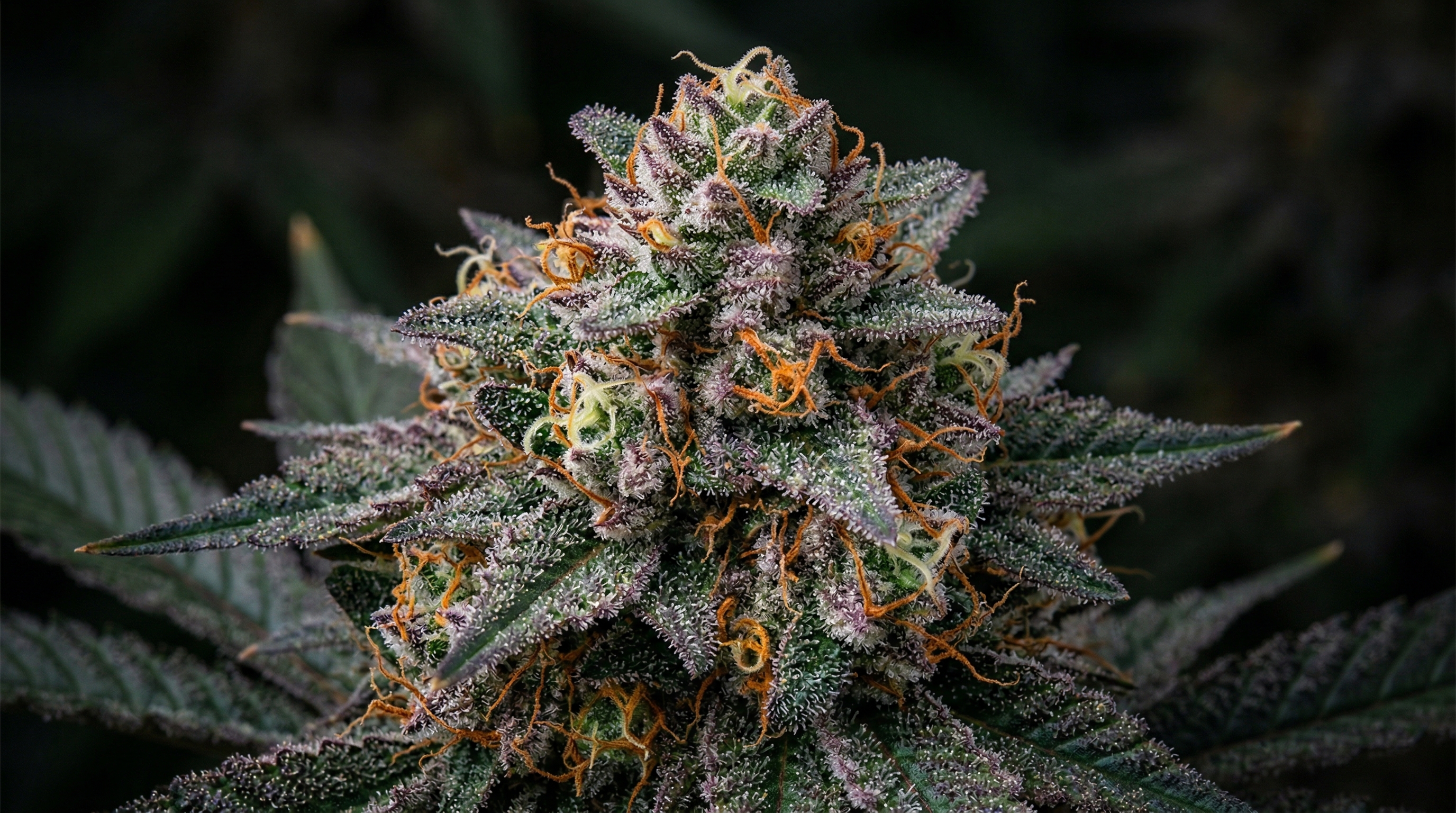
Why Does Music Sound So Much Better When You’re High?
Here’s a surprising fact: your brain doesn’t just passively receive music. It actively predicts what’s coming next — the next beat, the next chord change, the next drop. And cannabis appears to disrupt that prediction engine in a way that makes every sonic element feel fresh, vivid, and almost three-dimensional. For DJs beatmatching at 3 AM and producers sculpting synth patches in a home studio, this isn’t just a fun party trick — it’s a potential creative superpower.
A landmark study found that THC may alter auditory perception by modulating how the brain processes temporal information [Tart, 1971]. More recent neuroimaging research suggests cannabis affects connectivity in the default mode network — the brain region associated with creativity, mind-wandering, and making novel associations between ideas [Green et al., 2003]. For electronic music creators, where the entire art form revolves around layering sounds, manipulating frequencies, and building tension through time, this neurological shift can feel like switching from standard definition to 4K.
But here’s the thing: not all strains hit the same way behind the decks or in front of a DAW. Some will lock you into a rhythmic groove so deep you forget to save your project. Others will scatter your focus until you’ve spent 45 minutes tweaking a hi-hat that sounded fine to begin with. The difference often comes down to terpene profiles — the aromatic compounds that shape your experience far more than the outdated indica/sativa labels ever could.
In this deep dive, we’ll explore the science behind how specific terpenes and cannabinoid ratios influence auditory perception, creative flow, and motor coordination — the three pillars of great DJing and music production. Then we’ll connect that science to real strains you can actually seek out, organized by our High Families classification system.
If you’re a live instrumentalist rather than a DJ or producer, check out our guide to best strains for playing music and jam sessions. For the pure listening experience, why music sounds better high has you covered.
Let’s drop in.
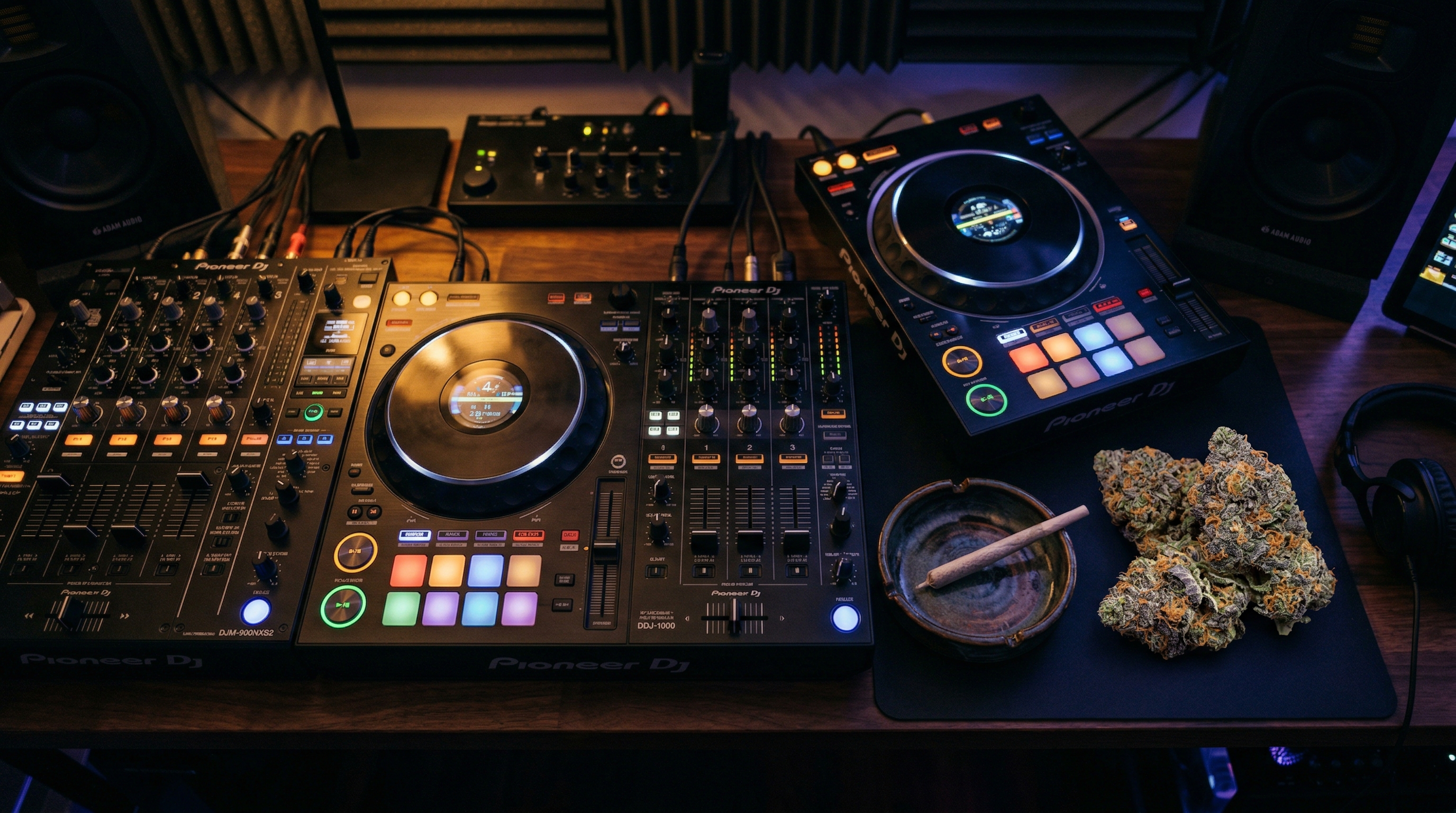
Quick Reference: Best Strains by Task
| Task | High Family | Key Terpenes | Top Strains |
|---|---|---|---|
| Live DJ sets | Energy / Uplift | Terpinolene, Limonene | Durban Poison, Jack Herer, Tangie |
| Beat-making & composition | Uplift | Limonene, Pinene | Sour Diesel, Super Lemon Haze, Strawberry Cough |
| Sound design & synthesis | Uplift / Balanced Hybrid | Limonene, Caryophyllene | GSC, Wedding Cake, Gelato |
| Long studio sessions | Energy | Terpinolene, Ocimene | Durban Poison, Green Crack, Chocolope |
| Mixing & mastering | Balanced / CBD | Myrcene, Pinene | Harlequin, ACDC, Cannatonic |
The Science: How Cannabis Affects DJs and Producers
How Cannabis Alters Auditory Perception
To understand why certain strains enhance music-making, we need to start with your endocannabinoid system (ECS) — a vast network of receptors that regulates everything from mood to pain to, yes, how you process sound.
Think of your auditory cortex like a mixing console with hundreds of channels. Normally, your brain applies automatic filters — it turns down “unimportant” sounds (the hum of your refrigerator, the ambient noise of a room) and boosts what it deems relevant (speech, alarms). THC binds to CB1 receptors densely concentrated in the auditory cortex, and research suggests this temporarily loosens those filters [Corrigall et al., 1998]. The result? Sounds that your brain normally suppresses suddenly pop into the foreground. You hear the reverb tail on a snare drum. You notice the subtle detuning on an analog synth pad. You feel the sub-bass in a way that seems almost physical.
This phenomenon — sometimes called auditory hyperfocus — has been documented in controlled settings. A study by Fachner and Rösing (2008) found that cannabis users listening to music showed increased activity in areas of the brain associated with attention to acoustic detail and emotional processing of sound. Participants reported that music sounded “wider,” “deeper,” and more emotionally resonant.
For a DJ, this may mean sharper awareness of how two tracks are blending. For a producer, it might translate to a more intuitive sense of spatial placement in a mix — where each element sits in the stereo field.
The Role of Terpenes in Creative Flow States
Here’s where it gets really interesting. The type of high matters enormously for music work, and that’s largely determined by terpenes — volatile aromatic compounds found in cannabis (and many other plants) that interact with your brain in distinct ways.
Limonene, the citrusy terpene abundant in strains like Super Lemon Haze, appears to elevate serotonin and dopamine activity [Komiya et al., 2006]. Dopamine is the neurotransmitter most associated with creative flow states — that feeling of being “in the zone” where ideas come effortlessly and time seems to dissolve. For electronic music producers working on arrangement and sound design, limonene-forward strains may help sustain that elusive creative momentum.
Pinene (found in Jack Herer and similar strains) is particularly fascinating for DJs. Research suggests pinene may act as an acetylcholinesterase inhibitor — in plain language, it may help preserve short-term memory and mental clarity even while under the influence of THC [Perry et al., 2000]. If you’ve ever gotten high and completely lost track of which track you cued up next, a pinene-rich strain might be your answer. For a deeper look, check out our pinene guide.
Terpinolene is the terpene most closely associated with the Energy High Family — the “espresso of cannabis” category. It’s less common than myrcene or limonene, but strains that carry it prominently tend to produce uplifting, cerebral, and distinctly non-sedating effects. Many producers report terpinolene-dominant strains are ideal for the technical, detail-oriented work of arrangement and mixing. Read the full breakdown in our terpinolene guide.
Ocimene is a sweet, herbal terpene found prominently in Durban Poison and a few other Energy Family strains. It’s associated with energizing, clear-headed effects that may support sustained concentration over long sessions. Our ocimene article goes deep on why it works the way it does.
Then there’s myrcene, the most common terpene in cannabis. In high concentrations, myrcene is associated with sedation and deep physical relaxation [do Vale et al., 2002]. While strains heavy in myrcene might feel amazing for listening to music on the couch, they can be counterproductive for the active, engaged work of DJing or producing. High myrcene = Relax High Family = couch, not controller.
What the Research Shows About Cannabis and Musical Timing
One critical dimension for DJs and producers is temporal perception — your sense of rhythm and timing. This is where the research gets genuinely nuanced.
A study by Mathew et al. (1998) found that THC can cause mild distortions in time perception, with users often perceiving time as passing more slowly. For music, this is a double-edged sword. On one hand, slowed temporal perception may allow you to “hear between the beats” — to perceive micro-timing details that normally fly by too quickly. Producers working on groove and swing often describe this as invaluable.
On the other hand, if temporal distortion goes too far, beatmatching becomes a nightmare. This is why dose matters enormously for performance-oriented music work. Research on cannabis and motor skills consistently shows that low-to-moderate doses may enhance certain perceptual abilities while high doses impair coordination and timing [Ramaekers et al., 2006].
Key insight: The sweet spot for DJing and production appears to be low-to-moderate THC combined with terpene profiles that promote focus and clarity — not the highest-THC strain you can find. For more on this principle, see our focus and productivity strain guide.
The 15 Best Strains for DJs and Electronic Music Producers
For Live DJing: Energy and Uplift Families
When you’re behind the decks, you need social energy, rhythmic awareness, and quick decision-making. You’re reading a crowd, managing transitions, and maintaining physical coordination — all while staying creative enough to take risks with your track selection. Strains from the Energy High Family and Uplift High Family are your best bet here.
The strain most often described as “the espresso of cannabis.” Durban Poison is a pure South African landrace sativa with a distinct terpinolene and ocimene profile that places it firmly in the Energy Family. It’s clean, cerebral, and functional — the kind of high where you’re fully present, tracking multiple things at once without feeling scattered. For long DJ sets where you need to stay sharp through hour three, this is the workhorse. The lack of heavy body effects also means your coordination stays intact.
Watch for: Some users report mild anxiety at higher doses. Keep it low (one or two hits) before a live set.
2. Jack Herer
Named after the legendary cannabis activist, Jack Herer has been a creative staple for decades for good reason. Its terpinolene and pinene combination may deliver both the energetic focus of the Energy Family and the memory-supporting properties that help you stay organized behind the decks. Many DJs love it for the “warm but sharp” quality — you feel genuinely good without losing the thread of what you’re doing. The pinene content may also help counter the short-term memory fog that can affect set planning when high.
Watch for: Can be slightly racy for anxiety-prone individuals. Pair with a low dose.
3. Tangie
A modern classic that leans hard into limonene — that bright, citrusy terpene associated with mood elevation and dopaminergic activation. Tangie sits in the Uplift Family, and it’s one of the better choices for DJs who play uptempo, energetic music (house, techno, drum and bass). The euphoria is social and outward-facing, which helps with reading a crowd and feeding off the room’s energy. It’s also a favorite for emotional, expressive mixing where you want the music to feel like it means something.
Watch for: The mood lift can tip into mild euphoric distraction at higher doses — keep it measured before performance.
4. Sour Diesel
One of the most iconic creative strains ever bred. Sour Diesel’s fast-acting, cerebral effects have made it a staple among artists, producers, and performers for generations. The limonene and fuel-forward terpene profile (with some caryophyllene for edge) lands it in the Uplift Family. It’s particularly good for the moment before you go on — quick onset, sharp focus, elevated confidence. Many DJs report that Sour Diesel makes them more decisive about track selection, less second-guessing, more committed to a direction.
Watch for: Can be intensely stimulating. Not ideal for people prone to performance anxiety.
A two-time High Times Cannabis Cup winner, Super Lemon Haze layers limonene and terpinolene into an experience that’s simultaneously uplifting and energizing. It bridges the Uplift and Energy families in a way that’s ideal for long sets. The energy holds without crashing, the mood stays elevated, and the mental clarity is genuinely functional. If you’re playing a four-hour set that goes from warm-up through peak time, Super Lemon Haze may sustain you better than anything else on this list.
Watch for: The energizing effects can make it hard to wind down afterward.
For Beat-Making and Composition
The compositional phase of production is different from live performance. Here you want sustained focus, pattern recognition, and the ability to hear your own work with fresh ears — that “I’ve never heard this before” quality that cannabis is famous for. The Uplift Family strains shine here.
One of the most underrated strains for focused creative work. Strawberry Cough’s strawberry-sweet limonene and myrcene profile (low myrcene, notably) produces a clear-headed, socially warm high that may help you hear your beats with curious ears rather than critical ones. Many producers use it specifically when they want to evaluate work-in-progress — it creates enough distance from your habitual judgments to hear what’s actually there. It’s also great for the early ideation phase where you’re jamming with samples and patterns.
Watch for: Relatively mild by today’s standards — which is actually a feature, not a bug.
7. Chocolope
A sometimes-overlooked gem for electronic producers. Chocolope’s unique chocolate-coffee flavor signals a distinct terpene profile with terpinolene and earthy aromatics that place it in the Energy Family. The high is smooth, focused, and unusually long-lasting — particularly useful for marathon composition sessions where you’re building a track from scratch. The energy is more of a “steady simmer” than a spike, which makes it easier to stay in flow for extended periods without the crashes associated with racier strains.
Watch for: Can be hard to find at many dispensaries; Dutch Treat is a reasonable substitute with a similar profile.
8. Green Crack
Despite the provocative name (popularized by Snoop Dogg), Green Crack is simply one of the most reliably functional daytime strains available. Its myrcene, limonene, and pinene combination produces a sharp, energized focus that’s excellent for the technical side of production work — programming drum patterns, layering synths, editing automation. The physical relaxation is just enough to keep your shoulders down and your ears open, without dragging you toward the couch. A favorite of producers who need to be “on” for a full studio day.
Watch for: High myrcene than Energy Family strains; the body component is more noticeable. Start lower.
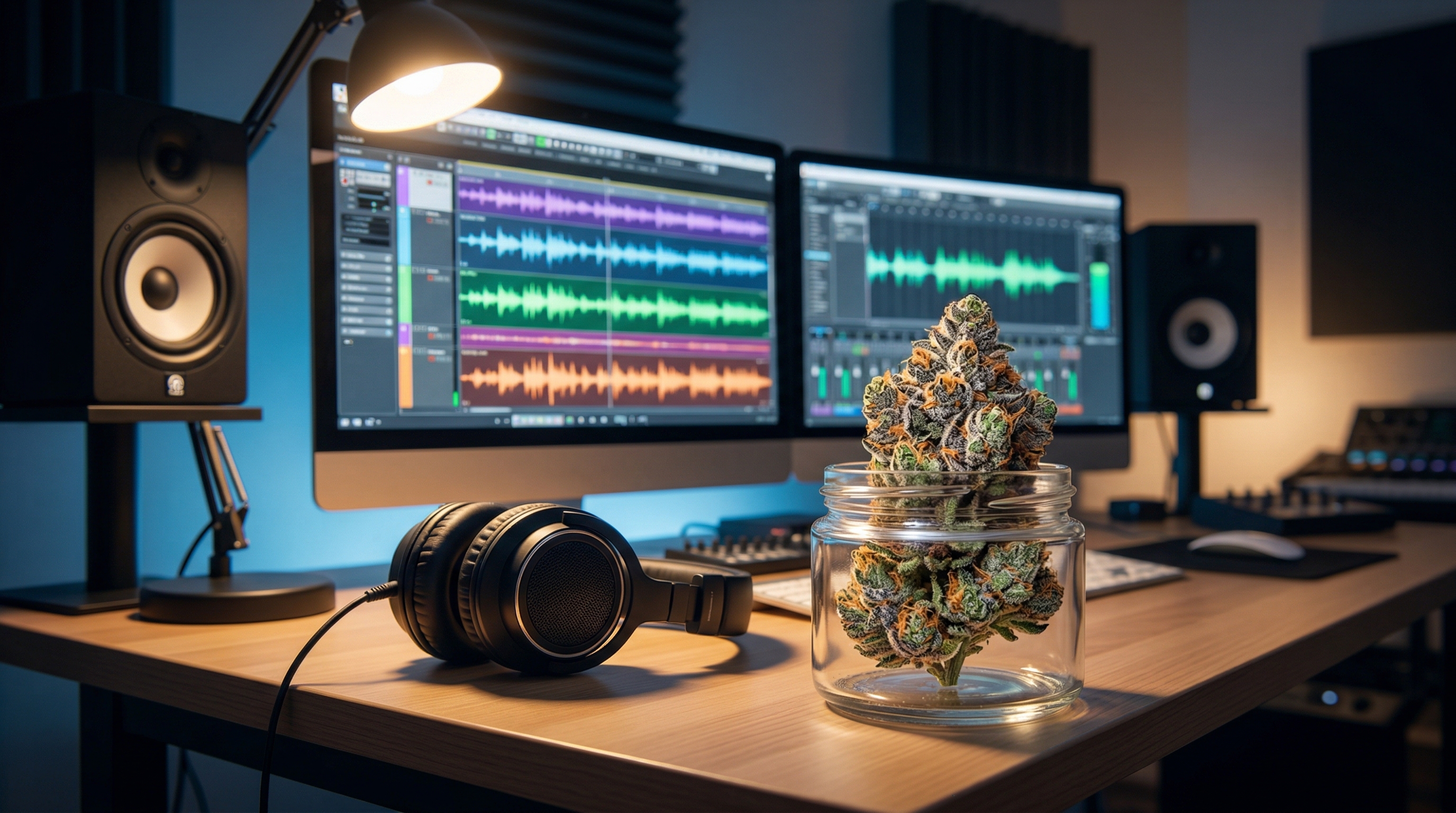
For Sound Design and Synthesis: Complex Profiles
Sound design is where cannabis may truly shine as a creative tool. This is the exploratory, experimental phase — twisting knobs, layering textures, stumbling onto happy accidents. You want expanded perception and creative risk-taking without needing precise motor skills. Strains with complex, multi-terpene profiles tend to produce the richest, most multi-dimensional experiences here.
GSC has become one of the most culturally influential strains of the past decade, and its popularity among creatives is well-earned. The caryophyllene, limonene, and linalool combination produces a complex high that cycles between creative euphoria and deep physical comfort — ideal for the kind of open-ended sound design sessions that can last half the night. Many electronic producers report that GSC makes unfamiliar sounds feel genuinely interesting and worth exploring. The catch is that it can lean sedating at higher doses, so keep it measured.
Watch for: Higher doses shift firmly toward couch-lock territory. This one rewards microdosing.
10. Wedding Cake
Wedding Cake’s rich, dessert-forward terpene profile — limonene, caryophyllene, linalool — produces what many describe as an intensely sensory high. Colors seem richer. Textures feel more interesting. Sounds become layered in ways you don’t normally perceive. For synth work, this heightened sensory awareness may make it easier to “feel” whether a patch is right — not just intellectually evaluate it. The linalool component adds a calming undercurrent that keeps the experience grounded rather than anxious.
Watch for: This is a potent strain. THC percentages often run high. Start with a very small amount.
11. Gelato
The balanced sibling of the dessert strain family. Gelato’s limonene, caryophyllene, and myrcene profile lands it in a hybrid sweet spot — enough creative euphoria for experimental work, enough physical relaxation to stay comfortable during long sessions, but not so much of either that you tip into anxiety or couch-lock. For producers who want to explore but still need to get something done by end of session, Gelato is a reliable choice. It’s also one of the more widely available complex-profile strains at most dispensaries.
Watch for: The body component may be more noticeable than expected for first-time users.
12. Amnesia Haze
A European classic beloved by electronic music producers. Amnesia Haze’s sativa-dominant, terpinolene-forward profile places it close to the Energy Family, but with enough complexity to make it excellent for sound design as well as performance. The name is somewhat misleading — many users report the opposite of amnesia: a heightened ability to remember melodic ideas and patterns. Long onset (especially when vaped), but the high runs cleanly for several hours. Particularly popular among techno and ambient producers for its ability to sustain deep focus.
Watch for: The slow onset can lead to overconsumption. Wait at least 15-20 minutes before reassessing your dose.
For Mixing, Mastering, and Critical Listening
Here’s where many producers make a costly mistake: reaching for the same heavy-hitting strain they use for creative sessions when it’s time to mix. Mixing and mastering demand critical listening, objectivity, and precision — essentially the opposite of the dreamy, expansive headspace that’s great for sound design. CBD-inclusive and balanced strains may help you stay relaxed and present without coloring your perception too heavily.
13. Harlequin
One of the most useful strains ever bred for functional, performance-oriented cannabis use. Harlequin’s CBD:THC ratio of roughly 5:2 (varies by batch) delivers clarity with just enough THC to reduce ear fatigue and keep the session feeling enjoyable rather than clinical. The myrcene and pinene profile supports calm focus. Many professional mixing engineers who use cannabis report that high-CBD strains like Harlequin help them stay objective about their decisions — they don’t fall in love with every EQ move the way they might on a high-THC strain.
Watch for: CBD sourcing and ratios vary significantly. Ask your dispensary for lab-tested batch info.
14. ACDC
One of the most CBD-dominant strains available, with ratios that sometimes reach 20:1 CBD to THC. For mixing and mastering, ACDC may offer the focus and anxiety reduction benefits of cannabis with minimal psychoactive distortion. Some producers use it specifically to battle the “ear fatigue spiral” — the phenomenon where you’ve been listening so long that everything starts to sound wrong. The gentle myrcene and pinene base provides a subtle relaxation without sedation.
Watch for: Pure CBD experiences won’t feel like much to users with high THC tolerance. Manage expectations.
15. Cannatonic
A roughly 1:1 CBD:THC ratio strain that occupies a useful middle ground between the creative effects of THC and the clarity of CBD. The myrcene and limonene combination provides a gently elevated mood with sustained focus — ideal for long mixing sessions where you need to stay engaged without getting distracted by rabbit holes. Several producers in the electronic space have specifically named Cannatonic as their go-to for the “finishing” phases of a track, when critical judgment matters more than open-ended exploration.
Watch for: Effects can vary significantly between phenotypes and batches. Start conservatively.
Bonus Picks for Specific Scenarios
Blue Dream — The balanced blueberry-haze hybrid with myrcene, pinene, and caryophyllene is a classic choice for long sessions that span both creative and technical phases. Not the sharpest or the deepest, but reliably balanced and easy to dose. Many producers keep it around as a “daily driver” that works for most studio situations.
Pineapple Express — The tropical limonene and caryophyllene profile makes Pineapple Express a fun choice for high-energy, positive-vibe production sessions. Great for writing catchy, upbeat electronic music where you want the energy of the room to match the energy of the track.
Dutch Treat — A terpinolene-forward strain beloved in European cannabis culture, Dutch Treat provides clean, focused energy similar to Durban Poison but with a sweeter, more approachable flavor profile. Excellent backup for producers who can’t find Chocolope or Amnesia Haze.
Dosing for DJs and Producers
The science is consistently clear: less is often more when cannabis meets musical performance. Here are the guidelines most producers and DJs land on after experimentation:
- Microdose (1-3mg THC): Ideal for mixing, mastering, and live DJ sets where precision matters. You may notice enhanced listening and reduced anxiety without impaired coordination.
- Low dose (3-7mg THC): A sweet spot for arrangement and composition work. Enough to shift your perspective and hear your work with fresh ears, not enough to derail your workflow.
- Moderate dose (7-15mg THC): Best reserved for pure sound design and experimental sessions where you’re exploring without hard deadlines.
- High dose (15mg+): Great for listening to finished music. Generally counterproductive for making it.
Pro tip: Many experienced producer-consumers report that vaporizing at lower temperatures (around 350-370°F) preserves more terpenes and produces a clearer, more functional experience than combustion. This aligns with research showing that different cannabinoids and terpenes vaporize at different temperatures [Hazekamp et al., 2006]. See our vaporizer guide for hardware recommendations.
Track What Actually Works for You
Here’s the honest truth: the relationship between cannabis and creativity is deeply personal. The strain that unlocks your best production sessions may be completely different from what works for someone else. Genetics, tolerance, set and setting, and even time of day all interact with which terpene profile serves you best.
The High IQ app’s Stash and Reports features let you log exactly which strains you used, what task you were doing, and how the session went — so over time you build a personalized map of what actually works for your creative process. If you haven’t tried systematic strain tracking, a few weeks of data may change how you approach your studio sessions entirely.
Key Takeaways
- Terpenes matter more than THC percentage for music work. Limonene and pinene-forward strains from the Uplift and Energy families tend to support focus and creativity, while high-myrcene strains may impair the coordination needed for DJing.
- Match your strain to your task: Use energetic, clear-headed strains for live performance and mixing; save complex-profile strains for exploratory sound design sessions.
- Dose low for performance, moderate for creation: Research consistently suggests that low-to-moderate THC doses may enhance auditory perception, while high doses impair timing and motor skills.
- CBD-inclusive strains like Harlequin, ACDC, and Cannatonic may be underrated tools for the precision work of mixing and mastering.
- The Energy Family (terpinolene + ocimene dominant) and Uplift Family (limonene + linalool dominant) are your primary playgrounds for DJ and production work.
FAQs
Does cannabis actually make you more creative, or does it just feel that way?
The honest answer: probably both, depending on the person. Research suggests cannabis may increase divergent thinking — the ability to generate multiple solutions to a problem [Schafer et al., 2012]. However, the same research found this effect was strongest in people with lower baseline creativity. If you’re already a highly creative producer, cannabis may change how you create more than how much you create. Our creativity strain guide goes deeper on this.
Will using cannabis before a DJ set hurt my beatmatching?
It depends entirely on the strain, dose, and your personal tolerance. High-THC, myrcene-heavy strains at large doses will almost certainly impair your timing and motor coordination. But a low dose of a pinene-rich, terpinolene-forward strain may actually sharpen your rhythmic awareness. The key recommendation: experiment with microdoses during practice sessions before bringing any cannabis into a live performance context.
Is there a best consumption method for music production?
Many producers prefer dry herb vaporizers at controlled temperatures. Lower temperatures (340-370°F) tend to release more terpenes and produce a clearer, more functional experience. Edibles are generally too unpredictable in onset and intensity for performance contexts, though some producers use very low-dose edibles (2.5-5mg) for marathon studio sessions where they don’t want to re-dose frequently.
Can cannabis damage my hearing or ear sensitivity over time?
There is no established evidence that cannabis directly damages hearing. However, the enhanced sound perception cannabis may provide could lead you to monitor at higher volumes — and that absolutely causes hearing damage over time. Always use proper monitoring practices regardless of your consumption habits.
Sources
- Tart, C.T. (1971). “On Being Stoned: A Psychological Study of Marijuana Intoxication.” Science and Behavior Books.
- Green, B., Kavanagh, D., & Young, R. (2003). “Being stoned: a review of self-reported cannabis effects.” Drug and Alcohol Review, 22(4), 453-460.
- Komiya, M., et al. (2006). “Lemon oil vapor causes an anti-stress effect via modulating the 5-HT and DA activities in mice.” Behavioural Brain Research, 172(2), 240-249.
- Perry, N.S.L., et al. (2000). “In-vitro inhibition of human erythrocyte acetylcholinesterase by salvia lavandulaefolia essential oil.” Phytomedicine, 7(3), 267-270.
- do Vale, T.G., et al. (2002). “Central effects of citral, myrcene and limonene, constituents of essential oil chemotypes from Lippia alba.” Phytomedicine, 9(8), 709-714.
- Mathew, R.J., et al. (1998). “Time perception and marijuana.” The American Journal of Drug and Alcohol Abuse, 24(4), 619-630.
- Ramaekers, J.G., et al. (2006). “Dose related risk of motor vehicle crashes after cannabis use.” Drug and Alcohol Dependence, 83(2), 137-143.
- Schafer, G., et al. (2012). “Investigating the interaction between schizotypy, divergent thinking and cannabis use.” Consciousness and Cognition, 21(1), 292-298.
- Hazekamp, A., et al. (2006). “Evaluation of a vaporizing device for the administration of tetrahydrocannabinol.” Journal of Pharmaceutical Sciences, 95(6), 1308-1317.


