Best Cannabis Strains for Singing and Vocal Performance
Science-backed guide to cannabis strains for singers — terpene profiles, throat health tips, consumption methods, and 15 strains for vocal performance.

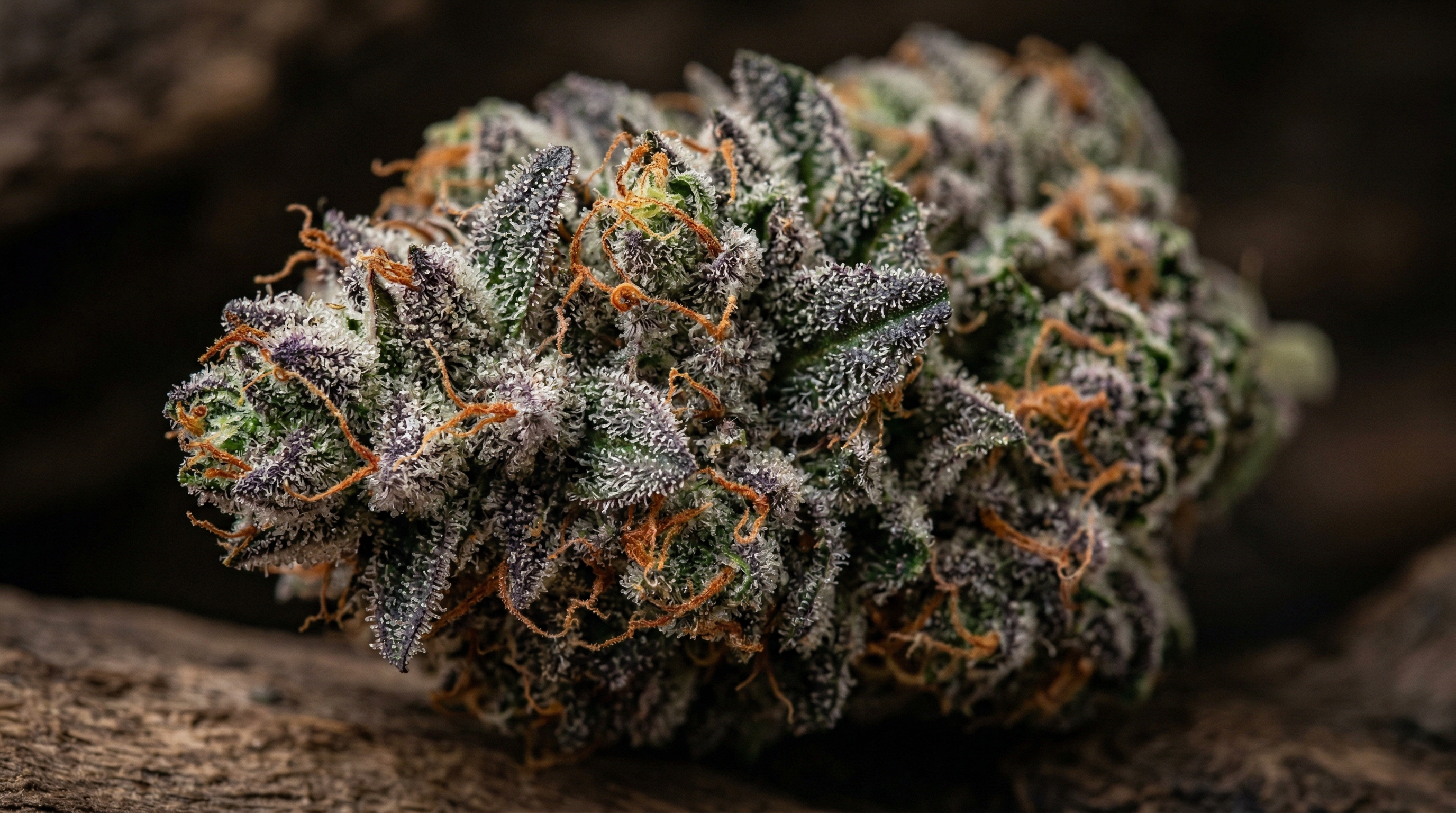
Whether you are a shower singer, a karaoke warrior, or a professional vocalist warming up before a studio session, you have probably noticed that cannabis can profoundly change the way you experience music — and the way music moves through you. Singers across genres, from jazz to reggae to hip-hop, have long described how certain strains unlock something in their voice: a deeper resonance, a looser vibrato, a willingness to take creative risks behind the microphone.
But not all strains are created equal when it comes to vocal performance. Some will dry out your throat like sandpaper. Others will glue you to the couch when you should be hitting high notes. A few will send your mind racing so fast that you forget the lyrics to a song you have sung a thousand times. And some — particularly smoked at high doses — can actively damage the vocal tissue you depend on.
This guide is different from most cannabis-and-music content you will find online because it takes the voice seriously as a biological instrument. We will cover the science of how cannabis interacts with the vocal system, which terpenes and cannabinoids matter most for singers, how consumption method makes or breaks your vocal health, and 15 specific strains ranked for different vocal performance contexts. We will also address what the research actually says — including the parts that are not entirely flattering.
If you already have a handle on the music-side relationship and want to understand how cannabis affects instruments more broadly, our companion guide on best cannabis strains for playing music and jam sessions covers that territory in depth.
The Voice Is Different: Why Singers Have Special Considerations
Most cannabis-and-music guides are written from a listener’s perspective — how does the high change your appreciation of sound? For singers, the question flips entirely. You are not the audience. You are the instrument.
The human voice depends on an extraordinarily precise biological system: the diaphragm and intercostal muscles provide breath pressure, the larynx converts that breath into sound via vocal fold vibration, the pharyngeal and oral cavity shape resonance, and the nervous system coordinates all of it in real time. Cannabis touches every layer of this system — some interactions are beneficial, some are potentially harmful, and the difference often comes down to strain, dose, and consumption method.
What the Research Actually Says
A 2019 systematic review published in Otolaryngology — Head and Neck Surgery (Mesbahi et al., PubMed ID 31393535) analyzed the evidence on cannabis inhalation and voice disorders. The findings are nuanced: smoked cannabis is associated with increased rates of laryngeal irritation, vocal fold edema, and voice quality changes over time. However, the evidence for vaporized or edible cannabis causing voice disorders is substantially weaker.
A 2020 pilot study in the Journal of Voice (Sataloff et al.) found that cannabis users showed measurable changes in fundamental frequency, jitter, and shimmer compared to controls — indicators of vocal fold irregularity. Crucially, the effect was most pronounced in daily smokers, not occasional users.
The takeaway: consumption method is not a footnote — it is the most important variable for vocal health, and we will revisit this throughout the guide.
Cannabis, Anxiety, and Vocal Freedom
Stage fright is one of the most common barriers to great singing. The physiological stress response — elevated cortisol, adrenaline release, increased muscle tension — directly impacts the voice: tighter throat muscles, shallower breathing, and a constricted range. Some research suggests that CBD and certain terpenes (particularly linalool and limonene) may help modulate anxiety responses without causing the sedation or cognitive impairment that would undermine performance [Linck et al., 2010; Zuardi et al., 1982].
The diaphragm is also more responsive when the body is relaxed. Cannabis-induced muscle relaxation — when kept at a moderate dose — may allow singers to access deeper diaphragmatic breath support, which is the foundation of powerful, sustainable vocal performance.
The Dry Mouth Problem
Every singer reading this needs to understand xerostomia (dry mouth). Cannabis interacts with cannabinoid receptors (CB1 and CB2) in the submandibular salivary glands, which reduces saliva production [Prestifilippo et al., 2006]. For vocalists, reduced saliva means:
- Increased friction between vocal folds, raising the risk of micro-tears
- Reduced flexibility in vocal fold tissue
- More effortful phonation, which can lead to vocal fatigue and compensatory tension
- Higher injury risk for professional singers with demanding repertoire
This is not a reason to avoid cannabis as a singer — it is a reason to choose your strains, method, and hydration strategy deliberately. We will return to solutions throughout this guide.
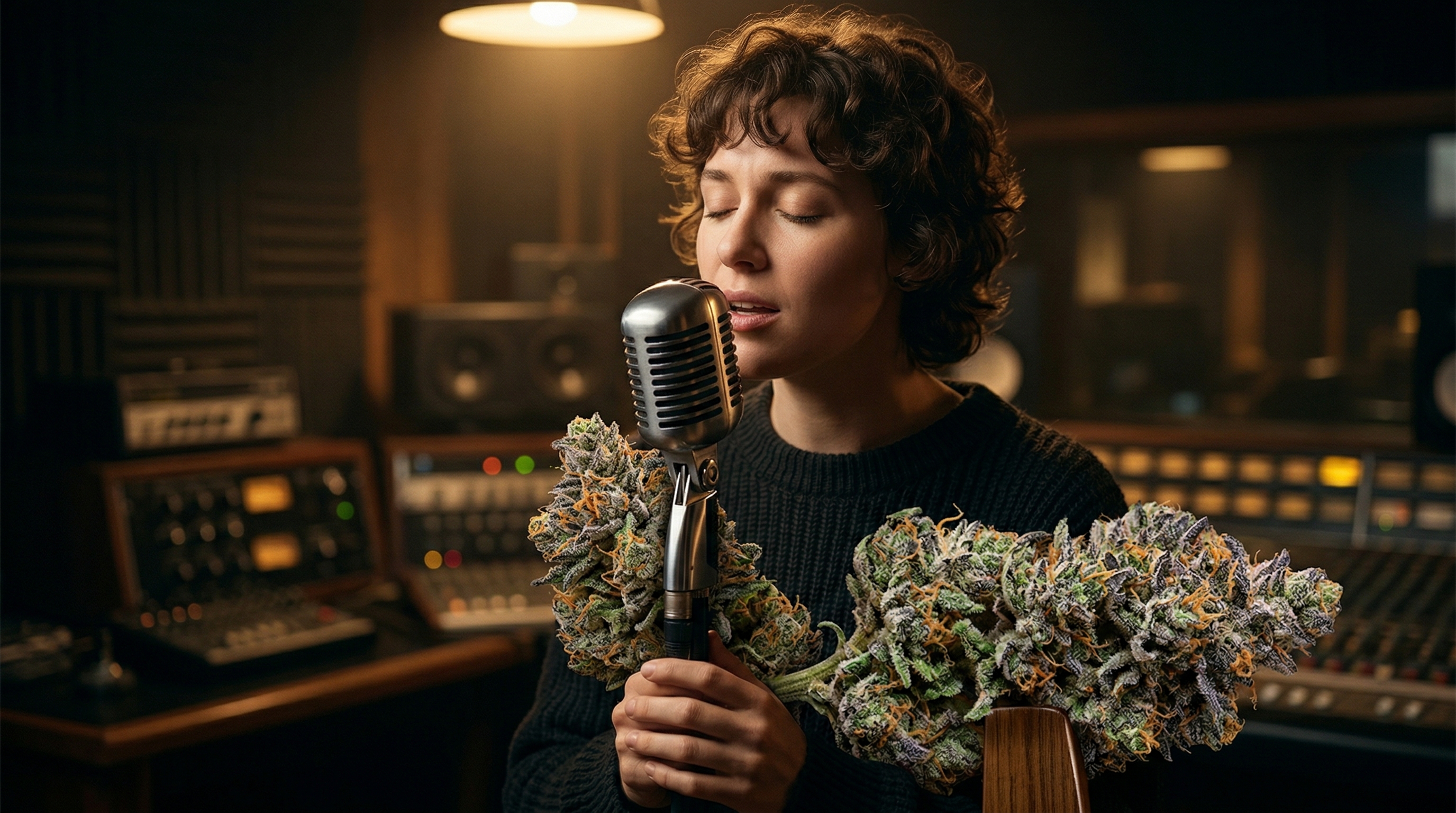
Consumption Method: The Most Important Decision for Singers
Before we discuss strains, let’s settle the consumption question definitively, because no strain recommendation is complete without it.
Vaporizing: The Recommended Approach
Vaporizing cannabis flower at 340–380°F (171–193°C) produces vapor rather than smoke. Combustion is avoided, which means:
- No carbon monoxide, benzene, or polycyclic aromatic hydrocarbons that cause laryngeal inflammation
- Significantly less throat irritation compared to smoking
- Better terpene preservation at lower temperatures (many therapeutic terpenes degrade above 400°F)
- More precise dosing control
For singers, dry herb vaporizers are strongly preferred over both smoking and vape cartridges. Our vaping vs. smoking comparison guide covers the respiratory evidence in detail.
Caution: Even vaporizing can cause some dryness and mild irritation. Drink warm water before and after, and avoid sessions within 30–45 minutes of a demanding performance.
Edibles and Tinctures: The Safest Options for Vocal Health
Edibles and sublingual tinctures completely eliminate any inhalation-related vocal risks. The tradeoffs:
- Edibles have delayed onset (45–90 minutes), making pre-performance timing difficult and imprecise
- Tinctures act faster (15–30 minutes sublingually) and are more controllable
- Both eliminate the dry-mouth-from-irritation compound effect, though cannabis-induced salivary reduction still occurs
For professional singers with important performances, edibles or tinctures consumed 60–90 minutes beforehand with a microdose of 2.5–5mg THC represent the lowest-risk approach.
Smoking: The Option to Avoid
Direct combustion exposes your vocal folds and entire respiratory tract to known irritants. Even one smoking session before a performance can cause acute vocal fold inflammation, altered voice quality, and reduced range. Long-term smoking is associated with the development of Reinke’s edema (vocal fold swelling) and increased risk of laryngeal pathology.
For occasional singers and hobbyists, a single pre-performance smoke is unlikely to cause lasting damage — but the short-term vocal effects are real and measurable. For professional or serious vocalists, pre-performance smoking is simply not worth the risk.
Terpene Profiles That Serve Singers
Understanding terpenes is how you move beyond trial and error. Here is what the evidence suggests about terpenes most relevant to vocal performance:
Terpenes That May Benefit Singers
| Terpene | Potential Benefit | Best Strains |
|---|---|---|
| Limonene | Mood elevation, anxiety reduction; citrus-forward | Tangie, Super Lemon Haze, Lemon Haze |
| Linalool | Calming without sedation; may ease throat muscle tension | Lavender, Amnesia Haze, Do-Si-Dos |
| Pinene | Bronchodilator properties; may support airway openness [Falk et al., 1990] | Jack Herer, Strawberry Cough, Blue Dream |
| Caryophyllene | Anti-inflammatory; may reduce irritation; acts on CB2 receptors | GSC (Girl Scout Cookies), Bubba Kush, Sour Diesel |
| Terpinolene | Focused, clear-headed energy; avoids the sedation trap | Durban Poison, Jack Herer, XJ-13 |
| Ocimene | Uplifting, clear mental effects; low sedation | Strawberry Cough, Dutch Treat, Clementine |
Terpenes to Approach with Caution
- Dominant myrcene: The most common terpene in cannabis, myrcene at high levels produces sedation and physical heaviness that can undermine the physical engagement singing requires. Strains where myrcene is the clear dominant terpene (Granddaddy Purple, Northern Lights) are better suited to post-performance wind-down.
- High levels of bisabolol: Deeply relaxing, potentially too sedating for performance contexts.
The Anti-Inflammatory Angle
Caryophyllene deserves special mention for singers. As the only terpene that directly activates cannabinoid receptors (specifically CB2), caryophyllene has demonstrated anti-inflammatory properties in multiple animal studies. While human clinical evidence specific to vocal tissue is lacking, its general anti-inflammatory effects suggest it may offer some comfort to singers dealing with minor throat irritation — particularly in high-CBD strains where it appears alongside cannabidiol’s own anti-inflammatory properties.
15 Best Cannabis Strains for Singing and Vocal Performance
Quick Reference Table
| Strain | Best Use Case | High Family | Key Terpenes | THC % |
|---|---|---|---|---|
| Blue Dream | Rehearsals, long sessions | Uplifting | Myrcene, Pinene, Caryophyllene | 17–24% |
| Jack Herer | Studio recording, precision | Energetic | Terpinolene, Pinene, Ocimene | 18–23% |
| Tangie | Live performance, stage fright | Uplifting | Limonene, Myrcene, Pinene | 19–22% |
| Durban Poison | Daytime rehearsals, energy | Energetic | Terpinolene, Myrcene, Ocimene | 15–25% |
| Strawberry Cough | Breath work, anxiety | Uplifting | Pinene, Myrcene, Linalool | 15–20% |
| Super Lemon Haze | High-energy live shows | Uplifting | Limonene, Terpinolene, Caryophyllene | 16–25% |
| Harlequin | Professional sessions, precision | Balancing | Myrcene, Pinene, Caryophyllene | 4–7% (CBD: 8–16%) |
| Pineapple Express | Collaborative sessions | Entourage | Caryophyllene, Limonene, Pinene | 17–24% |
| ACDC | No-impairment anxiety relief | Balancing | Myrcene, Pinene, Caryophyllene | 1–6% (CBD: 14–20%) |
| Lemon Haze | Creative songwriting | Uplifting | Limonene, Myrcene, Terpinolene | 17–20% |
| Green Crack | Focused practice sessions | Energetic | Myrcene, Caryophyllene, Pinene | 16–24% |
| XJ-13 | Balanced creative confidence | Entourage | Terpinolene, Pinene, Myrcene | 18–22% |
| Sour Diesel | Pre-performance warm-up | Energetic | Limonene, Caryophyllene, Myrcene | 20–25% |
| Cannatonic | Stage anxiety, CBD-forward | Balancing | Myrcene, Pinene, Caryophyllene | 5–7% (CBD: 12–15%) |
| Do-Si-Dos | Post-show recovery, decompression | Relaxing | Linalool, Caryophyllene, Limonene | 22–28% |
1. Blue Dream
High Family: Uplifting
Blue Dream is arguably the most beloved strain among creative performers, and for good reason. This legendary Blueberry × Haze cross delivers a balanced experience that starts with cerebral euphoria and settles into gentle full-body relaxation without couch-lock — a rare combination for singers who need both physical comfort and mental engagement.
- Key Terpenes: Myrcene, Pinene, Caryophyllene
- THC Range: 17–24%
- Why Singers Love It: The pinene content may support open airways, while the balanced effect profile keeps you energized enough to perform but relaxed enough to release tension from the jaw, neck, and shoulders — the usual tension culprits for vocalists. The moderate myrcene is tempered by pinene’s alertness.
- Best For: Long rehearsal sessions, open mic nights, collaborative songwriting, all-day studio work
- Consumption Tip: Vaporize at 365°F for best terpene expression. One session 30–40 minutes before warming up is the sweet spot for most singers.
2. Jack Herer
High Family: Energetic
Named after the legendary cannabis activist, Jack Herer is a terpinolene-dominant powerhouse that musicians consistently describe as their “creative fuel.” It delivers sharp mental clarity alongside a blissful, almost electric energy that keeps you present and engaged — without the scattered overstimulation that some high-THC sativas produce.
- Key Terpenes: Terpinolene, Pinene, Ocimene
- THC Range: 18–23%
- Why Singers Love It: The terpinolene–pinene combination may promote both mental focus and respiratory openness. Singers report feeling “locked in” to their performance — technically precise while emotionally connected. It is one of the few strains that genuinely supports both the analytical and expressive demands of singing.
- Best For: Studio recording sessions, technical vocal exercises, choral rehearsals, performances requiring precision and control
3. Tangie
High Family: Uplifting
If you have ever wanted to bottle sunshine and sing with it, Tangie is your strain. This California Orange × Skunk hybrid explodes with citrus aromatics, signaling its sky-high limonene content. The effect is bright, social, and confidently uplifting.
- Key Terpenes: Limonene, Myrcene, Pinene
- THC Range: 19–22%
- Why Singers Love It: Limonene-dominant strains are associated with mood elevation and anxiety reduction [Lopes Campêlo et al., 2011]. For singers battling stage fright — the kind that tightens the throat and flattens the voice — Tangie may offer the confidence needed to step up to the mic and mean it. The effect is energetic enough to support active, engaged performance.
- Best For: Live performances, karaoke nights, open mics, overcoming performance anxiety
- Famous Connection: Louis Armstrong, who famously called cannabis his “assistant,” tended toward sativa-leaning, uplifting experiences for performance — the archetype Tangie represents.
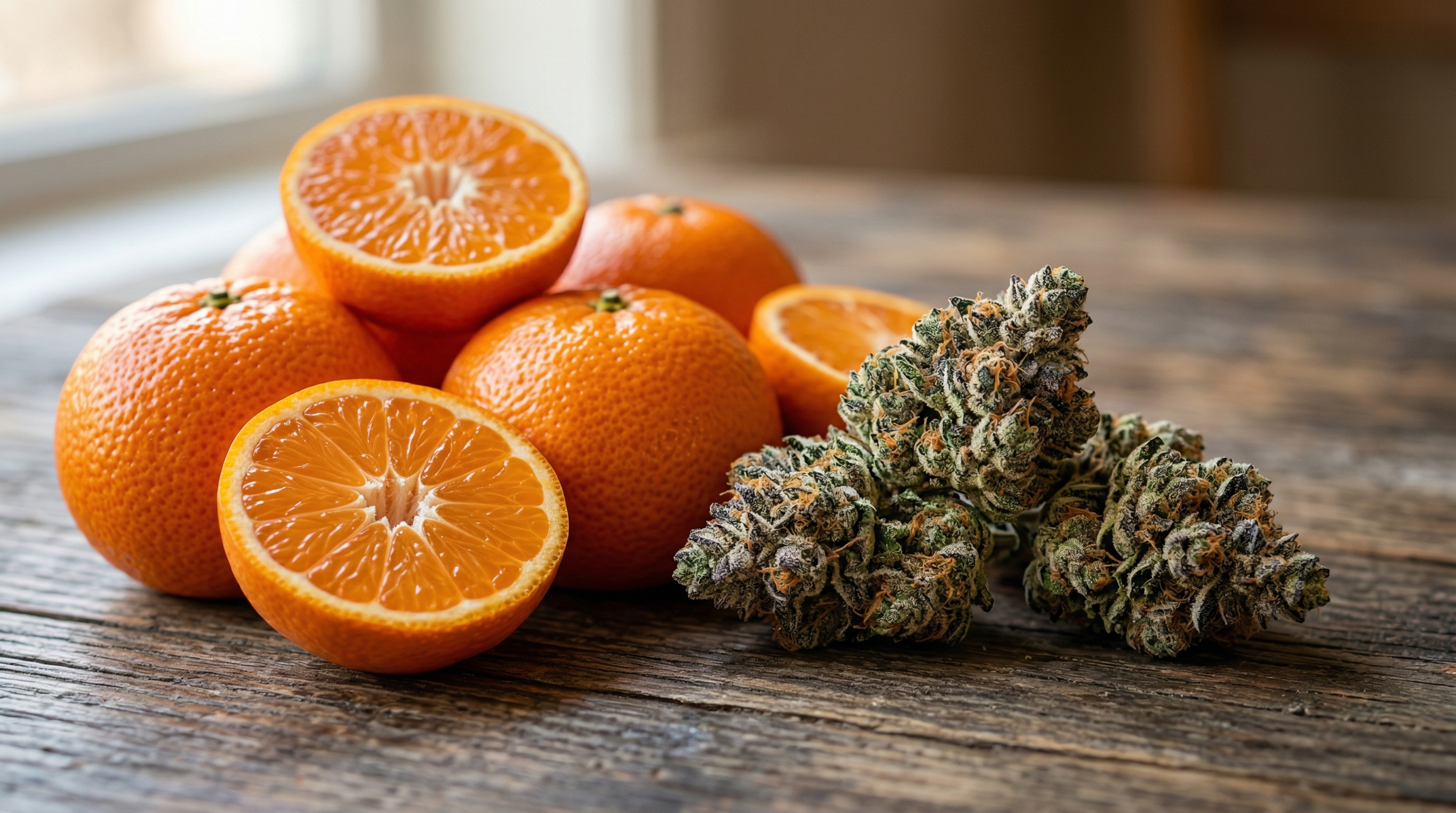
4. Durban Poison
High Family: Energetic
This pure South African landrace strain is one of the most celebrated energizing cultivars on the planet. Durban Poison delivers a crystal-clear, invigorating experience that many artists describe as “creative caffeine” — without the jitteriness that actual caffeine can induce before a performance.
- Key Terpenes: Terpinolene, Myrcene, Ocimene
- THC Range: 15–25%
- Why Singers Love It: The terpinolene dominance promotes a focused, productive headspace with clear-headed energy. Singers report enhanced rhythmic and melodic sensitivity — a heightened ability to “feel” the music rather than overthink it. It does not cloud the voice or fog the memory.
- Best For: Daytime rehearsals, vocal warm-ups, energetic performances, touring situations where you need consistent energy without cumulative sedation
5. Strawberry Cough
High Family: Uplifting
Do not let the name discourage you — despite its reputation for inducing a characteristic cough on the inhale (which is precisely why vaporizing is essential here), Strawberry Cough is a favorite among vocalists for its uplifting and clear-headed effects.
- Key Terpenes: Pinene, Myrcene, Linalool
- THC Range: 15–20%
- Why Singers Love It: The significant alpha-pinene content is the headline here. Alpha-pinene is a known bronchodilator that may help open airways [Falk et al., 1990], giving singers access to more breath capacity. The linalool adds a calming layer that smooths out anxious edges without tipping into sedation — the ideal combination for anxiety-prone performers.
- Best For: Breath work exercises, yoga-and-voice routines, anxiety-prone performers, singers working on supported breath technique
- Pro Tip: Vaporize at 350°F (177°C) to minimize throat irritation and maximize terpene preservation. This strain rewards low-temperature vaping.
6. Super Lemon Haze
High Family: Uplifting
A two-time Cannabis Cup winner, Super Lemon Haze combines Lemon Skunk and Super Silver Haze to create a zesty, energetic experience that many musicians consider their ideal performance strain. The lemon-forward aroma is almost medicinal in its sharpness.
- Key Terpenes: Limonene, Terpinolene, Caryophyllene
- THC Range: 16–25%
- Why Singers Love It: The limonene–terpinolene combination bridges the Uplifting and Energetic families, offering both mood elevation and mental sharpness. The caryophyllene adds a layer of physical comfort that may help reduce chronic throat tension in vocalists who carry stress in their neck and shoulders. The effect is theatrical in the best way — suited to performers who need presence.
- Best For: High-energy live performances, creative improvisation, band rehearsals, musical theater
7. Harlequin
High Family: Balancing
Here is one that surprises many singers. Harlequin is a high-CBD strain with a typical 5:2 CBD:THC ratio, delivering gentle, clear-headed effects with minimal psychoactive intensity. For singers who want the therapeutic benefits of cannabis without the cognitive shift that threatens pitch accuracy and lyric recall, Harlequin is a revelation.
- Key Terpenes: Myrcene, Pinene, Caryophyllene
- CBD Range: 8–16% | THC Range: 4–7%
- Why Singers Love It: The high CBD content may help manage performance anxiety without impairing coordination, memory, or vocal precision [Zuardi et al., 1982]. The caryophyllene may offer anti-inflammatory support at the throat level. This is the strain for the vocalist who needs to nail every note of a technically demanding set while keeping their head clear.
- Best For: Professional recording sessions, classical or technical vocal performances, singers new to cannabis, anyone who needs anxiety management without impairment
8. Pineapple Express
High Family: Entourage
This Trainwreck × Hawaiian cross delivers a beautifully complex, multi-terpene experience that exemplifies the entourage effect in action. The high is creative, social, and physically comfortable — a triple threat for performers who need to be relaxed, present, and connected.
- Key Terpenes: Caryophyllene, Limonene, Pinene, Ocimene
- THC Range: 17–24%
- Why Singers Love It: The diverse terpene profile creates a nuanced experience where no single effect dominates. You get mood elevation from limonene, physical comfort from caryophyllene, airway support from pinene, and mental clarity from ocimene — all working together. Collaborative singing, harmonizing, and call-and-response formats tend to feel natural and effortless.
- Best For: Collaborative performances, choir rehearsals, band practice, live shows requiring both relaxation and social presence
9. ACDC
High Family: Balancing
ACDC is the strain for professional singers with zero tolerance for impairment. With CBD:THC ratios often reaching 20:1 or higher, ACDC delivers meaningful therapeutic effects — anxiety relief, muscle relaxation, anti-inflammatory support — with virtually no intoxication.
- Key Terpenes: Myrcene, Pinene, Caryophyllene
- CBD Range: 14–20% | THC Range: 1–6%
- Why Singers Love It: For high-stakes performances — auditions, recordings, opening nights — where any cognitive impairment is unacceptable, ACDC provides the anxiety-calming and muscle-relaxing benefits of cannabis without the psychoactive effects. It is the botanical equivalent of a beta-blocker without the prescription.
- Best For: Auditions, professional recordings, classical performance, Broadway, opera, any high-stakes vocal context
10. Lemon Haze
High Family: Uplifting
Lemon Haze sits in a sweet spot between Super Lemon Haze’s intensity and a more approachable, creative effect profile. It is the strain for songwriters who want to write with more emotional openness and fewer inhibitions.
- Key Terpenes: Limonene, Myrcene, Terpinolene
- THC Range: 17–20%
- Why Singers Love It: The moderate THC and limonene-forward profile make it accessible for sessions focused on creative exploration — writing new songs, experimenting with melody, or finding fresh interpretations of familiar material. The mind stays nimble without racing.
- Best For: Songwriting sessions, vocal improvisation, exploring new keys or styles
11. Green Crack
High Family: Energetic
Despite its unfortunate name, Green Crack is a highly functional strain for structured practice sessions. The effect is sharp, energized, and focused — ideal for vocal exercises that require concentrated repetition.
- Key Terpenes: Myrcene, Caryophyllene, Pinene
- THC Range: 16–24%
- Why Singers Love It: The clean energy it provides is similar to a very good cup of coffee — alert, present, engaged — without the anxiety or jitteriness that high-caffeine consumption can create. Scales, arpeggios, and technical exercises feel less tedious. Focus on breath mechanics becomes easier.
- Best For: Technical practice sessions, scale work, sight-reading practice, vocal athletic conditioning
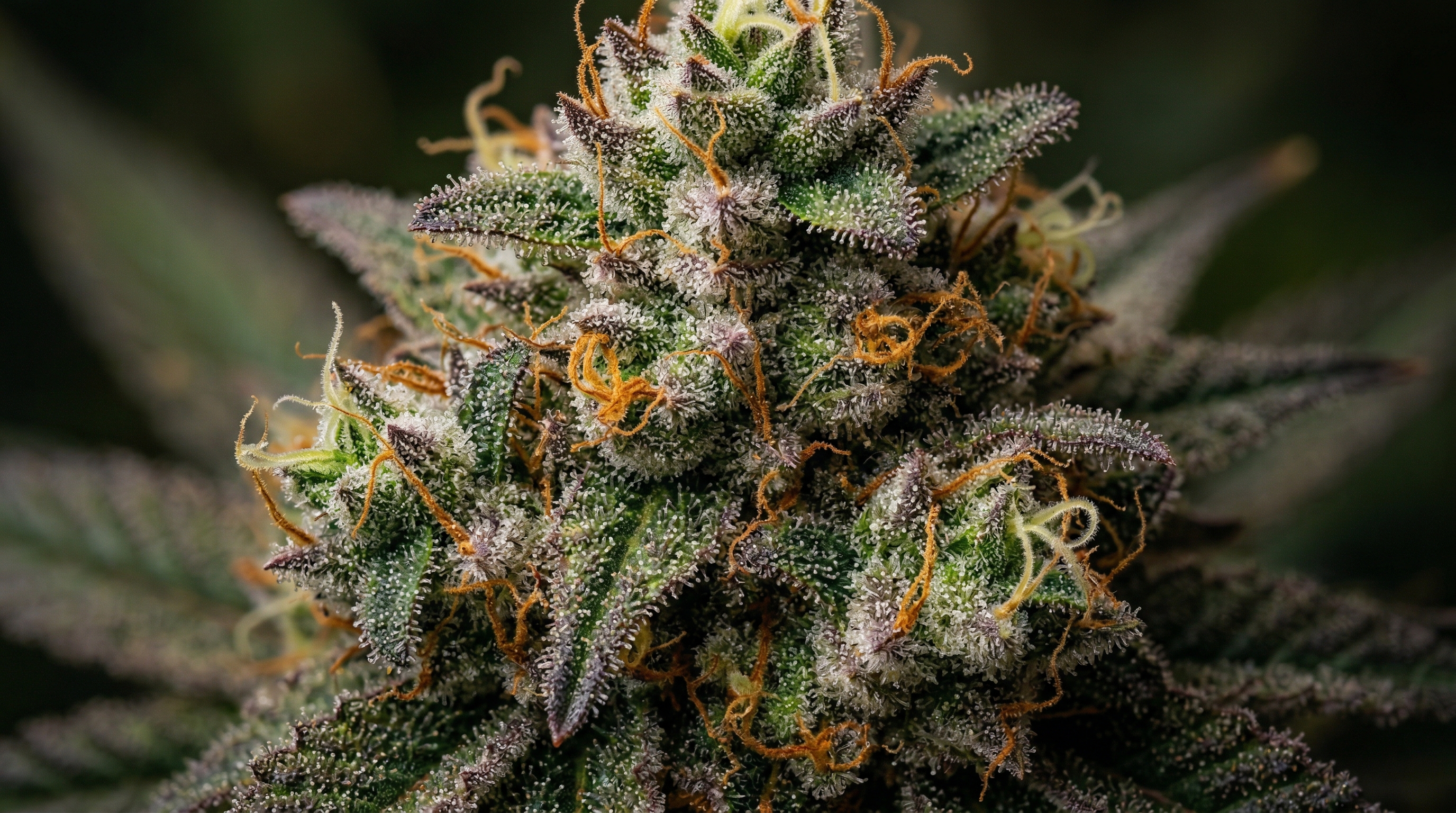
12. XJ-13
High Family: Entourage
XJ-13 (Jack Herer × G13 Haze) combines the best of two legendary strains into a balanced, confident experience. It is a hybrid in the truest sense — neither sleepily indica nor anxiously sativa, but genuinely even.
- Key Terpenes: Terpinolene, Pinene, Myrcene
- THC Range: 18–22%
- Why Singers Love It: XJ-13 is particularly well-suited to singers who have had bad experiences with high-anxiety sativas or overly sedating indicas. The terpinolene–pinene backbone provides clarity and breath openness while the balanced hybrid effects keep the experience smooth and controlled. Vocal confidence without vocal wobble.
- Best For: Balanced performers who want predictability, studio sessions, singing teachers warming up before lessons
13. Sour Diesel
High Family: Energetic
Sour Diesel is the quintessential performer’s strain — fast-acting, cerebral, and radiantly energetic. It has been the backstage companion of musicians for decades, and its reputation for fueling live performances is well-earned.
- Key Terpenes: Limonene, Caryophyllene, Myrcene
- THC Range: 20–25%
- Why Singers Love It: The limonene–caryophyllene combination lifts mood while grounding the nervous energy that pure limonene-forward strains can sometimes produce. The result is elevated confidence that feels stable rather than brittle — exactly what performers need before stepping on stage.
- Caution: Higher THC means higher impairment risk. Keep doses modest and know your tolerance. Sour Diesel can run hot for anxious users.
- Best For: Pre-show warm-up, high-energy genre performances (hip-hop, rock, reggae), performers who know their tolerance well
14. Cannatonic
High Family: Balancing
Cannatonic is another CBD-prominent option, typically running around 1:1 CBD:THC ratio, which puts it in an interesting middle ground between full psychoactivity and pure CBD experience. The gentle buzz provides creative openness without overwhelming the nervous system.
- Key Terpenes: Myrcene, Pinene, Caryophyllene
- CBD Range: 12–15% | THC Range: 5–7%
- Why Singers Love It: For singers who want just a touch of THC’s creative loosening effect alongside CBD’s calming influence, Cannatonic threads the needle. The effect is described as a “soft focus” — things feel a little more fluid and less rigid, but the head stays clear enough for technical demands.
- Best For: Performance anxiety with some psychoactive preference, creative exploration with a safety net, low-tolerance beginners
15. Do-Si-Dos (Post-Performance Only)
High Family: Relaxing
This one belongs in a different category from the rest. Do-Si-Dos, with its dominant linalool and caryophyllene profile, is not a performance strain. It is the strain you reach for after the performance is over.
- Key Terpenes: Linalool, Caryophyllene, Limonene
- THC Range: 22–28%
- Why Singers Love It (Post-Show): Vocal cords are inflamed tissue after a demanding performance. Linalool is associated with sedating, anti-inflammatory effects [Pereira et al., 2018]. The full-body relaxation Do-Si-Dos delivers is the opposite of what you need before singing, and exactly what you need after — to rest, decompress, and let the larynx recover.
- Best For: Post-show recovery, tour de-stress, after late-night gigs, vocal rest days
Practical Vocal Performance Protocol for Cannabis Users
Choosing the right strain is only half the equation. Here is a complete pre-show protocol:
Hydration (The Non-Negotiable)
- 3 hours before: Begin sipping room-temperature water consistently (aim for 16–24 oz)
- 1 hour before: Throat Coat tea (slippery elm-based) or warm water with raw honey — classical singer’s preparation
- During performance: Room-temperature or slightly warm water only. Avoid ice-cold water (constricts vocal folds), dairy (increases mucus production), and alcohol (dehydrates mucous membranes)
- After: Continue hydrating. Vocal folds need moisture to recover.
Consumption Timing
- Edibles/tinctures: 60–90 minutes before performance for full onset
- Vaporized flower: 30–45 minutes before, with your vocal warm-up serving as your calibration window
- The warm-up test: Always do scales and breathing exercises after consuming to assess how the strain is affecting your instrument before committing to a full performance
Dosing for Singers: Less Is Almost Always More
For vocal performance, microdosing (2.5–5mg THC, or 1–2 small vaporizer draws) consistently outperforms larger doses. The goal is to access the creative-opening, anxiety-reducing, and physical-relaxing benefits without cognitive impairment that would affect pitch accuracy, lyric recall, or breath support mechanics.
Professor High’s Rule: If you cannot remember the second verse, you have had too much. Enhancement is the goal — not replacement.
The Sober Baseline
Know your voice without cannabis before you rely on it with cannabis. Having a clear reference for how your instrument feels sober lets you accurately judge what is being enhanced versus what is being masked. Many singers who feel “better” high simply feel less anxious — which is genuinely valuable, but different from improved technique.
Strains to Avoid Before Singing
Just as important as knowing what to reach for is knowing what to avoid:
- Dominant-myrcene heavy indicas (Granddaddy Purple, Northern Lights, 9 Pound Hammer): The Relaxing family strains leave you too physically heavy and mentally foggy for active vocal performance. Save them for after.
- Ultra-high THC strains above 28–30%: At extreme THC levels, motor coordination and memory recall can be significantly impaired. Stage presence, lyric memory, and breath control all suffer.
- Strains with your personal anxiety triggers: If a particular strain has made you paranoid or self-conscious in the past, do not experiment with it before a performance. Know your reactions.
- Any smoked product before an important performance: As covered above, combustion produces laryngeal irritants. The short-term vocal effects are real — reduced flexibility, increased friction, altered resonance.
How to Track What Works for You
The cannabis-singing relationship is highly individual. Your endocannabinoid system, tolerance level, vocal technique, and performance context all shape the outcome. This is why tracking matters.
The High IQ app lets you log strain experiences against activities, so you can build a personalized record of what works for your singing sessions. Over time, patterns emerge — the strains that consistently leave you feeling vocally free, the ones that dry your throat, the ones that help with anxiety but compromise your range.
Cannabis is a tool. Like any tool, the more deliberately you use it, the better the results.
The Bigger Picture: Cannabis and Vocal Health Long-Term
A note for serious or professional singers: moderate, occasional cannabis use with thoughtful consumption methods is unlikely to cause lasting vocal damage. However, daily or heavy smoking is a genuine risk factor for voice changes over time, as the research cited above shows.
If you are using cannabis regularly and noticing consistent hoarseness, pitch instability, or reduced range, it is worth consulting a laryngologist who is knowledgeable about cannabis. The relationship between cannabis, vocal fold health, and long-term vocal function is an area where the research is still developing — which means staying cautious, staying informed, and prioritizing vocal health alongside creative freedom.
The voice is irreplaceable. Treat it accordingly.
Key Takeaways
Here is what every singer needs to remember from this guide:
- Consumption method matters most. Vaporizing or edibles protect your vocal tissue. Smoking before a performance can cause real, measurable damage.
- Dry mouth is the singer’s main risk. Hydrate before, during, and after every session.
- Terpenes are your guide. Look for limonene and linalool for anxiety relief, pinene for airway support, and caryophyllene for anti-inflammatory effects.
- Dose low. Microdosing (2.5–5mg THC) gives you the benefits without the impairment.
- Best all-around choices: Blue Dream and Jack Herer for most sessions; Harlequin or ACDC for professional or high-stakes performances.
- Avoid heavy indicas before performing. Save strains like Do-Si-Dos for post-show recovery.
- Track your results. What works for one vocalist may not work for another. Build your own personal strain log.
Every voice is different. Every performance context is different. Start conservative, observe carefully, and let the data guide you to your ideal vocal companion.
Sources
- Mesbahi, A. et al. (2019). “Cannabis Inhalation and Voice Disorders: A Systematic Review.” Otolaryngology — Head and Neck Surgery. PubMed ID: 31393535.
- Sataloff, R.T. et al. (2020). “The Effect of Marijuana on the Voice: A Pilot Study.” Journal of Voice. doi: 10.1016/j.jvoice.2020.08.021.
- Prestifilippo, J.P. et al. (2006). “Inhibition of salivary secretion by activation of cannabinoid receptors.” Experimental Biology and Medicine, 231(8):1421–1429.
- Linck, V.M. et al. (2010). “Effects of inhaled linalool in anxiety, social interaction and aggressive behavior in mice.” Phytomedicine, 17(8):679–683.
- Zuardi, A.W. et al. (1982). “Action of cannabidiol on the anxiety and other effects produced by delta-9-THC in normal subjects.” Psychopharmacology, 76(3):245–250.
- Falk, A.A. et al. (1990). “Uptake, distribution and elimination of alpha-pinene in man after exposure by inhalation.” Scandinavian Journal of Work, Environment and Health, 16(5):372–378.
- Lopes Campêlo, L.M. et al. (2011). “Sedative and anticonvulsant properties of the essential oil of Alpinia zerumbet and its main component terpinen-4-ol.” Phytomedicine, 18(13):1105–1108.
All health-related claims in this article are based on available research and should not be interpreted as medical advice. Individual effects vary significantly. Consult a healthcare provider for medical concerns related to vocal health or cannabis use.


