How to Choose a Cannabis Vaporizer: The Ultimate Buyer's Guide
Everything you need to know to pick the right cannabis vaporizer—heating methods, portable vs. desktop, temperature control, budgets, and top picks.


The Overwhelming Wall of Vapes
You decided to try vaporizing. Smart move. You open a browser, type “best cannabis vaporizer,” and immediately face a wall of devices with names like “Mighty+,” “Tinymight 2,” “Arizer Solo 3,” and “Volcano Hybrid”—each with hundreds of glowing reviews and a wildly different price tag.
An hour later you’ve got fifteen browser tabs open and you’re somehow more confused than when you started.
Here’s the thing: vaporizer shopping feels complicated because most buying guides assume you already understand the fundamentals. This one starts from scratch. By the end, you’ll understand the four decisions that actually matter, know what a fair price looks like at every budget level, and have a clear picture of which device category fits your life—before you spend a dollar.
Let’s cut through it.
Why Vaporize in the First Place?
Before diving into specs and price tiers, it’s worth understanding what makes vaporization distinct from other consumption methods.
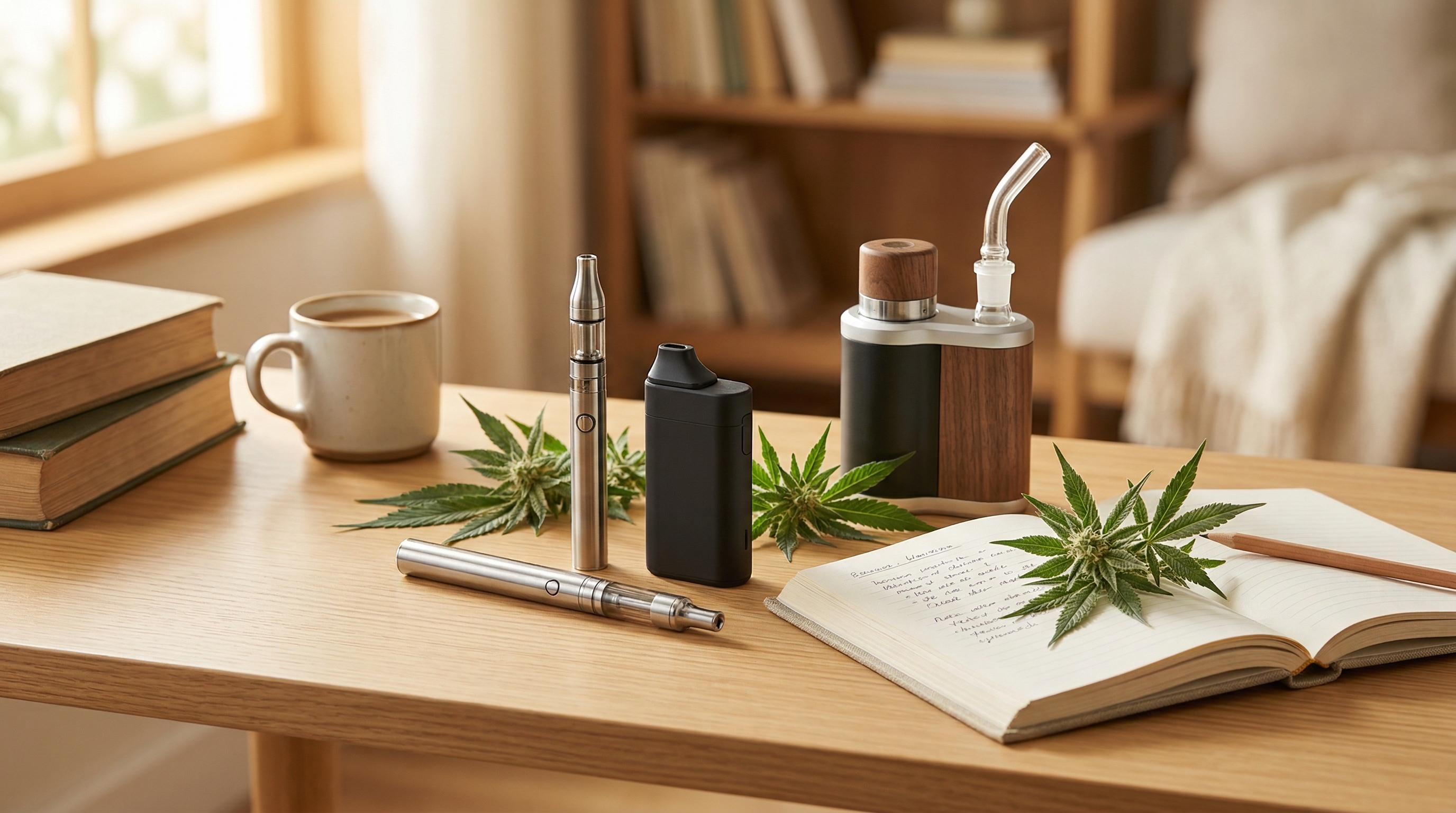
A vaporizer heats cannabis below the point of combustion—typically between 315–430°F (157–221°C)—which releases cannabinoids and terpenes as inhalable vapor rather than smoke. At combustion temperatures (above 445°F / 230°C), you’re burning plant matter and generating hundreds of byproducts including carbon monoxide, tar, and polycyclic aromatic hydrocarbons that have nothing to do with getting high.
Research published in Clinical Pharmacology & Therapeutics found that vaporization delivered similar THC levels to the bloodstream as smoking while significantly reducing carbon monoxide and respiratory irritants [Abrams et al., 2007]. A separate study estimated that vaporizers convert roughly 46% of available THC into inhalable form, compared to approximately 25% for combustion [Hazekamp et al., 2006]—nearly double the efficiency.
But the biggest argument for vaporizing isn’t health or efficiency. It’s flavor.
Terpenes—the aromatic compounds responsible for each strain’s distinct character—are remarkably heat-sensitive. Many begin vaporizing below 340°F, well before combustion destroys them. A quality vaporizer set to the right temperature lets you taste the actual profile of what you’re consuming: the bright citrus of a limonene-forward strain, the earthy spice of a caryophyllene-heavy cultivar, the clean pine of a pinene-rich flower. If you’ve been exploring strains based on their High Family and wondering why you can’t always taste the difference, your consumption method may be the variable.
For a deeper look at the science, our Vaping vs. Smoking guide covers the respiratory research, terpene delivery comparisons, and harm-reduction context in full.
Decision 1: What Are You Vaporizing?
This is the most foundational question—and it immediately eliminates half the options on the market.
Dry Herb (Flower) Vaporizers
Dry herb vaporizers heat ground cannabis flower in a small oven chamber. They tend to offer the fullest terpene expression, the widest strain selection, and the lowest per-session cost (flower is consistently cheaper than concentrates). If you enjoy exploring the differences between High Families—tasting and feeling how a limonene-forward Uplifting High strain differs from a myrcene-heavy Relaxing High strain—a quality flower vaporizer is your best tool.
The tradeoff is a slightly higher barrier to entry: you’ll need a grinder, you’ll load and clean a physical chamber, and some odor is unavoidable during sessions.
Concentrate Vaporizers (Dab Pens / Wax Pens)
Concentrate vaporizers heat extracts—wax, shatter, live resin, distillate, rosin—on a heated coil or ceramic element. They’re typically more discreet (minimal odor), more potent per puff, and simpler to load. Pre-filled 510-thread cartridges snap onto a battery with no mess at all.
The downside: concentrate quality varies dramatically. Mass-produced distillate cartridges often strip out the terpenes that make strains distinctive. If you’re using concentrates specifically for the entourage effect, seek out live resin or rosin products that preserve the original terpene profile.
Hybrid / Dual-Use Vaporizers
Some devices handle both flower and concentrates with swappable chambers or inserts. They offer versatility but rarely excel at both in the same way a dedicated device does. Consider a hybrid only if you genuinely use both materials regularly—otherwise you’re paying for a feature you’ll underuse.
| Factor | Dry Herb | Concentrate | Dual-Use |
|---|---|---|---|
| Flavor depth | Excellent | Good–excellent (extract-dependent) | Good |
| Discretion | Moderate | High | Moderate |
| Ease of use | Moderate | Easy | Moderate |
| Cost per session | Lower | Higher | Varies |
| Terpene preservation | High | Varies by extract type | Moderate |
| Barrier to entry | Low–medium | Very low | Medium |
Beginner recommendation: Start with dry herb. The wider strain selection, lower running cost, and full terpene expression will teach you more about what you enjoy—knowledge you’ll carry forward into any future concentrate purchases.
Decision 2: Portable vs. Desktop
Once you’ve settled on your material, decide where you’ll actually be using the device.
Portable Vaporizers
Battery-powered portables range from ultra-slim pens that slip into a shirt pocket to handheld units about the size of a garage door remote. They cover an enormous range of quality and price—from simple conduction devices under $80 to premium hybrid convection units approaching $400.
Choose portable if:
- You use cannabis outside the home regularly
- Discretion matters (vapor dissipates faster and smells less than smoke)
- You want one device that works in multiple contexts
- You’re new to vaporizing and want to start without a significant investment
Limitations to know: Battery life is finite (typically 45–90 minutes of active use), chamber sizes are smaller, and vapor quality—while excellent on premium models—rarely matches a dedicated desktop unit.
Desktop Vaporizers
Desktop vaporizers plug into the wall, eliminating the battery variable entirely. They typically feature larger chambers, more powerful heating elements, more precise temperature stability, and superior vapor quality. Many use either a whip (a flexible silicone tube you draw from directly) or a balloon/bag system where vapor is filled into a pouch and inhaled at leisure.
The Storz & Bickel Volcano—produced since 2000—remains the benchmark for desktop balloon vaporizers. The Arizer Extreme Q offers a more accessible entry point for whip-style desktop use.
Choose desktop if:
- Most of your sessions happen at home
- You host group sessions (balloons make sharing easy and efficient)
- Vapor quality and extraction efficiency are your top priorities
- You want unlimited session length without battery anxiety
Limitations to know: Not portable by definition, requires a dedicated space, and the initial investment is typically higher.
Pro tip: Many experienced users own one of each—a portable for daily on-the-go use and a desktop for longer home sessions. If budget is a constraint, choose whichever matches your most frequent scenario.
Decision 3: Heating Method
This is where the technical specs actually matter. The heating method determines vapor quality, flavor, efficiency, and heat-up time more than any other single specification.

Conduction Heating
Conduction heats cannabis through direct contact with a hot surface—think of a frying pan. The chamber walls get hot, and whatever is touching them vaporizes.
Advantages:
- Fast heat-up (15–30 seconds on most devices)
- Simple mechanism = lower price and fewer failure points
- Works well for packed, even loads
Disadvantages:
- Uneven extraction (material touching the walls vaporizes faster than material in the center)
- Cannabis continues to vaporize between draws, meaning you can waste material if you take long breaks mid-session
- Some risk of hot spots causing near-combustion at higher temperatures
Best for: Budget-conscious users, quick solo sessions, beginners who want simplicity.
Representative devices: PAX 3, DaVinci IQC, XMAX V3 Pro
Convection Heating
Convection heats cannabis by passing hot air through the material rather than heating the walls of the chamber. Think of a convection oven—the element never touches the food, but the heated air circulates evenly through it.
Advantages:
- Even, consistent extraction across the entire bowl
- Superior flavor preservation (terpenes released more gently and completely)
- Material only vaporizes when you’re actually drawing—less waste between hits
- Lower risk of combustion
Disadvantages:
- Slower heat-up (30–90 seconds)
- More complex mechanism = higher price
- Requires a slightly slower, deliberate draw to generate enough airflow
Best for: Flavor chasers, terpene enthusiasts, experienced users who want to notice the differences between strains.
Representative devices: Tinymight 2, Firefly 2+, Arizer XQ2 (desktop)
Hybrid Heating
Hybrid devices combine both methods: the chamber provides some conduction warmth while convective airflow handles the bulk of extraction. This approach has become the dominant design in mid-to-premium portables because it delivers most of convection’s flavor benefits with faster heat-up times than pure convection.
Best for: Most users seeking a balance of convenience and quality. The Storz & Bickel Mighty+ and POTV Lobo are consistently cited as the leading hybrids in their respective price tiers.
| Heating Method | Heat-Up Time | Flavor Quality | Efficiency | Price Range |
|---|---|---|---|---|
| Conduction | 15–30 sec | Good | Moderate | $50–$150 |
| Convection | 30–90 sec | Excellent | High | $150–$400 |
| Hybrid | 20–60 sec | Very good–excellent | High | $100–$400 |
Decision 4: Temperature Control
Temperature control is the feature most beginners underestimate and most experienced users consider non-negotiable. Here’s why it matters.
Cannabis contains over 100 cannabinoids and 200+ terpenes, each with a distinct boiling point. The temperature you set determines which of those compounds become vapor. This is how you can have two sessions with the same strain that feel and taste completely different.
Temperature Zones
Low Zone: 315–350°F (157–177°C)
- What vaporizes: Lighter terpenes (pinene, limonene, ocimene), early THC
- Experience: Bright flavor, clear-headed, energetic, functional
- Best for: Daytime use, Uplifting High and Energetic High strains, flavor chasers
- Vapor density: Light and thin
Medium Zone: 350–390°F (177–199°C)
- What vaporizes: THC fully, CBD, myrcene, caryophyllene, linalool
- Experience: Balanced—both mental and physical effects, fuller flavor
- Best for: Most users and most sessions; the sweet spot for Balancing High and Relieving High strains
- Vapor density: Medium, satisfying
High Zone: 390–430°F (199–221°C)
- What vaporizes: CBN, heavier terpenes, maximum cannabinoid extraction
- Experience: Heavy, sedating, full-body relaxation
- Best for: Evening use, sleep, Relaxing High strains, high-tolerance users
- Vapor density: Dense and thick
Above 430°F (221°C): Approach with caution. Combustion begins around 445°F. You’ll start generating some of the same combustion byproducts you were trying to avoid.
Temperature Stepping: The Advanced Technique
Temperature stepping is the practice of starting a session at low temperature and progressively increasing throughout. A typical approach: 3–4 draws at 340°F, then 3–4 draws at 365°F, finishing at 390°F. Each stage emphasizes different compounds, giving you a session that evolves from bright and flavorful to deeply relaxing—effectively three experiences from one bowl.
What to Look For in Temperature Controls
| Feature | Value |
|---|---|
| Precise digital control (adjustable by degree) | Gold standard for experienced users |
| Preset temperature levels (3–5 options) | Sufficient for beginners |
| App-connected temperature curves | Advanced—useful if you’re deeply into optimization |
| Single fixed temperature | Avoid—no flexibility to explore |
Budget Breakdown: What Your Money Buys
Here’s an honest, realistic breakdown of what each price tier delivers—no marketing language.
| Tier | Price Range | What You Actually Get |
|---|---|---|
| Entry-level | $30–$80 | Basic conduction portables and concentrate pens. Functional, limited temperature control, average build quality. Good for testing whether vaporizing is right for you. |
| Mid-range | $80–$180 | Solid dry herb portables with temperature control, decent battery life, good vapor quality. The sweet spot for most beginners. Models like the XMAX V3 Pro ( |
| Premium portable | $180–$350 | Hybrid or convection heating, precise temperature, premium materials (ceramic, borosilicate glass vapor paths), 2–5 year warranties. The Storz & Bickel Mighty+ ( |
| High-end / Desktop | $250–$600+ | Desktop units (Volcano Hybrid ~$599, Arizer XQ2 ~$160), top-tier portables with app control, maximum vapor quality and session efficiency. |
The $100–$175 range is the honest beginner recommendation. You’ll get a device capable enough to truly appreciate the difference between strain profiles and High Families, without locking significant money into preferences you haven’t formed yet.
Key Features Checklist
Before finalizing a purchase, run through this list:
Build quality
- Vapor path materials: ceramic, glass, or stainless steel (avoid plastic near the heating element)
- Removable, washable mouthpiece
- Robust feel—no flex or creaking in the body
Heating and temperature
- Adjustable temperature with at least 3 distinct levels
- Heat-up time under 60 seconds for portables
- Consistent temperature hold (check user reviews—manufacturer claims are optimistic)
Battery and charging
- At least 60 minutes of active use per charge
- USB-C charging preferred (faster and more universal)
- Removable battery is a bonus for power users and long-term ownership
Chamber
- Size suited to your typical session (0.1–0.2g for solo microdosing; 0.3–0.5g for longer sessions or sharing)
- Easy to load and clean
- Medical-grade ceramic or stainless steel chamber walls
Maintenance
- Accessible vapor path for cleaning
- Replacement parts (screens, o-rings, mouthpieces) available and affordable
- Cleaning kit included or available from the manufacturer
Warranty
- Minimum 1 year—avoid anything less
- Storz & Bickel offers a 2-year warranty on their devices
- Some brands offer 5–10 years, which is a meaningful signal of build confidence
Practical Comparison: Common Buyer Profiles
“I’m completely new and want to try vaporizing without spending much.”
Go to: Conduction portable, $60–$100 range. The XMAX V3 Pro ($100) and POTV ONE ($100) are consistently recommended as the best entry-level dry herb vaporizers. Both offer temperature control, decent build quality, and USB-C charging. Either will clearly outperform smoking on flavor and efficiency.
“I care about flavor more than anything. I want to actually taste my terpenes.”
Go to: Convection or hybrid portable, $150–$350. The Arizer Solo 3 ($250) uses full convection and is widely praised for flavor clarity. The Mighty+ ($339) is the hybrid standard that reviewers have recommended for years and continues to hold that reputation. Both will let you taste the actual terpene differences between strains.
“I mostly use cannabis at home in the evenings and want the best possible experience.”
Go to: Desktop vaporizer, $150–$600. The Arizer XQ2 ($160) offers exceptional value for a desktop whip/balloon hybrid unit. For the definitive balloon experience, the Volcano Hybrid ($599) is the benchmark—but it’s a significant investment. Many users split the difference with a premium portable like the Mighty+ for home use without the desk footprint.
“I’m on the go constantly and need something discreet.”
Go to: Compact portable with fast heat-up and minimal odor. The PAX Flow ($149) and DaVinci Miqro-C ($99) are among the smallest form-factor options with real temperature control. For concentrate-only use, a quality 510-thread battery with live resin cartridges is the most discreet option available.
“I want to share with a group at home.”
Go to: Desktop balloon vaporizer (Volcano) or a large-chamber portable like the Arizer Extreme Q. Balloons make sharing clean and efficient—fill the bag, pass it around, nobody has to breathe hot vapor directly. For portables, the Mighty+ handles groups reasonably well with its larger chamber.
“I want one device that does everything—flower, concentrates, different situations.”
Go to: Dual-use hybrid in the $150–$250 range. The DaVinci IQ3 (~$250) handles both flower and concentrates with accessory inserts. Accept that dual-use devices involve tradeoffs; if you find yourself using one material 90% of the time, a dedicated device will serve you better.
Using Your Vaporizer Well: Pro Tips
Buying the right device is step one. Getting the most out of it is step two.
Season before your first real session. Run 2–3 heat cycles at maximum temperature with an empty chamber to burn off any manufacturing residues. Your first session will taste dramatically better.
Grind medium-fine, not coarse. For dry herb vaporizers, grind consistency is a genuine variable. A medium-fine grind maximizes surface area for even extraction without restricting airflow. A quality 4-piece grinder is the most underrated accessory you can buy. Pack the chamber firmly but not compressed—material needs airflow.
Start low and step up. Begin at the low end of your temperature range (around 340°F) and take several draws before stepping up. This preserves the lighter, more volatile terpenes in the early draws and extracts the heavier compounds as temperature rises. It’s the difference between a one-note session and a layered one.
Save your AVB (already-vaped bud). Unlike ash from combustion, properly vaped flower still contains decarboxylated cannabinoids—particularly those that activate at higher temperatures. Many users save AVB for edibles or capsules. It’s not gourmet, but it’s efficient.
Clean after every 5–10 sessions. Residue buildup in the vapor path and mouthpiece degrades flavor faster than anything else. Isopropyl alcohol (90%+) and cotton swabs do most of the work. A clean vaporizer tastes like the strain; a dirty one tastes like the accumulation of every session before.
Let the device fully pre-heat. Many users begin drawing the instant the device signals ready. Wait another 10–15 seconds. The chamber walls and vapor path need to reach stable temperature for consistent extraction, especially with convection devices.
Common Mistakes to Avoid
Buying a desktop vaporizer when you’re primarily mobile. A Volcano is spectacular. It is also an appliance that lives on your counter. If 80% of your sessions happen outside the house, the best portable in your price range will serve you better.
Over-investing on your first purchase. Your preferences will evolve significantly after your first 20 sessions. Many new users buy the cheapest option, develop real opinions, and then make a well-informed second purchase. That’s a smarter path than spending $400 on a device before you know what you like.
Ignoring vapor path materials. Cheap devices route vapor through plastic components. At vaporizing temperatures, plastics can off-gas compounds that affect taste and safety. Look explicitly for ceramic, borosilicate glass, or stainless steel vapor paths—reputable manufacturers list this clearly.
Buying unregulated cartridges. The 2019 EVALI lung injury outbreak was specifically linked to vitamin E acetate in illicit THC cartridges—not vaporization as a method [Blount et al., 2020]. Purchase cartridges only from licensed dispensaries with verified lab testing. If a cartridge is extremely cheap or the source is unclear, skip it.
Neglecting the grinder. A bad grind is responsible for more disappointing vaporizer sessions than a bad device. If you have a cheap, dull grinder, upgrade it before blaming your vape.
FAQs
Is a more expensive vaporizer always better?
Not always—but there is a real quality floor. Devices under $50 typically use materials and heating elements that produce noticeably inferior vapor. Above $150, quality increases meaningfully through better heating technology and materials. Above $300, you’re paying for refinements (precision, build quality, warranty) that matter more to experienced users than beginners.
Can I vaporize CBD flower the same way?
Yes. CBD flower vaporizes at the same temperature ranges as THC flower. The experience is non-intoxicating but terpene-rich, and many users find CBD flower vaporized at 340–360°F an excellent option for relaxation without psychoactivity.
How do I know when my bowl is done?
Vapor will become noticeably thinner and the flavor will shift from your strain’s characteristic profile to a more generic “toasty” or “popcorn” note. The material in your chamber will turn from green to a tan-to-brown color. That’s properly vaped bud—save it for AVB.
Do vaporizers smell?
Less than smoking, but not zero. Vapor dissipates significantly faster than smoke and doesn’t linger on fabrics the same way. Sessions in a ventilated space leave minimal detectable odor within 10–15 minutes. Concentrate vaporizers smell the least; dry herb vaporizers during a session have a moderate characteristic aroma.
What’s the best temperature for a beginner?
Start at 356°F (180°C). This is a reliable middle ground that delivers noticeable THC effects, preserves enough terpenes for flavor, and doesn’t produce overly thick or harsh vapor. From there, experiment in both directions to find your personal sweet spot.
How often should I clean my vaporizer?
Clean the mouthpiece and vapor path with isopropyl alcohol after every 5–10 sessions. Do a thorough cleaning—including soaking removable glass components—every 15–20 sessions. The more consistently you maintain it, the better every session tastes.
Key Takeaways
- Your material choice (flower vs. concentrate) is the first and most important decision. Most beginners benefit most from starting with dry herb.
- Portable vs. desktop comes down to where you use cannabis most. Don’t buy a desktop if you’re primarily mobile.
- Heating method directly determines flavor and efficiency. Convection and hybrid devices outperform conduction for terpene preservation and even extraction.
- Temperature control is the feature that separates good sessions from great ones. Look for at least 3 adjustable levels; precise digital control is ideal.
- The $100–$175 range is the honest beginner sweet spot. Enough quality to genuinely appreciate vaporizing; not so much investment that you’re locked into uninformed preferences.
- Grind quality, packing technique, and regular cleaning matter as much as the device itself. The best vaporizer performs poorly with a coarse grind and a dirty vapor path.
For a deeper understanding of why vaporizing affects your experience differently than smoking, read our science-based breakdown: Vaping vs. Smoking Cannabis: What Science Actually Says.
Sources
Abrams, D.I., Vizoso, H.P., Shade, S.B., Jay, C., Kelly, M.E., & Benowitz, N.L. (2007). Vaporization as a smokeless cannabis delivery system. Clinical Pharmacology & Therapeutics, 82(5), 572–578.
Blount, B.C., Karwowski, M.P., Shields, P.G., et al. (2020). Vitamin E acetate in bronchoalveolar-lavage fluid associated with EVALI. New England Journal of Medicine, 382(8), 697–705.
Hazekamp, A., Ruhaak, R., Zuurman, L., van Gerven, J., & Verpoorte, R. (2006). Evaluation of a vaporizing device (Volcano) for the pulmonary administration of tetrahydrocannabinol. Journal of Pharmaceutical Sciences, 95(6), 1308–1317.
Lanz, C., Mattsson, J., Soydaner, U., & Brenneisen, R. (2016). Medicinal cannabis: in vitro validation of vaporizers for the smoke-free inhalation of cannabis. PLOS ONE, 11(1), e0147286.
Russo, E.B. (2011). Taming THC: potential cannabis synergy and phytocannabinoid-terpenoid entourage effects. British Journal of Pharmacology, 163(7), 1344–1364.
Van Dam, N.T., & Bhatt, M. (2012). Effects of cannabis vaporization on pulmonary function. Drug and Alcohol Dependence, 123(1–3), 49–54.


