Joints vs Blunts vs Spliffs: What's the Difference?
Learn the key differences between joints, blunts, and spliffs—including rolling papers, effects, and which one is right for you.

The Decision
You’ve seen all three passed around at parties, mentioned in songs, and debated in group chats. But if someone handed you a joint, a blunt, and a spliff and asked you to tell them apart, could you? Don’t worry—plenty of seasoned cannabis enthusiasts mix these up too.
Understanding the difference between joints, blunts, and spliffs isn’t just trivia. Your choice of roll directly affects the flavor, intensity, duration, and even the health profile of your session. The rolling material, what’s inside, and how it burns all change the experience in meaningful ways.
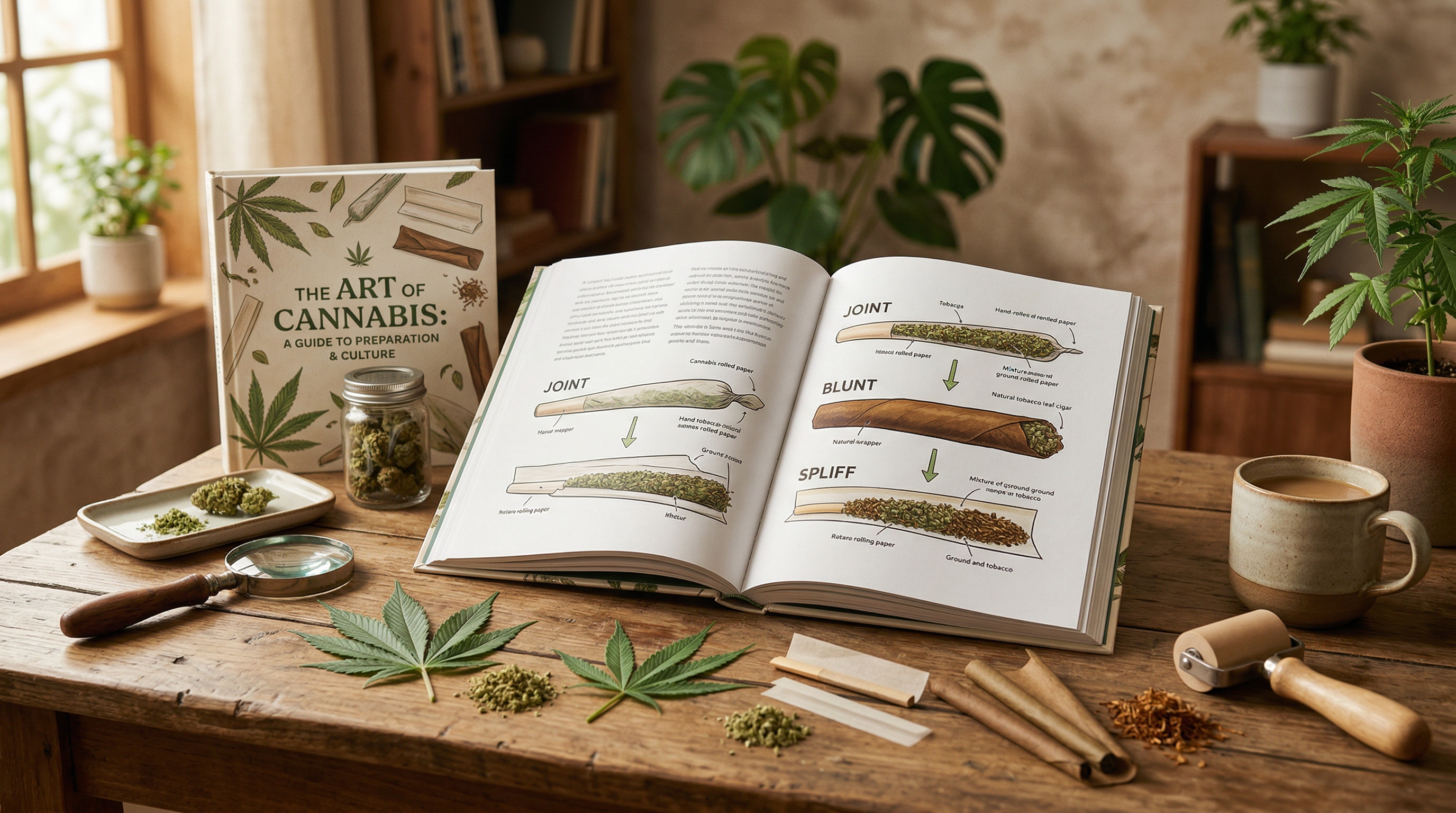
Here’s the short version: a joint is cannabis in a thin paper, a blunt is cannabis in a tobacco leaf or cigar wrap, and a spliff is cannabis mixed with tobacco in a thin paper. But the real story goes much deeper than that. Let’s break it all down so you can choose with confidence—or at least know exactly what you’re being handed.
Quick Comparison
| Factor | Joint | Blunt | Spliff |
|---|---|---|---|
| Wrap material | Thin rolling paper (rice, hemp, wood pulp) | Tobacco leaf or cigar wrap | Thin rolling paper (same as joint) |
| Contents | 100% cannabis | 100% cannabis | Cannabis + tobacco mix |
| Tobacco present? | No | Yes (in the wrap) | Yes (mixed in) |
| Typical size | 0.25–1g | 1–3g | 0.5–1g |
| Burn time | 3–7 minutes | 10–20+ minutes | 5–10 minutes |
| Flavor | Pure cannabis/terpene flavor | Sweet, earthy tobacco wrap flavor | Blended cannabis-tobacco taste |
| Nicotine exposure | None | Low-moderate (from wrap) | Moderate-high (mixed in) |
| Best for | Pure flavor, solo or small group | Long sessions, social sharing | Energy buzz, tobacco fans, European-style sessions |
| Avoid if | You want a long burn | You avoid tobacco entirely | You avoid nicotine or tobacco |
Deep Dive: The Joint
What It Is
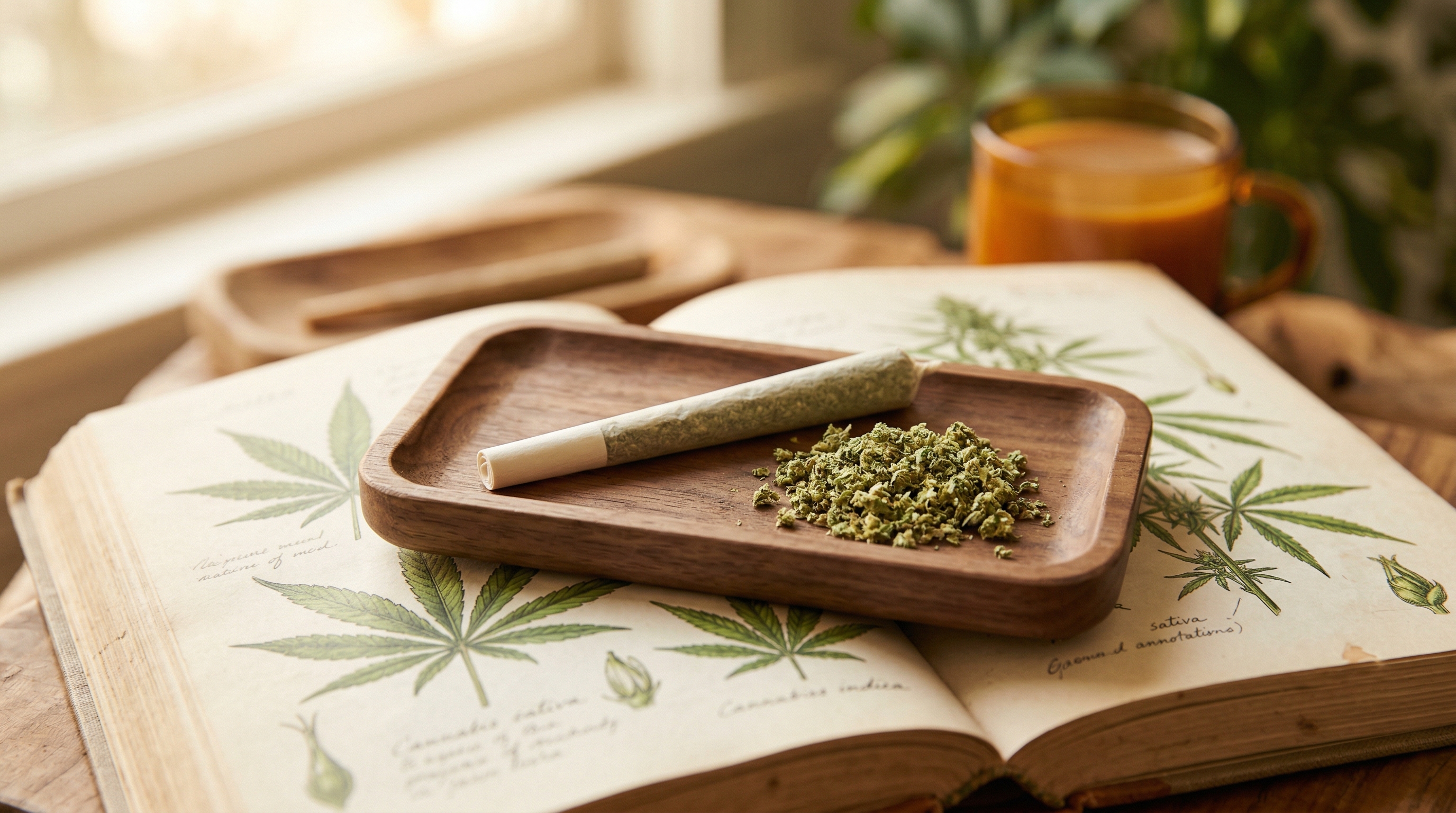
The joint is the most iconic way to smoke cannabis. It’s simply ground cannabis flower rolled in a thin paper—no tobacco involved. Rolling papers come in a variety of materials including rice, hemp, unbleached wood pulp, and even cellulose (transparent papers). Many joints include a crutch or filter tip at the mouthpiece end, which is a small rolled piece of cardboard that adds structure and prevents you from inhaling plant material.
How It Works
You grind your flower, distribute it evenly along the paper, roll it into a cylinder or cone shape, twist the end, and light up. Joints are typically the smallest of the three options, holding anywhere from a quarter gram to a full gram, though king-size papers and cones can hold more.
Because there’s no tobacco in the equation, joints give you the purest expression of your cannabis strain’s terpene and cannabinoid profile. If you’re exploring the High Families to find your ideal experience—whether that’s an Uplifting High rich in limonene or a Relaxing High loaded with myrcene—a joint is the best rolled option for tasting those differences.
Pros
- Pure cannabis flavor with no tobacco interference
- No nicotine exposure
- Easiest to roll for beginners (especially with pre-rolled cones)
- Widely available as pre-rolls at dispensaries
- Smallest commitment—great for solo sessions or microdosing
Cons
- Burns relatively quickly
- Thin paper can canoe (burn unevenly) if rolled poorly
- Holds less flower than a blunt
Ideal Use Cases
Solo sessions, flavor-focused smoking, trying a new strain, quick breaks, and anyone who wants a tobacco-free experience.
Deep Dive: The Blunt
What It Is
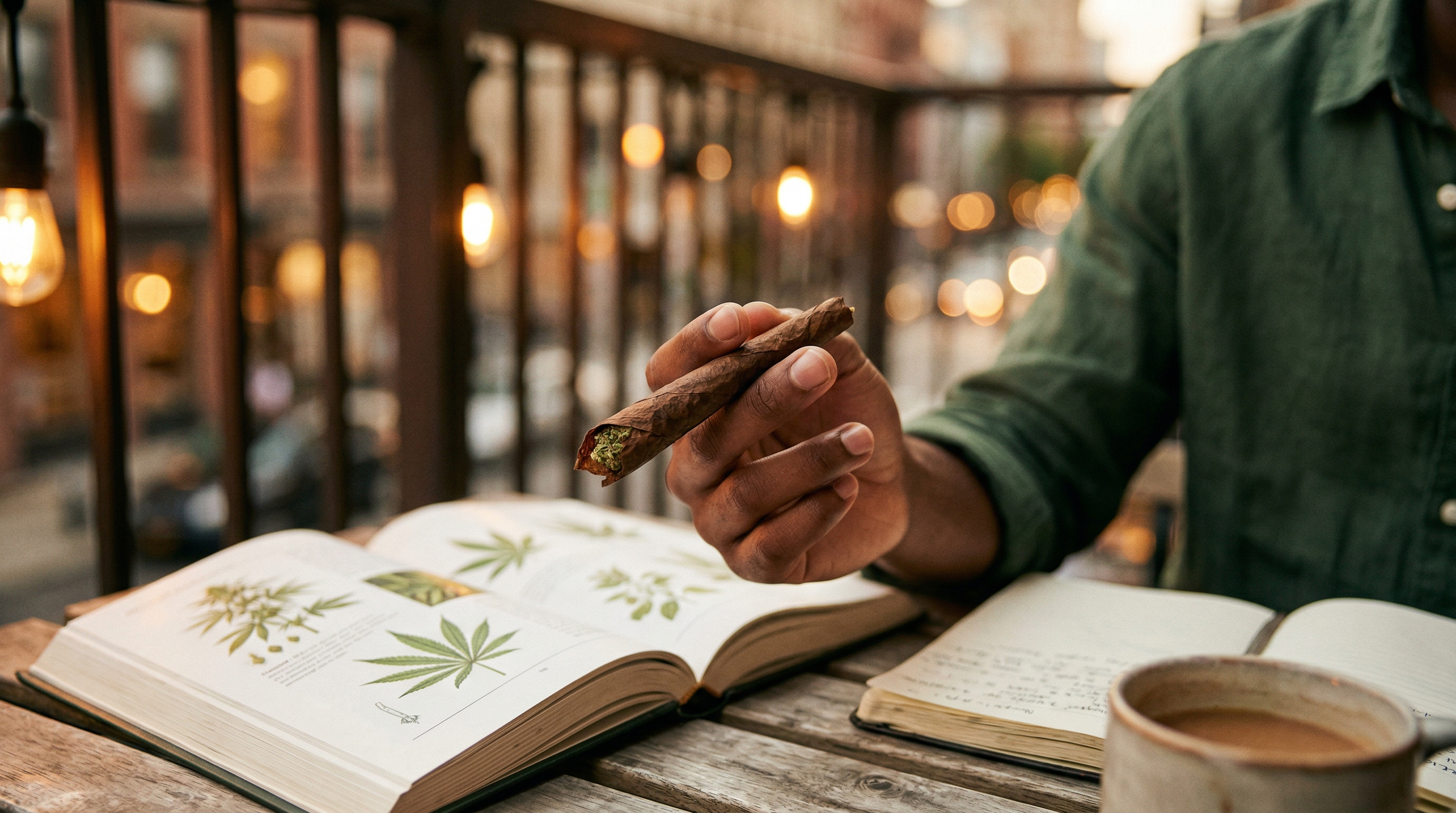
A blunt is cannabis rolled in a tobacco leaf wrap or emptied cigar shell. The name originally comes from the Phillies Blunt brand of cigars, which smokers would hollow out and refill with cannabis. Today you can buy dedicated blunt wraps made from tobacco leaf, or still go the classic route of splitting a cigarillo (like Swisher Sweets, Backwoods, or Dutch Masters).
How It Works
You either split a cigar and remove the tobacco, or unroll a blunt wrap, fill it with ground cannabis (typically 1–3 grams), and roll it back up. The thicker tobacco wrap burns much slower than thin rolling paper, giving you a longer session. The tobacco leaf also adds its own flavor and a mild nicotine buzz that some people enjoy.
Pros
- Slow, extended burn perfect for group sessions
- Holds significantly more flower
- The wrap adds a sweet, earthy flavor layer
- Sturdy and forgiving to roll—less likely to tear
- Cultural significance in hip-hop and social smoking traditions
Cons
- Contains tobacco/nicotine even though the filling is pure cannabis
- Tobacco wrap masks some of the strain’s terpene flavors
- Harsher on the lungs due to combustion of the tobacco leaf
- Uses more flower per session
- Not ideal for tasting subtle strain differences
Ideal Use Cases
Group sessions, parties, long smoke circles, outdoor hangouts, and anyone who enjoys the ritual and flavor of a tobacco wrap. If you’re less concerned with isolating your strain’s High Family profile and more focused on the social experience, blunts deliver.
Deep Dive: The Spliff
What It Is
The spliff is the hybrid option: cannabis and tobacco mixed together, then rolled in a standard thin rolling paper (the same kind used for joints). Spliffs are enormously popular in Europe, the Caribbean, and many parts of Africa and Asia, where mixing cannabis with tobacco is the cultural default. In North America, they’re less common but have a dedicated following.
How It Works
You blend ground cannabis with loose tobacco (often from a cigarette or rolling tobacco pouch) at whatever ratio you prefer—common mixes range from 70/30 cannabis-to-tobacco down to 50/50. Then you roll it just like a joint. The tobacco changes the burn rate, flavor, and the overall effect.
Pros
- Stretches your cannabis supply—you use less flower per roll
- Burns more evenly and consistently than a pure joint
- The nicotine adds a head rush and energetic buzz on top of the cannabis effects
- Familiar and comfortable for people transitioning from cigarettes
Cons
- Highest direct nicotine exposure of the three (tobacco is mixed into every hit)
- Risk of nicotine dependence with regular use
- Tobacco flavor dominates, making it harder to appreciate terpene profiles
- Not available as pre-rolls at dispensaries
- Stigma in some cannabis communities
Ideal Use Cases
Travelers in Europe or the Caribbean, tobacco users who want to combine habits, budget-conscious smokers looking to conserve flower, and anyone who enjoys the specific buzz that a cannabis-tobacco blend provides.
Head-to-Head Analysis
Effect Profile
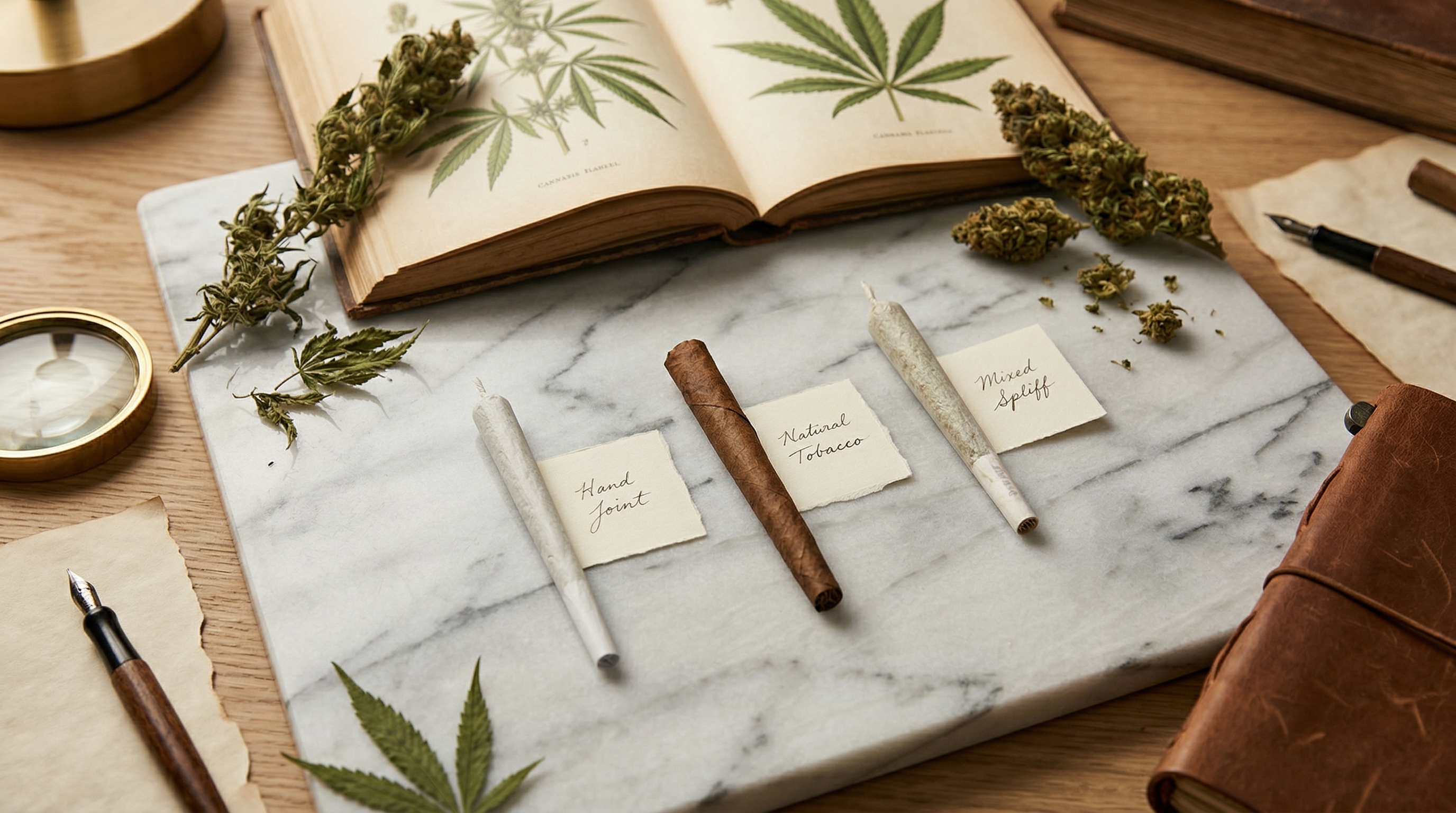
A joint delivers the cleanest cannabis experience. What you feel is determined entirely by the strain’s cannabinoid and terpene profile—its High Family. A strain from the Energetic High family will come through loud and clear in a joint.
A blunt adds a subtle nicotine layer from the tobacco wrap. Most people describe this as a slight body relaxation and head buzz layered on top of the cannabis effects. It can mellow out a very stimulating strain or add a warm heaviness to a relaxing one.
A spliff has the most noticeable nicotine impact because the tobacco is mixed directly into the flower. The initial head rush is more pronounced, and the overall experience tends to feel more energetic and buzzy—at least for the first few minutes before the cannabis effects take the lead.
Duration
Blunts win here by a wide margin. A well-rolled blunt can burn for 15–20 minutes or more, making it the go-to for group sessions. Spliffs last a bit longer than joints thanks to the tobacco’s moisture content and burn properties. Joints are the quickest smoke, typically finishing in under 7 minutes.
Accessibility and Cost
Joints are the most accessible. Rolling papers cost a dollar or two, pre-rolled cones are everywhere, and dispensary pre-rolls eliminate the need to roll at all. Blunts require cigar wraps (usually $1–3) and more flower, making them pricier per session. Spliffs are the most budget-friendly if you’re trying to conserve cannabis, since you’re replacing a portion of flower with inexpensive tobacco.
User Experience
For beginners, joints (especially pre-rolls) are the easiest entry point—no tobacco, simple mechanics, controlled dosing. Blunts have a learning curve in the rolling process but are forgiving once you get the technique down. Spliffs require you to dial in your preferred cannabis-to-tobacco ratio, which takes some experimentation.
The Verdict
Choose a Joint if…
- You want the purest cannabis flavor and effects
- You’re exploring different strains and High Families
- You avoid tobacco and nicotine entirely
- You prefer solo sessions or smaller doses
- You’re a beginner looking for the simplest option
Choose a Blunt if…
- You’re smoking with a group and want a long-lasting session
- You enjoy the flavor and ritual of a tobacco wrap
- You don’t mind low-level nicotine exposure
- You want something sturdy that won’t fall apart easily
Choose a Spliff if…
- You already use tobacco and enjoy the combined buzz
- You want to stretch your cannabis supply
- You’re traveling somewhere spliffs are the cultural norm
- You enjoy the energetic head rush nicotine adds
Consider All Three if…
You’re the kind of person who picks your experience based on the moment. A joint for tasting a new strain at home, a blunt for the weekend kickback, and a spliff when you’re abroad or feeling adventurous. There’s no wrong answer—just the right tool for the right occasion.
A note on health: All three methods involve combustion, which produces tar and irritants. If lung health is a priority, consider vaporizing or other smoke-free consumption methods. And if you choose blunts or spliffs, be mindful that regular tobacco exposure carries its own well-documented health risks.
FAQs
Is a blunt stronger than a joint?
Not inherently. The cannabis potency depends on the strain and amount used, not the wrap. However, blunts typically hold more flower (1–3g vs. 0.25–1g), so you may consume more THC in a single session. The nicotine from the tobacco wrap can also alter how the high feels, sometimes making it seem more intense.
Are spliffs common in the United States?
Less so than in Europe, where they’re the default in many countries. In the U.S., the cannabis community generally prefers pure joints or blunts. That said, spliffs have a following, particularly among people who also smoke cigarettes or who grew up in cultures where mixing is standard.
Can I use hemp wraps instead of tobacco wraps for a “blunt”?
Absolutely! Hemp wraps give you the slow burn and thickness of a blunt without any tobacco or nicotine. They’ve become increasingly popular as a middle ground—blunt-style experience, joint-level purity. Brands like High Hemp and Twisted Hemp are widely available. It’s technically a hemp wrap roll rather than a true blunt, but the experience is very similar.


