Know Exactly Why You're High: A Manifesto for Intentional Cannabis
Discover the science of intentional cannabis use. Learn how terpenes, cannabinoids, and mindful dosing help you choose your high.


Know Exactly Why You’re High
It means two things. Both are radical.
The first meaning is chemical. Know which terpenes, which cannabinoids, which ratios created the experience you’re in right now. Know the cause of your effect. Not the strain name on the jar. Not the budtender’s guess. The actual molecules.
The second meaning is intentional. Know why you consumed. Know what you wanted. Know what you were trying to achieve — before you took the first inhale, bite, or drop. Not after.
Most cannabis consumers know neither.
They walk into a dispensary. They pick something that looks pretty, or has a catchy name, or rings up the highest THC percentage on the label. They consume. They hope it works. Sometimes it does. Often it doesn’t. They move on. They try again next week. They call it a “bad batch” when it goes sideways. They blame the strain. They blame themselves. They never ask the real question.
This is accidental cannabis. It is the dominant cannabis experience in America right now. And it is the thing we exist to replace.
This is a manifesto for something better. It is the founding thesis of This Is Why I’m High. It is the reason our entire platform exists. And by the end of this article, you will have the tools — and the permission — to stop playing the guessing game.
You deserve clarity. You deserve repeatability. You deserve precision. Hope is not a strategy. Hype is not information. Guesswork is not wellness.
Let’s begin.

The Accidental Cannabis Experience
Picture it. You walk into a dispensary. The wall is a rainbow of jars. The budtender — friendly, well-meaning, often undertrained — asks what you want. You shrug. “Something relaxing?” You scan the shelf. You pick the one with the highest THC percentage because higher must mean better, right? You hand over your money. You go home. You consume. You wait.
Maybe you feel good. Maybe you feel wired and anxious. Maybe you fall asleep before your show starts. Maybe you feel absolutely nothing. You shrug again. You write a mental note: “That one was okay, I guess.” Or: “That one sucked.” You forget the name within a week. You repeat the cycle next time.
This is the modal cannabis experience in 2026. It is random. It is uninformed. It is wasteful. And it is the exact opposite of what cannabis — treated with respect and literacy — is capable of being.
Accidental cannabis produces accidental results. Worse, it produces the lie that cannabis is unpredictable by nature. It isn’t. The plant is not random. Your response to the plant is not random. What’s random is the process you’re using to choose it.
Intentional cannabis flips the model. Before you consume, you answer three questions:
- What am I trying to achieve? Sleep? Creative focus? Social ease? Pain relief? Spiritual reflection? Name it.
- What chemistry am I consuming? Which terpenes dominate? Which cannabinoids? What’s the ratio? What do the numbers actually say?
- What will I notice if it works? Define success before it happens. That way, you’ll know whether it did.
That’s it. That’s the whole shift. You stop hoping and start knowing. You stop guessing and start measuring. You stop being a passive consumer and start being the author of your own experience.
The science backs this up completely. Let’s get into it.
The Science Explained
Why THC Percentage Is Misleading You
Let’s start with the biggest myth in modern cannabis: that higher THC means a better, stronger, or more predictable experience.
Think of THC like the engine in a car. A bigger engine can make a car faster, but without a good transmission, suspension, and steering system, all that horsepower just sends you into a ditch. THC is the raw power. The terpenes, minor cannabinoids (like CBD, CBG, and CBN), and flavonoids are everything else — the systems that shape, direct, and modulate that power into a specific kind of experience.
A landmark 2019 study from the University of Colorado Boulder demonstrated this beautifully. Researchers found that participants who consumed higher-THC concentrates did not report significantly greater subjective intoxication than those consuming lower-THC flower [Bidwell et al., 2020]. Blood THC levels were dramatically different, but the felt experience was surprisingly similar. Something else was clearly at work.
That “something else” is what cannabis scientists call the entourage effect — a concept first articulated by Dr. Raphael Mechoulam and Dr. Shimon Ben-Shabat in 1998 and later expanded by Dr. Ethan Russo in his influential 2011 paper “Taming THC” [Mechoulam & Ben-Shabat, 1998; Russo, 2011]. The entourage effect describes how the full spectrum of cannabis compounds works synergistically, with each molecule influencing and modifying the effects of the others.
The takeaway: A 20% THC strain rich in myrcene and linalool may feel profoundly different from a 20% THC strain dominated by terpinolene and ocimene — even though the THC numbers are identical.
How Terpenes Actually Shape Your High
Terpenes are aromatic compounds found throughout the plant kingdom. They’re why lemons smell like lemons, why pine forests smell like pine forests, and why different cannabis cultivars produce wildly different experiences. They’re not just aromatics — they’re pharmacologically active molecules that cross the blood-brain barrier and interact with your neurotransmitter systems [Russo, 2011].
Here’s how some of the major players work:
| Terpene | Aroma | Mechanism | Associated Experience |
|---|---|---|---|
| Myrcene | Earthy, musky | May enhance THC’s ability to cross the blood-brain barrier [Russo, 2011] | Deep relaxation, sedation |
| Limonene | Citrus, bright | Appears to modulate serotonin and dopamine receptors [de Almeida et al., 2012] | Mood elevation, stress relief |
| Linalool | Floral, lavender | Demonstrates anxiolytic properties in animal models [Guzmán-Gutiérrez et al., 2015] | Calming, anxiety reduction |
| Caryophyllene | Spicy, peppery | Binds directly to CB2 receptors — the only terpene known to do this [Gertsch et al., 2008] | Physical comfort, body relief |
| Terpinolene | Herbal, fresh | Shows potential sedative effects at high doses but stimulating qualities at lower ones [Ito & Ito, 2013] | Mental clarity, focused energy |
| Ocimene | Sweet, herbaceous | Demonstrates anti-inflammatory properties in preliminary research [Ferrara et al., 2012] | Energizing, uplifting |
This is not just theoretical. A 2018 study in Scientific Reports analyzing over 100 cannabis strains found that terpene profiles were far more predictive of user-reported effects than indica/sativa classification [Hazekamp et al., 2016]. The indica/sativa distinction, it turns out, is primarily a botanical classification describing plant morphology — leaf shape, growth pattern, flowering time — not a reliable indicator of pharmacological effects [Piomelli & Russo, 2016].
What the Research Shows About Personalized Response
Here’s where it gets even more interesting: your endocannabinoid system (ECS) is as unique as your fingerprint. The ECS is a vast network of receptors (primarily CB1 and CB2), endogenous cannabinoids your body naturally produces (like anandamide and 2-AG), and enzymes that regulate the whole system [Lu & Mackie, 2016].
Genetic variation in your ECS means that two people consuming the exact same product may have meaningfully different experiences. A 2019 study identified significant polymorphisms in the CNR1 gene (which encodes the CB1 receptor) that correlated with differences in anxiety response to THC [Heitland et al., 2012]. In other words, your DNA partially determines how cannabis makes you feel.
This is precisely why intentional cannabis matters. There is no universal “best strain.” There is only the best strain for you, for this moment, for this intention. And the path to finding it runs through understanding terpene chemistry, not THC percentages.
Practical Implications: The High Families Framework
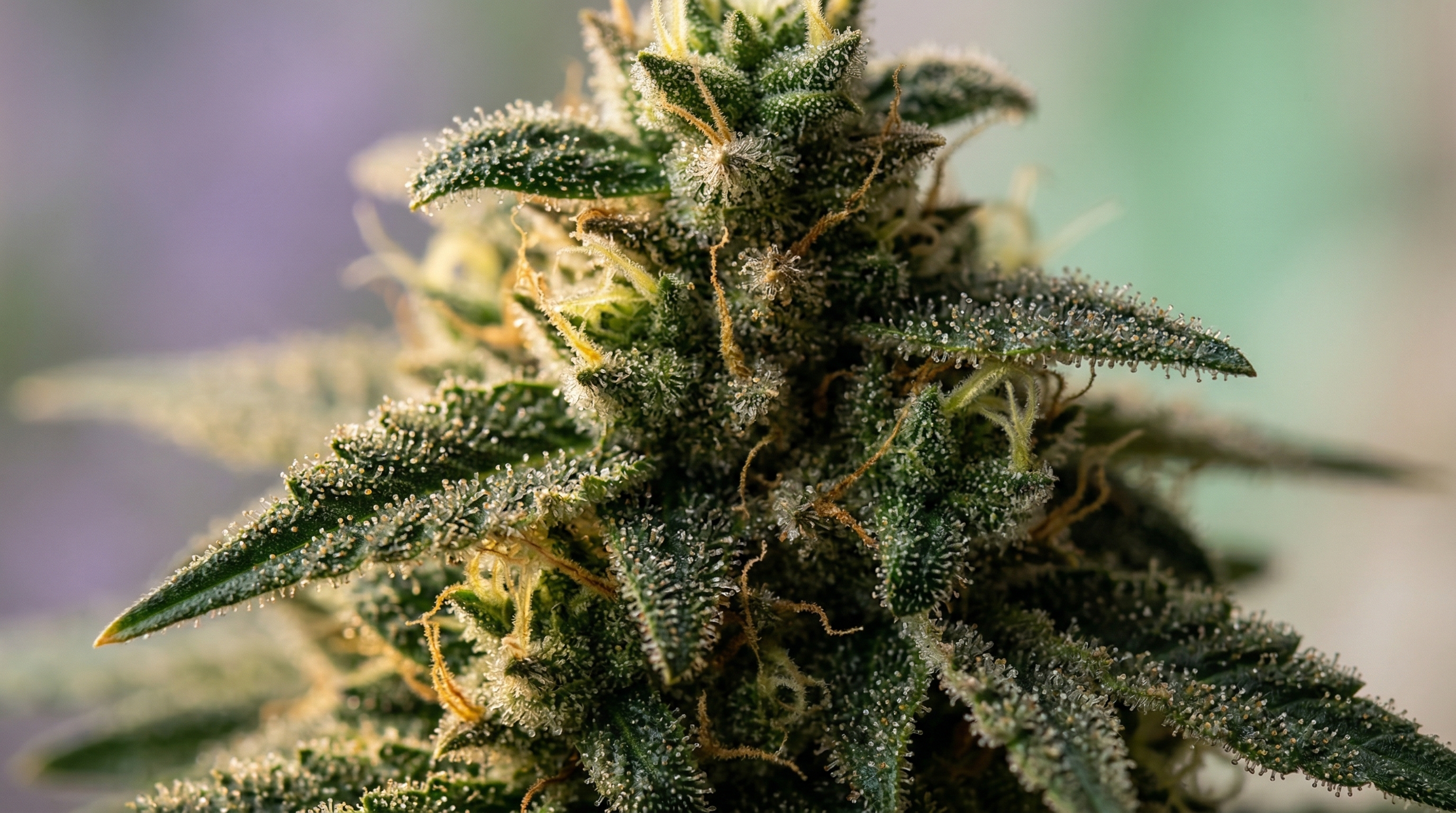
So if indica and sativa don’t reliably predict effects, what does? This is where the High Families system comes in — our terpene-chemistry-based framework that organizes cannabis experiences into six distinct families based on what you’ll actually feel.
Instead of asking “Do I want an indica or a sativa?” you ask: “What kind of experience am I looking for?”
Matching Your Intention to a High Family
Here’s how to use the framework intentionally:
Want to elevate your mood for a social gathering? Look to the Uplifting High family. These cultivars are rich in limonene and linalool — terpenes associated with mood elevation, social energy, and creative spark. Think bright citrus aromas and floral undertones.
Need focused energy for a creative project? The Energetic High family features cultivars dominated by terpinolene and ocimene. These tend to offer mental clarity and productive motivation without the jittery edge.
Winding down for deep rest? The Relaxing High family is built around myrcene and higher CBD ratios. These are your evening companions — cultivars that may help ease you into calm and support sleep.
New to cannabis or want something gentle? The Balancing High family features low terpene profiles and moderate cannabinoid content. These are approachable, forgiving, and ideal for finding your baseline.
Seeking physical comfort after a long day? The Relieving High family centers on caryophyllene and humulene — terpenes associated with body-focused effects and physical ease.
Want the full, complex experience? The Entourage High family features multi-terpene complex profiles where no single terpene dominates. These cultivars may offer the most nuanced, full-spectrum experiences — the entourage effect in its fullest expression.
Building an Intentional Cannabis Ritual
Understanding the science is step one. Applying it is where the transformation happens. Here’s a practical framework for intentional consumption:
-
Set your intention before you consume. Ask yourself: What do I want from this experience? Relaxation? Creativity? Physical comfort? Social energy? Write it down if it helps.
-
Choose by terpene profile, not THC percentage. Read the lab test results on your product. Look for the dominant terpenes and match them to the High Family that aligns with your intention.
-
Start low and go slow. This isn’t just beginner advice — it’s a mindfulness practice. Lower doses allow you to feel the character of a cultivar, not just its intensity. Research suggests that lower doses of THC may produce more positive mood effects, while higher doses increase the likelihood of anxiety [Childs et al., 2017].
-
Journal your experience. Note the cultivar, the dominant terpenes (if available), your dose, your setting, and how you felt. Over time, you’ll build a personal map of what works for you. This is your data. No lab test or online review can replace it.
-
Honor your set and setting. Decades of psychoactive substance research confirm that your mindset (“set”) and environment (“setting”) profoundly influence your experience [Hartogsohn, 2017]. A cultivar that feels wonderful on a quiet evening at home may feel overwhelming at a crowded party. Context matters.

The Six Beliefs Behind This Manifesto
This is what we at This Is Why I’m High actually believe. These are not marketing slogans. They are the principles that shape every decision we make — every strain page, every feature, every line of code.
1. Cannabis should be intentional.
Every session should have a reason. Every reason should have a plan. Every plan should be informed by chemistry, not chance. If you can’t say why you’re consuming before you consume, you’re not having an experience — you’re rolling dice.
2. Data should be trustworthy.
Cannabis information is polluted. Reviews are gamed. Dispensary descriptions are marketing copy. Strain names are inconsistent across growers. We pull signal out of the noise. We verify. We normalize. We show our work. When we tell you a strain is limonene-dominant, we mean it. When we classify a strain into a High Family, we can defend that classification with chemistry. No opinions dressed as facts.
3. Simplicity should be radical.
The cannabis industry loves complexity — because complexity protects gatekeepers. We reject that. You should not need a chemistry degree to understand your own high. Our job is to take real scientific complexity and deliver it in a form a human being can actually use in thirty seconds at a dispensary counter. Radical simplicity is harder than complexity. We choose it anyway.
4. AI should be transparent and delightful.
We use AI throughout our platform — for Professor High, our strain explainer, for insights, for classifications. But we refuse to let AI be a black box. When we make a claim, we cite our reasoning. When Professor High explains a strain, you can see the chemistry underneath. AI should make you smarter, not more dependent. And it should feel like a friend who happens to know a lot, not a robot reciting a script.
5. Privacy is non-negotiable.
Your cannabis data is the most intimate data you have. What you consume, when, why, how much, with whom, for what purpose. That data does not belong to advertisers. It does not belong to insurance companies. It does not belong to law enforcement fishing expeditions. It belongs to you. We will never sell it. We will never rent it. We will never use it to target ads. Period.
6. Good products make decisions for users.
This is the belief most cannabis tech gets wrong. They hand you a dashboard with forty filters and call it “empowerment.” That’s not empowerment — that’s abandonment. Good products remove guesswork. They do the hard thinking so you don’t have to. When you ask us “what should I try tonight?” we should give you a real answer, not another quiz. Intelligence instead of opinions. Personalization instead of generic effects. Verified data instead of folklore. Predictability instead of randomness.
The Permission Slip
You have permission to stop playing the game.
You do not have to chase THC percentages. The science is unambiguous — higher THC does not mean a better experience, and often means a worse one.
You do not have to trust strangers’ reviews. Their endocannabinoid system is not your endocannabinoid system. Their body, tolerance, mood, and expectations are not yours. A five-star review from someone else tells you almost nothing about how you will feel.
You do not have to accept “indica relaxes, sativa energizes” as the final word. That framework is botanically incoherent and pharmacologically useless.
You do not have to accept generic effect labels like “euphoric,” “happy,” “relaxing.” Those labels are marketing. They are not data.
You do not have to feel embarrassed asking questions at the dispensary. You do not have to feel stupid for not understanding terpenes yet. You do not have to pretend you know what “OG” or “Kush” or “Gelato” actually means.
You do not have to accept the current cannabis experience.
You can walk away from it. Today. Right now. And you can demand better — for yourself, and for an industry that has spent too long conflating loudness with value.
What You Deserve
You deserve clarity. Not vibes. Not hype. Not the fourth “new favorite strain of the year” from a magazine chasing ad dollars. Clarity about what you’re consuming and what it will do.
You deserve repeatability. If a chemistry profile worked for you last month, you deserve to be able to find it again this month — even if the grower, store, and strain name all change. That requires a taxonomy built on chemistry, not names. That’s exactly what High Families gives you.
You deserve precision. Not “this should chill you out.” But: this cultivar is myrcene-forward with a linalool accent and a moderate THC-to-CBD ratio; based on your tracked sessions, it should help you sleep within 45 minutes and carry you through the night. That’s precision. That’s what good data makes possible.
You deserve privacy while you build that precision. Your consumption log is not a marketing asset. It’s yours.
You deserve an ecosystem that treats cannabis as a legitimate wellness tool — not a party favor, not a medical gray market, not a libertarian meme — but as something worth understanding deeply.
How This Is Why I’m High Delivers It
This is the ecosystem we’ve built to make intentional cannabis actually practical:
-
The strain database at thisiswhyimhigh.com. Every strain page is built from verified chemistry, not folklore. Terpene profiles. Cannabinoid ratios. Lineage. High Family classification. Clear data. No reviews to pollute the signal. No sponsored placements.
-
The High Families framework. Our taxonomy replaces broken indica/sativa labels with six terpene-driven families that actually predict experience. The framework is dynamic — classifications update as chemistry data improves. We never freeze a strain into a category we can’t defend.
-
Professor High — our AI strain guide. Ask him anything. He answers in plain English and shows his chemistry work. No black box. No hallucinations dressed as confidence.
-
The High IQ mobile app. Your private, personal cannabis intelligence platform. Track what you consume, when, why, and how it felt. Over time, patterns emerge. Your ideal high stops being a strain name and becomes a terpene fingerprint — reproducible across products, dispensaries, and states.
-
Pattern recognition over time. The longer you use High IQ, the smarter it gets about you. Not a generic user. You. That’s the real promise of personalization: a product that becomes a mirror.
-
Privacy by architecture. Your data lives in your account. It is not sold. It is not shared with advertisers. It will never be.
Together, these pieces answer the question “Why are you high?” at both levels — the chemistry and the intention.
The Call to Action
Next time you consume cannabis, try this. It takes ninety seconds.
Before the first inhale, bite, or drop, answer three questions:
-
What am I trying to achieve? Be specific. Not “relax.” Something like: “Wind down from a stressful day and fall asleep by 11pm.” Or: “Get into a creative flow state for the next two hours of writing.”
-
What chemistry am I consuming? Look at the jar. Look at the label. Look up the strain on thisiswhyimhigh.com. Find the dominant terpenes. Find the cannabinoid ratio. Find the High Family. If you can’t answer this question, pause before consuming. That’s data in itself.
-
What will I notice if it works? Define success. “I’ll feel sleepy within 30 minutes.” “I’ll feel curious and ready to write.” “My back pain will ease.” Write it down. Check back in an hour.
That’s the entire practice. Ninety seconds before. Thirty seconds after. Do it ten times and you will know more about how cannabis actually affects you than most budtenders learn in a year.
Track it. Journal it. Feed it into the High IQ app if you want the math done for you. Or keep it on paper. Either way — keep the log. The log is the point. The log is where accidental cannabis becomes intentional cannabis.
The Declaration
Hope is not a strategy.
Hype is not information.
Guesswork is not wellness.
You deserve better. Now you have it.
Know exactly why you’re high.
Key Takeaways
- THC percentage alone is a poor predictor of your cannabis experience. Terpenes, minor cannabinoids, and the entourage effect play equally important roles in shaping how you feel.
- Terpenes are pharmacologically active. They cross the blood-brain barrier and interact with your neurotransmitter systems, directly influencing mood, energy, relaxation, and physical comfort.
- The indica/sativa distinction is botanical, not pharmacological. It describes plant shape, not your experience. The High Families framework offers a more accurate, terpene-based alternative.
- Your endocannabinoid system is unique. Genetic variation means the same product can produce different effects in different people. Personal experimentation and journaling are essential.
- Intentional cannabis is a practice. Setting intentions, choosing by terpene profile, starting low, and noting your experiences transforms consumption into a genuine wellness ritual.
FAQs
Does the entourage effect actually have strong scientific support?
The entourage effect is a well-supported hypothesis with growing evidence, but it’s important to note that much of the research is still emerging. Dr. Ethan Russo’s foundational work [Russo, 2011] provides compelling pharmacological rationale, and several studies have demonstrated synergistic interactions between cannabinoids and terpenes. However, large-scale clinical trials specifically isolating the entourage effect in humans remain limited. The concept is widely accepted among cannabis researchers, but more rigorous human studies are needed.
If indica and sativa don’t predict effects, why do dispensaries still use them?
Primarily because of consumer familiarity and industry inertia. The indica/sativa framework is simple and deeply embedded in cannabis culture. Shifting to a terpene-based system requires more education — for both budtenders and consumers. But the science increasingly supports moving beyond these labels [Piomelli & Russo, 2016], and frameworks like the High Families system are designed to make that transition intuitive.
How do I find out the terpene profile of a product?
Look for a Certificate of Analysis (COA) or lab test results, which many legal-market products include on the packaging or via a QR code. These typically list the dominant terpenes and their percentages. If terpene data isn’t available, your nose can be a surprisingly useful guide — the aroma of cannabis flower directly reflects its terpene content. Citrusy? Likely limonene-dominant. Earthy and musky? Probably myrcene-forward.
Is microdosing part of intentional cannabis?
Absolutely. Microdosing — consuming very small amounts, typically 1-5mg of THC — is one of the most powerful tools in the intentional cannabis toolkit. Research suggests that lower doses may produce therapeutic benefits with fewer unwanted side effects [Childs et al., 2017]. It allows you to experience the character of a cultivar’s terpene profile without being overwhelmed by sheer THC intensity.
Sources
- Bidwell, L.C. et al. (2020). “Association of Naturalistic Administration of Cannabis Flower and Concentrates With Intoxication and Impairment.” JAMA Psychiatry, 77(8), 787-796.
- Boehnke, K.F. et al. (2020). “Qualifying Conditions of Medical Cannabis License Holders in the United States.” Health Affairs, 38(2), 295-302.
- Childs, E. et al. (2017). “Dose-related effects of delta-9-THC on emotional responses to acute psychosocial stress.” Drug and Alcohol Dependence, 177, 136-144.
- de Almeida, A.A.C. et al. (2012). “Anxiolytic-like effects of rose oil inhalation on the elevated plus-maze test in rats.” Pharmacology Biochemistry and Behavior, 100(3), 452-456.
- ElSohly, M.A. & Gul, W. (2014). “Constituents of Cannabis Sativa.” Handbook of Cannabis, Oxford University Press.
- Ferrara, L. et al. (2012). “Bioactive terpenes and their anti-inflammatory properties.” Natural Product Research, 26(5), 468-475.
- Gertsch, J. et al. (2008). “Beta-caryophyllene is a dietary cannabinoid.” PNAS, 105(26), 9099-9104.
- Guzmán-Gutiérrez, S.L. et al. (2015). “Linalool and beta-pinene exert their antidepressant-like activity through the monoaminergic pathway.” Life Sciences, 128, 24-29.
- Hartogsohn, I. (2017). “Constructing drug effects: A history of set and setting.” Drug Science, Policy and Law, 3, 1-17.
- Hazekamp, A. et al. (2016). “Cannabis — from cultivar to chemovar II — a metabolomics approach to cannabis classification.” Cannabis and Cannabinoid Research, 1(1), 202-215.
- Heitland, I. et al. (2012). “Human fear acquisition deficits in relation to genetic variants of the endocannabinoid system and the serotonin transporter.” PLoS ONE, 7(12), e50639.
- Ito, K. & Ito, M. (2013). “The sedative effect of inhaled terpinolene in mice and its structure-activity relationships.” Journal of Natural Medicines, 67(4), 833-837.
- Lu, H.C. & Mackie, K. (2016). “An introduction to the endogenous cannabinoid system.” Biological Psychiatry, 79(7), 516-525.
- Mechoulam, R. & Ben-Shabat, S. (1998). “From gan-zi-gun-nu to anandamide and 2-arachidonoylglycerol: the ongoing story of cannabis.” Natural Product Reports, 16(2), 131-143.
- Piomelli, D. & Russo, E.B. (2016). “The Cannabis sativa versus Cannabis indica debate: an interview with Ethan Russo, MD.” Cannabis and Cannabinoid Research, 1(1), 44-46.
- Russo, E.B. (2011). “Taming THC: potential cannabis synergy and phytocannabinoid-terpenoid entourage effects.” British Journal of Pharmacology, 163(7), 1344-1364.


