Landrace Strains: Original Cannabis Genetics That Started It All
Explore landrace cannabis strains—the ancient genetics from Afghanistan to Thailand that shaped every modern hybrid you love today.

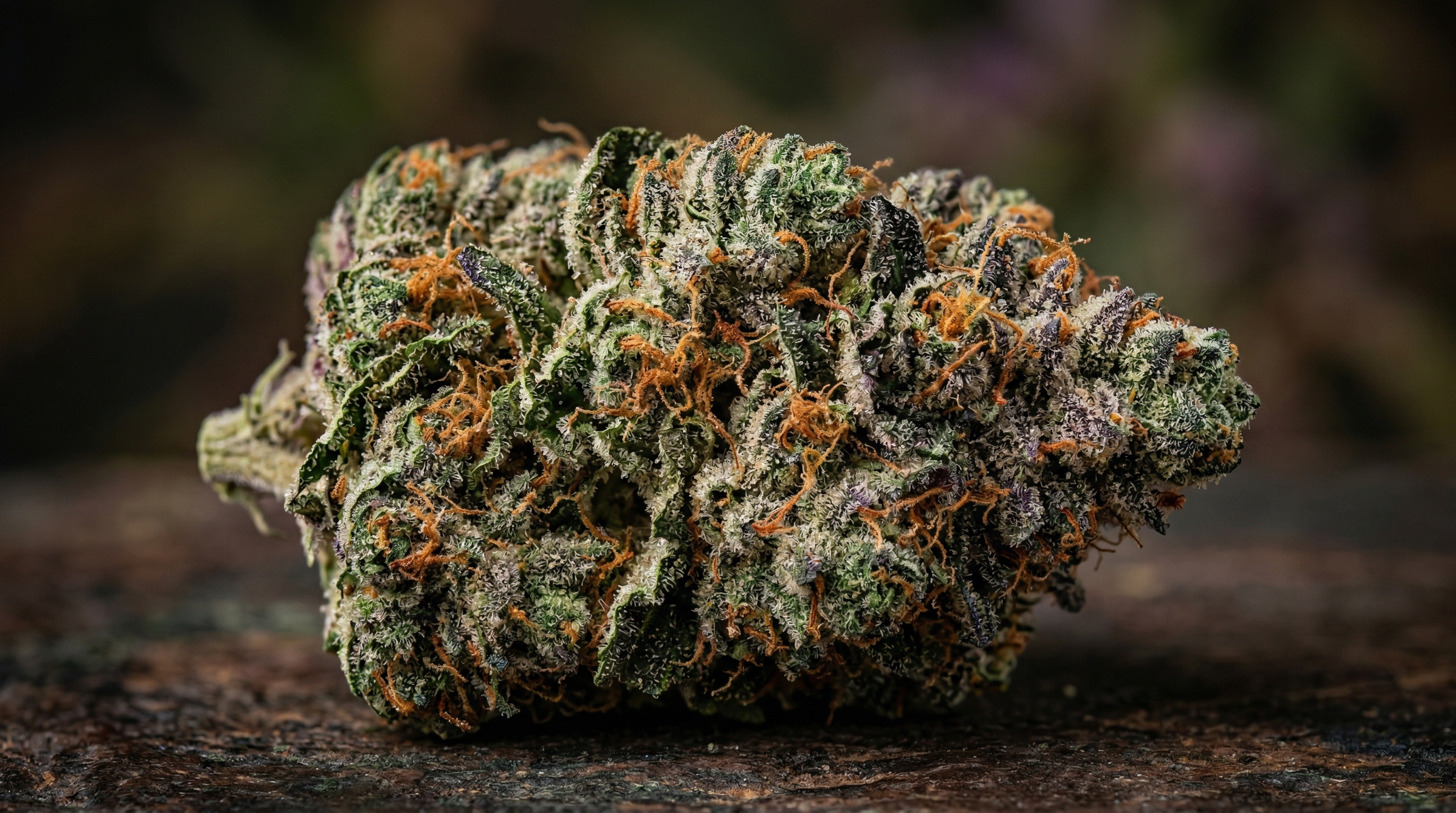
Before Hybrids, Before Dispensaries, There Was the Land
Here’s a fact that might rearrange your brain: every single strain sitting on dispensary shelves today—every Gelato, every OG Kush, every exotic cookie-flavored hybrid—traces its genetic lineage back to a handful of wild cannabis populations that evolved over thousands of years in specific pockets of the planet. These are landrace strains, the original cannabis genetics, and they’re the living ancestors of the modern cannabis world.
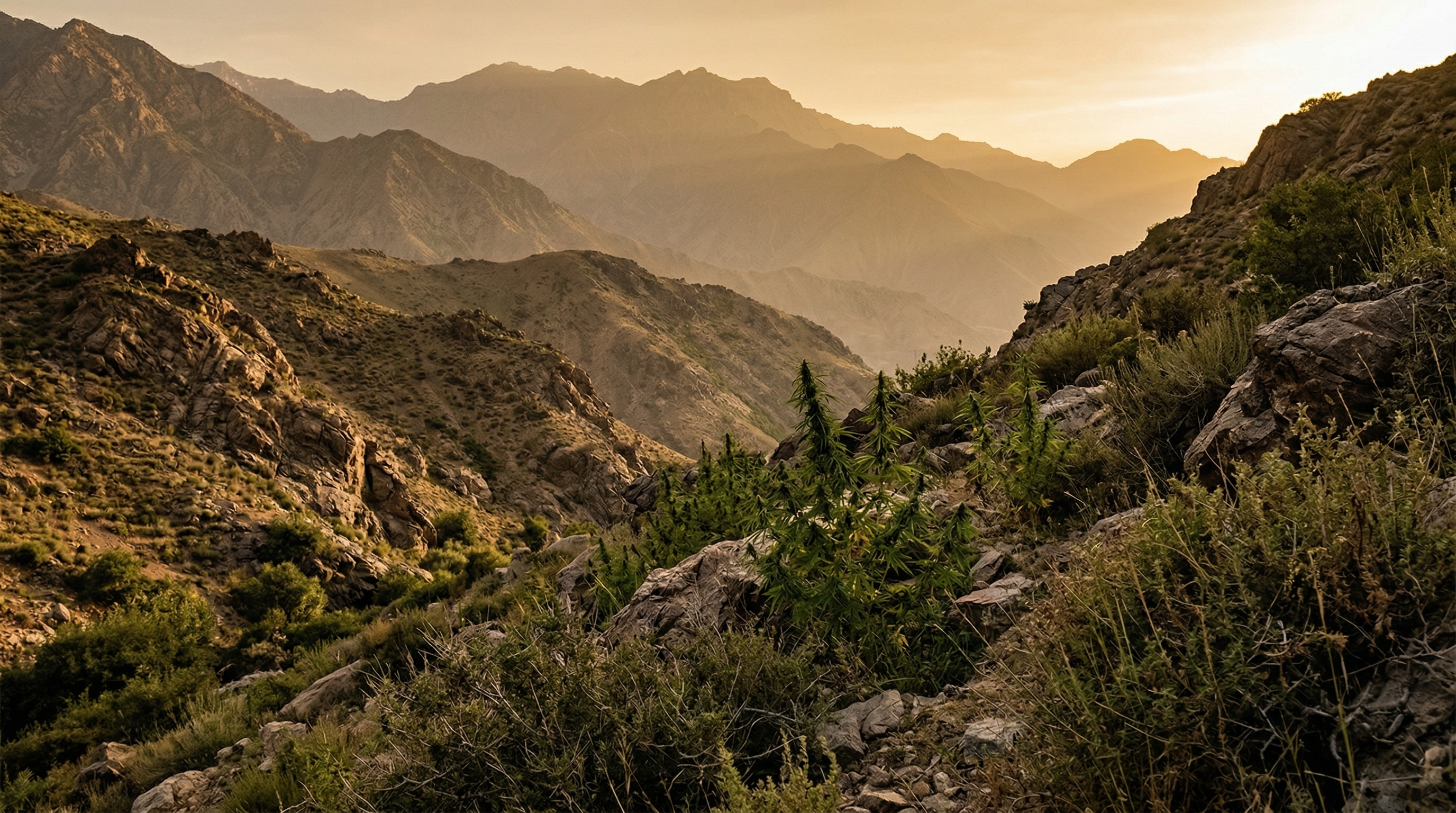
Imagine a world without breeders, without seed banks, without Instagram drops. For millennia, cannabis grew wild and semi-cultivated across Central Asia, the Hindu Kush mountains, equatorial Africa, and Southeast Asia. Each population adapted to its local climate, soil, altitude, and photoperiod over countless generations, developing unique chemical profiles, growth patterns, and effects. These weren’t “strains” in the way we use the word today—they were regional ecotypes, shaped not by human design but by natural selection and local cultivation traditions.
Why should you care? Because understanding landrace genetics is the key to understanding why modern cannabis does what it does. The terpene profiles you love, the cannabinoid ratios that define your favorite experiences, the growth structures that breeders manipulate—all of it started here. Landrace strains are the genetic foundation, the source code. And as the cannabis industry races toward hybridization and novelty, these ancient genetics are becoming increasingly rare and scientifically valuable.
In this deep dive, we’ll explore what makes a landrace strain a landrace, where the major lineages originated, what the science tells us about their unique chemistry, and why they matter for the future of cannabis—including how they connect to the High Families you already know and love.
The Science Explained
What Exactly Is a Landrace Strain?
The term landrace comes from agriculture, not cannabis specifically. A landrace is any domesticated plant (or animal) variety that has developed over time through adaptation to its natural and cultural environment—as opposed to being deliberately bred for specific traits. In genetics, landraces occupy a fascinating middle ground: they’re not truly wild (humans have influenced their cultivation for centuries), but they’re not modern cultivars either.
Think of it like the difference between a wolf, a village dog, and a purebred poodle. Landrace cannabis is the village dog—shaped by its environment and loosely guided by human hands, but not subjected to the intense selective breeding that produces today’s designer hybrids.
What makes landrace strains genetically distinct is their relative stability and regional specificity. A population of cannabis growing in the Rif Mountains of Morocco for hundreds of years will have developed consistent traits—particular terpene ratios, cannabinoid profiles, flowering times, and morphological features—that differ meaningfully from a population growing in the highlands of Oaxaca, Mexico.
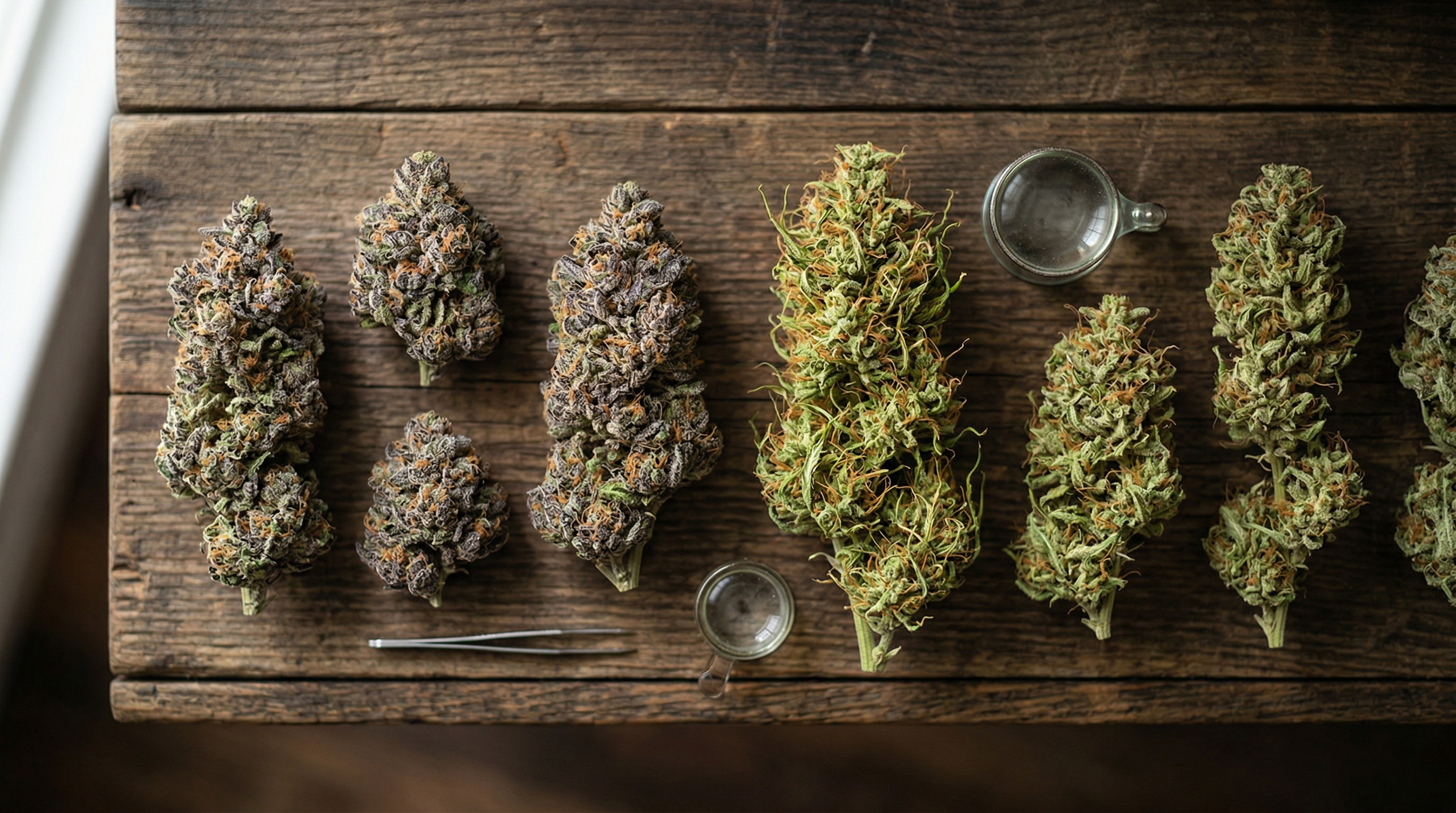
Research by McPartland and Guy (2017) has helped clarify the taxonomic picture, distinguishing between Cannabis sativa populations that evolved in warm, equatorial climates (producing taller plants with longer flowering cycles) and Cannabis indica populations from the Hindu Kush and surrounding regions (producing shorter, bushier plants with faster flowering). Importantly, these are botanical classifications based on morphology and origin—not the oversimplified “sativa = energizing, indica = sedating” framework you’ll hear at dispensaries.
Key distinction: When scientists use sativa and indica, they’re describing plant morphology and geographic origin. When dispensaries use those terms, they’re (inaccurately) describing effects. Landrace genetics remind us that terpene and cannabinoid profiles—not plant shape—drive the experience.
The Major Landrace Regions and Their Chemistry
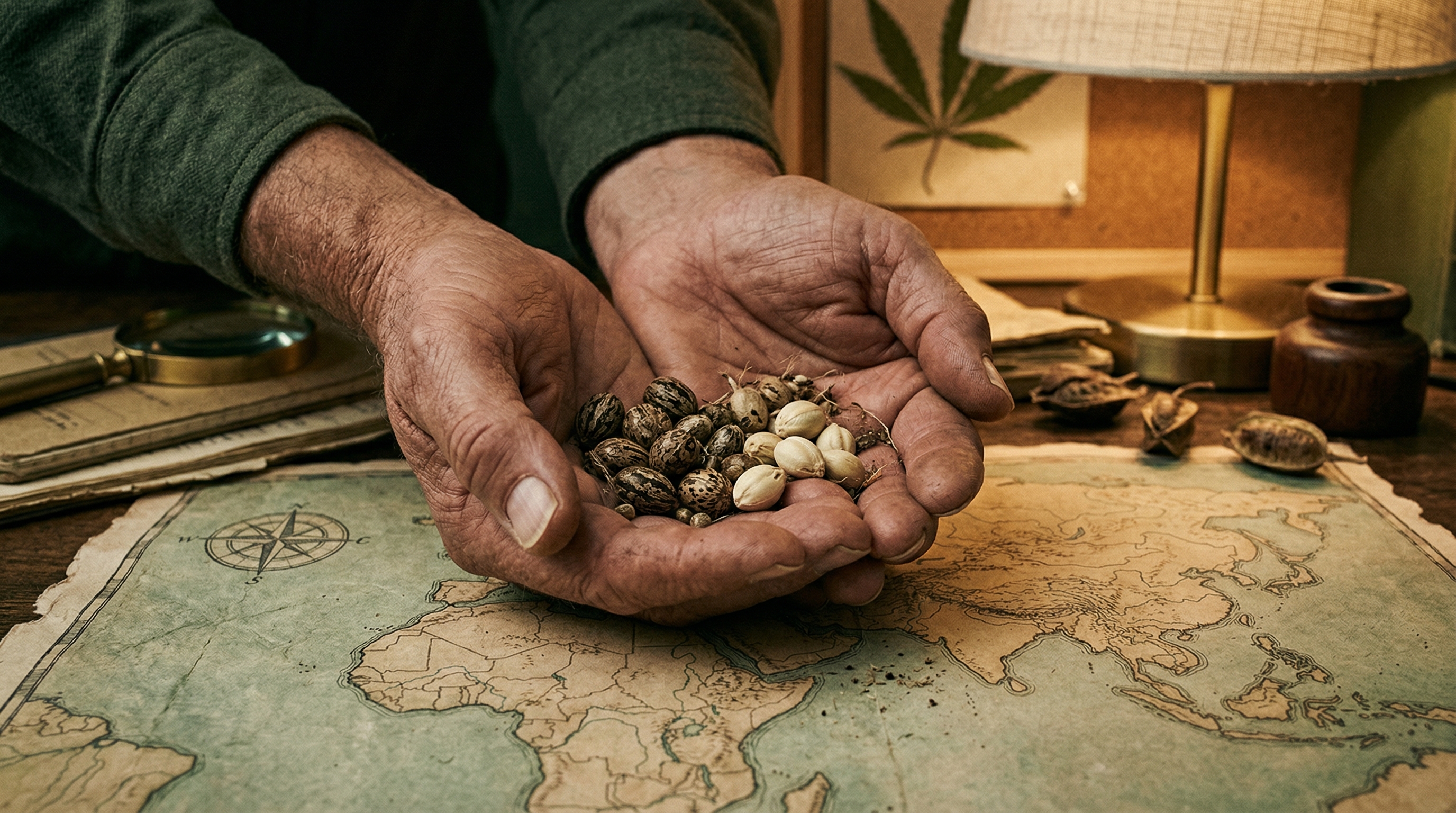
Cannabis likely originated in Central Asia, with recent genomic analysis suggesting the Tibetan Plateau region as a probable center of origin [Ren et al., 2021]. From there, both natural dispersal and human migration carried cannabis genetics across the globe. Over centuries, distinct regional populations emerged:
Hindu Kush Region (Afghanistan, Pakistan, Northern India) These are the classic broad-leaf, resin-heavy populations. Plants tend to be compact with dense flower structures and high myrcene and caryophyllene content. Afghan landraces are the backbone of most modern indica-leaning hybrids and are strongly associated with the Relaxing High and Relieving High families. Their heavy resin production evolved as a UV-protection mechanism at high altitudes [Small, 2015].
Equatorial Southeast Asia (Thailand, Laos, Cambodia) Thai and other Southeast Asian landraces are tall, narrow-leafed plants with extended flowering periods (sometimes 14-20 weeks). They tend toward higher terpinolene and limonene profiles with more complex, cerebral effects. Classic Thai Stick genetics align closely with the Energetic High and Uplifting High families.
Central and South America (Colombia, Mexico, Jamaica) Colombian Gold, Acapulco Gold, and Jamaican Lamb’s Bread represent equatorial sativa-type landraces with moderate THC levels and rich terpene diversity. These populations often feature limonene, ocimene, and linalool, contributing to the Uplifting High experience that defined cannabis culture in the 1960s and 70s.
Africa (Durban, Malawi, Congo) African landraces—particularly Durban Poison from South Africa—are prized for their energizing, clear-headed effects. Durban Poison is notable for its high terpinolene content, placing it firmly in the Energetic High family. These genetics have been foundational in breeding lines like Girl Scout Cookies and Cherry Pie.
Central Asia and the Middle East (Lebanon, Nepal, India) Lebanese Red and Gold, Nepalese Highland, and various Indian charas-producing populations round out the major landrace groups. These often show balanced cannabinoid ratios (including meaningful CBD content) and complex terpene profiles that fit the Entourage High and Balancing High families.
What the Research Shows About Landrace Chemistry
Modern analytical chemistry has given us powerful tools to understand what makes landrace genetics special. A landmark study by Vergara et al. (2021) analyzed the genomic diversity of cannabis and found that landrace populations contain significantly greater genetic diversity than modern commercial cultivars. This matters enormously—genetic diversity is the raw material for breeding, and it correlates with chemical diversity.
Lynch et al. (2016) demonstrated that terpene profiles are highly heritable and region-specific. Afghan landraces consistently produce different terpene ratios than Thai landraces, even when grown in identical conditions. This tells us that the chemical signatures of landrace strains are genetically encoded, not just environmentally driven.
Perhaps most intriguingly, research by Mudge et al. (2019) found that many landrace populations produce cannabinoid ratios that are rare in modern commercial cannabis. While dispensary shelves are dominated by high-THC, low-CBD varieties, landraces frequently show balanced THC:CBD ratios, meaningful levels of minor cannabinoids like CBC and CBG, and terpene profiles that may enhance the entourage effect.
This chemical complexity is exactly what the Entourage High family describes—a multi-terpene, multi-cannabinoid experience where the whole is greater than the sum of its parts. Ethan Russo’s influential work on the entourage effect [Russo, 2011] suggests that these complex chemical profiles may produce more nuanced, well-rounded experiences than the THC-dominant monocultures that dominate modern breeding.
The irony: In our rush to breed the highest-THC strains possible, we may have inadvertently narrowed the chemical diversity—and therefore the experiential range—of commercial cannabis. Landrace genetics represent a reservoir of chemical complexity that modern breeding has largely left behind.
The Genetic Bottleneck Problem
Here’s where the science gets urgent. Cannabis breeding over the past 50 years has created what geneticists call a genetic bottleneck. When breeders repeatedly cross a small number of elite cultivars (Skunk #1, Northern Lights, Haze, OG Kush), genetic diversity narrows with each generation. Sawler et al. (2015) found that many commercially available “distinct” strains are genetically near-identical, despite having different names.
This is a problem for several reasons:
- Reduced chemical diversity means fewer unique cannabinoid and terpene combinations
- Increased vulnerability to pests and diseases (genetic uniformity is a monoculture risk)
- Lost traits that could be valuable for medical research or novel consumer experiences
- Homogenization of the cannabis experience—everything starts to feel the same
Landrace conservation efforts, like those undertaken by seed banks such as the Afghan Seed Bank and organizations documenting heirloom genetics, are attempting to preserve these ancient gene pools before they’re lost to hybridization and habitat destruction.
Practical Implications
What Landrace Genetics Mean for Your Cannabis Experience
So how does all this ancient genetics science connect to what you’re actually smoking, vaping, or eating? More directly than you might think.
Understanding your preferences through ancestry. If you’ve ever wondered why you gravitate toward certain effects, landrace genetics offer a clue. Love the clear-headed focus of Durban Poison or Jack Herer? You’re responding to terpinolene-dominant genetics rooted in African and Southeast Asian landraces—the Energetic High family. Prefer the deep physical relaxation of Afghan Kush or Northern Lights? You’re enjoying the myrcene-rich legacy of Hindu Kush landraces, the Relaxing High family. Knowing the landrace ancestry of your favorite strains helps you make smarter choices.
Seeking out landrace or heirloom strains. If you can find them, pure or near-pure landrace strains offer a genuinely different experience from modern hybrids. The effects tend to be less intense but more nuanced—lower THC percentages paired with richer terpene and minor cannabinoid profiles. Many experienced consumers describe landrace highs as “cleaner,” “more clear,” or “more balanced.” This aligns with what we know about the entourage effect: complex chemical profiles may produce more refined experiences.
Using the High Families to navigate landrace-influenced strains. Even if you can’t find a pure Durban Poison or Afghan landrace, understanding which High Family those genetics belong to helps you find modern strains that carry their legacy:
| Landrace Origin | Key Modern Descendants | High Family |
|---|---|---|
| Afghan / Hindu Kush | Northern Lights, Bubba Kush, Hash Plant | Relaxing High |
| Thai | Haze, Super Silver Haze, Chocolope | Energetic High |
| Colombian | Skunk #1, AK-47 | Uplifting High |
| Durban (South Africa) | Girl Scout Cookies, Cherry Pie | Energetic High |
| Mexican (Oaxacan) | Original Haze genetics | Uplifting High |
| Nepalese / Indian | Various charas-influenced lines | Entourage High |
Supporting genetic preservation. As a consumer, you can vote with your wallet. Seek out breeders and seed companies that work with landrace genetics. Ask your dispensary about strain lineage. The more market demand exists for genetic diversity, the more incentive there is to preserve these irreplaceable gene pools.
Key Takeaways
- Landrace strains are regionally adapted cannabis populations that evolved over centuries in specific climates—they’re the genetic ancestors of every modern hybrid.
- Their chemical profiles are more complex than most modern strains, often featuring balanced cannabinoid ratios and diverse terpene combinations that may enhance the entourage effect.
- Modern breeding has created a genetic bottleneck, reducing the chemical and experiential diversity of commercial cannabis—landrace preservation is essential to reversing this trend.
- The High Families system maps directly to landrace origins: Afghan genetics align with the Relaxing High, Thai and African genetics with the Energetic High, and multi-origin landraces with the Entourage High.
- You can experience landrace influence today by understanding strain lineage and choosing varieties that preserve these ancient genetic signatures.
FAQs
Can I still buy pure landrace strains?
Yes, but they’re increasingly rare. Specialty seed banks like Ace Seeds, The Real Seed Company, and Afghan Selection offer authenticated landrace genetics. Some dispensaries carry landrace or near-landrace strains like Durban Poison, Afghan Kush, or Lamb’s Bread—though purity varies. Always ask about sourcing and lineage.
Are landrace strains less potent than modern hybrids?
In terms of raw THC percentage, generally yes. Most landraces test between 10-18% THC, compared to 25-35% for modern hybrids. However, potency isn’t just about THC. Landrace strains often contain richer terpene profiles and more balanced cannabinoid ratios, which may produce a more nuanced, well-rounded experience through the entourage effect [Russo, 2011].
Is the indica/sativa distinction based on landrace origins?
The botanical distinction is, yes. Botanists use Cannabis sativa and Cannabis indica to describe different morphological types that evolved in different regions. But the effect-based use of these terms at dispensaries (“sativa = uplifting, indica = sedating”) is an oversimplification that doesn’t hold up scientifically. Terpene and cannabinoid profiles—which the High Families system is built around—are far better predictors of experience than indica/sativa labels.
Why are landrace strains disappearing?
Three main reasons: hybridization (crossing landraces with modern


