Meet Professor High: Your Pineapple-Wearing Guide to Cannabis Science
Meet Professor High, the friendly cannabis scientist who translates complex research into knowledge you can actually use.


Why Does a Pineapple Wear a Lab Coat?
Here’s a question that might keep you up at night: there are over 30,000 published research papers on cannabis in the PubMed database, with hundreds more dropping every single month [National Library of Medicine, 2024]. That’s more reading material than any human could reasonably consume in a lifetime—and most of it is written in the kind of dense, jargon-heavy academic language that makes your eyes glaze over faster than a poorly rolled joint in a windstorm.
So who’s actually reading all of this stuff? Who’s sifting through randomized controlled trials, terpene chromatography data, and endocannabinoid receptor binding studies so that you can make better decisions about what you consume, how you consume it, and why it makes you feel the way it does?
That would be me. Professor High. The pineapple-wearing scientist mascot of This Is Why I’m High.
Now, you might be wondering why a pineapple. We’ll get to that. But first, let me tell you what I actually do here—because it’s more than just a fun avatar and a catchy name. My job is to take the best available cannabis science, strip away the academic gatekeeping, and hand you clear, honest, evidence-based knowledge that actually improves your relationship with this remarkable plant.
No hype. No pseudoscience. No “this strain cures everything” nonsense. Just real research, translated into real language, for real people.
In this article, I’m pulling back the curtain. You’ll learn why cannabis science literacy matters more than ever, how the research landscape has evolved from prohibition-era darkness to a genuine scientific renaissance, and how our unique High Families system was born from the very terpene research I spend my days reading. Consider this your origin story—and your invitation to geek out with me.

The Science Explained
Why Cannabis Science Literacy Actually Matters
Let’s start with a hard truth: the cannabis industry has a misinformation problem.
Walk into most dispensaries and you’ll hear confident claims about strains being “indica” or “sativa”—a classification system that genetic research has largely debunked. A landmark study by researchers at Dalhousie University found that the chemical profiles of cannabis labeled “indica” versus “sativa” overlapped so significantly that the labels were essentially meaningless from a biochemical standpoint [Watts et al., 2021]. Another study published in Nature Plants reinforced this, showing that commercial strain names often don’t correspond to consistent genetic or chemical identities [Schwabe & McGlaughlin, 2019].
Yet these myths persist. Why? Because for decades, cannabis research was strangled by prohibition. In the United States, cannabis has been classified as a Schedule I substance since 1970, meaning the federal government considered it to have “no accepted medical use” and a “high potential for abuse.” This classification didn’t just make cannabis illegal—it made cannabis research nearly impossible [National Academies of Sciences, 2017].
Scientists who wanted to study cannabis had to jump through extraordinary bureaucratic hoops. For years, all federally approved research cannabis came from a single farm at the University of Mississippi—and studies consistently showed that this government-grown cannabis bore little chemical resemblance to what people were actually consuming [Vergara et al., 2017]. Imagine trying to study wine by only tasting grape juice from one vineyard. That’s essentially what happened.
The result? A massive knowledge gap between what science could tell us and what consumers actually knew. Into that gap rushed marketing claims, bro-science, and well-meaning but unsupported folk wisdom.
What the Research Actually Shows (When You Read It)
The good news is that the research landscape has transformed dramatically in the last decade. Here’s what the science is actually revealing:
The Endocannabinoid System Is Real and Important
In 1988, researchers at St. Louis University discovered the first cannabinoid receptor in the brain (CB1), and in 1993, a second receptor (CB2) was found throughout the immune system [Devane et al., 1988; Munro et al., 1993]. We now know that humans have an entire endocannabinoid system (ECS)—a vast network of receptors, enzymes, and endogenous cannabinoids that helps regulate mood, pain, appetite, sleep, immune function, and more [Lu & Mackie, 2016].
Think of the ECS like a dimmer switch for your body’s various systems. It doesn’t turn things on or off—it modulates. It helps keep you in balance. And when you consume cannabis, the plant’s cannabinoids interact with this system in complex, dose-dependent ways.
Terpenes Aren’t Just About Smell
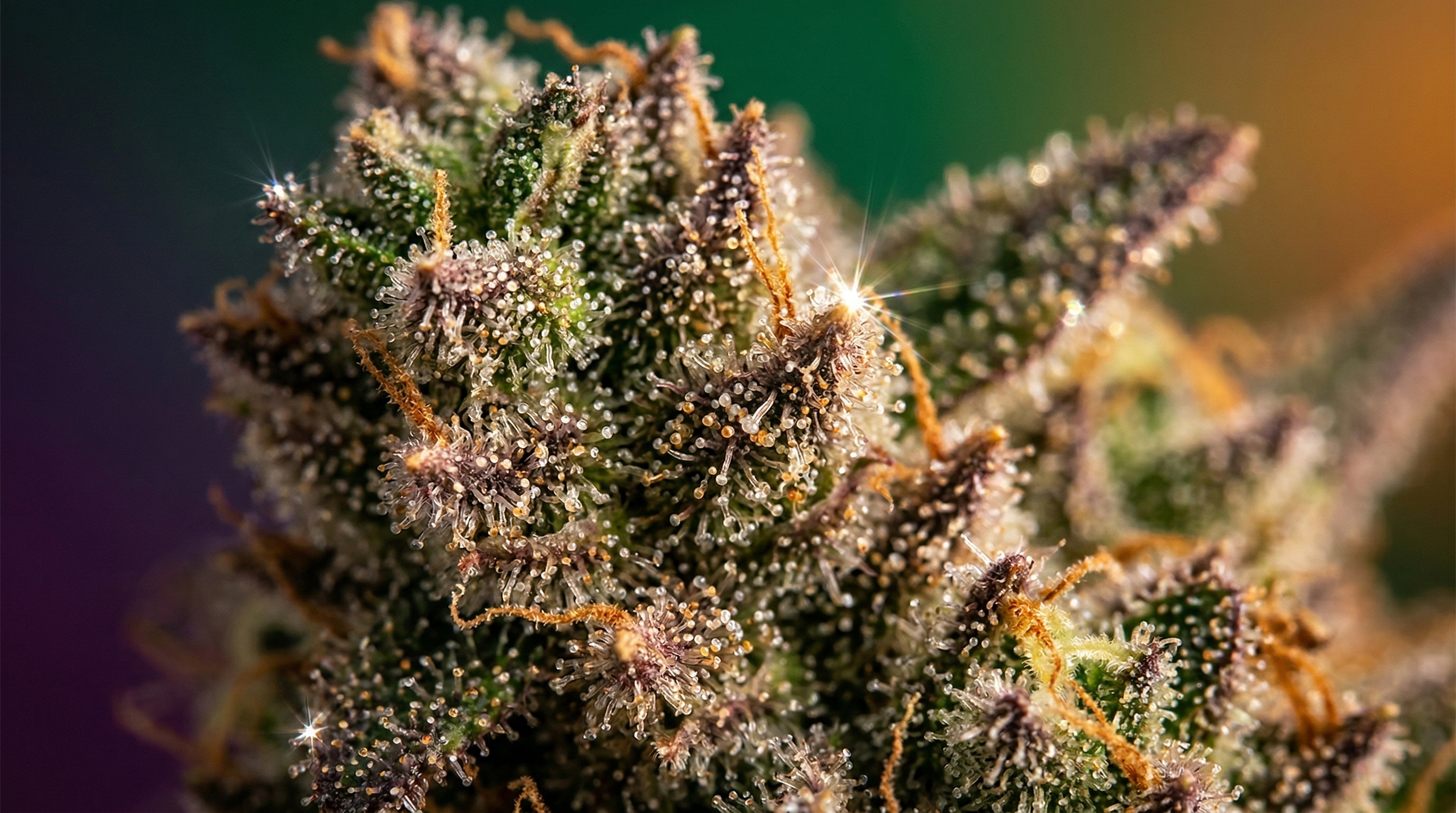
This is where things get really exciting. Terpenes—the aromatic compounds that give cannabis (and all plants) their distinctive scents—appear to do far more than just make your flower smell like lemons or pine trees.
Dr. Ethan Russo’s influential 2011 paper in the British Journal of Pharmacology proposed that terpenes work synergistically with cannabinoids to modulate the cannabis experience, a concept known as the entourage effect [Russo, 2011]. Limonene, for instance, may have mood-elevating properties. Myrcene may enhance the sedative qualities of THC. Beta-caryophyllene actually binds directly to CB2 receptors, making it functionally a cannabinoid itself [Gertsch et al., 2008].
More recent research has continued to build on this foundation. A 2020 study in Scientific Reports found that cannabis extracts with diverse terpene profiles produced different pharmacological effects than pure THC alone, supporting the idea that the whole plant offers something that isolated compounds cannot [LaVigne et al., 2021].
THC Percentage Isn’t Everything
Perhaps the most practically important finding for everyday consumers: chasing the highest THC percentage on the shelf is a bit like choosing wine solely by alcohol content. A 2020 study from the University of Colorado found no significant correlation between THC levels and the intensity of subjective intoxication [Bidwell et al., 2020]. Participants who consumed higher-THC cannabis didn’t report feeling meaningfully more impaired than those consuming lower-THC products.
What did seem to matter? The full chemical profile—cannabinoids, terpenes, flavonoids, and their interactions.
How High Families Were Born From the Research
This is where my reading habit becomes your practical tool.
After spending years reviewing terpene research, cannabinoid studies, and consumer experience data, a pattern became clear: the most reliable way to predict how a cannabis product might make you feel isn’t the strain name, the indica/sativa label, or the THC percentage. It’s the terpene profile.
That insight became the foundation of the High Families classification system—the framework that makes This Is Why I’m High different from every other cannabis resource out there.
Instead of outdated categories, we organize cannabis experiences into six families based on terpene chemistry:
| High Family | Key Terpenes | What You Might Experience |
|---|---|---|
| Uplifting High | Limonene, Linalool | Mood elevation, social energy, creative spark |
| Energetic High | Terpinolene, Ocimene | Focused productivity, mental clarity |
| Relaxing High | Myrcene, high CBD | Deep calm, wind-down, sleep support |
| Balancing High | Low terpene profiles | Gentle, approachable, beginner-friendly |
| Relieving High | Caryophyllene, Humulene | Physical comfort, body-focused relief |
| Entourage High | Multi-terpene complex | Full-spectrum, layered, nuanced |
This isn’t marketing. It’s applied science. When research shows that limonene may elevate mood [Russo, 2011] and linalool may reduce anxiety-like behavior in animal models [Guzmán-Gutiérrez et al., 2015], it makes sense to group strains rich in those terpenes into an Uplifting High family. When caryophyllene activates CB2 receptors associated with inflammation modulation [Gertsch et al., 2008], it belongs in the Relieving High family.
The bottom line: High Families give you a science-backed vocabulary for describing what you’re actually looking for—instead of relying on labels that don’t mean what you think they mean.
Every time I read a new study, I’m asking the same question: How does this help someone choose the right cannabis experience for them? That’s the lens through which all of this research gets filtered before it reaches you.
Practical Implications: How This Changes Your Cannabis Experience
So what does all of this mean for you, the person who just wants to enjoy cannabis thoughtfully and intentionally? Here’s where the rubber meets the road.
Stop Chasing THC Numbers
The research is clear: higher THC doesn’t automatically mean a better or stronger experience [Bidwell et al., 2020]. Next time you’re at a dispensary, ask about the terpene profile instead. Look for products that list their dominant terpenes on the label. If they don’t? That’s a red flag about transparency.
Use High Families as Your Compass
Instead of asking “Do you want indica or sativa?”—a question that even geneticists say is misleading—ask yourself: What kind of experience am I looking for?
- Want to be social and creative at a gathering? Explore the Uplifting High family.
- Need to focus on a project? Check out the Energetic High family.
- Winding down for sleep? The Relaxing High family is your friend.
- New to cannabis entirely? Start with the Balancing High family for gentle, approachable effects.
Embrace “Start Low, Go Slow”
This isn’t just a slogan—it’s supported by pharmacological research on dose-response curves. Cannabis effects are biphasic, meaning low and high doses can produce opposite effects. A small amount of THC may reduce anxiety, while a large amount may increase it [Childs et al., 2017]. Finding your personal sweet spot requires patience, not bravado.
Stay Curious, Stay Skeptical
If someone tells you a specific strain “cures” something, that’s a claim that goes far beyond what current research supports. Cannabis science is exciting and promising, but it’s also young. Most studies are preclinical (meaning they were done in labs or on animals, not in large human trials). I’ll always tell you what the evidence actually says—including when the honest answer is “we don’t know yet.”

Key Takeaways
- Cannabis science has exploded in the last decade, but most consumers never see the research. That’s the gap Professor High exists to fill.
- Indica vs. sativa labels are scientifically unreliable. Genetic and chemical research shows these categories don’t predict effects the way most people assume [Watts et al., 2021].
- Terpenes are key players in shaping your cannabis experience. The entourage effect—the synergy between cannabinoids and terpenes—appears to be a real and meaningful phenomenon [Russo, 2011].
- The High Families system translates terpene science into a practical, intuitive framework for choosing cannabis experiences that match your intentions.
- THC percentage alone is a poor predictor of experience quality or intensity. The full chemical profile matters far more [Bidwell et al., 2020].
FAQs
Is the entourage effect actually proven?
The entourage effect is strongly supported by preclinical research and observational evidence, but it hasn’t been definitively proven in large-scale human clinical trials yet. Dr. Russo’s foundational work [2011] and subsequent studies [LaVigne et al., 2021] provide compelling evidence that cannabinoids and terpenes interact synergistically. The scientific consensus is moving toward acceptance, but more human research is needed.
Why should I trust High Families over indica/sativa?
High Families are based on terpene chemistry—measurable, testable compounds with documented pharmacological properties. Indica and sativa are botanical classifications that describe plant shape, not chemical content. Multiple genetic studies have shown that the chemical profiles of plants labeled indica and sativa overlap significantly [Watts et al., 2021; Schwabe & McGlaughlin, 2019]. Terpene-based classification is simply more aligned with what the science tells us.
Does Professor High have real scientific credentials?
Think of Professor High as the editorial voice of This Is Why I’m High—a character who represents our commitment to evidence-based cannabis education. Every claim made under this byline is backed by peer-reviewed research, properly cited, and written with intellectual honesty. We distinguish between what’s established, what’s emerging, and what we simply don’t know yet. The pineapple lab coat is metaphorical. The research rigor is very real.
Why a pineapple?
The pineapple has been a symbol of hospitality, welcome, and community for centuries. In cannabis culture, it’s also become an icon of friendliness and good vibes (you might recognize it from certain corners of the internet). For us, it represents the idea that science should be welcoming—not intimidating. Knowledge is better when it’s shared generously, and that’s exactly what Professor High is here to do.
Sources
- Bidwell, L.C., et al. (2020). “Association of Naturalistic Administration of Cannabis Flower and Concentrates With Intoxication and Impairment.” JAMA Psychiatry. PMID: 32520316
- Childs, E., et al. (2017). “Dose-related effects of delta-9-THC on emotional responses to acute psychosocial stress.” Drug and Alcohol Dependence. PMID: 28359914
- Devane, W.A., et al. (1988). “Determination and characterization of a cannabinoid receptor in rat brain.” Molecular Pharmacology. PMID: 2848184
- Gertsch, J., et al. (2008). “Beta-caryophyllene is a dietary cannabinoid.” Proceedings of the National Academy of Sciences. PMID: 18574142
- Guzmán-Gutiérrez, S.L., et al. (2015). “Linalool and β-pinene exert their antidepressant-like activity through the monoaminergic pathway.” Life Sciences. PMID: 25772744
- LaVigne, J.E., et al. (2021). “Cannabis sativa terpenes are cannabimimetic and selectively enhance cannabinoid activity.” Scientific Reports. PMID: 33879807
- Lu, H.C., & Mackie, K. (2016). “An Introduction to the Endogenous Cannabinoid System.” Biological Psychiatry. PMID: 26698193
- Munro, S., et al. (1993). “Molecular characterization of a peripheral receptor for cannabinoids.” Nature. PMID: 7689702
- National Academies of Sciences, Engineering, and Medicine. (2017). The Health Effects of Cannabis and Cannabinoids: The Current State of Evidence and Recommendations for Research.
- Russo, E.B. (2011). “Taming THC: potential cannabis synergy and phytocannabinoid-terpenoid entourage effects.” British Journal of Pharmacology. PMID: 21749363
- Schwabe, A.L., & McGlaughlin, M.E. (2019). “Genetic tools weed out misconceptions of strain reliability in Cannabis sativa.” Nature Plants. DOI: 10.1186/s12863-019-0814-0
- Vergara, D., et al. (2017). “Compromised External Validity: Federally Produced Cannabis Does Not Reflect Legal Markets.” Scientific Reports. PMID: 28272394
- Watts, S., et al. (2021). “Cannabis labelling is associated with genetic variation in terpene synthase genes.” Nature Plants. DOI: 10.1038/s41477-021-01003-y


