Polyploid Cannabis: The Breeding Breakthrough Rewriting 2026 Genetics
Tetraploid cannabis plants carry double the chromosomes of normal plants. Here's what polyploid breeding actually does to potency, terpenes, and your flower.

Professor High

Why Your Strawberry Is a Genetic Experiment
Before we talk cannabis, let us talk strawberries. The average garden strawberry you put in a smoothie — Fragaria × ananassa — has eight complete sets of chromosomes. Eight. That is four times the genetic load of its wild ancestors, which carried only two sets. Botanists call this condition polyploidy: “many sets,” from the Greek polys and ploid.
Here is the surprising part: polyploidy is not rare in nature. It is everywhere. Modern wheat is hexaploid — six chromosome sets. Bananas are triploid. Cultivated oats are hexaploid. Seedless watermelons you bring to the barbecue are triploids, engineered specifically so the plant cannot form viable seeds. The entire history of agricultural plant improvement is essentially a history of humans accidentally and deliberately manipulating chromosome counts to produce bigger, more chemically complex, higher-yielding crops.
Cannabis, by comparison, has been playing it conservative. The plant is naturally diploid — two sets of chromosomes, which in cannabis adds up to 20 total (2n = 2x = 20). That is the baseline that has powered the entire modern cannabis industry. But starting around 2019 and accelerating hard through 2025, a small number of researchers and breeders began asking a very reasonable question: what happens if we give cannabis more chromosomes?
The answer, it turns out, is complicated — and genuinely interesting.
Cannabis Ploidy 101
To understand what breeders are actually doing, you need to know three terms.
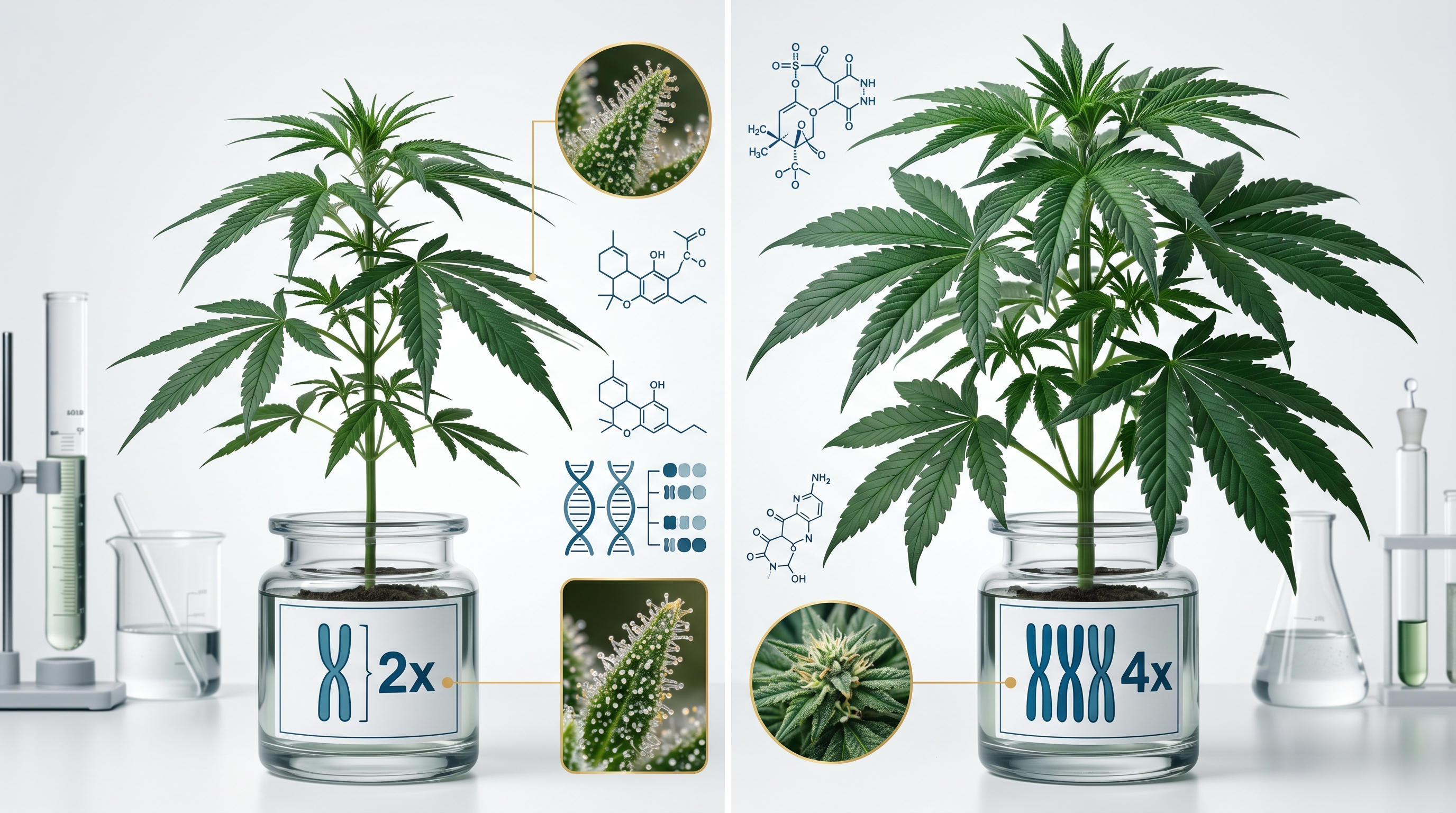
Diploid (2x): This is standard cannabis. Two chromosome sets, 20 chromosomes total. Every landrace, every OG Kush, every modern hybrid you have ever smoked is almost certainly a diploid. The plant is fully fertile — it produces seeds naturally when female flowers are pollinated by a male.
Tetraploid (4x): Four chromosome sets, 40 chromosomes. A tetraploid cannabis plant is created artificially — more on how in a moment — and it behaves differently from a diploid in a number of measurable ways. It is larger. Its leaves are wider. Its stomata are bigger but less densely packed. Most importantly for breeders, it is partially fertile, which makes it a stepping stone.
Triploid (3x): Three chromosome sets, 30 chromosomes. A triploid is produced by crossing a tetraploid parent with a diploid parent. The resulting plant inherits an uneven number of chromosomes — an odd set that cannot divide cleanly during reproduction. The result is a plant that is effectively sterile. Almost no seeds. Think of it as the cannabis version of a seedless watermelon.
This is why breeders care so much about tetraploids — not just for what tetraploid plants produce directly, but because tetraploids are the factory that makes triploids possible. And triploid cannabis, for reasons we will get into, is increasingly considered the end goal of this whole enterprise.
How Polyploid Induction Works
You cannot convince a cannabis plant to double its chromosomes by asking nicely. The process requires chemical intervention at the cellular level.
The classic approach uses colchicine, a compound derived from the autumn crocus (Colchicum autumnale). Colchicine works by disrupting the spindle fibers inside a dividing cell — specifically the protein structures that normally pull chromosomes apart during mitosis. When colchicine is applied to shoot tips or seeds at the right concentration (typically 0.1–0.2% w/v solutions), some cells complete their DNA replication but fail to divide. The result is cells with twice the normal chromosome count. Repeat that across enough cells during early development and you get a tetraploid plant.
A more refined alternative is oryzalin, a herbicide at high concentrations but a highly effective spindle inhibitor at very low concentrations. The landmark 2019 review in Frontiers in Plant Science by Mansouri and Bagheri documented that oryzalin works at over 30 times lower concentration than colchicine — typically 20–40 micromolar solutions — reducing toxicity to the plant significantly [Frontiers in Plant Science, 2019]. For cannabis researchers, this has become the preferred lab method.
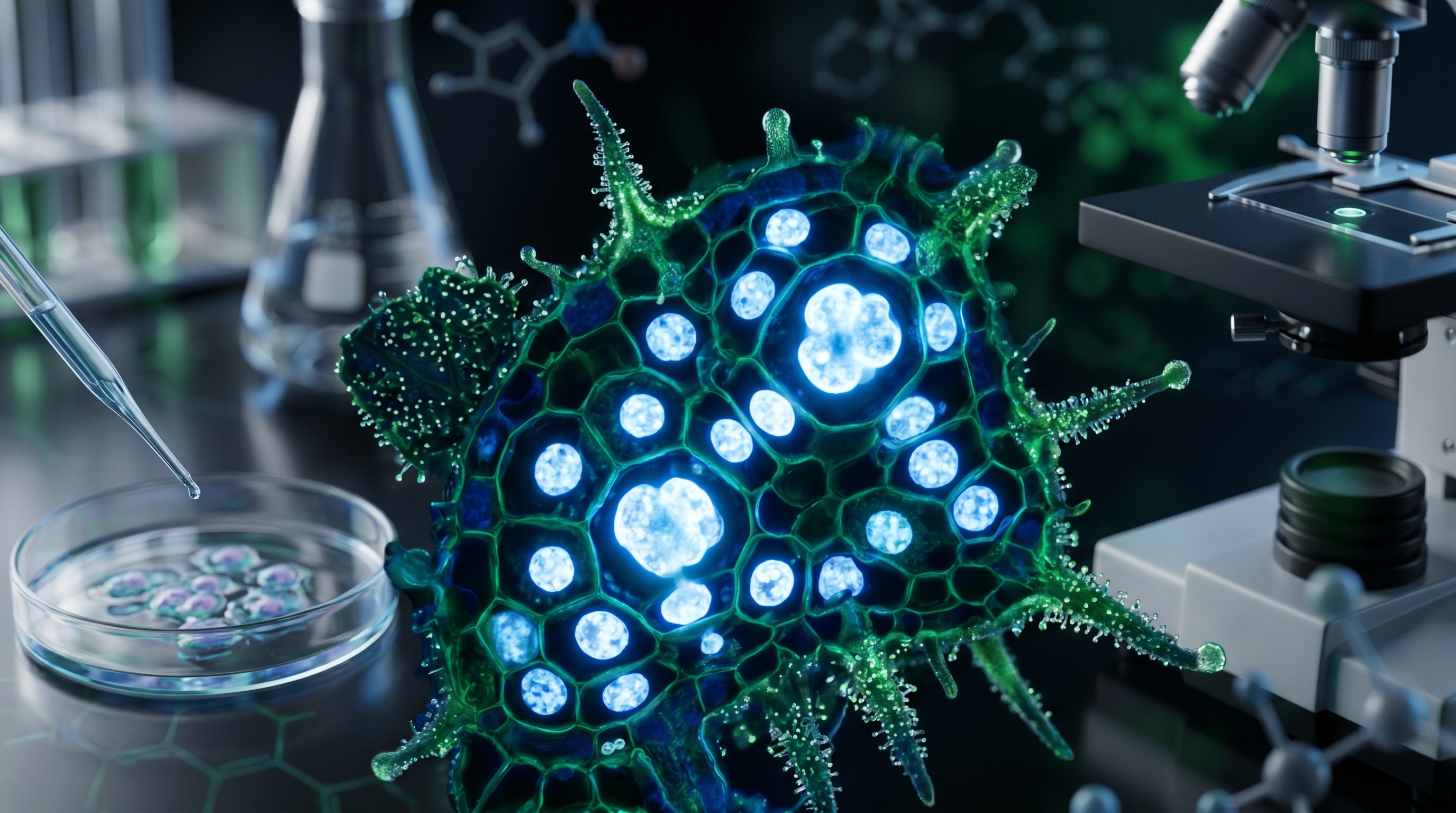
Once treated, breeders use flow cytometry — a technique that measures the DNA content of individual cells by flooding them with fluorescent dye — to screen which plants actually doubled. Not all treated plants become stable tetraploids. Some become mixoploids: plants with a mix of diploid and tetraploid cells, which are less useful commercially.
The best-performing tetraploids are then selected, propagated, and crossed with elite diploid lines to produce triploid seeds.
What the Studies Actually Show
Here is where we need to be honest with you: the science is more nuanced than the headlines suggest.
The most frequently cited benefit of tetraploid cannabis is increased trichome density. Research published in Frontiers in Plant Science found that tetraploid sugar leaves carry approximately 40% more trichomes than their diploid counterparts [Frontiers in Plant Science, 2019]. Since trichomes are where cannabinoids and terpenes are synthesized, that is a meaningful structural change.
Terpene data is more variable. The same Frontiers study measured a 71.5% increase in total terpene content in leaves of tetraploid plants — driven largely by sesquiterpenes, with cis-nerolidol showing a 1.92-fold increase. New compounds appeared that were absent in diploids entirely, including α-bisabolol in tetraploid leaves. However, a more recent 2023 study in the same journal, examining four cultivars side by side, found that triploids showed a consistent 21.89% decrease in total volatile content, while tetraploid responses were sharply cultivar-dependent — two cultivars showed increases, two showed decreases [Frontiers in Plant Science, 2023].
Cannabinoid findings follow a similar pattern. The Frontiers 2019 study found a significant 9% increase in CBDA in tetraploid buds (rising from 64.16 to 69.89 mg/g). THC-dominant cultivars showed minimal changes in THCA. Meanwhile, a 2023 multi-cultivar study found total cannabinoids actually decreased across ploidy levels when averaged across all four cultivars — from 21.59% in diploids to 18.51% in tetraploids.
What does this mean for you as a consumer? It means polyploidy is not a magic potency switch. The genetic background of the plant matters enormously. Some cultivars respond to chromosome doubling with measurably richer chemistry. Others do not. Breeders are actively trying to identify which elite lines respond positively — and those are the genetics worth watching.
What Tetraploid Does to the Plant
Walk into a room with mature tetraploid cannabis and you might notice something before you check any lab results. The plants look different.
Tetraploid cannabis plants tend to grow taller and wider than their diploid parents. One multi-cultivar study measured average tetraploid height at 71.38 cm versus 61.54 cm for diploids. Leaf dimensions increase correspondingly — leaflets that were 11.6 cm long in diploid plants grew to 13.21 cm in tetraploids, and width expanded from 3.17 cm to 4.09 cm [Frontiers in Plant Science, 2023].
Stomata — the tiny pores on leaf surfaces through which plants breathe — are about 30% larger in tetraploids but roughly half as dense, a classic polyploid signature seen across species from wheat to potato. This affects gas exchange and water uptake in ways that can make tetraploid plants both more resource-intensive and more sensitive to environmental stress.
Flowering time tends to slow. This is a tradeoff breeders have to manage carefully: bigger plant, potentially richer chemistry, but longer time to harvest — which matters enormously in licensed commercial grows operating on tight schedules.
Why Breeders Actually Care About Triploids More
If tetraploids are a mixed bag chemically, why is there so much excitement? Because tetraploids are a means to an end.
The real commercial prize is triploid cannabis — and you can only make triploids if you have stable, high-quality tetraploids to cross with diploids.
Triploid cannabis plants are effectively seedless. When a male plant sheds pollen near a triploid female, she cannot complete seed formation because her chromosomes cannot pair correctly during meiosis. The plant does not divert energy to producing and filling seeds. Instead, that energy goes into resin production — more trichomes, more flower weight, more of the compounds you actually want.
Humboldt Seed Company became the first major commercial seed bank to release triploid cannabis seeds publicly, launching their OG Kush Triploid and Donutz Triploid lines. Their data shows triploid cultivars delivering a 3–5% increase in THC, 10–20% increase in flower yields, and a 10–15% increase in fresh frozen live rosin yield compared to diploid equivalents [Humboldt Seed Company, 2024]. Those numbers are specific to their lines and growing conditions, but they suggest what is possible when elite genetics and ploidy engineering work together.
Oregon CBD — the hemp breeding operation — has been another significant commercial force, working with researchers at North Carolina State University to develop and validate triploid hemp lines. Their work, conducted with Seth Crawford and published in HortScience, confirmed that CBG(A) concentrations increased meaningfully across ploidy levels in their hemp lines, rising from approximately 7.78% in diploids to 12.38% in tetraploids — though total cannabinoid figures across all cultivars remain variable [HortScience, 2023].
In April 2025, the University of Guelph announced the public release of multiple advanced tetraploid and triploid cannabis varieties developed by researcher Dr. Max Jones — high-THC, high-terpene lines designed specifically to serve as parent stock for the next generation of seedless commercial cultivars.
What Polyploid Means for the Entourage Effect
This is where the science gets interesting for cannabis consumers who think about the full aroma and terpene experience.
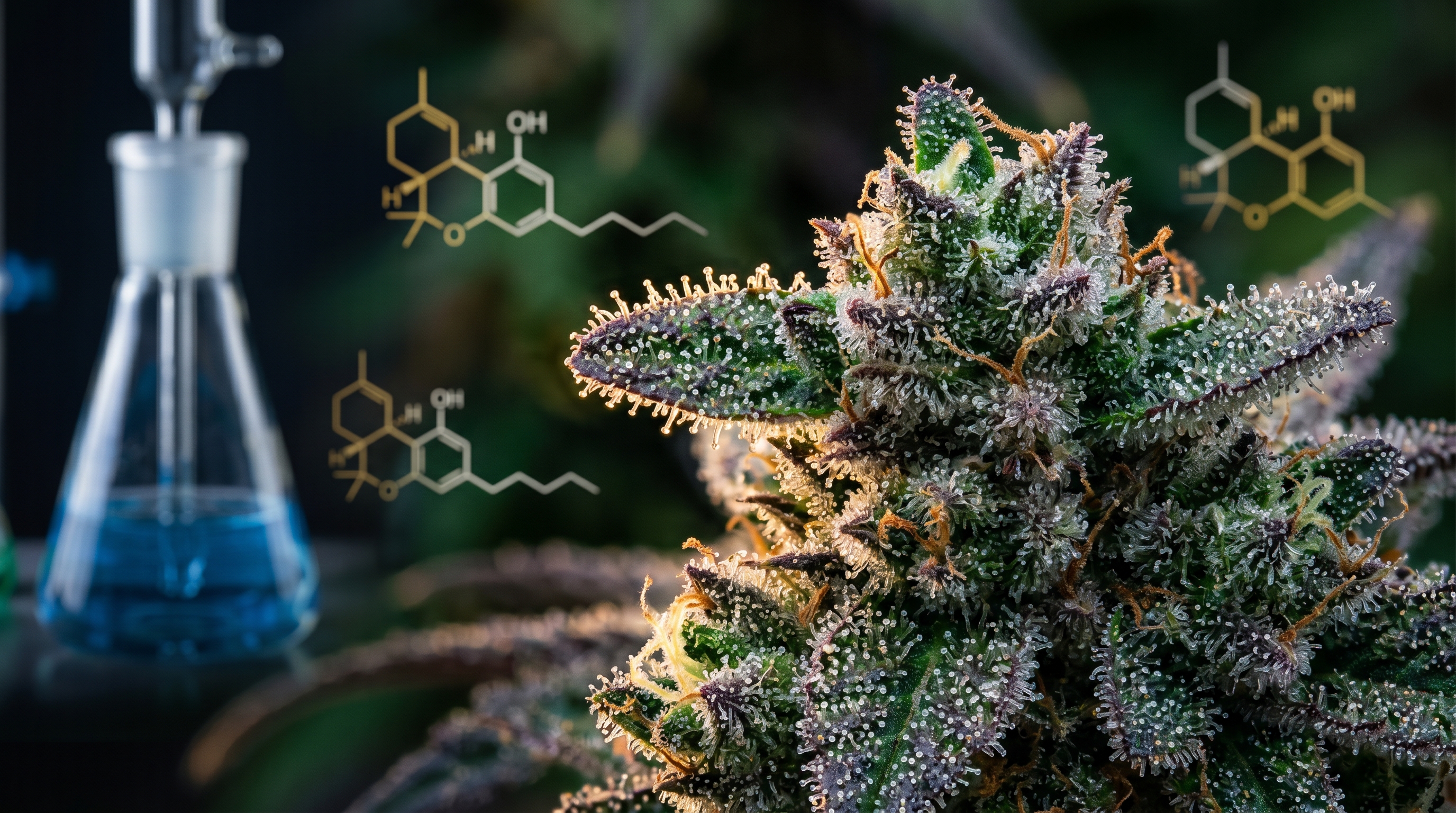
The entourage effect — the idea that cannabinoids and terpenes work synergistically rather than in isolation — depends on the ratios of compounds present, not just their absolute amounts. A tetraploid or triploid plant that shifts its terpene profile can alter the character of the experience even if the total THC number stays similar.
The 2023 Frontiers study documented some striking individual compound changes in tetraploid cultivars. One cultivar showed β-maaliene increasing by 164.83%, 3-carene by an extraordinary 1,874.68%, and caryophyllene — one of the most pharmacologically active terpenes, also found in black pepper and cloves — increasing by 118.4%. Limonene, however, decreased in that same cultivar. Another cultivar showed an essentially opposite pattern.
This means polyploid breeding is not producing uniform effects across the genetic spectrum. It is producing differentiated chemistry — and experienced consumers who track their experiences with platforms like High IQ may start noticing that polyploid-derived flower from the same named cultivar hits differently than the diploid original.
The Quality vs. Yield Tension
It would be a mistake to frame polyploidy purely as a win. Breeders working with these lines have been candid about the challenges.
Tetraploid plants are harder to work with in commercial settings. Their extended flowering times compress margins. Their sensitivity to environmental stress — temperature swings, nutrient fluctuations — means they require more attentive growing practices. A diploid OG Kush grown by a skilled cultivator may outperform a poorly managed tetraploid version of the same genetics every time.
Seed viability is also reduced in tetraploid lines. Because some chromosomes struggle to pair during meiosis even in partially fertile tetraploid plants, germination rates can be lower and seedling vigor inconsistent. This is why most commercial applications are moving toward triploid clones rather than triploid seeds — propagating by cutting guarantees genetic uniformity in a way that seed production does not.
The field is also grappling with how to communicate ploidy to consumers in a meaningful way. A COA (certificate of analysis) showing total cannabinoid percentage is the current standard — but it does not distinguish whether a plant’s chemistry came from increased trichome count (a structural polyploid benefit) or simply from superior cultivation. Savvy consumers are starting to ask for both.
Where This Fits in the Bigger Picture of Cannabis Genetics
Polyploid breeding sits within a broader movement to treat cannabis with the same genetic rigor applied to every other major crop. Alongside marker-assisted selection, genome sequencing, and feminization technology, ploidy engineering is one more tool for breeders who want predictability, stability, and peak chemistry.
If you are interested in how this connects to cannabis genealogy and the deep history of strain genetics, or why strain names often obscure more than they reveal, polyploid breeding matters for the same reason all of those topics matter: genetics shape chemistry, and chemistry shapes experience.
The future of personalized cannabis will almost certainly include polyploid-derived cultivars as a meaningful tier. The Balance and Entourage categories of effects are partly a function of terpene ratios — and if polyploid breeding selectively shifts those ratios, it may eventually give breeders a way to engineer High Family profiles with a precision that has not been possible before.
Strains like Blue Dream, Wedding Cake, and OG Kush have been bred and selected as diploids over decades. Their polyploid equivalents — if breeders succeed — may carry the same aromatic signatures but with amplified myrcene, shifted limonene, or more complex minor cannabinoid profiles. That is speculative today. By 2027, it may be a menu option at your dispensary.
What to Look For as a Consumer
Polyploid cannabis is not yet widely labeled at retail. Here is how to start paying attention:
Ask about parent genetics. Some dispensaries and brands are beginning to disclose triploid lineages, particularly in premium live rosin and fresh-frozen concentrates — where the terpene density differences are most perceptible.
Read the full COA. Total THC is one number. Look at total terpene percentage and individual terpene breakdown. Triploid-derived flower may show elevated sesquiterpenes or novel minor terpenes that you would not find in standard diploid batches.
Track your experiences. The difference between a polyploid-derived flower and a diploid version of the same cultivar may not be dramatic — but over time, patterns emerge. The High IQ app lets you log strains, effects, and sources so you can start connecting what you consume with how it actually hits.
Watch for outdoor growing context. If you are growing your own cannabis outdoors — and 2026’s outdoor growing season is shaping up to be excellent — triploid seeds offer a meaningful practical advantage: near-total resistance to accidental pollination from rogue males. One male in a neighborhood does not have to ruin your harvest if your plants are triploid.
The Bottom Line
Polyploid cannabis — tetraploid and triploid plants produced by chromosome-doubling techniques — represents the most structurally significant advance in cannabis genetics since widespread feminization. The science is real. The biology is proven. The commercial momentum is accelerating.
The honest truth, though, is that results are cultivar-dependent. Trichome density increases of around 40% are well-documented in tetraploid sugar leaves. Terpene changes can be dramatic in some cultivars and minimal or negative in others. Cannabinoid increases are modest and inconsistent when averaged across genetics, but may be significant in specific elite lines.
Breeders like Humboldt Seed Company and Oregon CBD have demonstrated that when polyploid engineering is applied to the right genetics with discipline, the output — seedless, high-density, terpene-rich flower — is genuinely superior to many diploid alternatives.
This is not hype. It is plant genetics doing what plant genetics has always done: slowly, methodically, producing something better than what came before.
Sources
- Mansouri, H., & Bagheri, M. (2019). Polyploidization for the genetic improvement of Cannabis sativa. Frontiers in Plant Science, 10, 476. Link
- Frontiers in Plant Science (2023). Cultivar-dependent phenotypic and chemotypic responses of drug-type Cannabis sativa L. to polyploidization. Link
- Crawford, S., & Chen, H. (2023). Characteristics of the Diploid, Triploid, and Tetraploid Hemp. PMC. Link
- Bagheri, M., & Mansouri, H. (2015). Effect of induced polyploidy on some biochemical parameters in Cannabis sativa L. Applied Biochemistry and Biotechnology. PubMed
- Humboldt Seed Company. Triploid Cannabis Seeds. Link
- University of Guelph Research Innovation (2025). Driving Cannabis Innovation: U of G Releases Advanced Tetraploid and Triploid Cannabis Varieties. Link
- Royal Queen Seeds Blog. Understanding Triploid and Tetraploid Cannabis Plants. Link
