RSO (Rick Simpson Oil): Complete Guide to Uses and Effects
Learn what RSO is, how it works, its potential benefits, and how it's made. A science-backed guide to Rick Simpson Oil for beginners and enthusiasts.

Updated April 15, 2026 — Refreshed with new internal links to our guides on the entourage effect, 11-hydroxy-THC, THCA/CBDA, and CBN. Core analysis and safety guidance unchanged — RSO’s evidence base remains preclinical-heavy in 2026, and the “start low, go slow” framing still applies.
What If One Extract Changed the Cannabis Conversation Forever?
In 2003, a Canadian engineer named Rick Simpson claimed he used a homemade cannabis extract to treat skin lesions on his arm. Whether you believe every detail of his story or not, what followed was a global grassroots movement that pushed full-spectrum cannabis extraction into the mainstream consciousness. The thick, dark, tar-like oil he popularized — now universally known as Rick Simpson Oil (RSO) — has become one of the most discussed and debated cannabis products in the world.
Here’s what makes RSO genuinely interesting from a scientific standpoint: unlike most cannabis concentrates designed for dabbing or vaping, RSO is a full-spectrum, whole-plant extract intended for oral consumption. That means it retains the full range of cannabinoids, terpenes, flavonoids, and other plant compounds — making it a fascinating case study in the entourage effect, the theory that cannabis compounds work better together than in isolation.
But RSO also lives in a complicated space. It’s surrounded by passionate testimonials, bold claims that sometimes outpace the science, and genuine emerging research that suggests full-spectrum extracts may have real therapeutic potential. Separating fact from hype is essential.
In this guide, you’ll learn exactly what RSO is, the science behind how it interacts with your body, what current research actually says about its potential, and the practical considerations you should know before trying it. Whether you’re a curious newcomer or someone exploring cannabis for wellness purposes, consider this your evidence-based roadmap.
Important disclaimer: This article is for educational purposes only. RSO is not FDA-approved, and nothing here constitutes medical advice. Always consult a healthcare provider before using cannabis products, especially alongside other medications.
The Science Explained: What RSO Actually Is
Understanding Full-Spectrum Extraction
To understand RSO, you first need to understand what full-spectrum extraction means — and why it matters.
Think of a cannabis plant like an orchestra. Individual cannabinoids like THC and CBD are the lead instruments — they carry the melody. But terpenes, flavonoids, minor cannabinoids (like CBN, CBG, and CBC), and even trace plant waxes are the rest of the ensemble. A THC isolate is like listening to a solo violin. RSO is like hearing the full symphony.
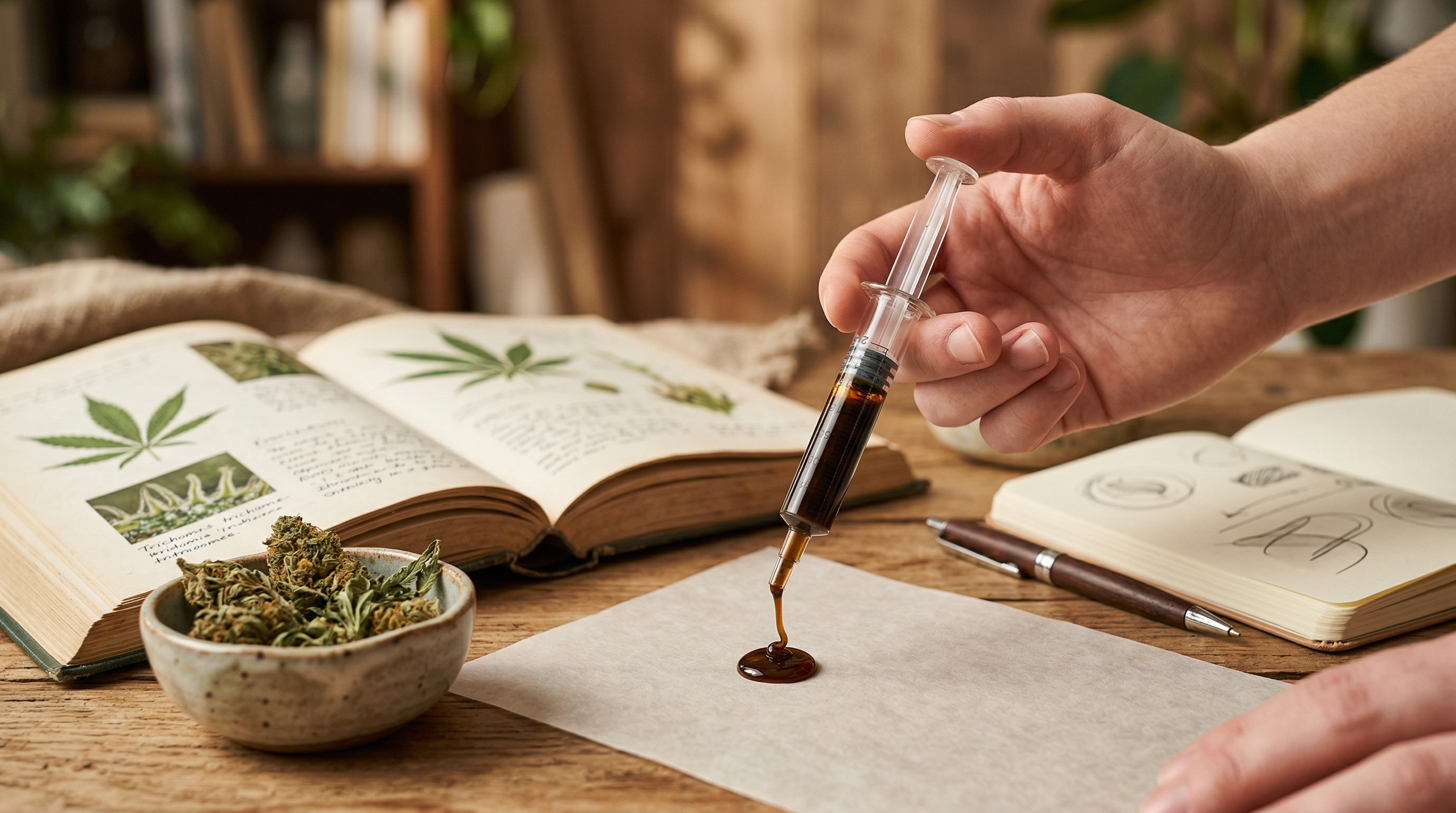
RSO is produced by soaking cannabis flower in a solvent (traditionally ethanol or isopropyl alcohol), which strips the plant of its chemical compounds. The solvent is then carefully evaporated away, leaving behind a thick, dark, highly concentrated oil that contains the broadest possible range of the plant’s chemistry.
The result is a product that’s typically:
- Very high in THC — often 60-90% total cannabinoids
- Rich in minor cannabinoids like CBN, CBC, and CBG
- Contains residual terpenes and flavonoids (though some are lost during the evaporation process)
- Designed for oral or topical use, not for smoking or vaping
This full-spectrum profile is what distinguishes RSO from distillate (which is typically refined to isolate specific cannabinoids) and from most commercial concentrates (which are optimized for inhalation).
The Entourage Effect: Why Full-Spectrum Matters
The theoretical backbone of RSO’s appeal is the entourage effect — a concept first proposed by Raphael Mechoulam and later expanded by Dr. Ethan Russo. The idea is straightforward: the many compounds in cannabis interact synergistically, modifying and enhancing each other’s effects in ways that isolated compounds cannot replicate [Russo, 2011].
For example, research suggests that myrcene (a terpene common in cannabis) may enhance THC’s ability to cross the blood-brain barrier [Russo, 2011]. Beta-caryophyllene, another common terpene, binds directly to CB2 receptors in the immune system, potentially adding anti-inflammatory properties independent of THC [Gertsch et al., 2008]. CBD appears to modulate THC’s psychoactive effects, potentially reducing anxiety while extending duration [Niesink & van Laar, 2013].
When you consume RSO orally, you’re introducing this complex cocktail of compounds to your digestive system, where they’re metabolized by the liver. This is a critical distinction — when THC is processed through the liver, it converts to 11-hydroxy-THC, a metabolite that’s significantly more potent and longer-lasting than inhaled THC [Huestis, 2007]. This is the same reason edibles hit differently than smoking.
The combination of a full-spectrum profile and liver metabolism is what makes RSO’s effects uniquely intense compared to other cannabis products.
What the Research Shows
Let’s be clear about something: there are no large-scale, peer-reviewed clinical trials specifically on RSO. Much of what’s claimed about RSO is based on preclinical research (cell cultures and animal studies), anecdotal reports, and extrapolation from studies on individual cannabinoids.
That said, the underlying science is genuinely compelling:
Cannabinoids and cancer cells (preclinical): Multiple laboratory studies have shown that THC and CBD can induce apoptosis (programmed cell death) in certain cancer cell lines [Velasco et al., 2012]. A systematic review found that cannabinoids demonstrated anti-tumor effects in vitro and in animal models across several cancer types [Velasco et al., 2016]. However — and this is crucial — killing cancer cells in a petri dish is not the same as treating cancer in a human body. Many substances destroy cancer cells in vitro but fail in clinical trials.
Full-spectrum vs. isolate efficacy: A notable 2015 study from the Lautenberg Center found that full-spectrum CBD extract was more effective than CBD isolate for inflammation in a mouse model, and that its effectiveness increased with dose — unlike isolate, which had a bell-curve response [Gallily et al., 2015]. This supports the entourage effect theory and, by extension, the rationale for full-spectrum products like RSO.
Pain and symptom management: A growing body of evidence suggests cannabinoids may help with chronic pain, nausea (particularly chemotherapy-induced), and sleep disturbances [Whiting et al., 2015]. Many people who use RSO report using it for these purposes, and while the evidence base is stronger for these applications than for anti-tumor claims, more clinical research is still needed.
Emerging clinical interest: A 2019 case series documented tumor regression in patients using synthetic cannabinoids alongside conventional treatment [Kenyon et al., 2018], and several clinical trials are now underway examining cannabinoids as adjunct cancer therapies. These are encouraging but preliminary.
The bottom line on research: The preclinical science is genuinely interesting and warrants more study. But preclinical is not clinical. Anyone who tells you RSO is a “proven cure” for anything is outpacing the evidence. Anyone who tells you it’s worthless is ignoring legitimate science.
How RSO Is Made: The Process Explained
Understanding how RSO is made helps you evaluate product quality — whether you’re buying from a dispensary or simply want to know what’s in the syringe.
The Traditional RSO Method
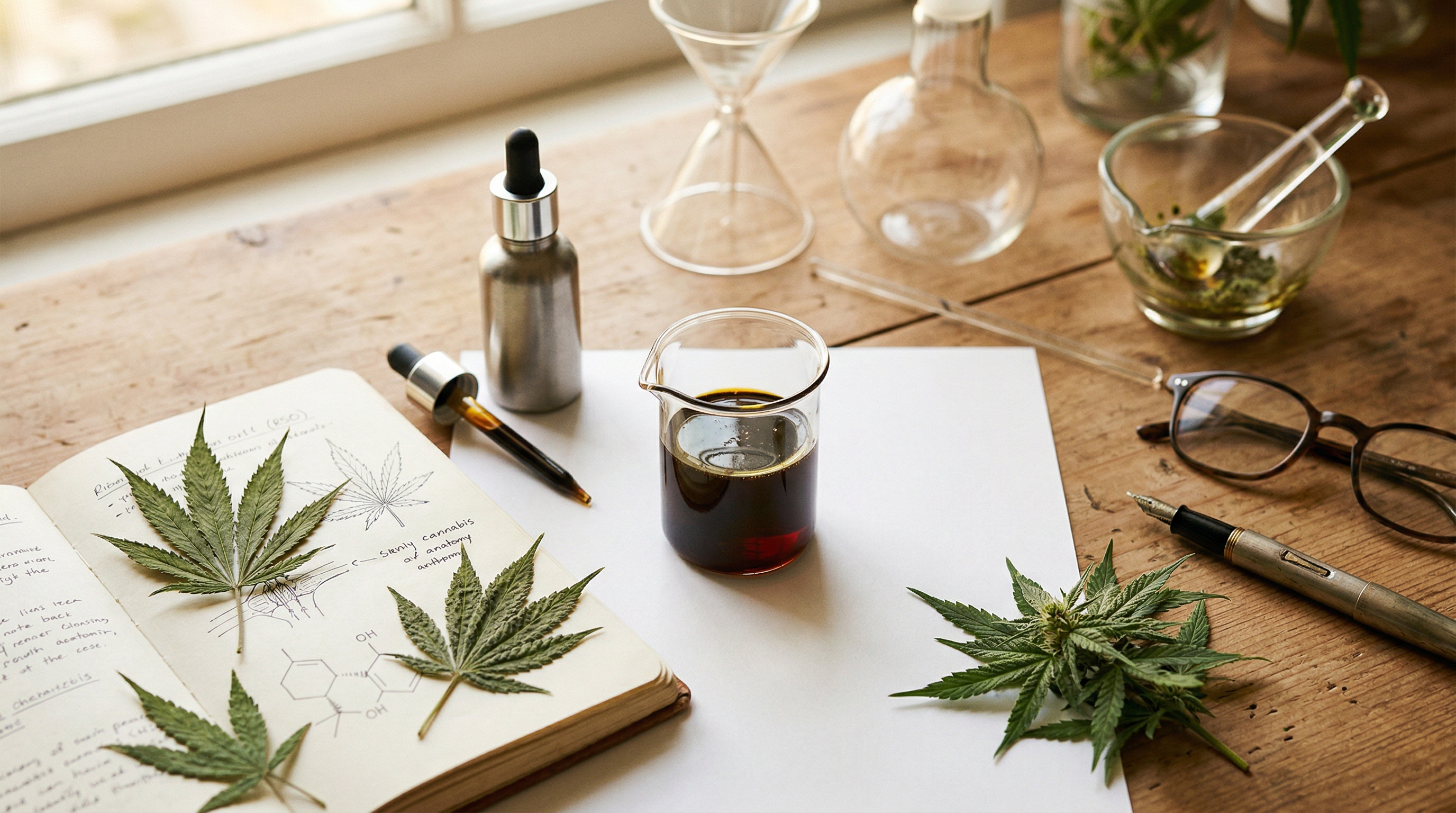
Rick Simpson’s original method is relatively straightforward in concept, though it requires extreme caution due to the use of flammable solvents:
- Starting material: High-quality cannabis flower (traditionally high-THC varieties) is placed in a large container
- Solvent wash: The flower is submerged in a solvent — Simpson originally used naphtha or isopropyl alcohol, though food-grade ethanol is now widely preferred for safety
- Agitation: The mixture is stirred or shaken to dissolve the cannabinoids, terpenes, and other compounds from the plant material
- Filtration: The plant material is strained out, leaving a cannabinoid-rich solvent solution
- Evaporation: The solvent is slowly and carefully evaporated using gentle heat (often a rice cooker in the traditional method), leaving behind the thick, dark oil
- Collection: The resulting RSO is collected and typically stored in oral syringes for precise dosing
Critical Safety Considerations
⚠️ This section is informational, not instructional. Making RSO at home involves serious risks:
- Solvent flammability: Ethanol and especially naphtha/isopropyl alcohol produce highly flammable vapors. Improper ventilation has caused explosions and fires
- Residual solvents: Without proper purging equipment, harmful solvent residues can remain in the final product
- Dosing uncertainty: Homemade RSO has no lab testing, making accurate dosing nearly impossible
- Legal considerations: Cannabis extraction is illegal in many jurisdictions, even where cannabis itself is legal
The safest approach is to purchase lab-tested RSO from a licensed dispensary, where products are tested for potency, residual solvents, pesticides, and contaminants.
What to Look for in Dispensary RSO
If you’re buying RSO from a licensed retailer, look for:
- Full lab results (Certificate of Analysis) showing cannabinoid profile, terpene content, and contaminant testing
- Full-spectrum labeling — some products marketed as “RSO” are actually distillate in a syringe
- Strain or cultivar information — this tells you about the terpene profile and associated effects
- Clear dosing information on the packaging
Practical Implications: Using RSO in the Real World
Connecting RSO to High Families
Because RSO is a full-spectrum extract, its effects depend heavily on the source cultivar’s terpene and cannabinoid profile. This is where our High Families system becomes particularly useful:
- RSO from myrcene-dominant cultivars aligns with the Relaxing High family — deep body relaxation and sleep support
- RSO from limonene/linalool-dominant cultivars connects to the Uplifting High family — mood elevation even in an oral format
- RSO from caryophyllene-dominant cultivars maps to the Relieving High family — body-focused comfort that some find helpful for physical tension
- RSO with complex multi-terpene profiles fits the Entourage High family — the fullest expression of the entourage effect
When shopping for RSO, asking about the source strain’s terpene profile can help you predict the experience far better than relying on “indica” or “sativa” labels.
Dosing: Start Low, Go Incredibly Slow
RSO is one of the most potent cannabis products available. A single syringe typically contains 600-900mg of THC. For context, a standard edible dose is 5-10mg.
The commonly referenced “Rick Simpson Protocol” suggests gradually building up to 1 gram per day over several weeks. This is an extremely high dose and should not be attempted without medical supervision. For most people, a practical approach looks more like this:
- Start with a grain-of-rice-sized dose (approximately 10-25mg THC)
- Wait at least 2 hours before considering more — oral cannabis takes time to metabolize
- Increase slowly over days or weeks as you understand your tolerance
- Keep a journal tracking dose, timing, and effects
RSO can be consumed by:
- Placing it directly under the tongue (sublingual)
- Swallowing it on a small piece of food
- Adding it to capsules
- Applying it topically (for localized use)
Pro tip: Because RSO is so thick and sticky, placing your dose on a small piece of bread or a cracker makes it much easier to consume. Some people also warm the syringe slightly between their hands to make dispensing easier.

Potential Side Effects and Considerations
Because of its potency, RSO can produce significant side effects, especially for new or low-tolerance users:
- Intense psychoactive effects — RSO is typically very high in THC
- Prolonged duration — oral cannabis effects can last 4-8 hours or longer
- Sedation and couch-lock — particularly with myrcene-dominant profiles
- Dry mouth, dizziness, and anxiety at higher doses
- Drug interactions — cannabinoids are metabolized by cytochrome P450 enzymes in the liver, the same system that processes many pharmaceuticals [Nasrin et al., 2021]. If you take any medications, consult your doctor
Key Takeaways
- RSO is a full-spectrum, whole-plant cannabis extract typically high in THC and designed for oral or topical use — not inhalation
- The entourage effect provides a scientific rationale for full-spectrum products, with research suggesting whole-plant extracts may be more effective than isolates [Gallily et al., 2015]
- Preclinical research on cannabinoids is promising but preliminary — no clinical trials have proven RSO cures any disease, and claims should be evaluated critically
- Dosing requires extreme caution — start with a grain-of-rice-sized amount and increase gradually over days or weeks
- The source cultivar’s terpene profile matters — use High Families to predict your experience rather than relying on indica/sativa labels
FAQs
Is RSO the same as CBD oil?
No. RSO is typically a high-THC, full-spectrum extract that produces significant psychoactive effects. Most CBD oils contain little to no THC and are non-intoxicating. They’re fundamentally different products with different compound profiles and different effects.
Can RSO cure cancer?
There is no clinical evidence that RSO cures cancer. Preclinical studies show cannabinoids can affect cancer cells in laboratory settings [Velasco et al., 2012], and this research is promising enough to warrant clinical trials. But laboratory results don’t automatically translate to human treatments. Anyone using RSO alongside cancer treatment should do so under medical supervision and never as a replacement for conventional therapy.
How long does RSO take to kick in?
Because RSO is typically consumed orally, effects generally begin within 30 minutes to 2 hours, depending on your metabolism, whether you’ve eaten, and the dose. Peak effects usually occur around 2-4 hours, with total duration lasting 4-8 hours or sometimes longer. This is why the “start low, go slow” approach is so important.
Is it legal to buy RSO?
RSO legality depends entirely on your jurisdiction. In U.S. states with legal adult-use or medical cannabis programs, licensed dispensaries commonly carry RSO products. In states or countries where cannabis remains illegal, RSO is illegal as well — producing, possessing, or distributing it carries the same legal risk as any other cannabis concentrate. Always check your local laws before purchasing or traveling with RSO, and note that THC-containing products (including RSO) are not legal at the federal level in the United States and remain prohibited on flights and federal land.
What’s the difference between RSO and FECO?
FECO (“Full Extract Cannabis Oil”) is effectively the same concept as RSO — a full-spectrum, whole-plant extract typically consumed orally — but many producers use the term to signal that they use food-grade ethanol exclusively rather than the naphtha Rick Simpson originally recommended. For most consumers the practical difference is minimal; both are high-potency, full-spectrum oils that should be dosed conservatively.
Does RSO contain THCA?
Most commercial RSO is fully decarboxylated during production, meaning the THCA in the starting flower has been converted to active THC. A few “raw” or “live” RSO-style products preserve the acid cannabinoids, but the classic Rick Simpson protocol assumes activated cannabinoids.


