Strain Names Decoded: What Do Cannabis Names Actually Mean?
From OG Kush to Pineapple Express, learn what cannabis strain names reveal about genetics, marketing, and why the same name means wildly different effects.

Professor High
Your friendly cannabis educator, bringing science-backed knowledge to the community.

Here’s something that might genuinely surprise you: a strain called “Blue Dream” at a Denver dispensary may share almost nothing chemically with a “Blue Dream” sold in Portland. A 2021 study in Nature Plants found that cannabis samples sold under the same strain name routinely showed wildly different terpene and cannabinoid profiles. So if strain names aren’t reliable chemical fingerprints, what are they actually telling you?
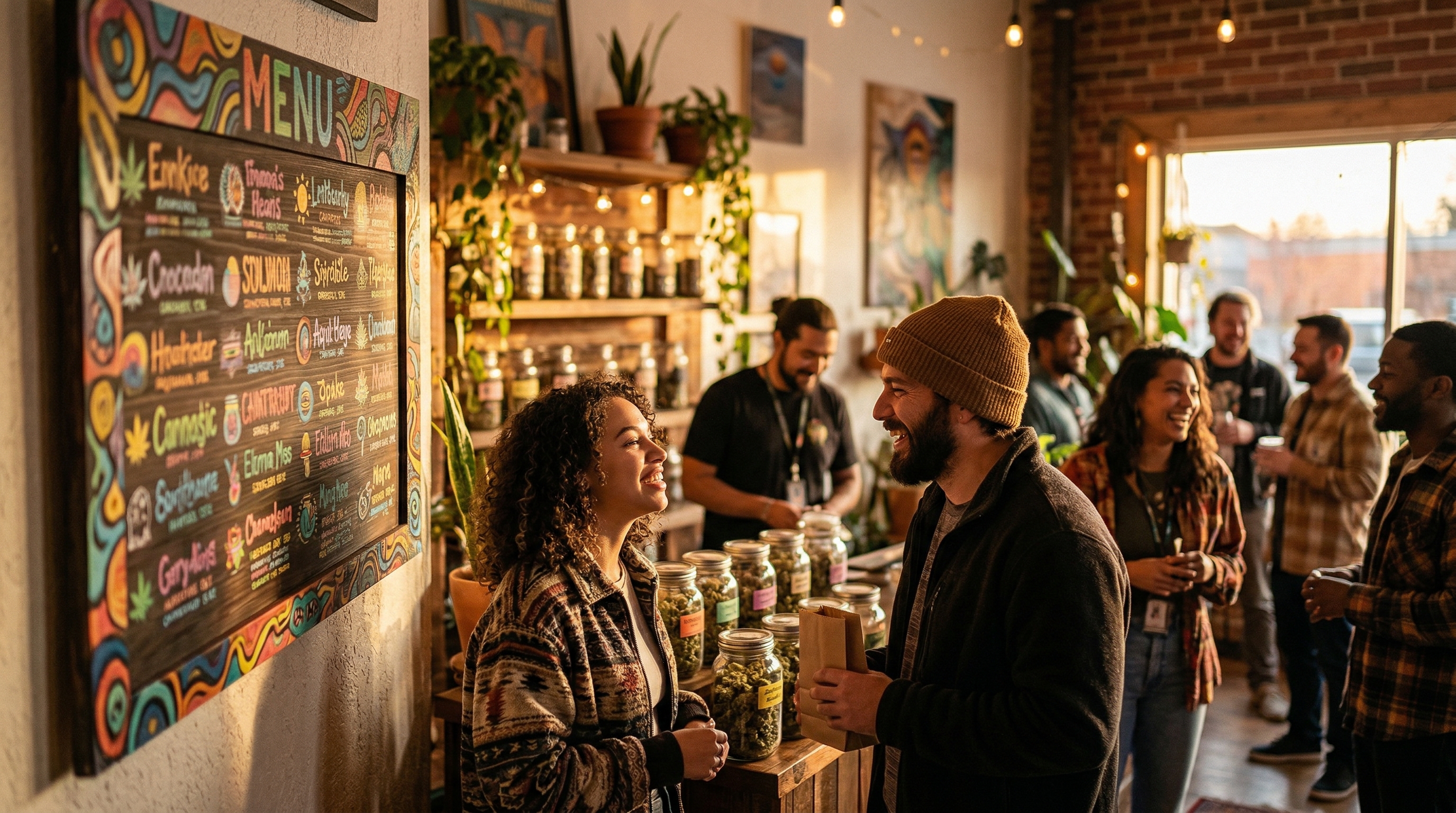
Cannabis strain names are one of the most colorful, confusing, and culturally rich corners of the plant world. They’re part marketing, part oral history, part genetic shorthand, and part inside joke. Names like Girl Scout Cookies, Gorilla Glue, and Sour Diesel have become iconic — but most consumers have no idea what those names actually communicate, if anything at all.
Understanding the naming system matters because it shapes how you shop, what you expect, and whether your experience matches your goals. In this article, we’ll trace the history of how cannabis naming evolved, break down the hidden logic (and delightful chaos) behind the conventions, look at what the science says, and give you practical tools for making smarter choices at the dispensary — including why our High Families system offers a more reliable compass than any name ever could.
A Brief History of Cannabis Naming
The Landrace Era (Pre-1970s)
Before modern breeding, cannabis strains were named after their geographic origins. Durban Poison came from South Africa’s port city of Durban. Acapulco Gold traced its roots to the Mexican coast. Afghan Kush referenced the Hindu Kush mountain range straddling Afghanistan and Pakistan. Thai and Colombian Gold were similarly geographic.
These “landrace” strains — plants that evolved in specific regions over centuries — were the entire genome pool from which modern cannabis descends. Their names were accurate by definition: the name told you exactly where the plant originated, and origin reliably predicted chemistry because those populations had been naturally selected by local climate, soil, and altitude for generations.
Naming was honest because it had to be. There were no breeders competing for shelf space, no dispensary menus, no marketing departments.
The Underground Era (1970s–1990s)
Prohibition changed everything. When cannabis went underground in the United States, breeding became secretive, and strain names became equally opaque — sometimes deliberately so. Names like Northern Lights, Skunk #1, and White Widow emerged from Dutch coffee shops and American growers operating in the shadows.
In this era, names served two functions: they distinguished phenotypes among growers who traded seeds and cuttings, and they obscured the product’s origins from law enforcement. The tradition of colorful, abstract naming was born from necessity.
OG Kush — one of the most iconic names in cannabis — likely emerged from the Southern California scene in the early 1990s. The “OG” is still debated: it may stand for “Ocean Grown” (referencing its coastal origins), “Original Gangster” (a nod to hip-hop culture), or simply “Original.” Nobody can say for certain. That ambiguity is not a bug — it’s a feature of an oral culture that passed strain knowledge through whisper networks.
The Branding Era (2000s–Present)
Legal markets changed the naming game entirely. Suddenly, breeders had intellectual property to protect, dispensaries had menus to differentiate, and consumers had marketing to respond to. The result is the naming free-for-all we live in today.
Pineapple Express became a household name partly because of the 2008 Seth Rogen film. Girl Scout Cookies (now often called GSC to avoid trademark issues with the actual Girl Scouts of America) became synonymous with a particular euphoric, full-body effect — but the name is pure branding genius, not chemistry. Gorilla Glue #4 was renamed GG4 after the adhesive manufacturer sent a cease-and-desist letter.
Today, breeders release hundreds of new cultivars per year, each requiring a name that stands out on a digital menu. The pressure to create memorable, marketable names has almost entirely decoupled naming from any chemical or genetic reality.
The Naming Taxonomy: What Each Type Actually Tells You
Not all names are equally meaningless. Here’s a practical breakdown of the major naming conventions and how much signal each carries:
Lineage Names (High Signal)
Lineage names reference parent strains directly. Blue Dream = Blueberry x Haze. Cherry Pie = Granddaddy Purple x Durban Poison. Wedding Cake = Triangle Kush x Animal Mints. These names function like a family tree — they tell you where a strain came from genetically.
The catch: offspring chemistry can vary dramatically based on which phenotype the breeder selected, growing conditions, and how many generations removed from the original cross. Think of it like human genetics — siblings share parents but can look and act very differently.
Blue Dream Lineage:
├── Blueberry (DJ Short, 1970s)
│   ├── Thai (landrace)
│   ├── Purple Thai (landrace)
│   └── Afghani (landrace)
└── Haze (1970s, Northern California)
    ├── Colombian (landrace)
    ├── Mexican (landrace)
    ├── Thai (landrace)
    └── South Indian (landrace)
Despite that rich lineage, the “Blue Dream” you buy might be a clone-only phenotype from 2009 California, or it might be a seed-grown plant from a breeder in 2024 who selected for completely different traits. The name is the same. The chemistry may not be.
Sensory Names (Medium Signal)
Names that describe flavor, aroma, or appearance carry the most useful information within the naming system. Lemon Haze, Blueberry, Sour Diesel, Skunk #1 — these hint at the terpene profile the breeder was selecting for.
Research actually supports this: a 2012 study found that strains with citrus descriptors in their names did tend to have higher limonene concentrations, and berry-named strains often showed elevated linalool [Hazekamp & Fischedick, 2012]. Breeders selecting for those flavors are, intentionally or not, selecting for those chemical compounds.
But “tend to” is not “reliably.” Growing environment, harvest timing, and curing methods can all shift terpene expression significantly, even within the same genetic line.
Geographic Names (Low-to-Medium Signal)
For true landraces, geographic names are still meaningful. Malawi Gold, Hindu Kush, Panama Red — these names, when used honestly, describe actual genetic populations with relatively consistent chemistry.
The problem is that “landrace” names are often applied to modern hybrids with no genuine connection to the place named. “Afghani” sold at a US dispensary is almost certainly a hybridized descendant several generations removed from any Afghan landrace. The geographic name has become marketing shorthand for “this is supposed to be heavy and sedating” — not an actual claim of provenance.
Pop Culture and Novelty Names (No Signal)
Pineapple Express, Obama Kush, Alaskan Thunderfuck, Alien OG — these names are pure branding. They’re memorable, marketable, and communicate nothing about chemistry, genetics, or likely effects. A dispensary can call any product any name it wants in most jurisdictions, with no regulatory requirement to connect the name to a specific genotype.
This is the wild west of cannabis naming, and it’s where most new strains live in 2026.
What the Research Actually Shows

The science on cannabis naming is both fascinating and sobering for anyone who trusts the label.
A landmark 2021 study in Nature Plants analyzed over 100,000 cannabis samples and found that strain names were poor predictors of chemical consistency [Watts et al., 2021]. Two samples labeled “OG Kush” from different producers could have dramatically different ratios of myrcene, limonene, and caryophyllene — the very terpenes that shape your subjective experience.
Even more damning: a 2015 study in PLOS ONE examined the genetic structure of commercially available cannabis and found that indica and sativa labels embedded in many strain names didn’t reliably correspond to distinct genetic lineages [Sawler et al., 2015]. The sativa/indica binary, which forms the backbone of how strain names have been understood for decades, doesn’t map onto genetic reality.
And then there’s the 2025 German study that inspired our High Families system. Researchers at Schurer Pharma analyzed 140 medicinal cannabis strains using GC-MS and found no statistical correlation between terpene profiles and sativa/indica genetics (p > 0.05). The study didn’t just add nuance to the naming debate — it demolished the foundational assumption most strain naming rests on. We wrote a full breakdown of that research here.
The bottom line: Strain names are cultural artifacts, not chemical guarantees. They can offer clues — especially sensory names — but they should never be your only guide.
Why the Same Name Can Mean Different Effects
Here’s the mechanism behind the inconsistency. Cannabis effect is primarily driven by the interaction of:
- Terpene profile — which terpenes are present and in what ratio
- Cannabinoid ratio — THC to CBD to minor cannabinoids
- Your endocannabinoid system — genetically determined, highly individual
A given strain name might have originated with a specific terpene profile in a specific California grow in 2009. But by the time it reaches a dispensary shelf in 2026, any of the following may have changed:
- Genetic drift — seed-grown plants express phenotypic variation; each generation can shift the chemical expression
- Growing environment — soil composition, light spectrum, nutrients, humidity, and temperature all influence terpene production
- Harvest timing — terpenes degrade with time; a strain harvested early vs. late in flower will have a different profile
- Curing and storage — improper curing destroys volatile terpenes; most of the aroma you smell is your quality indicator
- Intentional rebranding — dispensaries sometimes apply popular strain names to unrelated products
None of this is fraud in most cases. It’s the natural consequence of a naming system built on oral culture and informal breeder agreements, now operating at commercial scale without standardization.
Why High Families Is a Better Map
The High Families classification system does what strain names cannot: it groups cannabis by the actual terpene chemistry that drives your experience, not by lineage, branding, or geography.
Based on the German chemovar research and our own analysis of thousands of lab results, we identified six chemotype clusters — six distinct experience profiles that show up reliably across very different strain names:
| High Family | Key Terpenes | Experience Profile |
|---|---|---|
| Uplifting High | Limonene + Linalool | Mood elevation, social energy, euphoria |
| Energetic High | Terpinolene + Ocimene | Focus, creativity, alert clarity |
| Relaxing High | Myrcene dominant | Body calm, sedation, stress relief |
| Relieving High | Caryophyllene + Humulene | Physical comfort, anti-inflammatory |
| Balanced High | Mixed moderate profile | Versatile, gentle, accessible |
| Cerebral High | Pinene + Ocimene | Mental clarity, introspection, mild |
A strain called “Blue Dream” at one dispensary might land in the Energetic High family because it’s terpinolene-dominant. At another dispensary, a sample with the same name might be myrcene-heavy and fall squarely in the Relaxing High family. The High Family tells you what to actually expect. The strain name alone does not.

Shopping Smarter at the Dispensary
Here’s a practical framework for getting more consistent results, regardless of what names are on the menu:
Step 1: Identify your goal. What experience are you after? Relaxation, focus, social energy, physical relief, sleep? Map that to a High Family before you even walk in.
Step 2: Look at the terpene panel. Most legal market products include lab results. Find the top two or three terpenes by percentage. That’s your real guide. If a store doesn’t show terpene data, that’s a red flag.
Step 3: Ask about terpenes, not names. “What are the dominant terpenes in this?” is the single most useful question you can ask a budtender. If they can’t answer it, find someone who can.
Step 4: Keep a journal. Write down the strain name, the top terpenes, the THC/CBD percentages, the source, and how you felt. Over time, your own data will show you which terpene combinations reliably deliver your desired experience — regardless of what the strain is called.
Step 5: Use High Families as your return address. When you find something you love, check its High Family in the High IQ app. That classification will help you find similar experiences from completely different strain names at any dispensary you visit.
Key Takeaways
- Strain names evolved from honest geographic labels (Durban Poison, Afghan Kush) into a hybrid of oral culture, breeder shorthand, and marketing — roughly in that order.
- Sensory names carry the most signal within the existing naming system. “Lemon,” “Blueberry,” and “Skunk” in a name tend to correlate with the terpenes behind those descriptors.
- The same strain name can mean very different chemistry depending on the grower, phenotype, growing conditions, and harvest timing. Research confirms names are poor predictors of consistent terpene and cannabinoid profiles.
- Indica and sativa labels embedded in strain naming have no reliable genetic or chemical basis — the German chemovar study makes this definitive.
- Terpene profiles are more reliable than names. Use the High Families system to match your desired experience to actual chemistry, not marketing.
- Your own journal is the most reliable guide you’ll ever have. Strain names are how the cannabis world communicates; terpenes are what actually matters.
FAQs
Do strain names tell you anything useful at all?
Sometimes. Names that reference flavors or aromas (like “Lemon” or “Blueberry”) often correlate with specific terpenes because breeders selecting for those flavors are selecting for those compounds. But pop culture names and novelty branding tell you nothing about chemistry. Always check the terpene profile for the real story.
Why does the same strain feel different from different dispensaries?
Growing conditions, harvest timing, curing, and phenotype selection all alter a strain’s terpene and cannabinoid profile — sometimes dramatically. The name stays consistent across these variations; the chemistry does not.
Is the indica/sativa distinction in strain names meaningful?
Research says no. A 2025 German study found no statistical correlation between sativa/indica genetic labels and actual terpene profiles. A strain marketed as “indica” can be terpinolene-rich (associated with alert energy), while a “sativa” can be myrcene-dominant (associated with body sedation). Terpenes tell the real story.
How do I find the same experience again if strain names aren’t reliable?
Focus on terpenes. If you loved a strain, note its top two or three terpenes. Next time, look for a similar terpene profile regardless of the name. The High Families classification makes this even easier — find your preferred High Family and use it as a filter whenever you shop.
Are any strain names legally protected?
Some breeders have attempted trademark registration, with mixed success. Gorilla Glue Inc. successfully pressured cannabis brands to stop using “Gorilla Glue,” resulting in the rename to GG4. Girl Scout Cookies became GSC. But the industry has no broad standardization framework — the same name can legally be used by any seller for any product in most jurisdictions.
Sources
-
Watts, S., McElroy, M., Migicovsky, Z., et al. (2021). “Cannabis labelling is associated with genetic variation in terpene synthase genes.” Nature Plants, 7, 1330–1334. doi:10.1038/s41477-021-01003-y
-
Sawler, J., Stout, J.M., Gardner, K.M., et al. (2015). “The Genetic Structure of Marijuana and Hemp.” PLOS ONE, 10(8), e0133292. doi:10.1371/journal.pone.0133292
-
Hazekamp, A. & Fischedick, J.T. (2012). “Cannabis — from cultivar to chemovar.” Drug Testing and Analysis, 4(7-8), 660–667. doi:10.1002/dta.1382
-
Herwig, N., et al. (2025). “Terpene Profiles of Medicinal Cannabis Flowers: A Comprehensive Analysis.” Cannabis and Cannabinoid Research. doi:10.1089/can.2024.0127


