Sun-Grown Cannabis Has Better Terpenes: The Science of Outdoor Flower
Sun-grown cannabis develops more complex terpene profiles than indoor — UV stress, full-spectrum light, and terroir make outdoor flower aromatically superior.

Professor High
The Connoisseur’s Secret
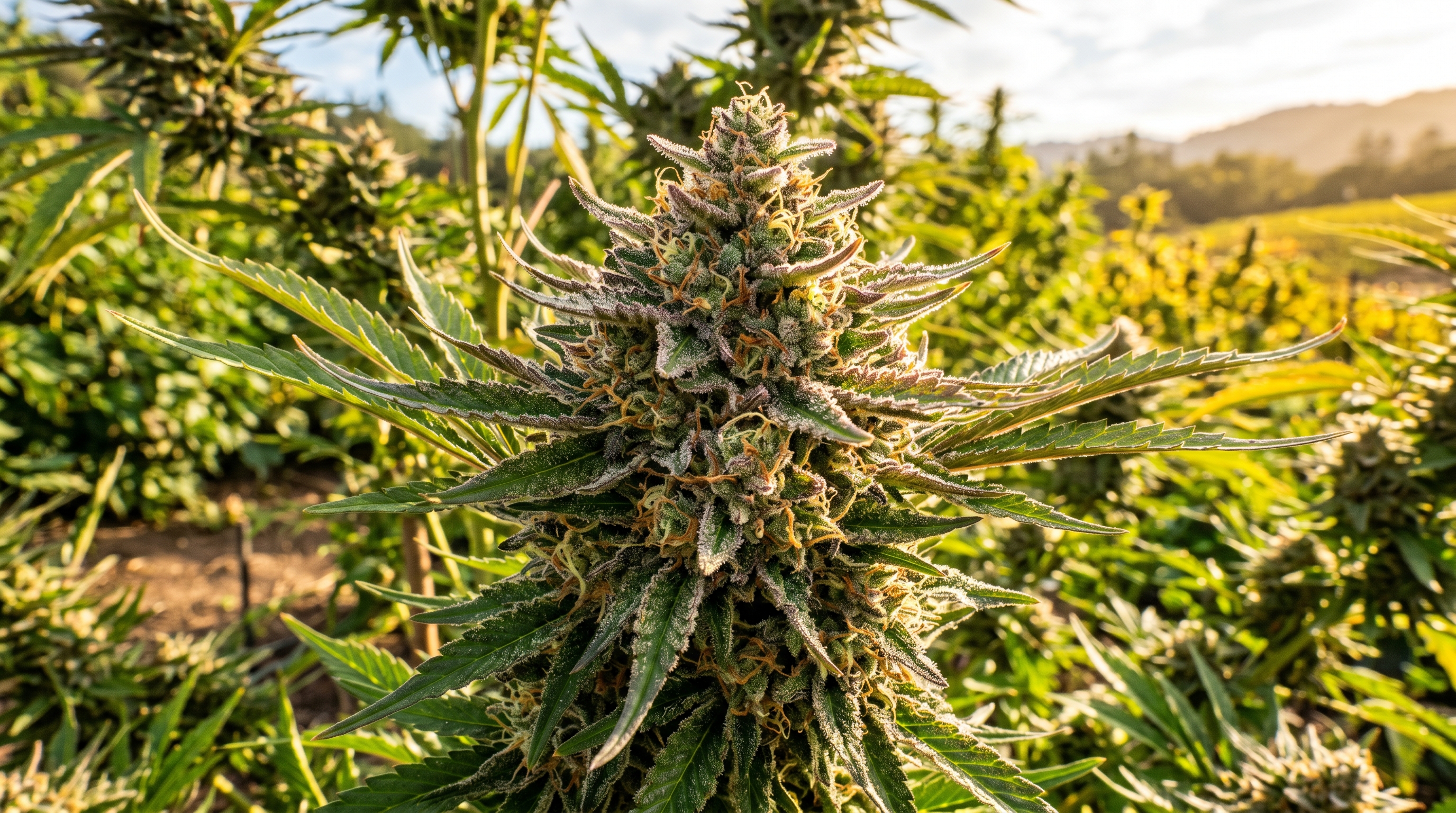
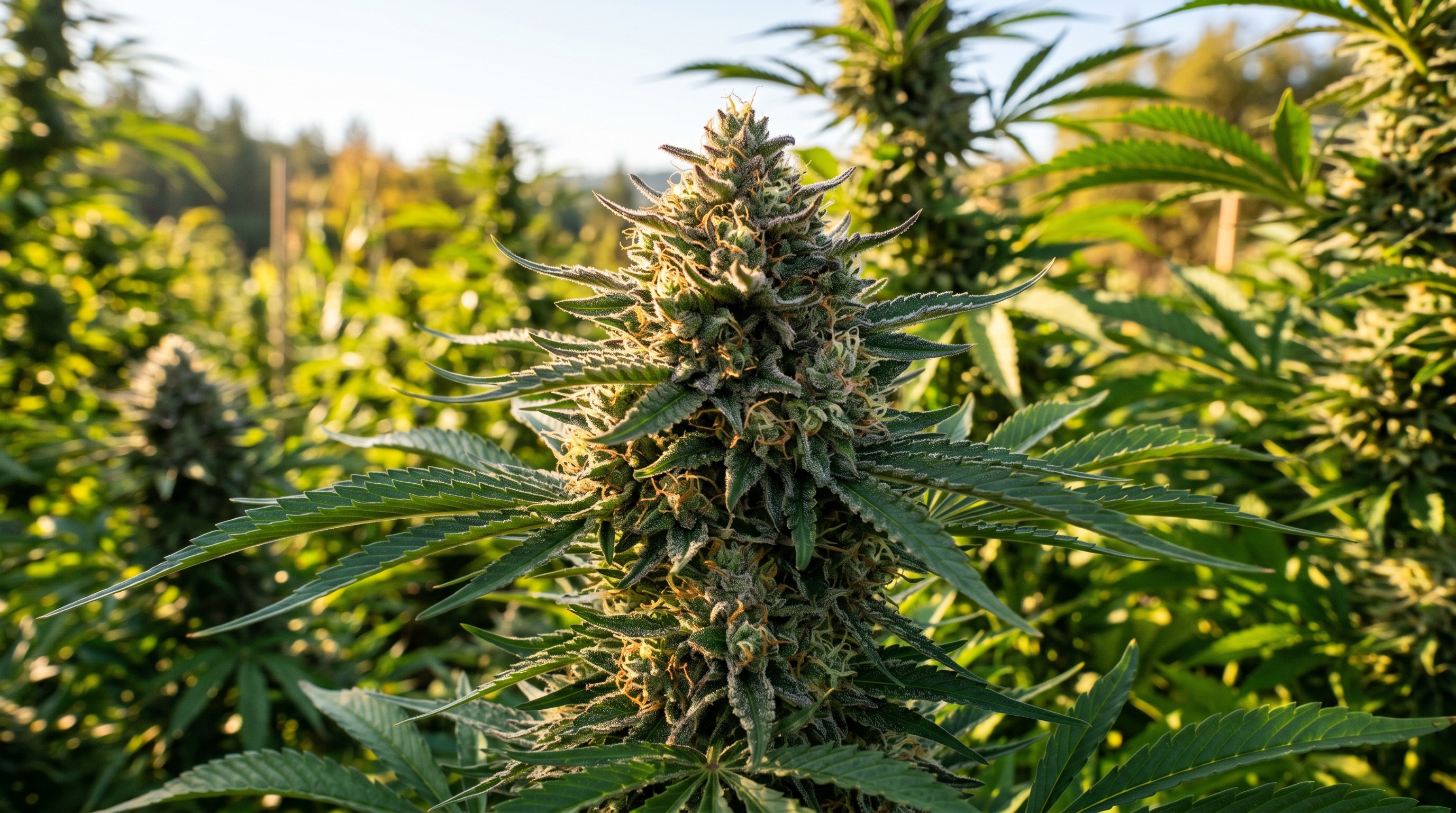
Here is something the cannabis industry has been slow to say out loud: indoor flower usually tests higher for THC. And outdoor flower often smells better. Those two facts are not in conflict — they are the product of entirely different cultivation philosophies optimizing for different outcomes.
Walk through any serious dispensary and you will find premium indoor flower front and center, dense buds under bright lights, lab numbers posted on the shelf. THC percentages in the mid-to-high twenties. Behind it, often labeled simply “sun-grown” or “outdoor,” is a product that frequently tests several points lower in cannabinoids — and commands a lower price as a result. What those lab numbers do not capture is terpene diversity: the dozens of aromatic compounds that give cannabis its character, its complexity, and increasingly, what researchers argue is a meaningful portion of its therapeutic effect.
Most consumers make purchase decisions based on THC percentage. Most connoisseurs make them based on smell. The science, it turns out, supports the connoisseurs.
What Terpene Production Actually Requires
To understand why sun-grown cannabis develops a richer aromatic profile, you first need to understand what terpenes are for. They are not produced for our benefit. They are a plant’s defense mechanism — synthesized in response to environmental stress, pest pressure, UV radiation, drought, and temperature swings. A cannabis plant under mild environmental pressure is a cannabis plant making more of the compounds that happen to define its aroma and shape its effect.
The biochemistry of cannabis aromas is driven by the mevalonate and methylerythritol phosphate (MEP) pathways — the plant’s two major terpene-synthesis routes. What activates those pathways is, in significant part, environmental signal. Full-spectrum light. Heat variation between day and night. Soil microbiome interaction. Root-zone stress. An indoor grow operating at optimized, static parameters removes many of those activating signals — by design.
Outdoor cultivation, by contrast, provides them continuously and unpredictably. That is the mechanism. When the sun beats down on a Humboldt plant in mid-August and UV-B indices spike, the plant reads it as a threat and responds biochemically. The response includes richer myrcene, expanded caryophyllene expression, and sesquiterpene diversification that indoor environments rarely replicate.
The UV Trick
Ultraviolet radiation is the clearest single-variable explanation for outdoor’s terpene advantage. Sunlight delivers a continuous, seasonally varying UV spectrum across UVA (315–400nm) and UVB (280–315nm) wavelengths. Indoor lighting — even high-end LED arrays — typically concentrates on the photosynthetically active radiation (PAR) range and delivers comparatively little UVA and almost no UVB.
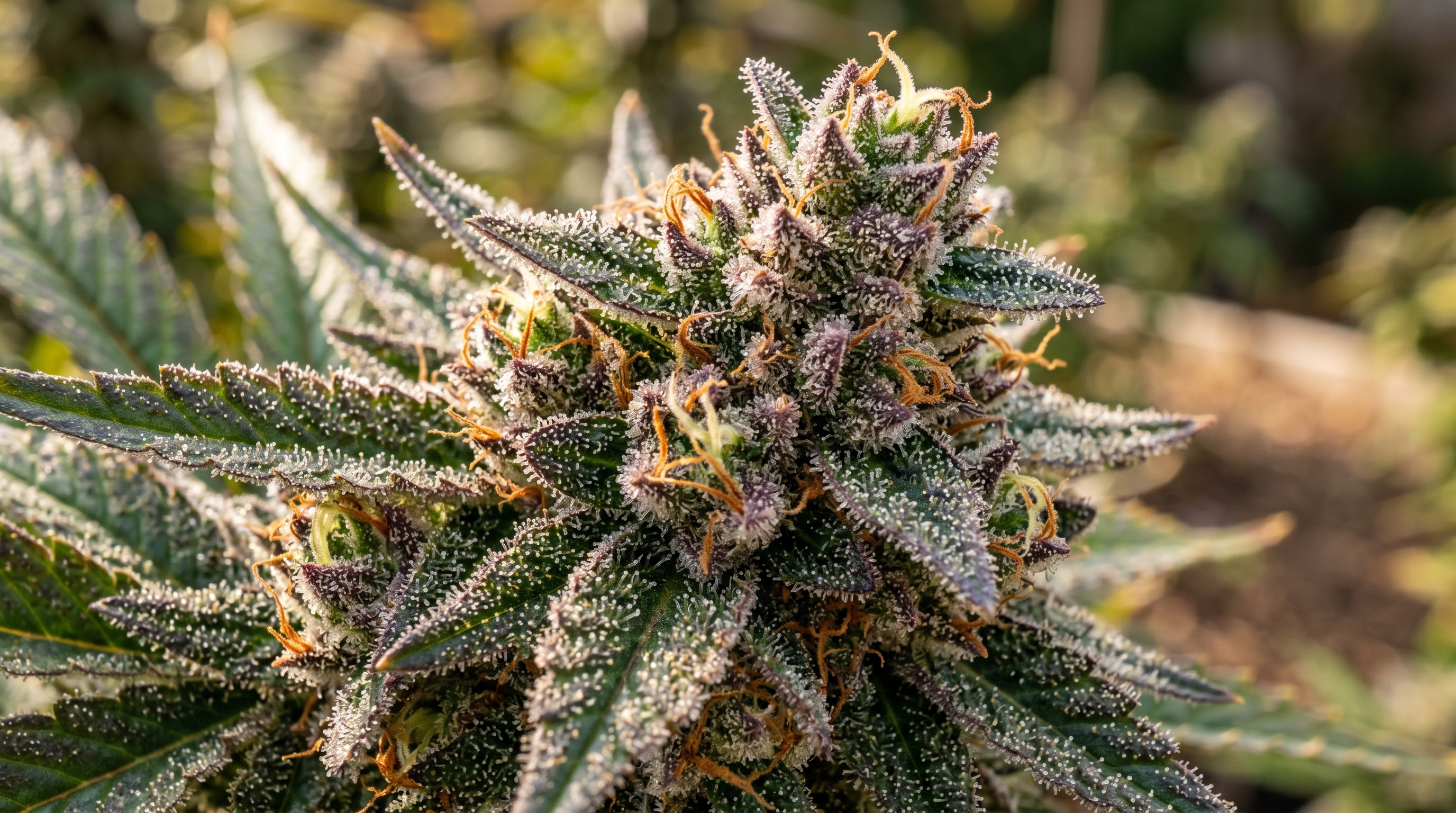
Plants interpret UV as a form of abiotic stress. When UVA and blue-wavelength light hit the canopy, the plant activates stress-response systems and begins synthesizing protective secondary metabolites: antioxidants, phenolic compounds, and terpenes. The terpenes serve a genuine protective function — they are partially UV-shielding and partially antimicrobial — but from a sensory standpoint, they are the thing that makes outdoor cannabis smell like it has been through something.
Research on UV supplementation in indoor environments confirms the mechanism while complicating simple prescriptions. Adding isolated UV to indoor grows yields mixed results — some studies show modest terpene concentration increases; others show no significant benefit or slight decreases. The distinction matters: natural sunlight delivers UV as part of a full-spectrum package that includes visible light at precise seasonal intensities, shifting day length, and diurnal temperature variation. Stripping out UV and adding it back as a single variable does not reproduce the same response.
The takeaway is not that UV alone is magic. It is that full-spectrum sunlight — as an integrated environmental signal — activates biochemical pathways that purpose-built indoor lighting does not fully replicate.
What the Research Actually Found
In a study published in Molecules (2023), researchers from Columbia University compared Red Velvet and Cheetah Piss cultivars grown from genetically identical stock — one group indoors under artificial light in a proprietary growing medium, one group outdoors in raised beds with natural soil and sunlight. The methodology was clean: same genetics, different environments.
The terpene findings were notable. Outdoor samples showed greater terpene diversity and significantly higher concentrations of sesquiterpenes including β-caryophyllene, α-humulene, α-bergamotene, α-guaiene, and germacrene B. One outdoor cultivar (Red Velvet) showed three-fold higher α-bergamotene levels than its indoor counterpart. Indoor samples were found to completely lack β-myrcene — a primary monoterpene — in at least one of the tested cultivars.
The cannabinoid data told a different story. Indoor-grown samples showed more oxidized and degraded cannabinoids. The researchers proposed an explanation: because outdoor plants produce more terpenes overall, those terpenes function as natural antioxidants, protecting cannabinoid compounds from oxidative degradation. Plants grown indoors, with fewer terpenes, have less of that protective buffer.
The conclusion from the authors: outdoor cultivation allows plants to “express the totality of their biochemical pathways.” Indoor environments, optimized for yield and cannabinoid concentration, may inadvertently constrain terpene pathway expression.
What Indoor Does Better
Indoor cultivation is not a compromise — it is a different product with real advantages.
Controlled environment agriculture removes weather risk, eliminates seasonal dependency, and allows year-round production on tight timelines. Pest pressure is dramatically lower, which means less intervention and more consistent quality. Humidity and temperature precision lets growers push cannabinoid accumulation in the final weeks of flower. The result is predictable: dense, visually consistent buds with high and reproducible THC and terpene concentrations within the range the cultivar was designed to express.
For concentrate production — live resin, rosin, distillate, vape cartridges — indoor’s potency advantage matters. When you are extracting from bulk starting material, cannabinoid density per gram of flower is a direct input cost. The best indoor flower is also engineered for visual appeal: tightly packed trichomes, vibrant color, structural uniformity. Shelf presence matters for retail, and indoor produces a more photogenic product.
If you want a consistent, high-THC experience and you are consuming in formats where aroma is secondary (edibles, vape carts, capsules), indoor flower and indoor-derived concentrate is the rational choice.
What Outdoor Does Better
Sun-grown cannabis has four distinct advantages: terpene breadth, terroir expression, minor cannabinoid preservation, and sustainability.
Terpene breadth. As the Columbia research demonstrated, outdoor plants express a wider range of sesquiterpenes and secondary aromatics. Terpene combinations, not individual compounds, drive the most interesting effects and aromas. A wider terpene palette means more potential for the kind of complex, layered sensory experience that distinguishes a memorable strain encounter from a generic high.
Terroir. The concept borrowed from wine is increasingly applicable to cannabis. Soil mineral content, local microbiome, seasonal light and temperature patterns — these variables leave chemical fingerprints in the plant. Growers in Southern Oregon’s Rogue Valley have documented up to seven distinct regional terroirs within the appellation. Researchers describe plants in that region absorbing qualities from volcanic mineral soils and crisp fall weather that trigger dense terpene production during final bloom. This kind of regional character is simply not available from an indoor grow room.
Minor cannabinoid preservation. Because outdoor-grown plants produce more terpene-based antioxidants, they also show less cannabinoid degradation post-harvest. The Columbia study found more rare cannabinoid variants — including C4- and C6-THCA analogs — in outdoor samples, with fewer oxidized byproducts like CBN. For consumers oriented toward entourage effect experiences, that molecular completeness has value.
Pinene, limonene, and terpinolene expression. In outdoor-grown cultivars, these lighter, more volatile monoterpenes often present at higher concentrations relative to their indoor counterparts, contributing to the brighter, more herbaceous top notes that experienced consumers associate with “wild” or “field” character.
The Sustainability Gap
This one is not subtle. Indoor cannabis cultivation is, by multiple independent assessments, among the most energy-intensive agricultural activities in the United States.
Producing one pound of indoor cannabis consumes approximately 2,000 to 3,000 kilowatt-hours of electricity — roughly equivalent to the annual electricity usage of an average American home for growing four pounds of flower. A 2021 Nature Sustainability study estimated that U.S. indoor cannabis cultivation generates approximately 44 million metric tons of CO2-equivalent emissions annually, roughly equivalent to the emissions of ten million passenger cars. Indoor cannabis now accounts for approximately one percent of all U.S. electricity consumption, a figure projected to approach three percent by 2035.
Outdoor cultivation, by contrast, runs almost entirely on solar energy. Irrigation draws some power; processing and drying operations consume electricity. But the fundamental cultivation energy input — light — is free. The carbon math is not close. An outdoor pound costs a fraction of the environmental footprint of an indoor pound.
For consumers who factor sustainability into purchasing decisions, sun-grown is the only rational choice. The terpene benefit is a bonus.
The Smell Difference — A Concrete Example
Consider Gelato, one of the most widely cultivated cultivars in the United States. Indoor Gelato — grown to specification by experienced cultivators — delivers a signature dessert profile: sweet cream, berry, vanilla, with caryophyllene providing a peppery backbone and limonene adding citrus brightness. The aroma is defined, reliable, and pleasant.
Outdoor Gelato from a well-run Emerald Triangle farm in its peak harvest month is a different experience. The same core terpenes are present. But layered beneath them are secondary aromatics that controlled environments don’t fully produce: earthy undertones from soil microbiome interaction, a subtle floral register from UV-stressed terpene expression, an almost fermented richness that experienced consumers sometimes call the “wild note.” The way terpenes shape sensory experience is not just about intensity — it is about the number of dimensions.
The indoor version is louder. The outdoor version is more complex. Those are different qualities, and neither is wrong — but they are not the same product.
Where to Find Quality Sun-Grown
Regional availability varies by market, but quality outdoor cannabis is most consistently found from:
Emerald Triangle (Northern California): Humboldt, Mendocino, and Trinity counties have decades of cultivation tradition and some of the best-suited growing conditions on Earth. Look for farms that list their county and growing practices. Certifications like “Sun+Earth Certified” or “Certified Kind” indicate verified outdoor, organic-adjacent practices.
Southern Oregon / Rogue Valley: The Rogue Valley appellation is increasingly recognized for high-quality sun-grown product with distinct regional terroir. Farms like Sol Cultivations and others in the Ashland corridor are producing terpene-forward outdoor flower competitive with premium indoor on all sensory metrics.
Dispensary sourcing: Ask specifically for “sun-grown,” “sungrown,” or “outdoor-cultivated” flower. Be cautious of “greenhouse” labeling — light-dep greenhouse production occupies a middle ground (UV-supplemented, but not full sunlight) and varies widely in quality.
Look at the top-ranked strains for outdoor growing conditions for cultivar recommendations suited to maximum terpene expression in natural sunlight.
The Trade-Off Choice
For vapor connoisseurs — those consuming flower via dry-herb vaporizer or rolling it into joints — outdoor sun-grown is the strongest case for your palate. The expanded terpene palette expresses most fully at the lower temperatures that vaporizers allow. You are tasting the terroir, not just the cultivar.
For high-potency concentrates, vape cartridges, and edibles where THC density is the primary input, premium indoor-derived material is the practical choice. The production math favors it.
For consumers oriented toward balanced effect profiles and whole-plant therapeutics, sun-grown’s more complete minor cannabinoid and terpene expression — as suggested by the Columbia study’s findings — may provide a more nuanced experience than high-THC indoor cultivars bred primarily for potency.
The Side-by-Side Exercise
If you have not deliberately compared indoor and outdoor versions of the same cultivar, the experiment is worth running. Purchase the same strain — Gelato, Blue Dream, Zkittlez — from two sources, one indoor and one confirmed outdoor, harvested within the same season.
Smell each cold, before any heat is applied. Indoor will likely register as more intense on first contact. Outdoor will likely reveal more layers as you continue to smell. The top note flattens more quickly; the secondary aromatics linger.
Then vaporize both at the same temperature. Note whether the aromatic complexity you detected cold carries through to vapor. Many experienced consumers find that outdoor’s broader terpene profile translates to longer-lasting flavor across the heat spectrum. Understanding what you are smelling transforms consumption from habit into an active practice.
Tracking your preferences across grow environments is genuinely high-value cannabis self-knowledge — the same way wine consumers track region and vintage. The High IQ app lets you log strain sessions with environment tags (indoor, outdoor, greenhouse) so patterns emerge over time. Your palate is the data. Might as well collect it.
The Bottom Line
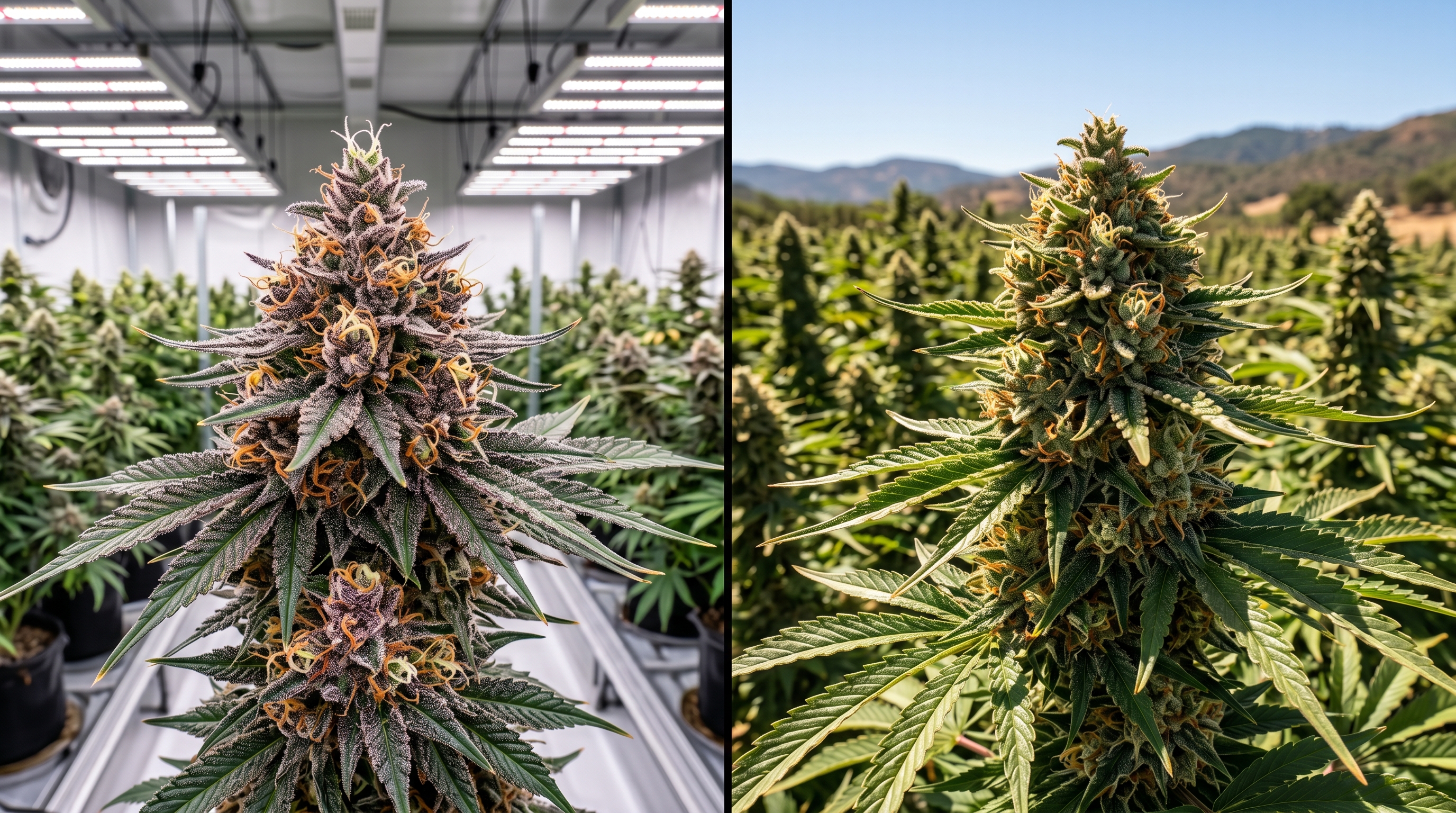
The science does not declare a winner in absolute terms. It reveals that indoor and outdoor cannabis are optimizing for different things. Indoor optimizes for cannabinoid concentration, visual quality, and production consistency. Outdoor optimizes for terpene diversity, terroir expression, and sustainability.
For consumers who have been making decisions based on THC percentage alone, the research on outdoor terpene profiles is a legitimate reason to reconsider. The most complex, aromatically interesting cannabis available in any legal market is almost certainly sun-grown. It may not have the highest THC number on the shelf. It is made by a plant that had to work for what it produced.
That difference, it turns out, you can smell.
Sources
- Comparison of the Cannabinoid and Terpene Profiles in Commercial Cannabis from Natural and Artificial Cultivation — Molecules, 2023 (PMC9861703). Columbia University study comparing Red Velvet and Cheetah Piss cultivars grown in identical genetics under natural vs. artificial conditions.
- The greenhouse gas emissions of indoor cannabis production in the United States — Nature Sustainability, 2021. Industry-wide emissions estimated at 44 million metric tons CO2e annually.
- The carbon footprint of indoor cannabis production — Lawrence Berkeley National Laboratory / Energy Policy, 2012. Energy intensity benchmarks: 2,000–3,000 kWh per pound of indoor cannabis.
- UV light and secondary metabolite production in cannabis — Valoya Lighting Research. Mechanism of UVA stress response and terpene pathway activation.
- Influence of different UV spectra and intensities on yield and quality of cannabis inflorescences — PMC, 2024 (PMC11685020). Controlled indoor UV supplementation results.
- Cannabis Inflorescence Yield and Cannabinoid Concentration Are Not Increased With Exposure to Short-Wavelength Ultraviolet-B Radiation — PMC, 2021 (PMC8593374). Limits of isolated UV-B supplementation.
