THC Shows No Brain Aneurysm Risk While Alcohol Doubles It
A 2026 cohort of 954 patients found alcohol roughly doubles brain aneurysm rupture risk while cannabis showed no significant link. The data, with caveats.

Professor High
The Bottom Line, Up Front
A prospective cohort study published in April 2026 out of University Hospital Essen in Germany tracked 954 patients with intracranial aneurysms over seven years. The researchers measured substance use and watched who ruptured and who didn’t. The results are stark.
Risky alcohol consumption — defined as more than 20 grams per day for men and more than 10 grams per day for women — was independently associated with roughly double the risk of aneurysm rupture (adjusted odds ratio 2.00, 95% CI 1.07–3.75, p=0.031). Among those who did rupture, risky drinkers were more than three times more likely to present with a clinically severe hemorrhage (aOR 3.26, 95% CI 1.34–7.95, p=0.009).
THC use? The researchers found no significant association with rupture or severity.
That’s the headline. Now let’s understand what it means, what it doesn’t mean, and what you should actually do with this information.
What a Brain Aneurysm Actually Is
To understand why this finding matters, you first need a clear picture of what we’re talking about.
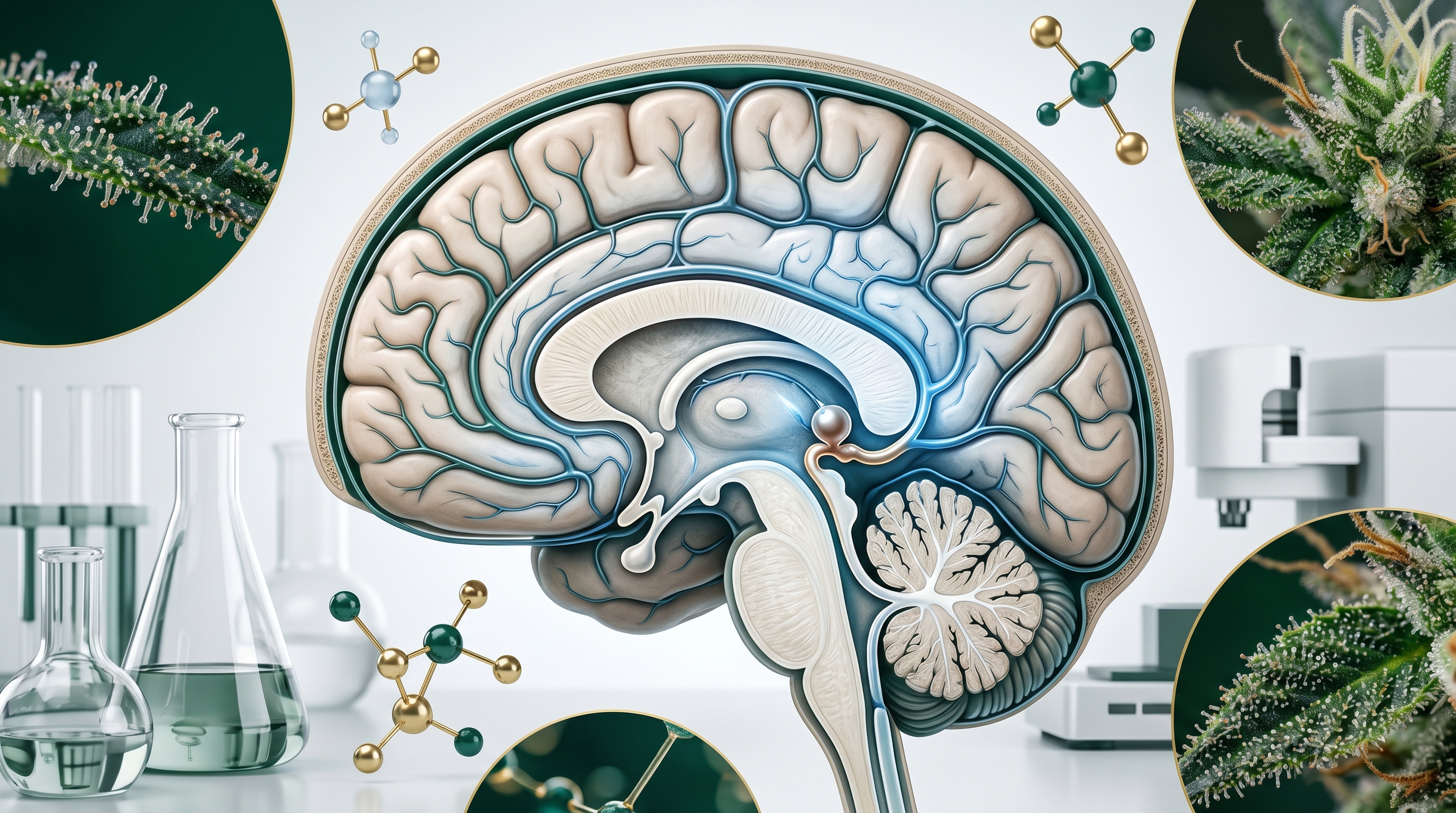
An intracranial aneurysm is a weak spot in the wall of a cerebral artery that balloons outward, like a blister on a garden hose. Most are small — a few millimeters — and never cause symptoms. An estimated 2–3% of adults are walking around with one right now and have no idea. They’re typically discovered incidentally, during imaging done for an unrelated headache or after a family member suffers a rupture.
The danger is rupture. When an aneurysm ruptures, it bleeds into the space surrounding the brain — a subarachnoid hemorrhage (SAH). The consequences are severe. Roughly 30–50% of people who suffer a subarachnoid hemorrhage die within the first month. Of those who survive, many face permanent neurological deficits. The ones who make it through intact are lucky — and often describe the rupture as “the worst headache of my life,” a phrase neurologists treat as a medical emergency until proven otherwise.
Identifying what causes rupture — and what doesn’t — is therefore one of the more consequential questions in cerebrovascular medicine. If alcohol is genuinely doubling the risk, that’s a modifiable factor. If cannabis isn’t contributing, that matters too.
What the Essen Study Did
The study was a prospective, single-center observational cohort — meaning researchers enrolled real patients, gathered data on their habits, and followed what happened over time, rather than working backward from outcomes. Data was collected between July 2016 and October 2023 at the University Hospital Essen, a major neurovascular referral center.
The 954 patients all had confirmed intracranial aneurysms — some ruptured on arrival, others unruptured. Exposure definitions were specific:
- Risky alcohol use: Men consuming more than 20 grams of ethanol per day; women consuming more than 10 grams per day. (For context: a standard German beer contains roughly 14 grams of ethanol. One glass of wine is approximately 12–15 grams.)
- THC use: Self-reported recreational cannabis consumption. Roughly 5.3% of the cohort reported cannabis use — a number the authors acknowledge is likely an undercount, particularly since the data was collected before Germany’s cannabis legalization took effect in April 2024.
Outcome was aneurysm rupture and clinical severity of the resulting hemorrhage, graded on the World Federation of Neurosurgical Societies (WFNS) scale.
The researchers used multivariate logistic regression to adjust for standard confounders including age, sex, hypertension, smoking, and aneurysm size and morphology. The alcohol finding held up after adjustment. The cannabis finding — or rather, non-finding — also held up: no statistically significant association, in either direction, once confounders were controlled.
The Numbers, Stated Precisely
For alcohol:
- Adjusted OR for rupture: 2.00 (95% CI 1.07–3.75, p=0.031)
- Adjusted OR for severe hemorrhage (WFNS IV-V): 3.26 (95% CI 1.34–7.95, p=0.009)
For THC:
- No significant association with rupture. The confidence intervals were wide — as expected with only ~50 cannabis users in the cohort — and the point estimate did not reach significance in either direction.
This is not the same as proving cannabis is safe for aneurysm patients. A null finding in a small subgroup means we don’t have the statistical power to detect a moderate effect if one exists. What we can say is that, in this dataset, alcohol was a clear signal and cannabis was not.
Why This Tracks Mechanically
The alcohol finding isn’t surprising when you understand the underlying physiology.
Alcohol and cerebrovascular risk have a well-documented relationship. Heavy alcohol consumption causes acute spikes in blood pressure — a major mechanical stressor on aneurysm walls — and chronic heavy use promotes arterial inflammation and impairs the structural integrity of vessel walls. Alcohol also disrupts platelet aggregation and fibrinolysis in ways that, paradoxically, can both increase bleeding tendency and promote thrombosis depending on timing and dose. The mechanism for rupture is primarily the acute hemodynamic hit: sudden BP elevation straining a structurally compromised arterial wall.
Meta-analytic data backs this up. A 2025 systematic review found that excessive alcohol intake (≥150 g/week) was associated with roughly 2.5x elevated risk of subarachnoid hemorrhage compared to abstinence in cohort studies — consistent with the Essen finding. A large U.S. study from Brigham and Women’s / Mass General (4,701 patients, 6,411 confirmed aneurysms) found current alcohol use was associated with rupture (OR 1.36, 95% CI 1.17–1.58), with risk scaling with daily consumption quantity. Former drinkers showed no significant effect — suggesting the risk is dynamic, not permanent.
What about cannabis? THC does produce acute cardiovascular effects. Heart rate increases transiently — typically by 20–40 beats per minute for the first 30–60 minutes after inhalation. Blood pressure responses are more variable: a brief initial increase, then potential reduction, with orthostatic hypotension (blood pressure dropping when you stand) being a real effect in some users. The endocannabinoid system plays a modulatory role in vascular tone through CB1 receptors on smooth muscle, but the net hemodynamic effect of typical cannabis use appears modest and transient compared to the sustained vascular stress of chronic heavy drinking.
There are also signals — via CB2 receptor activity — suggesting anti-inflammatory effects on vasculature, though this research is early and mostly preclinical. The point isn’t to paint cannabis as cardioprotective. It’s that the mechanism for catastrophic vessel rupture doesn’t map onto what we know about how cannabinoids interact with blood vessels.
The Limitations We Have to Acknowledge
Intellectual honesty requires stating these clearly.
Sample size is moderate. 954 patients is a meaningful cohort for a single-center prospective study, but the cannabis subgroup — approximately 50 individuals — is small. This limits statistical power substantially. A moderate cannabis-associated risk (say, OR 1.4 or 1.5) would likely be undetectable at this N.
Self-reported substance use is noisy. This is true for both alcohol and cannabis, but arguably more so for cannabis. Patients speaking with hospital staff about their habits before legalization may systematically underreport. The authors explicitly flag this. Underreporting biases the cannabis finding toward null — meaning if anything, the true picture might look somewhat worse for cannabis than what this study found. Or it might not. We genuinely can’t tell from this data alone.
Single-center, single-country design. Essen is a tertiary referral center. Its patient population isn’t necessarily representative of the broader population with intracranial aneurysms. German drinking culture and cannabis exposure patterns differ from those in the U.S., Netherlands, or Canada.
Observational design can’t establish causality. The adjusted OR for alcohol is compelling, but unmeasured confounders — stress, diet, other substance co-use — always exist. This is a signal, not a verdict.
Pre-legalization data. Most of the data was collected before April 2024, when Germany decriminalized recreational cannabis. Usage patterns, potency, and the type of cannabis consumed may shift substantially in post-legalization cohorts. Future studies will need to capture this.
Cannabis Cardiovascular Risk: The Honest Picture
For context on where this study sits within the broader literature, it’s worth stepping back.
The most cited cardiovascular concern for cannabis is acute MI triggering, documented by Mittleman et al. in the landmark 2001 Determinants of Myocardial Infarction Onset Study (Circulation, 2001). In 3,882 post-MI patients, cannabis smoking in the hour before infarction was associated with a 4.8-fold elevated risk of MI onset during that specific window (95% CI 2.4–9.5). The risk dropped sharply thereafter — by the second hour, it was no longer statistically significant.
This sounds alarming until you understand the denominator. Among people without established coronary artery disease and without multiple cardiac risk factors, the absolute risk remains very low. The effect is real, it’s an acute hemodynamic trigger, and it matters most in older adults with pre-existing disease. It does not translate to a broad population-level elevation in MI rates that rivals alcohol or tobacco.
Population-level data is mostly reassuring for cerebrovascular outcomes specifically. A nationwide U.S. retrospective cohort of 42,394 aSAH patients (2020) found cannabis users and non-users had similar mortality and complication rates after adjustment. A descriptive study at Neurology (2022) noted cannabis users had similar complication rates to published aSAH norms, with lower-than-expected in-hospital mortality. None of these studies establish cannabis as protective — they establish that cannabis users don’t appear to be dramatically worse off than non-users in cerebrovascular outcomes.
There are also case reports linking heavy cannabis use, particularly in young adults using high-potency concentrates, to reversible cerebral vasoconstriction syndrome (RCVS) — a condition of diffuse arterial spasm that can cause thunderclap headache and stroke. RCVS is rare, its link to cannabis is based on case series (not population data), and it appears more associated with heavy or acute high-dose use than typical moderate consumption. It is worth knowing about. It is not the same as the general population risk being studied in the Essen cohort.
The honest picture: cannabis is not cardiovascularly neutral, particularly for certain populations and in acute heavy use. But the data does not support placing it in the same risk tier as alcohol or tobacco for cerebrovascular catastrophe at usual doses in adults without severe pre-existing disease.
Where the Data Doesn’t Support the Headline
There are real gaps in what this study — and the broader literature — can tell us.
Heavy concentrate use in young adults is understudied. The cannabis market has shifted dramatically toward high-THC concentrates (dabs, wax, shatter) with potency levels that bear little resemblance to the cannabis studied in 2001 or even 2016 research. Acute cardiovascular effects of a 90% THC dab are almost certainly more intense than those of a 12% THC flower joint. We don’t have good population-level data on aneurysm risk in this exposure group.
Daily heavy users may carry different risk than moderate users. The Essen study’s THC exposure was binary (use vs. no use), not dose-stratified. A daily concentrate user and a weekend vaporizer user were coded the same way. Any elevated signal in heavy users could be diluted by the larger moderate-use group.
Long-term effects on vessel wall integrity are understudied. Most of what we know about cannabis and vasculature is about acute hemodynamic effects, not chronic structural changes. Alcohol’s chronic vessel damage is well-documented across decades of research. The equivalent cannabis literature is thin.
This isn’t an argument that cannabis is risk-free. It’s an argument that the comparison — alcohol vs. cannabis — is genuinely asymmetric based on available evidence, while acknowledging that the cannabis side of the ledger has real unknowns.

What This Means If You Have Relevant Risk Factors
If you have a known unruptured intracranial aneurysm: Talk to your neurovascular surgeon. Based on the existing literature — including this study — the conversation about alcohol is well-supported: risky drinking appears to meaningfully increase rupture risk, and the Essen data suggests that even severe hemorrhage outcomes are worse in heavy drinkers. That’s a lever worth discussing with your care team. The cannabis conversation is less clear-cut, but the principle of minimizing acute hemodynamic stressors — anything that spikes blood pressure — is reasonable advice.
If you have a family history of subarachnoid hemorrhage: First-degree relatives of SAH patients have meaningfully elevated aneurysm prevalence. Screening with MRA or CTA is something to discuss with a neurologist. The same substance-use considerations apply.
If you have hypertension or other vascular risk factors: These are already established modulators of aneurysm risk and rupture susceptibility. Blood pressure management is the highest-yield intervention across every study in this literature. Alcohol raises blood pressure. Cannabis effects on blood pressure are variable and context-dependent.
For the general adult cannabis consumer without known cerebrovascular disease: The data, including this study, does not support alarm about typical moderate cannabis use and brain aneurysm risk. The signal simply isn’t there in the way it is for alcohol. That said, “no significant association found” is not the same as “confirmed safe” — especially given the limitations outlined above.
Terpenes and the Vascular Context
It’s worth noting that the cardiovascular effects of cannabis aren’t THC-only. Certain terpenes influence vascular tone and blood pressure through mechanisms independent of CB1 and CB2 receptor activation.
Beta-caryophyllene, the most common terpene in cannabis and the only one known to bind directly to CB2 receptors, has demonstrated anti-inflammatory effects in preclinical models — relevant to vascular health. Strains high in caryophyllene are common across the Relief High Family, which skews toward lower-energy, body-focused effects.
Limonene and myrcene have each shown mild vasodilatory effects in animal studies, though clinical human data on cerebrovascular effects remains limited.
None of this translates to strain-specific aneurysm risk guidance — the research simply isn’t there. But it reinforces why whole-plant cannabis is pharmacologically complex, and why treating it as a monolithic substance overstates the certainty of any single finding.
If you’re thinking about strain selection from a cardiovascular lens, strains with balanced or lower THC levels and the calming effects associated with the Balance High Family tend to produce more modest acute hemodynamic responses than high-THC, high-energy cultivars. Strains like Blue Dream, Harlequin, or ACDC represent the lower-intensity end of the cardiovascular stimulation spectrum.
What Informed Consumption Actually Looks Like
The deeper principle here isn’t just about aneurysms. It’s about understanding your own physiological response to cannabis over time — because that response varies significantly by person, dose, tolerance, and context.
Blood pressure response. Heart rate change. Any subjective cardiovascular symptoms like pounding in the chest, sudden headache, or dizziness. These are things that can and should be tracked if you’re a regular consumer who cares about your health.
The High IQ app was built for exactly this kind of personal pattern-matching — logging sessions, tracking what you used, and building a picture of how different strains and consumption methods affect you specifically. No two people respond to cannabis identically. Population-level research tells you about averages; your personal data tells you about you.
If anything in your cannabis experience produces symptoms that concern you — and especially if you have any cardiovascular history or family history of brain aneurysms — your doctor’s judgment matters more than any published study, including the one we just spent 1,800 words unpacking.
This article is for educational purposes only. It does not constitute medical advice. If you have a known intracranial aneurysm, family history of subarachnoid hemorrhage, or any cardiovascular condition, please discuss substance use with a qualified neurologist or neurovascular specialist.
Related Reading
- Cannabis and Alcohol: What Happens When You Mix Them
- Cannabis and Heart Health: What Cardiovascular Research Shows
- Cannabis and Drug Testing: How Long THC Stays in Your System
- 100 Cannabis Tips Every Consumer Should Know
Sources
-
Oppong MD, et al. “Recreational substance use and aneurysmal subarachnoid hemorrhage.” PMC / University Hospital Essen. Published April 23, 2026. PMC13102730.
-
Can A, Castro VM, Ozdemir YH, et al. “Alcohol Consumption and Aneurysmal Subarachnoid Hemorrhage.” Translational Stroke Research. 2018;9(1):13–19. doi:10.1007/s12975-017-0557-z
-
Ali M, et al. “Risk factors of aneurysmal subarachnoid hemorrhage including analysis by sex.” University of Utrecht / dspace.library.uu.nl. 2025. (Systematic review, 67 studies, n=5,743,262)
-
Mittleman MA, Lewis RA, Maclure M, Sherwood JB, Muller JE. “Triggering Myocardial Infarction by Marijuana.” Circulation. 2001;103(23):2805–2809. doi:10.1161/01.CIR.103.23.2805
-
Dandurand C, et al. “Cannabis use and outcomes after aneurysmal subarachnoid hemorrhage: A nationwide retrospective cohort study.” Journal of Clinical Neuroscience. 2020;72:98–101. doi:10.1016/S0967-5868(19)31930-7
-
Caron JL, et al. “Cannabis Use and Outcomes in Patients With Aneurysmal Subarachnoid Hemorrhage.” Stroke. 2016;47(5):1371–1373. doi:10.1161/STROKEAHA.116.013099
-
Yang S, Zhou J, Ji X. “Evaluating the effects of recreational drug use on ruptured cerebral arteriovenous malformation presentation and in-hospital outcomes.” Journal of NeuroInterventional Surgery. Published January 26, 2025. doi:10.1136/jnis-2024-022398
-
Zhao L, et al. “Alcohol Abuse Associated With Increased Risk of Angiographic Vasospasm and Delayed Cerebral Ischemia in Patients With Aneurysmal Subarachnoid Hemorrhage Requiring Mechanical Ventilation.” Frontiers in Cardiovascular Medicine. 2022;9:825890.
-
Mika W, Słowik J, Sieradzka I, Wajda K. “Alcohol Abuse and its impact on Aneurysmal Subarachnoid Hemorrhage: A Narrative Review.” Journal of Education, Health and Sport. 2025;85:66459.
-
Chiu RG, et al. “Cannabis Abuse and Perioperative Complications After Treatment of Intracranial Aneurysms: A Nationwide Analysis.” World Neurosurgery. 2022;158:e18. doi:10.1016/j.wneu.2021.10.147
