The Cannabis Sommelier: Tasting, Pairing & Evaluation
Discover the emerging art of cannabis sommeliership—how terpene science and sensory training are transforming the way we taste, evaluate, and pair flower.

Professor High
Your friendly cannabis educator, bringing science-backed knowledge to the community.
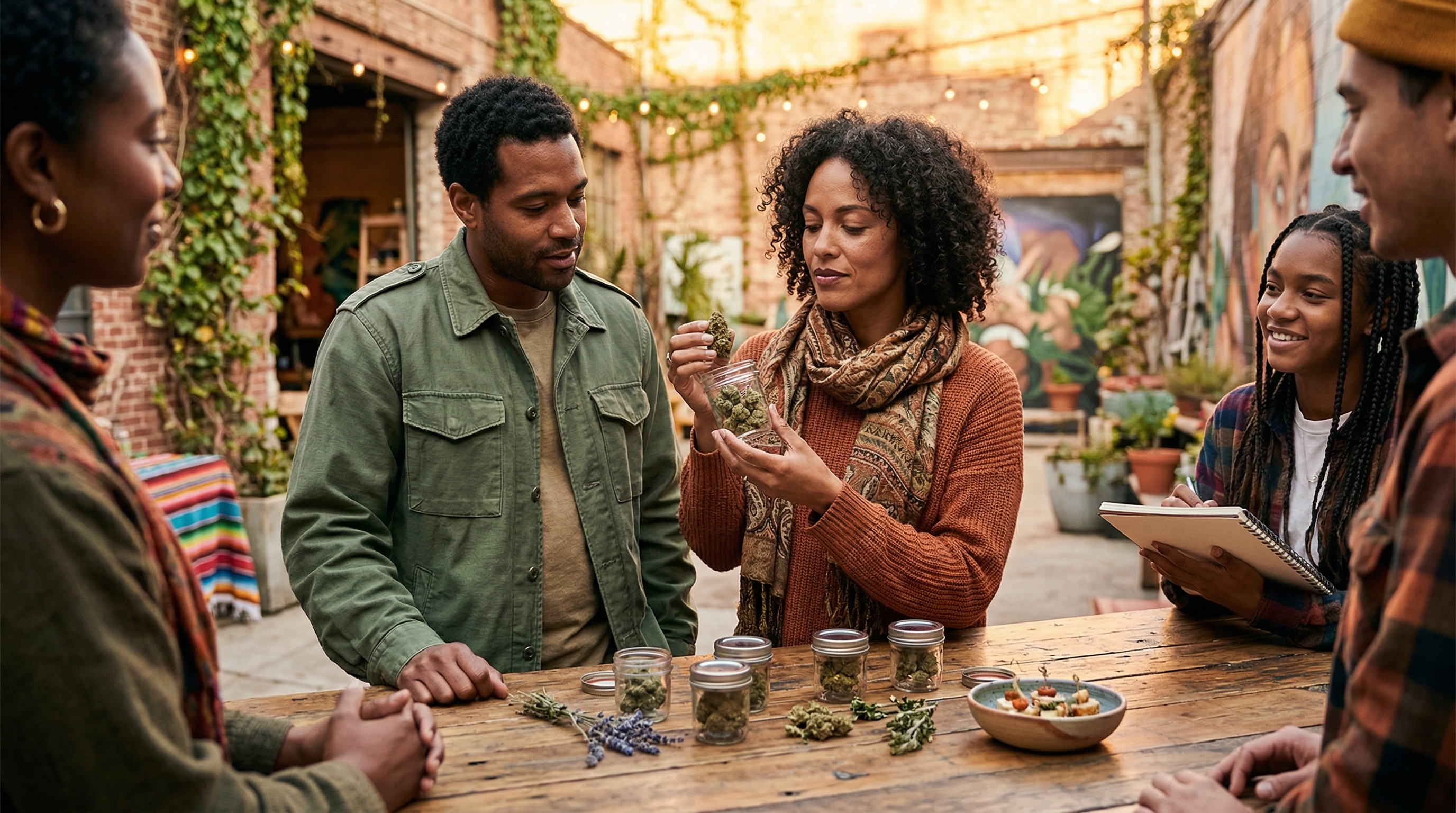
Cannabis sommeliers use terpene science and trained senses to evaluate flower, pair strains with food and experiences, and predict effects more accurately than any THC label. This guide covers how they do it—and how you can start.
You Already Know More Than You Think
Here’s a surprising fact: your nose can distinguish over one trillion different scent combinations [Bushdid et al., 2014]. Every time you crack open a jar of cannabis and inhale, your brain performs chemical analysis more precise than most lab instruments. You just haven’t learned to translate what it’s telling you.
Welcome to the world of the cannabis sommelier.
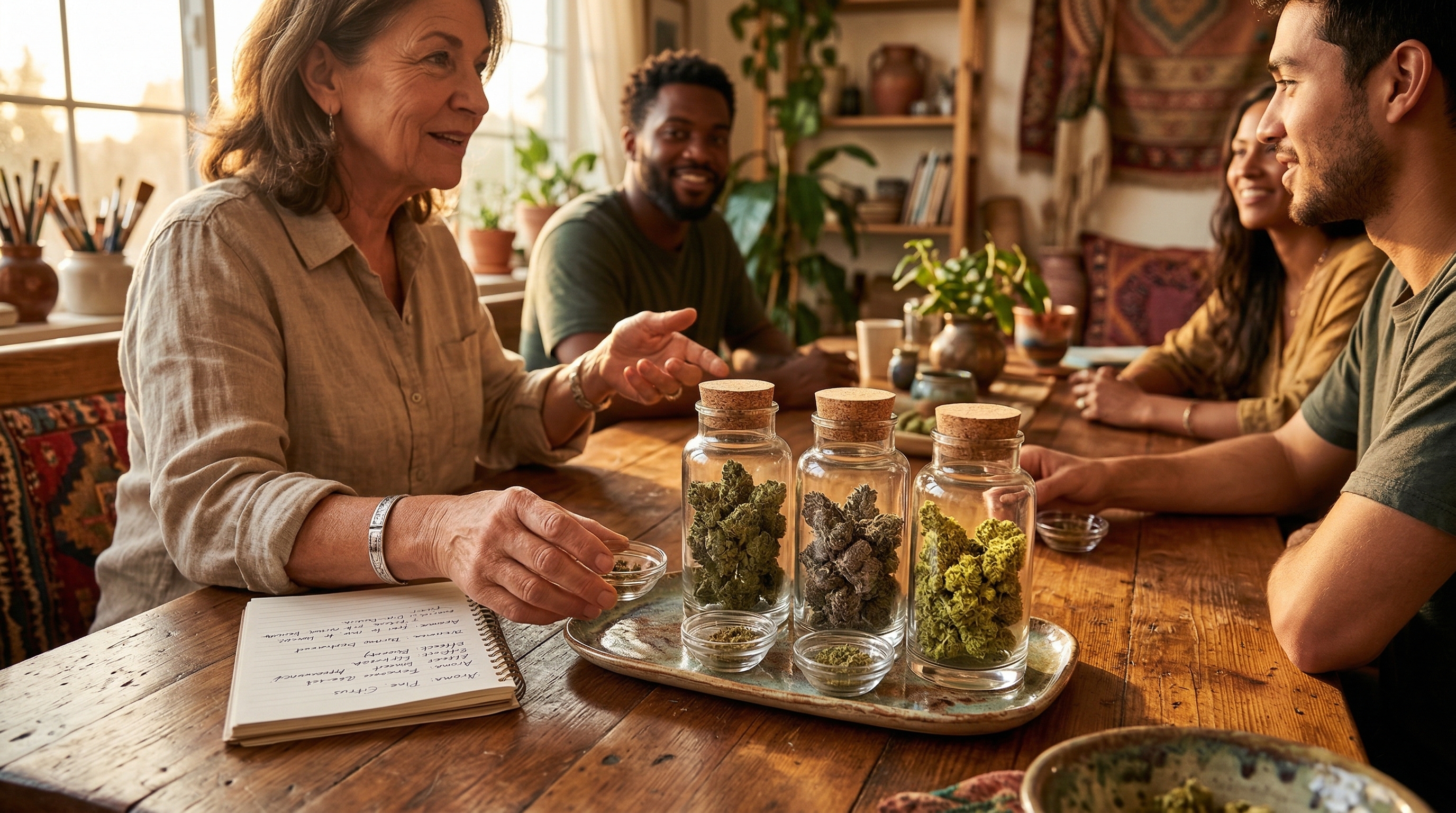
You’ve probably heard of wine sommeliers—those folks who can identify a grape varietal, region, and vintage from a single sip. A growing community of cannabis professionals is applying the same disciplined, sensory-driven approach to flower. They’re developing tasting vocabularies, building pairing frameworks, and grounding all of it in terpene science. And the best part? You don’t need a certification to start. You just need curiosity and a willingness to slow down.
In this article, you’ll learn the science behind how we perceive cannabis flavor and aroma, how professionals evaluate flower using structured tasting methods, and how you can start pairing strains with food, music, and experiences using terpene chemistry as your guide. Think of it as upgrading from “this smells good” to understanding why it smells good—and what that means for how it’ll make you feel.
The Science of Cannabis Flavor and Aroma
How Your Senses Decode a Strain
When you smell cannabis, you’re detecting volatile organic compounds—primarily terpenes and terpenoids—that evaporate from the plant’s trichomes at room temperature. These aren’t just pleasant scents. They’re molecular signals that interact with your olfactory receptors, which send information directly to your brain’s limbic system, the region responsible for emotion, memory, and mood [Sell, 2014].
Think of it like this: when you smell a lemon, you don’t just register “citrus.” Your brain might flash to summer, a kitchen, a feeling of freshness. Cannabis terpenes work the same way. Limonene triggers bright, uplifting associations. Myrcene signals earthiness and calm. Caryophyllene delivers a spicy, warm complexity. Your nose is reading the strain’s chemical personality before you ever light up.
Professional cannabis sommeliers take this a step further. They use a structured evaluation method that typically assesses:
- Appearance — trichome density, color, structure
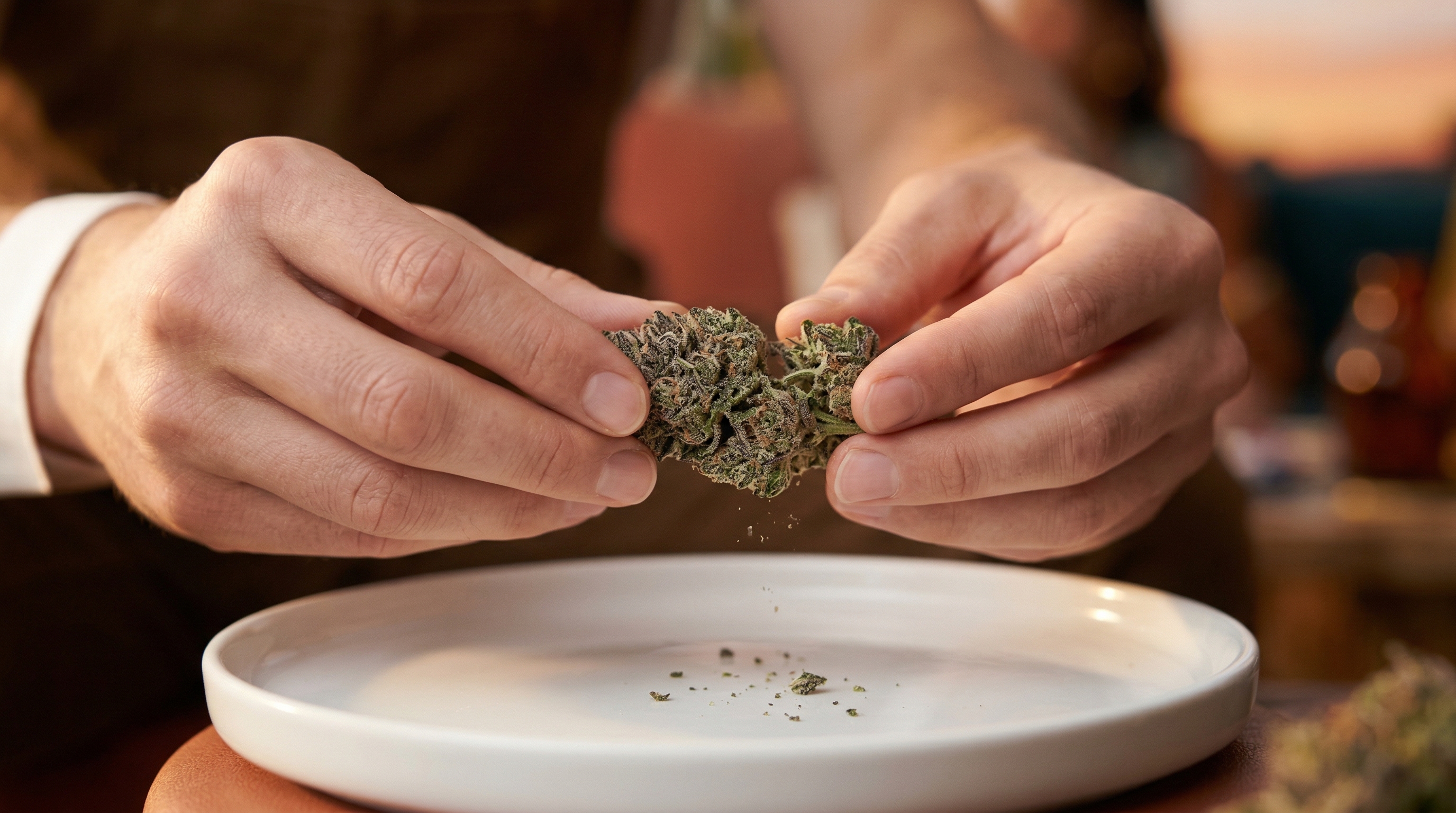
- Aroma (nose) — breaking the bud to release trapped volatiles
- Flavor (palate) — taste on inhale and exhale at low temperatures
- Effect (experience) — onset, duration, and character of the high
- Finish — lingering flavors and the tail end of the experience
This isn’t pretentious—it’s practical. By paying attention to each stage, you build a mental library that helps you predict what you’ll enjoy.
The Cannabis Tasting Wheel
Just as wine professionals use an aroma wheel to standardize language, cannabis sommeliers use a tasting wheel to build a shared vocabulary. The outer rings get increasingly specific: the broad category “earthy” branches into “soil,” “mushroom,” and “wood.” “Citrus” splits into “lemon,” “orange,” “grapefruit,” and “lime.” This standardization—first developed for professional use by labs like Confidence Analytics in Washington State—lets tasters communicate precisely about what they’re experiencing rather than reaching for vague adjectives.
The major aroma categories on a cannabis tasting wheel include:
| Category | Descriptors | Primary Terpenes |
|---|---|---|
| Citrus | Lemon, lime, orange, grapefruit | Limonene, Terpinolene |
| Earthy | Soil, mushroom, wood, hay | Myrcene, Humulene |
| Floral | Lavender, rose, jasmine | Linalool, Ocimene |
| Spicy / Herbal | Pepper, clove, basil, mint | Caryophyllene, Pinene |
| Fuel / Chemical | Diesel, gas, ammonia | Various sulfur compounds |
| Sweet / Fruity | Berries, mango, tropical | Myrcene, Ocimene, Terpinolene |
| Pine / Fresh | Forest, rosemary, menthol | Alpha-Pinene, Beta-Pinene |
Building fluency with this wheel takes time, but blind tasting side-by-side samples—as practiced at professional cannabis competitions and Ganjier training events in Humboldt, CA—accelerates the learning dramatically.
What the Research Shows
The connection between terpenes and subjective cannabis experience is one of the most exciting frontiers in cannabis science. Dr. Ethan Russo’s landmark paper on the entourage effect proposed that terpenes don’t just add flavor—they actively modulate how cannabinoids like THC and CBD interact with your body [Russo, 2011]. For example, research suggests that linalool may enhance calming effects, while pinene may help counteract some of THC’s short-term memory impairment.
A more recent study by Lavender et al. (2022) found that consumers could reliably distinguish between terpene profiles in blind tests and that those profiles correlated with reported subjective effects more strongly than THC percentage alone. In other words, your nose may be a better predictor of your experience than the number on the label.
Key insight: Terpene profiles—not THC percentages—appear to be the strongest predictor of how a strain will actually feel. Your nose knows.
That said, this field is still young. Much of the evidence comes from preclinical or observational studies, and more controlled human trials are needed. But the direction is clear: flavor and effect are deeply intertwined.
Practical Implications: Pairing Like a Pro
This is where it gets fun. Once you understand that terpenes drive both flavor and experience, you can start making intentional pairings—matching strains to foods, activities, and moods the way a wine sommelier matches bottles to courses.
The guiding principle mirrors classical food-and-wine pairing theory: complement or contrast. Complementary pairings echo the same aroma families between the strain and the food (a limonene-dominant strain paired with a lemon tart deepens both the citrus experience and the uplifting mood). Contrasting pairings use opposing profiles to create balance (an earthy myrcene-forward strain cutting through the sweetness of a rich chocolate dessert).
Here’s how to think about it using the High Families system, which classifies strains by their terpene chemistry rather than the outdated indica/sativa binary:
Pairing by High Family
| High Family | Dominant Terpenes | Pairs Well With |
|---|---|---|
| Uplifting High | Limonene, Linalool | Citrus desserts, brunch, live music, creative projects |
| Energetic High | Terpinolene, Ocimene | Morning hikes, green tea, podcasts, deep cleaning |
| Relaxing High | Myrcene, high CBD | Dark chocolate, ambient music, warm baths, stargazing |
| Relieving High | Caryophyllene, Humulene | Spicy foods, restorative yoga, massage, slow cooking |
| Entourage High | Multi-terpene complex | Multi-course meals, nature immersion, film marathons |
| Balancing High | Low terpene profiles | Light snacks, casual hangouts, journaling |
Specific Strain Pairing Examples
Here are three concrete pairings—inspired by how Brooklyn chefs and cannabis professionals are thinking about terpene-driven menus:
Caryophyllene-dominant strains (e.g., GSC, Bubba Kush): The peppery, woodsy notes echo the complexity of grass-fed beef, aged hard cheeses, or a bold red wine. Think a ribeye with compound butter, or a cheese board built around aged gouda and dark rye.
Limonene-dominant strains (e.g., Super Lemon Haze, Strawberry Cough): The bright citrus profile cuts through richness the way a squeeze of lemon does on seafood. Pair with ceviche, lemon-dressed salads, or citrus-glazed white fish. Matches beautifully with a crisp Sauvignon Blanc or sparkling water with citrus peel.
Myrcene-dominant strains (e.g., Blue Dream, Granddaddy Purple): The earthy, musky depth complements roasted root vegetables, earthy mushroom dishes, and funky fermented foods. Try it alongside a slow-roasted beet salad or a mushroom risotto.
How to Start Your Own Tasting Practice
You don’t need a Humboldt immersion or a $3,000 Ganjier certification to develop real skill. Here’s a practical progression:
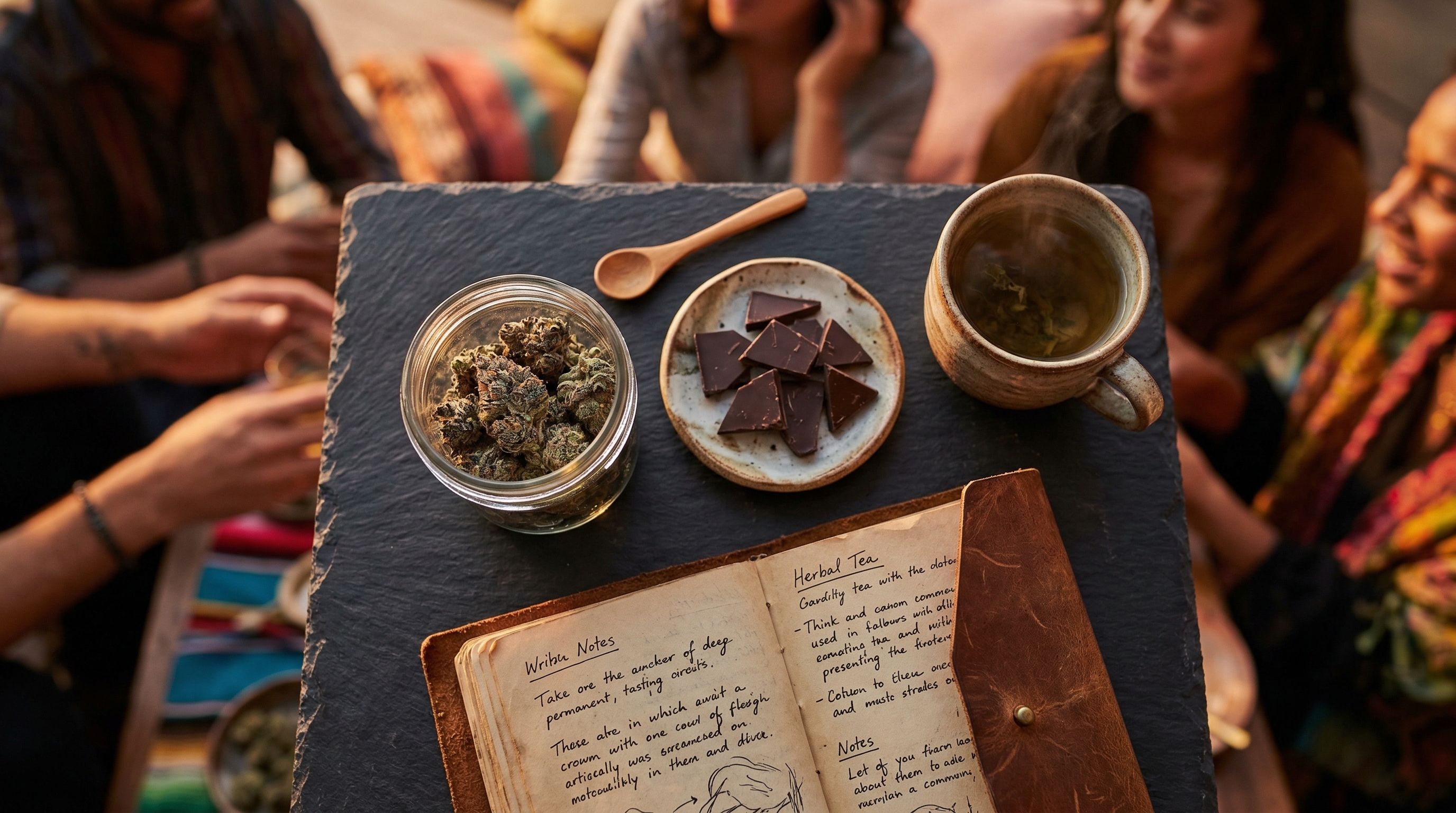
- Get a tasting journal. Write down strain name, aroma notes, flavor notes, and effects. Over time, you’ll see patterns emerge—your nose will develop preferences and consistency.
- Smell before you consume. Break the bud, cup it in your hands, and inhale slowly. Try to name three distinct scents using the tasting wheel categories above.
- Use low temperatures. Vaporizing at 315–375°F preserves terpenes that combustion destroys, giving you a cleaner flavor read. Lower temps favor floral and citrus terpenes; higher temps unlock earthy and spicy notes.
- Compare two strains side by side. Contrast is the fastest way to train your palate. Pick strains from different High Families for maximum distinction—a limonene-dominant and a myrcene-dominant strain will feel like completely different sensory worlds.
- Pair intentionally. Before your next session, choose a food or activity that matches the strain’s terpene profile. Notice how the combination feels. Document it.
The Ganjier program’s Systematic Assessment Protocol (SAP)—used by certified cannabis sommeliers in professional evaluation—breaks this into quantified scores for intensity, complexity, uniqueness (aroma), smoothness and longevity (flavor), and onset and duration (experience). You don’t need the app to adopt the mindset: slow down, pay attention, and score each element deliberately.
Key Takeaways
- Your nose is your best tool. Aroma is a direct window into a strain’s terpene profile, which research suggests is more predictive of your experience than THC percentage alone.
- Structured tasting isn’t snobbery—it’s skill-building. Evaluating appearance, aroma, flavor, effect, and finish builds a mental library that makes every future choice better.
- Terpenes bridge flavor and feeling. The entourage effect means the same compounds that create taste also shape your high, making pairing a science-backed practice.
- Complement or contrast. Use either approach deliberately—echo the strain’s aroma in the food, or use opposing profiles for balance.
- High Families replace guesswork. Instead of relying on indica/sativa labels, use terpene-based classifications to match strains to your desired experience.
- Start simple. A journal, two contrasting strains, and a willingness to slow down are all you need to begin.
FAQs
Do I need a certification to be a cannabis sommelier?
No certification is required to develop your palate and practice tasting. However, programs like the Ganjier certification (approximately $3,200, including in-person training in Humboldt, CA) and CannaReps’ Cannabis Sommelier Certification offer structured professional pathways. Ganjier salaries in the US currently range from $45,000–$70,000 annually. The most important thing, certification or not, is consistent, mindful practice.
Is cannabis pairing with food actually backed by science?
The science of terpene-flavor interaction is well-established in food science and perfumery [Sell, 2014]. Applying it to cannabis is newer, but the principle is sound: complementary or contrasting aromatic compounds enhance the overall sensory experience. More cannabis-specific controlled research is needed, but early evidence and professional experience strongly support the practice.
Why do some strains taste different than they smell?
Combustion and vaporization transform terpenes through heat, creating new aromatic compounds. Some terpenes are also more volatile than others, evaporating before you taste them. Low-temperature vaporization preserves more of the original terpene profile, giving you the closest match between nose and palate.
What’s the best way to build a terpene vocabulary?
Smell common household items—black pepper (caryophyllene), lemon peel (limonene), lavender (linalool), fresh rosemary (pinene), ripe mango (myrcene)—then compare them directly to cannabis strains known to be dominant in those terpenes. Your olfactory system learns through contrast and repetition. Blind side-by-side tastings accelerate progress faster than any amount of reading.
Sources
- Bushdid, C., Magnasco, M.O., Vosshall, L.B., & Keller, A. (2014). “Humans Can Discriminate More than 1 Trillion Olfactory Stimuli.” Science, 343(6177), 1370–1372. DOI: 10.1126/science.1249168
- Russo, E.B. (2011). “Taming THC: potential cannabis synergy and phytocannabinoid-terpenoid entourage effects.” British Journal of Pharmacology, 163(7), 1344–1364. PMID: 21749363
- Sell, C.S. (2014). Chemistry and the Sense of Smell. John Wiley & Sons. ISBN: 978-0-470-55130-1
- Lavender, I., McCartney, D., Marshall, N., Suraev, A., Irwin, C., D’Rozario, A.L., … & McGregor, I.S. (2022). “Cannabinoid and terpenoid doses are associated with adult ADHD status of medical cannabis patients.” Frontiers in Psychiatry, 13. DOI: 10.3389/fpsyt.2022.1012040


