The Endocannabinoid Tone Theory: Are You Running Hot or Cold?
Your endocannabinoid system has a baseline setting that shapes every high. Learn what tone means, why it varies, and how to work with yours.

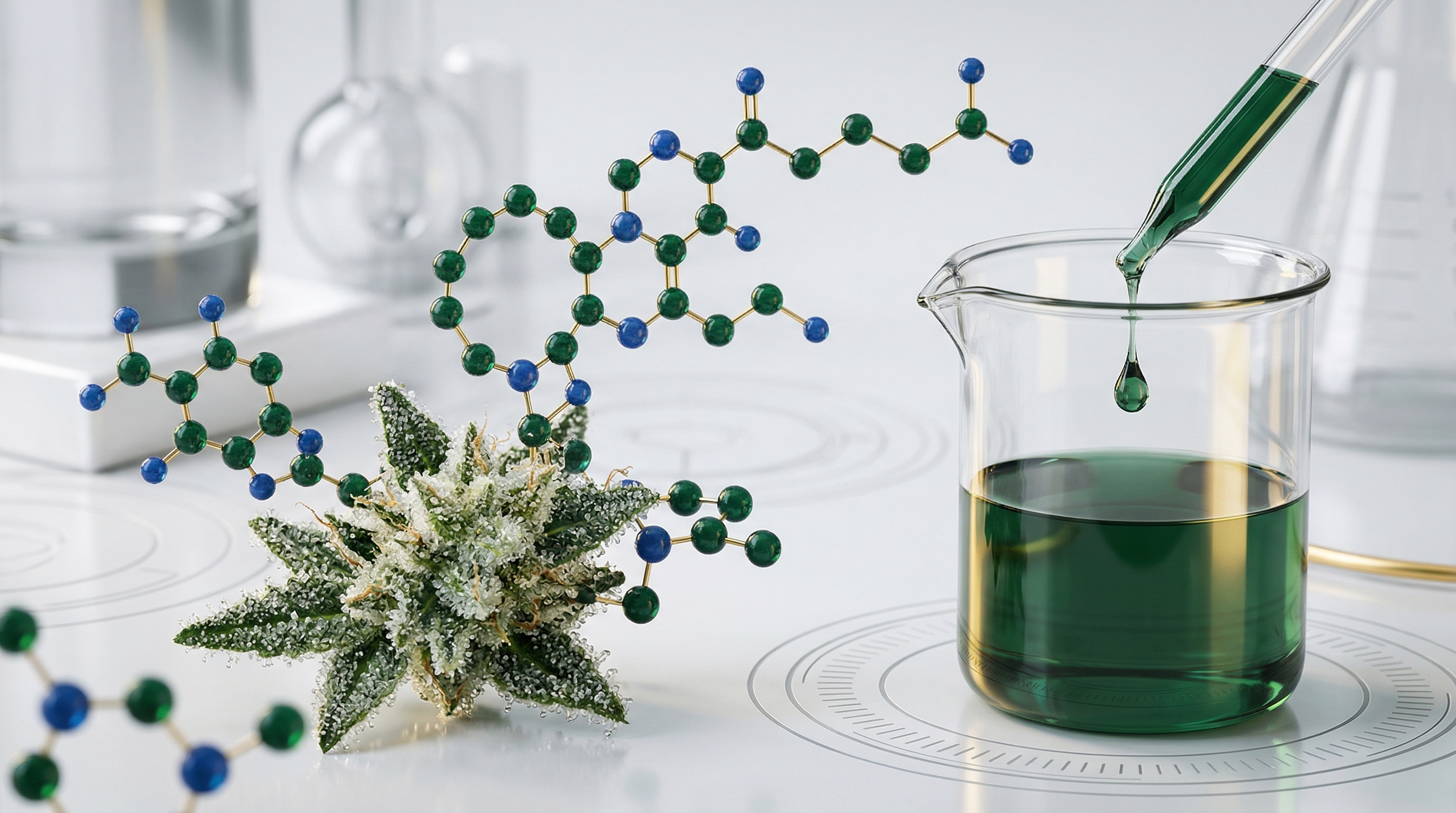
Why Does the Same Gummy Hit Your Friend Differently Than It Hits You?
Here’s a scenario you’ve probably lived through: you and a friend split the same edible, from the same batch, at the same time. Thirty minutes later, they’re giggling at a ceiling fan while you barely feel a thing. Or maybe it’s the reverse — you’re orbiting Jupiter and they’re casually scrolling their phone.
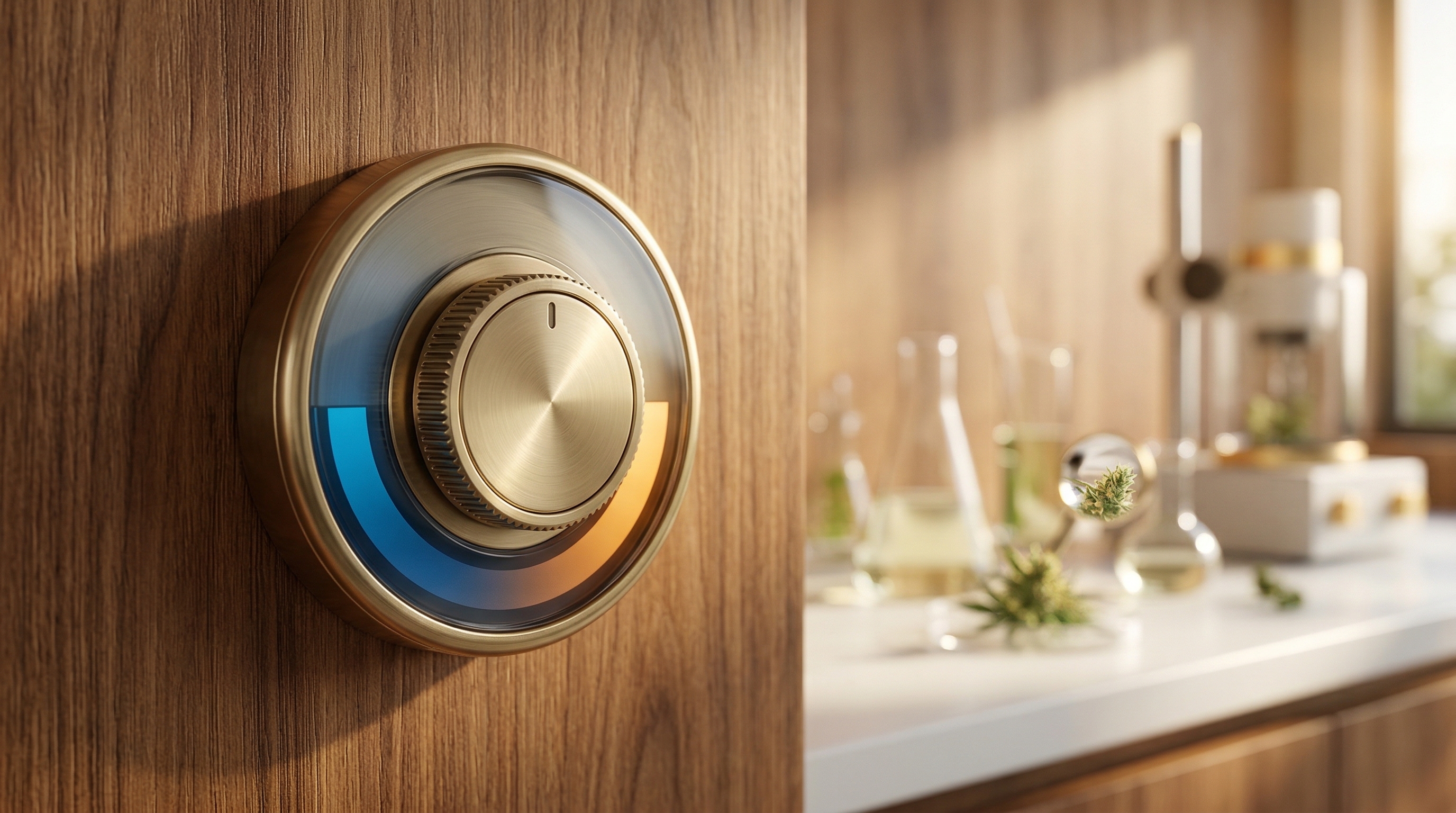
This isn’t just about body weight or tolerance. A growing body of research points to something more fundamental: your endocannabinoid tone — the baseline activity level of your body’s own cannabinoid system. Think of it like a thermostat. Some people’s endocannabinoid systems run “hot” (high baseline activity), and others run “cold” (low baseline activity). That setting may shape everything from your mood and appetite to how you respond to cannabis.
Understanding endocannabinoid tone won’t just satisfy your curiosity — it could genuinely change how you approach cannabis. It might explain why certain High Families work better for you, why microdosing clicks for some people and not others, and why the “perfect dose” is so wildly personal.
In this article, we’ll break down what endocannabinoid tone actually is, what the research says about it, and how you can use this concept to make smarter, more intentional choices about your cannabis experience.
The Science Explained
How Your Endocannabinoid System Sets Its Baseline
Your endocannabinoid system (ECS) is a vast signaling network that exists throughout your brain and body. It’s made up of three core components:
- Endocannabinoids — molecules your body produces naturally, primarily anandamide (AEA) and 2-AG
- Receptors — the CB1 and CB2 receptors these molecules bind to
- Enzymes — proteins like FAAH and MAGL that break endocannabinoids down after they’ve done their job
Endocannabinoid tone refers to the overall level of activity in this system at any given time. Imagine your ECS as a river. Endocannabinoid tone is the volume of water flowing through it — not during a storm, but on a normal, quiet day. Some people have a rushing stream; others have a gentle trickle.
This baseline is determined by a combination of factors: how much anandamide and 2-AG your body produces, how many CB1 and CB2 receptors you express, and how quickly your enzymes break those endocannabinoids down [Russo, 2004].
What the Research Shows
The concept of endocannabinoid tone was significantly advanced by neurologist and cannabis researcher Dr. Ethan Russo, who proposed the Clinical Endocannabinoid Deficiency (CED) hypothesis. The idea is straightforward: if your endocannabinoid tone is too low — if you’re “running cold” — certain systems may fall out of balance [Russo, 2004].
Russo’s updated 2016 review found accumulating evidence that conditions like migraine, fibromyalgia, and irritable bowel syndrome may share a common thread of reduced endocannabinoid function [Russo, 2016]. It’s important to note that this remains a hypothesis — compelling, but not yet proven in large-scale clinical trials.
On the genetic side, research has identified variations in the FAAH gene that directly affect endocannabinoid tone. FAAH is the enzyme that breaks down anandamide. Some people carry a variant (called FAAH C385A) that makes this enzyme less efficient, meaning anandamide sticks around longer. Studies suggest these individuals may report lower anxiety and may respond differently to both stress and cannabis [Dincheva et al., 2015].
Other research has examined how lifestyle factors modulate tone. Exercise, for instance, appears to temporarily increase circulating endocannabinoid levels — which may partly explain the “runner’s high” [Sparling et al., 2003]. Chronic stress, on the other hand, appears to suppress endocannabinoid signaling [Hill et al., 2010].

Key concept: Endocannabinoid tone isn’t fixed. It’s influenced by your genetics, your lifestyle, your stress levels, and potentially even your diet. It’s a dynamic baseline, not a permanent setting.
Practical Implications
What This Means for Your Cannabis Experience
So how does this connect to the plant in your jar? If your endocannabinoid tone is naturally lower, your CB1 receptors may be more sensitive or more numerous — essentially “hungry” for cannabinoid input. This could mean you’re more responsive to THC at lower doses. Conversely, someone with naturally high endocannabinoid tone might need more input to notice a shift.
This is one reason why “start low and go slow” isn’t just cautious advice — it’s physiologically sound. Your ideal dose is partly written into your biology.
Connecting to High Families
Endocannabinoid tone may also influence which types of cannabis experiences resonate with you:
- If you suspect you’re running “cold” (low tone), you might find that strains in the Relaxing High or Relieving High families — rich in myrcene or caryophyllene — provide the most noticeable support, since these terpenes may work synergistically with the ECS to enhance cannabinoid signaling [Russo, 2011].
- If your system runs “hot,” gentler options like the Balancing High family might be more your speed, offering subtle modulation rather than an overwhelming shift.
- The Entourage High family, with its complex multi-terpene profiles, may offer the most nuanced experience for anyone looking to work with their existing tone rather than overriding it.
Lifestyle Factors That May Support Your Tone
While more research is needed, current evidence suggests a few habits that may positively influence endocannabinoid tone:
- Regular exercise — particularly moderate aerobic activity [Sparling et al., 2003]
- Stress management — chronic stress appears to deplete endocannabinoid reserves [Hill et al., 2010]
- Omega-3 fatty acids — these serve as precursors for endocannabinoid synthesis [McPartland et al., 2014]
- Quality sleep — disrupted sleep patterns may impair ECS function

Key Takeaways
- Endocannabinoid tone is the baseline activity level of your ECS — it varies between individuals and influences how you respond to cannabis.
- Genetics play a role: variations in the FAAH gene can affect how quickly your body breaks down anandamide, shifting your natural tone higher or lower.
- Clinical Endocannabinoid Deficiency is a compelling but still-emerging hypothesis suggesting that low tone may underlie certain health conditions.
- Your tone isn’t fixed — exercise, stress levels, diet, and sleep may all modulate it over time.
- Dose sensitivity is personal: understanding tone helps explain why the same product affects different people in dramatically different ways.
FAQs
Can I test my endocannabinoid tone?
Not yet in any practical, consumer-available way. Researchers measure endocannabinoid levels through blood assays in clinical settings, but there’s no at-home test. For now, paying attention to how you respond to low doses of cannabis is the most accessible indicator.
Does tolerance affect endocannabinoid tone?
They’re related but distinct. Tolerance involves the downregulation of CB1 receptors from repeated THC exposure, while endocannabinoid tone refers to your body’s own baseline cannabinoid activity. Heavy cannabis use may temporarily alter your tone, but research suggests the ECS can recover with breaks [D’Souza et al., 2016].
Is endocannabinoid deficiency a real medical diagnosis?
Not currently. Clinical Endocannabinoid Deficiency remains a theoretical framework, not a recognized diagnosis. However, the underlying research is growing, and some clinicians use the concept to guide treatment approaches. Always consult a healthcare provider for medical concerns.
Does CBD affect endocannabinoid tone?
Possibly. CBD appears to inhibit FAAH, the enzyme that breaks down anandamide, which could effectively raise endocannabinoid tone by allowing more anandamide to circulate [Leweke et al., 2012]. This is one proposed mechanism for CBD’s reported calming effects, though more human research is needed.
Sources
- Russo, E.B. (2004). “Clinical Endocannabinoid Deficiency (CECD): Can this Concept Explain Therapeutic Benefits of Cannabis in Migraine, Fibromyalgia, Irritable Bowel Syndrome and other Treatment-Resistant Conditions?” Neuroendocrinology Letters. PMID: 15159679
- Russo, E.B. (2016). “Clinical Endocannabinoid Deficiency Reconsidered.” Cannabis and Cannabinoid Research. DOI: 10.1089/can.2016.0009
- Russo, E.B. (2011). “Taming THC: potential cannabis synergy and phytocannabinoid-terpenoid entourage effects.” British Journal of Pharmacology. PMID: 21749363
- Dincheva, I. et al. (2015). “FAAH genetic variation enhances fronto-amygdala function in mouse and human.” Nature Communications. DOI: 10.1038/ncomms7395
- Sparling, P.B. et al. (2003). “Exercise activates the endocannabinoid system.” NeuroReport. PMID: 14600519
- Hill, M.N. et al. (2010). “Endogenous cannabinoid signaling is essential for stress adaptation.” Proceedings of the National Academy of Sciences. DOI: 10.1073/pnas.0914661107
- McPartland, J.M. et al. (2014). “Care and Feeding of the Endocannabinoid System.” PLoS ONE. DOI: 10.1371/journal.pone.0089566
- Leweke, F.M. et al. (2012). “Cannabidiol enhances anandamide signaling and alleviates psychotic symptoms of schizophrenia.” Translational Psychiatry. DOI: 10.1038/tp.2012.15
- D’Souza, D.C. et al. (2016). “Rapid Changes in CB1 Receptor Availability in Cannabis Dependent Males after Abstinence from Cannabis.” Biological Psychiatry: Cognitive Neuroscience and Neuroimaging. DOI: 10.1016/j.bpsc.2016.07.001


