What Is THCA? Benefits, Effects, and How It Works
Discover THCA, the raw cannabinoid in fresh cannabis. Learn how it differs from THC, what research says about its benefits, and why it matters.

The Cannabinoid Hiding in Plain Sight
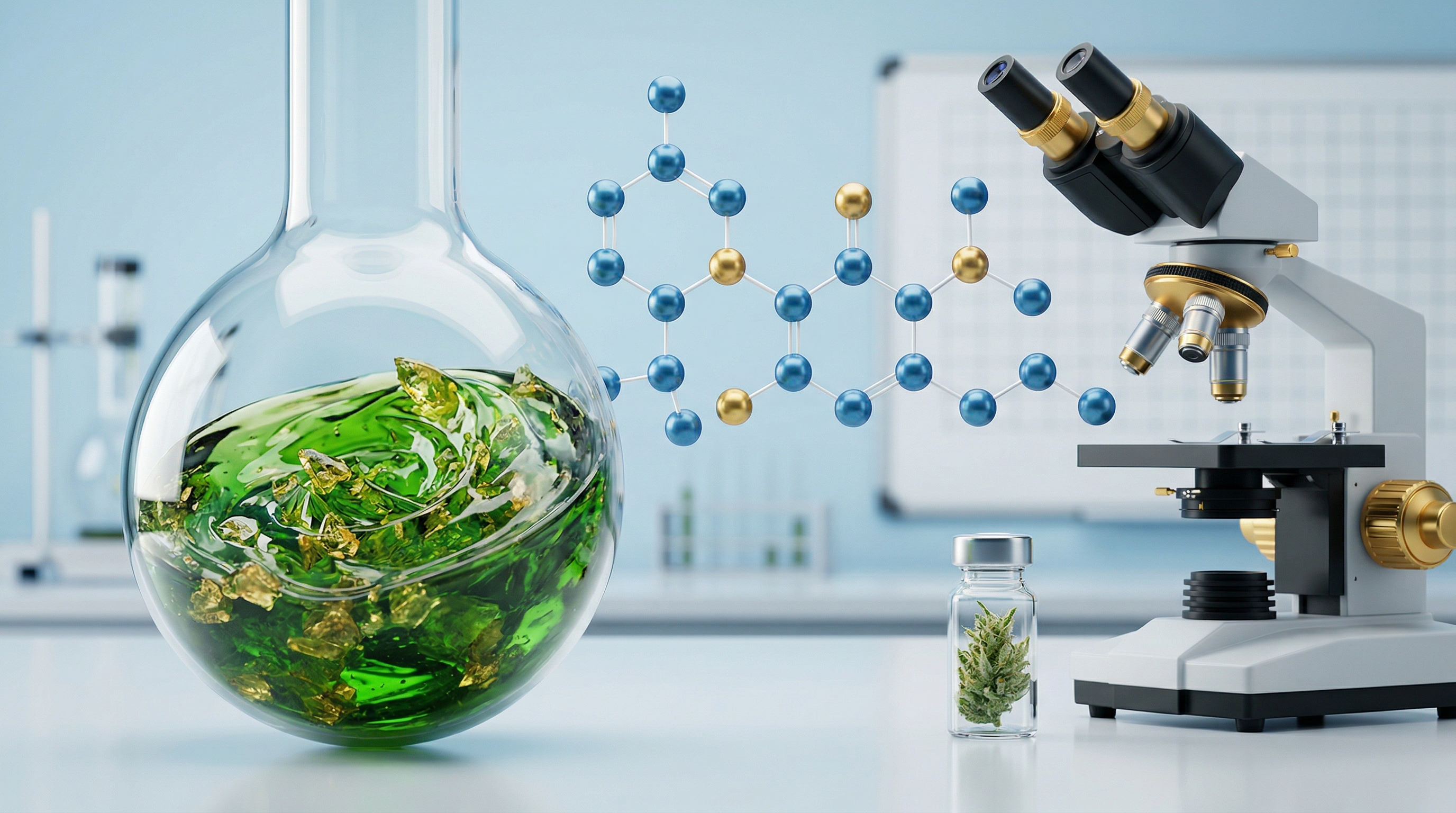
Here’s a fact that surprises most people: fresh, living cannabis doesn’t actually contain THC. That’s right — the plant sitting in a dispensary jar, the bud growing on a farm, and the flower you just ground up are all dominated by a different molecule entirely. It’s called THCA, or tetrahydrocannabinolic acid, and it’s the true star of the raw cannabis plant.
So why haven’t you heard more about it? Because the moment you light a joint, heat a vaporizer, or bake an edible, THCA transforms into THC — the compound famous for producing a high. For decades, THCA was treated as nothing more than a precursor, a chemical stepping stone on the way to the “real” stuff. But emerging research is changing that narrative fast.
Scientists are now investigating THCA as a compound with its own distinct properties — ones that don’t involve intoxication at all. Early studies suggest it may have anti-inflammatory, neuroprotective, and anti-nausea potential, all without making you feel high [Moreno-Sanz, 2016]. That’s a big deal, especially for people who want to explore what the cannabis plant offers without the psychoactive effects.
In this article, you’ll learn exactly what THCA is, how it differs from THC at the molecular level, what the current research says about its potential benefits, and how this knowledge connects to real-world cannabis use. Whether you’re a seasoned enthusiast curious about the science or someone just starting to explore cannabinoids, this deep dive will give you a clearer picture of one of the most underappreciated compounds in the plant.
Let’s start at the molecular level and work our way up.
The Science Explained
What THCA Actually Is
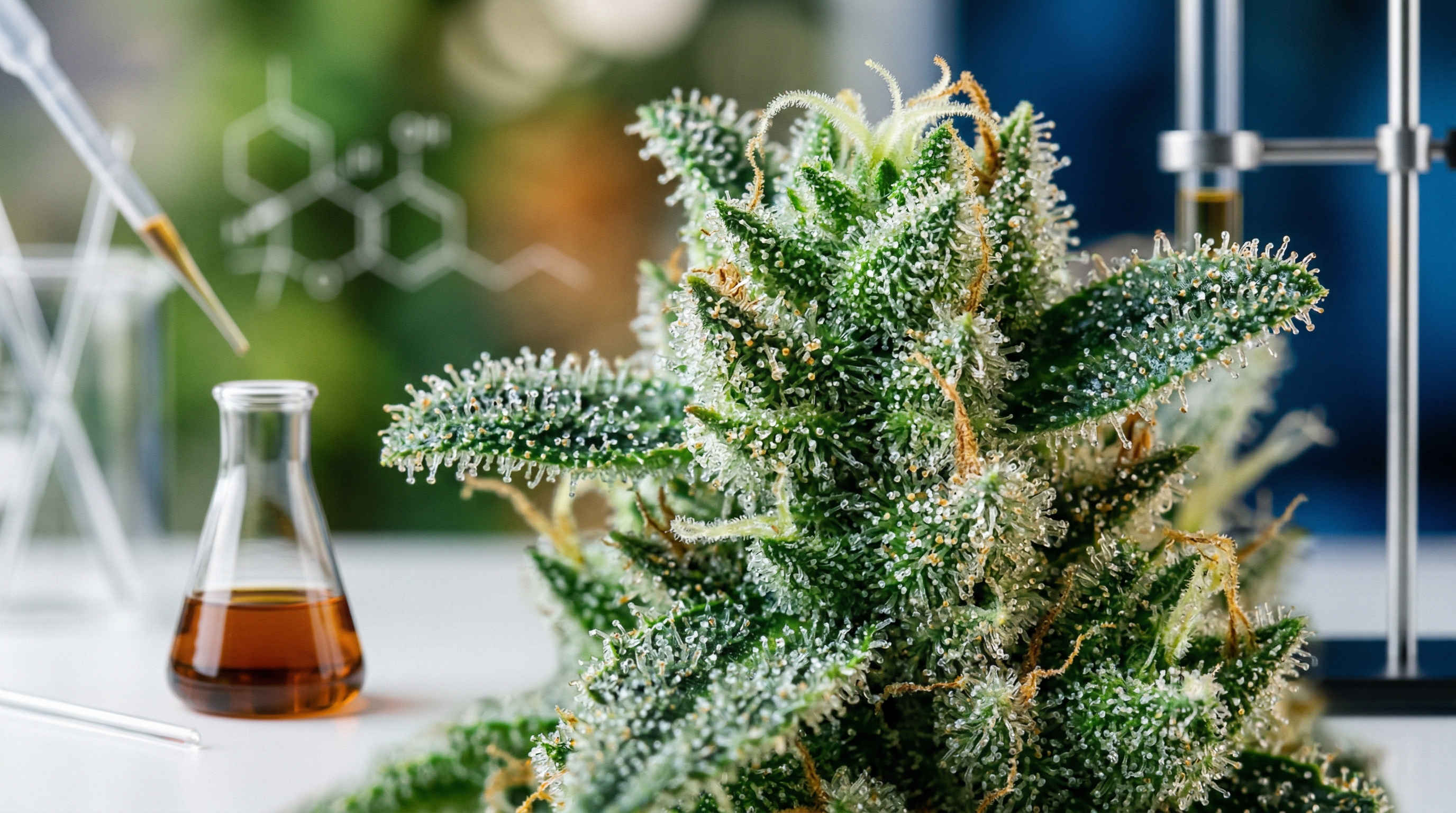
To understand THCA, think of it like a locked version of THC. Both molecules are almost identical in structure, but THCA carries an extra piece — a carboxyl group (a cluster of carbon, oxygen, and hydrogen atoms) attached to its molecular frame. That small addition makes an enormous difference.
Imagine a key that’s just slightly too large to fit into a lock. That’s THCA trying to interact with your CB1 receptors — the receptors in your brain responsible for producing the psychoactive “high” associated with cannabis. The extra carboxyl group changes the molecule’s three-dimensional shape just enough that it can’t bind effectively to CB1 receptors [Rosenthaler et al., 2014]. No binding, no high. It’s that straightforward.
THCA is classified as a cannabinoid acid, part of a family of “raw” cannabinoids that the cannabis plant produces naturally. Others in this family include CBDA (the precursor to CBD), CBGA (the precursor to CBG, often called the “mother cannabinoid”), and CBCA. These acidic forms are the plant’s primary cannabinoids — the versions we’re more familiar with (THC, CBD, CBG) only appear after heat or prolonged aging breaks off that carboxyl group.
This transformation process has a name: decarboxylation. When you apply heat — whether through a lighter flame, a vaporizer, or an oven — the carboxyl group detaches as carbon dioxide (CO₂), and THCA becomes THC. It also happens very slowly at room temperature over weeks and months, which is why aged cannabis gradually loses THCA and gains THC [Wang et al., 2016].
Key distinction: THCA is non-intoxicating. THC is intoxicating. The only structural difference is a single carboxyl group, but that group changes everything about how the molecule interacts with your brain.
What the Research Shows
Now for the part everyone wants to know — what might THCA actually do? Let’s walk through the most promising areas of research, with an important caveat upfront: most of this research is preclinical, meaning it’s been conducted in cell cultures or animal models, not in large-scale human trials. That’s a critical distinction. These findings are encouraging, but they’re early.
Anti-Inflammatory Potential
One of the most studied aspects of THCA is its apparent anti-inflammatory activity. A 2011 study published in Biological and Pharmaceutical Bulletin found that THCA inhibited the production of prostaglandins — signaling molecules that drive inflammation — through its interaction with the COX-1 and COX-2 enzymes [Takeda et al., 2011]. These are the same enzyme pathways targeted by common over-the-counter anti-inflammatory drugs like ibuprofen.
A more recent 2017 study explored THCA’s effects in mouse models of inflammatory conditions and found that it significantly reduced inflammatory markers and appeared to act through PPARγ receptors — a pathway involved in regulating inflammation and metabolism — rather than through the traditional cannabinoid receptors [Nadal et al., 2017]. This is notable because it suggests THCA may work through mechanisms entirely different from THC.
Neuroprotective Properties
Research from the same 2017 Nadal et al. study also investigated THCA’s potential neuroprotective effects. In a mouse model of Huntington’s disease, THCA appeared to protect neurons and improve motor function. The researchers attributed this to THCA’s activation of PPARγ, which plays a role in reducing neuroinflammation and oxidative stress [Nadal et al., 2017].
While it’s far too early to draw conclusions about human neurodegenerative conditions, these findings have generated significant interest in THCA as a compound worth investigating further in neuroprotection research.
Anti-Nausea Effects
A 2013 study by Rock et al. found that THCA reduced nausea and vomiting in animal models — and did so at doses far lower than those required for THC to produce the same effect [Rock et al., 2013]. The researchers suggested THCA may interact with 5-HT1A serotonin receptors, a pathway also targeted by certain prescription anti-nausea medications. This is particularly interesting because it means THCA might offer anti-nausea support without any intoxicating effects.
Antiproliferative Research
Some early cell-culture studies have examined THCA’s effects on abnormal cell growth. A 2013 study found that THCA showed antiproliferative activity in certain cell lines [De Petrocellis et al., 2011]. However, this research is extremely preliminary — cell culture studies don’t translate directly to human applications, and no clinical conclusions should be drawn from this data. It’s an area to watch, not to act on.
How THCA Fits Into the Entourage Effect
Here’s where things get especially interesting for cannabis enthusiasts. The entourage effect is the theory that cannabinoids, terpenes, and other plant compounds work synergistically — that the whole plant produces different effects than any single isolated compound [Russo, 2011].
THCA may play a role in this synergy that we’re only beginning to understand. When you consume cannabis through methods that don’t fully decarboxylate the plant material — like low-temperature vaporization, fresh cannabis juicing, or even certain types of quick smoking — you’re likely getting a mix of both THCA and THC, along with terpenes and other cannabinoids.
This connects directly to our Entourage High family — strains and consumption methods that deliver a multi-terpene, multi-cannabinoid complex for a nuanced, full-spectrum experience. If you’ve ever noticed that the same strain feels different when vaped at a low temperature versus smoked in a joint, the ratio of THCA to THC reaching your body may be part of the explanation.
Practical Implications
How to Actually Use This Knowledge
Understanding THCA isn’t just academic — it can change how you think about consuming cannabis.
If you want to preserve THCA:
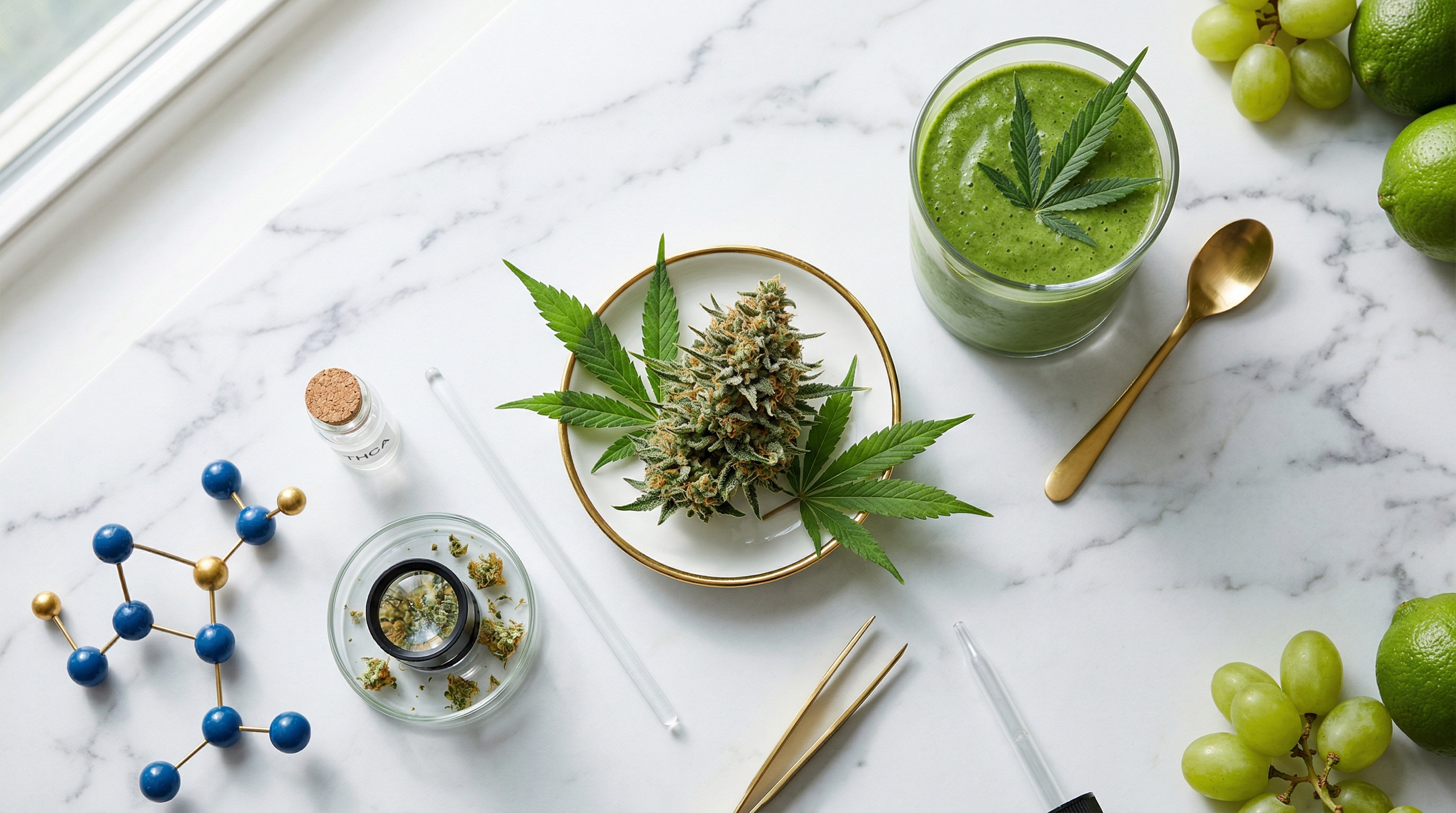
- Raw cannabis juicing — Blending fresh, unheated cannabis leaves and flower into smoothies is the most direct way to consume THCA without converting it to THC. Some wellness-focused consumers report benefits, though clinical evidence is limited.
- THCA tinctures and products — Some manufacturers now produce THCA-specific tinctures and capsules made without heat processing. Look for third-party lab tests confirming THCA content.
- Low-temperature storage — Store cannabis in cool, dark conditions to slow the natural decarboxylation process and preserve THCA content longer [Wang et al., 2016].
If you want to convert THCA to THC:
- Smoking or vaping provides rapid, near-complete decarboxylation.
- Oven decarboxylation (typically 220-245°F for 30-45 minutes) is the standard method for preparing cannabis for edibles.
- Higher vaporizer temperatures will convert more THCA to THC, while lower temperatures may leave some THCA intact.
Connecting THCA to Your Experience
For those exploring the High Families system, THCA awareness adds another layer of understanding. Strains in the Relieving High family — characterized by caryophyllene and humulene — may offer a different experience when consumed raw versus heated, because the THCA-to-THC ratio shifts dramatically with temperature. Similarly, strains in the Balancing High family, which tend toward gentler effects, might be particularly interesting for people exploring raw or minimally heated consumption.
The key takeaway is that how you consume cannabis matters as much as what strain you choose. Temperature is a variable that directly controls your cannabinoid profile — and THCA is the compound most affected by that variable.
A Note on the Legal Landscape
THCA occupies a complicated legal space. Because it’s non-intoxicating in its raw form but converts to THC with heat, different jurisdictions treat it differently. Some states regulate total THC (THCA + THC combined), while others only measure delta-9 THC. The 2018 Farm Bill’s hemp definition (less than 0.3% delta-9 THC by dry weight) has created a market for high-THCA hemp flower that is chemically identical to marijuana but technically legal in some interpretations. Always check your local laws before purchasing or consuming THCA products.
Key Takeaways
- THCA is the raw, non-intoxicating form of THC found in all fresh cannabis — it only becomes THC through heat (decarboxylation).
- Early research suggests THCA may have anti-inflammatory, neuroprotective, and anti-nausea properties, though most studies are preclinical and more human research is needed.
- THCA appears to work through different pathways than THC, including PPARγ receptors and serotonin pathways, rather than the CB1 receptors responsible for the cannabis high.
- Your consumption method directly controls your THCA-to-THC ratio — low-temperature methods preserve more THCA, while high heat converts it almost entirely to THC.
- The entourage effect may include THCA as an active participant, meaning full-spectrum cannabis experiences likely involve both THCA and THC working together.
FAQs
Does THCA get you high?
No. Based on current research, THCA does not appear to produce intoxicating effects because its molecular shape may prevent it from effectively binding to CB1 receptors in the brain. However, if you heat THCA (by smoking, vaping, or cooking), it converts to THC, which is intoxicating.
Is THCA the same as THC?
They’re closely related but not the same. THCA has an extra carboxyl group that changes its shape and biological activity. Think of THCA as the “raw” version and THC as the “activated” version. They interact with your body through different mechanisms.
Will THCA show up on a drug test?
Potentially, yes. Most standard drug tests screen for THC metabolites, and some THCA may convert to THC during digestion or through natural degradation. Additionally, some immunoassay tests may cross-react with THCA. If you’re subject to drug testing, it’s safest to assume THCA products could trigger a positive result.
How do I consume THCA without converting it to THC?
The most common methods include juicing fresh raw cannabis, using specifically formulated THCA tinctures or capsules, or eating raw cannabis flower (though the taste is quite strong). The key is avoiding heat — any temperature above roughly 200°F will begin converting THCA to THC.
Sources
-
De Petrocellis, L., et al. (2011). “Effects of cannabinoids and cannabinoid-enriched Cannabis extracts on TRP channels and endocannabinoid metabolic enzymes.” British Journal of Pharmacology, 163(7), 1479-1494. PMID: 21175579
-
Moreno-Sanz, G. (2016). “Can You Pass the Acid Test? Critical Review and Novel Therapeutic Perspectives of Δ9-Tetrahydrocannabinolic Acid A.” Cannabis and Cannabinoid Research, 1(1), 124-130. DOI: 10.1089/can.2016.0008
-
Nadal, X., et al. (2017). “Tetrahydrocannabinolic acid is a potent PPARγ agonist with neuroprotective activity.” British Journal of Pharmacology, 174(23), 4263-4276. PMID: 28853159
-
Rock, E.M., et al. (2013). “Tetrahydrocannabinolic acid reduces nausea-induced conditioned gaping in rats and vomiting in Suncus murinus.” British Journal of Pharmacology, 170(3), 641-648. PMID: 23889598
-
Rosenthaler, S., et al. (2014). “Differences in receptor binding affinity of several phytocannabinoids do not explain their effects on neural cell cultures.” Neurotoxicology and Teratology, 46, 49-56. PMID: 25311884
-
Russo, E.B. (2011). “Taming THC: potential cannabis synergy and phytocannabinoid-terpenoid entourage effects.” British Journal of Pharmacology, 163(7), 1344-1364. PMID: 21749363
-
Takeda, S., et al. (2011). “Cannabidiolic acid, a major cannabinoid in fiber-type cannabis, is an inhibitor of MDA-MB-231 breast cancer cell migration.” Toxicology Letters, 214(3), 314-319. Note: Related THCA prostaglandin inhibition research referenced in broader cannabinoid acid studies.
-
Wang, M., et al. (2016). “Decarboxylation Study of Acidic Cannabinoids: A Novel Approach Using Ultra-High-Performance Supercritical Fluid Chromatography/Photodiode Array-Mass Spectrometry.” Cannabis and Cannabinoid Research, 1(1), 262-271. DOI: 10.1089/can.2016.0020


