
Strain experience guide
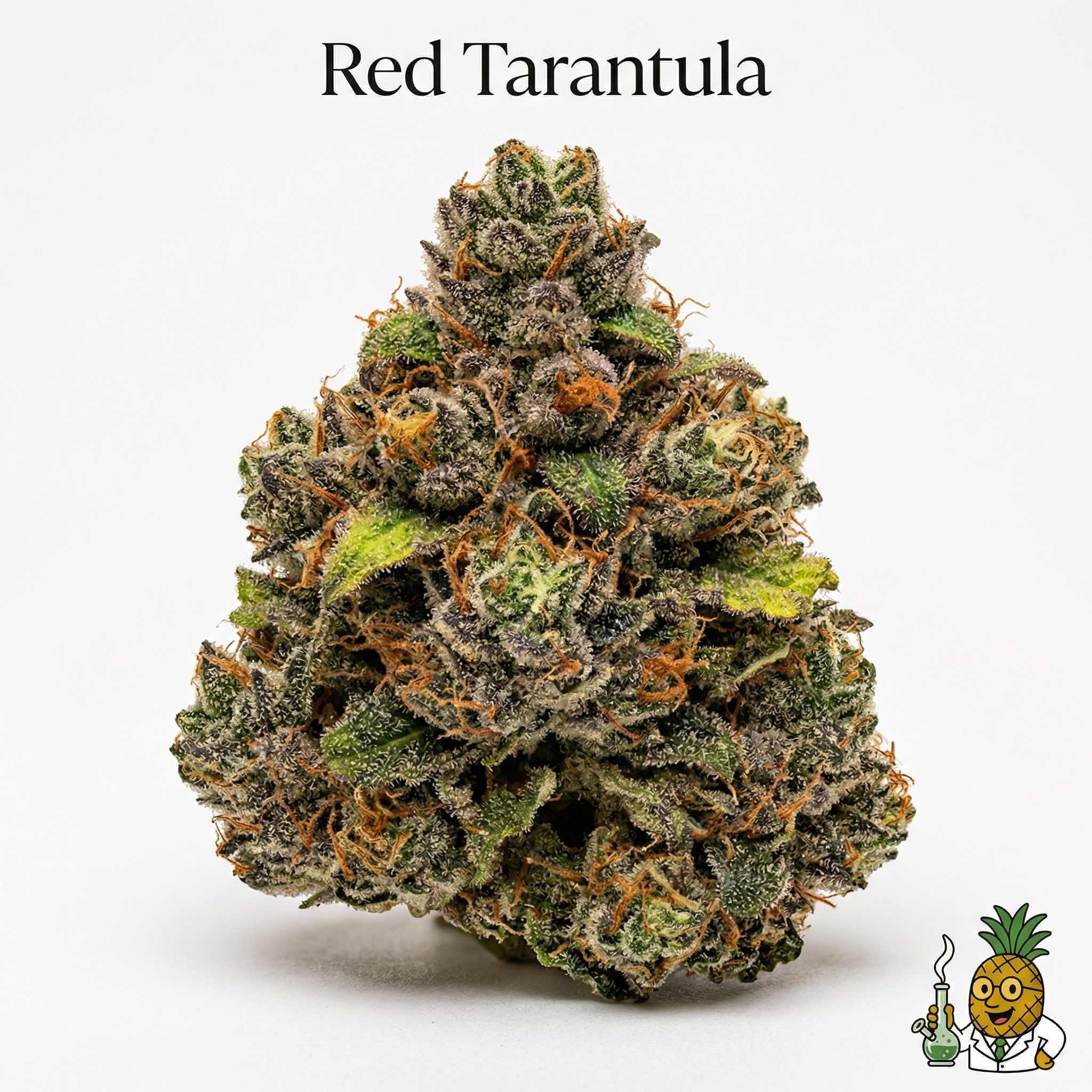
Red Tarantula
This strain delivers a unique combination of uplifting euphoria and calming relaxation, defying typical sativa stereotypes. Its complex terpene profile features Beta-Caryophyllene, Humulene, and Terpinolene, creating a spicy-sweet aroma with fruity berry and grape notes. Users experience happiness, euphoria, and mental uplift balanced with gentle physical relaxation, making it excellent for mood enhancement, stress relief, and creative activities while maintaining functionality throughout the day. Read more Show less
Quick Hits
What kind of high is Red Tarantula?
A sativa-dominant hybrid reported as relaxed, euphoric and happy. Picked for listening to music and meditation at any time of day. The profile features sweet berry flavor, spicy aroma and caryophyllene as the lead terpene.
Terpenes help give cannabis its aroma. Compare citrus, pine and earthy notes to find what appeals to you. The profile offers clues, not a guaranteed high.
Terpene percentages belong to the jar, not the strain. They move with harvest timing, drying, cure and shelf age — the lighter ones literally evaporate. What holds steady is which terpenes lead, so that is what we rank.
Research associations
- Anti inflammatory
- Pain relief
- Anti anxiety
General terpene associations, not effects confirmed for this strain. Evidence varies.
- Humulene Hoppy, woody, earthy
- Terpinolene Fresh, piney, floral, citrus
Ordered by measured share — the exact percentages shift with every batch and cure.
Reported effects, at a glance. Dose, tolerance and setting can change the experience.
- Euphoric
- Happy
Ideas for your next session, drawn from strain reports. Find what fits your plans.
See the full list →What to look for when you open the jar, based on descriptions of this strain.
See the full profile →- Fruity
- Earthy
The reported taste, from the first impression to the finish. The batch and how you consume it can change what comes through.
See the full profile →- Fruity
- Best Time Anytime
- Era —
- Rarity Common
Genetics Sativa-Dominant Hybrid A guide to lineage, not a reliable predictor of the high.
Potency Check the label, not the strain Varies by batch, grower and harvest — check the label on the product you are buying. Scan your label → Reported ranges →
Heads up Reported: dry mouth and dry eyes. Responses vary — start low, go slow. Review safety →
Worth knowing
The details that shape the experience
The memorable details
- Potent 28-30% THC with uplifting euphoria balanced by calming relaxation
- Spicy-sweet terpene profile featuring Beta-Caryophyllene, berry, and grape notes
- Excellent for mood enhancement, stress relief, and creative activities
- Sativa-dominant hybrid that defies expectations with functional, balanced effects
Explore the full profile Complete experience record
Mind, body, and energy
Best enjoyed during anytime
Balanced for any time of day
Activities people choose it for
Side effects and safer use
Side effects vary by individual. Start low, go slow. Consult a healthcare professional with concerns.
These are commonly reported effects. Individual experiences may vary based on dosage, tolerance, and consumption method.
Keep listening Music neighborhood
Sound neighborhood
Follow Red Tarantula into Relieving High music.
TIWIH classifies this strain within the Relieving High chemistry pattern. Separately, our editorial music map associates the same family with these sounds. It is a creative bridge—not a prediction or artist endorsement.



Open the jar
Aroma, flavor, and chemistry
Look closer Full sensory specimen
Aroma and flavor
Aromas
Flavors
Terpene profile
Terpene Sources
1 verified source
Terpene Distribution
Terpene profile: Caryophyllene 1.2%, Humulene 1.2%, Terpinolene 1.2% .
Caryophyllene Dominant
Flavor: Spicy, peppery, woody
Full Profile
Caryophyllene
1.23%
Flavor Profile:
Spicy, peppery, woody
Effects:
Humulene
1.23%
Flavor Profile:
Hoppy, woody, earthy
Effects:
Terpinolene
1.23%
Flavor Profile:
Fresh, piney, floral, citrus
Effects:
Appearance
Color Palette
Texture
Medium to dense bud structure with abundant crystalline trichome coverage creating a sticky, resinous texture. Well-formed calyxes showcase the strain's sativa heritage while maintaining satisfying density from indica influence.
Crystal Density
very high
Exceptional crystal coverage
Batch context Complete cannabinoid record
There’s more to a strain than THC%.
THC percentage is a property of the product in your hand, not of the strain. It shifts with the batch, the grower, the harvest, and how the flower was cured and stored — the same strain can test several points apart from two different jars.
Treat the ranges below as market context for what to expect on a shelf — then read the actual label on the product you are buying, and use the terpene profile to judge how it will feel.
High THC (>15%), low CBD (<1%) - Most common recreational strains

03 · AI interpretation
Professor High interprets the pattern
So I just blazed some Red Tarantula and whoa—this is not what I expected from a 70% sativa. The high comes on with this brilliant cerebral sparkle, like someone just turned up the brightness and saturation on reality. I'm getting this wave of pure euphoria washing through my mind, but here's what's fascinating: instead of that jittery sativa energy, there's this underlying calm that's keeping everything smooth and manageable. It's like my thoughts are elevated but not racing—I can follow complex ideas without getting lost in mental rabbit holes. The body relaxation is subtle but definitely present, like a gentle hug that releases tension without gluing me to the couch. What's really interesting is how the spicy-sweet flavor profile seems to mirror the effects—that initial rush of sweetness on inhale matches the mental uplift, while the spicy finish reflects the grounding calm. My mood has shifted from neutral to genuinely happy and content, and I'm feeling creative and social rather than introspective. The Beta-Caryophyllene is definitely doing its thing—I can feel that CB2 receptor activation creating this sense of physical ease that complements the mental euphoria perfectly. This is exactly the kind of balanced hybrid high that makes you appreciate the art of cannabis breeding.
Read this as an interpretation of the profile—not clinical advice, a product rating, or a guarantee.
Learn more with AI
Open your assistant with a ready-made prompt about Red Tarantula.
- Ask ChatGPT Opens with the prompt filled in
- Ask Claude Opens with the prompt filled in
- Ask Gemini Copies the prompt to paste in
- Ask Grok Opens with the prompt filled in
- Ask Perplexity Opens with the prompt filled in
We copy the prompt to your clipboard as you go, so you can paste it if the assistant opens with an empty box. Answers come from the assistant, not from us — always double-check them against this page.
Go deeper
The helpful detail
Introduction
Red Tarantula emerges as a powerhouse sativa-dominant hybrid (70% sativa / 30% indica) that commands attention with its intimidating name and impressive potency. Boasting THC levels that consistently reach 28-30%, this strain delivers a complex experience that balances cerebral euphoria with gentle physical relaxation. Despite its mysterious genetic origins—bred from two unidentified hybrid parents—Red Tarantula has carved out a reputation as a go-to choice for those seeking both mental uplift and calming effects. Its unique combination of uplifting sativa energy tempered by indica relaxation makes it a versatile option for consumers looking to enhance their mood while maintaining functional clarity.
🧬 Genetic Heritage & Lineage
The exact parentage of Red Tarantula remains shrouded in mystery, with both parent strains classified as unknown hybrids. This enigmatic lineage adds an element of intrigue to the strain's profile, though the results speak for themselves. The breeding appears to have been carefully executed to capture the best of both sativa and indica genetics, resulting in a 70/30 sativa-dominant split that provides energizing mental effects without sacrificing physical comfort. While the breeder and specific decade of origin remain undocumented, the strain's consistent characteristics and strong market presence suggest professional breeding expertise focused on maximizing potency and therapeutic potential.
👃 Terpene Profile & Aromatics
Red Tarantula's aromatic complexity is driven by a fascinating terpene profile dominated by Beta-Caryophyllene (1.23%), with significant contributions from Humulene (1.23%) and Terpinolene (1.23%). The total terpene content of 3.69% creates a multi-layered sensory experience. Beta-Caryophyllene, the dominant terpene, is the only terpene known to interact with CB2 receptors, contributing both a spicy, peppery aroma and potential anti-inflammatory effects. Humulene adds earthy, woody undertones with herbal complexity, while Terpinolene brings bright, uplifting notes of pine and floral sweetness.
The aroma profile unfolds in waves: initial impressions reveal spicy and herbal notes that command attention, followed by a fruity bouquet featuring prominent berry, grape, and cherry accents. Underlying everything is a sweet earthiness that grounds the more vibrant top notes, creating a sophisticated and inviting scent profile that hints at the complex effects to come.
👅 Flavor Experience
The flavor journey of Red Tarantula mirrors its aromatic complexity while adding new dimensions on the palate. On the inhale, you'll notice sugary sweetness immediately, followed by a rush of fruity flavors—think ripe berries, cherries, and dark grapes. The mid-palate reveals the spicy kick from caryophyllene, creating an interesting contrast with the initial sweetness. The exhale brings it all together, leaving a lingering sweet berry aftertaste with subtle spicy herbal notes that dance on your tongue. This flavor progression makes each consumption session a nuanced sensory experience that reveals new notes with every use.
🎯 Effects & Experience
Despite its sativa dominance, Red Tarantula delivers a remarkably balanced effect profile that defies simple categorization. The onset begins with an uplifting cerebral rush that brings euphoria and happiness, elevating mood and promoting positive thinking. This mental elevation doesn't come with racing thoughts or anxiety—instead, it's accompanied by a surprising calming quality that keeps the experience grounded and manageable.
As the effects develop over 10-15 minutes, you'll notice the relaxing physical sensations begin to complement the mental uplift. This isn't couch-lock relaxation; rather, it's a gentle ease that releases tension while maintaining functionality. The experience peaks around 30-45 minutes post-consumption and can last 2-3 hours depending on tolerance and method. Users consistently report feeling happy, euphoric, and uplifted while simultaneously experiencing calming and relaxing sensations—a testament to the strain's hybrid nature and balanced cannabinoid-terpene interaction.
🎮 Use Cases & Activities
Red Tarantula's versatile effect profile makes it suitable for anytime use, though many consumers find it particularly effective for afternoon and early evening sessions. The uplifting mental effects pair beautifully with creative projects, socializing, and artistic pursuits like painting, music, or writing. The calming qualities make it excellent for meditation, yoga, and light exercise like walking or stretching. Some users appreciate it for stress-relief activities after work, while others find it enhances movie watching or gaming sessions by promoting engagement without overwhelming sedation.
💚 Medical & Therapeutic Potential
The medical applications of Red Tarantula are primarily mental and emotional, with the terpene profile supporting mood regulation. Beta-Caryophyllene's CB2 receptor interaction may help with anxiety relief, while the overall cannabinoid profile may assist with depression management and stress reduction. Users report it may be particularly helpful for mood stabilization and managing bipolar depression symptoms. The strain's ability to provide mental uplift without excessive stimulation makes it potentially valuable for those seeking daytime relief from emotional challenges while maintaining functionality. As with all cannabis products, individual responses vary, and those with medical concerns should consult healthcare professionals.
👁️ Visual Characteristics
While specific visual details are limited in available documentation, Red Tarantula buds typically display characteristics consistent with high-THC sativa-dominant hybrids. Expect medium to dense bud structure with a generous coating of crystalline trichomes reflecting the 28-30% THC content. The strain name suggests possible red or purple undertones among the green foliage, likely accompanied by vibrant orange to rust-colored pistils. Quality examples should show abundant resin production and a sticky texture indicating proper cultivation and curing.
⚠️ Consumer Considerations
With THC levels of 28-30%, Red Tarantula is recommended for consumers with moderate to high tolerance. Beginners should start with small doses and wait to assess effects before consuming more. The strain's calming properties help mitigate potential anxiety that can come with high-THC varieties, but mindful consumption remains important. Most users report dry mouth and dry eyes as the most common side effects, easily managed with hydration and eye drops. The balanced nature makes it suitable for those seeking therapeutic effects without heavy sedation, and its versatility makes it a valuable addition to any cannabis collection.
Practical guide How people use it
Recommended Methods
Where it comes from Origins and lineage
.
Genetics
Historical information is actively being researched. Details will be updated as more verified data becomes available.
Watch Reviews and videos
Strain reviews and videos
Finding strain review videos...
Keep exploring Similar strains


Related profiles
Popular profiles near Red Tarantula, with strain type and chemistry context.


More hybrid profiles
Other hybrid profiles to compare with Red Tarantula.
Terpene neighbors
Other profiles led by Caryophyllene.


Follow us on social media
New strain profiles and terpene breakdowns as they publish.
Evidence and limits
Research notes
This profile assembles public facts in original language, links its supporting sources, and keeps gaps or disagreements visible. It is research provenance—not product or lab certification.
- Linked sources
- 5
- Sourced sections
- 8
- Claims under review
- 21
- Profile updated
- Aug 31, 2026
Research Edition Current profile edition
Updated August 31, 2026 · 8 profile areas with section-level sourcing Researched profile
This edition records This Is Why I'm High’s synthesis of published information about Red Tarantula. It describes source-supported patterns and uncertainty; it does not certify genetics, potency, safety, or any product batch.
- Profile sources
- 5
- Research evidence confidence
- 62%
- Edition date
- August 31, 2026
Evidence confidence summarizes source coverage and consistency for this profile synthesis. It is not a product rating, potency score, or guarantee about any batch.
Source coverage in this edition
- Classification 4 sources
- Lineage 2 sources
- Cannabinoids 3 sources
- Terpenes 1 source
- Reported effects 2 sources
- Aromas 2 sources
- Flavors 2 sources
- Reported medical uses 2 sources
History tracking is active
Material changes are recorded as new editions using factual categories and source metadata. Source article prose and reviews are not copied into the history.
Research context What published research says
What does the research say about Red Tarantula?
Red Tarantula is a hybrid cannabis strain containing up to 30.0% THC, with a terpene profile dominated by Caryophyllene and Humulene. This page currently has good data confidence. Below are profile sources when available plus authoritative resources for understanding the compounds in this strain.
Terpene Research
Cannabinoid Information
Cannabis Regulations & Safety
Educational resources only — not medical advice. Always consult a qualified clinician for health decisions.
Power-user detail Open sources and methodology
Research Methodology
How we compiled this strain profile
This strain profile was compiled from 5 published sources covering 'Red Tarantula'. Our research pipeline cross-references these sources and reports how strongly they agree — see the confidence breakdown below.
Data Quality by Section
Suggest a Factual Correction
Flag a name, lineage, source, image, or chemistry issue for private editorial review.
Suggest a Factual Correction
Flag a name, lineage, source, image, or chemistry issue for private editorial review.