Best Cannabis Strains for Gaming: Level Up Your Sessions
Discover the science behind pairing cannabis strains with gaming. Terpene profiles, focus, and flow states explained.


Updated April 15, 2026 — Revised the pinene and terpinolene sections to reflect the 2025 Weerts et al. human trial, which tested whether α-pinene attenuates THC-induced memory impairment [Weerts et al., 2025]. Added fresh links to our newer deep-dives on pinene, terpinolene, and microdosing for focus.
Your Brain on Cannabis and Gaming: A Match Made in Neurochemistry
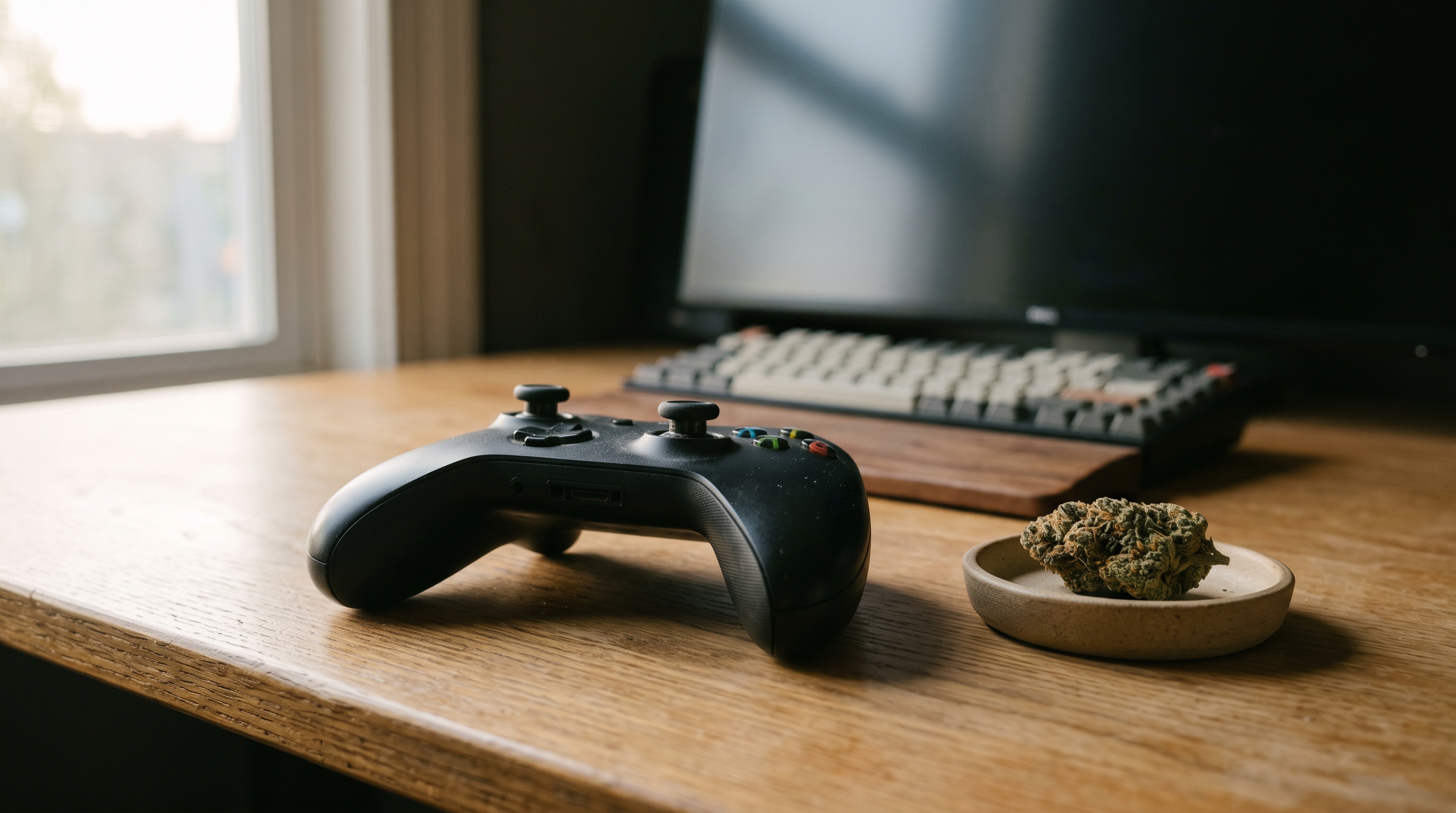
Here’s a surprising fact: your brain processes a video game the same way it processes a survival scenario. Your prefrontal cortex lights up with decision-making, your dopaminergic pathways fire with every reward, and your sensory cortex works overtime interpreting visual and auditory input. Now add cannabis to that neurological cocktail, and something fascinating happens — depending on the strain, you either sharpen into a laser-focused competitor or melt into a puddle on the couch watching your character walk into a wall.
The difference isn’t random. It’s chemistry.
If you’ve ever wondered why one session has you threading headshots in an FPS while another leaves you hopelessly lost in the menu screen of a game you’ve played 500 times, the answer lies in terpenes, cannabinoids, and how they interact with the very same brain systems that gaming activates. This isn’t about chasing the “best strain” based on some arbitrary ranking — it’s about understanding why certain cannabis profiles enhance certain types of gameplay, and how to find your perfect pairing.
In this deep dive, we’ll explore the neuroscience of gaming while high, break down which terpene profiles support different play styles, and connect everything to the High Families system so you can walk into a dispensary with a real game plan. Whether you’re grinding ranked matches, exploring open worlds, or vibing through cozy indie titles, there’s a science-backed approach to choosing your strain.
Let’s load in.
The Science Explained
How Cannabis Interacts with Your Gaming Brain
To understand why cannabis affects gaming performance, you need to understand two systems working in tandem: the endocannabinoid system (ECS) and the dopamine reward pathway.
Think of your ECS as a master dimmer switch for your brain. It doesn’t generate signals — it modulates them. When you consume cannabis, THC binds to CB1 receptors concentrated heavily in areas critical to gaming: the prefrontal cortex (strategy and decision-making), the basal ganglia (motor control and timing), and the hippocampus (spatial memory and navigation) [Lu & Mackie, 2016].
Now here’s where it gets interesting for gamers. Your brain’s dopamine reward system — the same circuitry that gives you that rush when you land a clutch play or find a rare item — is directly modulated by the ECS. Research suggests that THC can amplify dopamine release in the nucleus accumbens, the brain’s reward center, potentially making in-game achievements feel more satisfying [Bloomfield et al., 2016]. This is part of why gaming while high can feel so immersive.
But there’s a catch. Dose matters enormously. At low to moderate doses, THC appears to enhance dopamine signaling and may support what psychologists call a flow state — that effortless zone where you lose track of time and perform at your peak. At higher doses, however, THC can overstimulate CB1 receptors in the prefrontal cortex, potentially impairing working memory and reaction time [Ramaekers et al., 2006]. In gaming terms: low dose might put you in the zone; high dose might put you in the lobby.
This is where terpenes enter the picture and change everything.
What the Research Shows: Terpenes as the Real Game-Changers
The cannabis plant produces over 200 terpenes, but a handful dominate most commercial strains — and each one appears to influence your brain differently. Rather than thinking about indica vs. sativa (a classification that research has largely debunked as a predictor of effects), focus on the terpene profile.
Limonene, the citrusy terpene found in strains like Super Lemon Haze and Tangie, has been studied for its potential mood-elevating properties. Animal research suggests it may increase serotonin and dopamine levels in key brain regions [Zhang et al., 2019]. For gaming, this could translate to elevated mood, social energy (great for co-op sessions), and a generally upbeat headspace. Strains rich in limonene fall into our Uplifting High family.
Terpinolene, less common but powerful, appears in strains like Jack Herer and Dutch Treat. Early research suggests it may have stimulating properties, and anecdotal reports consistently describe a focused, clear-headed effect [Russo, 2011]. Worth noting: a 2025 systematic review found that while terpinolene is frequently marketed as “uplifting,” there is still very limited human evidence for specific mood or effect claims — most of what we know comes from animal studies and chemotype correlations [André et al., 2024]. Terpinolene-dominant strains belong to the Energetic High family, and they remain one of the most interesting options for competitive gaming where reaction time matters. For a deeper look, see our terpinolene deep dive.
Beta-caryophyllene is unique among terpenes because it actually binds to CB2 receptors, functioning almost like a cannabinoid itself [Gertsch et al., 2008]. Found in strains like GSC (Girl Scout Cookies) and Bubba Kush, it’s associated with physical comfort without heavy sedation. This makes Relieving High family strains potentially useful for marathon gaming sessions where physical tension (hello, death grip on the controller) becomes an issue.
Then there’s myrcene, the most abundant terpene in cannabis and the one most associated with the classic “couch-lock” effect. Research suggests myrcene may enhance THC’s ability to cross the blood-brain barrier, potentially amplifying sedative effects [Russo, 2011]. Myrcene-heavy strains in the Relaxing High family might be ideal for chill, low-stakes gaming — think Stardew Valley, Animal Crossing, or exploring Skyrim for the 47th time — but could work against you in competitive scenarios.
Practical Implications: Matching Strains to Your Play Style
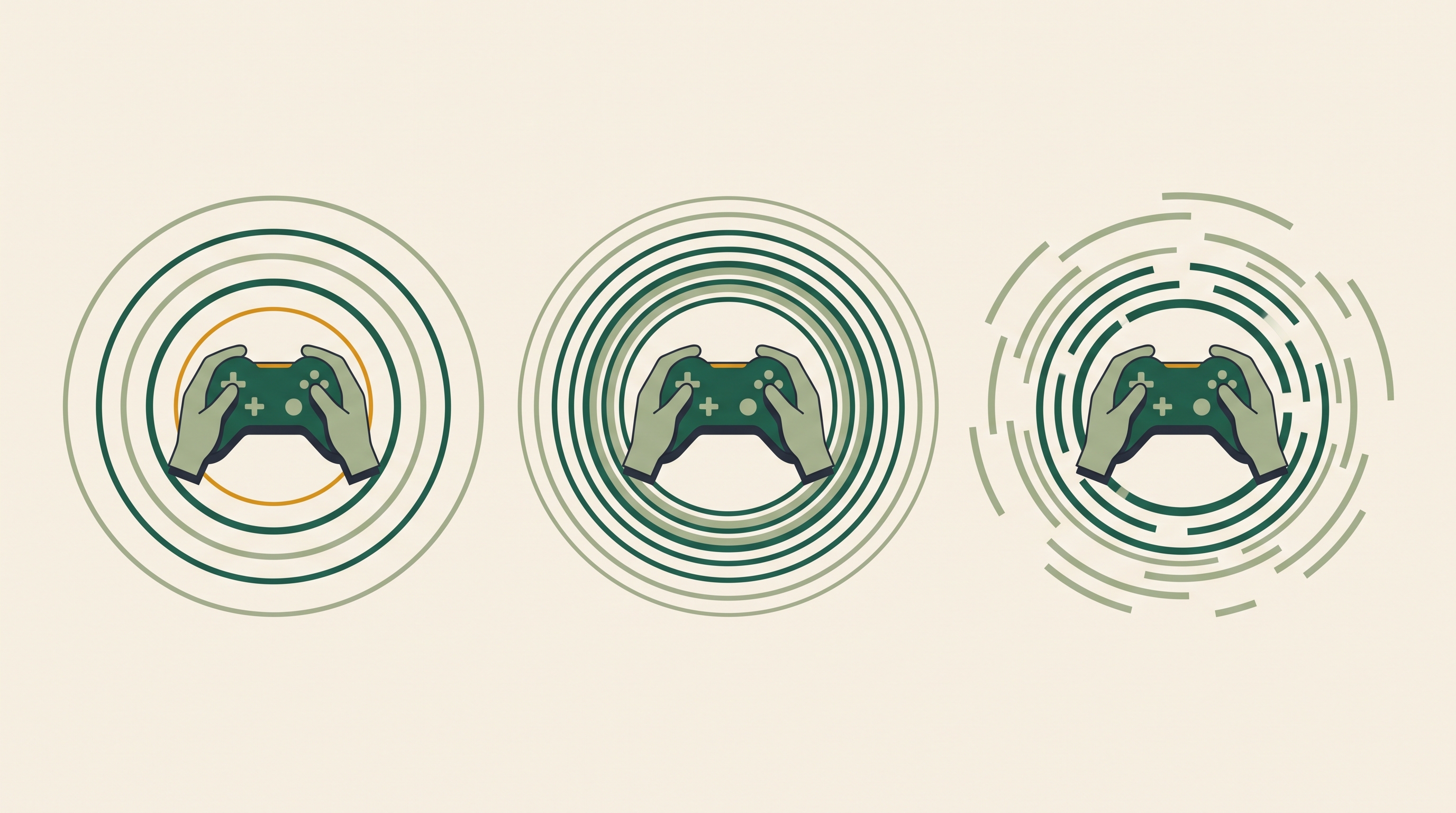
Now let’s translate the science into your actual gaming life. Here’s a framework built around play styles, not strain names — because strain names vary by market, but terpene profiles are universal.
Competitive and Ranked Play (FPS, Fighting Games, MOBAs)
Target: Energetic High family
You need reaction time, pattern recognition, and sustained focus. Look for strains with terpinolene and/or pinene — alpha-pinene is an acetylcholinesterase inhibitor that may support alertness and memory preservation outside the context of acute THC exposure [Russo, 2011]. Important nuance: the first human trial of α-pinene co-administered with inhaled THC, published in 2025, found that 15 mg of inhaled α-pinene did not mitigate THC-induced working-memory or reaction-time impairment in healthy adults [Weerts et al., 2025]. So treat “pinene protects your working memory from THC” as an unproven claim — and keep your dose low (microdose or a single hit) to stay in the flow-state sweet spot. See our pinene deep dive and microdosing guide for the full picture.
Strains to explore:
- Jack Herer — terpinolene-forward, clear-headed cerebral lift
- Durban Poison — pure sativa energy, sharp and focused
- XJ-13 — hybrid clarity with uplifting pinene notes
- Ghost Train Haze — high-THC sativa for experienced gamers chasing intensity
- Green Crack — energizing and alert, great for fast-paced reaction games
Pro tip: If you find yourself overthinking plays or second-guessing decisions, you’ve likely overshot your dose. Less is genuinely more for competitive gaming.
Social and Co-Op Gaming (Party Games, MMOs, Co-Op Adventures)
Target: Uplifting High family
Social gaming is about communication, laughter, and shared experiences. Limonene-forward strains may help elevate mood and social energy. A touch of linalool (the terpene also found in lavender) can take the edge off competitive anxiety without sedating you, potentially supporting a relaxed but engaged social state [Malcolm & Tallian, 2017].
Strains to explore:
- Super Lemon Haze — bright citrus energy, chatty and engaged
- Mimosa — limonene-rich, euphoric and social
- Strawberry Cough — uplifting clarity, perfect for keeping conversation flowing
- Pineapple Express — the classic good-vibes strain for group sessions
Open-World Exploration and RPGs
Target: Entourage High family
This is where cannabis and gaming arguably pair best. Open-world games reward curiosity, immersion, and sensory appreciation — and a multi-terpene profile with moderate THC can make every sunset in Red Dead Redemption 2 feel transcendent. The Entourage High family features complex terpene blends that may produce nuanced, layered experiences perfect for getting lost in a game world.
Strains to explore:
- Wedding Cake — rich, complex profile that deepens sensory experience
- Gelato — creamy, balanced, and deeply immersive
- Blue Dream — the all-time great for RPG exploration
- OG Kush — the classic full-body immersion strain
Cozy and Casual Gaming (Farming Sims, Puzzle Games, Indie Titles)
Target: Relaxing High family
This is where myrcene-heavy strains shine. You’re not trying to optimize performance — you’re trying to sink into the experience. The potential sedative and muscle-relaxing properties of myrcene-dominant strains pair beautifully with low-stakes gameplay where the journey is the point.
Strains to explore:
- Granddaddy Purple — deeply relaxing, beautiful for slow-paced worlds
- Northern Lights — classic indica comfort for long cozy sessions
- Grape Ape — body-heavy relaxation, great for de-stressing through gameplay
- 9 Pound Hammer — heavy myrcene profile for serious couch-lock gaming
New to Cannabis and Gaming?
Target: Balancing High family
If you’re just starting to combine cannabis and gaming, strains with lower THC (under 15%), higher CBD ratios, and gentle terpene profiles offer a forgiving introduction. CBD may modulate some of THC’s more intense effects on working memory and anxiety [Niesink & van Laar, 2013], giving you a smoother experience while you learn your preferences.
Strains to explore:
- Harlequin — high-CBD, clear-headed, minimal impairment
- ACDC — near-zero psychoactive effect, great for anxiety-prone gamers
- Cannatonic — gentle balanced ratio, reliable and approachable
- Pennywise — 1:1 THC:CBD ratio, subtle and controllable

The Dose-Response Curve: The Most Important Variable
Here’s something the strain lists won’t tell you: dosing is more important than strain selection. A landmark study on cannabis and cognitive performance found that low doses of THC could improve certain aspects of attention and processing speed, while higher doses consistently impaired them [Ramaekers et al., 2006]. This biphasic (two-phase) response means the same strain can be your best friend or worst enemy depending on how much you consume.
For gaming specifically, consider these practical dosing guidelines:
- Microdose (1-2.5mg THC): Subtle mood lift, potential focus enhancement, minimal impairment. Best for competitive play.
- Low dose (2.5-5mg THC): Noticeable effects, enhanced immersion, slight reaction time impact. Great for RPGs and exploration.
- Moderate dose (5-15mg THC): Full psychoactive effects, strong immersion, likely impaired reaction time. Ideal for casual and cozy gaming.
- High dose (15mg+): Intense effects, potential for anxiety or confusion. Generally not recommended for any gaming that requires input.
Important note: These ranges assume occasional to moderate tolerance. Your ideal dose depends on your individual biology, tolerance, and the specific product. Always start low and increase gradually.
Find Your Perfect Gaming Profile in the High IQ App
Choosing the right strain is easier when you can filter by terpene profile, effects, and High Family all in one place. The High IQ app lets you track which strains work best for your sessions, log your experiences, and get personalized recommendations based on your history. Whether you’re building a competitive gaming loadout or stocking up for a cozy indie marathon, your data helps you dial in faster.
Key Takeaways
- Terpene profiles, not strain names or indica/sativa labels, are the best predictor of how cannabis will affect your gaming. Use the High Families system to navigate your options.
- Low doses tend to support flow states and focus, while higher doses enhance immersion but may impair reaction time and decision-making — a classic biphasic response.
- Competitive gaming pairs best with Energetic High family strains (terpinolene, pinene) at microdose levels. Casual and exploratory gaming opens up the full spectrum of options.
- Beta-caryophyllene-rich strains from the Relieving High family may help with physical comfort during long sessions without heavy sedation.
- Your dose matters more than your strain. Start low, pay attention, and adjust. The best gaming strain is the one dosed correctly for the experience you want.
FAQs
Does cannabis actually make you better at gaming?
Not exactly. Research suggests low doses of THC may enhance certain aspects of attention and make the experience more immersive and enjoyable, but there’s no evidence it improves raw skill or reaction time [Ramaekers et al., 2006]. Think of it as enhancing the experience of gaming rather than your performance.
Is sativa better than indica for gaming?
This is one of the most persistent myths in cannabis. Genetic research has shown that indica and sativa labels don’t reliably predict effects [Watts et al., 2021]. Instead, look at the terpene profile. A “sativa” with high myrcene will likely feel sedating, while an “indica” with terpinolene might feel energizing. The High Families system is a much more reliable guide.
Can CBD help with gaming anxiety?
Some research suggests CBD may modulate anxiety responses and counteract some of THC’s more anxiogenic effects [Niesink & van Laar, 2013]. If you experience performance anxiety in competitive gaming, a strain with a balanced THC:CBD ratio from the Balancing High family might help take the edge off. However, more human clinical research is needed.
What’s the best consumption method for gaming sessions?
Vaporizing or smoking offers faster onset (minutes) and shorter duration (1-3 hours), making it easier to dial in your dose for a gaming session. Edibles are harder to dose precisely and last much longer (4-8 hours), which can be great for a long RPG marathon but risky for competitive play where you might overshoot. Start with inhalation methods if you’re new to combining cannabis and gaming.
Sources
- Bloomfield, M.A.P., et al. (2016). “The effects of Delta-9-tetrahydrocannabinol on the dopamine system.” Nature. DOI: 10.1038/nature20153
- Gertsch, J., et al. (2008). “Beta-caryophyllene is a dietary cannabinoid.” Proceedings of the National Academy of Sciences. PMID: 18574142
- Lu, H.C., & Mackie, K. (2016). “An introduction to the endogenous cannabinoid system.” Biological Psychiatry. PMID: 26698193
- Malcolm, B.J., & Tallian, K. (2017). “Essential oil of lavender in anxiety disorders.” The Mental Health Clinician. PMID: 29955514
- Niesink, R.J.M., & van Laar, M.W. (2013). “Does cannabidiol protect against adverse psychological effects of THC?” Frontiers in Psychiatry. PMID: 24137134
- Ramaekers, J.G., et al. (2006). “Dose related risk of motor vehicle crashes after cannabis use.” Drug and Alcohol Dependence. PMID: 16099116
- Russo, E.B. (2011). “Taming THC: potential cannabis synergy and phytocannabinoid-terpenoid entourage effects.” British Journal of Pharmacology. PMID: 21749363
- Watts, S., et al. (2021). “Cannabis labelling is associated with genetic variation in terpene synthase genes.” Nature Plants
- Weerts, E.M., Kumar, L., Spindle, T.R., Zamarripa, C.A., et al. (2025). “The Individual and Interactive Effects of Alpha-Pinene and Delta-9-Tetrahydrocannabinol in Healthy Adults.” Medical Cannabis and Cannabinoids, 8(1):144–157. DOI: 10.1159/000547014. PMID: 40734690
- André, R., et al. (2024). “The Entourage Effect in Cannabis Medicinal Products: A Comprehensive Review.” Pharmaceuticals, 17(11):1543. DOI: 10.3390/ph17111543


