Best Cannabis Strains for Meditation Music and Sound Baths
Which strains deepen a sound bath? Terpene science meets sonic healing — 15 picks matched to Tibetan bowls, binaural beats, and ambient music.

The Problem: The Wrong Strain Ruins a Sound Bath
You’ve invested in the experience. Maybe you’re paying for a 90-minute crystal bowl session. Maybe you’ve set aside a quiet evening at home with a carefully curated ambient playlist and noise-canceling headphones. You consume before the session — and then it all goes sideways.
A racy, cerebral strain leaves your mind sprinting instead of settling. Anxious thoughts loop over the resonant tones. Or the opposite: a heavy sedative knocks you out before the first gong strike fades, and you wake up groggy with no memory of the journey. You didn’t get the deep listening experience you were after — you got a nap, or a panic attack, depending on the direction.
This is the most common mistake people make when pairing cannabis with meditative music and sound healing. They choose a strain based on vibes, a friend’s suggestion, or a dispensary label that says “relaxing” — and they discover too late that those labels tell you almost nothing about the actual experience.
The fix is straightforward once you understand the underlying science: terpene chemistry, the neuroscience of auditory perception under cannabis, and how to match your strain to the specific style of sonic meditation you’re practicing. That’s exactly what this guide covers — including 15 specific strain recommendations matched to different sound environments, from Tibetan singing bowls to binaural beats to ambient drone music.
Before we get to the strains, read our foundational guide on cannabis and mindful consumption for context on set, setting, and dosing philosophy. And if you’re new to understanding strain effects beyond indica/sativa labels, the High Families system is where to start.

The Science: How Cannabis Changes Your Relationship with Sound
Your Brain on Music and Cannabis
To understand why cannabis makes sound baths more immersive, you first need to understand what’s happening at the neurological level when THC enters the picture.
Your auditory cortex — the brain region responsible for processing sound — is rich in CB1 cannabinoid receptors, the primary target of THC. When those receptors are activated, your brain processes temporal information differently, essentially changing your perception of time and the spacing between auditory events [Tart, 1971]. Think of it like switching from a phone speaker to a high-fidelity audiophile setup: the same information is present, but your brain suddenly processes it with far more granularity and attention to detail.
Research by Fachner (2008) used EEG to measure brain activity in participants listening to music with and without cannabis. Cannabis measurably altered temporal processing in the right hemisphere — the side of the brain associated with holistic, spatial, and musical perception. Participants didn’t just think the music sounded richer; their brains were demonstrably processing it differently.
There’s also the attention-filtering component. Cannabis appears to narrow attentional focus while simultaneously reducing the brain’s tendency to filter out sensory information it normally deems irrelevant [Tart, 1971]. In everyday life, your brain constantly suppresses ambient sounds — the hum of a refrigerator, distant traffic, the sound of your own breathing. Cannabis may dial down this suppression. In a sound bath context, this means every overtone, every subtle resonance, every harmonic interaction between a singing bowl and the room’s acoustics becomes perceptible. For more on this phenomenon, see our deep dive on why music sounds better high.
What Are Sound Baths, Exactly?
Sound baths are immersive acoustic experiences where participants are “bathed” in sustained tones and vibrations from instruments like Tibetan singing bowls, crystal singing bowls, gongs, tuning forks, and chimes. Unlike recorded music, live sound baths create physical vibrations you can feel resonating through your body — not just hear through your ears.
The therapeutic framework behind sound baths rests on a concept called entrainment: the tendency of biological rhythms to synchronize with external rhythmic stimuli. When you’re exposed to consistent, low-frequency vibrations (such as a gong resonating at a specific Hz), your brainwaves may gradually shift to match that frequency [Goldsby et al., 2017]. Sound bath practitioners typically aim to guide participants from beta waves (alert, everyday cognition) through alpha (relaxed awareness, 8–12 Hz) and into theta (deep meditation, near-sleep, 4–8 Hz).
This is exactly where cannabis may play a meaningful role. Research on cannabis and EEG patterns suggests that THC can increase alpha wave activity in some individuals [Ilan et al., 2004], which aligns perfectly with the relaxed-but-aware state that sound bath facilitators aim to cultivate. The sound bath pulls your brainwaves in one direction — the right cannabis strain reduces the internal resistance, allowing you to arrive at that meditative state more quickly and more completely.
Ancient cultures understood this intuitively: Tibetan Buddhist monks have used singing bowls for centuries to enhance deep meditation. Native cultures worldwide have used rhythmic drumming in healing rituals. The combination of psychoactive plant medicines and sound-based healing has roots spanning thousands of years across nearly every major human civilization.
The Terpene Framework for Meditative Listening
Here’s where strain selection becomes nuanced. The effects of cannabis aren’t driven by THC percentage alone — terpenes, the aromatic compounds responsible for each strain’s scent, shape the experiential direction of the high. This is the foundation of the entourage effect, and it’s the reason two strains with identical THC percentages can produce completely different mental states.
These are the terpenes most relevant to meditation and sound healing:
Myrcene — The most abundant terpene in cannabis, associated with deep physical relaxation and muscle softening. Research suggests myrcene may enhance the speed at which cannabinoids cross cellular membranes, potentially intensifying THC’s effects [Russo, 2011]. For sound baths, myrcene-dominant strains help dissolve physical tension so you can fully surrender to the sonic experience. Caution: high doses of heavy myrcene strains may tip you toward sleep rather than alert meditation. This terpene is the signature of the Relax High family.
Linalool — Also found in lavender, linalool has demonstrated anxiolytic properties in preclinical research [Guzmán-Gutiérrez et al., 2015]. A racing mind is the enemy of a good sound bath — linalool-rich strains may quiet mental noise without heavy sedation. Research in animal models suggests linalool modulates the GABAergic system similarly to low-dose benzodiazepines, offering calm without cognitive blunting [Linck et al., 2018].
Beta-Caryophyllene — Unique among terpenes for directly binding CB2 receptors in the endocannabinoid system [Gertsch et al., 2008], functioning almost like a cannabinoid itself. It’s associated with physical comfort and may support anti-inflammatory signaling — critical for longer sound bath sessions where physical discomfort (stiff back, achy hips on a hard floor) can pull you out of meditative states. The signature terpene of the Relief High family.
Limonene — The citrus-scented terpene associated with mood elevation and stress reduction [Piccinelli, 2022]. Supports an open, receptive emotional state that makes meditative music feel emotionally moving rather than merely pleasant. Helpful for heart-centered sound healing practices.
Terpinolene — Found in strains associated with the Energy High family, terpinolene tends to produce a more cerebral, mentally alert experience. Counterintuitive for meditation, but some practitioners prefer a strain that keeps the mind curiously engaged during active listening meditation, rather than passive surrendering.
Pinene — May support alertness and counteract some of THC’s short-term memory effects [Russo, 2011]. Helpful for focused awareness meditation where you’re actively tracking sounds rather than passively receiving them.
Important note: Individual responses to cannabis vary significantly. Cannabis can increase anxiety in some people, particularly at higher doses or with unfamiliar strains — the exact opposite of what you want during meditation. Always start with strains you’ve used before, dose conservatively, and listen to your body.
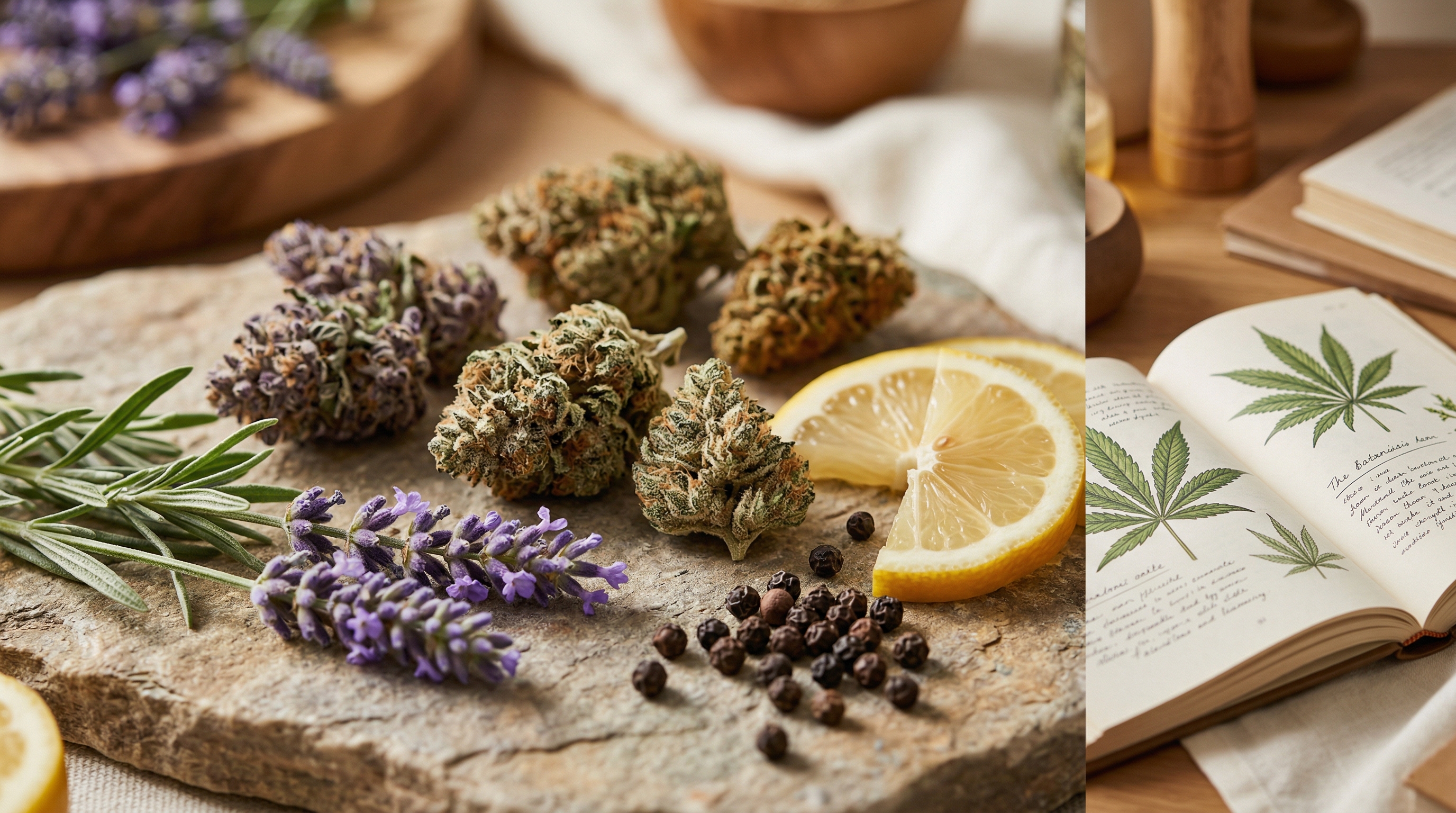
15 Best Strains for Meditation Music and Sound Baths
We’ve organized these recommendations by sonic environment — because the right strain for a Tibetan bowl session is meaningfully different from what works best for binaural beats or ambient drone music.
For Tibetan Singing Bowls and Gong Baths: Deep Surrender
Tibetan bowls and gongs produce extraordinarily complex overtone series — each instrument rings at a fundamental frequency plus dozens of harmonic partials simultaneously. These sustained, rich tones demand that you let go rather than analyze. The strains that work best here are deeply relaxing, physically grounding, and slow the analytical mind without extinguishing awareness entirely. Look to the Relax High family.
1. Granddaddy Purple
Granddaddy Purple is perhaps the quintessential sound bath companion. This myrcene-dominant cultivar delivers deep physical relaxation with a distinctive grape and berry fragrance that many find adds a pleasant sensory dimension to the experience. It promotes body heaviness without the complete mental shutdown of very sedating OG-family strains, leaving enough awareness to experience the vibrations washing through you. THC typically runs 17–23%.
Best for: Evening gong baths, crystal bowl sessions, deep release practices Primary terpenes: Myrcene, caryophyllene, pinene
2. Northern Lights
Northern Lights is one of the most historically celebrated indica cultivars for meditation, and with good reason. Its terpene profile combines myrcene and caryophyllene for full-body relaxation with a clarity that remains accessible. Many sound bath practitioners describe it as producing a state of “effortless presence” — the mind quiets naturally rather than being forcibly silenced. THC typically 16–21%.
Best for: All singing bowl formats, yoga nidra with sound, extended 90+ minute sessions Primary terpenes: Myrcene, caryophyllene, limonene
3. Hindu Kush
Hindu Kush comes from the mountain range that spans Pakistan and Afghanistan — a region with deep historical connections to both cannabis cultivation and meditative spiritual practice. This is a slow, heavy, ceremonially minded strain. Its earthy, sandalwood-adjacent aroma may enhance the sensory environment of a traditionally styled sound bath with incense and candlelight. For long gong baths, it may be your most reliable deep-immersion ally.
Best for: Traditional ceremonial sound healing, gong journeys, long savasana Primary terpenes: Myrcene, caryophyllene, pinene
4. Bubba Kush
Bubba Kush delivers caryophyllene and myrcene in a profile that targets physical comfort with notable specificity. Its heavy body effect is particularly valuable for practitioners who struggle with floor discomfort during extended sessions. The mental experience is introspective but calm — you’re inside the experience, not observing it from a distance. THC typically 14–22%.
Best for: Sound baths in physical settings with minimal padding, long floor sessions Primary terpenes: Caryophyllene, myrcene, limonene
For Binaural Beats: Clear-Headed Immersion
Binaural beats work by delivering slightly different frequencies to each ear, creating a perceived third frequency — the “binaural beat” — that may encourage brainwave entrainment. Delta waves (0.5–4 Hz) support deep sleep. Theta waves (4–8 Hz) support creativity and deep meditation. Alpha waves (8–12 Hz) support relaxed awareness. Beta waves (13–30 Hz) support focus.
For binaural beat meditation, you want a strain that enhances the experience without clouding it. The Balance High family — lower-diversity terpene profiles, often higher CBD — is the ideal starting point. So are balanced THC:CBD strains that gently amplify auditory sensitivity without heavy sedation.
5. Harlequin
Harlequin is the most recommended strain for binaural beat meditation among experienced practitioners, and the science supports why. Its signature CBD:THC ratio (typically 5:2) offers subtle perceptual enhancement from the THC alongside the anxiety-modulating properties of CBD. You gain the auditory sensitivity benefits without the risk of anxiety or cognitive fragmentation that can disrupt binaural beat work.
Best for: All binaural beat frequencies, beginners to cannabis-enhanced meditation Primary terpenes: Myrcene, caryophyllene, terpinolene
6. ACDC
ACDC sits at the near-CBD-only end of the spectrum (CBD:THC ratios up to 20:1 in some phenotypes). For practitioners who want to explore cannabis-enhanced listening without any psychoactive component, ACDC provides gentle body awareness and relaxation while leaving the mind completely clear. Ideal for delta wave binaural beat sessions aimed at deep sleep preparation.
Best for: Delta wave sleep-induction binaural beats, anxious practitioners Primary terpenes: Myrcene, caryophyllene
7. Cannatonic
Cannatonic occupies the middle ground between Harlequin and ACDC — balanced CBD:THC ratios (typically 1:1) with a gentle onset and clean finish. Many meditation practitioners describe it as producing “transparent” effects: you notice an enhancement of present-moment awareness without feeling distinctly “high.” For theta wave binaural beats targeting creative and meditative states, this is a highly reliable choice.
Best for: Theta wave creativity meditation, theta/alpha binaural beat work Primary terpenes: Myrcene, caryophyllene, pinene
8. Blue Dream
Blue Dream is a consistent overperformer for mentally engaged meditation. Its balanced myrcene, pinene, and caryophyllene profile creates relaxation without sedation — a gentle body ease alongside mental lucidity that works well for alpha wave binaural beats targeting relaxed alertness. Many practitioners find it supports the “observer mind” quality of mindfulness meditation: aware, present, unattached.
Best for: Alpha wave binaural beats, mindfulness-based sound meditation, daytime sessions Primary terpenes: Myrcene, caryophyllene, pinene
For Nature Soundscapes and Forest Bathing Music: Expansive Awareness
Recordings of rain, ocean waves, forest ambience, and bird songs have well-documented stress-reduction properties. The Japanese practice of shinrin-yoku (forest bathing) has been shown to reduce cortisol, lower heart rate, and support immune function [Li, 2018]. When paired with cannabis that produces alert, expansive awareness rather than heavy sedation, nature soundscapes can become genuinely immersive experiences.
The Energy High family — rich in terpinolene, which is itself found in plants like tea tree and conifers — creates a curious, nature-attuned mental state that pairs unusually well with nature sound environments.
9. Jack Herer
Jack Herer is named after the legendary cannabis activist and author of The Emperor Wears No Clothes. Its terpene profile (terpinolene, caryophyllene, ocimene) creates a clear, energized, nature-curious mental state that responds beautifully to forest and water sound environments. Many practitioners describe feeling more physically present in their body — a sense of embodied alertness — which is the ideal state for nature soundscape meditation.
Best for: Forest bathing music, rain recordings, ocean soundscapes, outdoor meditation Primary terpenes: Terpinolene, caryophyllene, ocimene
10. Pineapple Express
Pineapple Express brings limonene to the foreground — the terpene most associated with mood elevation and emotional openness. For nature soundscape work, its bright, tropical quality enhances the sensory richness of birdsong, running water, and wind through trees. Its balanced effect (energized but not racy) makes it accessible for beginners who want to stay alert during meditative practice.
Best for: Tropical nature soundscapes, sunrise/sunset meditation recordings Primary terpenes: Limonene, caryophyllene, myrcene
11. Strawberry Cough
Strawberry Cough is a limonene-forward cultivar with a distinctively uplifting and emotionally open quality. Its fruity terpene character seems to amplify the emotional resonance of evocative soundscapes — the kind that bring up memories, feelings of longing, or profound appreciation for natural beauty. For practitioners interested in emotionally cathartic meditation through sound, this is a compelling option.
Best for: Emotionally evocative soundscapes, heart-centered meditation music Primary terpenes: Limonene, caryophyllene, linalool
For Ambient and Drone Music: Deep Somatic Immersion
Ambient music — think Brian Eno, Moby, drone artists like Stars of the Lid, or custom meditation compositions — works through texture, space, and slowly evolving harmonic landscapes. There are no beats to track, no lyrics to follow. The practice is surrender into sound-as-environment. This style of sonic meditation benefits most from strains that dissolve the boundary between listener and soundscape — deeply relaxing, sensorially rich, and mildly psychedelic in character.
12. GSC (Girl Scout Cookies)
GSC (Girl Scout Cookies) combines OG Kush genetics with Durban Poison, resulting in a uniquely nuanced experience: deep physical relaxation from the OG side, mental curiosity and pattern recognition from the Durban. For ambient music meditation, this translates to a state where you feel physically released into the floor while your awareness drifts through the sonic landscape with genuine interest. Caryophyllene’s CB2 activity also provides body comfort for longer sessions.
Best for: Ambient and drone music, extended somatic meditation, hour-long immersions Primary terpenes: Caryophyllene, limonene, myrcene
13. Skywalker OG
Skywalker OG is a caryophyllene-dominant cultivar with a deeply relaxing body effect and an introspective mental quality that many find conducive to visionary or imagery-rich meditation. During ambient drone sessions, practitioners often report a heightened visual imagination — the inner landscape becomes active while the outer body is completely still. THC typically 20–25%, so microdosing is recommended.
Best for: Deep ambient immersion, visualization-based meditation, guru yoga Primary terpenes: Caryophyllene, myrcene, limonene
14. Purple Punch
Purple Punch (Larry OG x Granddaddy Purple) inherits the deep relaxation genetics of both parents while adding a distinctively sweet, grape-candy aroma. Its linalool and myrcene combination creates profound calm — the mental equivalent of the sustained low drone of a singing bowl held indefinitely. For ambient music lovers who want to fully dissolve into the sound, Purple Punch is one of the most effective vehicles available.
Best for: Drone-based ambient, low-BPM meditative ambient, end-of-day sound journeys Primary terpenes: Linalool, myrcene, caryophyllene
15. Wedding Cake
Wedding Cake (Triangle Kush x Animal Mints) brings caryophyllene and linalool together with a creamy, vanilla-adjacent aroma. Its distinctive quality is producing deep physical relaxation alongside a surprising mental warmth and emotional openness — it softens internal resistance in a way that’s particularly valuable for practitioners who hold chronic physical tension or have difficulty fully surrendering during meditation. Many practitioners report it as creating a quality of “melting into presence.”
Best for: Trauma-informed sound healing, deeply restorative ambient, therapeutic sessions Primary terpenes: Caryophyllene, linalool, limonene

How to Choose: Matching Strain to Sound Environment
Use this quick-reference framework when selecting your strain:
| Sound Environment | High Family | Key Terpenes | Example Strains |
|---|---|---|---|
| Tibetan bowls / gongs | Relax High | Myrcene, caryophyllene | Granddaddy Purple, Northern Lights |
| Crystal bowl sound baths | Relax High | Myrcene, linalool | Hindu Kush, Purple Punch |
| Binaural beats (theta/alpha) | Balance High | CBD, myrcene, caryophyllene | Harlequin, Cannatonic |
| Binaural beats (delta, sleep) | Balance High | CBD-dominant | ACDC, Harlequin |
| Nature soundscapes | Energy High | Terpinolene, limonene | Jack Herer, Pineapple Express |
| Emotionally evocative music | Uplifting High | Limonene, linalool | Strawberry Cough, Jack Herer |
| Ambient / drone music | Relax High | Caryophyllene, linalool | GSC, Wedding Cake, Skywalker OG |
| Active listening meditation | Energy High | Terpinolene, pinene | Jack Herer, Blue Dream |
| Post-session integration | Relief High | Caryophyllene | Bubba Kush, Skywalker OG |
A Note on the Relax, Balance, and Relief Families
Three High Families dominate sound bath recommendations because of their terpene architecture:
- Relax High: Myrcene-forward. Promotes deep physical release and the dissolution of mental chatter. The foundation of most sound bath strain selections.
- Balance High: Lower terpene diversity, often higher CBD. Gentle perceptual enhancement without risk of anxiety. The safest starting point for beginners and sensitive practitioners.
- Relief High: Caryophyllene-forward, CB2-active. Supports physical comfort during extended sessions — the strain category most often overlooked in meditation contexts, despite being highly practical.
For a related exploration, see our guides on the best strains for deep relaxation and couch-lock and the best strains for yoga and stretching.
Dosing and Timing: Getting the Protocol Right
The Biphasic Reality
Cannabis follows a well-documented biphasic response pattern — low doses and high doses can produce near-opposite effects [Sulak, 2016]. At low doses (1–5 mg THC), cannabis tends to reduce anxiety, enhance sensory perception, and support present-moment awareness. At higher doses (15+ mg THC), it can increase anxiety, fragment attention, and replace meditative clarity with mental noise.
For sound bath meditation, this means less is almost always more. The goal is heightened auditory sensitivity and reduced internal resistance — not impairment. A single moderate inhale, or a 2.5–5 mg edible taken with appropriate timing, will often produce significantly better results than a larger dose.
Consumption Method and Timing
| Method | Onset | Peak | Optimal for |
|---|---|---|---|
| Inhalation (vape/flower) | 1–5 min | 15–30 min | Precise pre-session timing |
| Sublingual tincture | 15–30 min | 45–90 min | Extended 90-minute sound baths |
| Edible (low dose) | 45–90 min | 2–3 hours | Full-day retreat formats |
For most practitioners, inhalation via vaporizer — one to two draws, taken 10–15 minutes before the session — offers the best combination of dosing precision and timing control. The effects arrive as the session begins and align with the most immersive portion of the experience.
A Practical Protocol for Your Next Session
- Choose your strain intentionally — match to your sound environment and High Family using the table above
- Dose conservatively — start at half your normal recreational dose
- Time it right — inhaled cannabis peaks in 15–30 minutes; plan accordingly
- Arrive early — settle your body before the onset adds any edge
- Set an intention — even something as simple as “I’m here to listen deeply”
- Hydrate beforehand — cotton mouth during a sound bath is a genuine distraction
- Integrate afterward — journal, sit quietly, or simply rest before returning to daily activity
Track What Works: The Stash Approach
The relationship between cannabis and meditation is genuinely personal. The strain that produces transcendent listening for one practitioner may create anxious overthinking for another — and the same strain may affect you differently depending on your dose, your mental state that day, the specific sound environment, and dozens of other variables.
This is why tracking matters. Log your strain, dose, consumption method, timing, and the quality of your experience after each session. Over time, you’ll identify your personal pattern: which strains reliably support deep listening, which ones you’ve outgrown, and what dosing protocol reliably delivers the experience you’re after.
The High IQ app makes this systematic — you can log sessions, track terpene profiles, and build a personal database of what works for your specific nervous system and practice style.
If you’re interested in exploring the auditory dimensions of cannabis further, This Is Why I’m High has also commissioned AI-generated soundtracks for individual cannabis strains — each one composed to match the terpene profile and experiential character of that cultivar. Explore the full collection at the Music Hub, where you can listen to strain-matched audio designed to be experienced alongside your session.
Key Takeaways
-
Cannabis enhances auditory perception by altering temporal processing and reducing sensory filtering in the auditory cortex, which may make sound baths feel more immersive, more detailed, and more physically resonant
-
Terpenes matter more than THC percentage for meditation — myrcene for physical release, linalool for mental calm, caryophyllene for body comfort, limonene for emotional openness, terpinolene for alert awareness
-
Match your strain to your sonic environment: Relax High for singing bowls and gong baths, Balance High for binaural beats, Energy High for nature soundscapes, Relief High for physical comfort during long sessions
-
Dose low and time it right — the biphasic effect means less cannabis often produces better meditation than more. Target 1–5 mg THC with familiar strains
-
Track your results — individual responses vary significantly. The best sound bath strain is the one that consistently works for your nervous system in your sonic environment
FAQs
Can cannabis actually improve meditation, or does it just feel that way?
Research confirms that cannabis measurably changes how the brain processes sound and time [Fachner, 2008] — so at a neurological level, something real is happening. Whether that constitutes “improved” meditation is genuinely contested among traditions. Some practitioners find cannabis reduces the friction of achieving meditative states; others find it creates a dependency that undermines the development of intrinsic meditation skill. The most honest approach is to experiment mindfully and evaluate the results honestly over time.
Is CBD or THC better for sound bath meditation?
They serve different purposes. THC is primarily responsible for enhanced auditory perception and altered time perception — the experiential qualities most associated with sound bath enhancement. CBD may reduce anxiety and support calm without psychoactive effects [Zuardi et al., 2017]. For most practitioners, a balanced THC:CBD strain — or a low-dose THC option alongside CBD — offers the best of both: perceptual enhancement without the risk of anxiety. Harlequin, Cannatonic, and ACDC are reliable starting points for this approach.
What if cannabis makes me anxious during meditation?
This is a signal to adjust your approach. Try a high-CBD, low-THC strain from the Balance High family. Reduce your dose significantly — sometimes a single small inhale is enough. You can also try consuming after you’ve already settled into the sound bath and begun to relax, rather than before. If cannabis consistently produces anxiety in meditative settings, it may simply not be the right tool for this particular practice, and that’s a completely valid conclusion.
How is a cannabis sound bath different from just listening to music while high?
A sound bath uses specific frequencies, sustained resonance, and often live acoustic instruments to create vibrations you can feel throughout your body — not just hear with your ears. Unlike recorded music with beats, dynamics, and musical structures that engage the analytical mind, sound baths are designed to bypass analysis entirely. The combination of cannabis-enhanced auditory sensitivity and the somatic, all-encompassing nature of live sound baths creates an experience that many practitioners describe as qualitatively different from any other form of cannabis-enhanced listening — more embodied, more continuous, and more likely to produce genuine states of altered consciousness.
Can I use any of these strains for yoga nidra or sleep-induction practices?
Yes — the Relax High strains like Granddaddy Purple, Northern Lights, and Purple Punch work well for yoga nidra practices conducted alongside recordings of singing bowls or guided sleep-induction audio. For these applications, slightly higher doses (while still staying below the anxiety threshold) may be appropriate, since the goal shifts from alert meditation toward deliberate surrender into sleep. See also: best strains for deep relaxation for additional options.
Sources
- Tart, C.T. (1971). On Being Stoned: A Psychological Study of Marijuana Intoxication. Science and Behavior Books.
- Fachner, J. (2008). “Music and Altered States of Consciousness: An Overview.” In Music, Health, and Wellbeing. Oxford University Press.
- Russo, E.B. (2011). “Taming THC: potential cannabis synergy and phytocannabinoid-terpenoid entourage effects.” British Journal of Pharmacology, 163(7), 1344–1364.
- Gertsch, J., et al. (2008). “Beta-caryophyllene is a dietary cannabinoid.” PNAS, 105(26), 9099–9104.
- Guzmán-Gutiérrez, S.L., et al. (2015). “Linalool and β-pinene exert their antidepressant-like activity through the monoaminergic pathway.” Life Sciences, 128, 24–29.
- Ilan, A.B., et al. (2004). “Effects of low dose THC on working memory and attentional processes.” Psychopharmacology, 177(1–2), 195–204.
- Goldsby, T.L., et al. (2017). “Effects of Singing Bowl Sound Meditation on Mood, Tension, and Well-being: An Observational Study.” Journal of Evidence-Based Complementary & Alternative Medicine, 22(3), 401–406.
- Li, Q. (2018). “Effect of forest bathing trips on human immune function.” Environmental Health and Preventive Medicine, 15, 9–17.
- Linck, V.M., et al. (2018). “Effects of inhaled linalool in anxiety, social interaction and aggressive behavior in mice.” Phytomedicine, 17(8), 679–683.
- Piccinelli, A.C., et al. (2022). “Antihyperalgesic activity of limonene and limonene-containing preparations.” Natural Product Communications, 10(2), 285–288.
- Sulak, D. (2016). “Introduction to the Endocannabinoid System.” NORML.
- Zuardi, A.W., et al. (2017). “Cannabidiol: from an inactive cannabinoid to a drug with wide spectrum of action.” Revista Brasileira de Psiquiatria, 28(1), 14–83.


