Cannabis, Adenosine, and Sleep Pressure: The Missing Link
How adenosine builds sleep pressure, why caffeine blocks it, and where cannabinoids like CBD may touch this pathway. The science, hedged honestly.

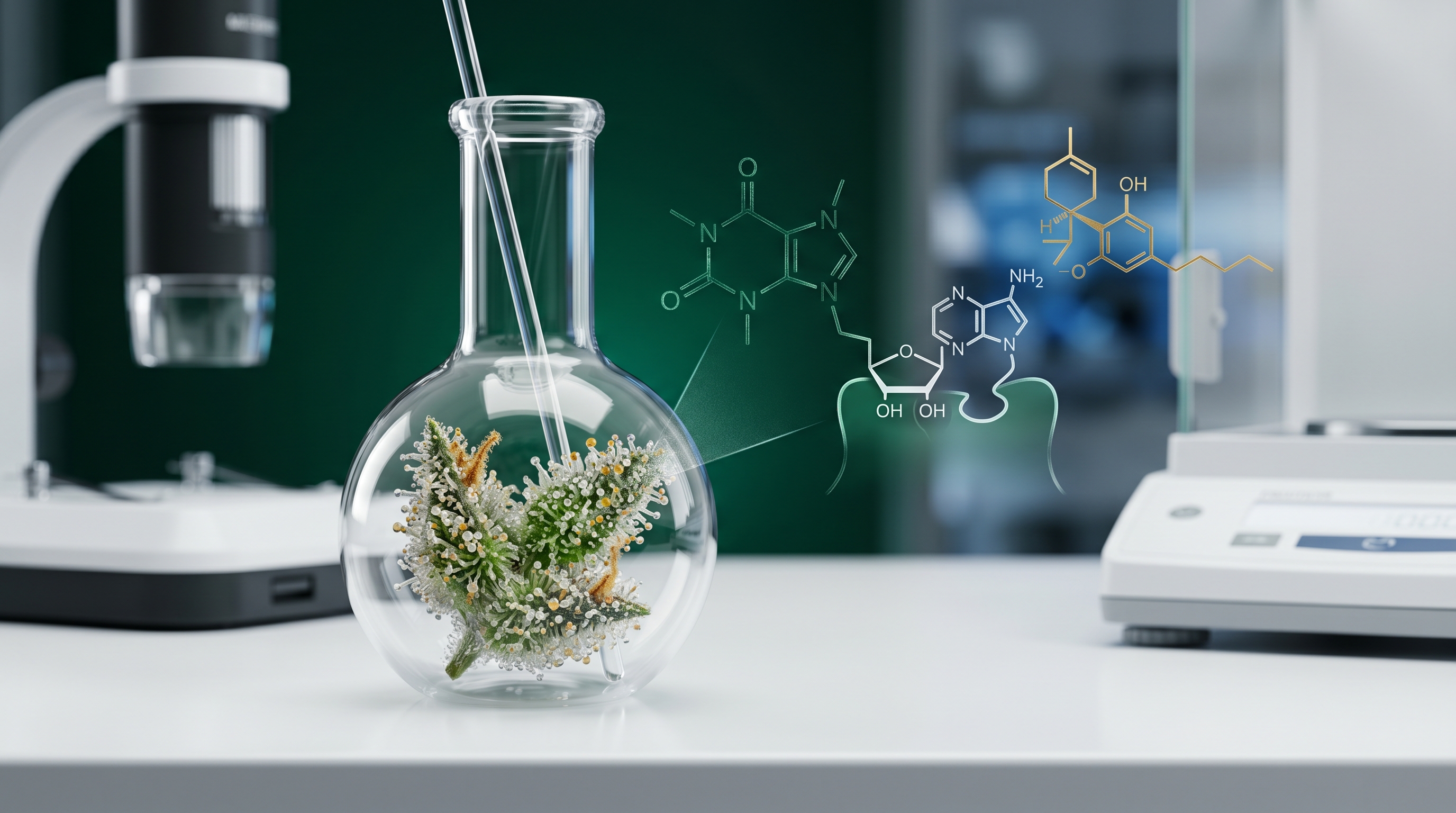
Here is a question that breaks most sleep advice: why are you sleepy at 10 p.m. but wide awake at 10 a.m. after the same amount of coffee? The answer is not melatonin, and it is not your “circadian rhythm” alone. It is a quiet little molecule called adenosine, and it is the closest thing your brain has to a fuel gauge for tiredness.
Adenosine is also where one of the most underappreciated threads in cannabis science quietly runs. When people ask whether cannabis “helps you sleep,” they usually think about THC making them drowsy or CBN as the so-called sleepy cannabinoid. Almost nobody talks about adenosine, even though it is the system caffeine works on, and even though at least one cannabis compound appears to nudge it. So let’s pull that thread carefully, separate the strong evidence from the speculative, and figure out what it actually means for your nights.
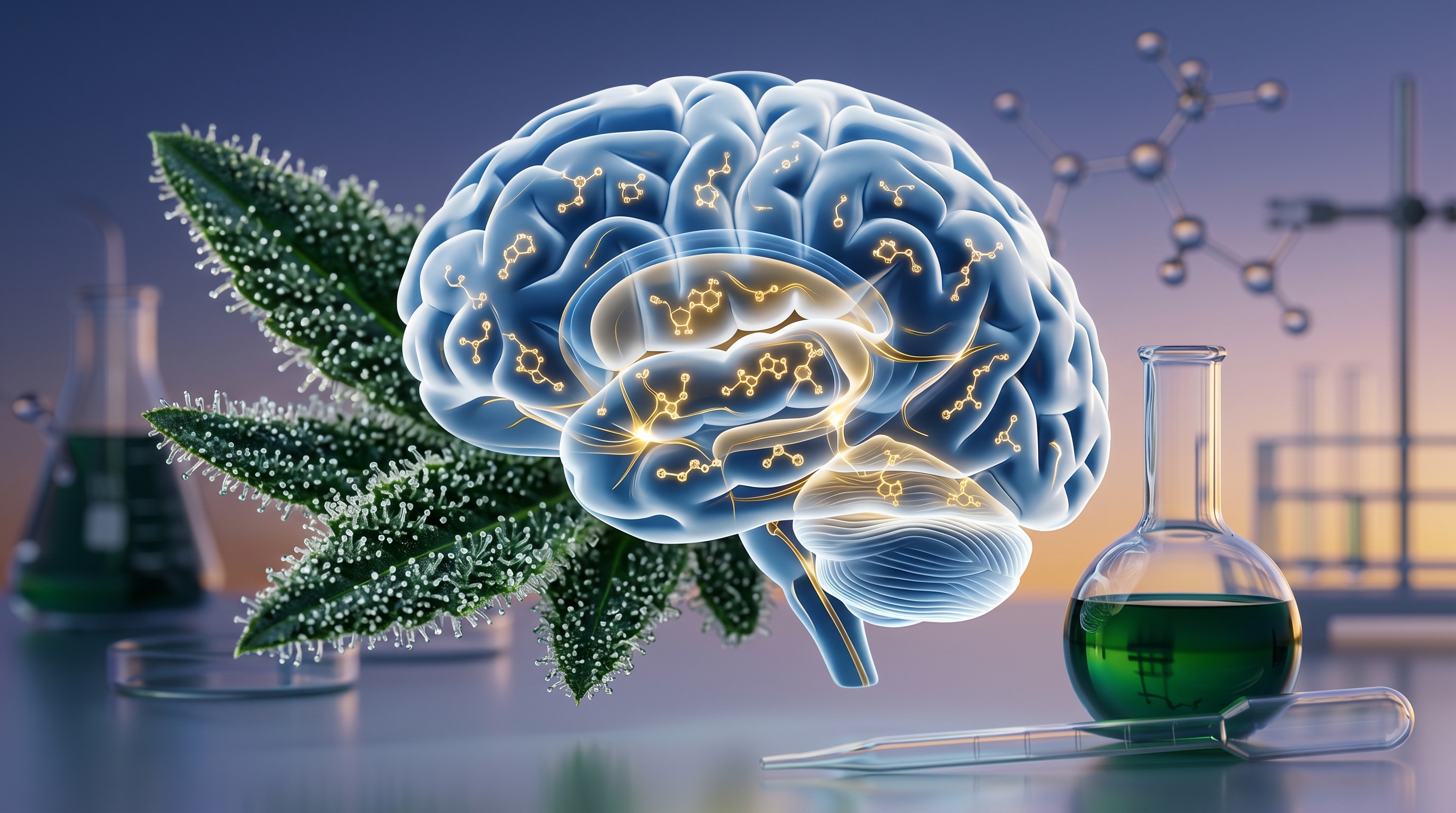
Two clocks, not one: the model that makes sleep make sense
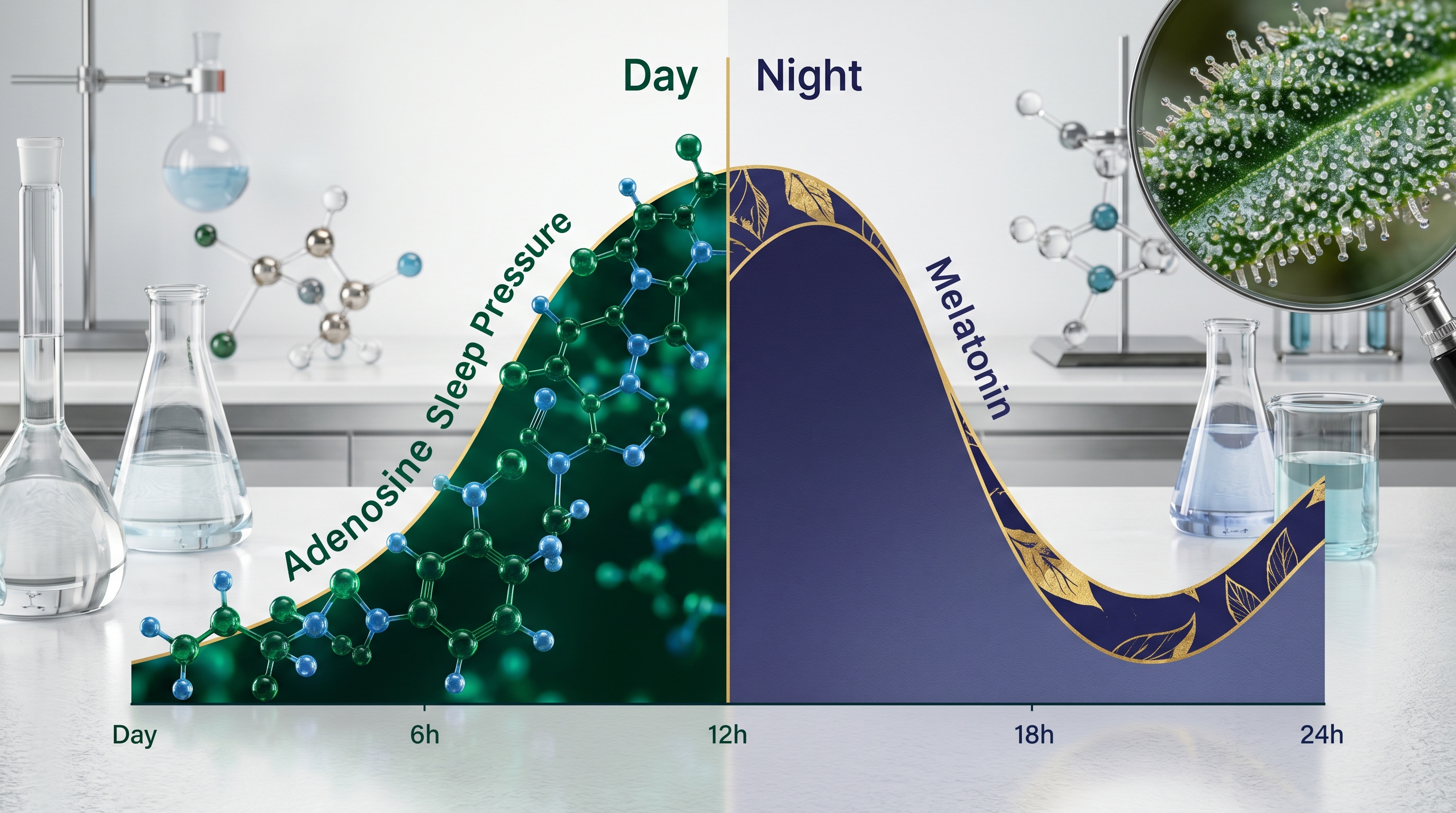
Sleep scientists describe your drive to sleep using the two-process model, first formalized by Alexander Borbély in the 1980s and still the backbone of the field. Think of it as two systems running in parallel.
Process C is the circadian clock. It is your roughly 24-hour internal timer, anchored by light and reflected in the rise and fall of melatonin and your internal day-night signal. Process C does not really care how tired you are; it cares what time it is.
Process S is the homeostatic sleep drive, often called sleep pressure. The longer you stay awake, the more pressure builds. Sleep relieves it. By bedtime, Process S is high and Process C has dimmed its alerting signal, and the two line up to push you under. This is why a midday nap can wreck your night: you bled off sleep pressure too early.
The reason this distinction matters is that adenosine is the leading molecular candidate for Process S — the chemical that actually keeps score of how long you have been awake. Melatonin belongs to Process C. They are different machines, and confusing them is the root of a lot of bad sleep advice.
Adenosine: the brain’s tiredness meter
Here is the elegant part. Your neurons run on ATP, the cell’s energy currency. As you stay awake and your brain burns through ATP, one of the breakdown products is adenosine, which accumulates in the extracellular space — especially in regions like the basal forebrain (Reichert et al., 2022; Huang et al., 2024). The more wakeful neural activity you rack up, the more adenosine builds up.
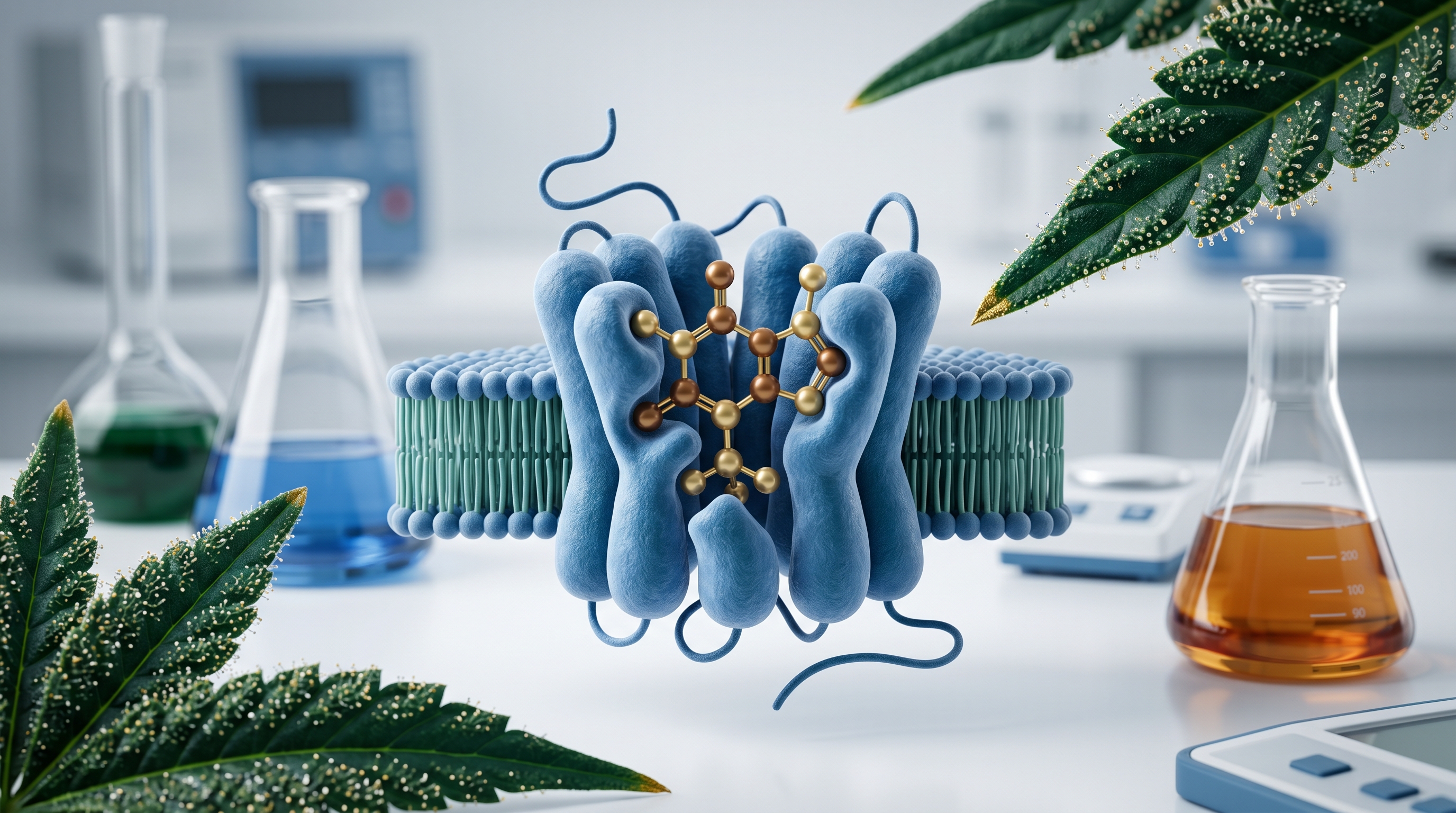
Adenosine signals through four receptor subtypes (A1, A2A, A2B, A3), but two do the heavy lifting for sleep: the A1 receptor and the A2A receptor. Both are G-protein-coupled receptors, and both, when stimulated, promote slow-wave sleep (Reichert et al., 2022).
A 2019 review by Lazarus and Greene proposed an influential way to split their jobs. In their model, A2A receptors “gate” sleep — concentrated in the striatum and nucleus accumbens, they help flip the switch from wake to sleep by quieting arousal circuits. A1 receptors, by contrast, track sleep need itself — widely expressed across cortex, hippocampus, thalamus, and basal forebrain, they suppress wake-promoting neurons and drive the deep slow-wave activity (SWA) that resolves your accumulated tiredness (Lazarus & Greene, 2019).
The evidence for adenosine as the homeostatic signal is genuinely strong:
- Injecting adenosine agonists into the brains of animals increases NREM sleep and slow-wave activity; antagonists reduce them (Lazarus & Greene, 2019).
- Mice with A1 receptors knocked out in forebrain neurons fail to show the normal rebound in slow-wave activity after sleep deprivation — their tiredness meter is broken (Bjorness et al., 2009).
- After sleep loss, A1 receptor binding goes up and astrocyte-derived adenosine rises, which tracks with the cognitive deficits we see after a bad night (Reichert et al., 2022).
A note of intellectual honesty: most of this mechanistic detail comes from rodents and cell models. The human picture is supported largely indirectly — through what happens when we block these receptors. Which brings us to the molecule you already know.
The caffeine analogy: blocking the meter
Caffeine is the cleanest real-world proof that adenosine controls sleepiness, because caffeine’s entire trick is blocking adenosine receptors. It is a non-selective antagonist with roughly equal affinity for A1 and A2A (Reichert et al., 2022). It does not give you energy — it muffles the “you are tired” signal that has been building all day.
The location matters. Elegant mouse work showed that caffeine’s wake-promoting punch comes mainly from blocking A2A receptors in the shell of the nucleus accumbens — a region the size of a pea. Delete those specific receptors and caffeine stops keeping mice awake (Lazarus et al., 2011). That is the gating system from earlier, jammed open.
What does this look like in humans? In controlled trials, evening caffeine reliably lengthens the time it takes to fall asleep, lowers sleep efficiency, and blunts slow-wave activity in the EEG (Reichert et al., 2022). A 2025 randomized crossover trial found that 400 mg of caffeine — roughly four cups of coffee — measurably disrupted sleep even when consumed up to 12 hours before bed in habitual coffee drinkers, while 100 mg up to 4 hours before bed was far gentler (Gardiner et al., 2025).
Here is the part most people miss: caffeine does not erase your sleep pressure — it masks it. The adenosine is still there, still bound up in your brain’s energy ledger. Block the receptors and the tiredness waits in line, which is exactly why the crash arrives when the caffeine wears off. We dig into the cannabis side of this dance in cannabis and coffee, the science behind the pairing.
Where cannabinoids touch the adenosine pathway
Now the cannabis angle — and this is where you should hold your expectations loosely, because the gap between cell-dish findings and your nightstand is wide.
The headline mechanism is this: CBD appears to inhibit the equilibrative nucleoside transporter, ENT1, the protein that normally clears adenosine out of the extracellular space. In a foundational 2006 study, Carrier and colleagues showed that CBD binds ENT1 with a Ki under 250 nM and reduces adenosine uptake in microglia and macrophages. Because reuptake is how adenosine signaling gets switched off, slowing it down means adenosine lingers and signals longer (Carrier et al., 2006).
In other words, where caffeine blocks adenosine receptors, CBD may do something closer to the opposite at the upstream step — letting more adenosine accumulate to act on those same receptors. This is sometimes called adenosine reuptake inhibition, and it is genuinely distinct from how THC and CBD hit the cannabinoid receptors. It also turns out that THC inhibits ENT-1 with a similar potency, and combined THC/CBD effects in mice were diminished when A2A receptors were deleted, pointing to adenosine as a real player in some cannabis effects (Carroll et al., 2021).
So is the case closed? No, and here is the crucial caveat. Most ENT1 work was done in cell cultures and immune tissue, studying inflammation — not sleep. The doses are often high, and the brain is messier than a dish. A 2023 in vivo study using a mouse hypothermia model found that CBD did not substantially raise endogenous adenosine levels, directly challenging how relevant this mechanism is in a living animal (Xiao et al., 2023). And separate work suggests CBD may act as a negative allosteric modulator of the A2A receptor rather than a clean indirect agonist (Martínez-Pinilla et al., 2023). The mechanism is real in vitro; its weight in your actual sleep is unproven.
This is part of why CBD’s effects are so famously biphasic and confusing. As we cover in why CBD can be stimulating, not sedating, at low doses, the same compound can read as alerting or calming depending on dose — not the signature of a simple sleeping pill. None of this means cannabinoids work on adenosine the way caffeine does in reverse. It means there is a plausible, partially supported pathway worth watching.
Adenosine vs. melatonin: stop confusing the two
If you take one practical idea from this article, make it this: adenosine and melatonin are not the same tool, and they do not solve the same problem.
| Adenosine (Process S) | Melatonin (Process C) | |
|---|---|---|
| What it tracks | How long you have been awake | What time your body thinks it is |
| Built by | Neural energy use across the day | Your circadian clock, cued by darkness |
| The lever | Sleep pressure / sleep need | Sleep timing |
| Blocked by | Caffeine (receptor antagonist) | Light; delayed by evening caffeine |
Melatonin is a timing signal. Taking it when your sleep pressure is already high and your timing is already aligned does little. Adenosine is the pressure itself — and you cannot really supplement it, you can only build it (by staying awake) or unmask it (by skipping the afternoon coffee). Interestingly, evening caffeine also delays the melatonin rhythm by around 40 minutes, roughly half the shift caused by bright light — so caffeine meddles with both clocks, which is part of why it is such a potent sleep disruptor (Burke et al., 2015).
For the bigger picture of how cannabis interacts with both processes, see our deeper guides on cannabis and sleep and how THC affects your circadian rhythm.
Practical implications (held loosely)
Let’s translate this into things you can actually do — with appropriate hedging, because the human cannabis-adenosine evidence is thin.
- Protect your sleep pressure. The most reliable lever here is not a cannabinoid; it is not blocking adenosine. Cutting caffeine 8 to 12 hours before bed may do more for your sleep than any sleep aid (Gardiner et al., 2025). If you pair cannabis with coffee, the caffeine is the bigger variable.
- Do not expect CBD to behave like reverse-caffeine. The reuptake-inhibition mechanism is mostly preclinical and contested in vivo. CBD’s real-world sleep effects in humans are mixed and dose-dependent, and at low doses it can be alerting.
- THC and adenosine may interact, but THC’s sleep story is its own animal. THC can shorten the time to fall asleep for some people while suppressing REM and altering dreams, and tolerance builds fast. Adenosine is only one small piece of that.
- Track your own response. Because adenosine, circadian timing, dose, and individual receptor genetics (ADORA2A variants change caffeine sensitivity) all interact, the same product genuinely hits people differently. If you want better nights, see our science-based guide to cannabis and sleep and consider patterns built for evening wind-down or deep relaxation.
If you are choosing products with rest in mind, terpenes matter too — myrcene’s sedating reputation and linalool, the lavender terpene for calm both feed into the relaxing profiles described in our understanding High Families framework. The strain name on the jar tells you less than how your body responds to that chemistry.
Limitations and open questions
I want to be straight with you about what we do not know.
- The strongest adenosine evidence is animal and cellular. The two-process model and A1/A2A roles are well supported, but the precise human contribution of each receptor is still debated (Reichert et al., 2022).
- CBD’s adenosine effect is unproven in living humans for sleep. ENT1 inhibition is real in vitro; whether it meaningfully raises brain adenosine in people, at realistic doses, to change sleep is an open question — and at least one in vivo study says no (Xiao et al., 2023).
- None of this is a treatment recommendation. Adenosine signaling touches the heart, immune system, and brain. If you have a sleep disorder, this is a conversation for a clinician, not a blog. Always talk to a healthcare professional before using cannabis for sleep, especially alongside other medications.
The honest summary: adenosine is almost certainly the “missing link” in how you understand tiredness, and caffeine proves it daily. Whether cannabis tugs that same lever in any way you would feel is a fascinating, half-answered question. We built This Is Why I’m High around tracking your own patterns precisely because biology this individual cannot be settled by a label.
Frequently asked questions
Does cannabis raise adenosine like a sleep aid? Possibly, but the evidence is mostly preclinical. CBD (and THC) can inhibit ENT1, the transporter that clears adenosine, in cell studies — which would let adenosine linger. But a 2023 in vivo study failed to find a meaningful rise in brain adenosine from CBD, so this is unproven in living animals and humans (Carrier et al., 2006; Xiao et al., 2023).
Is adenosine the same as melatonin? No. Adenosine builds sleep pressure based on how long you have been awake (Process S). Melatonin signals timing from your circadian clock (Process C). They are different systems that happen to align at bedtime.
Why does caffeine work, then? Caffeine blocks A1 and A2A adenosine receptors, especially A2A in the nucleus accumbens, so the tiredness signal can’t land (Lazarus et al., 2011). It masks sleep pressure rather than removing it — which is why the crash arrives later.
Should I take CBD instead of cutting caffeine for better sleep? The far more reliable lever is reducing late-day caffeine. CBD’s sleep effects in humans are mixed and dose-dependent, and the adenosine mechanism behind it is not established in vivo. Talk to a clinician about persistent sleep problems.
Does THC affect adenosine too? THC also inhibits ENT-1 in cell studies, and some THC effects in mice depend partly on A2A receptors (Carroll et al., 2021). But THC’s sleep effects — faster onset for some, REM suppression, fast tolerance — are driven mostly by the cannabinoid receptors, not adenosine.
Sources
- Reichert CF, Deboer T, Landolt HP. Adenosine, caffeine, and sleep–wake regulation: state of the science and perspectives. Journal of Sleep Research. 2022;31(4):e13597. DOI: 10.1111/jsr.13597
- Lazarus M, Greene RW, et al. Gating and the Need for Sleep: Dissociable Effects of Adenosine A1 and A2A Receptors. Frontiers in Neuroscience. 2019;13:740. DOI: 10.3389/fnins.2019.00740
- Huang Z, et al. Functions and mechanisms of adenosine and its receptors in sleep regulation. Sleep Medicine Reviews. 2024. PMID: 38373361
- Lazarus M, et al. Arousal Effect of Caffeine Depends on Adenosine A2A Receptors in the Shell of the Nucleus Accumbens. Journal of Neuroscience. 2011;31(27):10067–10075. DOI: 10.1523/JNEUROSCI.6730-10.2011
- Carrier EJ, Auchampach JA, Hillard CJ. Inhibition of an equilibrative nucleoside transporter by cannabidiol: a mechanism of cannabinoid immunosuppression. PNAS. 2006;103(20):7895–7900. DOI: 10.1073/pnas.0511232103
- Carroll CB, et al. Contribution of the Adenosine 2A Receptor to Behavioral Effects of Tetrahydrocannabinol, Cannabidiol and PECS-101. Molecules. 2021;26(17):5354. DOI: 10.3390/molecules26175354
- Burke TM, et al. Effects of caffeine on the human circadian clock in vivo and in vitro. Science Translational Medicine. 2015;7(305):305ra146. DOI: 10.1126/scitranslmed.aac5125
- Gardiner C, et al. Dose and timing effects of caffeine on subsequent sleep: a randomized clinical crossover trial. Sleep. 2025. PMCID: PMC11985402
- Martínez-Pinilla E, et al. Cannabidiol at Nanomolar Concentrations Negatively Affects Signaling through the Adenosine A2A Receptor. International Journal of Molecular Sciences. 2023;24(24):17500. DOI: 10.3390/ijms242417500
This article is for educational purposes only and is not medical advice. Cannabis affects everyone differently. Consult a healthcare professional before using cannabis, especially for sleep or alongside other medications.


