Cannabis and Cold Exposure: Ice Bath and Sauna Synergy
Can cannabis pair with ice baths, saunas, and contrast therapy? The thin science, the endocannabinoid overlap, and the real safety risks—explained.

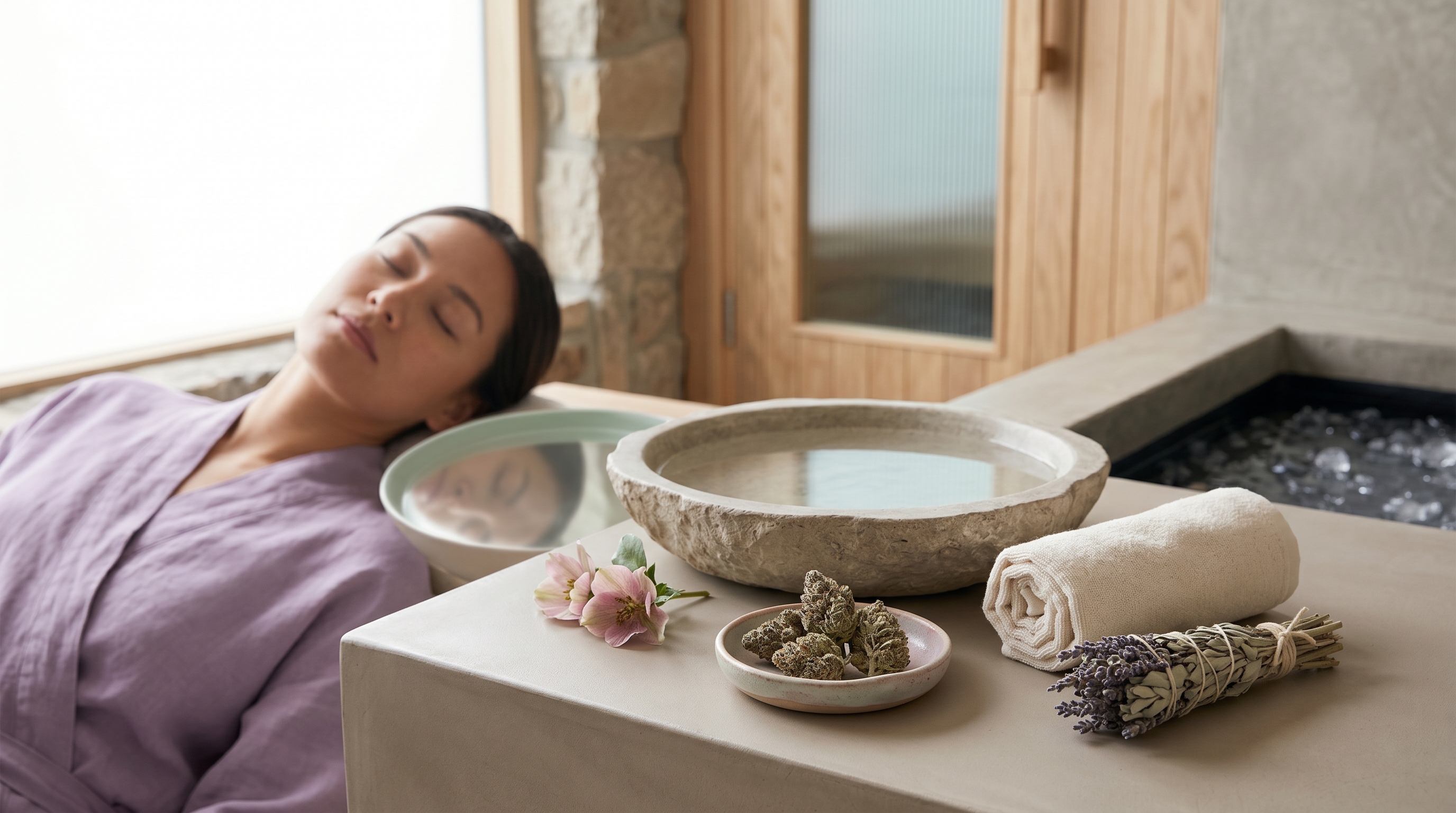
There’s a corner of the biohacking world where the cold plunge, the sauna, and the pre-roll all live on the same shelf. The pitch sounds intoxicating: ice baths flood you with feel-good chemistry, saunas wring out the stress, cannabis softens the edges—so why not stack all three into one glorious recovery ritual?
Let me put the most important sentence first. Combining cannabis with extreme cold or heat carries real, documented risk. THC raises your heart rate. It can drop your blood pressure. It blunts the reflexes that keep you upright, and it nudges your body’s thermostat. Ice water and hot rooms do their own dramatic things to circulation and balance. Mix impaired judgment with a 40°F plunge or a 180°F sauna and you are not optimizing. You are gambling with fainting, falls, and cardiac strain.
So this isn’t a green light. It’s an honest tour: what the endocannabinoid system actually does during cold and heat exposure, why the “stack” is mostly anecdote dressed up as science, and how—if you’re going to be in this world anyway—to be dramatically less reckless about it.
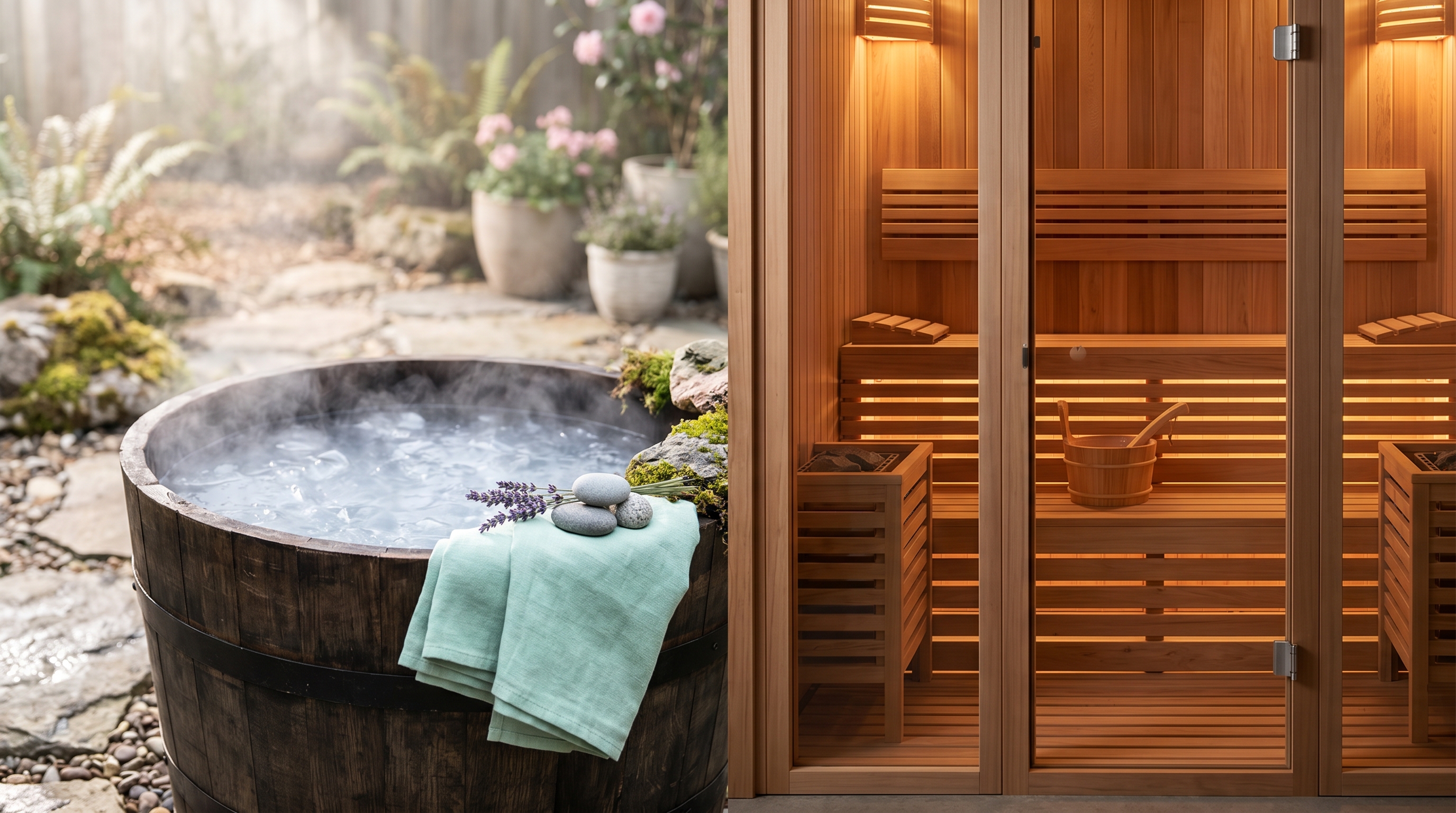
Your Built-In Thermostat Runs on Endocannabinoids
Your body holds its core temperature in a narrow band. The endocannabinoid system is one of the dimmer switches behind that thermostat. The two main endocannabinoids—anandamide (AEA) and 2-arachidonoylglycerol (2-AG)—bind to CB1 and CB2 receptors across your brain and body. Some of the densest CB1 populations sit in the preoptic hypothalamus, the brain’s temperature command center.
When THC floods those CB1 receptors, the thermostat shifts. In animal studies, THC reliably produces hypothermia—a measurable drop in core temperature—by reducing heat production rather than dumping heat faster [Sanchez et al., 1998]. The effect is dose-dependent and completely abolished when CB1 receptors are blocked, which tells researchers CB1 is the lever being pulled. In humans the drop is far gentler—often just 0.2–0.5°C—because we have more compensatory machinery, but the direction is the same: cannabis tends to nudge your internal set point downward.
Here’s the nuance that matters: the same review notes that simply blocking cannabinoid receptors doesn’t change baseline temperature much, suggesting the endocannabinoid system isn’t running your thermostat minute to minute—it’s more of an influence that gets loud when you flood it with THC. Your endocannabinoid “tone” still matters, though, which is the whole premise behind the endocannabinoid tone theory of running hot or cold.
Temperature sensing also leans on a family of channels called TRP receptors, which cannabis compounds touch directly. TRPV1 (a “warm” channel) drives cooling when activated; TRPA1 and TRPM8 (the “cold” channels, the ones that make menthol feel icy) push the other way. Cannabinoids interact with several of these, which is part of why the cannabis-and-temperature story is so tangled.
What Actually Happens When You Get Cold
Cold exposure is having a cultural moment, and the biology is genuinely interesting. When you hit cold water, your sympathetic nervous system fires. Noradrenaline and adrenaline spike. Your body recruits brown adipose tissue (BAT)—the “good fat” that burns energy purely to make heat, a process called non-shivering thermogenesis. One crossover study of twelve adults found noradrenaline more than doubled within five minutes of an 8–12°C ice bath [Braunsperger et al., 2025].
Now here’s where the endocannabinoid system re-enters. Brown fat is studded with CB1 receptors, and the relationship between the ECS and thermogenesis is intimate—but it cuts against the simple “cold boosts your feel-good cannabinoids” story you’ll hear on podcasts.
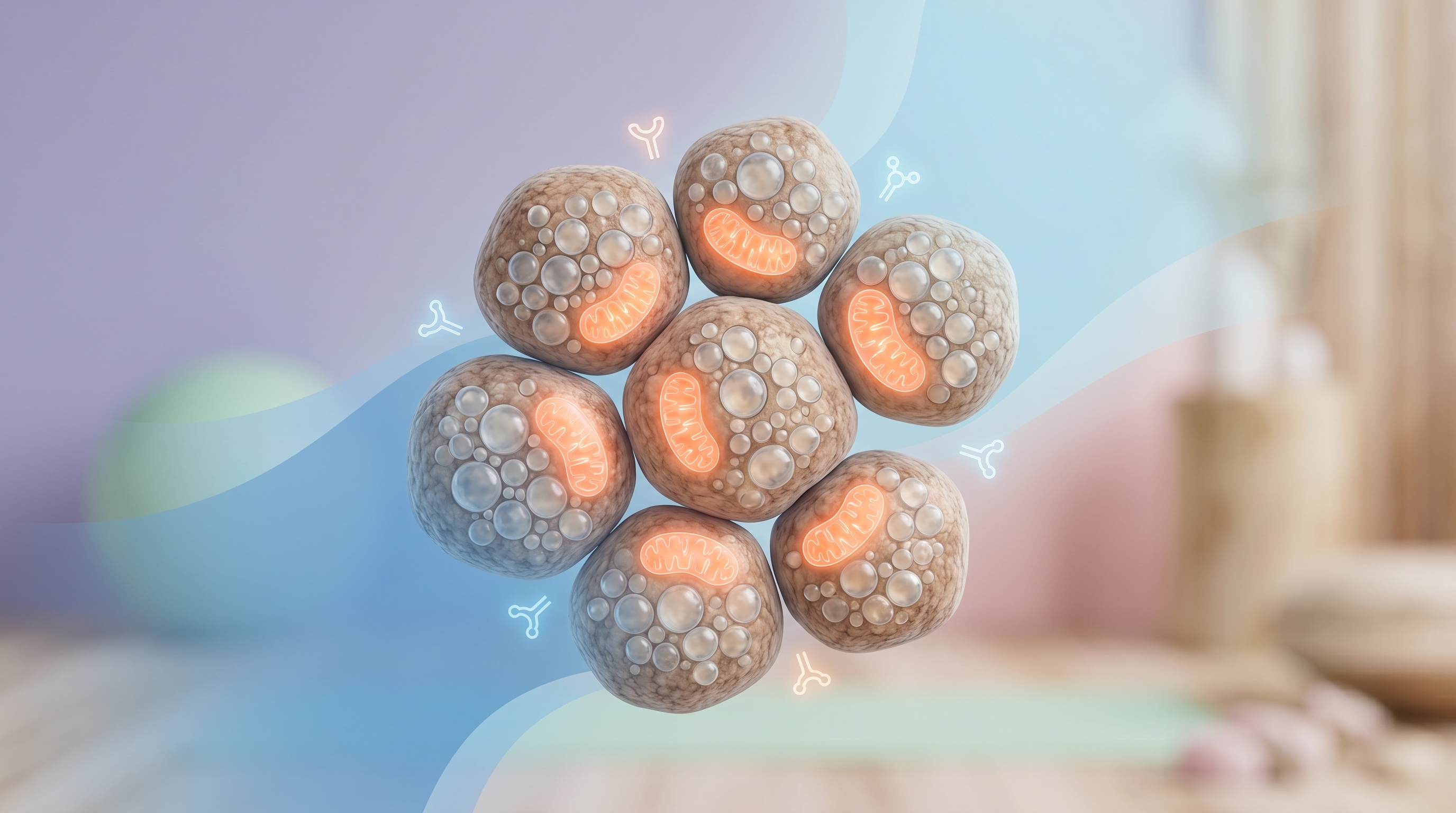
In a study of 25 men exposed to two hours of cold, researchers tracked plasma endocannabinoids while imaging brown fat activity [Maliszewska et al., 2023]. The men with active brown fat showed a decrease in circulating AEA, OEA, and PEA that stayed suppressed throughout the cold, while men without active BAT saw their levels drift back to baseline. The leading explanation: cold-activated brown fat upregulates its CB1 receptors and pulls endocannabinoids out of the bloodstream. An earlier finding showed cold exposure “markedly increased CB1 receptor density” in the brown fat of lean men.
Animal work fills in the mechanism. Cold exposure and β3-adrenergic stimulation raise endocannabinoid levels locally inside fat tissue, where they appear to act as a negative-feedback brake on thermogenesis—the ECS generally tells the body to conserve energy, not burn it [Krott et al., 2016]. In other words, your endocannabinoid system and brown-fat heat production are locked in a push-pull, not a high-five. That’s a long way from “cold plunges flood you with bliss molecules.”
The Real Endocannabinoid “High” Comes From Movement, Not the Plunge
If you’ve heard that cold and heat give you a cannabis-like glow, the cleaner evidence actually points to exercise. A meta-analysis of acute exercise found that anandamide reliably rises after a single bout of running or cycling, across humans and animals and even in people with PTSD or depression [Desai et al., 2022]. Intense exercise pushes both AEA and BDNF up, which researchers link to the mood lift and the analgesic afterglow once chalked up entirely to endorphins.
This is the part of the “runner’s high” story that’s genuinely well supported, and we cover the mechanism in depth in the endocannabinoid system during exercise. It’s also why so much of the cannabis-and-fitness conversation is really an endocannabinoid conversation—see best cannabis strains for working out and exercise and cannabis and VO2max.
So when the cold-plunge crowd reports euphoria, a chunk of it is the adrenaline rush and the sense of accomplishment, not a measurable surge in endocannabinoids from the cold itself. Honesty matters here.
The Proposed Recovery and Mood Synergy (Hold Your Expectations)
Here’s the most generous version of the stack, clearly labeled as hypothesis, not fact.
The argument goes: cold and heat exposure both work on inflammation and recovery, cannabis touches the same pathways, so combining them might compound the benefit. There’s a kernel of plausibility. The endocannabinoid system is deeply involved in the molecular science of inflammation and in how cannabinoids may protect against neuroinflammation. Contrast therapy (alternating cold and hot) is popular precisely because people feel less sore afterward.
But “feels less sore” and “measurably accelerates recovery” are different claims. The athletic-recovery literature on cannabis is thin and mixed—we walk through exactly what holds up in what science says about cannabis and athletic recovery and cannabis for surgery recovery. On the cold side, the picture is murkier still: some research suggests cold-water immersion right after strength training may actually blunt muscle adaptation. Stacking cannabis on top of that doesn’t have a single quality human trial behind it.
The mood story has a little more to stand on. Cold exposure raises catecholamines that can sharpen alertness; saunas are linked to relaxation and stress relief; and the ECS is a known player in how cannabinoids affect your stress hormone cortisol. It’s reasonable to suspect the combination feels good for some people. It is not established that it does anything you couldn’t get more safely from the components separately.
Bottom line on synergy: the evidence is thin and largely anecdotal. Treat any “stack” claim as a personal experiment, not a protocol.
The Risks—Read This Part Twice
This is where the article earns its keep. Cannabis and extreme temperature each stress the cardiovascular and autonomic systems, and combining them can stack those stresses in dangerous ways.
THC raises your heart rate. Pharmacological modeling estimates that half of people would cross into tachycardia at roughly 15 mg of inhaled THC, even at rest [Liu et al., 2025]. Now add a cold plunge, which spikes adrenaline, or a sauna, which makes your heart work harder to shed heat. You’re asking your cardiovascular system to absorb two big hits at once. If you have any heart condition, this is a hard no—start with what cardiovascular research shows about cannabis and heart health.
THC can drop your blood pressure and make you faint. THC can cause vasodilation and orthostatic hypotension—the head-rush when you stand. Heat amplifies it by pulling blood toward the skin. Emergency-medicine reports describe a recognizable pattern: THC plus heat (hot shower, bath, sauna) plus dehydration equals presyncope and fainting. Saunas already cause fainting in people who push too long; cannabis lowers the threshold. A faint in a hot, slippery sauna or while climbing out of a cold tub is how a “wellness ritual” turns into a head injury.
Cannabis impairs the judgment that keeps cold and heat safe. Cold-water immersion demands you respect time limits and read your body’s signals. Sauna safety depends on noticing when you’re overheating and getting out. THC blunts time perception, risk assessment, and interoception—the very faculties these practices require. You can’t safely titrate your exposure if you can’t accurately feel it.
Cannabis tilts your thermoregulation in the same direction as the cold. Because THC nudges your set point downward and promotes vasodilation, it may impair the compensatory responses—shivering, vasoconstriction—that protect you in genuine cold. The THC-induced temperature drop is mild on its own, but you don’t want anything working against your body’s heat-conservation reflexes while you’re sitting in ice water.
Your wearable won’t save you. Some people lean on heart-rate and HRV data to “stay in range.” That data is informative—we explain it in what your wearable’s heart-rate variability tells you about cannabis—but a watch reacts after the fact. It can’t catch a fainting spell before you’re on the floor.
Safer-Practice Guidance (If You’re Going to Do It Anyway)
I’d rather give you guardrails than pretend nobody will try this.
- Separate them in time. The simplest harm-reduction move is to not combine them at all. Cold plunge or sauna sober; enjoy cannabis later. You get most of the upside and almost none of the acute risk.
- Never use cannabis before an ice bath or while in heat. If you’ve consumed, skip the plunge and skip the sauna. Save the temperature work for a clear-headed day.
- Hydrate and eat first. Dehydration and low blood sugar are the strongest amplifiers of cannabis-related fainting. Don’t do any of this on an empty tank.
- Never alone, never locked in. Have a sober person present. Don’t use a sauna with a latching door or a cold tub you can’t easily exit.
- Respect conservative time limits. Short cold exposures, modest sauna sessions, and stand up slowly every single time.
- If you have any cardiovascular condition, are pregnant, on blood-pressure medication, or new to cannabis—don’t. The margin for error is too small. This applies doubly if you’re exploring cannabis for stress relief or sleep and reaching for higher doses.
- Track honestly. If you’re determined to experiment, log it the way you’d log anything else in the High IQ app—dose, timing, how you actually felt, any dizziness. Patterns beat vibes, and a written record may talk you out of a bad idea.
Key Takeaways
- The endocannabinoid system genuinely helps regulate body temperature, mostly through CB1 receptors in the hypothalamus, and THC nudges your set point downward.
- Cold exposure tends to lower circulating endocannabinoids in people with active brown fat—the reliable “bliss molecule” surge comes from exercise, not the plunge.
- The recovery and mood “synergy” of stacking cannabis with cold and heat is thin and anecdotal, not proven.
- The risks are real and documented: THC raises heart rate, can drop blood pressure, blunts judgment, and combines badly with the cardiovascular stress of ice baths and saunas—fainting is a known pattern.
- Safest move: keep cold therapy, saunas, and cannabis on separate clocks. If you experiment anyway, hydrate, never go alone, and track what happens.
The components are interesting on their own. But the case for stacking cannabis with extreme cold and heat is built on enthusiasm, not evidence—and the safety math runs the wrong way.
Frequently Asked Questions
Does cold exposure boost your endocannabinoids like exercise does? Not in the way the hype suggests. In humans, cold exposure tends to lower circulating endocannabinoids—especially in people with active brown fat, which appears to pull them out of the blood. The reliable endocannabinoid surge comes from acute exercise, not the plunge itself.
Is it safe to use cannabis before a sauna? No. THC can drop blood pressure and cause vasodilation, heat amplifies both, and the combination is a well-documented cause of fainting. Saunas already cause syncope in some people; cannabis lowers the threshold further.
Can cannabis help with post-workout recovery if I also do cold therapy? Maybe for perceived soreness, but the human evidence is thin and mixed. There’s no quality trial showing the combination speeds recovery, and some research suggests cold-water immersion right after lifting can blunt muscle gains. See our athletic recovery deep-dive.
Why does THC make me feel cold sometimes? THC nudges your hypothalamic temperature set point downward and promotes vasodilation, so some people report feeling chilly even at normal room temperature. The core-temperature drop in humans is usually small (around 0.2–0.5°C), but the perception of cold can be noticeable.
Does CBD carry the same risks as THC here? CBD doesn’t raise heart rate or cause the same blood-pressure-and-fainting pattern that THC does, so it’s lower-risk on those specific fronts. But it’s not a free pass—extreme cold and heat carry their own dangers regardless of what you’ve consumed, and dosing and quality still matter.
Sources
- Sanchez-Blazquez et al. (1998). Cannabinoid and opioid systems and thermoregulation. Front. Biosci. DOI: 10.2741/190 (PMC3979758)
- Maliszewska et al. (2023). Changes in plasma endocannabinoid concentrations correlate with brown adipocyte uptake during cold exposure in humans. Front. Mol. Biosci. DOI: 10.3389/fmolb.2023.1073683
- Krott et al. (2016). Endocannabinoid regulation in white and brown adipose tissue following thermogenic activation. J. Lipid Res. DOI: 10.1194/jlr.M064758
- Braunsperger et al. (2025). Effects of time-of-day on the noradrenaline, adrenaline, cortisol and blood lipidome response to an ice bath. Sci. Rep. DOI: 10.1038/s41598-025-85304-8
- Desai et al. (2022). A systematic review and meta-analysis on the effects of exercise on the endocannabinoid system. Cannabis Cannabinoid Res. DOI: 10.1089/can.2021.0113
- Liu et al. (2025). Quantifying heart rate changes after delta-9-THC administration using a PBPK-PD model in healthy adults. Pharmaceutics. DOI: 10.3390/pharmaceutics17020237
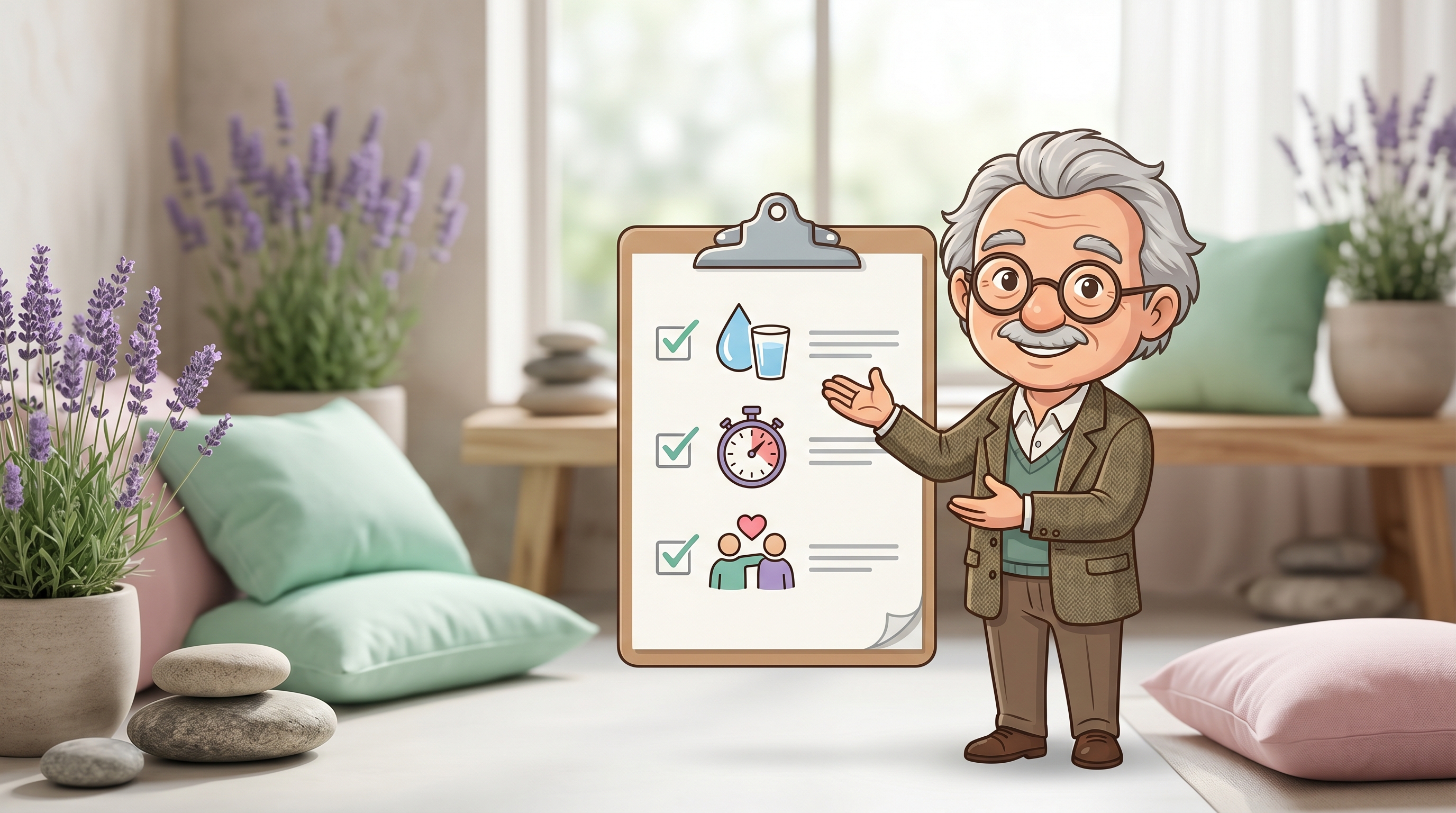
Professor High’s take: The biology is real, the stack is mostly hype, and the risks are not. If you love your cold plunge and your sauna, keep them—and keep cannabis on a different clock.


