Cannabis and Skin Conditions: Eczema, Psoriasis, and Acne Research
What does the science actually say about cannabinoids for eczema, psoriasis, and acne? A deep-dive into the endocannabinoid system and skin research.


Why Skin Researchers Are Paying Close Attention to Cannabis
Skin disease is one of the most prevalent categories of human illness. Acne affects roughly 85% of people at some point in their lives. Psoriasis impacts around 125 million people worldwide. Eczema (atopic dermatitis) affects up to 20% of children and 10% of adults globally. These three conditions alone account for enormous amounts of suffering, lost productivity, and healthcare spending—and for many patients, current treatments offer incomplete relief or come with significant side effects.
In that context, the emergence of cannabinoids as potential dermatological agents is genuinely newsworthy. Over the past decade, researchers have made a striking discovery: the skin has its own complete endocannabinoid system. It doesn’t just respond to cannabinoids—it produces them, relies on them for homeostasis, and may become dysregulated in ways that contribute to chronic skin disease.
This article is a detailed look at what that science actually shows. We’ll cover the biology of the skin’s endocannabinoid system, then examine what research currently tells us about CBD, THC, and other cannabinoids for eczema, psoriasis, and acne specifically. We’ll be honest about the limitations—most of the evidence is still preclinical or from small trials—while giving you enough detail to evaluate the research yourself.
The Skin’s Endocannabinoid System: A Quick Primer
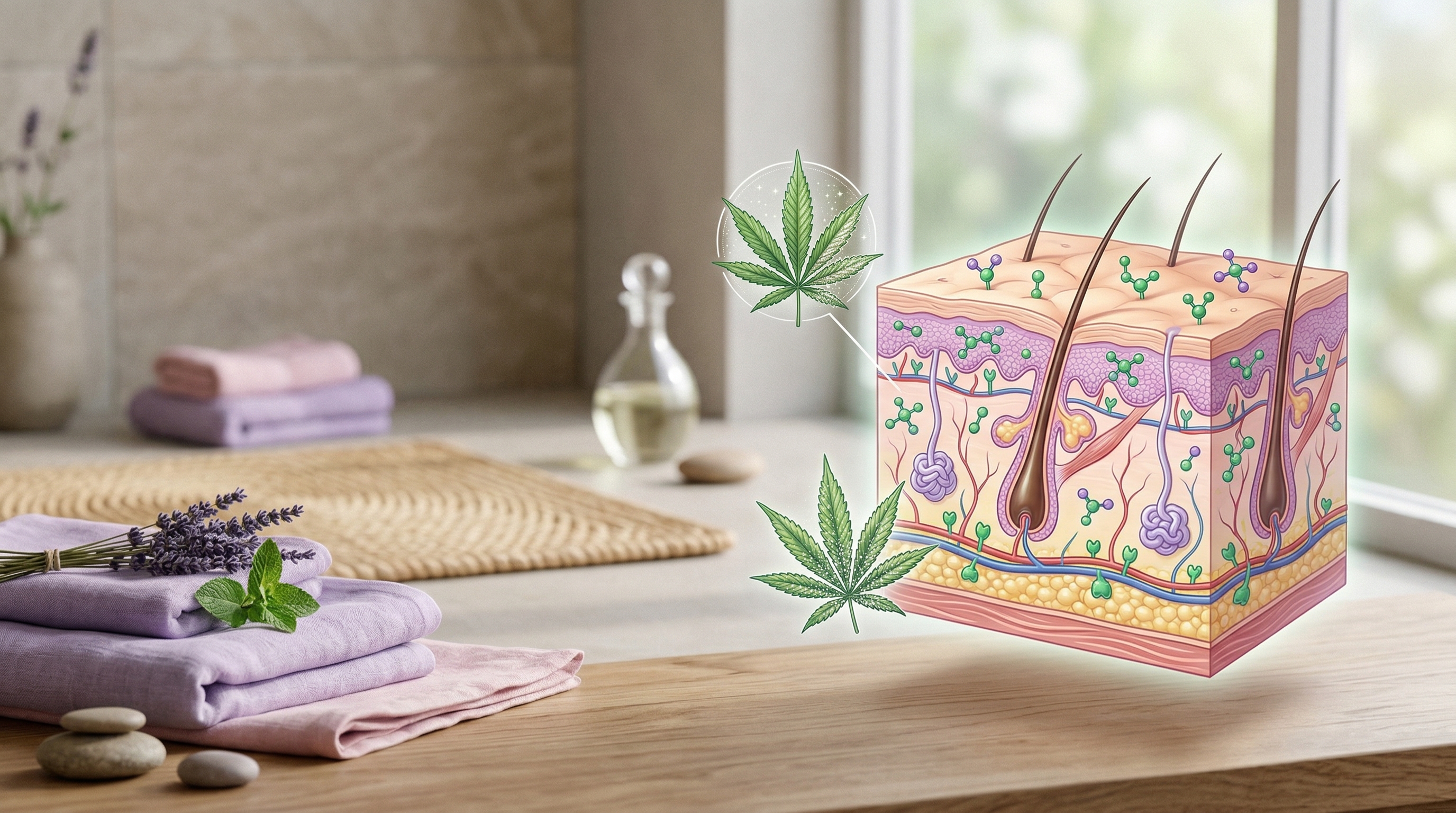
Most people learn about the endocannabinoid system (ECS) in the context of the brain or immune system. What’s less commonly known is that the skin contains a remarkably complete version of the same signaling network.
A landmark 2009 review by Bíró et al. in Trends in Pharmacological Sciences established what researchers now call the “cutaneous ECS.” The key components are all present in skin tissue:
CB1 and CB2 receptors — the two main cannabinoid receptors, found on keratinocytes (the cells that form the outer skin layers), sebocytes (sebum-producing cells in the sebaceous glands), dermal nerve fibers, hair follicle cells, mast cells, and various immune cells in the skin [Bíró et al., 2009].
Endocannabinoids — the body’s own cannabis-like molecules. Anandamide (AEA) and 2-arachidonoylglycerol (2-AG) are both present in skin tissue and have been studied extensively for their roles in skin homeostasis.
Metabolic enzymes — fatty acid amide hydrolase (FAAH) and monoacylglycerol lipase (MAGL), which break down endocannabinoids, are expressed in skin cells. This matters because some cannabinoid compounds work partly by inhibiting these enzymes and extending the activity of the body’s own endocannabinoids.
Non-CB1/CB2 receptors — CBD in particular interacts with TRPV1 channels (involved in pain and itch signaling), TRPV4, PPARs (nuclear receptors that regulate inflammation and lipid metabolism), and GPR55. These additional targets may be just as important as the classical cannabinoid receptors for skin applications.
According to a 2025 comprehensive review in Biomolecules (Tanase et al.), the cutaneous ECS “maintains skin homeostasis and barrier integrity, regulating various neuro-immunoendocrine functions.” The researchers describe the ECS as a kind of master regulator of skin biology, influencing proliferation, differentiation, apoptosis, immune tolerance, and sebum production all at once.
This is why researchers became interested in cannabinoids for skin disease in the first place. When the ECS is dysregulated—either overactive or underactive in specific pathways—it appears to contribute to exactly the kinds of problems seen in eczema, psoriasis, and acne.
Eczema (Atopic Dermatitis): The Itch-Inflammation Cycle
What’s Actually Going Wrong in Eczema
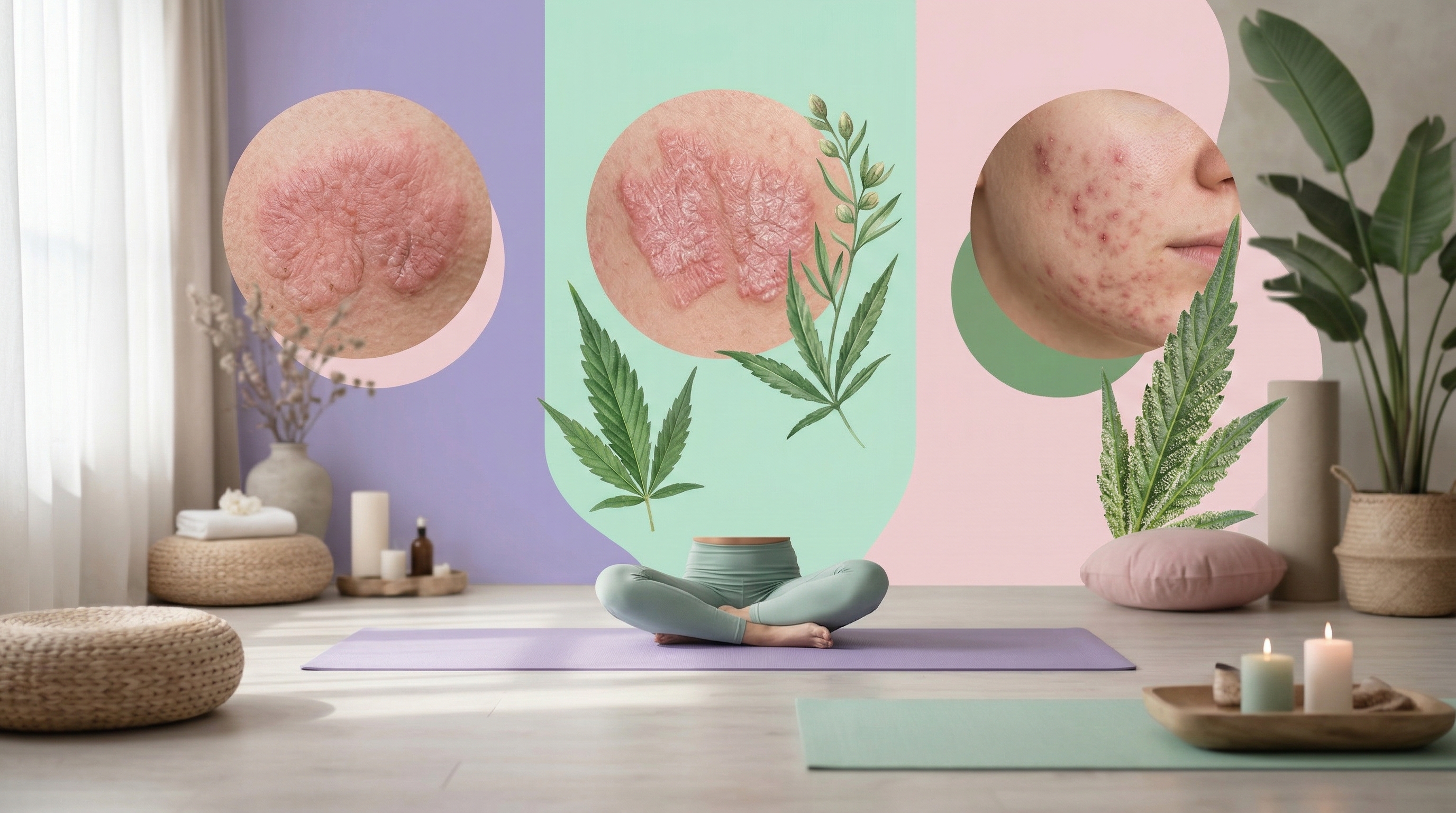
Atopic dermatitis is characterized by a dysfunctional skin barrier that allows allergens and irritants to penetrate, triggering an immune response that produces intense itching, redness, and inflammation. The immune dysregulation involves Th2 cells producing cytokines like IL-4 and IL-13, which further weaken the skin barrier—creating a vicious cycle.
Several features of this process appear to involve ECS dysfunction. TRPV1 channels—which CBD directly modulates—are heavily involved in itch signaling. CB1 receptor activation has been shown to suppress the release of pro-inflammatory cytokines from mast cells and keratinocytes. And FAAH (the enzyme that breaks down anandamide) appears to be upregulated in eczematous skin, meaning the body’s own itch-suppressing endocannabinoids are being degraded faster than normal.
What the Research Shows
The clinical evidence for cannabinoids in eczema is limited but promising. Here is what we actually have:
A 2019 retrospective study by Palmieri et al. examined 20 patients with psoriasis, atopic dermatitis, and scarring who used a CBD-enriched ointment twice daily for 3 months. For the atopic dermatitis patients, the ointment significantly reduced SCORAD (SCORing Atopic Dermatitis) index scores, with improvements in skin hydration and elasticity. No adverse events were reported. This is a small observational study, not a randomized controlled trial, so the findings are preliminary.
A 2024 review by Russo in the Journal of Cosmetic Dermatology summarized an observational study of 20 atopic dermatitis patients using CBD topicals: 50% reported an improvement in their eczema by more than 60%, and 67% reported a decrease in itch. Again, this is observational without a control group.
Against these positive signals, a randomized controlled trial (n=66) testing twice-daily topical CBD for 2 weeks did not show a statistically significant reduction in ISGA (Investigator’s Static Global Assessment) score compared to placebo [Russo, 2025]. This null result is important. It suggests that CBD’s effects on eczema may be real but modest, possibly requiring longer treatment durations or higher concentrations than were tested.
The most consistent finding across studies is CBD’s effect on pruritus (itch). A 2025 systematic review and meta-analysis by Sermsaksasithorn et al. published in Frontiers in Pharmacology analyzed 17 studies covering multiple skin conditions. The headline finding: cannabinoids produced a “modest but statistically significant reduction in pruritus,” while no significant benefits were observed for other dermatological outcomes including skin dryness, erythema, and transepidermal water loss. The effect size for itch reduction (SMD = −0.33 for erythema, though the primary itch finding was significant) suggests clinical relevance but not dramatic efficacy.
For eczema, the honest summary is: cannabinoids—particularly CBD and CBD-enriched preparations—show a consistent signal for reducing itch, with some evidence of broader skin improvement in observational settings. The controlled trial data is thin, and the one RCT that exists produced a null result. More and better trials are ongoing.
The Barrier Question
One potentially important area is CBD’s effect on skin barrier function. The skin barrier in eczema patients is compromised partly due to inadequate ceramide production. Some preclinical data suggests that ECS modulation can influence keratinocyte differentiation and lipid synthesis in ways that support barrier integrity. If this translates clinically, cannabinoids might address eczema at a more fundamental level than simply suppressing itch. But this remains largely preclinical territory as of 2024-2025.
Psoriasis: Overproduction and Over-Inflammation
What’s Actually Going Wrong in Psoriasis
Psoriasis is fundamentally a disease of excessive keratinocyte proliferation. Normally, skin cells take about 28-30 days to mature and shed. In psoriatic plaques, this cycle is compressed to 3-4 days, producing the characteristic thick, scaly buildup. This accelerated proliferation is driven by a dysregulated immune response involving Th17 cells, TNF-α, and IL-17 signaling—all of which also damage the skin barrier and drive inflammation.
The ECS connection is particularly clear here. CB1 and CB2 receptor activation both inhibit keratinocyte proliferation and promote apoptosis (programmed cell death) in proliferating cells. A 2007 study by Wilkinson and Williamson, frequently cited in this field, demonstrated that cannabinoids including CBD, CBC, and CBG inhibit human keratinocyte proliferation through a non-CB1/CB2 mechanism—suggesting that multiple cannabinoid receptors and pathways contribute to the antiproliferative effect.
The 2025 Tanase review notes that CBD’s antiproliferative effects in psoriasis are mediated through interactions with PPAR-gamma (which regulates inflammatory gene expression) and direct inhibition of Th17-mediated signaling pathways.
What the Research Shows
For psoriasis, the data is somewhat more encouraging than for eczema, particularly for topical preparations.
The most-cited clinical evidence comes from a study of 2.5% CBD ointment applied twice daily for 12 weeks in a split-body trial design (one side of the body receives CBD, the other receives placebo on the same patient). Researchers observed down-regulation of pro-inflammatory cytokines IL-1β and IL-8 in the treated plaques [Lee et al., 2024]. This cytokine suppression is meaningful because IL-1β and IL-8 are key drivers of the inflammatory cascade that sustains psoriatic plaques.
The Palmieri et al. retrospective study mentioned above included 5 psoriasis patients alongside the atopic dermatitis patients, and reported significant improvement in psoriasis measures with CBD-enriched ointment. Small sample size limits interpretation.
For scalp psoriasis specifically, a study examined a shampoo containing 0.075% CBD in 22 patients with mild-to-moderate scalp psoriasis. The CBD shampoo significantly reduced disease severity and symptoms—a notable finding because scalp psoriasis is notoriously difficult to treat with conventional topicals due to hair coverage [reviewed in Blaskovich et al., Am J Clin Dermatol, 2024].
Importantly, a 2023 Journal of Dermatological Science study (Wilkinson and Williamson’s work built upon by subsequent researchers) confirmed that cannabinoids suppress keratinocyte proliferation via a pathway that doesn’t require CB1 or CB2 receptors at all—suggesting that cannabinoids might work even in patients whose CB receptors are not optimally expressed or functional.
What About THC?
Most psoriasis research focuses on CBD, but THC has shown antiproliferative effects in keratinocytes as well. In legal cannabis markets, some patients use low-THC topicals for psoriasis with anecdotal success. The challenge with THC for topical psoriasis treatment is largely regulatory and practical rather than pharmacological—the research base is smaller and product standardization is harder to achieve.
Acne: Where the Sebum Research Gets Specific
What’s Actually Going Wrong in Acne
Acne vulgaris develops from four interacting factors: excess sebum production, abnormal keratinization (shedding of cells in the hair follicle), Cutibacterium acnes bacterial colonization, and inflammation. Standard treatments target one or more of these: retinoids address keratinization, benzoyl peroxide kills bacteria, and oral antibiotics or isotretinoin address the bacterial and sebum components. But all of these have significant side effects, and many patients develop antibiotic resistance.
CBD appears to address all four components of acne to varying degrees—which is part of why acne research has advanced faster than eczema or psoriasis research in recent years.
The Sebum Connection
Sebocytes (the cells that produce sebum) express CB2 receptors and multiple other ECS targets. A 2014 study by Oláh et al. in the Journal of Clinical Investigation—one of the most important papers in this field—demonstrated that CBD exerts a “sebostatic” effect on human sebocyte cultures. CBD normalized lipid production by inhibiting arachidonic acid-induced sebum overproduction and activated the TRPV4 channel to reduce sebocyte proliferation. The researchers also found that CBD suppressed pro-inflammatory cytokine production in sebocytes.
The mechanistic picture has been filled in further by a 2024 paper by Lee et al. in Archives of Dermatology Research, which identified the specific Akt/AMPK-SREBP-1 pathway through which CBD inhibits excessive lipid synthesis in SEB-1 sebocytes and HaCaT keratinocytes. This is significant because SREBP-1 is a transcription factor that directly controls fat synthesis genes—inhibiting it at the molecular level provides a clear mechanism for CBD’s sebostatic effects.
The Antibacterial Angle
C. acnes bacterial overgrowth is central to acne development. Multiple cannabinoids—including CBD—have demonstrated antibacterial activity against C. acnes in vitro. A 3% cannabis seed extract applied for 12 weeks significantly reduced inflammation-induced erythema in acne patients while being “safe, well-tolerated, non-allergenic, and non-irritating” [reviewed in Lee et al., 2024]. The anti-C. acnes activity of cannabinoids adds another therapeutic dimension beyond the sebum and inflammation effects.
Clinical Trial Evidence
The most robust clinical evidence for CBD in acne comes from a Phase 2 open-label trial of BTX 1503, a 5% topical CBD formulation, in 23 acne patients. The trial found BTX 1503 was well-tolerated and had a “positive effect on acne”—a modest but encouraging statement given the early-stage design. This trial is ongoing in expanded form, and results from the larger RCT are expected in 2025-2026.
A 2024 review of all available clinical evidence (Russo, J Cosmetic Dermatology) concluded that topical CBD demonstrates consistent evidence for anti-sebum, anti-inflammatory, and antibacterial effects in acne pathophysiology, with an overall favorable tolerability profile. The main gap is large, well-controlled RCTs with standardized preparations and validated outcome measures.
One additional finding worth noting: the 2024 Lee et al. paper also examined CBD’s effects on acne scarring, testing whether CBD accelerated wound healing and reduced scar formation. The results showed CBD enhanced keratinocyte migration and proliferation at lower concentrations—the exact behavior needed for wound healing—while inhibiting excessive proliferation at higher concentrations. This dual dose-dependent effect is consistent with CBD’s role as an ECS modulator rather than a simple agonist or antagonist.
Beyond CBD: Other Cannabinoids Under Investigation
While CBD dominates the dermatology research, several other cannabinoids show distinct mechanisms worth tracking:
CBG (Cannabigerol) — sometimes called the “mother cannabinoid” because other cannabinoids are synthesized from its precursor. CBG has demonstrated potent antibacterial activity against Staphylococcus aureus strains relevant to atopic dermatitis [Appendino et al., 2008]. It also interacts with PPAR-alpha, which regulates inflammatory gene expression in skin cells. See our deep-dive on CBG’s clinical research profile.
CBC (Cannabichromene) — like CBD, CBC inhibits keratinocyte proliferation through non-CB1/CB2 mechanisms (Wilkinson and Williamson, 2007). It also shows anti-inflammatory activity and may synergize with CBD in topical formulations.
THCV (Tetrahydrocannabivarin) — a minor cannabinoid that acts as a CB1 and CB2 receptor antagonist at low doses. Some research suggests CB2 antagonism may have interesting effects on inflammatory skin conditions, though this work is quite early.
PEA (Palmitoylethanolamide) — technically an endocannabinoid-related compound rather than a phytocannabinoid, PEA is naturally produced in skin and has been shown in multiple clinical trials to reduce itch and inflammation in eczema. It’s now commercially available in topical preparations in Europe. Its mechanism involves PPAR-alpha activation and mast cell stabilization.
CBN (Cannabinol) — has shown antibacterial activity and some anti-inflammatory properties in skin models, though dermatology-specific research is limited.
The “entourage effect” concept—the idea that combinations of cannabinoids and terpenes may be more effective than isolated compounds—is particularly relevant for topical applications. Full-spectrum hemp extracts that retain the full cannabinoid and terpene profile may outperform isolated CBD for some skin conditions, though rigorous head-to-head comparisons are lacking.
How Cannabinoids Get Into Skin (And What That Means for Efficacy)
Understanding topical pharmacokinetics matters a lot for evaluating skin condition research and choosing products. CBD and other cannabinoids are highly lipophilic (fat-soluble), which means they can penetrate the lipid-rich outer layers of skin reasonably well—but achieving adequate concentrations in the deeper layers where sebocytes, hair follicles, and immune cells reside is technically challenging.
The stratum corneum (outermost skin layer) acts as a selective barrier. Standard CBD creams and balms deliver cannabinoids to the epidermis and upper dermis without meaningful systemic absorption. This is exactly what you want for localized skin treatment—and exactly why topical cannabinoids don’t produce psychoactive effects. (See our complete guide to how cannabis topicals work for more on this mechanism.)
Formulation matters enormously. The 2024 Blaskovich review in the American Journal of Clinical Dermatology identifies several strategies researchers are using to improve skin penetration:
- Nanoparticle encapsulation — enclosing CBD in lipid nanoparticles that merge with skin cell membranes
- Nanoemulsions — reducing CBD droplet size to improve distribution
- Microneedling pre-treatment — creating micro-channels in the skin before CBD application (a clinical trial for this approach in acne is actively enrolling, NCT06362889)
- Chemical penetration enhancers — agents like terpenes and fatty acids that temporarily disrupt the stratum corneum barrier
Terpenes are particularly interesting here. Several cannabis terpenes—including myrcene, linalool, and caryophyllene—act as skin penetration enhancers on their own. This means that full-spectrum hemp topicals may have a built-in delivery advantage over isolated CBD preparations. Caryophyllene is especially notable because it is the only terpene that directly activates CB2 receptors—making it both a penetration enhancer and a cannabinoid receptor agonist in skin tissue. More on this in our caryophyllene deep-dive.
What This Means for the Immune System Connection
Psoriasis, eczema, and acne are all immune-mediated conditions to varying degrees. Understanding how cannabinoids modulate the immune system—not just the skin surface—adds important context to the dermatology research.
CB2 receptors are densely expressed on immune cells throughout the body, including the skin-resident immune cells (Langerhans cells, T cells, mast cells, macrophages) that drive inflammatory skin disease. Activation of CB2 receptors generally suppresses pro-inflammatory cytokine release—which is why CB2-selective compounds have attracted interest for multiple inflammatory conditions. This connects directly to the broader immune-cannabinoid research landscape.
For psoriasis specifically, the suppression of Th17 cell activity and IL-17 production is a major therapeutic target (the most effective modern psoriasis biologics work by blocking IL-17 or IL-23). CBD has shown preclinical activity on these same pathways, though through different mechanisms—making it a candidate for combination approaches rather than a replacement for established treatments.
A Practical Guide to the Current Evidence
Here is where the evidence stands for each condition as of early 2026:
| Condition | Strength of Evidence | Most Studied Cannabinoid | Most Consistent Finding |
|---|---|---|---|
| Acne | Moderate preclinical, limited clinical | CBD | Sebostatic (reduces sebum), anti-inflammatory |
| Psoriasis | Moderate preclinical + limited clinical | CBD | Antiproliferative (keratinocytes), cytokine suppression |
| Eczema/Atopic Dermatitis | Moderate preclinical, mixed clinical | CBD | Pruritus (itch) reduction |
What “preclinical” means here: Cell culture and animal studies have demonstrated clear biological effects. These are not speculative—they tell us CBD can do these things to human skin cells in controlled conditions. The question is whether the effects translate into clinically meaningful improvement when applied to real patients with real products at real concentrations.
What the clinical evidence shows: Small studies, observational data, and one Phase 2 trial suggest CBD topicals are safe and likely beneficial, particularly for itch. The first rigorous, powered RCTs are underway. We should have much better data within 2-3 years.
What it doesn’t show: That cannabinoids replace established treatments for any of these conditions. For moderate-to-severe psoriasis or eczema, biologics and proven systemic medications remain far more effective. For acne, isotretinoin and topical retinoids have decades of clinical evidence behind them. Cannabinoids are best understood as potentially valuable additions to—not replacements for—evidence-based dermatology care.
Frequently Asked Questions
Will CBD lotion help my eczema?
Possibly, particularly for itch. The most consistent finding across studies is that cannabinoid topicals reduce pruritus—the maddening itch that drives much of eczema’s burden. For overall disease control, the evidence is more mixed. If you want to try CBD topicals for eczema, look for products with third-party lab testing, a concentration of at least 250mg per 1oz (roughly 0.88%), and simple ingredient lists without known irritants. Expect modest improvement in itch over 2-4 weeks rather than dramatic resolution.
Can cannabis topicals treat psoriasis plaques?
Early clinical evidence suggests CBD-enriched ointments may reduce inflammation and normalize keratinocyte turnover in mild-to-moderate psoriasis. The cytokine suppression data from the split-body trial is encouraging. However, for thick plaques, systemic treatments are far more effective. CBD topicals are most plausible as adjunctive care—especially for scalp psoriasis, where the CBD shampoo study showed meaningful improvement.
Does CBD really reduce sebum for acne?
Yes—in cell culture and in vitro models, CBD clearly suppresses sebum production through the AMPK-SREBP-1 pathway. Whether this translates to clinical sebum reduction in humans at achievable topical concentrations is less certain. The Phase 2 trial of 5% CBD for acne was positive, but lacked rigorous controls. This is one of the more mechanistically well-supported applications for CBD in dermatology.
Should I use full-spectrum or CBD isolate for skin conditions?
The limited comparative data available slightly favors full-spectrum preparations, particularly for anti-inflammatory applications, because terpenes like caryophyllene contribute additional CB2 agonist activity and some terpenes improve skin penetration. However, isolate products allow more precise dosing and are free from even trace THC if that’s a concern. If you’re in a legal state and open to full-spectrum, it’s a reasonable choice. If THC is a concern (drug testing, personal preference), a broad-spectrum or isolate product is appropriate.
Is CBD safe for sensitive or inflamed skin?
In published clinical studies, topical CBD has shown an excellent safety profile with few adverse events. The Palmieri retrospective study, the BTX 1503 Phase 2 trial, and multiple observational studies all report good tolerability. That said, cannabis topicals—like any topical product—can contain carrier ingredients (shea butter, beeswax, essential oils, etc.) that cause reactions in some individuals. Patch test any new product on a small area first, especially if you have reactive or broken skin.
Can cannabis topicals interact with other skin medications?
Standard topicals don’t reach the bloodstream in meaningful amounts, so systemic drug interactions are not a concern. However, topical cannabinoids could theoretically interact with other topically applied medications if used in the same area at the same time. If you’re using prescription topicals (corticosteroids, calcineurin inhibitors, retinoids), apply them at different times of day and consult your dermatologist about adding cannabinoid products to your routine.
What’s Coming Next in the Research
Several clinical trials are actively enrolling or in progress as of 2025-2026:
- NCT06022874 — A study of the therapeutic effects of topical CBD products for atopic dermatitis (ongoing)
- NCT06362889 — Microneedling with CBD and hempseed oil for acne vulgaris (enrolling)
- A multicenter, double-blind, randomized trial of CBD for severe pruritus (results pending)
- Expanded Phase 3 trials of BTX 1503 for acne following the positive Phase 2 signal
The next generation of research is also moving beyond CBD to look at full-spectrum formulations, novel delivery systems (nanoparticles, microneedling), and combination approaches. The dermatology field is paying serious attention—the number of published cannabinoid-dermatology papers has roughly tripled between 2018 and 2024.
Key Takeaways
- The skin contains a complete endocannabinoid system—CB1/CB2 receptors, endocannabinoids, and metabolic enzymes—in keratinocytes, sebocytes, hair follicles, and immune cells. Disruption of this system appears to contribute to eczema, psoriasis, and acne.
- Eczema: The most consistent finding is itch reduction. One RCT found no significant benefit on overall disease score; observational data is more positive. Ongoing trials should clarify the evidence over the next 2 years.
- Psoriasis: Cannabinoids—especially CBD—inhibit keratinocyte proliferation and suppress pro-inflammatory cytokines (IL-1β, IL-8, IL-17 pathway). A CBD shampoo study showed meaningful improvement in scalp psoriasis. Evidence is preclinical-heavy but mechanistically strong.
- Acne: The sebostatic (sebum-reducing) effect of CBD in human sebocytes is well-established at the molecular level. CBD also shows antibacterial activity against C. acnes and anti-inflammatory effects. A Phase 2 clinical trial was positive; larger RCTs are in progress.
- CBD is not the only relevant cannabinoid. CBG shows potent antibacterial activity against Staph aureus; CBC inhibits keratinocyte proliferation; caryophyllene activates CB2 receptors and enhances skin penetration. Full-spectrum formulations may leverage these combined effects.
- For all three conditions, cannabinoid topicals are best understood as potentially useful adjuncts to—not replacements for—established dermatological treatments. Mild cases are the most plausible candidates for meaningful benefit from CBD topicals alone.
- Formulation quality matters enormously. Concentration, delivery system, and ingredient list all affect how much CBD actually reaches the relevant skin cells.
Sources
- Bíró, T. et al. (2009). “The endocannabinoid system of the skin in health and disease: novel perspectives and therapeutic opportunities.” Trends in Pharmacological Sciences, 30(8), 411-420. PMCID: PMC2757311
- Lee, J.H., Yoon, J.Y., Kim, D.H. et al. (2024). “Potential of cannabidiol as acne and acne scar treatment: novel insights into molecular pathways of pathophysiological factors.” Archives of Dermatology Research, 316, 428. https://doi.org/10.1007/s00403-024-03131-9
- Russo, E.B. (2025). “The Therapeutic Potential of Cannabidiol in Skin Conditions.” Journal of Cosmetic Dermatology, published online Nov 2, 2025. https://doi.org/10.1111/jocd.70527
- Tanase, C. et al. (2025). “Cannabidiol in Skin Health: A Comprehensive Review of Topical Applications in Dermatology and Cosmetic Science.” Biomolecules, 15(9), 1219. https://doi.org/10.3390/biom15091219
- Sermsaksasithorn, P. et al. (2025). “Cannabis and cannabinoids in dermatology: a systematic review and meta-analysis of quantitative outcomes.” Frontiers in Pharmacology, PMC12575346. https://doi.org/10.3389/fphar.2025.1609667
- Blaskovich, M.A.T. et al. (2024). “The Potential Role of Cannabidiol in Cosmetic Dermatology: A Literature Review.” American Journal of Clinical Dermatology, 25, 951-966. https://doi.org/10.1007/s40257-024-00891-y
- Wilkinson, J.D., Williamson, E.M. (2007). “Cannabinoids inhibit human keratinocyte proliferation through a non-CB1/CB2 mechanism and have a potential therapeutic value in the treatment of psoriasis.” Journal of Dermatological Science, 45(2), 87-92. PMID: 17157480
- Tóth, K.F. et al. (2019). “Cannabinoid Signaling in the Skin: Therapeutic Potential of the ‘C(ut)annabinoid’ System.” Molecules, 24(5), 918. PMCID: PMC6429381
- Oláh, A. et al. (2014). “Cannabidiol exerts sebostatic and antiinflammatory effects on human sebocytes.” Journal of Clinical Investigation, 124(9), 3713-3724. PMCID: PMC4151231
- Palmieri, B. et al. (2019). “A therapeutic effect of cbd-enriched ointment in inflammatory skin diseases and cutaneous scars.” La Clinica Terapeutica, 170(2), e93-e99. PMID: 30993303


