Cannabis for Parkinson's Disease: What Research Says About Tremor and Quality of Life
What does science say about cannabis for Parkinson's tremor and quality of life? We break down clinical trials, CBD research, and practical guidance.


Nearly One Million Americans Live With Parkinson’s — Many Are Asking About Cannabis
Here’s a number that might surprise you: approximately one million people in the United States are currently living with Parkinson’s disease (PD), with roughly 90,000 new diagnoses each year [Parkinson’s Foundation, 2024]. It’s the second most common neurodegenerative disorder after Alzheimer’s, and its hallmark symptoms — tremor, rigidity, slowness of movement, and balance problems — can profoundly erode quality of life over time.
The main drug treatment, levodopa, is still the gold standard. But it comes with a catch. Over time, it works less well. Many patients develop harsh side effects, like jerky movements called dyskinesias. So a growing number of patients, caregivers, and doctors are asking: Could cannabis help?
The answer, as with most things in cannabis science, is nuanced. There’s no miracle cure hiding in a joint or a tincture. But a growing body of research is exploring how cannabinoids interact with the very brain systems that Parkinson’s disrupts. Some findings are promising. Others are mixed. All of them deserve a clear-eyed look.
In this deep dive, we’ll cover four things: how Parkinson’s affects the brain, why the endocannabinoid system matters here, what clinical studies have actually found, and what practical steps make sense if you or a loved one is exploring this path. No hype. No false promises. Just the evidence in plain language.
Important disclaimer: This article is for educational purposes only and is not medical advice. Parkinson’s disease is a serious neurological condition. Always consult your neurologist or healthcare provider before making any changes to your treatment plan, including adding cannabis.
The Science Explained
How Parkinson’s Disease Affects the Brain
To understand why cannabis researchers are interested in Parkinson’s, you need to understand what’s going wrong in the brain.
Think of your brain’s movement system like an orchestra. The basal ganglia — a cluster deep in the brain — acts as the conductor. It keeps your movements smooth and on purpose. Within it, a region called the substantia nigra makes dopamine, the chemical that keeps motion fluid.
In Parkinson’s, these dopamine-making neurons slowly die. By the time you notice symptoms, roughly 60-80% of them are already gone [Dauer & Przedborski, 2003]. Without enough dopamine, the orchestra loses its conductor. Movements get slow. Muscles stiffen. Hands shake at rest. Balance slips.
But Parkinson’s isn’t just about movement. Many patients face non-motor symptoms that are just as hard to live with: bad sleep, anxiety, depression, pain, nausea, and brain fog. These often show up years before tremor does [Chaudhuri et al., 2006].
This is where the story gets interesting, because the brain regions most affected by Parkinson’s are densely populated with receptors from another system: the endocannabinoid system (ECS).
The Endocannabinoid System and Movement Control
Your endocannabinoid system is a signaling network that keeps your body in balance. It has three main parts:
- Endocannabinoids (like anandamide and 2-AG) — your body’s own cannabis-like molecules
- Receptors (primarily CB1 and CB2) — the locks these molecules fit into
- Enzymes that build and break down endocannabinoids
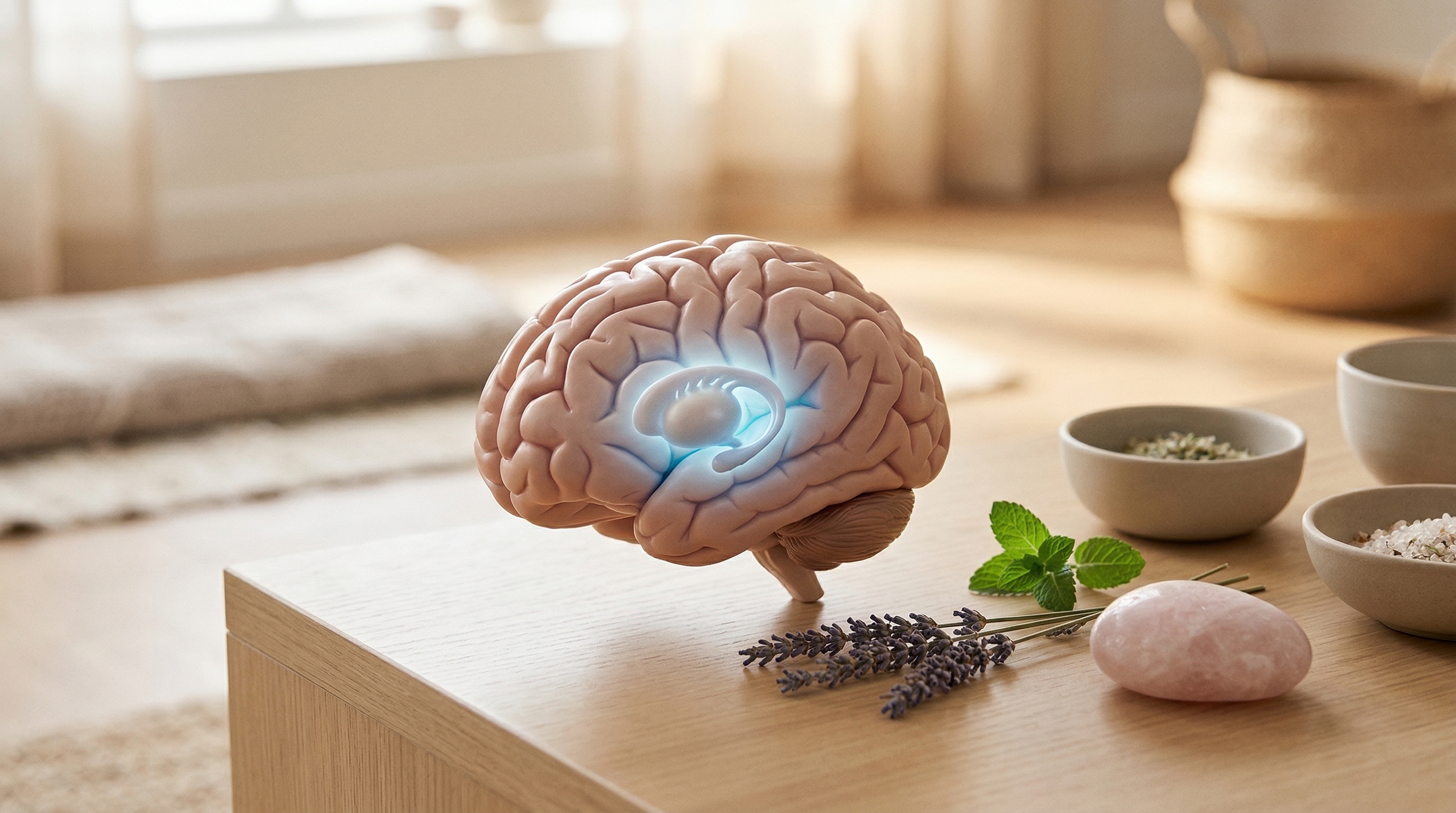
Here’s the key link: CB1 receptors are packed into the basal ganglia — the exact brain area that Parkinson’s attacks [Herkenham et al., 1991]. The basal ganglia has one of the highest CB1 densities anywhere in the brain.
Think of it this way: dopamine is like traffic lights, and the ECS is like roundabouts that fine-tune the flow. When dopamine crashes in Parkinson’s, the ECS tries to pick up the slack — but it can’t fully cover the loss.
Research has shown that endocannabinoid levels change in Parkinson’s patients. Untreated PD patients have elevated anandamide in their cerebrospinal fluid. This suggests the ECS is ramping up to compensate for dopamine loss [Pisani et al., 2005]. As the disease progresses, CB1 receptors first decrease in the early stages, then increase — along with CB2 receptors — in later stages. The system is constantly trying to restore balance [Garcia-Arencibia et al., 2009].
CB2 receptors play a different role. They’re found mainly on glial cells — the brain’s immune support network. CB2 activation appears to reduce the neuroinflammation that speeds up dopamine neuron death. In mouse studies, drugs that activate CB2 receptors protected against dopamine neuron loss by calming overactive immune cells in the brain [Price et al., 2009].
This biological overlap is what makes the ECS such a compelling therapeutic target — and why plant-derived cannabinoids like THC and CBD have attracted research attention.
What the Research Shows: Tremor and Motor Symptoms
Let’s get to the question most people are asking: Can cannabis reduce Parkinson’s tremor?
The honest answer is: the evidence is mixed, and we need more rigorous studies. But what exists is worth examining carefully.
Observational and Survey Studies
Several studies have asked PD patients about their cannabis use. A widely cited survey from Tel Aviv University found that smoking cannabis improved tremor, rigidity, and slowness in 22 PD patients. Benefits showed up about 30 minutes after use [Lotan et al., 2014]. Motor scores improved by about 30% on average.
However — and this is crucial — this was an open-label study with no placebo control. Patients knew they were using cannabis, which can create strong placebo effects. In a condition where symptoms shift based on stress, sleep, and expectations, that’s a big deal.
A 2025 French survey of 1,136 PD patients gave us the best real-world data yet. About 6% used cannabis and 18% used CBD. Both groups rated satisfaction at 7 out of 10. The top reported benefits:
- Sleep: 57% of cannabis users, 47% of CBD users
- Pain: 50-55% of both groups
- Rigidity/cramps: 57% of cannabis users, 49% of CBD users
About 60% of cannabis users and 52% of CBD users said the overall impact on their quality of life was positive [Rascol et al., 2025].
Clinical Trials
Rigorous randomized controlled trials (RCTs) — the gold standard of medical research — have been fewer and have produced less clear-cut results.
Chagas et al. (2014) tested CBD in 21 Parkinson’s patients across three groups: placebo, 75mg/day CBD, and 300mg/day CBD over six weeks. CBD did not significantly improve motor symptoms. However, the group receiving 300mg/day CBD showed significant improvement in quality of life and daily well-being as measured by the PDQ-39 questionnaire.
The most rigorous trial to date was a 2024 phase 2 study published in Movement Disorders. Researchers at the University of Colorado enrolled 61 people with PD. Half received a high-CBD/low-THC cannabis extract (about 192mg CBD and 6.4mg THC daily). The other half got a placebo. After about three weeks, motor scores improved in both groups — but the gap between them wasn’t statistically significant (p=0.379). The CBD/THC group improved by 4.57 points versus 2.77 for placebo. On the downside, the active group reported nearly double the side effects (275 vs. 135 incidents, mostly mild) and showed worse results on cognition and sleep [Liu et al., 2024].
A 2024 Brazilian case series tried a different path: very low-dose cannabis extract (9:1 THC:CBD ratio) in six PD patients over 90 days. The higher-dose group saw real improvement in insomnia after 60 days, with no major side effects. This hints that tiny doses of THC-heavy extracts might help with sleep while avoiding the side effects seen at higher doses [Oliveira et al., 2024].
Neuroprotection: The Preclinical Promise
Perhaps the most exciting area of research isn’t about symptom management at all — it’s about neuroprotection. Could cannabinoids slow the progression of Parkinson’s by protecting dopamine neurons from dying?
Animal studies have shown promising results:
-
CBD protected the enzyme needed to make dopamine (tyrosine hydroxylase) in a mouse model. A 2025 study found that daily CBD (0.5mg/kg) delayed motor decline and kept dopamine neurons alive — especially when given before major damage occurred [Fernandez-Espejo et al., 2025].
-
CBD also works through multiple pathways: it activates TRPV1 receptors (boosting a nerve growth factor called CNTF), partially activates D2 dopamine receptors, and modulates serotonin receptors — all of which may help keep dopamine flowing [Peres et al., 2018].
-
THCV (tetrahydrocannabivarin), a lesser-known cannabinoid, showed neuroprotective effects in a 6-OHDA-lesioned rat model and reduced motor inhibition [Garcia et al., 2011].
-
CB2 receptor activation reduced neuroinflammation in the substantia nigra, with CB2 agonists protecting mice from MPTP-induced neurodegeneration by decreasing microglial activation [Price et al., 2009].
These results are exciting, but a critical caveat: animal models are not humans. Many compounds that protect mouse brains fail to help people. The most provocative finding — that CBD might work best before major damage occurs — hints at early intervention. But we are still far from proving this in people.
Beyond Tremor: Quality of Life and Non-Motor Symptoms
Here’s where the story shifts — and arguably where the current evidence is most compelling.
Even if cannabis doesn’t dramatically reduce tremor in clinical trials, many Parkinson’s patients report meaningful improvements in non-motor symptoms that significantly affect quality of life:
-
Sleep: Cannabis, particularly strains and products higher in myrcene and CBD, may help with the insomnia and REM sleep behavior disorder common in PD. Chagas et al. (2014) found that CBD rapidly reduced agitation and nightmares in four PD patients with REM sleep behavior disorder. The 2024 Brazilian case series confirmed insomnia improvement at low THC:CBD doses over 90 days.
-
Pain: Chronic pain affects up to 85% of PD patients. Cannabinoids — especially those rich in caryophyllene and humulene — interact with pain pathways through both CB1 and CB2 receptors [Russo, 2008]. The French nationwide survey found pain relief was among the most commonly reported benefits, with over half of users reporting improvement.
-
Anxiety and Depression: The Chagas et al. quality-of-life improvement may partly reflect CBD’s anxiolytic properties. A study by de Faria et al. found that 300mg of pure CBD attenuated experimentally induced anxiety in 24 PD patients during a public speaking test.
-
Nausea: THC’s well-established antiemetic effects may benefit patients experiencing medication-related nausea.
-
Psychosis: CBD has shown antipsychotic properties and was specifically studied in PD psychosis. A small open-label study found CBD significantly reduced psychotic symptoms without worsening motor function or causing extrapyramidal symptoms [Zuardi et al., 2009].
Practical Implications
Connecting Science to Real-World Use
If you or a loved one is considering cannabis as a complementary approach to Parkinson’s management, here’s what the current evidence suggests for practical decision-making:
Start with CBD-dominant products. The best quality-of-life data comes from CBD studies, and CBD causes fewer side effects than THC. This matters a lot for older adults who may be more sensitive to feeling high. CBD also doesn’t carry the same fall risk from dizziness that THC can cause.
Consider the terpene profile, not just the cannabinoid. This is where the High Families framework becomes genuinely useful:
| Symptom | Potentially Relevant High Family | Key Terpenes |
|---|---|---|
| Sleep disturbances | Relaxing High | Myrcene, Linalool |
| Chronic pain & stiffness | Relieving High | Caryophyllene, Humulene |
| Anxiety & depression | Uplifting High | Limonene, Linalool |
| General well-being | Balancing High | Low-terpene, gentle profiles |
Watch out for drug interactions. This is non-negotiable. Both THC and CBD are broken down by liver enzymes (CYP3A4 and CYP2C19) that also process many Parkinson’s drugs. CBD can block these enzymes, which may raise blood levels of other medications [Nasrin et al., 2021]. In the 2024 Colorado trial, 13 people could not handle the target dose — a clear reminder that side effects are real. Always talk to your neurologist first.
Start low, go slow — then go even slower. PD patients are often older and on multiple medications. This makes them more prone to side effects like dizziness, sudden blood pressure drops when standing, and brain fog. A common starting approach is:
- Begin with a low-dose CBD tincture (5-10mg)
- Increase gradually over weeks, not days
- Keep a symptom journal to track effects
- Add low-dose THC only if needed and tolerated
Choose delivery methods carefully. Smoking is generally not recommended for PD patients due to respiratory concerns and the difficulty of dose control. Sublingual tinctures, oils, and low-dose edibles offer more consistent dosing. Vaporization may be an option for faster onset but still carries some respiratory considerations.
Know the limits. Cannabis is not a replacement for levodopa or other PD drugs. No evidence supports using it as a primary treatment. But it may serve as a helpful add-on — especially for non-motor symptoms that standard meds don’t cover well.
Key Takeaways
-
The endocannabinoid system overlaps heavily with the brain areas Parkinson’s attacks. This makes cannabinoids worth studying — but being worth studying is not the same as being proven to work.
-
Evidence for cannabis reducing tremor is weak. Patients often report feeling better, but controlled trials haven’t shown a clear motor benefit. The 2024 Colorado trial (n=61) found no real gap between CBD/THC and placebo.
-
Quality of life is where cannabis shows the most promise — especially for sleep, anxiety, pain, and general well-being. CBD has the best safety profile. The 2025 French survey (n=1,136) confirmed high satisfaction among PD patients.
-
Neuroprotection is the biggest open question. Animal studies show CBD and THCV may protect dopamine neurons. A 2025 mouse study found preventive CBD preserved these neurons. But none of this is proven in humans yet.
-
Safety comes first. Drug interactions, fall risk, and cognitive effects are real concerns in an older population. Medical supervision is essential — not optional.
FAQs
Can cannabis cure or reverse Parkinson’s disease?
No. There is currently no evidence that cannabis can cure, reverse, or halt the progression of Parkinson’s disease in humans. Some preclinical (animal) research suggests potential neuroprotective effects — particularly with CBD — but these findings have not been replicated in clinical trials with human patients. Cannabis should be considered, at most, a complementary tool for symptom management under medical supervision.
Which cannabinoid is better for Parkinson’s — THC or CBD?
Based on current evidence, CBD has a better safety profile for Parkinson’s patients. It has shown quality-of-life benefits, may reduce anxiety and psychosis, and causes fewer side effects than THC. THC may help with pain and nausea, but its mind-altering effects, dizziness risk, and cognitive impacts make it harder for older adults — especially those who are prone to falls. Most researchers suggest starting with CBD-dominant products.
What dose of CBD should a Parkinson’s patient try?
Studies have used 75mg to 300mg of CBD per day, but most experts say to start much lower (5-10mg) and increase slowly. Chagas et al. saw quality-of-life gains at 300mg/day. The 2024 Colorado trial used about 192mg CBD daily. There’s no proven “best dose” — everyone responds differently. Work with a neurologist who knows your full medication list.
Will cannabis interact with my Parkinson’s medications?
Possibly, yes. CBD blocks certain liver enzymes (CYP3A4 and CYP2C19) that break down many drugs, including some used for Parkinson’s. This can raise blood levels of those drugs, making their effects stronger — and their side effects worse. THC has similar risks. In the 2024 Colorado trial, the cannabis group had nearly double the side effects of the placebo group. Always tell your neurologist and pharmacist about any cannabis use.
Is smoking cannabis safe for Parkinson’s patients?
Smoking is generally not recommended for PD patients. Burning plant material creates harmful byproducts, and smoking makes it hard to control your dose — a real problem when you’re managing a complex condition with multiple drugs. Oils, tinctures, and low-dose edibles give more consistent, measurable doses. If you need faster effects, vaporizing at controlled temperatures is a safer option than smoking.
What about THCV for Parkinson’s?
THCV (tetrahydrocannabivarin) is one of the more interesting cannabinoids for PD research. In rodent studies, it protected dopamine neurons — likely by reducing brain inflammation through CB2 receptors and acting as an antioxidant [Garcia et al., 2011]. But THCV has not been tested in human PD trials yet, and most cannabis products contain very little of it. It’s a promising research target, not a current recommendation.
This article was last updated on March 22, 2026. As cannabis research moves rapidly, findings described here may be supplemented by newer studies. Always consult your healthcare provider for the most current guidance.
References cited: Babson et al., 2017; Carroll et al., 2004; Chagas et al., 2014; Chaudhuri et al., 2006; Dauer & Przedborski, 2003; de Faria et al.; Fernandez-Espejo et al., 2025; Garcia-Arencibia et al., 2007; Garcia-Arencibia et al., 2009; Garcia et al., 2011; Herkenham et al., 1991; Liu et al., 2024; Lotan et al., 2014; Nasrin et al., 2021; Oliveira et al., 2024; Peres et al., 2018; Pisani et al., 2005; Price et al., 2009; Rascol et al., 2025; Russo, 2008; Zuardi et al., 2009; Zuardi et al., 2017.


