Cannabis Genealogy: Tracing Your Favorite Strain's Family Tree
Discover the science of cannabis breeding and genetics. Learn how to trace your favorite strain's lineage and what it means for your high.

Professor High
Your friendly cannabis educator, bringing science-backed knowledge to the community.
Your Strain Has a Family Tree — and It’s Wild
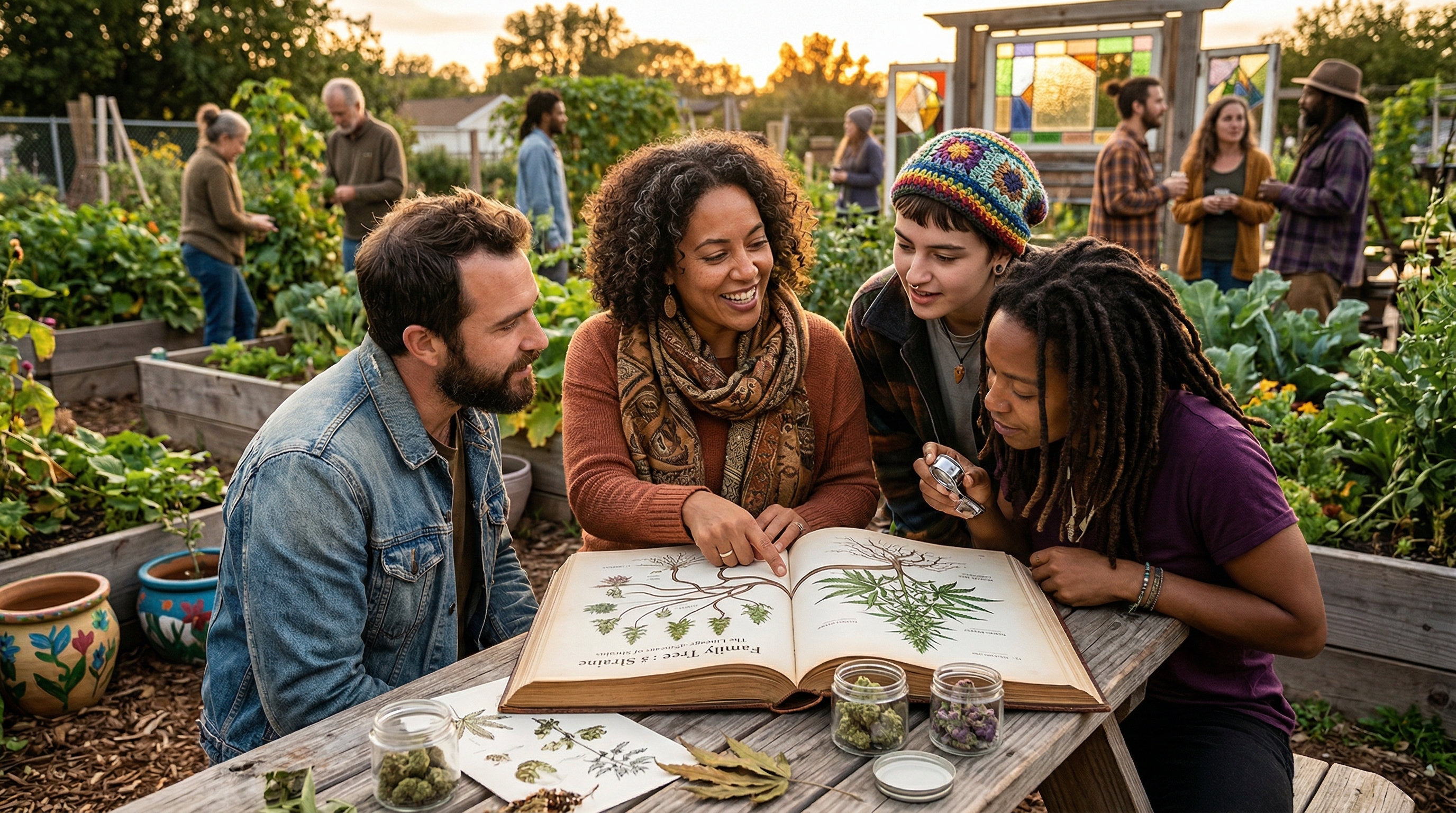
Here’s a surprising fact: the strain you’re enjoying right now likely has a lineage that stretches back decades, across continents, and through the hands of countless breeders who carefully (and sometimes accidentally) shaped its genetics. Blue Dream? That’s a cross between Blueberry and Haze — and if you trace those parents back, you’ll find landrace genetics from Afghanistan, Thailand, Colombia, and Mexico woven into a single plant.
Cannabis genealogy is the practice of mapping these genetic family trees, and it’s one of the most fascinating intersections of science, culture, and history in the cannabis world. Understanding where your strain comes from doesn’t just satisfy curiosity — it actually helps you predict effects, flavors, and which High Family a strain belongs to. That’s because the terpene and cannabinoid profiles you experience are shaped by generations of genetic inheritance.
In this article, you’ll learn how cannabis breeding works at a genetic level, why strain lineage matters more than “indica vs. sativa” labels, and how to trace the ancestry of your favorite cultivars. Think of it as 23andMe for your stash jar.

The Science of Cannabis Genetics
How Cannabis Breeding Works
Think of cannabis genetics like a recipe book passed down through generations. Each parent plant contributes half of its genetic “recipes” to its offspring — instructions for everything from terpene production to flower structure to cannabinoid ratios. When a breeder crosses two strains, they’re essentially shuffling two recipe books together and seeing what the offspring cook up.
Cannabis is a diploid organism, meaning it carries two copies of each gene — one from each parent [Small, 2015]. This is why siblings from the same cross can express wildly different traits, just like human siblings. A cross between OG Kush and Durban Poison might produce one plant that leans heavily toward its OG Kush parent’s myrcene-rich, physically relaxing profile, and another that expresses Durban Poison’s terpinolene-dominant, energizing character.
Breeders use several techniques to stabilize desired traits:
- Backcrossing (BX): Crossing offspring back with a parent to reinforce specific traits
- Selfing (S1): Using reversed pollen from a female plant on itself to create near-copies
- F1 Hybrids: First-generation crosses that often show “hybrid vigor” — enhanced growth and potency
- Stabilization: Breeding through multiple generations (F2, F3, F4…) until offspring consistently express target traits
The key insight here is that terpene profiles are heritable [Booth et al., 2017]. When a strain like GSC (Girl Scout Cookies) consistently produces high levels of caryophyllene and limonene, that’s because breeders selected for those traits across generations. This is why strain lineage is a better predictor of your experience than the outdated indica/sativa binary.
What the Research Shows
Modern genomic research is revolutionizing our understanding of cannabis family trees. A landmark 2021 study by Watts et al. used whole-genome sequencing to analyze over 100 cannabis cultivars and found that commercial strain names often don’t reliably predict genetic identity [Watts et al., 2021]. In other words, the “Blue Dream” at one dispensary may be genetically distinct from the “Blue Dream” at another.
However, the same research confirmed that terpene chemotype — the overall terpene fingerprint — is a more reliable marker of a strain’s lineage than its name alone. Strains with shared ancestry tend to cluster together by terpene profile, even when they’ve been given different names by different growers.
Earlier work by Lynch et al. (2016) mapped the genetic relationships between hundreds of cannabis varieties and found that most modern commercial strains share a surprisingly narrow genetic base, with a few “founding” cultivars — like Skunk #1, Northern Lights, and Haze — appearing repeatedly in pedigrees [Lynch et al., 2016].
Key takeaway: A strain’s terpene profile is shaped by its genetic ancestry. Understanding lineage helps you predict effects far better than relying on indica/sativa labels.
Tracing Lineage: The Landrace Foundations
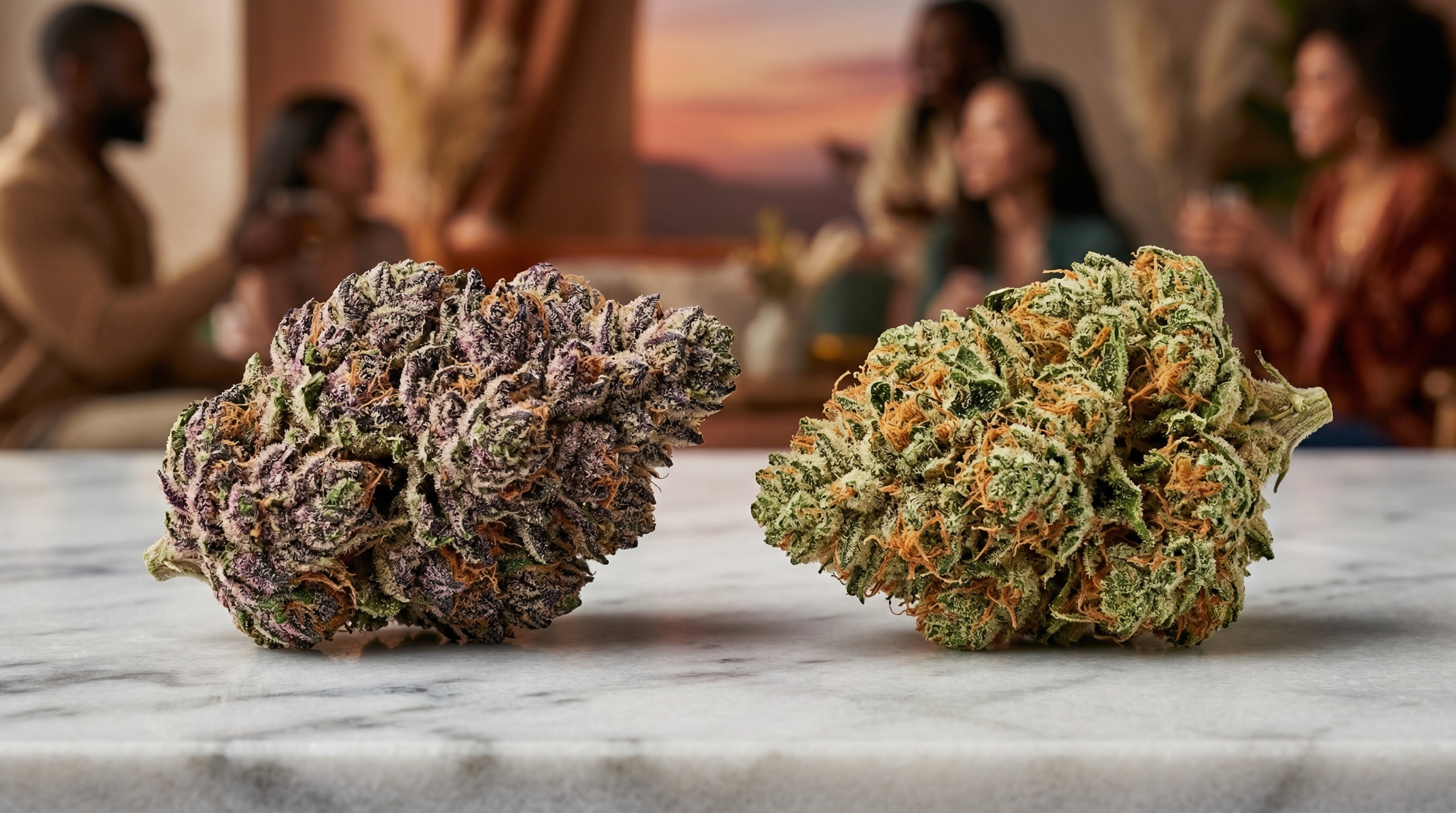
Every modern strain, no matter how exotic its name, traces back to landrace varieties — cannabis populations that evolved naturally in specific geographic regions over centuries. These are the “great-great-grandparents” of your favorite cultivar:
| Landrace Region | Notable Landraces | Terpene Tendencies | High Family Connection |
|---|---|---|---|
| Hindu Kush (Afghanistan/Pakistan) | Afghani, Hindu Kush | Myrcene, caryophyllene | Relaxing High |
| Southeast Asia (Thailand, Laos) | Thai, Chocolate Thai | Terpinolene, ocimene | Energetic High |
| Central America (Mexico, Colombia) | Acapulco Gold, Colombian Gold | Limonene, linalool | Uplifting High |
| Jamaica | Lamb’s Bread | Varied profiles | Entourage High |
| Southern Africa | Durban Poison, Malawi Gold | Terpinolene, myrcene | Energetic High |
In the 1960s and 70s, the “hippie trail” and seed collectors brought these landraces together for the first time. Breeders in Northern California, Amsterdam, and British Columbia began crossing these geographically isolated gene pools, creating the first modern hybrids. Skunk #1 — a cross of Afghani, Acapulco Gold, and Colombian Gold — became one of the most influential building blocks in cannabis history, contributing genetics to hundreds of strains we know today [Clarke & Merlin, 2013].
Practical Implications: Why Lineage Matters for Your Experience
So how does all this genealogy translate to what you actually feel when you consume cannabis? Here’s where it gets practical.
Terpene inheritance shapes your High Family. If a strain descends primarily from myrcene-rich Afghan genetics, it’s more likely to land in the Relaxing High family. If its lineage traces through terpinolene-dominant Southeast Asian landraces, expect something closer to the Energetic High family. When breeders cross these lineages, you often get complex, multi-terpene profiles that fall into the Entourage High family — where multiple terpenes and cannabinoids work together for a nuanced experience.
Here’s how to use lineage information:
- Check the parents: When considering a new strain, look up its parent strains. If both parents are known for relaxation (e.g., Granddaddy Purple × Northern Lights), the offspring will likely follow suit.
- Look for terpene consistency: Strains from the same breeding line often share dominant terpenes. The “Cookies” family (GSC, Sunset Sherbet, Gelato) consistently features caryophyllene and limonene — placing many of them in the Relieving High or Uplifting High families.
- Use lineage to explore: If you love a particular strain, seek out its siblings or parents. Enjoyed Tangie? Try its parent, California Orange, or its sibling, Mimosa.

Key Takeaways
- Every modern cannabis strain traces back to landrace varieties that evolved in specific regions around the world, each carrying distinct terpene tendencies.
- Terpene profiles are genetically inherited, which is why strains from the same family tree often produce similar effects — and why lineage is a better guide than indica/sativa labels.
- Strain names aren’t always reliable — genetic research shows the same name can represent different genetics depending on the grower. Terpene testing and lineage verification matter.
- You can use genealogy to predict your experience: Check parent strains, look for terpene patterns, and explore related cultivars through our High Families system.
- Cannabis genetic diversity is narrowing as commercial breeding favors a small number of popular lines. Supporting breeders who work with diverse genetics helps preserve the plant’s future.
FAQs
Can I actually look up a strain’s family tree?
Yes! Resources like Seedfinder.eu and the International Cannabis Genomics Research Initiative maintain databases of strain pedigrees. Many seed banks also publish detailed lineage information. Keep in mind that some pedigrees are based on breeder claims rather than verified genomic data, so they should be taken as guides rather than guarantees.
Does a strain’s lineage guarantee I’ll have a specific experience?
Not exactly. Lineage gives you a strong probability of certain terpene and cannabinoid profiles, but growing conditions (light, soil, nutrients, curing) also significantly affect the final product [Booth et al., 2017]. Two plants of the same strain grown in different environments may produce noticeably different experiences. Always check lab-tested terpene data when available.
Why do people still use “indica” and “sativa” if lineage matters more?
Habit, mostly. The indica/sativa distinction was originally a botanical classification about plant morphology — leaf shape and growth patterns — not effects [Piomelli & Russo, 2016]. Genomic research shows most modern strains are complex hybrids that don’t fit neatly into either category. That’s exactly why we developed the High Families system — it classifies cannabis by terpene chemistry and actual experience rather than outdated botanical labels.
What’s a “polyhybrid” and why does it matter?
A polyhybrid is a strain created by crossing two or more hybrid parents, resulting in a complex genetic background with contributions from many landrace ancestors. Most modern commercial strains — like Gelato, Wedding Cake, and Runtz — are polyhybrids. This genetic complexity often produces rich, multi-layered terpene profiles that may place them in the Entourage High family, where the interplay of multiple compounds creates nuanced effects.
Sources
- Booth, J.K., Page, J.E., & Bohlmann, J. (2017). “Terpene synthases from Cannabis sativa.” PLOS ONE. DOI: 10.1371/journal.pone.0173911
- Clarke, R.C. & Merlin, M.D. (2013). Cannabis: Evolution and Ethnobotany. University of California Press.
- Lynch, R.C., et al. (2016). “Genomic and Chemical Diversity in Cannabis.” Critical Reviews in Plant Sciences. DOI: 10.1080/07352689.2016.1265363
- Piomelli, D. & Russo, E.B. (2016). “The Cannabis sativa Versus Cannabis indica Debate.” Journal of Cannabis Therapeutics. DOI: 10.1080/15228394.2016.1177083
- Small, E. (2015). “Evolution and Classification of Cannabis sativa in Relation to Human Utilization.” The Botanical Review. DOI: 10.1007/s12229-014-9144-8
- Watts, S., et al. (2021). “Cannabis labelling is associated with genetic variation in terpene synthase genes.” Nature Plants. DOI: 10.1038/s41477-021-01003-y


