Cannabis in Music: From Jazz Clubs to Hip-Hop Studios
From 1920s New Orleans jazz clubs to modern hip-hop studios, how cannabis shaped American music — and what the science says about why.

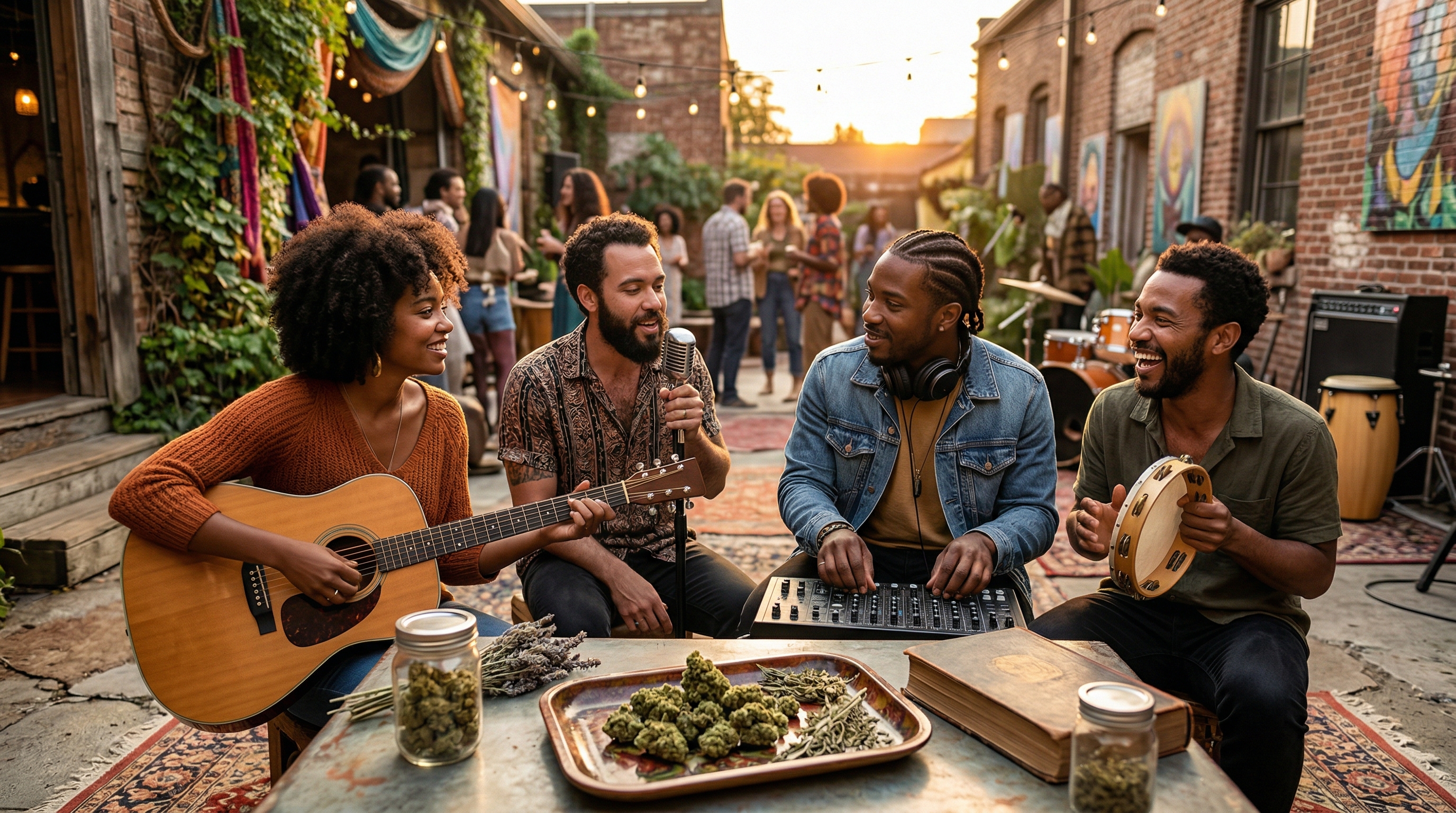
Cannabis and music have been inseparable for over a century — from the smoky tea pads of 1920s Harlem to the platinum studios of modern hip-hop. This deep dive traces that history and unpacks the neuroscience behind why musicians keep reaching for the plant.
The Song That Changed Everything
Here’s a surprising fact: one of the most influential jazz musicians in history, Louis Armstrong, smoked cannabis nearly every day of his adult life and credited it with making him a better musician. He called it his “assistant” and his “cheap drunk” — and once wrote a letter to President Eisenhower advocating for its legalization. Armstrong wasn’t an outlier. He was part of a century-long love affair between cannabis and music that stretches from smoky New Orleans jazz clubs in the 1920s all the way to the billion-dollar hip-hop studios of today.
This isn’t just a cultural curiosity. There’s genuine neuroscience behind why so many musicians across genres, decades, and continents have reached for cannabis as a creative companion. Research suggests that cannabinoids interact with brain regions responsible for auditory processing, pattern recognition, and divergent thinking — the very cognitive functions that make music possible.
Whether you’re a musician, a music lover, or simply someone who’s ever put on headphones after a session and felt the music hit differently, understanding this history gives you a richer appreciation for both cannabis culture and the soundtrack of the last hundred years. You’ll learn how cannabis influenced entire genres, why certain terpene profiles may enhance musical experiences, and what the science actually says about the plant-creativity connection.
Let’s press play.
The Science: Why Cannabis and Music Belong Together
Your Brain on Bass
Before diving into the history, it helps to understand why cannabis and music have been so consistently intertwined across cultures and centuries. The answer lives in your endocannabinoid system (ECS) — your body’s built-in network of receptors that cannabinoids like THC and CBD interact with.
Think of your ECS like a mixing board in a recording studio. It has dozens of channels controlling different aspects of your experience: mood, pain, appetite, and crucially, how you perceive time and sound. When THC binds to CB1 receptors in the brain — particularly in the auditory cortex and the prefrontal cortex — it adjusts those faders. Certain elements get amplified. Others fade into the background.
Research found that cannabinoids modulate auditory processing at the cellular level, affecting how neurons in the auditory cortex respond to sound [Sherif et al., 2016]. This may explain why so many users report hearing “more detail” in music — the brush on a snare, the breath before a vocal, the harmonics in a guitar chord.
There’s also time dilation to consider. THC appears to alter the brain’s internal clock, making moments feel stretched [Tinklenberg et al., 1976]. For a musician, this could mean more perceived “space” between notes — more room to improvise and find unexpected pathways. For a listener, it means the music breathes.
If you want to go deeper on the neuroscience, check out our companion piece: Why Music Sounds Better High.
The Creativity Research
The creativity connection isn’t just anecdotal. One study found that cannabis use was associated with increased “hyper-priming” — the brain’s ability to connect distantly related concepts [Schafer et al., 2012]. In musical terms, this may explain why a jazz musician leaps to an unexpected chord, or why a rapper finds a rhyme connecting unrelated ideas.
But the creativity link is dose-dependent. Low doses of THC (5.5 mg) didn’t significantly impair creative thinking, while higher doses (22 mg) actually decreased divergent thinking performance [Kowal et al., 2015]. There’s a sweet spot — and many of the musicians we’ll discuss were experienced users who likely consumed moderate doses relative to their tolerance.
The key takeaway: More isn’t always better. Many of the most creatively productive cannabis-using musicians throughout history likely found their own personal optimal dose rather than simply consuming as much as possible.
A Century of Cannabis and Sound
The Jazz Age: “Reefer” and Revolution (1920s–1940s)
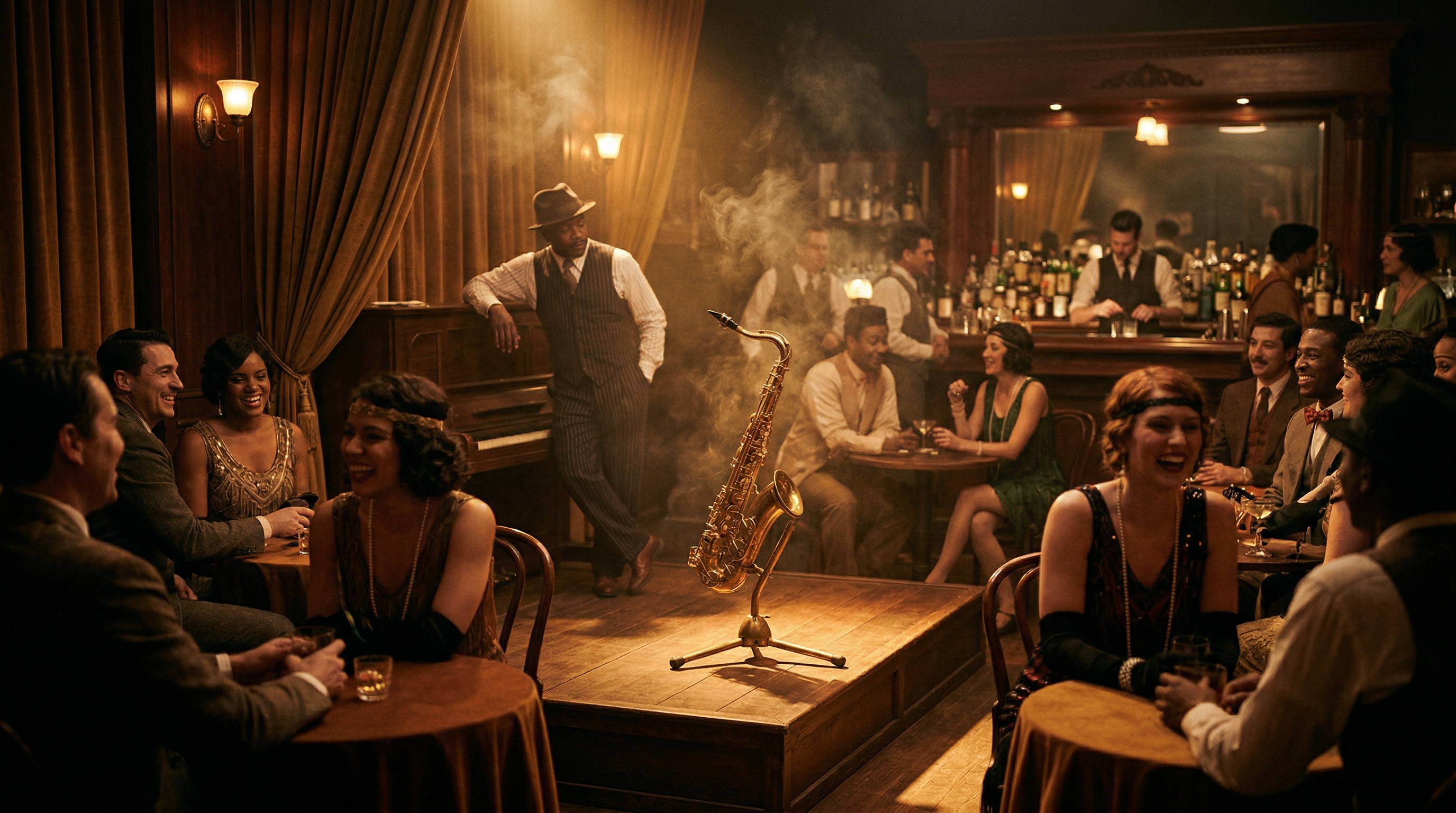
The story begins in New Orleans. Cannabis arrived through Caribbean and Mexican immigrant communities in the early 1900s. Jazz musicians — many of them Black artists already pushed to the margins of Prohibition-era America — took to it as an alternative to alcohol. It was cheaper, no hangover, and many felt it helped them play better.
Cannabis slang was born in jazz. “Reefer,” “muggles,” “viper,” “gage,” “mezz,” “tea” — all jazz-born words. Cab Calloway’s 1932 hit “Reefer Man” was a genuine chart record. Fats Waller cut “Viper’s Drag” in 1934, with lyrics that went: “I’m the king of everything / Got to get high before I sing / Sky is high, everybody’s high / If you’re a viper.”
Louis Armstrong was the most famous advocate. He wrote openly about cannabis in letters and interviews his whole career. But he wasn’t alone. Mezz Mezzrow — a white clarinetist who immersed himself in Harlem’s jazz scene — became so well-known for selling high-quality cannabis that “mezz” became slang for good weed. Duke Ellington, Count Basie, and Dizzy Gillespie all ran in cannabis-friendly circles.
“Tea pads” — cannabis lounges with live jazz — flourished across Harlem. One estimate put the number at 500 active tea pads in New York City by the mid-1930s.
Then the crackdown came. Harry Anslinger, the first head of the Federal Bureau of Narcotics, explicitly tied cannabis to jazz music and Black musicians in his push to make it illegal. He kept a file called “Marijuana and Musicians” and was quoted using virulently racist language linking cannabis to Black artists. The Marihuana Tax Act of 1937 was, in many ways, an attack on jazz culture — and knowing that history is key to understanding why legalization is a justice issue, not just a lifestyle one.
Rock, Folk, and the Counterculture (1950s–1970s)
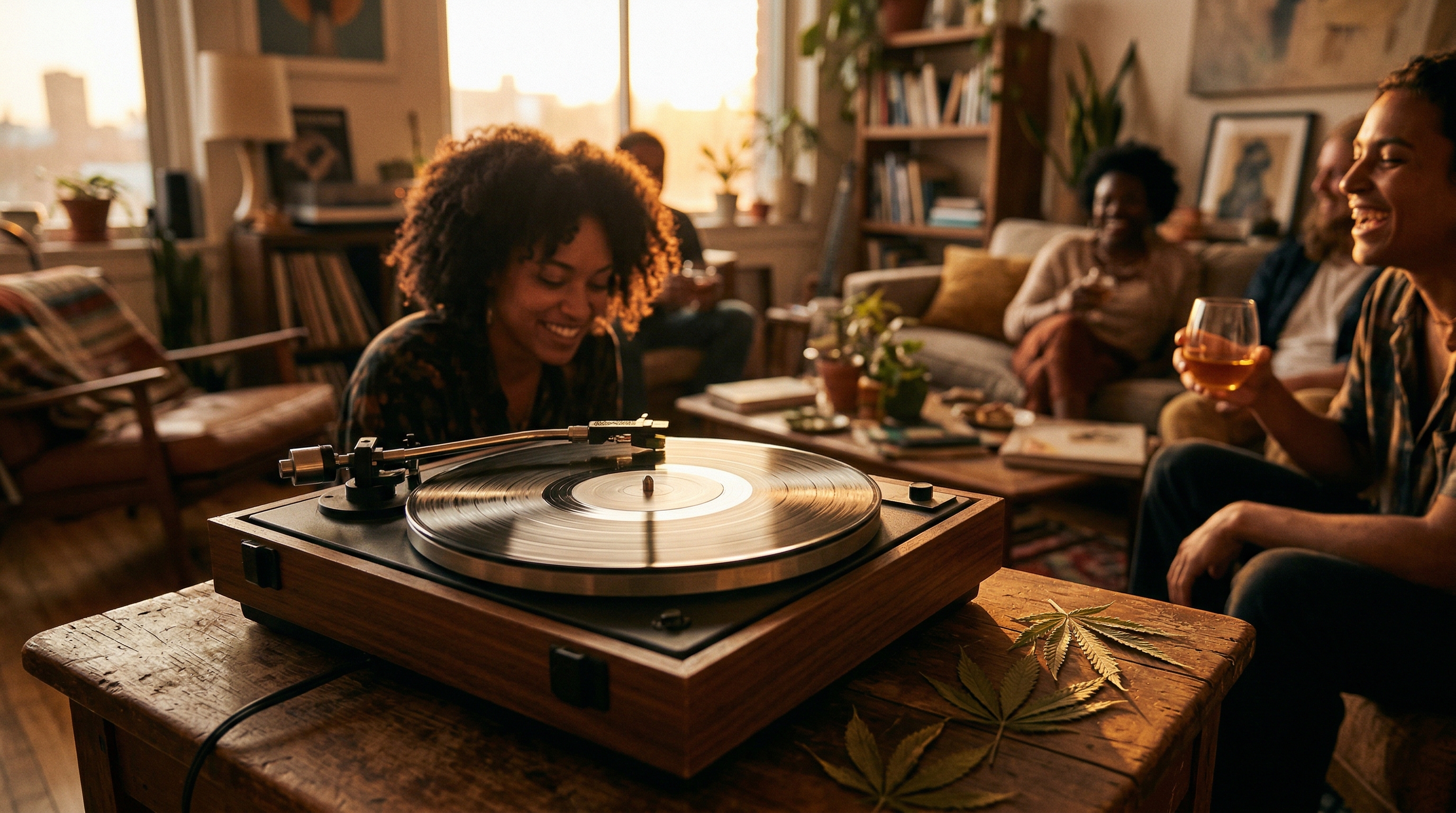
If jazz planted the seed, the 1960s counterculture watered it with a fire hose. Cannabis became the sacrament of a generation rejecting conformity, and music was its sermon.
The pivotal moment came on August 28, 1964. Bob Dylan reportedly introduced The Beatles to cannabis at the Delmonico Hotel in New York City. Paul McCartney later said: “I remember it pretty well, y’know. We were all laughing.” The Beatles’ music shifted fast — from the pop of Please Please Me to the experimental depth of Revolver (1966) and Sgt. Pepper’s (1967). That shift was not a coincidence.
Rock defined itself through artists who openly made cannabis part of their process. Jimi Hendrix, Janis Joplin, and The Grateful Dead all built cannabis into their personal mythologies. The Dead pioneered the concert as a multi-hour immersive event — a format that cannabis seemed purpose-built to enhance.
In country music, Willie Nelson became the genre’s most iconic cannabis advocate. He has been open about using cannabis since the 1970s — famously smoking on the roof of the White House with a Secret Service agent during the Carter years. He later launched Willie’s Reserve, one of the first legacy artist cannabis brands.
The strains of this era were mostly landrace varieties: Acapulco Gold, Panama Red, Thai Stick. Many were rich in terpinolene and limonene — terpenes tied to the Uplift and Energy High Families. These sativa-leaning landraces may have fueled the energetic, exploratory creativity of the era.
Reggae: Cannabis as Sacrament (1960s–Present)
No genre makes the cannabis-music bond clearer than reggae. For Rastafari practitioners like Bob Marley, Peter Tosh, and Bunny Wailer, cannabis (“ganja” or “herb”) was not recreational — it was spiritual. The Rastafari tradition views cannabis as the “wisdom weed” — a sacred plant that may facilitate meditation, prayer, and connection to Jah (God).
Bob Marley’s catalog is inseparable from cannabis culture. His influence on how the world thinks about the plant goes far beyond music. Peter Tosh’s 1976 album Legalize It was one of the first mainstream calls for cannabis reform in popular music. It was a radical act. The album was banned from radio in both Jamaica and the United States.
Marley died in 1981, but his legacy still shapes the cannabis industry. In 2014, his family launched Marley Natural — a brand built on his philosophy that cannabis is a gift from the earth.
Reggae spread globally through the 1970s and 1980s, bringing cannabis culture to the UK, Africa, and beyond. Artists like Burning Spear and Steel Pulse expanded Marley’s vision. The genre’s characteristic one-drop rhythm and heavy bass created a natural space for the slow, contemplative experience tied to the Relax and Balance High Families.
Hip-Hop: Cannabis as Identity (1990s–Present)
Hip-hop’s relationship with cannabis didn’t just continue the tradition — it transformed cannabis from a countercultural symbol into a mainstream cultural force.
Dr. Dre’s 1992 album The Chronic — named directly after high-grade cannabis — sold nearly six million copies and created G-funk. The production was laid-back, synth-heavy, and unhurried. It sounded like what smoking felt like. It changed popular music forever.
Then came Snoop Dogg, who turned cannabis into a personal brand decades before celebrity cannabis lines existed. His influence helped shift how people saw cannabis users — from dangerous to creative, from criminal to chill. Cypress Hill made cannabis the center of their whole identity with Black Sunday in 1993 — the genre’s first true cannabis concept album. Method Man and Redman built a comedy franchise around it.
The most important shift came later. Kid Cudi’s Man on the Moon: The End of Day (2009) explored cannabis, mental health, and anxiety with real vulnerability. Cannabis in hip-hop wasn’t just celebration anymore. It became a coping tool and a subject worth serious artistic attention.
Wiz Khalifa, A$AP Rocky, Mac Miller, and Tyler, the Creator each built identities that include cannabis in distinct ways. Wiz’s Kush & Orange Juice mixtapes and Taylor Gang brand made him the plant’s most visible ambassador in a new generation.
The business followed. Jay-Z launched Monogram. Snoop Dogg’s Leafs by Snoop was one of the first celebrity cannabis lines. Berner — rapper and founder of Cookies — built one of the most successful cannabis brands in America at the intersection of hip-hop and retail.

The Terpene Connection: Matching Cannabis to Music
The history of cannabis and music is also, in ways that weren’t understood until recently, a history of terpenes. The reason the 1960s landrace sativa experience felt different from the indica-forward strains that dominated 1990s hip-hop isn’t just about THC potency — it’s about dramatically different terpene profiles and how they interact with the musical experience.
Here’s a practical framework using the High Families system:
For the jazz improv experience — the expansive, open-ended creative flow that Louis Armstrong described — strains from the Energy High Family (rich in terpinolene and ocimene) may support that kind of alert, fast-moving, associative creativity. Think of this as the “viper” experience: mentally active, socially warm, creatively loose. Strains like Jack Herer carry terpene profiles that may support this type of experience.
For deep, immersive album listening — the Dark Side of the Moon experience, or putting on a Grateful Dead live recording and letting it wash over you — the Entourage High Family offers complex, multi-terpene profiles that may support the kind of sustained, nuanced perception that rewards careful listening. The Entourage Effect means these complex profiles often produce richer, more layered experiences than single-terpene dominant strains.
For reggae and meditative listening — the contemplative, spiritually oriented space that Rastafari describe — strains from the Relax or Balance High Families, with their myrcene and linalool dominant profiles, may pair naturally with the rolling rhythms of roots reggae or the introspective quality of lo-fi beats. Research suggests linalool may modulate the GABA system in ways similar to anti-anxiety medications [Russo, 2011]. See our deep dive on linalool for more.
For making music — whether you’re in a studio or jamming with friends — the Uplift High Family’s limonene-forward profiles may promote dopamine release and elevated mood, supporting the playful, confident creative state that musicians from Fats Waller to Dr. Dre have sought. The key remains starting with a low dose: as the research on creativity suggests, the sweet spot is likely far lower than most people assume.
The Playlist — Moments That Shaped the Story
A few key records that mark milestones in the cannabis-music relationship:
- Cab Calloway — “Reefer Man” (1932): The first mainstream cannabis novelty record, and a window into how openly jazz musicians discussed the plant before prohibition tightened.
- Peter Tosh — Legalize It (1976): The most politically direct cannabis statement in popular music history — radical, banned, and vindicated by history.
- Bob Marley — Exodus (1977): Rolling Stone named it the greatest album of the 20th century in 1999. Marley’s spiritually grounded cannabis philosophy suffuses every track.
- Dr. Dre — The Chronic (1992): The record that made cannabis a defining element of the most commercially dominant genre in American music.
- Cypress Hill — Black Sunday (1993): The album that turned cannabis celebration into a complete artistic statement.
- Kid Cudi — Man on the Moon: The End of Day (2009): Cannabis as vulnerability, mental health, and genuine emotional exploration — a turning point for the conversation.
Key Takeaways
- Cannabis and music have been intertwined for over a century, from 1920s jazz clubs through reggae, rock, and hip-hop — each era building on the last’s relationship with the plant.
- The connection is neurochemical, not just cultural. THC interacts with auditory processing, time perception, and associative thinking — the core cognitive functions behind both making and enjoying music.
- Cannabis prohibition was explicitly designed to target music and race. Harry Anslinger built the case for criminalization on racist associations between cannabis, Black musicians, and jazz — a history essential to understanding the legalization movement today.
- Reggae uniquely framed cannabis as spiritual and medicinal, not recreational — a philosophical distinction that continues to influence how the plant is discussed and marketed.
- Hip-hop industrialized the cannabis-music relationship, transforming it from a subculture into a multibillion-dollar industry.
- Dose and terpene profile matter for the musical experience. Low doses may support creative divergent thinking; higher doses can impair it. The High Families system offers a practical framework for matching strains to listening intentions.
FAQs
Did cannabis prohibition really target musicians?
Yes. Harry Anslinger, the architect of federal cannabis prohibition, explicitly targeted jazz musicians — particularly Black artists — as part of his campaign. He maintained surveillance files on musicians and used overtly racist rhetoric connecting cannabis to Black music and culture to build public support for criminalization. The Marihuana Tax Act of 1937 cannot be understood without this context.
Why does music sound different when you use cannabis?
THC appears to modulate activity in the auditory cortex and alter time perception, which may make you more attuned to musical details and give the sense that music has more space and depth. It may also increase dopamine release, amplifying the emotional pleasure response to music you already enjoy. We cover this in depth in Why Music Sounds Better High.
Did Bob Dylan really introduce The Beatles to cannabis?
According to multiple firsthand accounts — including from Paul McCartney — yes. The encounter took place on August 28, 1964, at the Delmonico Hotel in New York City during The Beatles’ first American tour. McCartney has described it as a watershed moment in the band’s creative evolution, and the shift in the Beatles’ musical output from 1964 to 1966 is widely cited as evidence of cannabis’s influence on their songwriting.
What’s the connection between Rastafari and cannabis?
For Rastafari practitioners, cannabis (“ganja” or “the herb”) is a sacred sacrament used for meditation, prayer, and spiritual connection. The use is rooted in biblical interpretation — particularly of Genesis 1:29 and Revelation 22:2 — and in a broader philosophy of natural living and spiritual seeking. Bob Marley, Peter Tosh, and Bunny Wailer were all practicing Rastafari, and their use of cannabis was inseparable from their spiritual and artistic practice.
What strain did jazz musicians actually smoke?
Cannabis available in 1920s–1940s America was primarily imported from Mexico and the Caribbean — what we’d now describe as landrace sativa strains. These would have been relatively low in THC by modern standards (typically under 10%) but rich in terpenes like terpinolene, limonene, and myrcene. The “mezz” — the high-quality cannabis sold by Mezz Mezzrow in Harlem — was reportedly sourced from Mexico and was prized for its potency relative to the domestic product available at the time.
Sources
-
Kowal, M.A., et al. (2015). “Cannabis and creativity: highly potent cannabis impairs divergent thinking in regular cannabis users.” Psychopharmacology, 232(6), 1123-1134.
-
Schafer, G., et al. (2012). “Investigating the interaction between schizotypy, divergent thinking and cannabis use.” Consciousness and Cognition, 21(1), 292-298.
-
Sloman, L. (1979). Reefer Madness: The History of Marijuana in America. Bobbs-Merrill.
-
Tinklenberg, J.R., et al. (1976). “Marihuana and immediate memory.” Nature, 226, 1171-1172.
-
Russo, E.B. (2011). “Taming THC: potential cannabis synergy and phytocannabinoid-terpenoid entourage effects.” British Journal of Pharmacology, 163(7), 1344-1364.
-
Herer, J. (1985). The Emperor Wears No Clothes. HEMP Publishing.
-
Shapiro, H. (2003). Waiting for the Man: The Story of Drugs and Popular Music. Helter Skelter Publishing.


