How to Clean and Maintain Your Bong: The Complete Guide
Step-by-step guide to cleaning your bong with isopropyl alcohol and salt, plus a maintenance schedule to keep every session tasting fresh.

There’s nothing quite like a smooth, clean bong rip—and nothing quite as disappointing as pulling through a piece that hasn’t been cleaned since the last time you moved apartments. A dirty bong doesn’t just taste terrible; it may harbor bacteria, mold, and built-up resin that can work against the experience you’re trying to have.
The good news? Cleaning your bong is easy, inexpensive, and takes less time than you think. This guide walks you through everything: a standard deep clean, quick-rinse habits, a maintenance schedule, and fixes for every common problem. Whether you’re a daily user or an occasional smoker, a clean piece makes every session better.
One more thing worth noting: the temperature and quality of your bong water matters too. If you want to go deep on that, check out our guide on hot vs. cold bong water temperature science.
Goal and Overview
What you’ll accomplish: A sparkling clean bong that looks, smells, and hits like new.
Estimated time: 15–30 minutes active work (plus optional soaking time for heavy buildup)
Difficulty level: Beginner — no special skills required
How often: Quick rinse every 3–5 sessions; deep clean once a week for daily users, once every 2–3 weeks for occasional users.
What You’ll Need
Required
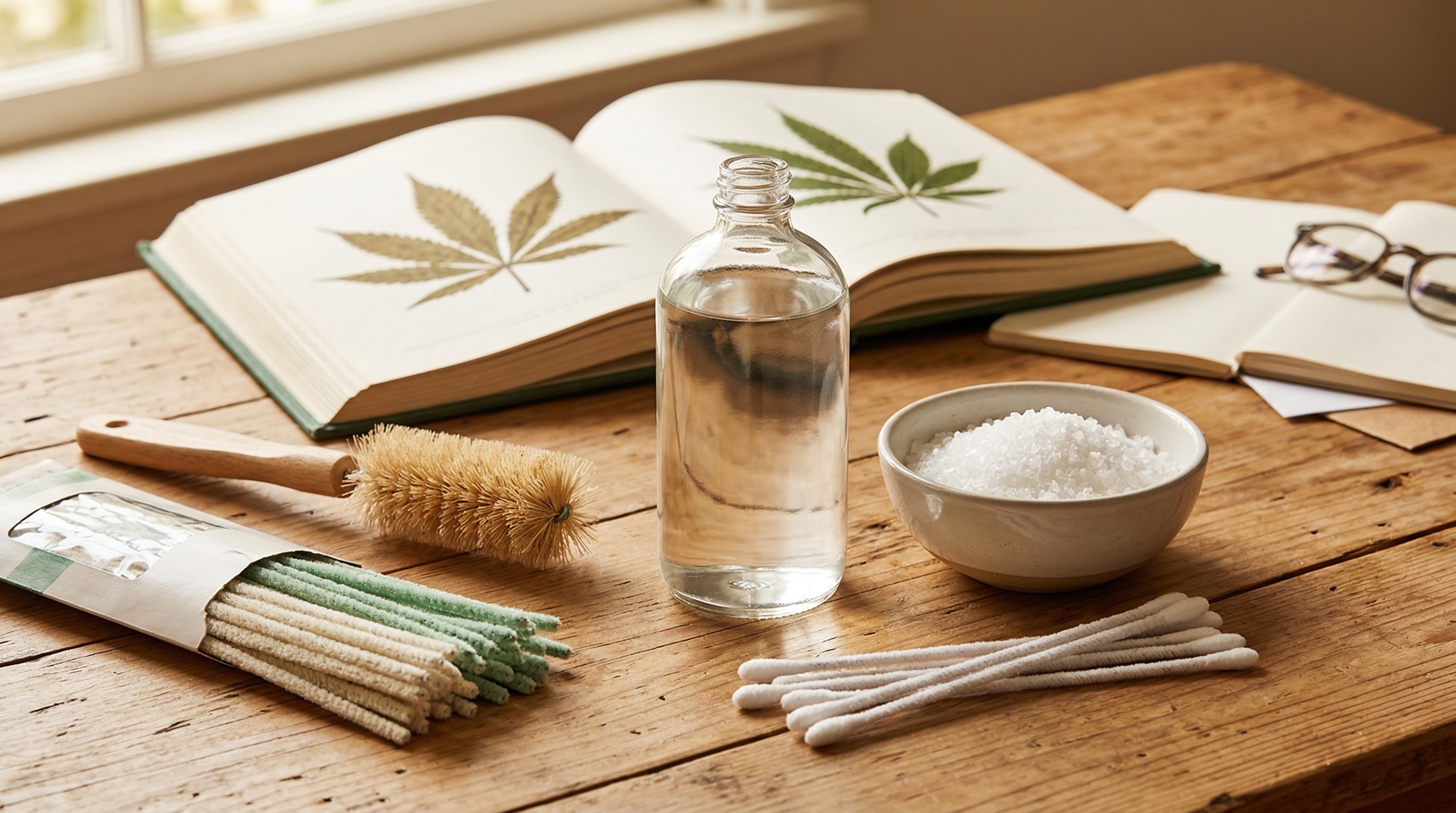
- Isopropyl alcohol (91% or higher) — the higher the concentration, the better it dissolves resin
- Coarse salt (kosher salt or rock salt) — acts as a gentle abrasive; do not use fine table salt
- Rubber stoppers, corks, or plastic wrap + rubber bands — to seal openings while shaking
- Warm water — for rinsing (not boiling—thermal shock can crack glass)
- A sink or basin — things can get messy
Optional but Helpful
- Pipe cleaners or bottle brushes — essential for downstems and percolator chambers
- Cotton swabs (Q-tips) — precise cleaning for bowls and glass joints
- Resealable plastic bags — for soaking smaller pieces like bowls and downstems
- Lemon juice or white vinegar — dissolves hard water mineral deposits
- Commercial bong cleaner (Formula 420, Randy’s Black Label) — a grab-and-go alternative
Safety
- Rubber gloves — isopropyl alcohol dries out skin with repeated exposure
- Good ventilation — open a window; the fumes aren’t dangerous in normal use but aren’t pleasant either
Step-by-Step: The Standard Deep Clean
Step 1: Disassemble Your Bong
Remove the bowl, downstem, and any other detachable components—ash catchers, percolator attachments, diffusers. Separating everything lets you clean each piece individually and reach areas that would otherwise be inaccessible.
Visual cue: At minimum, you should have the base, downstem, and bowl as three separate pieces.
Common error: Forcing a stuck downstem. If it’s locked in with resin, pour a small amount of warm water into the joint and let it sit for a few minutes before gently twisting. Never pull straight out—that’s how glass breaks.
Tip: Work over a folded towel. It gives you a soft landing surface and keeps glass from sliding around while you work.
Step 2: Dump Old Water and Pre-Rinse
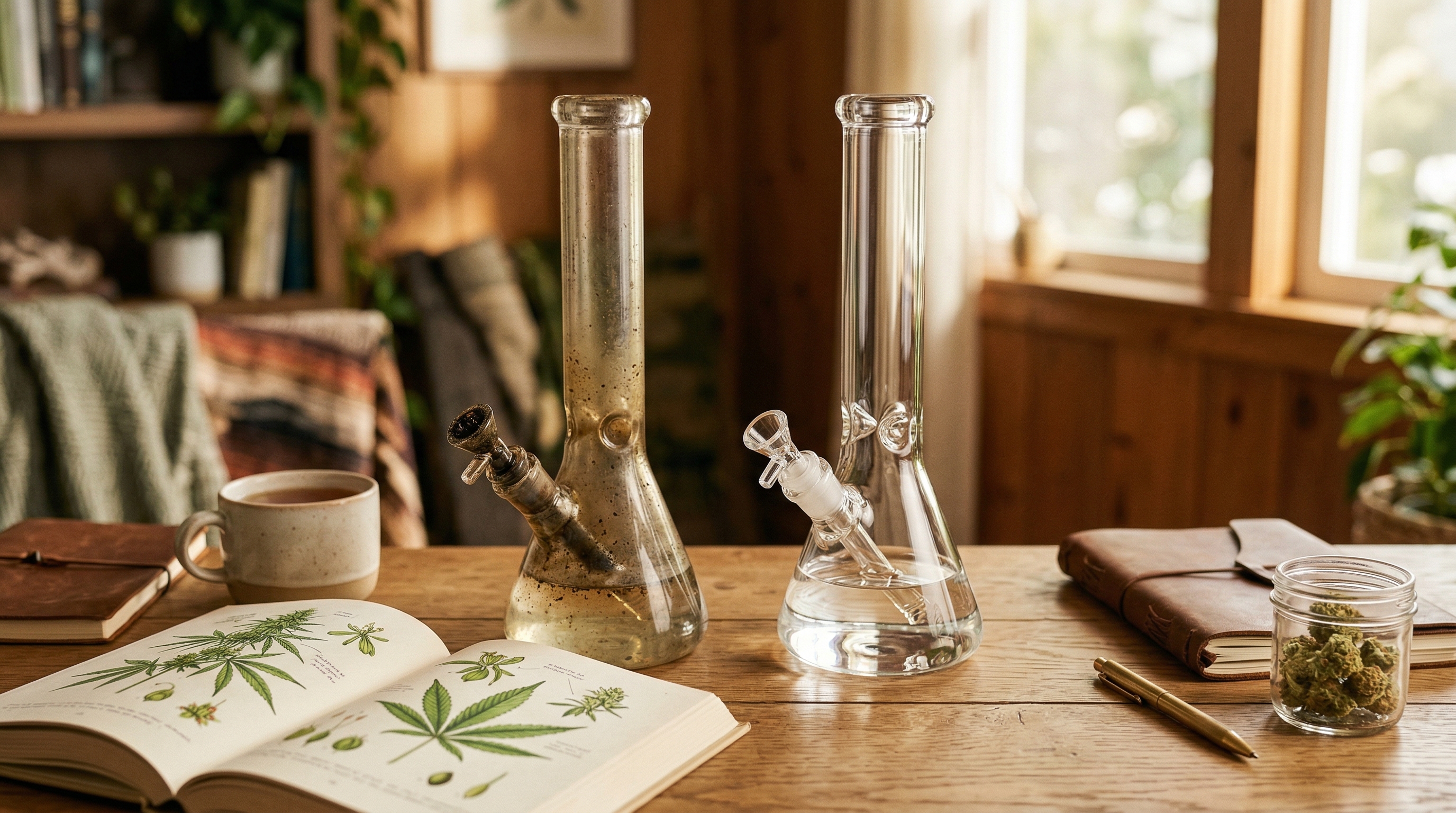
Discard any old bong water—do not let it sit overnight or between sessions. Stagnant water breeds bacteria and biofilm that degrade flavor and hygiene fast. Rinse every piece with warm water to loosen surface residue and soften built-up resin.
Important: Avoid boiling water or sudden temperature swings. Thermal shock can crack glass, especially thinner pieces. Comfortably warm tap water is all you need here.
Time estimate: 2–3 minutes
Step 3: Salt and Alcohol into the Base
Pour approximately 2–3 tablespoons of coarse salt into the bong’s main chamber, then add enough 91%+ isopropyl alcohol to fill it roughly one-third of the way. The salt provides physical abrasion while the alcohol dissolves the resin chemistry—the combination works dramatically better than either alone.
For smaller pieces—bowls, downstems—place them in resealable plastic bags with a splash of isopropyl and a pinch of salt.
Tip: The ratio doesn’t need to be precise. You want enough alcohol to slosh around and enough salt to scrub. More salt is usually better than less.
Step 4: Seal Every Opening and Shake
Use rubber stoppers, corks, or plastic wrap secured with rubber bands to cover every opening on the bong—mouthpiece, downstem joint, any other openings. Then shake vigorously for 2–5 minutes, working the alcohol-salt solution through every chamber.
Visual cue: The alcohol will turn amber or dark brown as it strips away resin. That’s the process working exactly as it should.
Common error: Not sealing tight enough. A stopper that pops off mid-shake means resin-brown alcohol on your countertop, walls, and clothes. Double-check every seal before you start.
Time estimate: 2–5 minutes of active shaking
Step 5: Soak If Needed
If your bong has significant buildup, shaking alone may not be enough. Let the alcohol-salt solution sit for 30 minutes to 2 hours for moderate buildup. For badly neglected pieces, an overnight soak is the move.
Do the same with bagged components—let them sit in their alcohol bath while the main chamber soaks.
Tip: Percolators with intricate internal chambers almost always require soaking. The alcohol needs time to reach places you can’t physically scrub.
Step 6: Scrub the Details
After soaking, use pipe cleaners to scrub inside the downstem and any narrow passages. Cotton swabs work well for bowl pieces and the ground joint where the downstem meets the base. A bottle brush can scrub the interior walls of the main chamber where your hand can’t reach.
Pay particular attention to:
- The inside of the downstem (the most resin-prone component)
- The ground joint where pieces connect
- Any percolator slits or diffuser holes
- The mouthpiece rim
Time estimate: 3–5 minutes
Step 7: Rinse Thoroughly—Then Rinse Again
This is the step most people underestimate. Rinse every piece with warm water multiple times until there is absolutely no alcohol smell and no residue visible. Inhaling isopropyl alcohol vapors through a heated bowl is not something you want to do.
Visual cue: Water running off every piece should be completely clear. Smell each piece—you should detect nothing but clean glass.
Common error: One rinse and calling it done. Rinse until you’re sure, then rinse once more.
Time estimate: 3–5 minutes per piece, possibly more
Step 8: Dry and Reassemble
Set all pieces on a clean towel to air dry. Once completely dry, reassemble, fill with fresh water, and notice the difference on your first pull.
Worth knowing: A clean bong doesn’t just taste better—it lets you actually experience the terpene profile of your flower. Whether you’re working with something from the Relaxing High family or an Uplifting High strain, those aromatic compounds come through cleanly through clean glass. Resin and old water mask exactly the characteristics that make a good strain worth choosing.
Maintenance Schedule
Consistent small habits eliminate the need for brutal deep-clean sessions. Here’s a practical schedule:
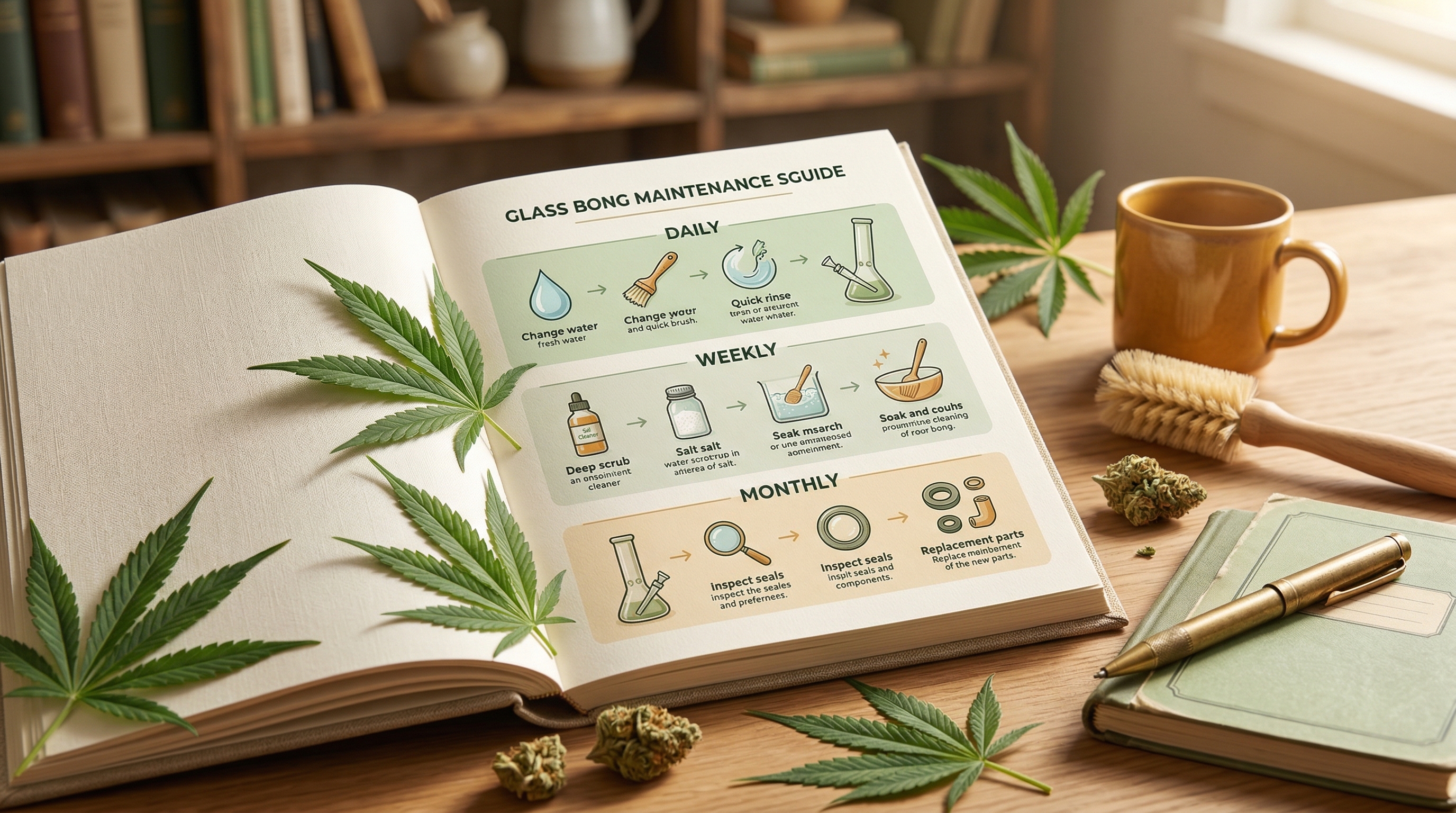
After every session:
- Dump bong water immediately. Never let it sit.
- Rinse the base with warm water (30 seconds).
Every 3–5 sessions (quick maintenance):
- Full warm water rinse of all pieces
- Swish with a small amount of isopropyl alcohol (no salt needed for light maintenance)
- Rinse clean
Weekly (for daily or near-daily users):
- Full deep clean with alcohol and salt as described above
Monthly (for occasional users, or as needed):
- Full deep clean
- Check for hard water deposits; treat with vinegar if present
- Inspect rubber grommets and seals; replace if cracked or degraded
Pro Tips
Add lemon juice to your bong water. A few drops of lemon juice per session introduces citric acid that slows resin adhesion to the glass walls. Less buildup means easier cleaning and better-tasting water.
Invest in an ash catcher. These small glass attachments sit between your bowl and downstem and catch ash and resin before they enter the main chamber. They take 60 seconds to clean and can double the time between deep cleans of the base. If you’re also thinking about other consumption methods that keep your glass cleaner by nature, our vaping vs. smoking comparison breaks down the tradeoffs.
Use a dedicated cleaning kit. Keep your alcohol, salt, stoppers, and brushes together in one container. Removing the friction of “I have to find everything first” makes it far more likely you’ll actually clean your piece regularly.
Choosing the right flower matters too. Strains with higher terpene content produce more resin—so if you notice you’re cleaning more often than expected, it may be worth browsing options in our strain finder to find something that matches both your preferred High Family and your cleaning tolerance. For silicone bongs: Skip isopropyl alcohol entirely—it degrades silicone over time. Use warm dish soap and water, or a white vinegar and baking soda solution instead. Many silicone bongs are dishwasher-safe on the top rack.
For acrylic bongs: Also avoid isopropyl alcohol. Hot water with a small amount of dish soap is safe; commercial cleaners designed for acrylic are even better.
Don’t use boiling water on any material. The risk of cracking glass or warping other materials isn’t worth it when warm water works just as well for softening resin.
Troubleshooting
| Problem | Likely Cause | Solution |
|---|---|---|
| Resin won’t come off after shaking | Buildup is too thick | Soak for 2+ hours or overnight, then reshake |
| Cloudy white film on glass | Hard water mineral deposits | Soak in equal parts white vinegar and warm water for 1 hour, then rinse |
| Alcohol smell lingers after rinsing | Not rinsed enough | Rinse 5–6 additional times; let air dry completely before use |
| Downstem is stuck | Resin has bonded the joint | Pour warm water over the joint, wait 5 minutes, twist gently—never yank straight out |
| Percolator chambers still dirty after cleaning | Solution couldn’t reach intricate geometry | Fill with alcohol and salt, soak overnight, shake in short bursts at different angles |
| Tastes off despite looking clean | Residue in unseen areas (joints, mouthpiece) | Scrub joints and mouthpiece interior with alcohol-dipped cotton swabs |
| Bowl is clogged | Resin blocking the hole | Soak in isopropyl alcohol for 30 minutes, then clear with a straightened paper clip or pipe cleaner |
Cleaning Method Variations
The Quick Rinse (5 Minutes)
Short on time? Pour out old water, rinse with warm water, add a splash of isopropyl (no salt), shake briefly, and rinse clean. This won’t remove heavy buildup but keeps residue from hardening between deep cleans.
Commercial Cleaner
Products like Formula 420 or Randy’s Black Label are premixed solutions specifically formulated for glass pipes and bongs. Pour in, shake, rinse. More expensive than the DIY method but requires less effort and works well for regular maintenance. Particularly useful for percolators.
Eco-Friendly Option
If you prefer to avoid isopropyl alcohol, a combination of coarse salt, white vinegar, and baking soda creates a fizzy, mildly abrasive cleaning solution. It requires more soaking time and may not cut through heavy resin as efficiently, but it works for regular maintenance and is less harsh on your hands and your home’s drains.
Key Takeaways
- The isopropyl alcohol and coarse salt method is the most effective and inexpensive way to deep-clean glass. Use 91%+ isopropyl and kosher or rock salt—never fine table salt.
- Shake for 2–5 minutes after sealing all openings. Amber-colored alcohol is the sign the method is working.
- Soak overnight for heavily neglected pieces. Percolators almost always need soaking to clean fully.
- Rinse more than you think is necessary. Any residual isopropyl alcohol you inhale through a heated bowl is unpleasant and avoidable.
- Change bong water after every session. Stagnant water breeds bacteria and biofilm faster than most people realize—this one habit makes a bigger difference than any cleaning product.
- Ash catchers are the single best investment for reducing cleaning frequency. They intercept resin before it reaches the main chamber.
- Silicone and acrylic bongs need different care—skip isopropyl alcohol and use dish soap or vinegar-based solutions instead.
- A clean bong preserves terpenes. The flavor and effect profile of a well-chosen strain comes through far more clearly through clean glass. If you’re picking strains by High Family, clean glass is how you actually taste the difference.
Cleaning your bong isn’t glamorous, but it’s one of the highest-return habits in cannabis. Every session through clean glass tastes better, hits smoother, and delivers more of what your flower actually has to offer. Five minutes of maintenance after each session means you never have to spend an hour scrubbing. Keep it simple, keep it consistent, and your piece will take care of you in return.


