How to Sober Up From Being Too High: 8 Science-Backed Tips
Feeling too high? These 8 evidence-based tips can help you come back down to earth safely and comfortably. A practical guide for every cannabis user.

Updated April 15, 2026 — Refreshed with new internal links to our deep dives on edible dosing, why edibles hit harder, and the paranoia prevention guide. Core guidance unchanged — the techniques below are still the evidence-based playbook.
We’ve all been there—or if you haven’t yet, you probably will be. You took one edible too many, hit a concentrate harder than expected, or simply underestimated a new strain. Now the room feels like it’s breathing, your heart is doing a drum solo, and you’re Googling “can you die from too much weed” at 2 AM.
Deep breath. You’re going to be fine.
No one has ever fatally overdosed on cannabis alone [National Institute on Drug Abuse, 2024]. What you’re experiencing is uncomfortable, sometimes genuinely frightening, but temporary. This guide gives you eight practical, science-informed strategies to ride it out and feel like yourself again.
Goal & Overview
What you’ll accomplish: Learn how to reduce the intensity and duration of an overwhelming cannabis experience using simple, accessible techniques.
Estimated time: Most acute cannabis overconsumption episodes peak within 30–90 minutes (inhaled) or 2–4 hours (edibles) and resolve within 4–8 hours total [Huestis, 2007].
Difficulty level: Beginner — no special skills required, just a willingness to be kind to yourself.
What You’ll Need
Required
- A safe, comfortable space (couch, bed, quiet room)
- Water or a non-caffeinated beverage
- A trusted friend, roommate, or someone you can call
Optional (But Helpful)
- Black peppercorns (whole, from your spice rack)
- CBD oil or tincture (broad- or full-spectrum, any dose you have on hand)
- Lemon or lemon juice
- A calming playlist, familiar TV show, or comfort movie
- A blanket and pillow
Safety Note
- A phone with emergency contacts accessible — in the rare case symptoms include chest pain, severe vomiting, or loss of consciousness, call 911 or your local emergency number immediately
Step-by-Step Instructions
Step 1: Recognize What’s Happening
Before anything else, name it: you consumed too much THC, and your endocannabinoid system is temporarily overstimulated. Common symptoms include racing heart, anxiety or paranoia, dizziness, nausea, dry mouth, and time distortion.
Remind yourself — out loud if it helps — that this is temporary, not dangerous, and will pass. Research confirms that acute cannabis intoxication, while uncomfortable, resolves on its own without lasting effects in otherwise healthy adults [Grotenhermen, 2003].
Key takeaway: You are not in danger. Your body will metabolize the THC, and you will feel normal again. Set a timer for 30 minutes — you’ll likely feel noticeably better by the time it goes off.
Tip: Write “I’m okay, this is temporary” on a sticky note and keep it where you can see it. Grounding reminders work.
Step 2: Stop Consuming Immediately
This sounds obvious, but it matters — especially with edibles, where delayed onset can trick you into taking more. Put away all cannabis products. If you’re in a social setting, let someone know you’re done for the night.
Time estimate: 10 seconds of discipline that saves you hours of discomfort.

Step 3: Hydrate (But Skip the Alcohol and Coffee)
Water is your best friend right now. THC doesn’t dehydrate you the way alcohol does, but dry mouth (cottonmouth) is a direct effect of cannabinoids binding to receptors in your salivary glands [Prestifilippo et al., 2006]. Sipping water or juice helps with comfort and gives you something grounding to focus on.
Avoid: Alcohol (amplifies THC’s effects and impairment), caffeine (can increase heart rate and anxiety), and very sugary energy drinks.
Tip: Add lemon to your water. Limonene, the terpene abundant in citrus, may have anxiolytic properties and is a key component of the Uplifting High family. While squeezing a lemon into your glass isn’t a cure, some users swear by it, and there’s emerging terpene science to support the idea [Russo, 2011].
Step 4: Try the Black Pepper Trick
This one sounds like folk wisdom, but there’s real science behind it. Chew on 2–3 whole black peppercorns or simply sniff freshly cracked black pepper. Beta-caryophyllene, the dominant terpene in black pepper, is a dietary cannabinoid that binds to CB2 receptors and may produce calming, anti-anxiety effects [Gertsch et al., 2008].
Neil Young famously recommended this trick, and Dr. Ethan Russo’s research on terpene-cannabinoid interactions provides a plausible mechanism: beta-caryophyllene may modulate THC’s psychoactive effects through the entourage effect [Russo, 2011]. (For a deeper dive into why this single terpene behaves so much like a cannabinoid, see our guide to caryophyllene.)
Time estimate: Relief may begin within 5–15 minutes.
Common error: Don’t inhale ground pepper — you’ll sneeze violently. Chew whole peppercorns gently or just sniff them.
Fun fact: Beta-caryophyllene is also the signature terpene of the Relieving High family, which is known for body-focused comfort — exactly what you need right now.
Step 5: Take CBD If You Have It
CBD may counteract some of THC’s anxiety-producing effects. Research suggests CBD acts as a negative allosteric modulator of the CB1 receptor, meaning it can dampen THC’s binding efficiency without blocking it entirely [Laprairie et al., 2015]. In simpler terms: CBD may turn down the volume on your high.
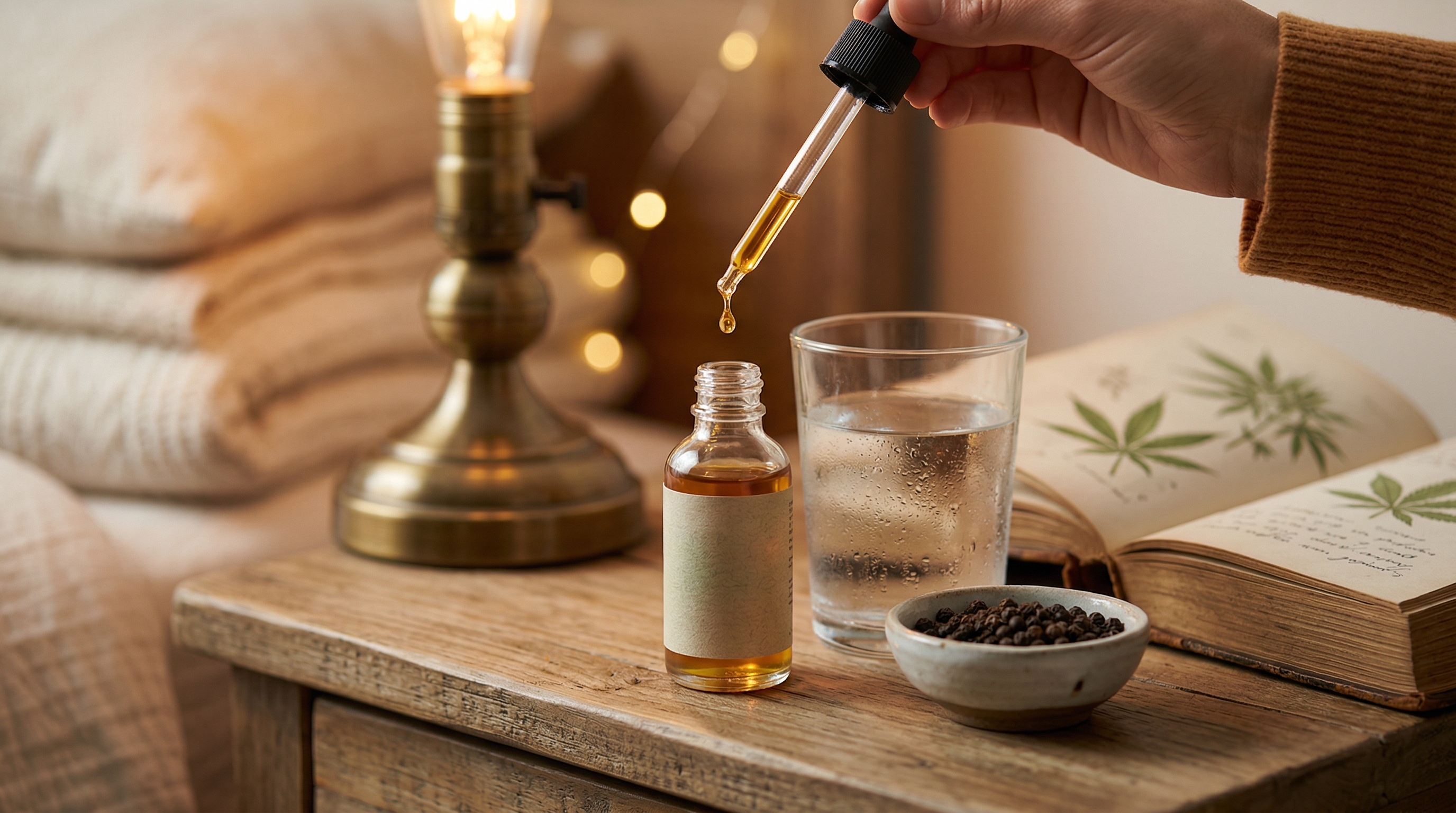
- Dose: 25–50 mg of CBD oil or tincture placed under the tongue
- Onset: 15–30 minutes sublingually
- Note: This won’t instantly sober you up, but many users report it takes the anxious edge off
Tip: This is a great reason to always keep a CBD tincture in your cannabis toolkit, even if you don’t use it regularly.
Step 6: Breathe With Intention
Your racing heart is likely being driven by two things: THC’s direct cardiovascular effects (mild tachycardia is normal and documented [Jones, 2002]) and anxiety amplifying the sensation. You can’t control the first, but you can absolutely manage the second.
Try box breathing:
- Inhale slowly for 4 seconds
- Hold for 4 seconds
- Exhale slowly for 4 seconds
- Hold for 4 seconds
- Repeat for 5–10 cycles
This activates your parasympathetic nervous system — the “rest and digest” response — and can measurably lower heart rate and anxiety within minutes.
Step 7: Change Your Environment
Sometimes the best thing you can do is shift your sensory input. If you’re inside, step outside for fresh air. If you’re in a loud, crowded space, find somewhere quiet. Put on a familiar, comforting show or album — novelty can feel overwhelming when you’re too high, so lean into the familiar.
- Take a warm (not hot) shower
- Pet an animal if one is available
- Wrap yourself in a blanket
- Doodle, color, or do something gentle with your hands
Tip: Cold water on your wrists and the back of your neck can trigger the mammalian dive reflex, which slows your heart rate. It sounds dramatic, but it’s a well-documented physiological response.
Step 8: Sleep It Off
If you can sleep, sleep is the single most effective way to end an overwhelming high. Your body will continue metabolizing THC while you rest, and you’ll wake up feeling significantly better — though possibly a little groggy (sometimes called a “weed hangover”).
Make your space comfortable, put your phone on Do Not Disturb, and let your body do its thing.
Time estimate: Even 1–2 hours of sleep can make a dramatic difference.

Pro Tips
Build a “Too High” kit in advance. Keep a small pouch with CBD tincture, whole black peppercorns, a calming essential oil (lavender contains linalool, another anxiolytic terpene), and a written note reminding yourself this is temporary. Having it ready means you don’t have to think clearly when you’re not thinking clearly.
Know your terpene profile. Strains in the Relaxing High family tend to be high in myrcene, which may intensify sedation and the feeling of being “locked in.” If you’re prone to overconsumption anxiety, you might find strains from the Balancing High family — with gentler, lower-intensity terpene profiles — more forgiving.
Start low, go slow with edibles. The number one cause of overconsumption is edible impatience. A standard dose is 5–10 mg of THC, and onset can take 30 minutes to 2 hours. Wait at least 2 full hours before considering more.
Tell someone. You don’t need to suffer in silence. A calm friend who knows what’s happening can be the single most reassuring presence. If you’re alone, text or call someone you trust.
Troubleshooting
| Problem | Likely Cause | Solution |
|---|---|---|
| Heart racing for 30+ minutes | Normal THC-induced tachycardia + anxiety | Box breathing, cold water on wrists, lie down. If accompanied by chest pain, seek medical help. |
| Nausea or vomiting | Overconsumption, especially edibles | Sip ginger tea, lie on your side, avoid sudden movements. If vomiting is severe and persistent, seek medical attention. |
| Paranoia that won’t ease | High-THC strain with low CBD, possible sensitivity | CBD tincture, black pepper, change environment, call a trusted friend |
| Still high after 6+ hours | Likely edibles — liver converts THC to 11-hydroxy-THC, which is more potent and longer-lasting | This is normal for edibles. Sleep, hydrate, and wait. |
| “Weed hangover” the next day | Residual metabolites, dehydration, poor sleep quality | Water, light food, gentle movement, fresh air. It will pass by midday. |
Variations: Prevention Is Better Than Recovery
The best way to handle being too high is to avoid it in the first place:
- Microdose: Start with 2.5–5 mg THC for edibles, one small puff for inhalation
- Choose balanced strains: Look for 1:1 THC:CBD ratios or strains in the Balancing High family
- Know your method: Edibles hit harder and last longer than inhalation — respect the difference. Our edible dosing guide walks through the 2-hour rule in detail.
- Check in with yourself: Set a 15-minute timer after your first dose and honestly assess before consuming more
Remember: Cannabis affects everyone differently based on tolerance, body weight, metabolism, genetics, and even what you’ve eaten that day. There’s no weakness in taking it slow.
You’re going to be okay. Drink some water, chew some pepper, and put on your favorite comfort show. This too shall pass — usually in about an hour.
Sources
- Gertsch, J. et al. (2008). “Beta-caryophyllene is a dietary cannabinoid.” Proceedings of the National Academy of Sciences, 105(26), 9099-9104. PMID: 18574142
- Grotenhermen, F. (2003). “Pharmacokinetics and pharmacodynamics of cannabinoids.” Clinical Pharmacokinetics, 42(4), 327-360. PMID: 12648025
- Huestis, M.A. (2007). “Human cannabinoid pharmacokinetics.” Chemistry & Biodiversity, 4(8), 1770-1804. PMID: 17712819
- Jones, R.T. (2002). “Cardiovascular system effects of marijuana.” Journal of Clinical Pharmacology, 42(S1), 58S-63S. PMID: 12412837
- Laprairie, R.B. et al. (2015). “Cannabidiol is a negative allosteric modulator of the cannabinoid CB1 receptor.” British Journal of Pharmacology, 172(20), 4790-4805. PMID: 26218440
- National Institute on Drug Abuse. (2024). “Cannabis (Marijuana) DrugFacts.” Retrieved from nida.nih.gov
- Prestifilippo, J.P. et al. (2006). “Inhibition of salivary secretion by activation of cannabinoid receptors.” Experimental Biology and Medicine, 231(8), 1421-1428. PMID: 16946411
- Russo, E.B. (2011). “Taming THC: potential cannabis synergy and phytocannabinoid-terpenoid entourage effects.” British Journal of Pharmacology, 163(7), 1344-1364. PMID: 21749363


