How to Store Cannabis: Complete Guide to Freshness & Potency
Learn how to store cannabis properly to preserve terpenes, cannabinoids, and freshness. Step-by-step guide with pro tips and troubleshooting.

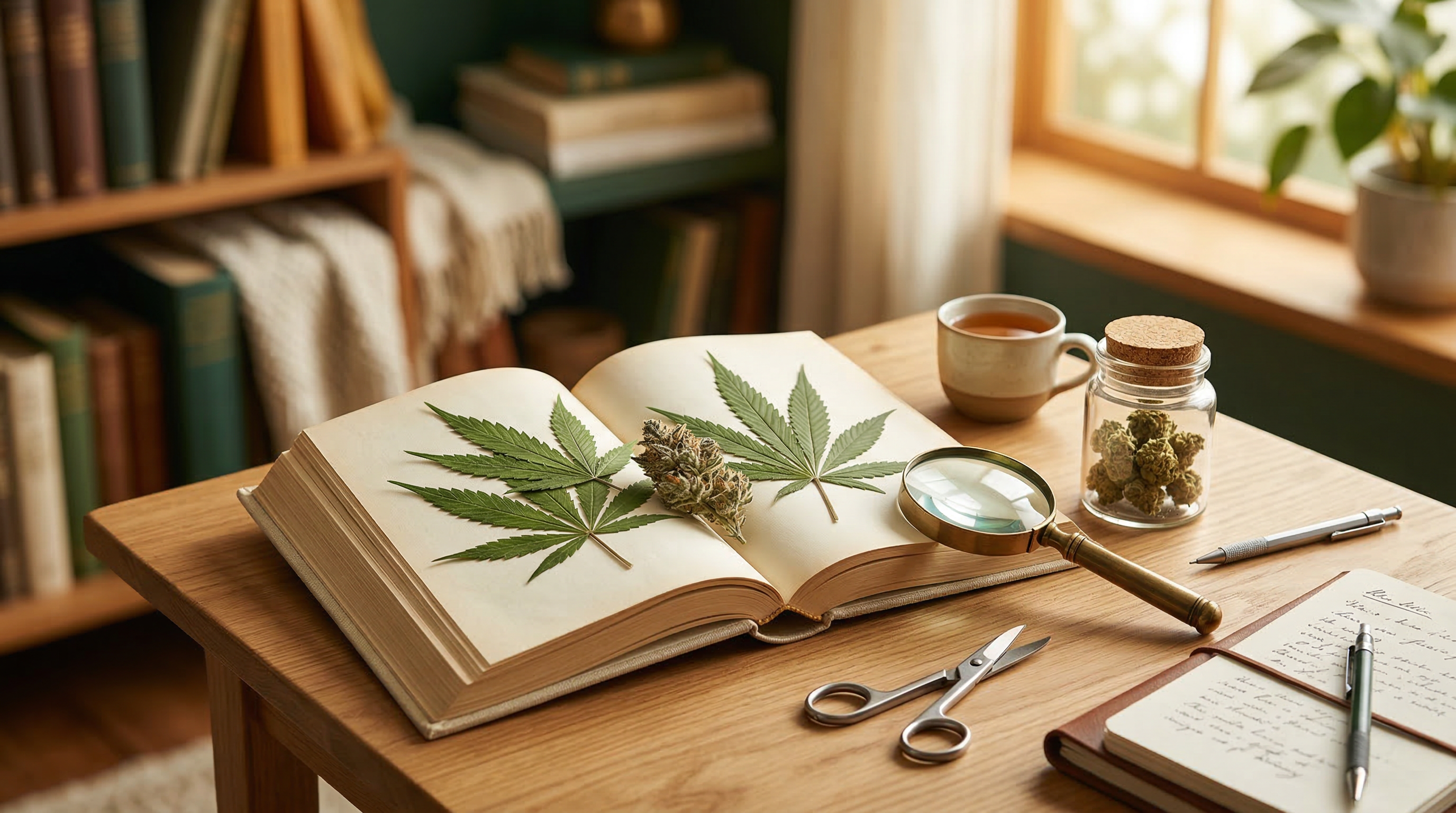
You finally found a strain from the Uplifting High family that makes your entire weekend glow—and then, two weeks later, it crumbles into dust that tastes like a cardboard box. Sound familiar? Research shows that improperly stored cannabis can lose up to 16% of its THC content after just one year, while terpene degradation may cause 30–50% product loss within six months [Terpene Belt Farms, 2024]. Proper cannabis storage is one of the simplest things you can do to protect your investment, preserve those precious terpenes, and keep every session as good as the first.
This guide walks you through exactly how to store your flower (and other products) so nothing goes to waste. Whether you’re new to cannabis or a seasoned enthusiast looking to upgrade your setup, you’ll find everything you need in the steps below. For more foundational knowledge, check out our gear guide for beginners.
Goal & Overview
What you’ll accomplish: A properly stored cannabis stash that maintains its potency, flavor, and aroma for months—sometimes up to a year or more.
Estimated time: 10–15 minutes for initial setup; seconds per use after that.
Difficulty level: Beginner. No special skills required—just the right gear and a little know-how.
Key takeaway: The four enemies of fresh cannabis are light, heat, air, and moisture. Control those, and you’re golden.
What You’ll Need
Required
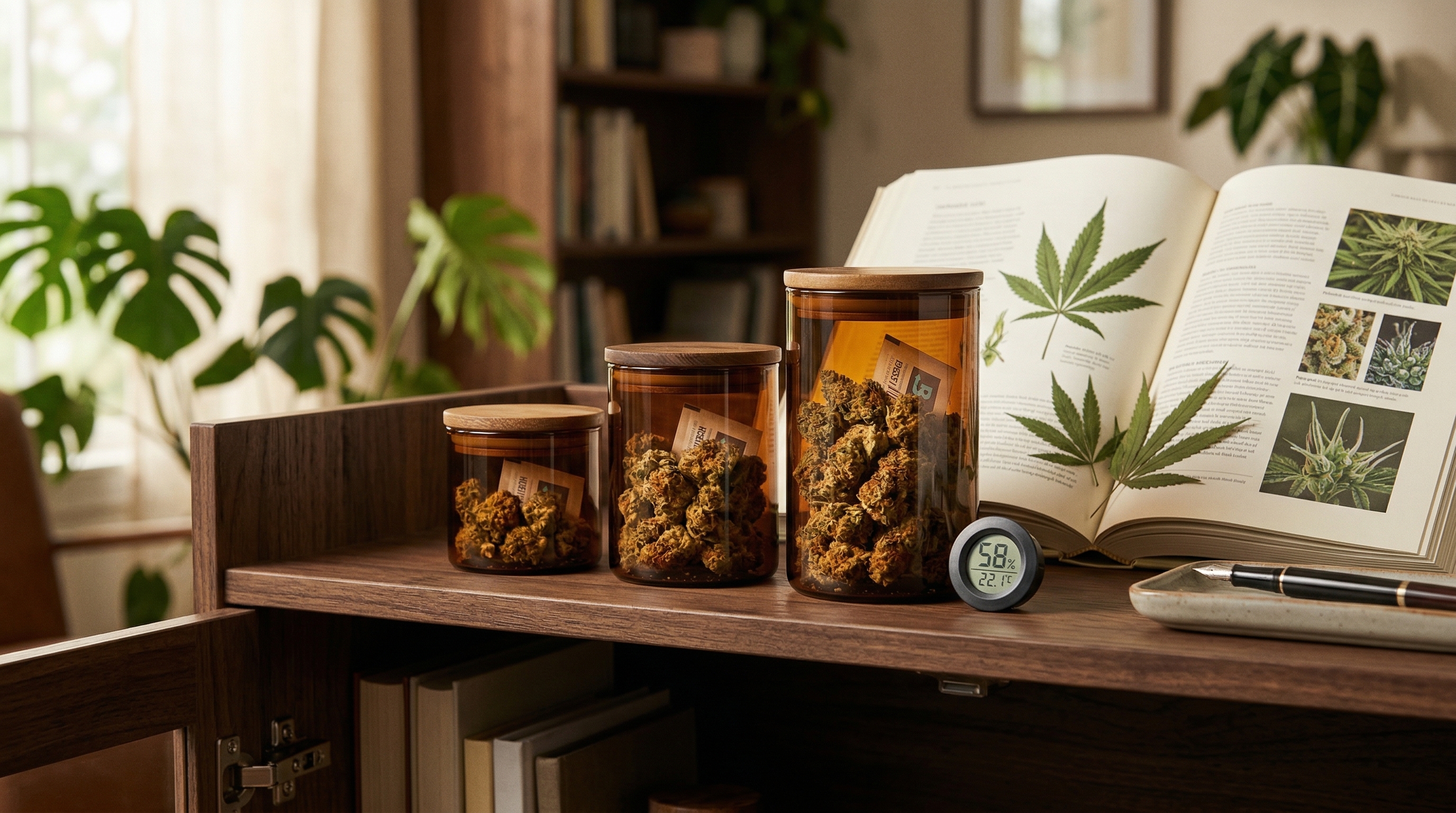
- Airtight glass jars (Mason jars or purpose-built cannabis storage jars with silicone-sealed lids)
- A cool, dark storage location (closet shelf, drawer, or cabinet away from appliances)
Optional
- Humidity control packs (Boveda or Integra Boost, 58%–62% RH)
- UV-blocking glass jars (violet or amber-tinted)
- Hygrometer (small, jar-sized) for monitoring relative humidity
- Vacuum-seal bags for long-term bulk storage
- Labels and a marker for strain name, date, and High Family
Safety Equipment
- None required—but wash your hands before handling flower to avoid transferring oils and bacteria.
Step-by-Step Instructions
Step 1: Choose the Right Container
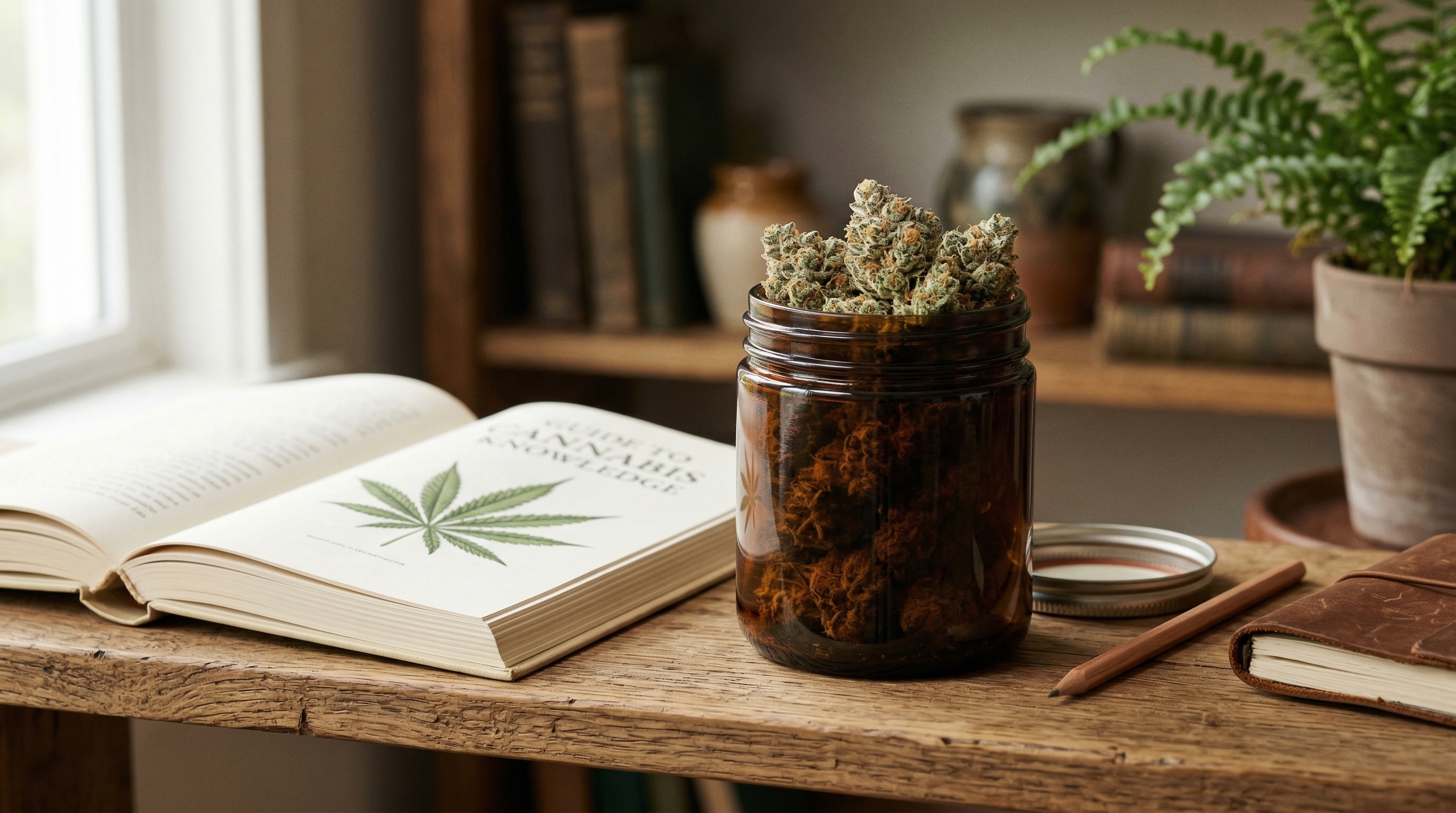
The container you pick matters more than almost anything else. Here’s how the options stack up:
| Container Type | UV Protection | Airtight | Static-Free | Best For |
|---|---|---|---|---|
| UV-blocking glass (violet/amber) | Yes | Yes | Yes | Long-term storage (3+ months) |
| Clear Mason jar (in dark spot) | No | Yes | Yes | Medium-term storage (1–3 months) |
| Ceramic jar with silicone seal | Yes | Yes | Yes | Display + storage combo |
| Metal tin with liner | Partial | Varies | Yes | Short-term, travel |
| Plastic container | No | Varies | No | Avoid for flower |
| Plastic bag (dispensary bag) | No | No | No | Transport only—never storage |
Why glass? Plastic carries a static charge that can pull trichomes off your flower—those tiny, crystal-like structures packed with cannabinoids and terpenes [Happyana et al., 2013]. Metal can alter flavor over time. Glass is inert, meaning it won’t interact with your cannabis at all.
Common error: Using the dispensary bag long-term. Those exit bags are designed for transport, not storage. Transfer your flower as soon as you get home.
Tip: Size your jar to your stash. A half-full jar means more trapped air, which accelerates degradation. Use smaller jars for smaller amounts.
Step 2: Add Humidity Control
Cannabis flower stays in its sweet spot between 58% and 62% relative humidity (RH). Too dry and terpenes evaporate, trichomes crumble, and smoke turns harsh. Too moist and you’re inviting mold—specifically Aspergillus, which can be harmful when inhaled [McPartland & McKernan, 2017]. The safe range for cannabis sits between 55–62% RH, preventing both mold growth and excessive drying [Mood, 2025].
Two-way humidity packs are the easiest way to maintain that sweet spot. The two most popular brands:
| Feature | Boveda | Integra Boost |
|---|---|---|
| Technology | Salt-based solution | Plant-based glycerin |
| Available RH levels | 58%, 62% | 55%, 62% |
| Indicator | Pack feels rigid when spent | Color-changing indicator card |
| Best for | Precise humidity control | Eco-conscious consumers |
| Price range | ~$1–2 per pack | ~$1–2 per pack |
Both brands perform comparably in side-by-side tests [Grow Weed Easy, 2025]. Choose whichever you prefer—the important thing is using something.
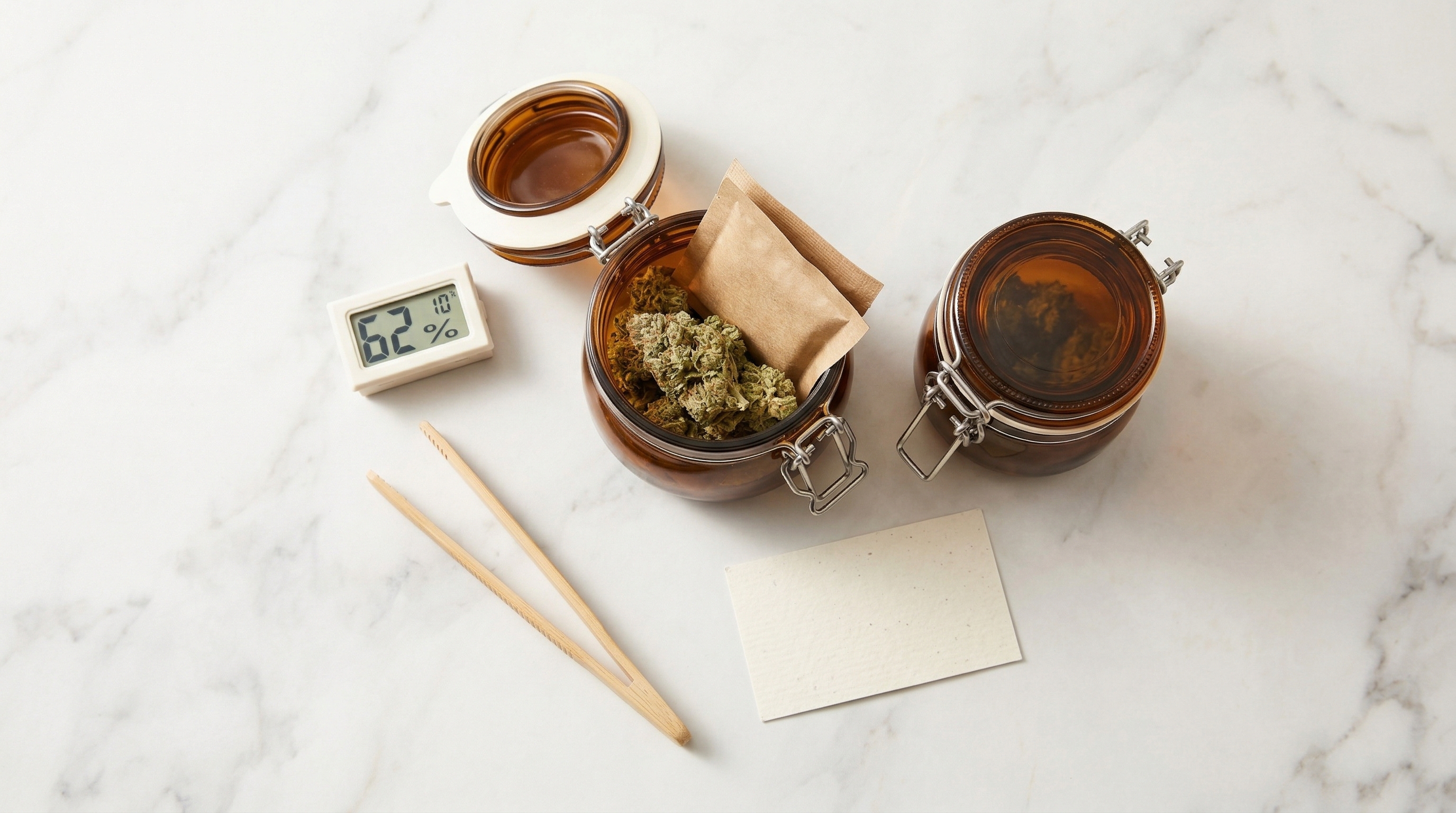
- Drop a 62% RH humidity pack into each jar. These two-way packs absorb excess moisture and release it when the environment gets too dry. (Use 58% RH if you prefer a slightly drier smoke.)
- One standard-size pack handles up to 7 grams; use larger packs or multiples for an ounce.
- Replace packs every 2–4 months, or when they feel rigid (Boveda) or the indicator card changes color (Integra Boost).
Time estimate: 30 seconds per jar.
Tip: If you’re a data nerd, toss a mini hygrometer in the jar for the first few days to verify the RH is in range. Note that a humidity pack at 62% won’t rescue flower that has already dried below 45% RH—packs maintain equilibrium rather than aggressively rehydrate [Mood, 2025].
Step 3: Find the Ideal Storage Spot
Now that your jar is sealed, location is everything. Here’s a quick reference for optimal conditions:
| Factor | Ideal Range | What Happens Outside Range |
|---|---|---|
| Temperature | 60–70°F (15–21°C) | Above 77°F: mold risk increases; THC converts to CBN faster |
| Relative Humidity | 58–62% RH | Below 55%: terpenes evaporate, harsh smoke; Above 65%: mold risk |
| Light Exposure | None (total darkness) | UV rays break down cannabinoids and terpenes rapidly |
| Air Exposure | Minimal (airtight seal) | Oxygen accelerates THC oxidation into CBN |
- Temperature: Aim for 60–70°F (15–21°C). Heat accelerates the conversion of THC into CBN, a cannabinoid associated with drowsiness rather than the effects you originally selected your strain for [Ross & ElSohly, 1999]. Temperatures above 77°F (25°C) can also encourage mold. A study in Analytical and Bioanalytical Chemistry found that storage temperature significantly impacts both the volatilome (terpene profile) and cannabinoid content of cannabis flower [Pasti et al., 2024].
- Light: UV rays are the single biggest degradation factor. In a landmark study, Fairbairn et al. found that light exposure is the most significant contributor to cannabinoid loss over time—even more than temperature [Fairbairn et al., 1976]. Store jars in a closed cabinet, drawer, or closet.
- Stability: Avoid spots near ovens, dishwashers, windows, or heating vents where temperatures fluctuate.
Common error: Storing cannabis in the fridge or freezer. Temperature swings every time you open the door cause condensation, and frozen trichomes become brittle and snap off at the slightest touch.
Step 4: Handle with Care
Every time you open the jar, you introduce fresh oxygen and potentially moisture from your environment. A few habits go a long way:
- Open jars briefly. Grab what you need and reseal.
- Don’t dig around with your fingers. Use clean tweezers or a small scoop to avoid crushing trichomes and transferring skin oils.
- Keep different strains in separate jars. This preserves each strain’s unique terpene profile—important if you’re comparing experiences across High Families.
Step 5: Label Everything
Write the strain name, purchase date, High Family (if you know it), and any notes on a label or piece of tape on each jar. Your future self will thank you when you’re staring at three identical jars six weeks from now.
Time estimate for full setup: About 10–15 minutes for your first batch of jars. After that, it’s a 60-second habit each time you bring home new flower.
Pro Tips
Cure-style “burping” for fresh flower: If you’ve purchased cannabis that still feels slightly moist, open the jar once a day for 30 seconds over the first week. This lets excess moisture escape gradually without over-drying—similar to the curing process growers use post-harvest.
Separate your grind from your stash: Ground cannabis has dramatically more surface area exposed to air, so it degrades much faster. Only grind what you plan to use in the next day or two, and keep the rest as whole buds.
Storing concentrates and edibles: This guide focuses on flower, but the principles apply broadly. Concentrates do best in small silicone-lined glass containers in a cool, dark spot. Edibles should follow the manufacturer’s storage instructions—many are perishable and belong in the fridge.
Terpene preservation matters for your experience: Different terpenes evaporate at different rates, and understanding this can help you prioritize storage for your favorite strains. Limonene and linalool—key to the Uplifting High family—are relatively volatile, meaning they’re among the first to disappear with poor storage. Meanwhile, heavier terpenes like caryophyllene tend to persist longer. Myrcene, the most common terpene in cannabis, falls somewhere in between, while pinene is notably volatile and contributes to that fresh, piney aroma that fades quickly without proper care. Research on terpene-infused products found that temperature, humidity, and light all independently contribute to terpene instability [Karangan et al., 2024]. If you love a strain for its mood-elevating citrus profile, proper storage is the difference between a vibrant session and a flat one. Learn more in our complete terpenes guide.
Understanding Degradation: What Happens Over Time
Cannabis doesn’t “expire” like food, but its chemical composition slowly changes. Understanding these processes helps you make informed storage decisions:
- THC to CBN conversion: When THC is exposed to oxygen and UV light, it oxidizes into CBN—a cannabinoid that may promote drowsiness rather than the uplifting or balanced effects you chose your strain for. A four-year study found significant shifts in cannabinoid ratios over time, with the THC-to-CBN ratio serving as a reliable indicator of sample age [Zamengoa et al., 2019].
- Terpene evaporation: Terpenes are volatile organic compounds that begin evaporating at temperatures above 70°F (21°C). The most volatile terpenes—like limonene and pinene—may disappear first, shifting the aroma and potentially the experience of your strain.
- CBD stability: CBD is generally more stable than THC under similar storage conditions, but it still degrades with prolonged heat and light exposure.
- Moisture and mold: Above 65% RH, mold and mildew growth becomes a real risk. Below 55% RH, flower dries out, trichomes become brittle, and the smoking experience turns harsh.
Knowing your cannabis lab results can help you track whether your stored flower is maintaining its original profile or showing signs of degradation.
Troubleshooting
| Problem | Likely Cause | Solution |
|---|---|---|
| Flower feels crispy and crumbles easily | Humidity too low (below 55% RH) | Add a 62% humidity pack; allow 24–48 hours to rehydrate. Note: extremely dry flower (below 45% RH) may not fully recover |
| Musty or ammonia-like smell | Mold growth from excess moisture | Discard affected flower immediately—do not consume. Mold spores can be harmful when inhaled |
| Harsh, flavorless smoke | Terpene loss from heat or light exposure | Move jars to a cooler, darker location; prevention is key since lost terpenes cannot be restored |
| Buds feel sticky or damp | Humidity too high (above 65% RH) | Remove humidity pack temporarily; “burp” the jar daily until buds feel dry to the touch but still slightly springy |
| Flower tastes different than when purchased | Terpene degradation over time | Use within 6 months for best flavor; check storage conditions |
| Trichomes appear diminished | Physical handling or static from plastic | Switch to glass containers; use tweezers instead of fingers |
| White powdery spots on buds | Possible mold or mildew | Inspect closely—trichomes are crystalline and sparkle; mold looks fuzzy and dull. If you suspect mold, it’s safest to discard the affected flower |
| Flower smells like hay or grass | Chlorophyll breakdown or poor initial cure | This is often irreversible; proper storage from purchase prevents it |
Variations
- Bulk storage (1 oz+): Vacuum-seal flower in portions you’ll use within a month, then store sealed bags inside a larger opaque container. Open one portion at a time to minimize air exposure for the rest.
- Travel storage: Use a small, smell-proof, hard-sided case with a humidity pack inside. Avoid leaving it in a hot car—even 30 minutes in direct sunlight can spike internal temperatures well above 100°F.
- Display jars: If you like showing off your collection, use UV-blocking violet glass (such as Miron glass) which filters out degrading light wavelengths while still looking beautiful on a shelf.
The Bottom Line
Storing cannabis properly isn’t complicated—it’s just intentional. Glass jar, humidity pack, cool dark spot, minimal handling. That’s genuinely it. These small steps protect the cannabinoids and terpenes that define your experience, whether you’re reaching for a Relaxing High strain to wind down or an Energetic High cultivar to power through a creative project.
Set up your storage system once, and every jar you open will reward you with the freshness and potency your flower was meant to deliver.
Key Takeaways
- Store in airtight glass jars (amber or UV-blocking) to protect against air and light—the two biggest enemies of cannabis freshness.
- Maintain 58–62% relative humidity using two-way humidity packs like Boveda or Integra Boost.
- Keep jars at 60–70°F in a cool, dark place away from heat sources and windows.
- Handle flower minimally with clean tools to preserve trichomes and terpene integrity.
- Label everything with strain name, purchase date, and storage start date.
- Use within 6 months for the best terpene profile and flavor, though properly stored cannabis can maintain potency for a year or more.
- Never store in the fridge or freezer—temperature fluctuations cause condensation and brittle trichomes.
Related Reading
- Cannabis Terpenes Guide — Understand the aromatic compounds you’re preserving
- Cannabis Gear Guide: Beginners to Advanced — Storage gear and more essentials
- THC vs CBD: Key Differences — How these cannabinoids behave differently over time
- How to Read Cannabis Lab Results — Track potency and quality before and after storage
Sources
- Fairbairn, J.W., Liebmann, J.A., & Rowan, M.G. (1976). “The stability of cannabis and its preparations on storage.” Journal of Pharmacy and Pharmacology, 28(1), 1–7. PMID: 6643
- Happyana, N., Agnolet, S., Muntendam, R., Van Dam, A., Schneider, B., & Kayser, O. (2013). “Analysis of cannabinoids in laser-microdissected trichomes of medicinal Cannabis sativa.” Phytochemistry, 87, 51–59. PMID: 23280039
- Karangan, A., Widagdo, A.J., Rahardjo, S.W., et al. (2024). “Surroundings Impact on Terpene Stability in Terpene-Infused Pre-Rolled Cones: The Role of Temperature, Humidity, and Light Exposure.” Journal of Fluid Flow, Heat and Mass Transfer, 11, 434–442. DOI: 10.11159/jffhmt.2024.043
- McPartland, J.M., & McKernan, K.J. (2017). “Contaminants of Concern in Cannabis: Microbes, Heavy Metals and Pesticides.” In Cannabis sativa L. - Botany and Biotechnology. Springer. DOI: 10.1007/978-3-319-54564-6_22
- Pasti, L., et al. (2024). “The influence of drying and storage conditions on the volatilome and cannabinoid content of Cannabis sativa L. inflorescences.” Analytical and Bioanalytical Chemistry, 416, 3797–3809. DOI: 10.1007/s00216-024-05321-w
- Ross, S.A., & ElSohly, M.A. (1999). “CBN and Δ9-THC concentration ratio as an indicator of the age of stored marijuana samples.” Bulletin on Narcotics, 49(1), 139–147. PMID: 9839040
- Terpene Belt Farms. (2024). “Terpene Preservation: Commercial Storage Protocol Guide.” Updated December 2025. https://terpenebeltfarms.com/blogs/terpene-preservation/
- Zamengoa, L., Bettina, C., Badocco, D., Di Marco, V., Miolo, G., & Frisona, G. (2019). “The role of time and storage conditions on the composition of hashish and marijuana samples: A four-year study.” Forensic Science International, 298, 131–137. DOI: 10.1016/j.forsciint.2019.02.058


