The Science of Cannabis Aromas: Why Every Strain Smells Different
From terpenes to volatile sulfur compounds, discover the chemistry that makes every cannabis strain smell unique—and what your nose reveals.

Why Does Cannabis Smell Like That?
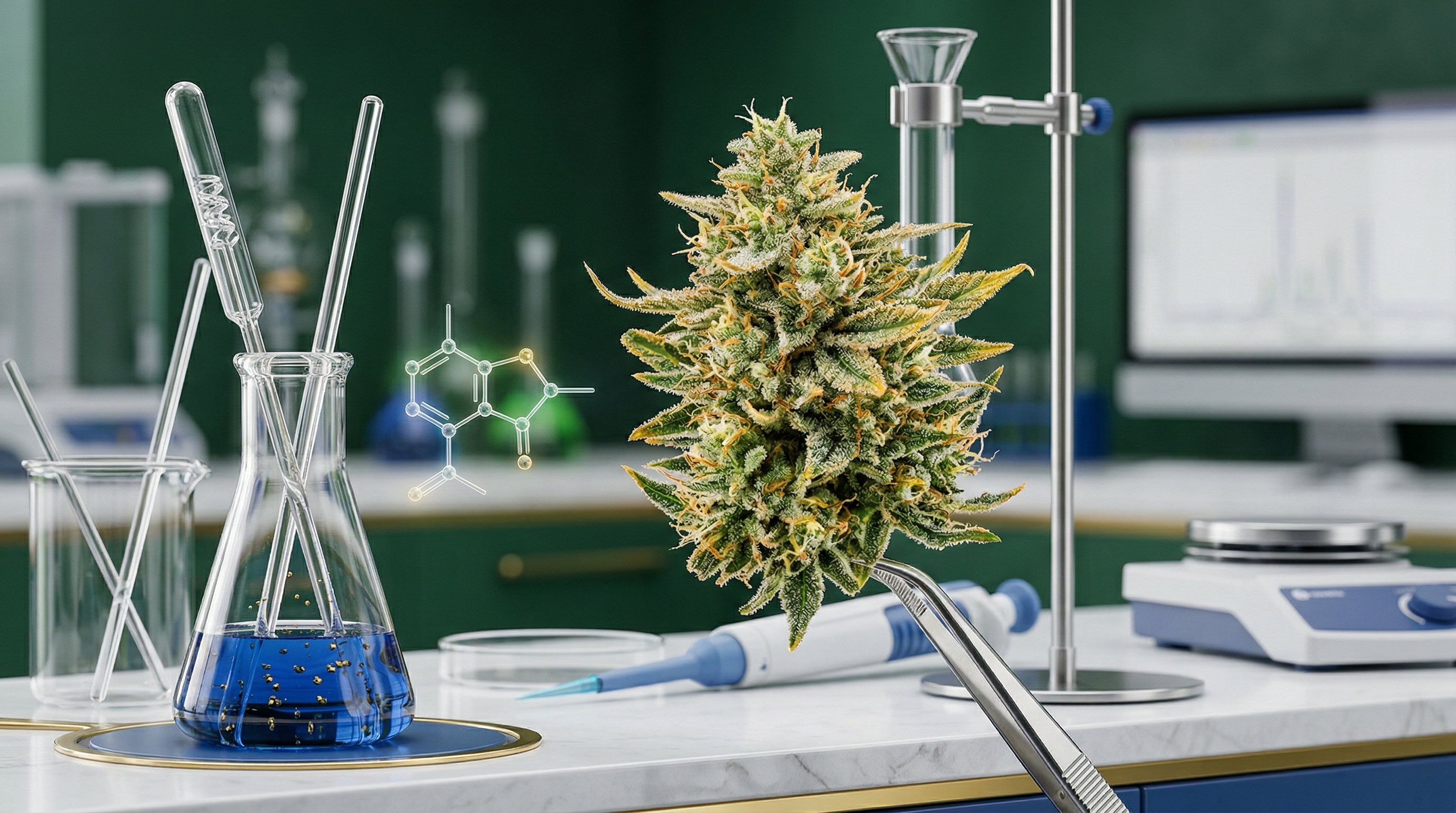
Every strain smells different because genetics and growing conditions set a unique mix of terpenes, sulfur compounds, esters, and other volatiles. Here’s a question that puzzled scientists for decades: how can one plant produce aromas ranging from fresh-squeezed lemons and ripe blueberries to diesel fuel, skunk spray, and aged cheese? Cannabis is one of the most aromatically complex plants on Earth, capable of producing over 200 distinct volatile compounds—more than coffee, hops, or lavender [Booth & Bohlmann, 2019].
And here’s the truly wild part: for most of cannabis research history, scientists could not fully explain the signature skunky smell. It was not until 2021 that researchers finally identified the family of molecules responsible—and the answer surprised nearly everyone in the field.
This is not just trivia. The aromatic profile of a cannabis strain is essentially a chemical fingerprint that can tell you a remarkable amount about what your experience might feel like. Those scent molecules—primarily terpenes, but also esters, flavonoids, and volatile sulfur compounds—do not just create smell. Many of them appear to actively shape the effects of cannabis through what researchers call the entourage effect.
So when you lean in and inhale the aroma of a fresh bud, your nose is doing something genuinely useful: it is reading a chemical preview of the experience ahead.
In this deep dive, we will explore exactly how cannabis creates its extraordinary range of aromas, what cutting-edge research has revealed about the molecules involved, and how you can use scent as a practical guide to choosing strains that match the experience you are looking for.
The Chemistry of Cannabis Smell
The Tiny Factories Behind Every Aroma
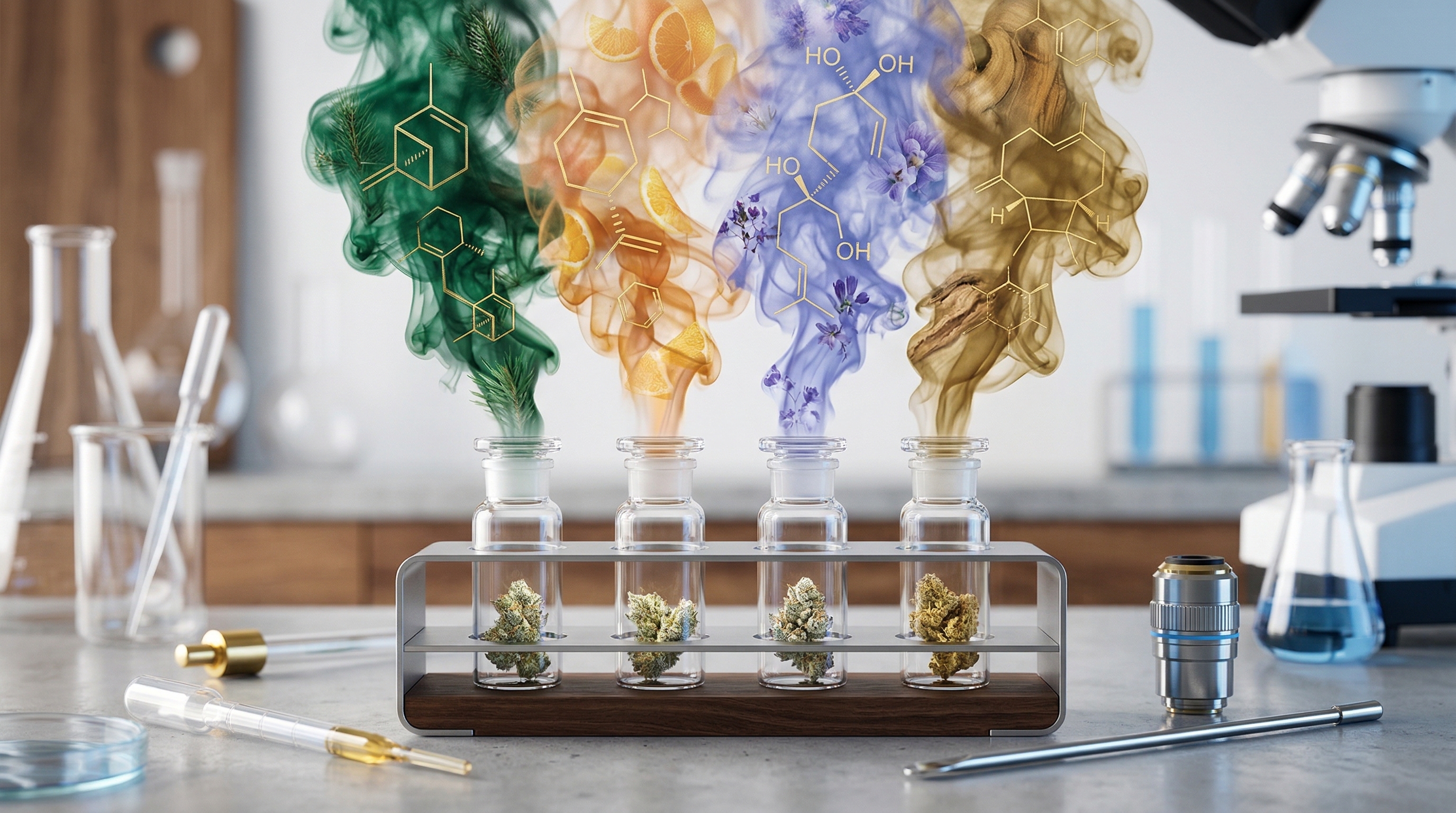
To understand why strains smell different, you need to meet the structures responsible: trichomes. These are the frosty, mushroom-shaped glands that coat cannabis flowers and, to a lesser extent, leaves. Think of each trichome as a miniature essential oil distillery. Inside these structures, the plant synthesizes and stores an extraordinary cocktail of volatile compounds.
The process begins with terpene biosynthesis—the biological pathway through which the plant builds its aromatic molecules. Cannabis produces terpenes through two primary metabolic pathways:
- The MEP pathway (methylerythritol phosphate) operates in the plant’s chloroplasts and primarily produces monoterpenes—small, lightweight molecules like limonene, myrcene, linalool, and alpha-pinene. These are the volatile, fast-evaporating compounds you smell the instant you open a jar.
- The MVA pathway (mevalonic acid) operates in the cytoplasm and produces sesquiterpenes—larger, heavier molecules like beta-caryophyllene and humulene. These tend to be earthier, spicier, and less immediately volatile [Booth et al., 2017].
Here is where genetics enter the picture. The cannabis genome contains a family of genes called TPS genes (terpene synthase genes), and different cultivars express different combinations of these genes at different levels. A study by Booth et al. (2017) identified over 30 TPS genes in the cannabis genome, and the specific combination that is “turned on” in any given strain determines its unique terpene recipe.
Imagine a mixing board in a recording studio. Every strain has access to roughly the same set of channels—myrcene, limonene, pinene, caryophyllene, and so on—but the faders are set at different levels. One strain might push myrcene to the front with limonene as a secondary note, creating a tropical, musky aroma. Another might lead with terpinolene and ocimene, producing a fresh, herbal, almost floral scent. Same instrument panel, radically different music.
But genetics are only part of the story. Environmental factors—what growers borrow from the wine world and call terroir—also shape the final aromatic profile. Light intensity, temperature, soil nutrients, UV exposure, and even stress from pests can all influence terpene production [Hazekamp et al., 2016]. This is why the same strain grown in two different facilities can smell noticeably different, and why researchers have found measurable within-strain aroma variation even among genetically similar plants [Naibauer et al., 2022].
The Molecules Scientists Missed for Decades
For years, researchers assumed that terpenes alone explained cannabis aroma. But there was always a gap in the science: no combination of known terpenes could fully replicate that unmistakable skunky, gassy, funky smell that defines many of the most popular strains on the market.
In 2021, a landmark study by Oswald et al. changed everything. The research team identified a previously overlooked family of molecules in cannabis: volatile sulfur compounds (VSCs), specifically a group called prenylated VSCs. The star player is a molecule called 3-methyl-2-butene-1-thiol (321 MBT) [Oswald et al., 2021].
This was a genuine scientific breakthrough. The compound 321 MBT is structurally similar to the molecules found in skunk spray and is also the compound responsible for the “skunked” off-flavor in light-struck beer. It is extraordinarily potent—detectable by the human nose at concentrations as low as parts per billion. That means even trace amounts can dominate a strain’s aroma.
The research team found that VSC concentration correlated strongly with perceived skunkiness in blind smell tests—while terpene profiles alone failed to predict it. Even more intriguing, VSC levels increased dramatically during the final weeks of flowering and peaked during the curing process, which may explain why properly cured cannabis often smells more pungent than freshly harvested material.
A follow-up study in 2023 by the same research group identified tropical volatile thiols (TVTs)—sulfur-containing compounds that explain the intense tropical fruit aromas in strains with names like Tropicana Cookies, Papaya, and Guava. These molecules, similar to those found in passion fruit and grapefruit, are present in minuscule quantities but have enormous aromatic impact [Oswald et al., 2023].
A 2024 study published in ACS Omega further confirmed these findings, demonstrating that even genetically similar cannabis phenotypes can possess diverse and distinct aromas driven by minor nonterpenoid compounds—not the dominant terpenes. The authors found newly identified “tropicannasulfur compounds” driving tropical aroma preferences that had no terpene analog [PMC11223244, 2024].
The full aromatic picture of cannabis now includes:
- Monoterpenes — limonene, myrcene, alpha-pinene, linalool, terpinolene (light, volatile, “top notes”)
- Sesquiterpenes — beta-caryophyllene, humulene, bisabolol (heavy, earthy, “base notes”)
- Volatile sulfur compounds (VSCs) — responsible for skunky, gassy, and tropical fruit aromas
- Esters — fruity, candy-like aromas in modern cultivars
- Flavonoids — including cannflavins unique to cannabis, contributing subtle aromatic notes
- Ketones and aldehydes — contributing floral, waxy, or green aromas
The practical implication is significant: standard cannabis lab tests that only report terpenes are telling you less than half the aromatic story. Research from 2025 published in PLOS One explicitly noted that “terpene profiles alone poorly predicted sensory character,” and that the limitations of chemical composition as a proxy for aroma quality should be clearly communicated to consumers [Isaacson et al., 2025].
How Your Nose Processes Cannabis Aroma
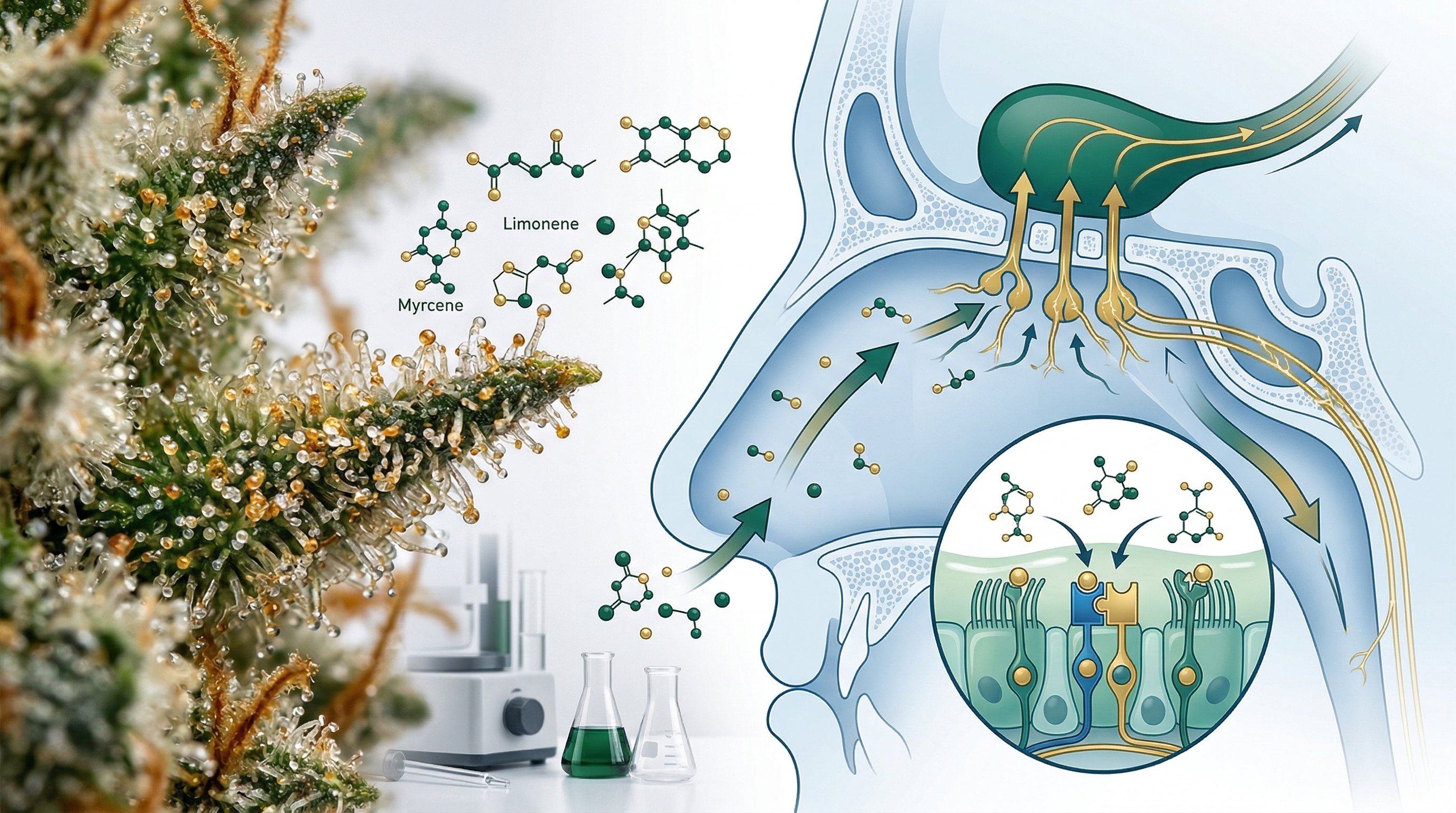
Understanding how we smell cannabis adds another dimension to the science. The olfactory system is remarkably sophisticated. When you inhale, aromatic molecules travel up your nasal cavity and bind to olfactory receptor neurons—specialized sensory cells that line the olfactory epithelium. Humans have approximately 400 different types of olfactory receptors, each tuned to detect different molecular structures.
Here is the counterintuitive part: your perception of a complex aroma like cannabis is not a simple sum of its parts. The same molecules can smell dramatically different depending on concentration and context. Beta-caryophyllene smells like black pepper at high concentrations but contributes a woodsy, hoppy note at low levels. Geraniol smells like roses in isolation but adds citrus complexity in a terpene blend.
This is why research has consistently found that aroma perception in cannabis does not map cleanly onto chemical composition [Isaacson et al., 2025]. Your brain is performing complex pattern recognition, weighing ratios and interactions between dozens of compounds simultaneously.
It also explains why trained human smell panels remain valuable even in an era of sophisticated chemical analysis. A 2025 study developed a 25-term descriptive aroma lexicon for cannabis—terms like “skunky,” “citrus,” “woody,” “animalic,” “candy-like,” and “earthy”—and demonstrated that human panelists could reliably differentiate strains based on orthonasal aroma in ways that chemical profiles alone could not fully predict [Isaacson & Shellhammer, 2025].
The practical upshot: your nose has been shaped by millions of years of evolution to detect aromatic nuance. Trust it.
The Entourage Effect: When Smell Predicts Experience
Here is where the science gets genuinely practical. There is growing evidence that the aromatic compounds in cannabis do not just create smell—they may actively modulate the effects you feel.
The entourage effect, a concept first proposed by Mechoulam and Ben-Shabat (1998) and later expanded by Russo (2011), suggests that cannabis compounds work synergistically. Terpenes, cannabinoids, and other volatile molecules may enhance, modify, or buffer each other’s effects in ways that isolated compounds cannot replicate.
Consider the evidence for specific terpenes:
- Myrcene, the most abundant terpene in many cannabis strains, has demonstrated sedative-like properties in animal models and may enhance THC’s ability to cross the blood-brain barrier [Russo, 2011]. This could explain why myrcene-dominant strains are consistently associated with deep relaxation and couch-lock.
- Beta-caryophyllene is unique among terpenes because it directly binds to CB2 cannabinoid receptors in the body’s endocannabinoid system [Gertsch et al., 2008]. It is technically both a dietary cannabinoid and a terpene—a dual identity that makes it one of the most pharmacologically interesting aromatic compounds in any plant.
- Limonene has shown anxiolytic (anti-anxiety) properties in both animal and preliminary human studies, and some researchers suggest it may enhance the absorption of other compounds through cell membranes [Russo, 2011].
- Linalool, the terpene responsible for lavender’s calming scent, has demonstrated anti-anxiety and sedative effects in animal models [Guzmán-Gutiérrez et al., 2015].
- Terpinolene is consistently associated with citrus and chemical sensory descriptors, and strains dominated by this terpene tend to cluster into distinct aromatic categories that consumers perceive as lighter, more energizing [Isaacson et al., 2025].
It is important to note that much of this research involves animal models and in vitro experiments, and we need more rigorous human clinical trials to fully confirm these mechanisms. But the pattern is consistent enough that many researchers now believe the aromatic profile of a strain is a meaningful predictor of its effects—more reliable than the indica/sativa classification that dominated cannabis culture for decades.
A 2020 study by Bidwell et al. found no significant correlation between THC content and subjective intoxication levels among experienced users, but did find that different strains with divergent terpene profiles produced measurably different experiences. As the PLOS One 2025 study explicitly noted: “aroma is the only known predictor of subjective enjoyment”—a striking finding that underscores just how central scent chemistry is to the cannabis experience.
This is the scientific foundation of the High Families system, which classifies strains by their terpene chemistry rather than by outdated botanical labels. When you detect bright citrus notes, you are likely detecting limonene—and that strain may belong to the Uplifting High family. Deep earthy and musky aromas signal myrcene dominance, pointing toward the Relaxing High. Peppery, spicy warmth suggests beta-caryophyllene and the Relieving High family.
Your nose, in other words, is a remarkably effective terpene analyzer.
The Aromatic Families: A Field Guide
Mapping Smells to Experiences
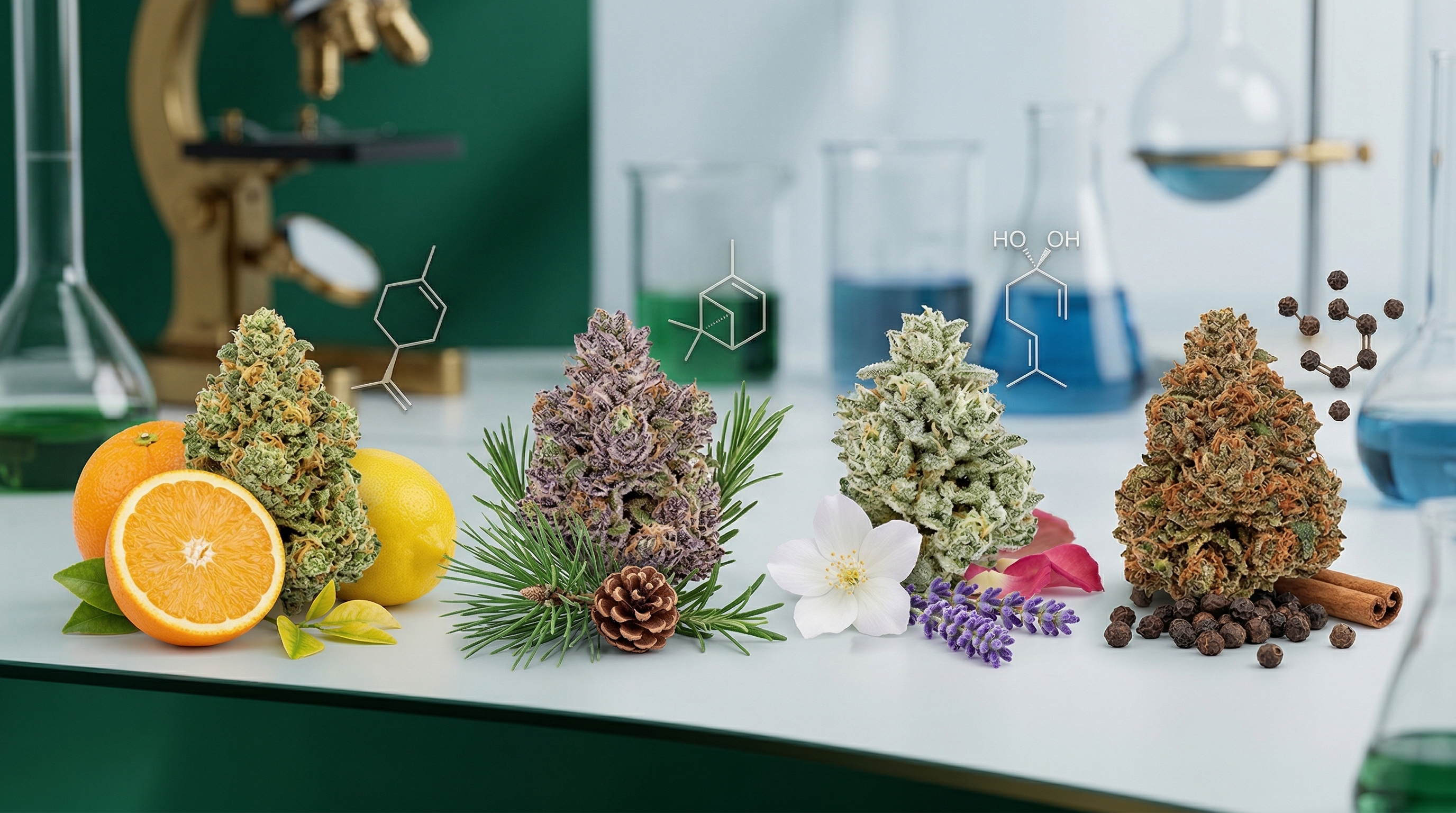
The aromatic diversity of cannabis resolves into several recognizable clusters when you train your nose. Here is a practical reference:
| What You Smell | Likely Dominant Compounds | Associated High Family | What You Might Expect |
|---|---|---|---|
| Citrus, lemon, orange, grapefruit | Limonene, linalool | Uplifting High | Mood elevation, social energy, creativity |
| Fresh herbs, floral, sweet, tropical | Terpinolene, ocimene | Energetic High | Focus, mental clarity, productivity |
| Earthy, musky, mango, tropical funk | Myrcene | Relaxing High | Deep calm, body relaxation, sleep |
| Black pepper, spice, cloves, wood | Caryophyllene, humulene | Relieving High | Physical comfort, body-focused effects |
| Skunk, fuel, gas, cheese | Volatile sulfur compounds | Varies | Typically high-THC, potent experiences |
| Complex, layered, multi-note | Multi-terpene blend | Entourage High | Full-spectrum, nuanced experience |
| Subtle, mild, clean | Low terpene concentration | Balancing High | Gentle effects, beginner-friendly |
The Major Terpenes: A Deep Profile
Myrcene (Beta-Myrcene) The single most abundant terpene in cannabis, responsible for the earthy, tropical, musky base note in many strains. Found naturally in mangoes, hops, lemongrass, and thyme. In cannabis, it has a distinctive herbal-musty character with a hint of tropical fruit. Strains like OG Kush, Blue Dream, and Granddaddy Purple are typically myrcene-dominant.
Limonene The bright citrus terpene—all lemon zest and orange peel. Naturally occurring in citrus rinds and used as a cleaning solvent in its isolated form. In cannabis it contributes an uplifting, mood-brightening quality. Strains like Lemon Haze, Super Lemon Haze, and Durban Poison often feature limonene as a leading terpene.
Caryophyllene (Beta-Caryophyllene) The spicy, peppery terpene that also doubles as a CB2 receptor agonist. Found in black pepper, cloves, and cinnamon. In cannabis it contributes warmth, depth, and a faintly woody character. The fact that it directly engages the endocannabinoid system makes it uniquely functional. Girl Scout Cookies, Bubba Kush, and Sour Diesel are examples of caryophyllene-forward strains.
Terpinolene Herbal, floral, and slightly citrusy—the least common of the “big five” terpenes but a dominant note in distinct strain families. Strains like Jack Herer, Ghost Train Haze, and Dutch Treat tend to be terpinolene-dominant. Notably, it is the terpene most consistently correlated with specific sensory descriptors in clinical research [Isaacson et al., 2025].
Linalool The lavender terpene—floral, clean, slightly spicy. Associated with calming effects in aromatherapy research, and in cannabis it tends to soften and round out other terpene profiles. Lavender Kush and LA Confidential are linalool-prominent examples.
Pinene (Alpha-Pinene) Sharp, fresh, unmistakably piney. Also found in rosemary, basil, and—unsurprisingly—pine trees. May act as an acetylcholinesterase inhibitor, potentially supporting memory and alertness [Russo, 2011]. Blue Dream and Pineapple Express tend to carry notable pinene content.
Ocimene Sweet, herbal, and woody with a slightly tropical edge. Less studied than other major terpenes but a significant contributor to the fresh, almost green aroma profiles of certain strains. Found in mint, parsley, and orchids.
Humulene Earthy, woody, and subtly herbal—the terpene that makes cannabis smell like hops (because it is found in abundance in hops). Often co-occurs with caryophyllene. Associated with appetite-suppressing properties in some research.
Practical Guide: Using Your Nose
How to Train Your Nose for Cannabis Aromas
Your olfactory system is trainable. Professional perfumers, sommeliers, and hop scientists develop extraordinary sensitivity through deliberate practice, and you can build meaningful cannabis aroma recognition with relatively simple habits.
Step 1: Smell before you grind. Gently squeeze the whole flower between your fingers and inhale. The first wave of aroma comes from the most volatile monoterpenes—these are your “top notes,” the bright, fresh, quickly evaporating impressions.
Step 2: Grind and smell again. Breaking open the trichomes releases a fuller aromatic spectrum, including heavier sesquiterpenes and those potent volatile sulfur compounds. This is the “heart” of the aroma—richer, deeper, more complex than the initial impression.
Step 3: Name your first impression. Is it bright and citrusy? Earthy and heavy? Spicy and warm? Sweet and fruity? Skunky and gassy? Your instinctive first reaction is usually picking up on the dominant terpene or VSC family. Match it to the table above.
Step 4: Keep a scent journal. Over time, tracking what you smell alongside the effects you experience builds a personal database that is far more useful than any strain name or THC percentage. Note the dominant impression, secondary notes, and what you end up feeling.
Why THC Percentage Is Not the Whole Story
This is one of the most practically important findings from aroma science: THC percentage alone is a poor predictor of your experience. The 2020 Bidwell study found no significant correlation between THC content and subjective intoxication. What varied meaningfully between strains was the terpene and minor cannabinoid profile—the very compounds your nose detects.
Two strains with identical 25% THC can produce remarkably different experiences based on their aromatic profiles. And a 2025 study confirmed that aroma—not potency—is the only known predictor of subjective enjoyment [Isaacson et al., 2025].
The practical upshot: follow your nose, not the label.
The bottom line: Cannabis aroma is a chemical preview of your experience. Learning to read it—even at a basic level—is one of the most useful skills you can develop as a cannabis consumer.
Getting the Most from Terpene Information
Most legal dispensaries now report terpene data on labels. Here is how to use it:
- Look for the top two or three terpenes. The dominant and secondary terpenes give you the most predictive information about aroma profile and likely effects.
- Cross-reference with the High Families. The High Families system maps directly to terpene chemistry, giving you a fast shorthand for what to expect.
- Note VSC-dominant strains. If you consistently love the most pungent, skunky strains, you may be a VSC connoisseur—a preference that standard terpene panels cannot fully explain but the emerging VSC science is beginning to illuminate.
- Keep a ratio perspective. A strain with 1.5% myrcene and 0.3% limonene is a very different experience than a strain with 0.8% myrcene and 0.9% limonene, even though both are “myrcene-dominant.”
FAQ
Why do some strains smell fruity while others smell like fuel?
Different aromatic compound families dominate in different strains. Fruity aromas often come from esters and tropical volatile thiols (TVTs)—sulfur compounds structurally related to those in passion fruit and grapefruit. Fuel-like or “gassy” smells are typically driven by other volatile sulfur compounds and certain terpene combinations like myrcene paired with caryophyllene [Oswald et al., 2023]. Genetics determine which compounds are produced at the highest concentrations.
Does the smell of cannabis change as it ages?
Yes, significantly. Monoterpenes, the lighter compounds behind bright, fresh aromas, evaporate first during storage and leave the heavier sesquiterpenes, so the smell shifts toward earthier, more muted notes. Proper storage in airtight, light-proof containers around 60-70°F slows that loss [Milay et al., 2020]. The characteristic old-weed smell is largely oxidized terpenes and degraded volatile sulfur compounds.
Can you tell whether a strain is indica or sativa from its smell?
Not reliably. The 2025 PLOS One lexicon study found that Type I (high-THC) and Type III (high-CBD) cannabis showed “overlapping sensory profiles,” though Type I was more frequently described as skunky, musty, and animalic, while Type III skewed toward citrus, fruity, and candy-like [Isaacson et al., 2025]. But the variability within each type is substantial. After decades of hybridization, the indica/sativa distinction is a poor predictor of aroma chemistry, just as it is a poor predictor of effects.
Why does the same strain sometimes smell different from batch to batch?
Multiple factors contribute. Genetic variation within named strains is well-documented—a 2022 study at Frontiers in Psychology found that even “genetically consistent” commercial strains can contain outlier plants with meaningfully different aroma profiles [Naibauer et al., 2022]. Growing conditions (light, temperature, nutrients, harvest timing), curing practices, and storage all also influence the final aromatic profile. This is why the cannabis concept of terroir matters: two batches of the same strain can smell quite different based on how and where they were grown.
Why do terpene labels sometimes not match what I smell?
Because terpene profiles alone do not fully predict aroma. As the most recent research makes clear, volatile sulfur compounds and other nonterpenoid molecules often drive the most distinctive aromatic impressions. A strain might be labeled with myrcene and caryophyllene as dominant terpenes while the sensory character you actually perceive is determined by trace-level VSCs that are below detection thresholds on standard lab panels [PMC11223244, 2024].
Key Takeaways
- Cannabis produces 200+ volatile compounds including terpenes, volatile sulfur compounds, esters, and flavonoids, making it one of the most aromatically complex plants on Earth.
- The “skunk” and “gassy” smells were unexplained until 2021, when prenylated volatile sulfur compounds (VSCs) were identified as the responsible molecules—not terpenes as previously assumed.
- Terpene profiles are shaped by genetics and environment. TPS genes determine what a strain can produce, while growing conditions (terroir) influence the final ratios and concentrations.
- Aromatic compounds may actively shape your cannabis experience through the entourage effect—beta-caryophyllene engages CB2 receptors directly, myrcene may enhance THC permeability, and limonene shows anxiolytic properties.
- Aroma, not THC percentage, is the only known predictor of subjective enjoyment. Standard lab panels only report terpenes and miss the VSCs and esters that drive many of the most distinctive aromas.
- The High Families system classifies strains by terpene chemistry, aligning with the emerging science that aromatic profiles predict effects better than indica/sativa labels or potency numbers.
- Your nose is trainable. Developing scent vocabulary—even just recognizing citrus vs. earthy vs. spicy—is one of the most practical consumer skills in cannabis.
Sources
- Booth, J. K., Page, J. E., & Bohlmann, J. (2017). Terpene synthases from Cannabis sativa. PLOS ONE, 12(3), e0173911.
- Booth, J. K., & Bohlmann, J. (2019). Terpenes in Cannabis sativa—From plant genome to humans. Plant Science, 284, 67–72.
- Gertsch, J., et al. (2008). Beta-caryophyllene is a dietary cannabinoid. Proceedings of the National Academy of Sciences, 105(26), 9099–9104.
- Guzmán-Gutiérrez, S. L., et al. (2015). Linalool and beta-pinene exert their antidepressant-like activity through the monoaminergic pathway. Life Sciences, 128, 24–29.
- Hazekamp, A., et al. (2016). The medicinal use of cannabis and cannabinoids — An international cross-sectional survey on administration forms. Journal of Psychoactive Drugs, 48(1), 36–47.
- Isaacson, S. E., & Shellhammer, T. (2025). Beyond potency: A proposed lexicon for sensory differentiation of Cannabis sativa L. aroma. PLOS One, 20(10), e0335125.
- Naibauer, S. K., et al. (2022). Human olfactory discrimination of genetic variation within Cannabis strains. Frontiers in Psychology, 13, 942694.
- Oswald, I. W. H., et al. (2021). Identification of a new family of prenylated volatile sulfur compounds in Cannabis revealed by comprehensive two-dimensional gas chromatography. ACS Omega, 6(47), 31667–31676.
- Oswald, I. W. H., et al. (2023). Minor, nonterpenoid volatile compounds drive the aroma differences of exotic Cannabis. ACS Omega, 8(42), 39203–39216.
- PMC11223244 (2024). Nonterpenoid Chemical Diversity of Cannabis Phenotypes Predicts Differentiated Aroma Characteristics. PMC / ACS, PMID 38973868.
- Russo, E. B. (2011). Taming THC: potential cannabis synergy and phytocannabinoid-terpenoid entourage effects. British Journal of Pharmacology, 163(7), 1344–1364.
- Bidwell, L. C., et al. (2020). Association of naturalistic administration of cannabis flower and concentrates with intoxication and impairment. JAMA Psychiatry, 77(8), 787–796.


