The Terpene Smell Test: Can Your Nose Predict Your High?
Your nose may be your best guide to choosing cannabis. Explore the science of how terpene aromas hint at the experience ahead.

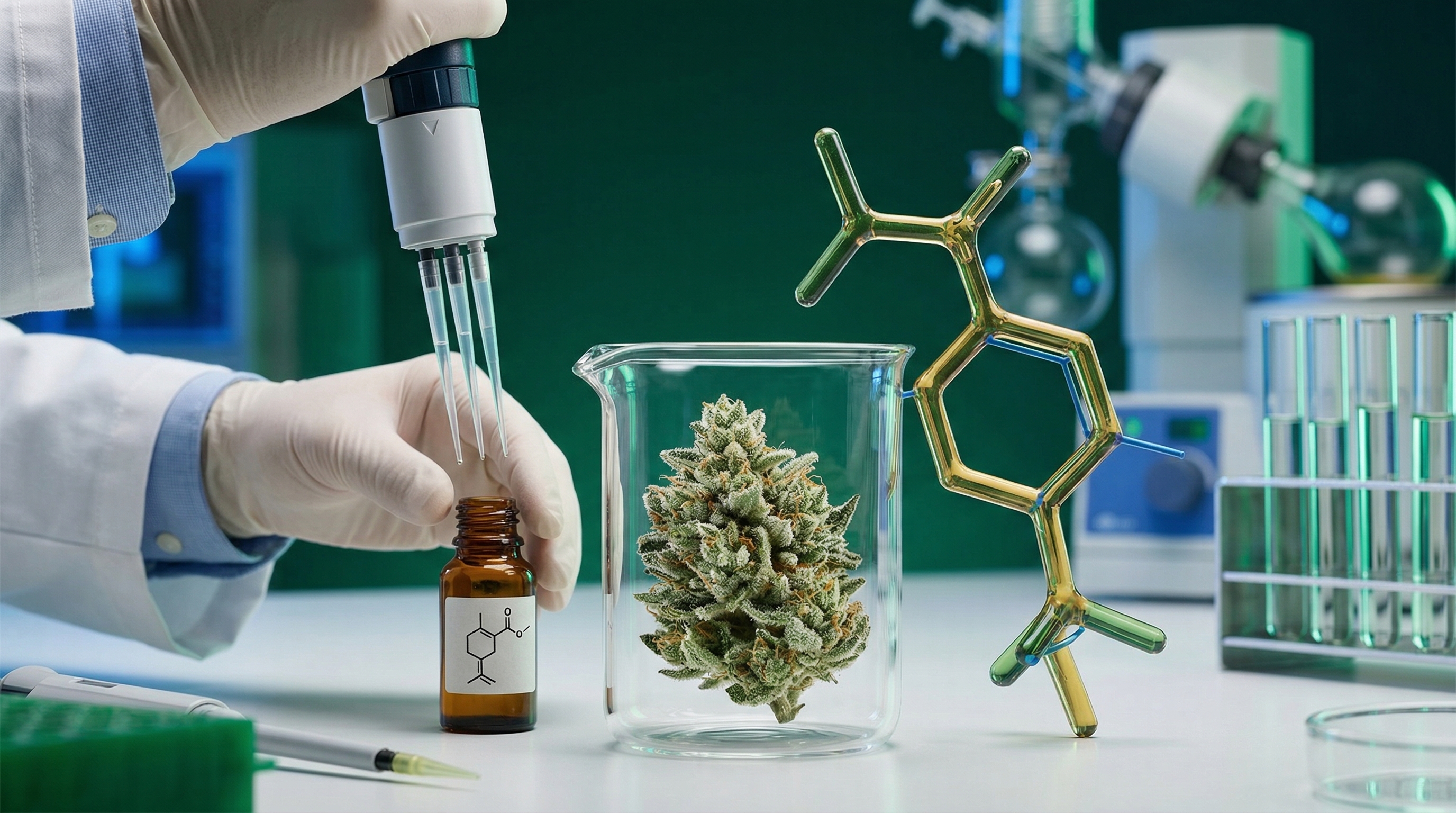
Here’s something you’ve probably noticed but never fully questioned: when you open a jar of cannabis and take a deep inhale, your body has an almost instant opinion. Some strains smell like a citrus grove on a summer morning and make you want to lean in. Others hit with a deep earthy musk that immediately signals something heavier. And weirdly, the ones that smell best to you often tend to produce the experience you enjoy most.
Is that coincidence, or is your nose actually doing something useful?
It turns out there’s real science behind the idea that aroma can guide your cannabis choices — and that the relationship between smell and effect is more nuanced, and more complicated, than most budtenders let on.
Why Terpenes Are the Bridge Between Smell and Experience
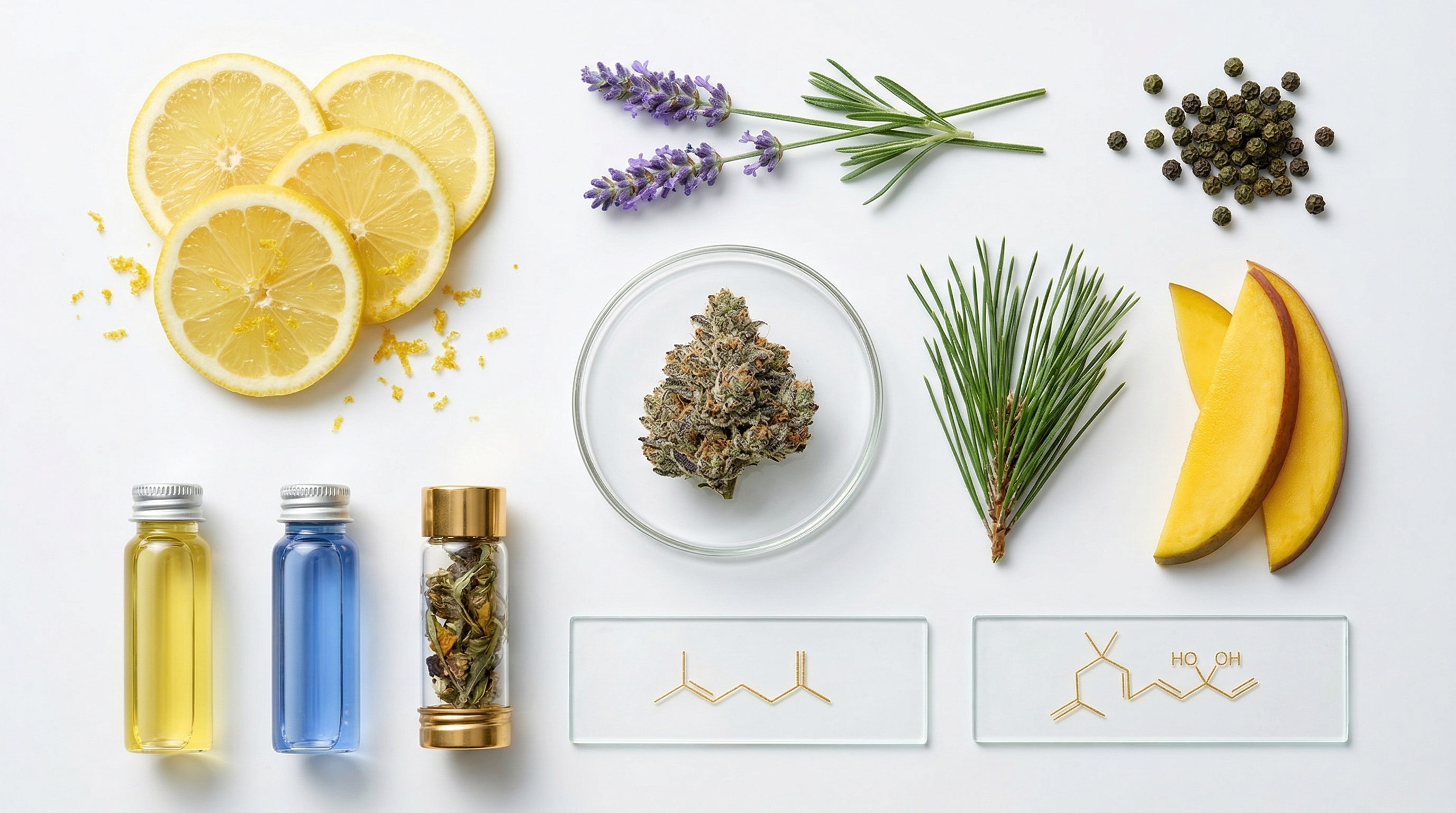
The compounds responsible for cannabis aroma are terpenes — volatile organic molecules produced in the same trichome glands that make THC and CBD. They’re not unique to cannabis. Terpenes are what make lavender calming, black pepper biting, and pine forests clarifying. Over 200 terpenes have been identified in cannabis, though most strains are dominated by a handful of major players [Booth & Bohlmann, 2019].
Think of terpenes as the personality layer of cannabis. THC and CBD are the main structural components, but terpenes are what make each strain smell, taste, and feel distinct. Two strains with identical THC percentages can produce wildly different experiences because their terpene profiles differ. This is why the indica/sativa framework has largely collapsed — the more useful question is: what’s the terpene fingerprint?
The most commonly encountered cannabis terpenes, and the aromas they carry:
| Terpene | Aroma Signal | Associated Effects |
|---|---|---|
| Myrcene | Earthy, musky, mango | Sedating, relaxing, body-heavy |
| Limonene | Citrus, lemon peel, orange | Mood-lifting, energizing, anti-anxiety |
| Linalool | Floral, lavender | Calming, anti-anxiety, sleep-supporting |
| Alpha-Pinene | Pine, rosemary, fresh | Alertness, focus, memory |
| Beta-Caryophyllene | Black pepper, spice, wood | Anti-inflammatory, stress relief |
| Terpinolene | Herbal, fresh, slightly citrus | Uplifting, creative, cerebral |
| Humulene | Earthy, woody, hops | Appetite suppression, anti-inflammatory |
The Olfactory Shortcut Your Brain Uses
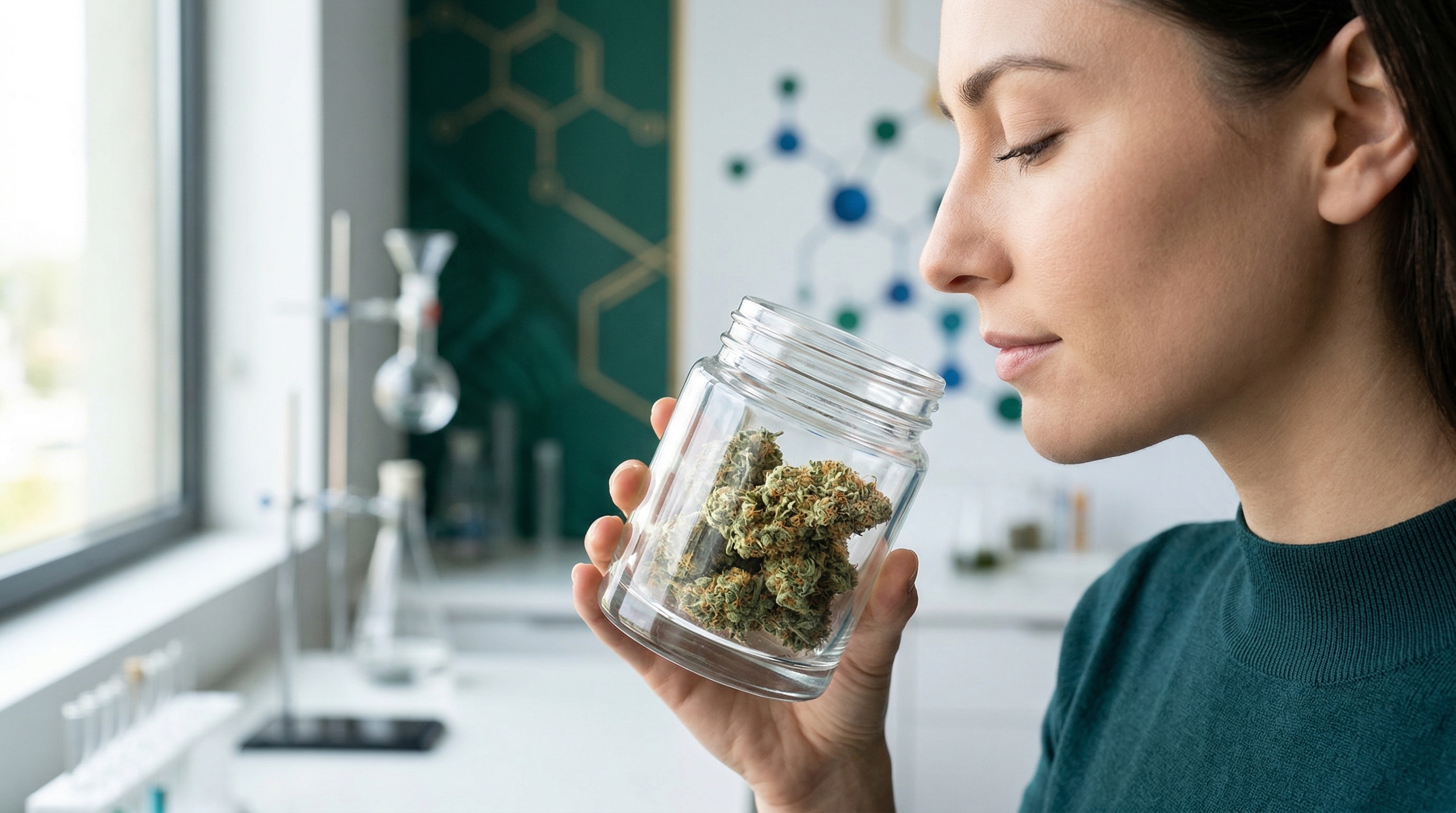
When you inhale the scent of a cannabis flower, terpene molecules bind to olfactory receptors high in your nasal cavity. These receptors send signals directly to the limbic system — the brain region that governs emotion, memory, and arousal — without the usual routing through the thalamus that other senses use [Herz, 2009].
This is why smells trigger emotional responses before you’ve consciously identified what you’re smelling. Your brain is evaluating the terpene chemistry in real time, translating molecular information into gut reactions: “I want more of this” or “this isn’t for me.”
This olfactory-limbic pathway is also why aromatherapy has been used medicinally for millennia. Lavender (linalool) has measurable anxiolytic effects. Rosemary (pinene) supports cognitive performance. Citrus (limonene) reliably elevates mood. These aren’t placebo effects — they reflect genuine pharmacological activity that begins at your nose.
For cannabis, this means your immediate scent response is giving you real biochemical data. The strains you’re instinctively drawn to by smell may actually signal better compatibility with your endocannabinoid system.
What the Research Actually Says
The idea that terpenes modulate the cannabis experience — not just its smell — is central to the entourage effect. Dr. Ethan Russo’s foundational 2011 paper in the British Journal of Pharmacology argued that terpenes like myrcene, limonene, and linalool modify how cannabinoids interact with the endocannabinoid system, potentially shaping whether a high feels anxious or calm, heavy or clear [Russo, 2011].
More recent data has started quantifying this. A 2021 study in Psychoactives found that participants’ subjective cannabis experiences correlated more strongly with terpene profiles than with THC content alone [LaVigne et al., 2021]. The terpene composition appeared to be a better predictor of how people felt than the number on the label — a striking finding that challenges a decade of potency-first marketing.
On the aroma side, a 2020 review in Chemical Senses noted that hedonic responses to plant volatiles — whether we find a scent pleasant or unpleasant — may reflect an evolved mechanism for detecting useful or harmful compounds [Keller, 2020]. In other words, liking a smell may not be arbitrary. It may reflect something your biology already knows.
The Honest Limits of Your Nose
Here’s where it’s important to be direct about what the science actually shows — including the parts that complicate the simple “smell = prediction” narrative.
A landmark study published in PLOS One in October 2025 by researchers at Oregon State University is the most rigorous examination of cannabis aroma to date. The team built a validated 25-word aroma lexicon from 91 flower samples evaluated by a trained sensory panel. Four distinct scent clusters emerged: fruit/berry/candy; citrus/chemical; cheesy/vomit-fecal; and a funky blend of earthy, fuel, tea, and nutty notes [Shellhammer et al., 2025].
The finding that reshaped the conversation: terpene chemistry alone poorly predicted sensory perception. The chemical clusters identified in lab analysis did not match how the panel actually described the smells. Terpinolene was the only compound consistently associated with its expected sensory descriptors (citrus and chemical). Limonene — despite its cultural association with “citrus” — did not reliably produce citrusy perception. Volatile sulfur compounds, not terpenes, appear to drive much of the skunky character. And a growing body of work suggests that minor nonterpenoid volatiles — esters, aldehydes, thiols — drive many of the most distinctive aromas in exotic cultivars [Oswald et al., 2023].
The takeaway is not that terpenes don’t matter. They clearly do, both aromatically and pharmacologically. The takeaway is that a terpene percentage on a label is an incomplete proxy for what you’ll actually smell, and what you’ll actually smell is itself an incomplete proxy for what you’ll actually feel. The map is not the territory.
This matters practically: a strain labeled “high limonene” may not smell particularly citrusy to your nose. And a strain that smells deeply citrusy may have that quality driven by nonterpenoid compounds the label doesn’t mention. Your nose, in this sense, may actually be more accurate than the lab printout — because it’s sampling the full aromatic complexity, not just the terpene fraction.
How to Use Your Nose Alongside Lab Data
The most useful framework is to treat smell and lab data as complementary signals, not competing ones.
What lab data tells you:
- Which terpenes are present and at what concentration
- Baseline cannabinoid levels (THC, CBD, CBG)
- Freshness indicators (terpene levels drop with age — below 1% total terpenes suggests significant degradation)
What your nose tells you:
- The full aromatic picture, including nonterpenoid volatiles the lab may not report
- Your personal hedonic response — whether this chemistry suits your biology
- Freshness quality — complex, pungent aroma means terpenes are intact; hay or grass smell means they’ve degraded
Here’s a simple exercise to build your smell-to-experience vocabulary:
- Smell before reading the label. Close your eyes. Let your limbic system form its first impression.
- Name the dominant notes. Citrus? Floral? Earthy? Spicy? Pine? Don’t overthink it — your first impression is the data.
- Match your impression to a High Family. Bright citrus points toward Uplifting High. Deep earthy musk points toward Relaxing High. Spicy and peppery suggests Relieving High. Complex and layered often means Entourage High.
- Note your gut reaction. Does the smell feel energizing or settling? Your limbic system is giving you a prediction.
- Track your results over time. The patterns that emerge between what your nose loves and what your body responds to are your personal terpene compatibility map.

Pro tip: If a strain smells complex and hard to pin to a single category — floral and peppery and earthy at the same time — you may be looking at a rich multi-terpene profile. These often deliver the most nuanced experiences, and are frequently where the entourage effect is most pronounced.
The Aroma-to-Effect Cheat Sheet
| Dominant Smell | Likely Primary Terpene(s) | Experience Tendency |
|---|---|---|
| Bright citrus, lemon peel | Limonene | Uplifting, mood-elevating, social |
| Fresh pine, rosemary | Alpha-pinene | Alert, focused, clear-headed |
| Lavender, floral | Linalool | Calm, anxiety-reducing, sleep-leaning |
| Earthy, musky, mango | Myrcene | Sedating, body-heavy, relaxing |
| Black pepper, spice | Beta-caryophyllene | Stress-relieving, anti-inflammatory |
| Herbal, fresh, slightly piney | Terpinolene | Uplifting, creative, cerebral |
| Earthy, woody, hoppy | Humulene | Mellow, appetite-suppressing |
| Skunk, fuel, complex | Volatile sulfur compounds + nonterpenoids | Intensity varies; distinctive chemotype |
Use this as a starting guide, not a rulebook. Individual variation in olfactory receptors is significant — you literally smell the world differently than the person next to you, and your personal associations with scents shape your responses.
Key Takeaways
- Terpenes link aroma to effect through the entourage effect — the same molecules that create a strain’s scent modulate how cannabinoids interact with your nervous system [Russo, 2011].
- Your olfactory system bypasses normal processing delays, sending terpene data directly to your emotional brain via the limbic system. Your gut reaction to a scent is real biochemical information.
- Terpene labels are incomplete proxies for aroma. The 2025 OSU research showed that terpene chemistry alone poorly predicts what a strain actually smells like [Shellhammer et al., 2025]. Your nose samples the full picture, including nonterpenoid volatiles that lab reports may omit.
- Aroma preference may signal compatibility. Research suggests that the strains you’re instinctively drawn to by scent may align with the effects you respond to best.
- Use smell alongside, not instead of, data. The most informed cannabis consumers combine their nose’s instinct with terpene lab reports, cannabinoid levels, and personal experience history.
FAQs
Can I reliably tell how a strain will affect me by smell alone?
Not with precision — but with more accuracy than most people realize. Terpene aromas correlate with effect profiles, and your olfactory system is detecting the full chemical picture, including compounds that lab terpene panels don’t report. A strain that smells like bright citrus is genuinely more likely to deliver uplifting effects than one that smells deeply earthy. Think of it as a strong, calibrated hint rather than a guarantee.
Why do some strains smell incredible to me but unpleasant to my friend?
Individual olfactory receptor genetics vary significantly. You literally smell the world differently than the person next to you — studies estimate that up to 30% of olfactory receptor genes vary between individuals [Hasin-Brumshtein et al., 2018]. Combined with personal associations and neurological history, your unique receptor profile shapes both what you perceive and what you find pleasant. This variation is actually useful: your personal preferences may reflect your body’s individual terpene compatibility.
Is the smell test more useful than THC percentage for predicting experience?
They measure different things and are best used together. THC percentage tells you about intensity potential, but research suggests terpene profiles are better predictors of qualitative experience — the character of the high, not just its strength [LaVigne et al., 2021]. A 28% THC strain dominated by myrcene and a 22% strain with high limonene and pinene will feel completely different even though the first appears “stronger” on paper.
Does the smell change after grinding or combustion?
Yes, meaningfully. Grinding exposes more surface area and releases additional volatile terpenes — sometimes revealing secondary notes you didn’t catch from the intact bud. Heat transforms the terpene profile further, as different terpenes volatilize at different temperatures (myrcene at 168°C, limonene at 176°C, linalool at 198°C). The initial sniff is your baseline; the full aromatic picture unfolds through the experience.
What does it mean if the cannabis smells like hay or has no aroma?
Terpenes are volatile — they degrade with exposure to air, light, and heat. A hay or grass smell typically indicates that terpenes have significantly degraded, either through poor cure, old age, or improper storage. Total terpene content below 1% on a lab report suggests similar degradation. Fresh, quality flower should hit you with a complex, assertive aroma the moment the jar opens.
Sources
- Booth, J.K. & Bohlmann, J. (2019). “Terpenes in Cannabis sativa — From plant genome to humans.” Plant Science, 284, 67–72. DOI: 10.1016/j.plantsci.2019.03.022
- Russo, E.B. (2011). “Taming THC: potential cannabis synergy and phytocannabinoid-terpenoid entourage effects.” British Journal of Pharmacology, 163(7), 1344–1364. PMID: 21749363
- LaVigne, J.E. et al. (2021). “Cannabis terpenes act on cannabinoid receptors and are not mere distractors.” Scientific Reports, 11, 8232. DOI: 10.1038/s41598-021-87740-8
- Herz, R.S. (2009). “Aromatherapy facts and fictions: a scientific analysis of olfactory effects on mood, physiology and behavior.” International Journal of Neuroscience, 119(2), 263–290. PMID: 19125379
- Keller, A. (2020). “Olfactory perception of chemically diverse molecules.” Chemical Senses, 45(8), 609–617. DOI: 10.1093/chemse/bjaa054
- Shellhammer, T. et al. (2025). “Beyond potency: A proposed lexicon for sensory differentiation of Cannabis sativa L.” PLOS One. DOI: 10.1371/journal.pone.0319844
- Oswald, I.W.H. et al. (2023). “Minor, nonterpenoid volatile compounds drive the aroma differences of exotic Cannabis.” ACS Omega, 8(42), 39203–39216. DOI: 10.1021/acsomega.3c05988
- Hasin-Brumshtein, Y. et al. (2018). “Human odorant receptors of the large OR9 family.” Scientific Reports, 8, 15513. DOI: 10.1038/s41598-018-33870-5


