What Are Moon Rocks: The Complete Guide to Cannabis's Most Potent Flower
Moon rocks combine flower, hash oil, and kief to hit 50–90% THC. Learn what they are, their origin, how to smoke them safely, and how to make your own.

Heads up before you read: Moon rocks typically test between 50–90% THC — three to five times stronger than average flower. This guide is for cannabis-experienced adults who already understand their tolerance. If you’re brand new to cannabis, start with beginner-friendly flower first and come back here when you’re ready.
What You’ll Learn
Moon rocks are cannabis’s most potent flower product. By the end of this guide, you’ll understand exactly what they are, where they came from, how to smoke them safely, and how to make your own at home. More importantly, you’ll know how to approach them without accidentally sending yourself to the moon with no return ticket.
What Exactly Are Moon Rocks?
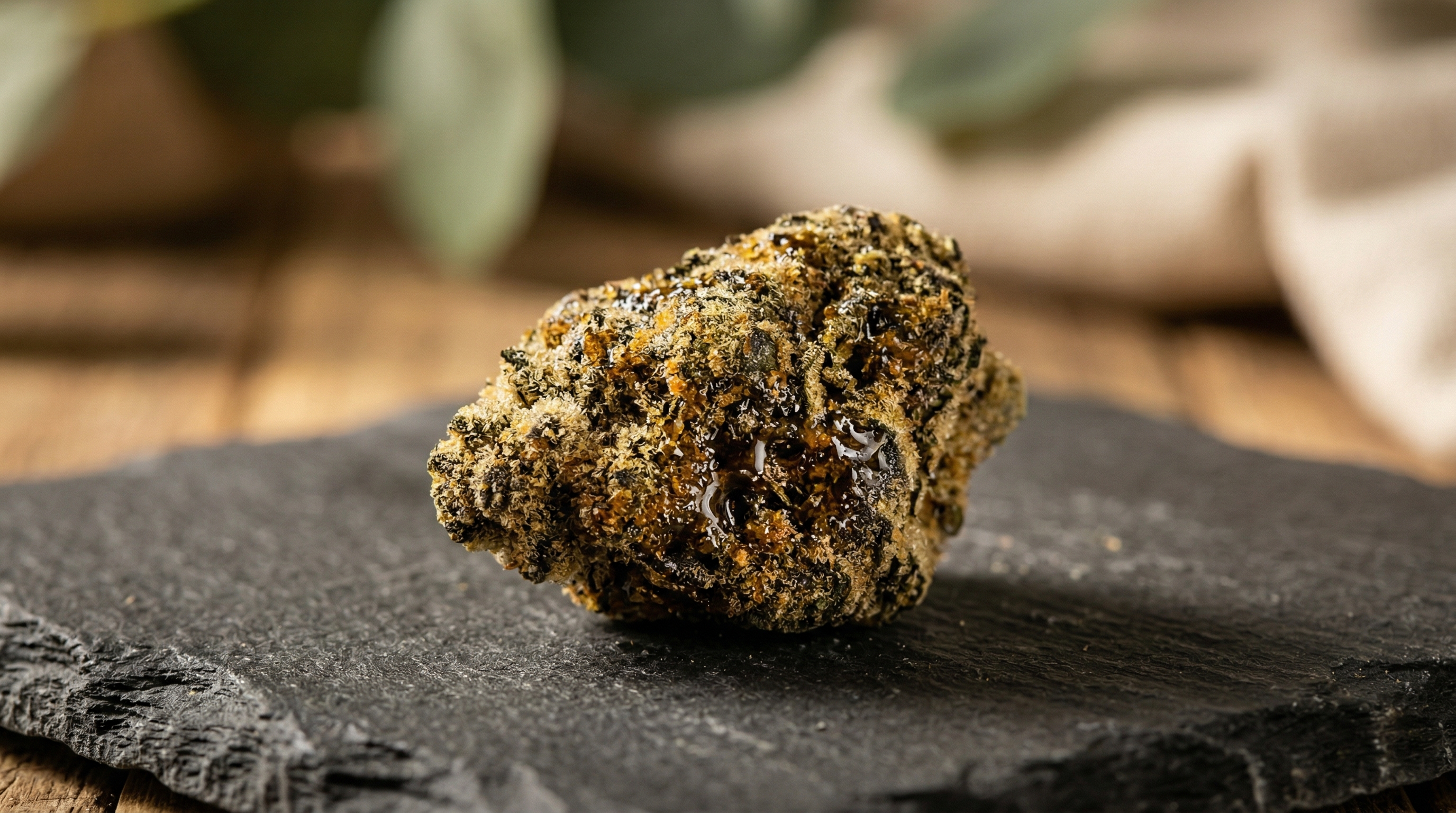
Moon rocks are cannabis flower buds that have been coated in concentrate (usually hash oil or distillate) and then rolled in kief — the trichome crystals that collect at the bottom of your grinder. The result is a dense, shimmering nugget that looks like it was pulled straight from the lunar surface, hence the name.
What makes them so potent is simple math: you’re stacking three forms of cannabis on top of each other.
| Layer | Component | Typical THC |
|---|---|---|
| Base | Cannabis flower | 15–30% |
| Coating | Hash oil or concentrate | 60–90% |
| Outer shell | Kief | 50–70% |
| Combined | Moon rock | 50–90% |
That’s roughly 3–5 times stronger than the dispensary flower most people are used to. A single hit can equal several normal bowl-packs. That’s not a metaphor — it’s chemistry.
Because moon rocks combine flower, concentrate, and kief, they can deliver what’s known as the entourage effect — cannabinoids, terpenes, and flavonoids working together for a broader, more layered experience. The key word is can: this depends heavily on what concentrate you use. A distillate-coated moon rock has almost no terpenes in the oil layer (they’re stripped during processing), which undermines the entourage effect the label might suggest. A live resin or rosin-coated moon rock preserves the terpene profile and delivers a more cohesive full-spectrum experience — and commands a higher price.
One more thing worth knowing upfront: most moon rocks contain essentially zero CBD. CBD appears to modulate some of THC’s anxiogenic effects. If you’re prone to anxiety or paranoia with high-THC products, that lack of CBD buffer at these concentrations is a meaningful risk factor. Check your ratio before you buy.
Depending on the strains and concentrates used, moon rocks can land in virtually any High Family, though many lean toward the Relaxing High or Entourage High territory due to their intensity.
The Origin Story: Kurupt, Dr. Zodiak, and the Birth of Moon Rocks
Moon rocks didn’t just materialize from the cosmos. They have a very specific origin story rooted in West Coast hip-hop culture.
Around 2013–2014, rapper Kurupt (Ricardo Brown) — best known for his work with Snoop Dogg, Dr. Dre, and 2Pac — collaborated with Dr. Zodiak (Daniel Laughlin) to create a branded cannabis product unlike anything on the market. They called it “Kurupt’s Moonrock”.
The original formulation used Girl Scout Cookies flower as the base, coated in hash oil and rolled in thick kief. It became a sensation almost immediately — referenced by artists like Cardi B and Lil Wayne, endorsed by Snoop Dogg himself, and celebrated at the High Times Cannabis Cup.
Dr. Zodiak later described the product as combining his passion for cannabis with a vision for what premium, branded cannabis could look like before legalization made the conversation mainstream. The brand eventually partnered with 1933 Industries for national distribution.
Today, “moon rocks” is a generic term used across the cannabis industry. Countless dispensaries produce their own versions with different strains, concentrates, and kief sources. Some premium craft versions use a single cultivar for all three layers, preserving a unified terpene profile.
It’s worth being direct about something: moon rocks originated in Black hip-hop culture, and that context often gets stripped away as the product goes mainstream. When you’re buying dispensary moon rocks, you’re consuming a product that Kurupt and Dr. Zodiak built. The least the industry can do is remember where it came from.
A note on lab testing: if you’re buying moon rocks from a dispensary, ask how the THC percentage was determined. Some states require testing of the finished multi-layer product; others only test the individual components separately, and the final potency figure is a calculated estimate. Those numbers can be imprecise. Treat the label as a directional guide, not a precise measurement.
How to Smoke Moon Rocks Safely
Moon rocks require a different approach than flower. Here’s exactly what to do — and what to avoid.
The Right Tools
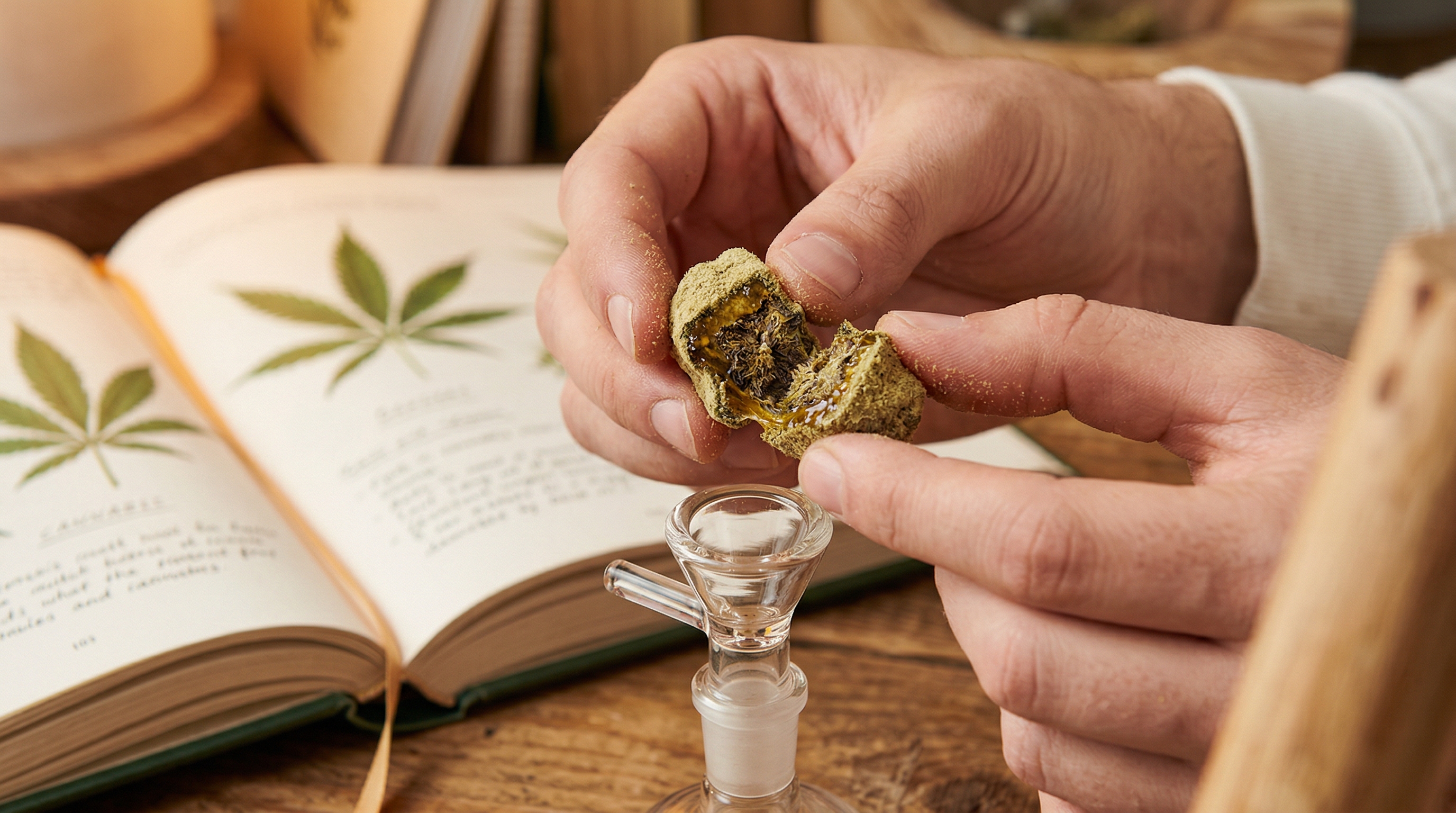
Use a glass pipe, bong, or bubbler. Moon rocks burn slowly and unevenly. Water filtration from a bong or bubbler helps cool the thick, oil-heavy smoke. They’re also your best bet for portion control.
Do not use a grinder. Moon rocks will gum up the mechanism instantly and you’ll lose most of the kief coating in the process. Use scissors or your fingers instead.
Do not roll them in joints. Despite social media content suggesting otherwise, moon rocks burn unevenly in joints, can clog the paper, and produce harsh, inconsistent pulls. Glass is the way to go.
Step-by-Step: Your First Moon Rock Session
- Break off a small piece — About the size of a pea. Seriously, that’s plenty for your first time.
- Layer it on top of regular ground flower in your bowl. The dry flower underneath helps it stay lit, since the concentrate layer burns differently than plain bud.
- Use a lighter, not a torch. Torches run hot and destroy terpenes. A standard lighter lets you control the burn.
- Take one small hit. Put the pipe down. Set a timer for 15 minutes.
- Wait. Moon rocks are dense and slow-releasing. The full effects may take 15–30 minutes to develop, especially if you’re not used to high-potency products.
- Reassess before going back for more. If you feel good after 15 minutes — sit with it. If you want a little more, take another small hit and wait again.
Dosing warning: Even seasoned consumers report being surprised by how long and intensely moon rocks hit. The concentrate layer means the THC absorbs differently than flower alone. One small session can last 4–6 hours for some people.
How to Make Moon Rocks at Home
Making your own moon rocks is genuinely satisfying — and it lets you choose your starting materials intentionally. Here’s how.
What You’ll Need
Required:
- Dense, well-cured cannabis nugs (1–2 grams each — loose, airy flower falls apart)
- Cannabis concentrate — hash oil, CO2 oil, or distillate (about 1–2 grams per 3.5g of flower)
- Kief — at least 1–2 grams (collect from your grinder catch over time, or purchase separately)
- Small tongs or tweezers — for handling without losing kief
- Parchment paper — for drying without sticking
- A liquid dropper or small brush — for even concentrate application
Optional:
- A warming plate or hair dryer — to thin thick concentrates for easier coating
- Latex or nitrile gloves — keeps your hands clean and preserves trichomes
- A small tray — to catch and recollect excess kief
Step 1: Choose Your Flower
Pick dense, compact buds — roughly grape-sized. Loose, fluffy flower absorbs too much oil and collapses under the weight of the coating.
Think about which High Family experience you’re targeting. Want an uplifting moon rock? Start with a limonene-rich sativa-leaning strain. After deep body relaxation? A myrcene-dominant base will set the tone. The base flower drives more of the terpene experience than most people expect.
Time: 5 minutes
Step 2: Prepare Your Concentrate
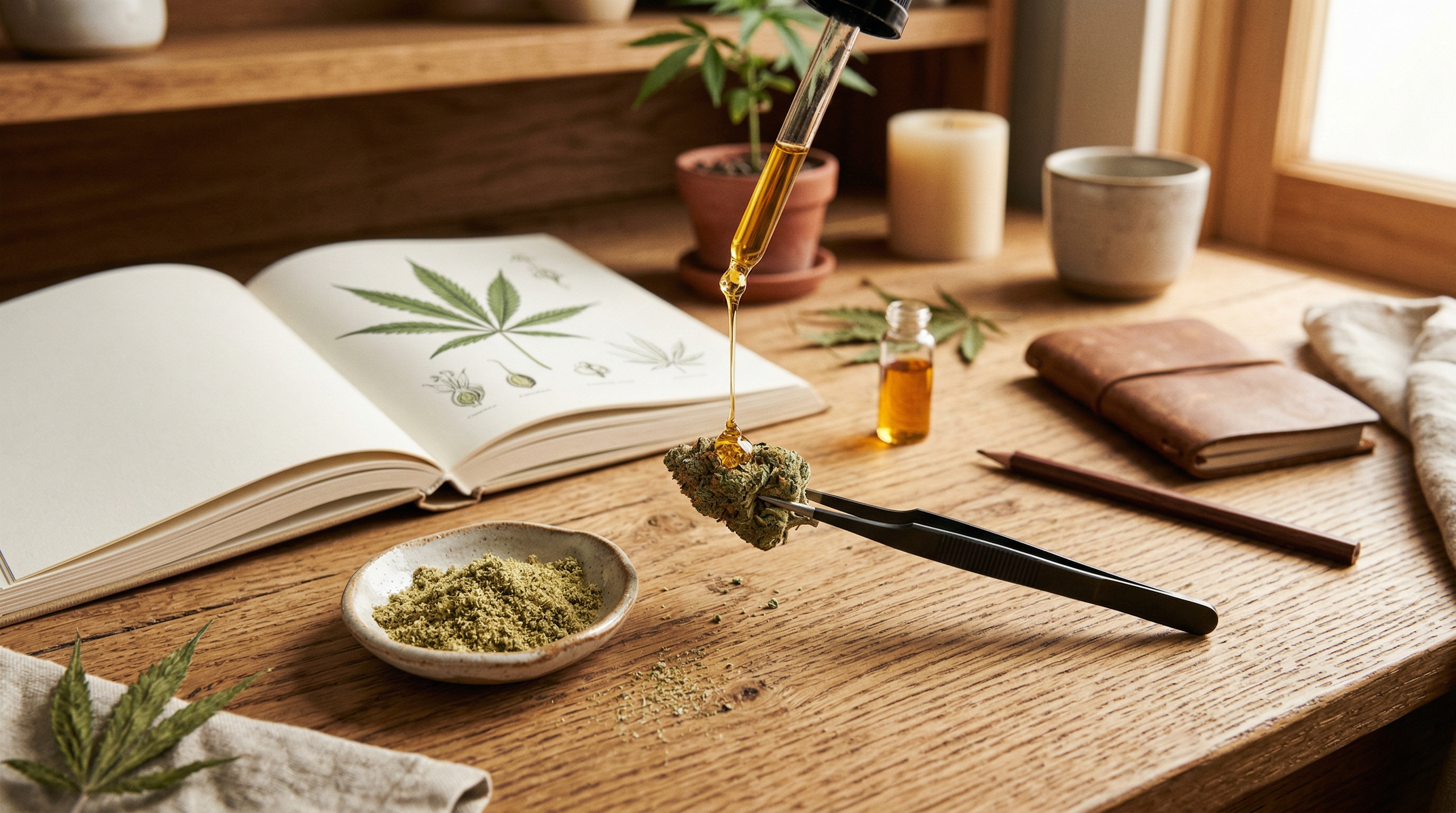
If your hash oil or distillate is thick, gently warm it until it reaches a honey-like consistency. Place the container in warm water for a few minutes, or use a hair dryer on low. You want it thin enough to spread but not so runny it drips off.
- Critical: Keep temperatures below 200°F (93°C). Overheating degrades cannabinoids and terpenes — the good stuff you’re trying to preserve.
Time: 5–10 minutes
Step 3: Coat the Bud
Hold the nug with tongs and apply concentrate evenly across the entire surface with a brush or dropper. Rotate as you go. Aim for thorough but not excessive coverage — like glazing a donut, not drowning it.
- Visual cue: Glossy and wet, not dripping.
- Common mistake: Too much oil makes the final product burn poorly and smoke harshly. Less is more.
Time: 5–10 minutes
Step 4: Roll in Kief
While the concentrate is still tacky, roll the nug in a tray of kief, pressing gently so it adheres. Every surface should be frosty. Pale, crystalline, no green showing through — that’s your target.
Time: 5 minutes
Step 5: Dry for 24 Hours
Set your moon rocks on parchment paper in a cool, dry place and leave them alone for at least 24 hours. The concentrate needs to set and bind the kief firmly to the flower. Rushing this results in rocks that crumble and shed kief everywhere.
Time: 24 hours (hands-off)
Step 6: Store Properly
Moon rocks degrade faster than regular flower. The concentrate layer can dry out or become overly tacky in heat. Store them in a glass jar in a cool, dark place — never in plastic, which strips trichomes through static cling. Properly stored moon rocks stay fresh for several weeks.
Troubleshooting
| Problem | Likely Cause | Solution |
|---|---|---|
| Won’t stay lit | Too much concentrate, not enough airflow | Break into smaller pieces; layer on top of dry ground flower |
| Kief falling off | Concentrate dried before kief was applied | Reapply thin layer of warmed concentrate and re-roll |
| Harsh, heavy smoke | Dense oil producing thick vapor | Use a water pipe; take smaller hits; try a lower-potency starting material |
| Too intense — feeling overwhelmed | Consumed too much too quickly | Stop immediately, hydrate, eat something, rest in a comfortable space — effects will pass |
| Sticky, unworkable texture | Stored somewhere too warm | Refrigerate for 15–20 minutes before handling |
| Bud fell apart during coating | Flower was too dry or loosely structured | Start with denser, fresher nugs next time |
Moon Rock Variations
CBD Moon Rocks: Use high-CBD flower, CBD distillate, and CBD kief. Non-intoxicating (or very mildly intoxicating). Good for exploring the Balancing High without the intensity.
Sun Rocks: A close cousin — sun rocks skip the kief coating and use a thinner layer of concentrate (usually rosin or BHO). Slightly less potent but smoother-smoking.
Craft Moon Rocks: Use a single strain for all three layers — flower, concentrate, and kief from the same cultivar. This is the premium approach. The terpene profile stays cohesive and the experience is far more intentional. Think of it as single-origin versus a blend.
Mini Moon Rocks: Popcorn-sized nugs coated the same way. Built-in portion control, easier to handle, perfect for first-timers who still want the full experience.
Who Are Moon Rocks For?
Moon rocks are not a product for everyone, and that’s okay.
They’re a good fit if you:
- Are an experienced cannabis consumer with an established tolerance
- Want a special-occasion, high-intensity experience
- Are managing severe pain, sleep issues, or appetite concerns where higher potency makes a meaningful difference
- Are curious about the outer edges of what flower-based cannabis can deliver
They’re probably not a good fit if you:
- Are new to cannabis or still dialing in your tolerance
- Are prone to anxiety or paranoia with high-THC products
- Need to be functional and clear-headed afterward
- Are using cannabis for the first time after a long break (your tolerance has reset — start with standard flower and work back up)
If you’ve taken a tolerance break recently, check out our guide on what that reset actually does to your endocannabinoid system before reaching for something this strong.
The Bottom Line
Moon rocks are cannabis in its most concentrated flower form — a triple-layered experience that commands respect. The three-layer construction (flower + concentrate + kief) isn’t just marketing; it’s a genuine potency multiplier that puts these nuggets in an entirely different category from standard dispensary flower.
Whether you buy them from a dispensary or craft your own at home, the key is patience and moderation. Start with a pea-sized piece. Give it 15 minutes. Let the experience unfold rather than chasing it.
If you want to go deeper on how all these components — cannabinoids, terpenes, concentrates — actually interact in your body, our High Families system is built specifically to help you understand what kind of experience you’re looking for before you light up something this intense.
Stay curious, stay safe, and as always — now you know why you’re high.


