Ocimene: The Rare Sweet Terpene Powering Your Energy High
Discover ocimene, the uncommon cannabis terpene linked to uplifting, energetic effects. Learn the science behind this sweet compound.


The Terpene You’ve Been Smelling but Couldn’t Name
Here’s a question: have you ever cracked open a jar of cannabis and caught a whiff of something unexpectedly sweet—almost like fresh basil crossed with a ripe mango—and felt a little more awake just from the aroma? There’s a good chance you were meeting ocimene (pronounced oh-SIH-meen), one of the least discussed yet most distinctive terpenes in the cannabis plant.
Updated June 2026: New preclinical research shows sex-dependent terpene responses, and a machine-learning study in Communications Medicine demonstrates that terpene composition—not THC or CBD alone—predicts pain relief outcomes. We’ve updated the research sections and added links to newer terpene guides.
While heavy hitters like myrcene and limonene get all the attention, ocimene quietly shows up in some of the most energizing strains on the market. It appears at notable levels in less than 10% of tested cannabis varieties [Booth & Bohlmann, 2019]. That makes it genuinely rare. But when it does show up, people notice: strains rich in ocimene tend to feel alert, creative, and physically light.
That’s no accident. Ocimene’s chemistry suggests it plays a real role in shaping the cannabis experience—especially in what we call the Energy High. Together with its partner terpinolene, ocimene defines the terpene fingerprint of uplifting, focus-forward cannabis.
In this article, you’ll learn what ocimene is, what research says about its effects, why it’s tied to that focused, get-things-done feeling, and how to use this knowledge when choosing a strain.
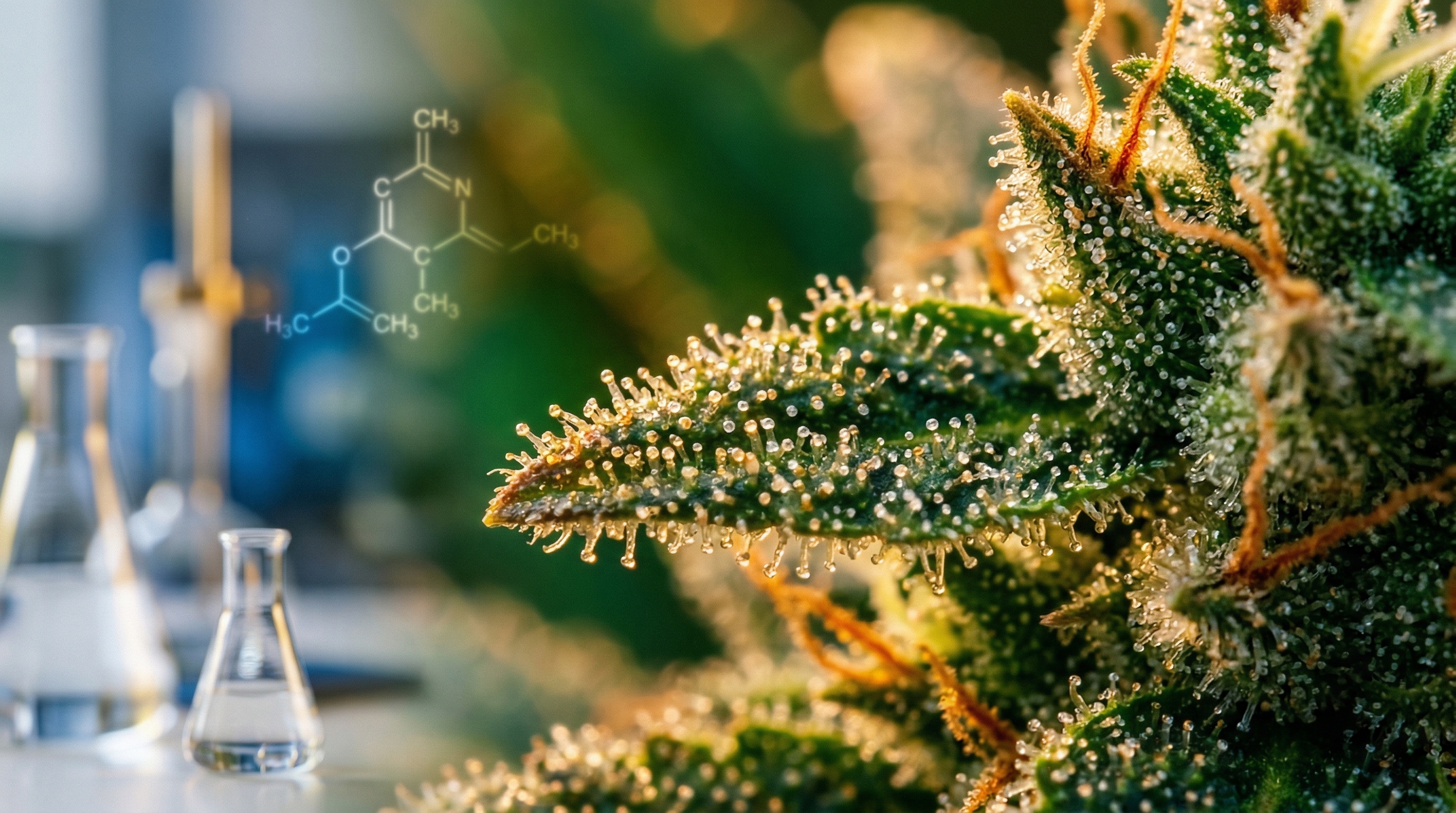
The Science Explained
What Ocimene Actually Is
Ocimene is a monoterpene—a small, lightweight aromatic compound made from two isoprene units (C₁₀H₁₆). Think of monoterpenes as the “sprinters” of the terpene world: they’re small, they evaporate fast, and they’re the first things you smell when you open a bag of flower. Ocimene is especially quick to disappear, with a boiling point of just 66 degrees C (about 150 degrees F)—one of the lowest of any cannabis terpene. That means it’s often the first compound lost during rough drying or high-heat consumption.
Ocimene comes in several forms called isomers—same atoms, slightly different arrangements. The two most common in cannabis are beta-ocimene and alpha-ocimene, with beta-ocimene showing up more often [Booth & Bohlmann, 2019]. These small structural differences may affect aroma and how the molecule behaves in your body, though scientists are still sorting out the details.
Ocimene isn’t found only in cannabis. It also shows up in mint, basil, orchids, mangoes, and parsley—its name comes from the Greek word ocimum, meaning basil. In nature, many plants use ocimene as a defense tool. It repels pests while attracting the bugs that eat those pests [Farre-Armengol et al., 2017]. It’s the plant’s way of calling for backup.
Its aroma profile is sweet, herbaceous, and slightly woody, with a citrusy undertone that distinguishes it from the heavier, muskier scent of myrcene. If myrcene is a warm blanket, ocimene is a cool breeze through an open window. Compared to pinene, which leans sharply into evergreen freshness, ocimene offers something rounder and sweeter.
What the Research Shows
Here’s where it gets interesting. Ocimene hasn’t been studied as much as caryophyllene or linalool. But the studies that do exist tell a clear story: this is a compound with real biological activity.
Anti-inflammatory potential. A 2025 study in Inflammopharmacology tested ocimene in a rat arthritis model. The researchers found it reduced inflammatory cell death (pyroptosis) by blocking the TLR4/NLRP3 pathway—a key driver of chronic conditions like rheumatoid arthritis [Laraib et al., 2025]. Why does this matter? It shows us how ocimene may fight inflammation, not just that it does. Earlier lab work on Citrus unshiu essential oil had already shown ocimene-rich fractions suppressed inflammatory markers [Kim et al., 2014]. The newer study adds real depth to those findings.
Antifungal activity. Ocimene shows strong promise against fungal infections. A 2016 study tested it against 35 strains of Candida albicans, including drug-resistant ones. Ocimene blocked biofilm formation and stopped the shape-shifting growth that makes Candida so hard to treat [Thakre et al., 2016]. A 2022 study on Zanthoxylum essential oils rich in ocimene confirmed broad antifungal, antibacterial, and antiviral activity [Yang et al., 2022].
Antiviral properties. Essential oils from Salvia species—which contain notable amounts of ocimene—showed antiviral activity in lab tests [Najar et al., 2021]. These studies tested oil blends, not pure ocimene alone. But ocimene keeps showing up in the active fractions, which hints it plays a real role.
Antiparasitic effects. A 2023 study in Pharmaceuticals tested pure beta-ocimene against Leishmania parasites. It killed the parasites while showing less harm to healthy cells [de Sousa et al., 2023]. This selective toxicity—hitting the bad cells, sparing the good ones—is exactly what researchers look for in potential treatments.
The entourage effect connection. For cannabis users, the most exciting question is how ocimene works alongside other compounds. Ethan Russo’s landmark work on the entourage effect argues that terpenes shape how THC and CBD interact with your body [Russo, 2011]. And a 2024 study in PAIN showed that cannabis terpenes can reduce chronic pain in mice through adenosine A2A receptors [Schwarz et al., 2024]. The takeaway? Terpenes like ocimene are not just aromatic passengers—they are active players.
Key insight: Ocimene rarely appears alone. It most commonly co-occurs with terpinolene, and this pairing is a hallmark of the Energy High family—strains known for mental clarity, focus, and creative stimulation.
Sex-dependent responses. An April 2026 study from Abstrax and Western Washington University revealed that biological sex significantly shapes terpene responses—a variable historically overlooked. In mice, repeated terpene vapor inhalation produced stronger stress-related behavioral changes in females than males. When sub-effective doses of linalool were combined with CBD, female mice showed a synergistic response that neither compound produced alone—the same pattern did not appear in males or with other terpene-CBD pairings [Abstrax/WWU, 2026]. This is an early but important signal: the “one size fits all” assumption in terpene research may be fundamentally flawed.
Machine learning validates terpene importance. A 2025 study in Communications Medicine used machine learning to analyze chemical profiles from medical cannabis patients. The models found that incorporating terpene composition significantly improved prediction of pain relief (AUC = 0.63) compared to demographics and clinical features alone (AUC = 0.52, p < 0.001). Notably, well-known cannabinoids like THC and CBD provided limited predictive value—specific terpenoids were the key differentiators [Hatav et al., 2025].
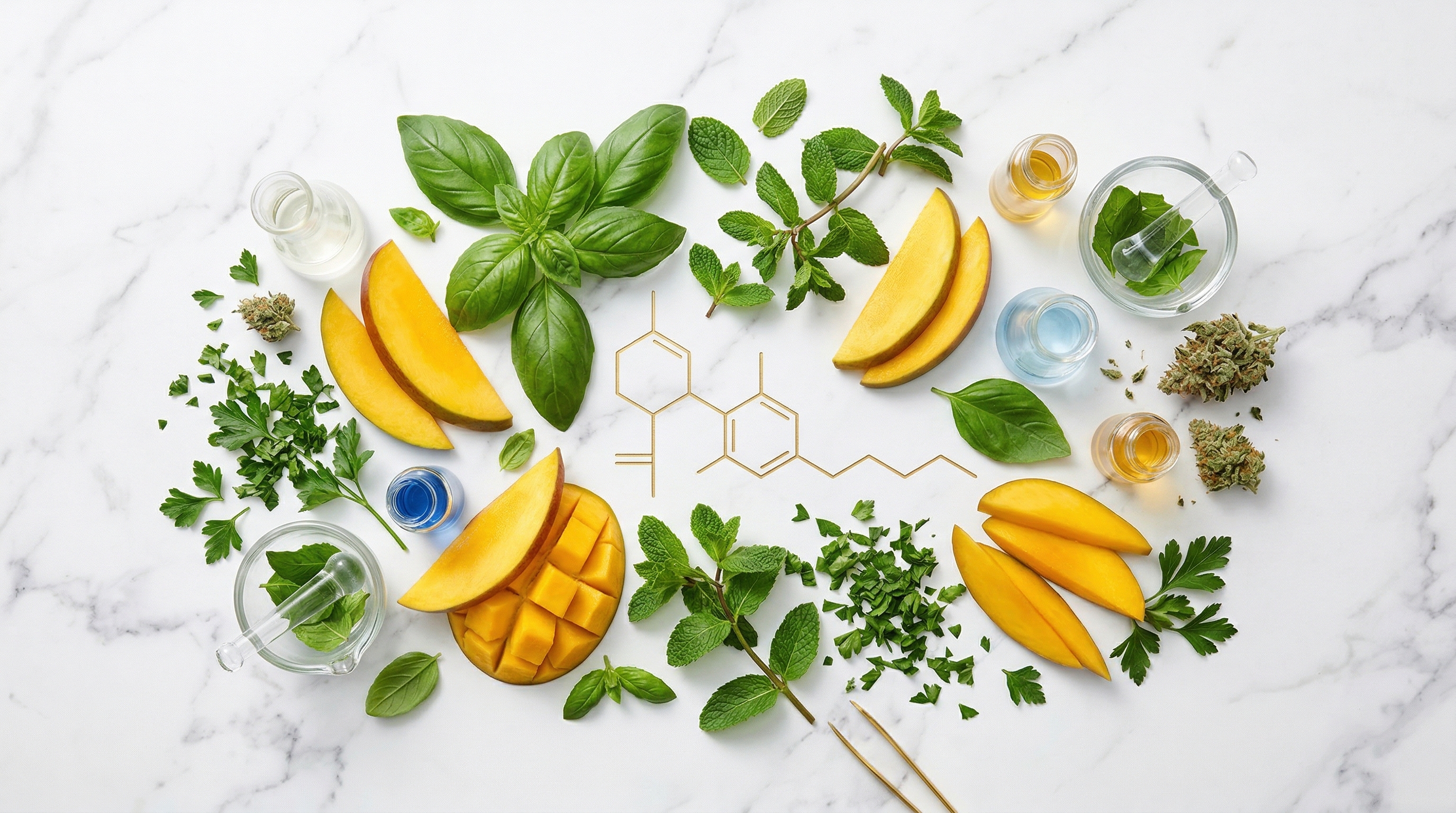
Ocimene and Terpinolene: The Energy High Partnership
If terpinolene is the lead vocalist of the Energy High family, ocimene is the rhythm section. These two terpenes show up together more often than chance alone would explain. That pairing may be why certain strains feel so clearly uplifting.
Both are rare as dominant compounds. Terpinolene appears in only about 11% of strains [Leafly, 2019], and ocimene is even less common at high levels. But when they team up, you get a profile that sits at the opposite end of the spectrum from the sedating myrcene-heavy strains that dominate the market.
Think of it this way: terpinolene brings piney, herbal complexity and directly activates cannabinoid receptors as a partial agonist. Ocimene may add its own anti-inflammatory effects through a completely different pathway—the TLR4/NLRP3 immune signaling route [Laraib et al., 2025]. Different mechanisms, potentially stronger results together.
This is the entourage effect in action: not one molecule doing everything, but a team of compounds working through different pathways to create a single, unified experience.
Practical Implications: Finding Your Energy High
So how does all of this translate to your actual experience with cannabis? Here’s where the High Families framework becomes genuinely useful.
Ocimene-Rich Strains Worth Exploring
At This Is Why I’m High, we skip the outdated indica/sativa labels. Instead, we group strains by terpene-driven effect profiles. The Energy High family is built around terpinolene and ocimene as the lead terpenes. Strains in this family tend to deliver:
- Mental clarity and focused thinking
- Creative stimulation without racing thoughts
- A physically light sensation—the opposite of couch-lock
- Social energy that feels natural, not jittery
Here are cultivars that frequently test high in ocimene:
| Strain | Ocimene Notes |
|---|---|
| Golden Goat | Sweet, tropical profile with notable ocimene presence alongside terpinolene |
| Strawberry Cough | Berry-forward phenotypes often show elevated ocimene levels |
| Dutch Treat | Amsterdam classic with piney-sweet character; ocimene contributes to its uplifting reputation |
| Clementine | Citrus-dominant with ocimene adding herbal depth |
| Space Queen | Fruity, cerebral effects with a complex terpene blend featuring ocimene |
| Green Crack | Energizing sativa-leaning cultivar where ocimene often appears in the terpene profile |
| Amnesia Haze | Classic haze genetics with sweet, herbal complexity |
If you’ve enjoyed any of these and noticed that alert, productive feeling, ocimene was likely part of the equation.
Ocimene vs. Other Terpenes: A Quick Comparison
Here’s how ocimene stacks up against the other major terpenes:
- vs. Myrcene: Opposite effects. Myrcene promotes sedation and body heaviness; ocimene is associated with alertness and physical lightness.
- vs. Limonene: Both may elevate mood, but limonene delivers a brighter citrus punch while ocimene is sweeter and more herbal.
- vs. Linalool: Linalool promotes calm and sleep; ocimene leans toward energy and engagement.
- vs. Humulene: Both show anti-inflammatory potential, but humulene is earthy and appetite-suppressing while ocimene is sweet and stimulating.
- vs. Terpinolene: Partners, not competitors. They frequently co-occur and may amplify each other’s uplifting qualities.
How to Use This Knowledge
- Check lab results. Ask for the Certificate of Analysis (COA) at your dispensary. Look for ocimene in the terpene list. Even at 0.1-0.5%, it may shape the overall effect.
- Smell before you buy. Ocimene smells sweet, herbal, and slightly minty. If a strain smells like fresh basil and citrus—not diesel or earth—you may be in Energy High territory.
- Preserve it carefully. Ocimene’s boiling point is just 66 degrees C. It’s one of the first terpenes lost to heat. Store flower in airtight containers at cool temps, and try lower-heat methods.
- Start low, observe closely. Ocimene-rich strains can feel mentally stimulating. Some people find this racy at higher doses. Start small and pay attention to how you feel.
- Pair with your goals. The Energy High family works great for daytime use, creative projects, social hangouts, or any time you want to feel enhanced rather than sedated.
- Understand bioavailability. Different consumption methods deliver different amounts of ocimene to your body. Vaporizing at lower temperatures preserves more terpenes than smoking. See our guide on terpene bioavailability for the full breakdown.

Key Takeaways
- Ocimene is a rare monoterpene with a sweet, herbal aroma found in less than 10% of cannabis chemovars at significant levels—but it punches above its weight in shaping the experience.
- 2025 research confirms ocimene mitigates inflammation through the TLR4/NLRP3 pyroptosis pathway, adding mechanistic evidence to earlier observations [Laraib et al., 2025].
- Antifungal studies show ocimene inhibits Candida albicans biofilms, including fluconazole-resistant strains [Thakre et al., 2016].
- Ocimene pairs with terpinolene as the signature terpene combination of the Energy High family—strains known for focus, creativity, and physical lightness.
- Forget indica vs. sativa. Terpene profiles like those featuring ocimene are far more reliable predictors of how a strain will make you feel.
- Preserve it. With a boiling point of just 66 degrees C, store flower properly and consume at lower temperatures to retain ocimene’s benefits.
FAQs
Is ocimene safe to consume?
Ocimene has a long history of human exposure through food and essential oils—it’s present in basil, mint, and many fruits. In cannabis, it appears at very low concentrations. There are no known safety concerns specific to ocimene at these levels, though as with all cannabis compounds, individual responses may vary.
Why don’t more strains have ocimene?
Terpene levels are shaped by genetics and growing conditions. Only certain cultivars make much ocimene, and its extreme volatility means it fades fast during drying and curing. Growers who use gentle handling and lower temperatures tend to keep more of it intact. Fresh, carefully processed flower will always have the richest terpene profile.
Can I get ocimene from CBD strains too?
Yes. Terpene profiles don’t depend on THC or CBD levels. Some CBD-rich strains do contain ocimene. This may help create an alert, clear-headed feeling even without much THC. Check the terpene section on your COA to find out.
How is ocimene different from terpinolene?
Both are rare terpenes in the Energy High family, but they work differently. Terpinolene has a piney-herbal scent and directly activates cannabinoid receptors. Ocimene is sweeter and works through immune pathways like TLR4/NLRP3 [Laraib et al., 2025]. They often show up in the same strains, and their different mechanisms may create stronger effects together.
Does ocimene get you “more high”?
Not exactly. Terpenes don’t produce intoxication on their own. However, the entourage effect theory [Russo, 2011] suggests that terpenes like ocimene may modulate how cannabinoids interact with your system—potentially shaping the quality of the experience toward something more energetic and focused rather than sedating.
Looking to explore more terpenes? Read our deep dives on myrcene, limonene, caryophyllene, linalool, pinene, terpinolene, humulene, and bisabolol. For how terpenes actually reach your brain, see Terpene Bioavailability.
Sources
- Booth, J.K. & Bohlmann, J. (2019). “Terpenes in Cannabis sativa – From plant genome to humans.” Plant Science, 284, 67-72. DOI: 10.1016/j.plantsci.2019.03.022
- de Sousa, J.M.S., et al. (2023). “Cytotoxic and Antileishmanial Effects of the Monoterpene beta-Ocimene.” Pharmaceuticals, 16(2), 183. DOI: 10.3390/ph16020183
- Farre-Armengol, G., Filella, I., Llusia, J., & Penuelas, J. (2017). “beta-Ocimene, a Key Floral and Foliar Volatile Involved in Multiple Interactions between Plants and Other Organisms.” Molecules, 22(7), 1148. DOI: 10.3390/molecules22071148
- Kim, D.S., et al. (2014). “Anti-inflammatory effects of the essential oil from Citrus unshiu.” Journal of Functional Foods, 11, 438-447.
- Leafly. (2019). “The Cannabis Terpenes Research Project.” leafly.com
- Laraib, I., Qasim, S., Uttra, A.M., & Ahmed, S.R. (2025). “Ocimene mitigates pyroptosis through TLR4/NLRP3-mediated mechanisms in CFA-induced inflammation.” Inflammopharmacology, 33, 2779-2792. DOI: 10.1007/s10787-025-01756-4
- Najar, B., et al. (2021). “Volatiles and Antifungal-Antibacterial-Antiviral Activity of South African Salvia spp. Essential Oils.” Molecules, 26(9), 2826. DOI: 10.3390/molecules26092826
- Russo, E.B. (2011). “Taming THC: potential cannabis synergy and phytocannabinoid-terpenoid entourage effects.” British Journal of Pharmacology, 163(7), 1344-1364. PMID: 21749363
- Schwarz, A.M., et al. (2024). “Terpenes from Cannabis sativa induce antinociception in a mouse model of chronic neuropathic pain.” PAIN, 165(11), e145. DOI: 10.1097/j.pain.0000000000003313
- Thakre, A.D., et al. (2016). “Effects of Cinnamaldehyde, Ocimene, Camphene, Curcumin and Farnesene on Candida albicans.” Advances in Microbiology, 6(9), 627-643. DOI: 10.4236/aim.2016.69062
- Yang, J., et al. (2022). “Chemical Composition and Antifungal, Anti-Inflammatory, Antiviral, and Larvicidal Activities of the Essential Oils of Zanthoxylum acanthopodium DC.” Molecules, 27(16), 5243. DOI: 10.3390/molecules27165243
- Abstrax & Western Washington University. (2026). “Moody Mice and Monoterpenes: Sex-Dependent Behavioral Effects of Linalool and β-Myrcene.” White Paper based on peer-reviewed study in NeuroSci (PMC11676933).
- Hatav, A., Vysotski, Y., Shapira, A., et al. (2025). “Machine-learning of medical cannabis chemical profiles reveals analgesia beyond placebo expectations.” Communications Medicine, 5, 295. DOI: 10.1038/s43856-025-00996-3


