Cannabis and Bone Health: What Osteoporosis Research Shows
Your bones have cannabinoid receptors. What research reveals about CBD, CB2 signaling, and whether cannabis can support bone density and fracture healing.


Your Bones Are Alive—And They Have Cannabinoid Receptors
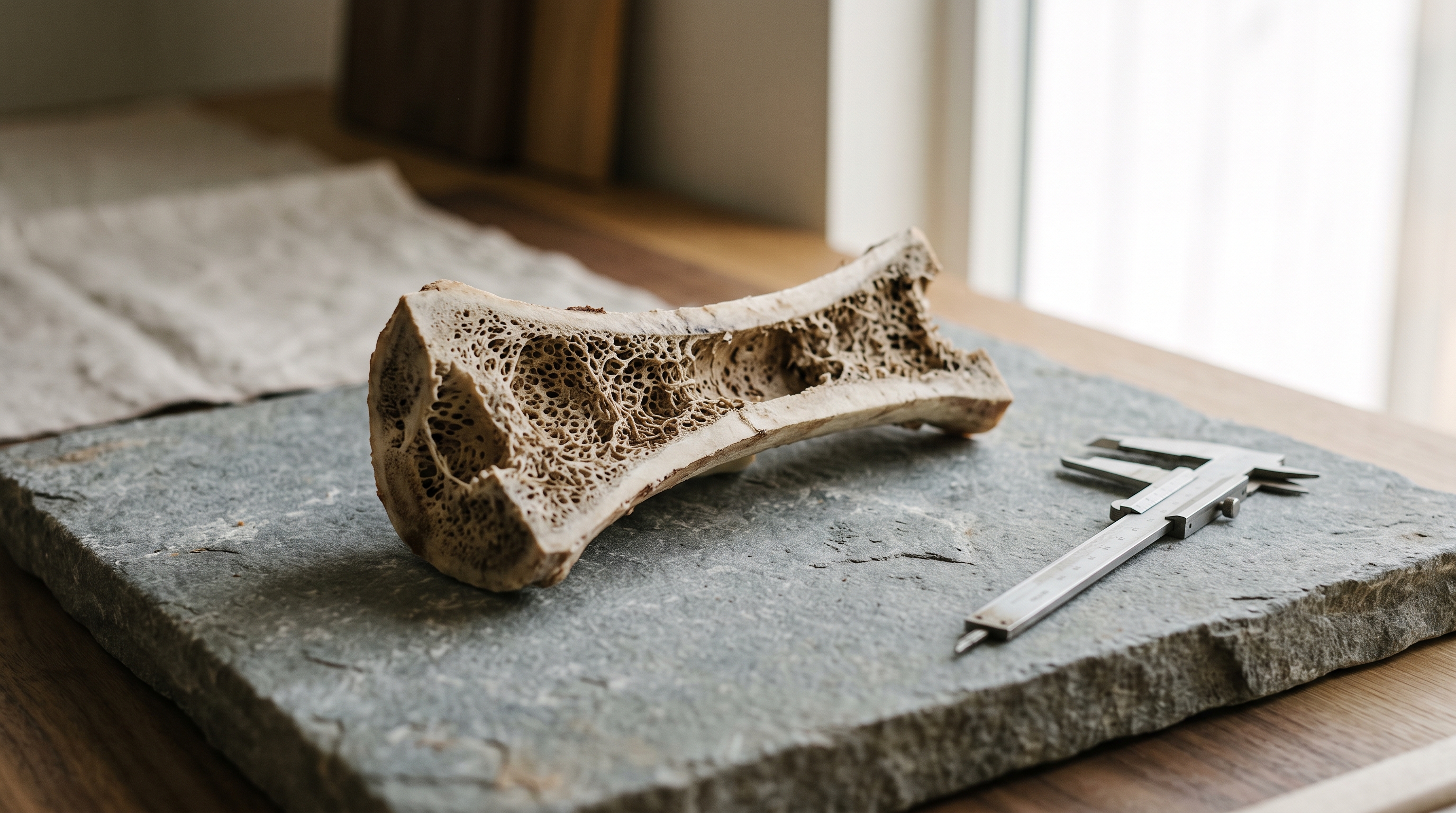
Here’s something that might surprise you: your skeleton isn’t the static scaffolding you probably picture from biology class. Your bones are living tissue, constantly breaking down and rebuilding in a process called bone remodeling. Every decade or so, your body essentially replaces your entire skeleton.
Now here’s where it gets really interesting for the cannabis-curious: your bones are loaded with cannabinoid receptors. That’s right—the same endocannabinoid system (ECS) that influences your mood, appetite, and pain perception is also deeply involved in how your bones grow, maintain density, and heal after fractures.
This matters because osteoporosis—a condition where bones become brittle and fragile—affects an estimated 200 million people worldwide [Sözen et al., 2017]. In the United States alone, roughly 10 million people have osteoporosis, and another 44 million have low bone density, putting them at elevated risk [National Osteoporosis Foundation]. As populations age, researchers are increasingly curious about every tool that might support bone health—including cannabinoids.
In this article, we’ll unpack what scientists have discovered about the relationship between your endocannabinoid system and your bones, what specific cannabinoids like CBD and THC may do at the cellular level, and what all of this might mean for your wellness routine. No hype, no miracle claims—just the science as it stands today.
The Science Explained
How the Endocannabinoid System Influences Bone
To understand why researchers are studying cannabis and bone health, you need to meet two key cell types and two key receptors.
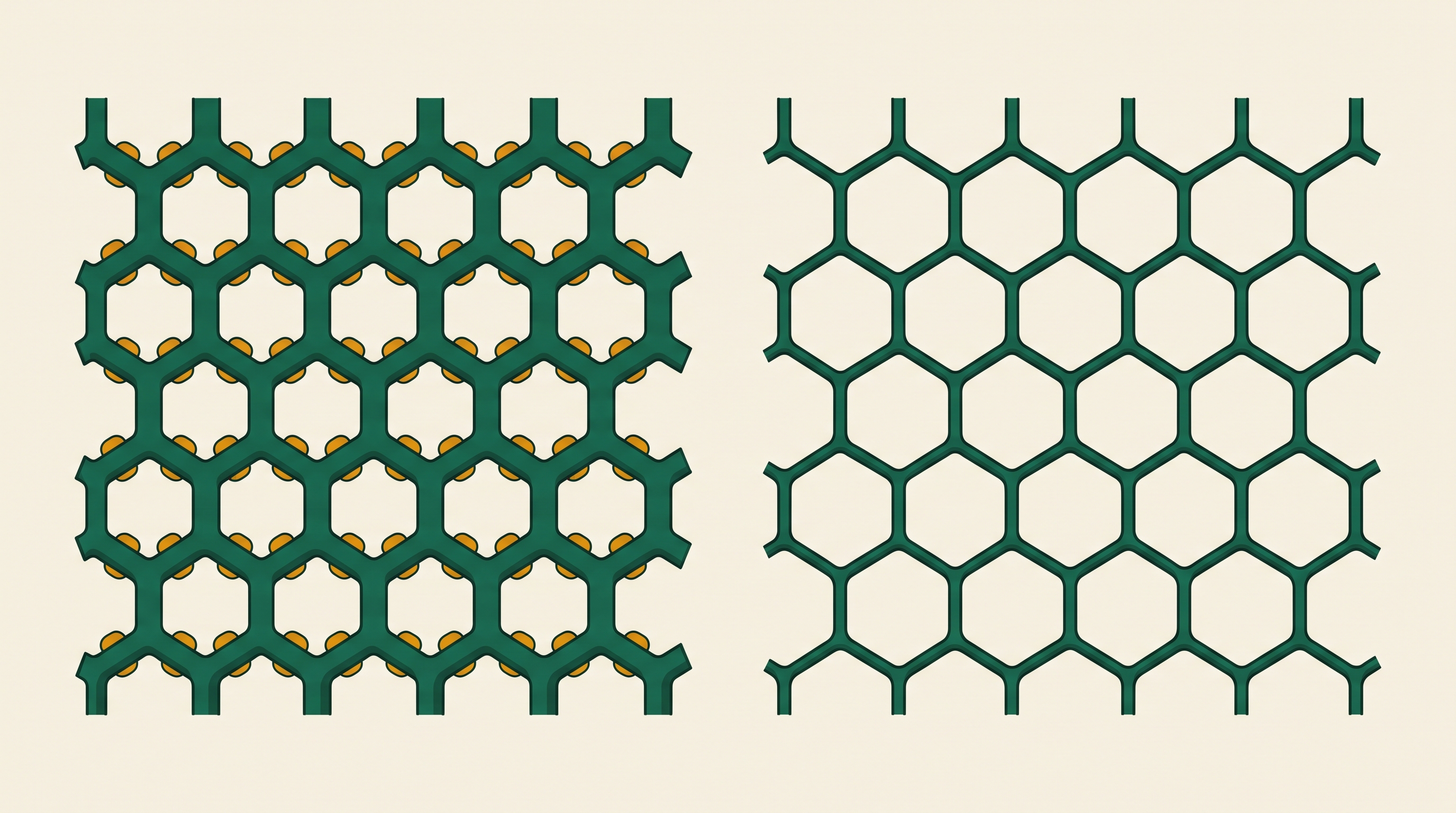
The cells: Think of bone remodeling as a construction site. Osteoblasts are the builders—they lay down new bone tissue. Osteoclasts are the demolition crew—they break down old or damaged bone. In healthy bones, these two teams work in balance. In osteoporosis, the demolition crew outpaces the builders, and bones gradually lose density and strength.
The receptors: Your endocannabinoid system includes two primary receptors—CB1 and CB2. Both are found in bone tissue, but CB2 receptors are especially abundant in osteoblasts and osteoclasts [Bab et al., 2009]. This means cannabinoids—whether produced by your body (endocannabinoids) or from the cannabis plant (phytocannabinoids)—can directly influence how your bones are built and broken down. To understand how these two receptors differ in function across the body, see our guide to CB1 vs CB2 receptors.
Imagine your CB2 receptors as tiny switches on the surface of bone cells. When the right molecule flips that switch, it can either tell the builders to speed up or tell the demolition crew to slow down. This is why researchers believe the endocannabinoid system plays a regulatory role in maintaining bone mass.
What the Research Shows
The most frequently cited study in this space comes from a team at Hebrew University of Jerusalem. [Kogan et al., 2015] found that CBD alone helped enhance fracture healing in rats. Specifically, CBD appeared to improve the biomechanical properties of healing femurs—meaning the healed bones were stronger and more resistant to breaking again. Interestingly, the combination of CBD and THC together did not show the same benefit, suggesting CBD may be the more relevant cannabinoid for bone repair.
Earlier foundational research by [Idris et al., 2005] demonstrated that CB2 receptor activation in mice stimulated bone formation and inhibited bone resorption (the breakdown process). Mice lacking CB2 receptors developed age-related osteoporosis at accelerated rates, reinforcing the idea that this receptor is essential for maintaining bone density.
A study by [Sophocleous et al., 2011] added nuance by showing that the relationship between cannabinoid receptors and bone is complex and dose-dependent. Low-level endocannabinoid signaling appeared to support bone health, while disruptions to the system—either too much or too little activity—could tip the balance toward bone loss.
More recently, [Raphael-Mizrahi et al., 2020] explored synthetic cannabinoids targeting CB2 receptors and found they could reduce bone loss in ovariectomized mice—a model commonly used to mimic postmenopausal osteoporosis. This suggests that targeted CB2 activation could one day become a therapeutic strategy, though we’re still far from clinical applications in humans.
Important caveat: The vast majority of this research has been conducted in animal models or cell cultures. Human clinical trials on cannabinoids and bone health are extremely limited. These findings are promising but preliminary—they suggest possibilities, not proven treatments.
Practical Implications
What This Means for Your Wellness Routine
Let’s be clear: no one should use cannabis as a treatment for osteoporosis based on current evidence. If you have concerns about bone density, talk to your healthcare provider about established screening and treatment options.
That said, if you’re already incorporating cannabis into your wellness routine, here are some science-informed considerations:
CBD may deserve your attention. The research consistently points to CBD—not THC—as the cannabinoid most associated with potential bone benefits. If bone health is a concern for you, CBD-forward products may be worth exploring as part of a broader wellness approach. Strains and products in the Relieving High family, which often feature caryophyllene (a terpene that also interacts with CB2 receptors), could be particularly relevant here. Caryophyllene is unique among terpenes because it directly binds to CB2 receptors [Gertsch et al., 2008], the same receptors implicated in bone regulation.
Consider the entourage effect—carefully. While the [Kogan et al., 2015] study suggested CBD alone outperformed the CBD-THC combination for fracture healing, the broader entourage effect—where multiple cannabis compounds work synergistically—may still play a role in overall wellness. Products in the Entourage High family deliver complex, multi-terpene profiles that engage multiple pathways simultaneously.
Don’t overlook lifestyle fundamentals. Cannabis research is exciting, but bone health depends heavily on well-established factors: weight-bearing exercise, adequate calcium and vitamin D intake, avoiding excessive alcohol, and not smoking tobacco. Any cannabis-related strategy should complement—never replace—these foundations.
Dosing matters. The animal research suggests that cannabinoid effects on bone are dose-dependent, with moderate signaling being beneficial and extremes potentially harmful. This aligns with the general principle of “start low, go slow” that applies across cannabis wellness.

Key Takeaways
- Your bones have cannabinoid receptors. CB2 receptors are found on bone-building and bone-resorbing cells, making the endocannabinoid system a direct player in bone remodeling [Bab et al., 2009].
- CBD shows the most promise for bone health. Animal studies suggest CBD may enhance fracture healing and support bone strength, potentially more effectively than THC [Kogan et al., 2015].
- CB2 receptor activation may protect against bone loss. Research in animal models links CB2 signaling to maintained bone density, especially in age-related and postmenopausal osteoporosis models [Raphael-Mizrahi et al., 2020].
- Human evidence is still missing. Nearly all current research is preclinical. We need human clinical trials before drawing any firm conclusions.
- Caryophyllene-rich strains are worth watching. This terpene’s unique ability to activate CB2 receptors makes it a compelling area for future bone health research.
FAQs
Can cannabis cure or treat osteoporosis?
Not based on current evidence. Research to date suggests that cannabis is not yet validated as a clinical treatment for osteoporosis in humans. Animal studies show promise, but these findings have not yet been confirmed in human trials. Always consult a healthcare provider for osteoporosis management.
Is CBD or THC better for bone health?
Based on the available preclinical research, CBD appears more promising. One key study found that CBD alone improved fracture healing in rats, while the CBD-THC combination did not show the same benefit [Kogan et al., 2015]. However, more research is needed.
Does smoking cannabis hurt bone health?
This is an underexplored area. Smoking anything introduces combustion byproducts that may negatively affect overall health. If bone wellness is a priority, non-combustion methods like tinctures, edibles, or vaporizers may be preferable choices.
What terpenes might support bone health?
Beta-caryophyllene is the most intriguing candidate because it directly activates CB2 receptors [Gertsch et al., 2008]—the same receptors implicated in bone regulation. Look for it in strains from the Relieving High family.
Sources
- Bab, I., Zimmer, A., & Bhatt, R. (2009). “Cannabinoids and the skeleton: from marijuana to reversal of bone loss.” Annals of Medicine, 41(8), 560-567. PMID: 19634029
- Gertsch, J., Leonti, M., Raduner, S., et al. (2008). “Beta-caryophyllene is a dietary cannabinoid.” Proceedings of the National Academy of Sciences, 105(26), 9099-9104. PMID: 18574142
- Idris, A.I., van’t Hof, R.J., Greig, I.R., et al. (2005). “Regulation of bone mass, bone loss and osteoclast activity by cannabinoid receptors.” Nature Medicine, 11(7), 774-779. PMID: 15908955
- Kogan, N.M., Melamed, E., Wasserman, E., et al. (2015). “Cannabidiol, a major non-psychotropic cannabis constituent enhances fracture healing and stimulates lysyl hydroxylase activity in osteoblasts.” Journal of Bone and Mineral Research, 30(10), 1905-1913. PMID: 25801536
- Raphael-Mizrahi, B., Gabet, Y., & Bab, I. (2020). “Cannabinoids and the skeleton: from background to clinical use.” Calcified Tissue International, 106, 3-14. PMID: 31471677
- Sophocleous, A., Landao-Bassonga, E., Van’t Hof, R.J., et al. (2011). “The type 2 cannabinoid receptor regulates bone mass and ovariectomy-induced bone loss by affecting osteoblast differentiation and bone formation.” Endocrinology, 152(6), 2141-2149. PMID: 21447637
- Sözen, T., Özışık, L., & Başaran, N.Ç. (2017). “An overview and management of osteoporosis.” European Journal of Rheumatology, 4(1), 46-56. PMID: 28293453


