Cannabis and Male Fertility: What the Sperm Research Shows
THC may lower sperm count, motility, and morphology, and the data leans toward caution. Here's what the fertility research actually shows.

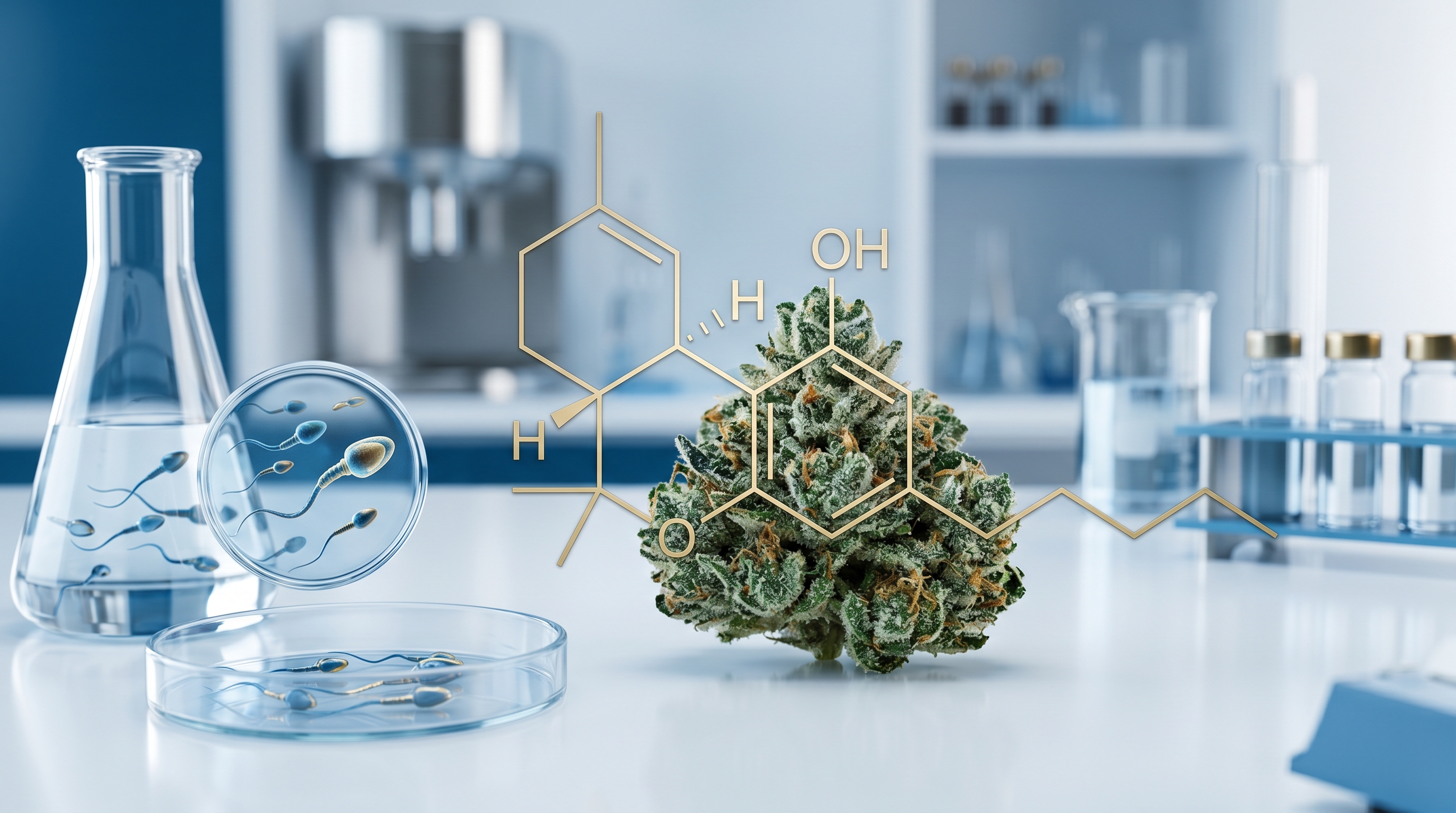
If you and a partner are trying to conceive, you have probably googled some version of “does weed affect sperm?” It’s a fair question that deserves a straight answer instead of either a shrug or a scare.
Here’s the honest version up front: the research leans toward caution. Several studies link regular cannabis use to lower sperm counts, weaker motility, and more abnormal sperm shapes. But the picture is genuinely mixed, with at least one large study finding the opposite, and human data is messier than anyone would like. This is a risk-side topic, so I’ll present the concerning evidence honestly without inflating it.
Let me walk you through what scientists have found, why your body has cannabinoid receptors sitting on sperm cells in the first place, and what it means if you’re planning a family.
First, a quick disclaimer
This article is educational, not medical advice. Fertility is personal and complicated, and the evidence here is still evolving. If you’re trying to conceive, dealing with a low sperm count, or weighing whether to cut back on cannabis, talk to your doctor or a reproductive specialist. They can look at your actual numbers and history. I can only tell you what the published research says.
Why your sperm even respond to cannabis
To understand the fertility question, start with the endocannabinoid system, or ECS. This is the network of receptors and signaling molecules your body uses to keep many systems in balance. It touches mood, appetite, and yes, reproduction.
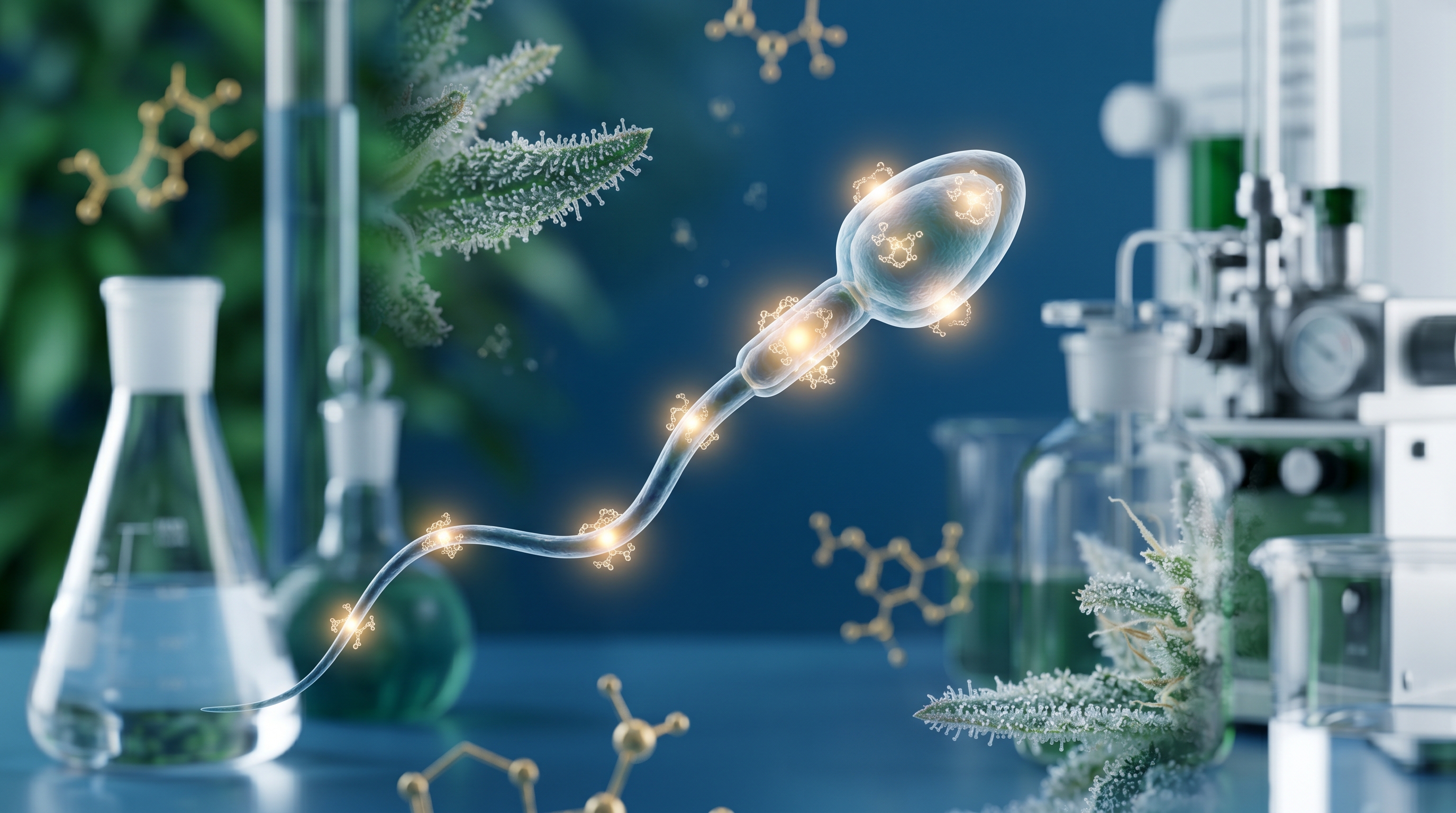
The ECS isn’t just in your brain. It runs through the male reproductive tract too. Researchers have found CB1 and CB2 cannabinoid receptors in the testes. They sit in the Sertoli and Leydig cells that feed developing sperm. They even sit on mature sperm themselves [Plessis et al., 2015]. Want a primer on how those two receptors differ? I wrote one here: CB1 vs CB2 receptors.
The placement is strangely specific. CB1 sits on the acrosome (the cap at the head), the midpiece, and the tail; CB2 concentrates in the post-acrosomal region. That precise mapping tells biologists these receptors aren’t decoration, they’re steering sperm function.
Your body makes its own cannabinoids to work this system, chiefly anandamide and 2-AG. Anandamide is sometimes called the body’s natural THC, and that nickname is the whole story: THC from cannabis can plug into the same receptors your own anandamide uses. That’s the mechanism behind everything that follows.
The “optimal tone” idea
The concept researchers keep returning to is balance, what some call endocannabinoid tone. Sperm need just the right amount of cannabinoid signaling. Too little and they may fire too early; too much and they get sluggish and lose their ability to fertilize.
THC throws a wrench into that finely tuned dial. By flooding the system with an outside cannabinoid that doesn’t behave exactly like your natural ones, cannabis may push sperm out of their ideal range. Think of it less like a poison and more like turning a dimmer switch the wrong way at the wrong moment.
What the human studies actually show
Now the part you came for. I’ll give you the strongest evidence on each side.
The Danish study that raised alarms
The most cited concerning study is [Gundersen et al., 2015], published in the American Journal of Epidemiology. It looked at 1,215 healthy young Danish men, a large and relatively clean sample because they were drawn from routine military fitness exams rather than a fertility clinic.
The finding: men who smoked cannabis more than once a week had a 28% lower sperm concentration and a 29% lower total sperm count than non-users. That held up after adjusting for confounders. When cannabis was combined with other recreational drugs, the gap widened sharply, to a 52% lower concentration and 55% lower count.
That’s not a subtle effect. For a couple already near the edge of a normal count, a cut that size could matter. Oddly, the same study found cannabis users had higher testosterone. That surprised people who assumed weed would tank male hormones. (I dug into that question in cannabis and testosterone.)
The Harvard study that complicated everything
Then in 2019, a Harvard team [Nassan et al., 2019] studied 662 men attending a fertility clinic, with 1,143 semen samples. They expected to confirm the harm. Instead they found the paradox that made headlines: men who’d ever smoked cannabis had a higher sperm concentration (62.7 vs 45.4 million/mL) than never-users, and were less than half as likely to have a low count.
What gives? A few possibilities, none of them a green light:
- These were subfertile men at a clinic, not a general population, so the groups differ from the Danish sample.
- It may reflect that men with naturally higher testosterone are both more likely to try cannabis and to make more sperm, a confound rather than a benefit.
- The researchers themselves cautioned against reading it as proof cannabis helps. They even found cannabis users had 16% lower FSH, a hormone tied to sperm production.
So the two best human studies point in opposite directions. That alone should tell you the human evidence is not settled.
The systematic review that tried to settle it
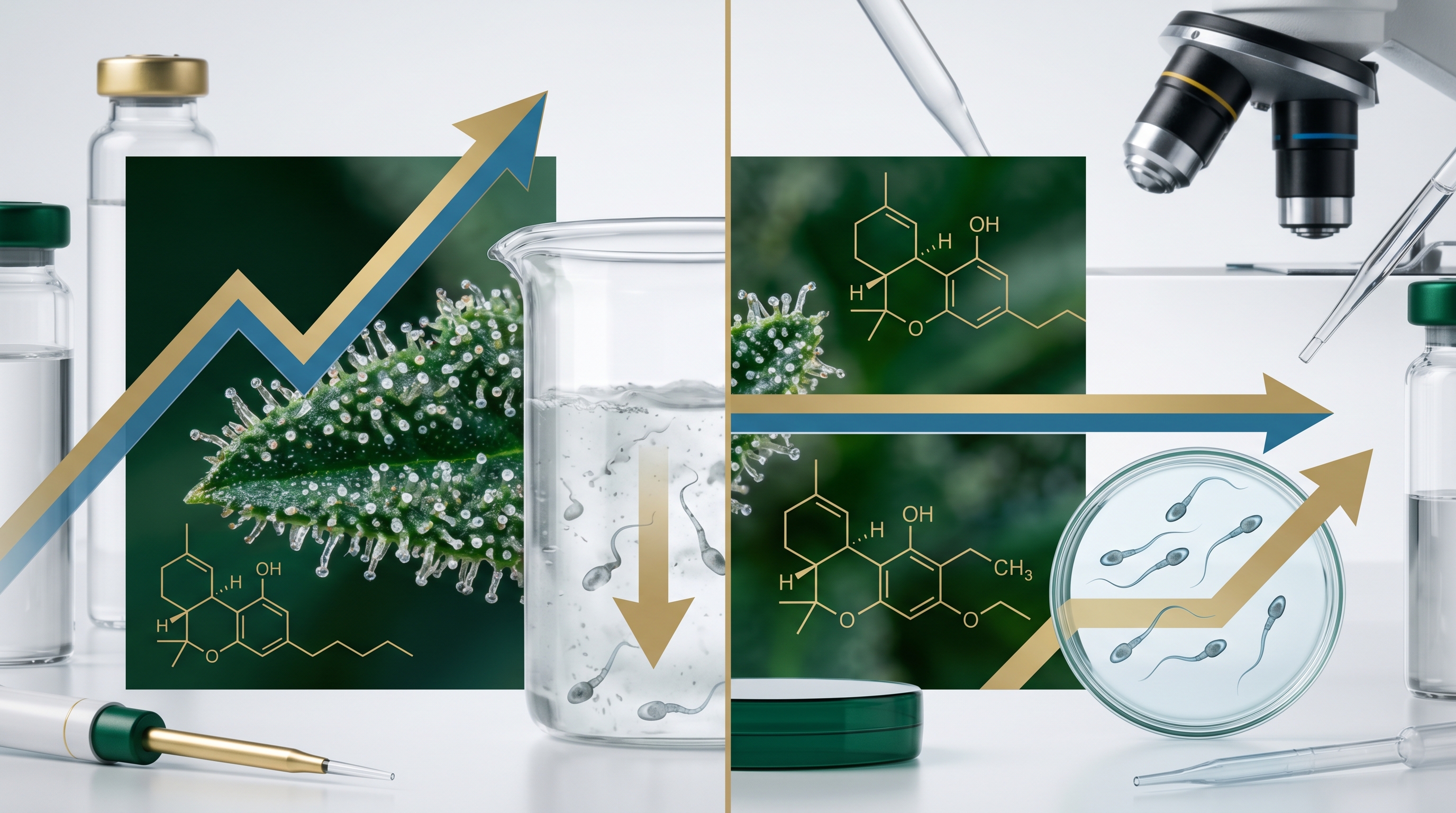
When individual studies disagree, scientists turn to systematic reviews. [Payne et al., 2019], in the Journal of Urology, pulled the literature together. Their read of the whole body of work tilted toward concern: across studies, cannabis was associated with reduced sperm count and concentration, more abnormal morphology (men under 30 who used within three months of testing had nearly double the odds of abnormal shapes), and impaired function. One study they cite found heavy users (10+ times weekly) averaged 26.6 million/mL versus 67.9 in lighter users.
A review can’t manufacture certainty out of inconsistent inputs, but the overall direction was unfavorable.
Beyond count: function and capacitation
Sperm count is only half the story. Sperm also have to work, and this is where lab studies are most striking.
Before a sperm can fertilize an egg, it goes through two changes. First comes capacitation, a final maturation step. Then comes the acrosome reaction, where it releases enzymes to drill into the egg. Both depend on cannabinoid signaling at the right level. In lab experiments, THC blocked the acrosome reaction by as much as 57%. It also cut motility by 28% to 56%, depending on dose [Payne et al., 2019]. The CB2 receptor specifically helps regulate human sperm motility [Agirregoitia et al., 2010].
In plain terms: even a sperm that swims may struggle to finish the job if THC has dialed down its capacitation machinery. A normal-looking count on a lab report wouldn’t capture that.
What animal studies add
Because you can’t ethically dose humans with THC and measure their sperm in a controlled trial, rodent studies fill gaps. They consistently show dose-dependent damage: reduced testicular weight, narrower seminiferous tubules (where sperm are made), oxidative stress, and lower sperm output. A 2026 rat study comparing THC and CBD found THC was the harder hitter on sperm quality and hormones.
Animals aren’t people, and the doses in these studies are often higher than typical human use, so don’t treat rodent findings as a 1:1 prediction. But they reinforce a plausible biological mechanism rather than a random correlation.
The good news: it appears reversible
Here’s the genuinely encouraging part. The damage doesn’t look permanent. Spermatogenesis, the assembly line that builds new sperm, runs on a cycle of roughly 72 to 74 days, about three months. In animal models, sperm production recovered within about 45 days of stopping cannabis [Payne et al., 2019].
So if cannabis is affecting your sperm, quitting for around three months before trying to conceive gives your body a full production cycle to rebuild fresh, the same advice fertility doctors give about alcohol and smoking.
Why the human data is so mixed
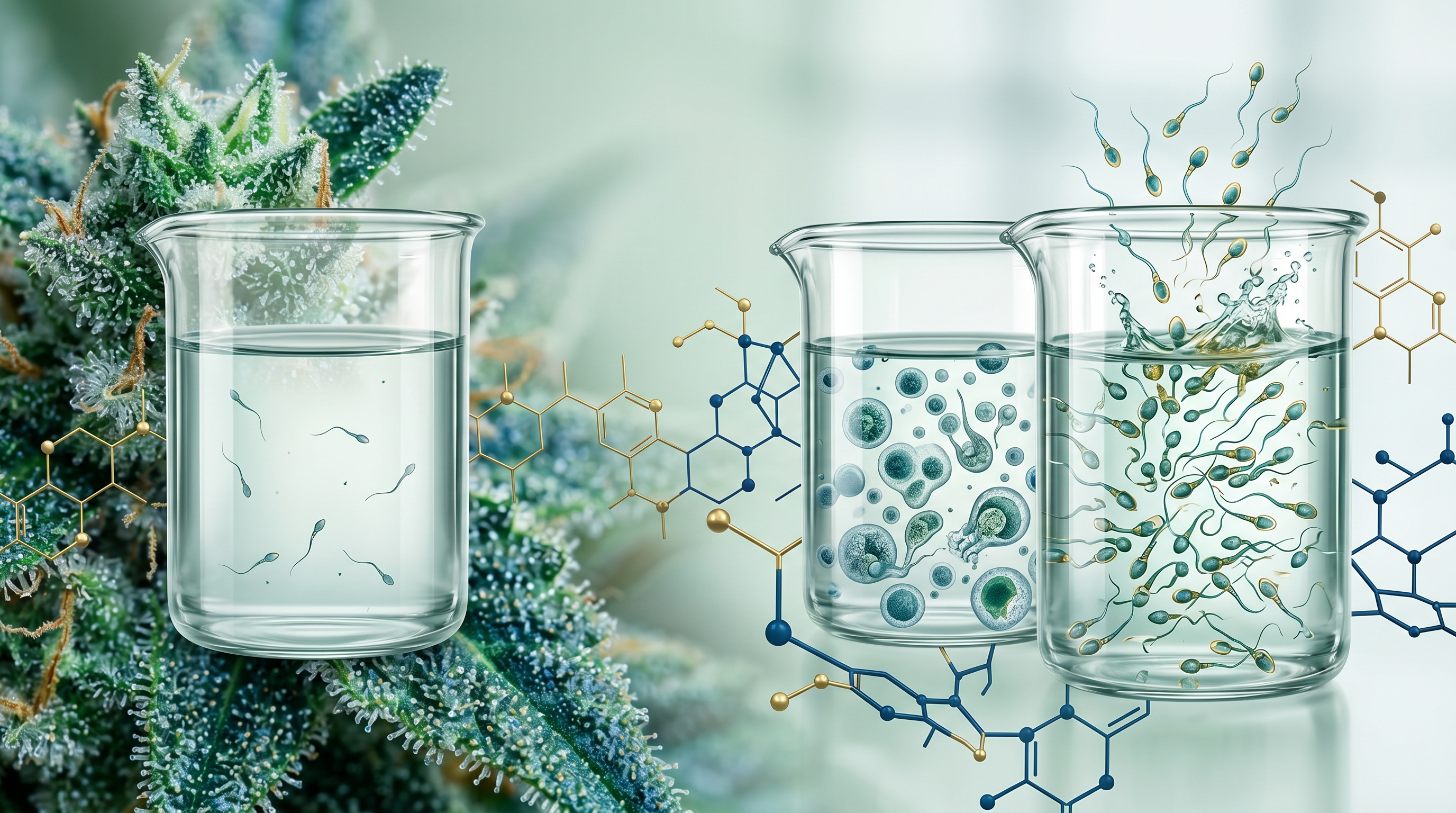
If you’re frustrated that science can’t just give a clean yes or no, you’re in good company. Researchers are too. A few reasons the picture stays muddy:
- Self-reported use. People misremember or under-report how much they smoke, blurring the dose-response signal.
- Confounders. Cannabis users more often use tobacco, alcohol, and other drugs, all of which independently affect sperm. (See cannabis and alcohol.)
- Cross-sectional snapshots. Most studies measure one moment in time, which can’t prove cause and effect.
- Different populations. Healthy young recruits versus fertility-clinic patients aren’t comparable groups.
- No controlled trials. You can’t ethically assign people to smoke weed for a study.
This is the same evidentiary fog that surrounds a lot of cannabis health questions, from lung health to heart health to hormones broadly. Honest science means living with uncertainty while still acting on the best available signal.
Practical caution if you’re trying to conceive
So what do you actually do with all this? Here’s my read, and it’s the cautious one.
If conception is the goal, the prudent move is to pause cannabis for about three months before and during the trying-to-conceive window. That covers a full sperm production cycle and removes a variable you can control. It’s the same logic you’d apply to cleaning up sleep, alcohol, and diet for the same window. (Cannabis affects sleep and metabolism too, so a reset often helps on multiple fronts.)
If you’re not trying to conceive, this isn’t a reason to panic, especially since effects look reversible. But it is a reason to know your own body, because what’s true on average may not be true for you, which is why I keep harping on self-tracking and understanding why the same input hits you differently.
And none of this substitutes for a real evaluation. If you’ve been trying to conceive without success, get a semen analysis and talk to a specialist. Cannabis might be one factor, or it might be a red herring while something else is going on.
Frequently asked questions
Does cannabis cause permanent infertility in men? The evidence doesn’t suggest permanent damage. Studies and the ~72-to-74-day spermatogenesis cycle point to recovery after abstinence, with animal data showing rebound within weeks. Permanent effects haven’t been established.
How long should I quit weed before trying to conceive? Many fertility experts suggest around three months, the length of a full sperm production cycle, to let freshly made sperm develop without exposure. Confirm timing with your doctor.
Does CBD affect sperm the same way as THC? Most of the concerning signal points at THC, which directly engages CB1/CB2 receptors on sperm. CBD’s role is less studied, and at least one animal comparison found THC was harder on sperm quality than CBD. The data on CBD is thin, so don’t assume it’s risk-free.
Why did one big study find cannabis users had more sperm? The 2019 Harvard study found higher concentrations in ever-users, but it studied fertility-clinic patients and the authors warned against reading it as a benefit, possibly reflecting a testosterone-linked confound. It mainly shows the human evidence isn’t uniform.
Does cannabis lower testosterone in men? Surprisingly, the Danish study found higher testosterone in users, while other research is mixed. The bigger fertility concern is direct effects on sperm, not testosterone. More in cannabis and testosterone.
Is occasional use as risky as daily use? Effects appear dose-dependent, so heavier, more frequent use carries the strongest associations in the data. Occasional use shows weaker signals, but the safest course when conceiving is a clean break.
Key takeaways
Here is the fair summary of cannabis and male fertility:
- The evidence leans toward caution, even though it is mixed.
- THC may lower sperm count, weaken motility, change shape, and disrupt the capacitation and acrosome steps sperm need to fertilize an egg.
- One large study found the opposite. Human data is muddied by confounders, so nothing here is a settled verdict.
- The reassuring part: effects appear reversible within a normal sperm cycle of about three months.
If you are trying to start a family, the low-risk play is simple. Pause cannabis for about three months, clean up the other factors you can control, and talk to your doctor. You lose little by being careful during a short window, and you may gain a real edge.
If you want the bigger context on how cannabis touches your hormones and whole-body systems, start with the endocannabinoid system guide and cannabis and pregnancy for the other half of the conception equation. And for the broader science of how cannabis affects the body and brain, how cannabis affects your memory is a good next read.
Sources
- Gundersen TD, Jørgensen N, Andersson AM, et al. Association Between Use of Marijuana and Male Reproductive Hormones and Semen Quality: A Study Among 1,215 Healthy Young Men. American Journal of Epidemiology. 2015;182(6):473-481. DOI: 10.1093/aje/kwv135
- Nassan FL, Arvizu M, Mínguez-Alarcón L, et al. Marijuana smoking and markers of testicular function among men from a fertility centre. Human Reproduction. 2019;34(4):715-723. DOI: 10.1093/humrep/dez002
- Payne KS, Mazur DJ, Hotaling JM, Pastuszak AW. Cannabis and Male Fertility: A Systematic Review. Journal of Urology. 2019;202(4):674-681. DOI: 10.1097/ju.0000000000000248
- du Plessis SS, Agarwal A, Syriac A. Marijuana, phytocannabinoids, the endocannabinoid system, and male fertility. Journal of Assisted Reproduction and Genetics. 2015;32(11):1575-1588. DOI: 10.1007/s10815-015-0553-8
- Agirregoitia E, Carracedo A, Subirán N, et al. The CB2 cannabinoid receptor regulates human sperm cell motility. Fertility and Sterility. 2010;93(5):1378-1387. DOI: 10.1016/j.fertnstert.2009.01.012


