Does CBD Need Weeks to Build Up? Blood Levels Are Not a Benefit Clock
Does CBD need weeks to build up? Blood accumulation does not set a benefit deadline. See what human testing measured and what it cannot tell you.

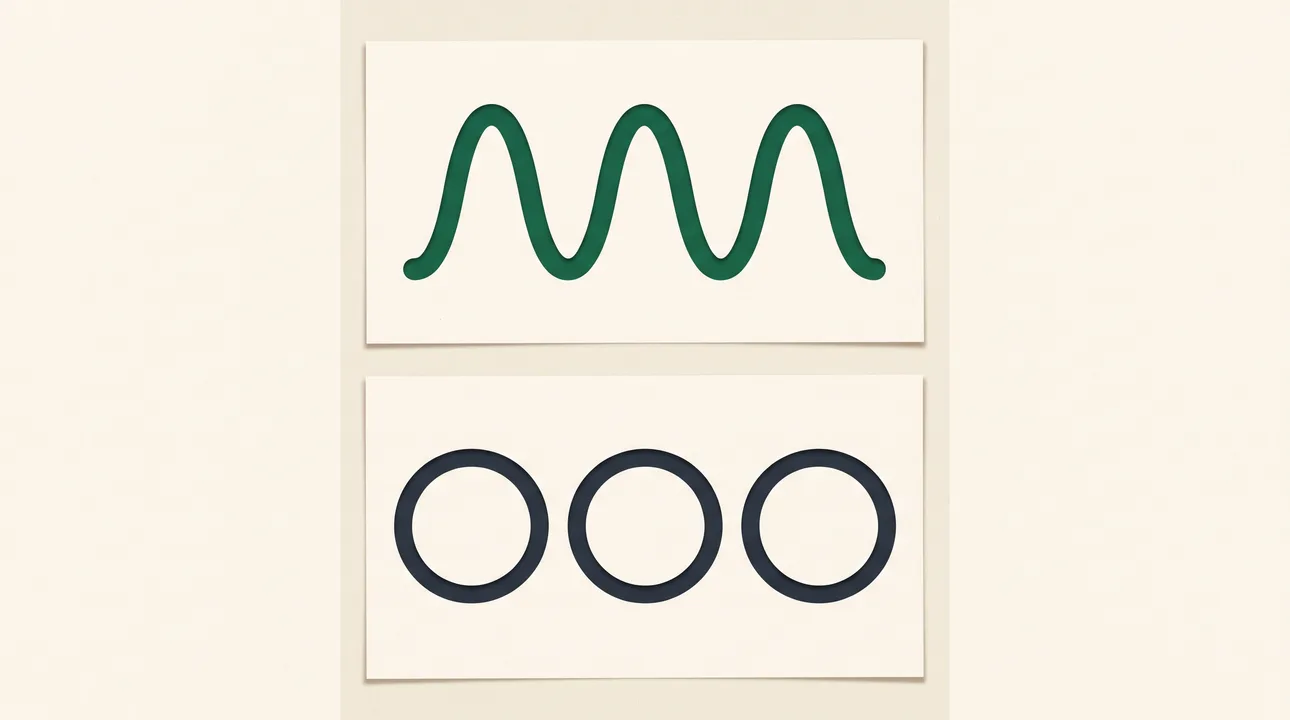
CBD can accumulate with repeated doses, but buildup does not establish that it must take weeks to produce a benefit. Reaching a stable pattern in blood and improving a symptom are different questions. A blood-level study can answer the first without answering the second.
One controlled study estimated that CBD reached steady state at about two days. That estimate came from visual inspection of trough data the authors did not publish. It involved high pharmaceutical doses in healthy volunteers, so it is not a two-day promise for a retail oil or gummy. Taylor et al., 2018
What does CBD buildup actually tell you?
Accumulation describes repeated exposure. If some CBD remains when the next dose arrives, blood levels can build toward a repeating pattern. That pattern is not a score for sleep, anxiety or any other health outcome.
| Question | What the 2018 study measured | What it cannot establish |
|---|---|---|
| Does CBD accumulate? | Blood concentrations after repeated pharmaceutical oral doses | How much a particular retail product accumulates in you |
| When does the pattern stabilize? | Roughly two days, estimated visually from unpublished trough data | A universal number of days for every dose or formulation |
| When does a benefit begin? | No treatment-benefit timeline for anxiety or insomnia | That waiting a set number of weeks makes CBD effective |
These rows concern the separate 24-person multiple-dose arm. Participants received a purified pharmaceutical solution under fasted conditions. The tested doses were 750 or 1,500 milligrams twice daily; those are study details, not suggested doses. Original methods and results
The distinction also matters when reading THC versus CBD comparisons. Naming a cannabinoid tells you which substance was tested. It does not turn a blood measurement into a demonstrated benefit.
Does steady state mean the blood level stays flat?
No. With repeated doses, steady state can mean the peaks and troughs repeat, rather than rising with each dose. The level can still rise after a dose and fall before the next one.
Think of a repeating wave, not a line that suddenly becomes flat. Nor does reaching that pattern mean a symptom must start improving at that moment. The drug’s movement through blood is the subject of pharmacokinetics; a treatment effect needs an outcome measurement of its own.
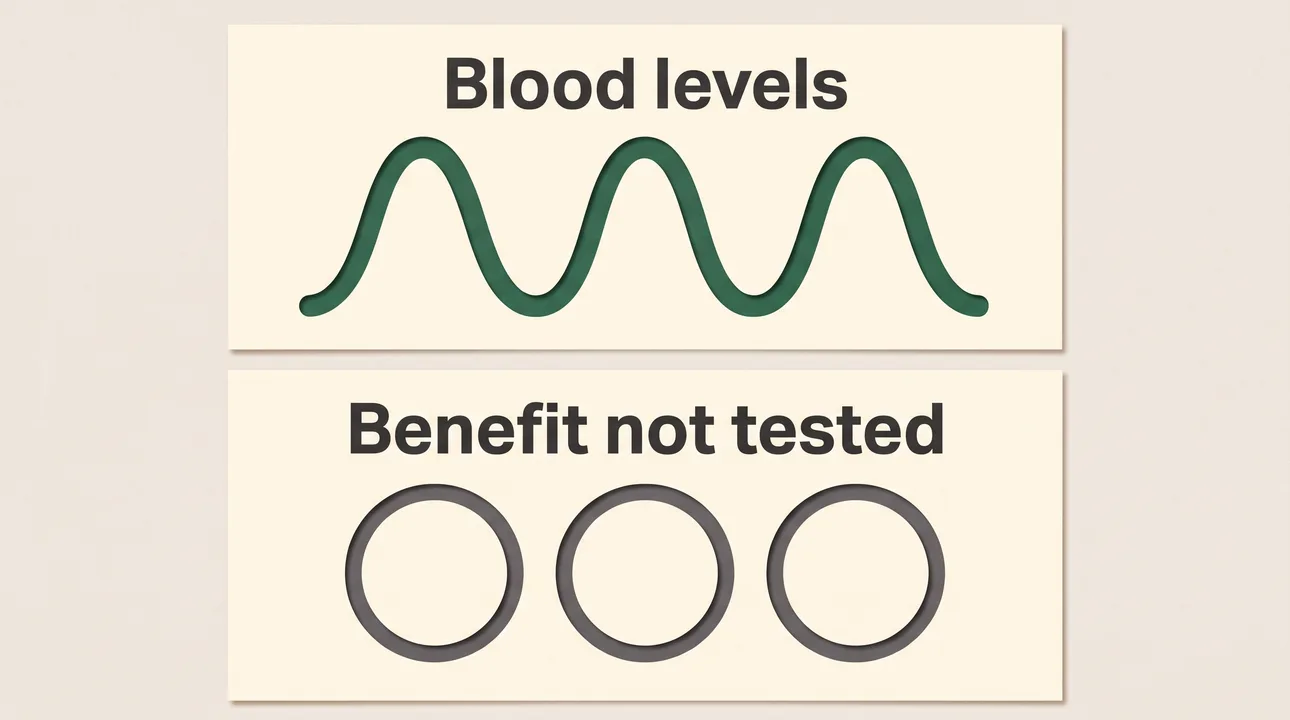
Only the repeating stage is shown schematically. The empty rating card represents a benefit question the study did not test; neither card shows actual data or a timing scale.
Our lesson on how the body absorbs and eliminates THC explains that broader vocabulary for a different cannabinoid. This CBD result cannot be substituted for THC’s timing or detection windows.
What did the repeated-dose study find?
The multiple-dose arm included 24 healthy adults: nine at each active dose and six on placebo. They received doses for six days, then one final morning dose on day seven. Blood exposure on day seven was about 1.8 to 2.6 times that on day one. Taylor et al., 2018
The researchers assessed safety, including sleep disruption and sleepiness. They found no consistent effect on those sleep measures. Those were safety assessments in healthy volunteers, not a powered trial of insomnia treatment. The study had no prospective statistical-power calculation.
This is why “stable blood levels” cannot become “now it works.” The study did not determine when anxiety or insomnia improves, or whether a consumer should keep using a product that has not helped.
Why doesn’t a long half-life settle the question?
Because CBD did not decline through one simple phase in this study. Its terminal half-life describes the slow final part of the measured decline. After repeated doses, that estimate was about 56 to 61 hours. It did not predict the authors’ roughly two-day steady-state estimate.
They also calculated an effective half-life from the dosing interval and observed accumulation. That estimate was much shorter, about 10 to 17 hours. It helps explain the mismatch without making either number a personal countdown. Original discussion
A 2019 correction replaced a mistaken factor in the published equation with the dosing interval. It did not announce a revision of the reported accumulation estimates. You do not need the equation to understand the lesson: one half-life figure does not describe every part of a changing blood-level curve. Taylor et al., 2019 correction
These values do not tell you when all CBD has left your body, or how to set a washout period. They also do not measure symptom relief.
Could another study predict a longer buildup time?
Yes. A later modeling paper used concentration data from 12 healthy adults to simulate repeated doses of 50 milligrams twice daily. Its original abstract reported variable times to steady state, predicted to extend to roughly three weeks in some individuals. That was a simulation, not a direct observation of weeks of repeated dosing or a treatment-benefit result. Schultz et al., 2023
The full paper’s methods, funding and conflicts of interest were not available for this account. Its abstract is enough to show why the 2018 estimate should not become a universal rule; it does not establish a waiting period for you.
Product differences matter to the scope of a claim. A full-spectrum, broad-spectrum or isolate CBD product is not automatically the same preparation as the purified pharmaceutical solution tested in 2018.
How should you read a claim that CBD needs weeks?
Look for the outcome the cited study actually measured. A blood-concentration result supports a claim about exposure. A claim about improved sleep or anxiety needs evidence for that outcome and its timing.
The same distinction helps with CBD and prescription-drug interactions: a change in exposure is its own question. It is not automatically a health benefit. Likewise, expectations and placebo effects concern experience and comparison conditions, rather than proving that blood levels reached a plateau.
The 2018 trial was funded by GW Research. Three authors were company employees and shareholders; two received consultancy fees. Greenwich Biosciences paid the open-access fee. Across the trial’s arms, common adverse events included diarrhea, nausea, headache and sleepiness. Events were mild or moderate; none were severe or serious. This small, short study cannot establish universal safety. Original funding and conflicts
Key takeaways
- Repeated CBD doses can accumulate, but accumulation is not a clinical benefit clock.
- The roughly two-day estimate came from unpublished trough data at high pharmaceutical doses.
- Steady state can be a repeating pattern of peaks and troughs.
- A later model predicted variable longer accumulation; neither study sets a personal waiting or washout period.
FAQ
Does CBD need to build up before it works?
Blood buildup alone cannot answer that. A benefit claim needs a measured health outcome, including when it changed. The repeated-dose study discussed here did not establish an anxiety or insomnia benefit timeline.
Does steady state mean a flat blood level?
No. Peaks after dosing and troughs before the next dose can settle into a repeating pattern. That is different from a constantly flat concentration or steadily increasing benefit.
Does the two-day estimate mean retail CBD works in two days?
No. It was a visual estimate from unpublished trough data in healthy volunteers receiving high doses of a pharmaceutical solution. It was not a treatment deadline for a retail product.
Does a long half-life tell me when CBD is gone?
No single value provides that personal answer. The terminal and effective half-lives described different aspects of this study’s exposure pattern. Neither is a personal washout calculation or a measure of when benefits stop.
Sources
- Taylor, L., Gidal, B., Blakey, G., Tayo, B., & Morrison, G. (2018). A Phase I, Randomized, Double-Blind, Placebo-Controlled, Single Ascending Dose, Multiple Dose, and Food Effect Trial of the Safety, Tolerability and Pharmacokinetics of Highly Purified Cannabidiol in Healthy Subjects. CNS Drugs, 32(11), 1053–1067. DOI: 10.1007/s40263-018-0578-5. Original full paper
- Taylor, L., Gidal, B., Blakey, G., Tayo, B., & Morrison, G. (2019). Correction to: A Phase I, Randomized, Double-Blind, Placebo-Controlled, Single Ascending Dose, Multiple Dose, and Food Effect Trial of the Safety, Tolerability and Pharmacokinetics of Highly Purified Cannabidiol in Healthy Subjects. CNS Drugs, 33(4), 397. DOI: 10.1007/s40263-019-00617-3. Original correction
- Schultz, H. B., Hosseini, A., McLachlan, A. J., & Reuter, S. E. (2023; online 2022). Population Pharmacokinetics of Oral-Based Administration of Cannabidiol in Healthy Adults: Implications for Drug Development. Cannabis and Cannabinoid Research, 8(5), 877–886. DOI: 10.1089/can.2021.0202. Original abstract; full-text access limited


