Cannabis Pharmacokinetics: How Your Body Absorbs, Distributes, and Eliminates THC
Follow a THC molecule through your body. Learn how absorption, metabolism, and genetics shape your cannabis experience across every consumption method.

Professor High
Your friendly cannabis educator, bringing science-backed knowledge to the community.
Why Does a 10mg Edible Hit Harder Than a Joint?
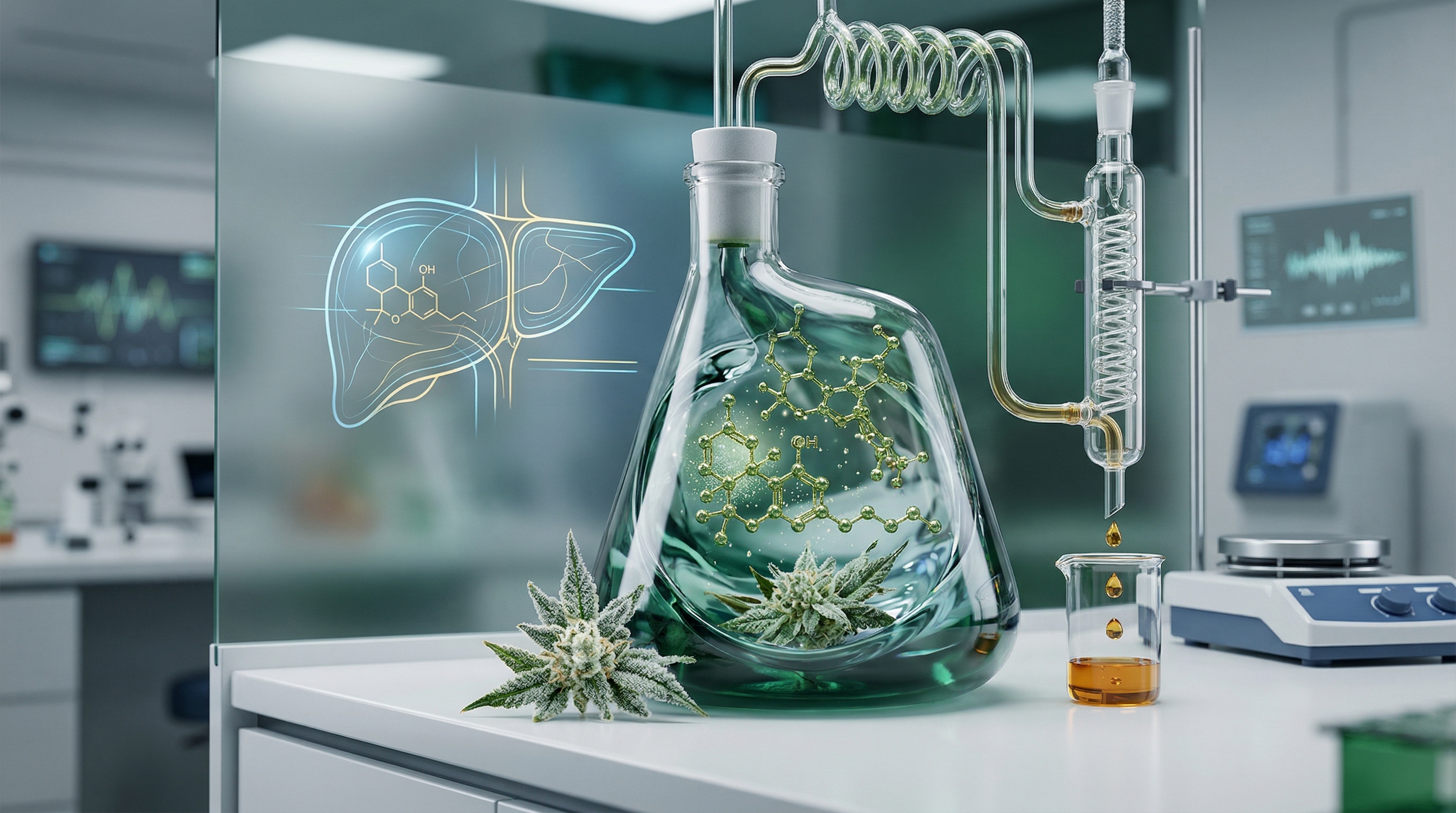
Here’s a fact that surprises most people: when you eat a cannabis edible, your liver converts THC into a completely different molecule – one that research suggests crosses the blood-brain barrier more efficiently than the THC you inhaled (Grotenhermen, 2003). Same plant, same cannabinoid going in, but your body transforms it into something fundamentally different depending on how you consume it.
This is the world of pharmacokinetics – the science of how your body absorbs, distributes, metabolizes, and ultimately eliminates a substance. It’s the reason a 5mg edible can floor one person while barely registering for another. It’s why smoking produces near-instant effects that fade in a couple of hours, while that same THC baked into a brownie might not peak for two hours and could linger well into the next morning.
Understanding pharmacokinetics isn’t just academic trivia. It’s genuinely practical knowledge that can help you:
- Dose more accurately across different consumption methods
- Predict onset times so you’re not caught off guard
- Understand drug testing windows and why THC lingers in your system
- Make informed choices about which consumption method suits your needs
In this deep dive, we’re going to follow a THC molecule on its entire journey through your body – from the moment it enters your lungs, stomach, or skin, through its distribution into your brain and fat tissue, its transformation in your liver, and its eventual exit. Along the way, we’ll connect the science to real-world implications that can genuinely improve your cannabis experience.
Let’s trace the path.
The Science Explained: THC’s Journey Through Your Body
Phase 1: Absorption – Getting THC Into Your Bloodstream
The first challenge any cannabinoid faces is getting from the outside world into your bloodstream. This process – absorption – varies dramatically depending on your consumption method, and it’s the single biggest factor determining how quickly you feel effects.
Inhalation (Smoking and Vaping)
When you inhale cannabis smoke or vapor, THC encounters the alveoli – tiny air sacs in your lungs with incredibly thin walls (just one cell thick) and an enormous collective surface area of approximately 70 square meters. THC, being highly lipophilic (fat-loving), passes through these membranes almost instantly.
Bioavailability – the percentage of THC that actually reaches your bloodstream – ranges from roughly 10% to 35% for inhalation, depending on factors like inhalation depth, hold time, and vaporization temperature (Huestis, 2007). Peak blood plasma concentrations occur within 3 to 10 minutes, which is why you feel the effects of smoking almost immediately.
Here’s an important nuance: smoking and vaping aren’t identical. Combustion (smoking) destroys a portion of THC through pyrolysis – the heat literally breaks down some cannabinoids before you can absorb them. Vaporization at lower temperatures may preserve more THC and terpenes, though real-world bioavailability studies show considerable overlap between the two methods (Spindle et al., 2018). For a full breakdown of how these methods compare, see our vaping vs. smoking comparison.
Oral Ingestion (Edibles)
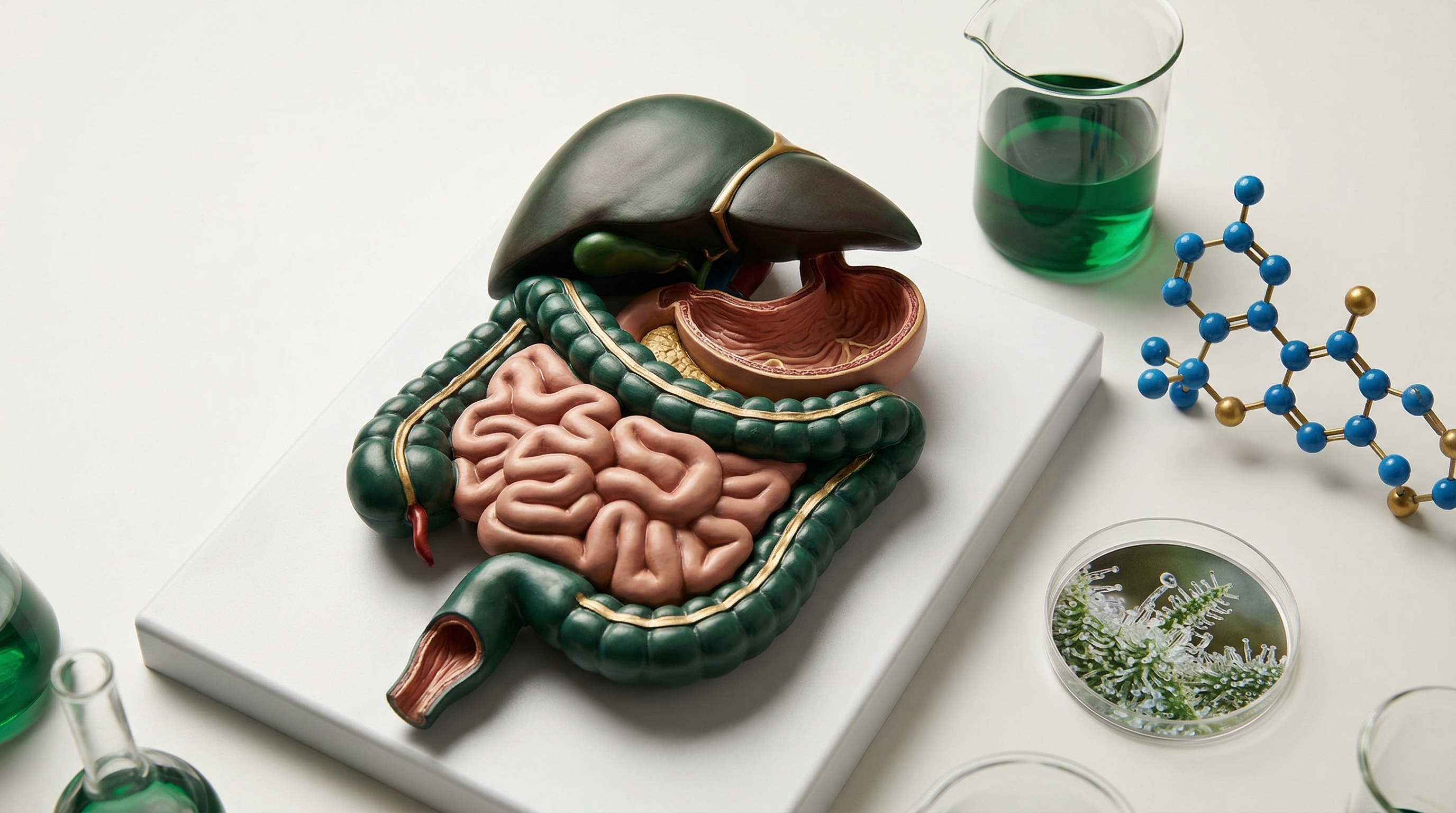
Eating cannabis sends THC on a much longer, more complicated journey. First, THC must survive the acidic environment of your stomach. Then it’s absorbed through the walls of your small intestine into the hepatic portal vein, which routes it directly to your liver before it ever reaches general circulation.
This detour is called first-pass metabolism, and it’s a game-changer. Your liver’s cytochrome P450 enzymes (specifically CYP2C9 and CYP3A4) convert a significant portion of delta-9-THC into 11-hydroxy-THC (11-OH-THC) – that more potent metabolite we mentioned earlier. The ratio of 11-OH-THC to THC in blood is greater than 1:1 following oral ingestion, compared to less than 1:20 following inhalation (Huestis, 2007). The trade-off? Oral bioavailability drops to just 4% to 12%, and onset is delayed to 30 minutes to 2 hours depending on stomach contents, metabolism, and individual variation.
Key takeaway: First-pass metabolism is why edibles feel qualitatively different from smoking – you’re literally experiencing a different, more potent molecule reaching your brain in higher proportions. For a deeper look at this specific metabolite, read our guide to why edibles hit harder.
Sublingual and Buccal (Under the Tongue / Cheek)
Tinctures and sublingual strips exploit the thin, capillary-rich mucous membranes of your mouth. THC absorbed here enters the bloodstream directly, partially bypassing first-pass metabolism. Clinical data suggests sublingual bioavailability of approximately 13%, with a faster onset of action (15-45 minutes) and shorter time to peak effects compared to swallowed edibles (Karschner et al., 2011). The pharmacokinetic profile sits somewhere between inhalation and oral ingestion.
Topical and Transdermal
Standard topicals (creams, balms) generally don’t produce significant systemic THC levels – cannabinoids penetrate the skin and interact with local cannabinoid receptors but struggle to reach the bloodstream in meaningful quantities (Stinchcomb et al., 2004). Transdermal patches, however, use permeation enhancers to push cannabinoids through the skin barrier into systemic circulation, producing slow, sustained delivery over hours. For a complete ranking, see our bioavailability comparison.
Phase 2: Distribution – Where THC Goes in Your Body
Once THC enters your bloodstream, it doesn’t just float around evenly. It distributes throughout your body based on blood flow and tissue affinity, and its lipophilic nature drives some fascinating behavior.
Protein Binding and Initial Distribution
In the bloodstream, THC is approximately 95-99% bound to plasma proteins – primarily lipoproteins and to a lesser extent albumin (Lucas et al., 2018). Only the tiny unbound fraction is pharmacologically active, available to cross membranes and bind to cannabinoid receptors. The initial volume of distribution is small, roughly equivalent to plasma volume (about 2.5-3 liters), reflecting this extensive protein binding.
Rapid Phase: Brain and Organs
Within minutes of entering the bloodstream, THC preferentially floods highly vascularized organs – your brain, heart, lungs, and liver receive the highest initial concentrations. This is the “onset” you feel: THC binding to CB1 receptors concentrated in your brain’s prefrontal cortex, hippocampus, basal ganglia, and cerebellum.
Peak brain concentrations after inhalation occur remarkably fast – often within 15 to 30 minutes – and then begin declining as THC redistributes to other tissues. For more on the receptors involved, see our CB1 vs. CB2 receptor guide.
Slow Phase: Fat Storage
Here’s where THC’s fat-loving nature creates a unique pharmacokinetic wrinkle. Over hours and days, THC migrates from the bloodstream into adipose (fat) tissue, where it accumulates and is released slowly back into the blood over extended periods (Huestis, 2007).
The steady-state volume of distribution of THC is approximately 3.5 L/kg of body weight – meaning if you weigh 70 kg, THC distributes as though it’s dissolved in roughly 245 liters of fluid (Lucas et al., 2018). This enormous number reflects THC’s strong affinity for tissues rather than blood, and it’s one of the highest volumes of distribution of any recreational substance.
This slow redistribution from fat stores is why:
- Chronic users may have detectable THC metabolites for weeks or even months after cessation
- Some people report feeling slightly “off” for days after heavy use – residual THC is genuinely re-entering circulation
- Body composition matters – individuals with higher body fat percentages may store more THC and eliminate it more slowly
- Food deprivation or stress (via ACTH release) can trigger lipolysis, releasing fat-stored THC back into the bloodstream – a phenomenon researchers have called “reintoxication” (Gunasekaran et al., 2009)
Phase 3: Metabolism – The Liver’s Transformation
Your liver is THC’s primary processing facility, and its work here is both complex and consequential. Metabolism also occurs to a lesser extent in extrahepatic tissues that express CYP450 enzymes, including the small intestine and brain.
The CYP450 Enzyme System
The cytochrome P450 (CYP450) enzyme family – particularly CYP2C9, CYP2C19, and CYP3A4 – handles the heavy lifting of THC metabolism. CYP2C9 is the primary enzyme, responsible for an estimated 70% of THC clearance (Bland et al., 2005). These enzymes perform two major transformations:
Phase I Metabolism (Oxidation):
- Delta-9-THC -> 11-OH-THC (active, crosses the blood-brain barrier more efficiently)
- 11-OH-THC -> 11-nor-9-carboxy-THC (THC-COOH) (inactive, but this is what standard drug tests detect)
Phase II Metabolism (Conjugation):
- THC-COOH is glucuronidated – attached to a sugar molecule – making it water-soluble enough for your kidneys to excrete
THC produces over 100 metabolites in total, though the pathway above accounts for the major route. Some of these minor metabolites may also have pharmacological activity, contributing to the overall effect profile.
Genetic Variation: Why People Respond Differently
Here’s something that doesn’t get discussed enough: your CYP2C9 genotype significantly affects how you metabolize THC. Roughly 15-20% of Caucasian populations carry a CYP2C9*3 variant that metabolizes THC about three times more slowly than the common variant (Sachse-Seeboth et al., 2009). In these individuals, the area under the curve (a measure of total drug exposure) was threefold higher, and they showed a trend toward increased sedation.
These slow metabolizers may experience:
- Stronger effects from the same dose
- Longer duration of intoxication
- Higher blood THC concentrations
- A 70% reduction in the formation of THC-COOH (the inactive metabolite)
A 2024 study on CYP2C9 polymorphisms found that roughly 60% of participants carried at least one polymorphism affecting THC metabolism, suggesting this genetic variability is more common than previously appreciated. Cannabis pharmacogenomics – personalized dosing based on your genetic profile – may represent the future of responsible consumption.
This genetic variation is one reason why “start low, go slow” isn’t just a platitude – it’s pharmacogenomic wisdom. Two people eating the same 10mg edible may genuinely be having different biochemical experiences.
Phase 4: Elimination – THC’s Exit Strategy
THC and its metabolites leave your body through two primary routes:
- Feces (~65%): The majority of THC metabolites are excreted through bile into the intestines (Huestis, 2007)
- Urine (~20%): Primarily as THC-COOH-glucuronide – the conjugated, water-soluble metabolite
- Other routes (~15%): Minor amounts are eliminated through sweat, saliva, and hair
The terminal elimination half-life of THC is biphasic. The initial half-life is roughly 4 hours for the rapid distribution phase. But in chronic users, the terminal half-life extends dramatically to 5-13 days due to slow release from fat stores (Huestis, 2007). THC-COOH, the inactive metabolite detected by standard drug tests, has an even longer half-life.
Detection Windows by Test Type
| Test Type | Occasional User | Regular User | Heavy Chronic User |
|---|---|---|---|
| Urine (50 ng/mL cutoff) | 3-4 days | 7-10 days | 30+ days |
| Urine (20 ng/mL cutoff) | Up to 7 days | Up to 21 days | 30-90 days |
| Blood | 1-2 days | 3-7 days | Up to 30 days |
| Saliva | 24-30 hours | Up to 72 hours | Up to 72 hours |
| Hair (1.5 inch sample) | Up to 90 days | Up to 90 days | Up to 90 days |
Note: These are estimates. Individual variation based on metabolism, body fat, hydration, exercise, and CYP2C9 genotype can shift these windows significantly.
Practical Implications: What This Means for Your Cannabis Experience
Dosing Across Methods
Understanding pharmacokinetics makes you a smarter consumer. Here’s a practical framework:
| Method | Onset | Peak | Duration | Bioavailability | 11-OH-THC Production |
|---|---|---|---|---|---|
| Smoking | 1-5 min | 15-30 min | 1-3 hours | 10-35% | Minimal |
| Vaping | 1-5 min | 10-20 min | 2-4 hours | 30-50% | Minimal |
| Edibles | 30-120 min | 2-4 hours | 6-10 hours | 4-12% | High |
| Sublingual | 15-45 min | 45-90 min | 4-6 hours | ~13% | Moderate |
| Transdermal | 1-2 hours | Sustained | 8-48 hours | Variable | Low |
Connecting to High Families
Pharmacokinetics doesn’t just apply to THC in isolation. The terpenes present in your cannabis also have their own absorption and metabolism profiles, and they may influence how THC behaves in your body through what researchers call the entourage effect.
For example, myrcene – the dominant terpene in Relax High family strains – has been hypothesized to increase cell membrane permeability, potentially enhancing THC absorption (Russo, 2011). Meanwhile, caryophyllene, the signature terpene of the Relief High family, acts directly on CB2 receptors and follows its own distinct pharmacokinetic pathway.
The Entourage High family, characterized by complex multi-terpene profiles, may produce its nuanced effects partly because different terpenes absorb, peak, and clear at different rates – creating a shifting symphony of effects rather than a single note. For more on how terpenes shape your experience, explore our complete terpene guide.
Practical Takeaways for Smarter Consumption
- Eating fat with edibles slows absorption but may increase total bioavailability – lipid-rich meals help dissolve lipophilic THC in the gut (Zgair et al., 2016)
- Holding smoke longer doesn’t meaningfully increase absorption – most THC is absorbed in the first few seconds; extended holds primarily increase tar and irritant exposure
- Exercise after cessation may temporarily increase blood THC levels as fat stores are mobilized through lipolysis – something to consider before drug testing (Wong et al., 2013)
- Sublingual tinctures offer a middle ground if you want faster onset than edibles without the respiratory involvement of smoking
- Nano-emulsion edibles use technology to create smaller THC particles that may bypass some first-pass metabolism, offering faster onset and higher bioavailability than traditional edibles
- Tracking your response to different consumption methods helps you identify your personal pharmacokinetic patterns – what works for someone else may not match your genetics and metabolism
Key Takeaways
- Consumption method is the single biggest variable in your cannabis experience – the same THC molecule produces different effects depending on whether it’s inhaled, eaten, or absorbed sublingually
- First-pass liver metabolism converts THC to 11-OH-THC, a more potent metabolite – this is why edibles feel stronger and different, not just slower
- THC is 95-99% protein-bound in blood and distributes extensively into fat tissue, creating a large reservoir that releases slowly over days to weeks
- Genetic variation in CYP2C9 enzymes means some people metabolize THC up to three times more slowly, experiencing stronger and longer effects from identical doses
- THC elimination is biphasic – rapid clearance from blood in hours, but slow release from adipose tissue over days to weeks, which is why drug test detection windows vary so widely
- “Start low, go slow” isn’t just cautious advice – it’s grounded in the pharmacokinetic reality that individual absorption, distribution, and metabolism vary enormously
FAQs
Why do edibles sometimes seem to “not work” and then hit all at once?
Oral absorption of THC is highly variable and depends on stomach contents, gut motility, and individual metabolism. On an empty stomach, absorption may be faster but less complete. After a fatty meal, onset may be delayed but peak effects stronger. The common mistake of “re-dosing” because you don’t feel anything at 45 minutes can lead to compounded effects when both doses finally absorb. Always wait at least 2 hours before considering additional doses.
How long does THC actually stay in your system?
It depends on what you mean by “in your system.” Psychoactive effects from inhalation typically resolve within 2-4 hours, but THC metabolites (specifically THC-COOH) remain detectable in urine for days to weeks depending on usage frequency. Under the standard 50 ng/mL cutoff, occasional users are unlikely to test positive beyond 3-4 days, while chronic heavy users may test positive for 30 days or more. At a more sensitive 20 ng/mL cutoff, detection can extend to 21 days for regular users and potentially 90 days in extraordinary cases (Huestis, 2007).
Does body weight affect how cannabis hits you?
Body composition – specifically the ratio of fat to lean mass – may influence THC distribution and elimination. Individuals with higher body fat percentages have more tissue for THC to accumulate in, which can affect both the duration of effects and the length of detection windows. However, body weight alone is a poor predictor of response. Factors like CYP2C9 genotype, tolerance, consumption method, and even the specific terpene profile of the strain you’re using all play significant roles.
Can exercise release stored THC and make you feel high again?
Research suggests it’s possible but unlikely to produce noticeable psychoactive effects in most people. A 2013 study found that moderate exercise could increase blood THC concentrations by roughly 15% in regular users, likely due to lipolysis (fat breakdown) releasing stored cannabinoids (Wong et al., 2013). The study by Gunasekaran et al. (2009) also showed that food deprivation and ACTH (a stress hormone) could trigger similar release from fat stores. While these increases are generally too small to produce a subjective high, they could potentially affect drug test results in borderline cases.
Why does the same strain hit me differently each time?
Multiple pharmacokinetic variables shift between sessions: stomach contents, hydration, sleep quality, stress levels, concurrent medications, and even your menstrual cycle if applicable. The entourage effect adds another layer – terpene profiles can vary between batches of the same strain. For a deeper dive into this phenomenon, read our article on why the same strain hits you differently each time.
Sources
- Bland, T.M. et al. (2005). CYP2C-catalyzed delta-9-tetrahydrocannabinol metabolism. Biochemical and Biophysical Research Communications, 327(3), 831-838. PubMed
- Grotenhermen, F. (2003). Clinical pharmacokinetics of cannabinoids. Journal of Cannabis Therapeutics, 3(1), 3-51. Taylor & Francis
- Gunasekaran, N. et al. (2009). Reintoxication: the release of fat-stored delta-9-THC into blood is enhanced by food deprivation or ACTH exposure. British Journal of Pharmacology, 158(5), 1330-1337. PMC
- Huestis, M.A. (2007). Human cannabinoid pharmacokinetics. Chemistry & Biodiversity, 4(8), 1770-1804. PMC
- Karschner, E.L. et al. (2011). Plasma cannabinoid pharmacokinetics following controlled oral THC and smoked cannabis administration. Analytical and Bioanalytical Chemistry, 401(7), 2083-2090. PubMed
- Lucas, C.J. et al. (2018). The pharmacokinetics and the pharmacodynamics of cannabinoids. British Journal of Clinical Pharmacology, 84(11), 2477-2482. PMC
- Russo, E.B. (2011). Taming THC: potential cannabis synergy and phytocannabinoid-terpenoid entourage effects. British Journal of Pharmacology, 163(7), 1344-1364. PubMed
- Sachse-Seeboth, C. et al. (2009). Interindividual variation in the pharmacokinetics of delta-9-THC as related to genetic polymorphisms in CYP2C9. Clinical Pharmacology & Therapeutics, 85(3), 273-276. PubMed
- Spindle, T.R. et al. (2018). Acute effects of smoked and vaporized cannabis in healthy adults. JAMA Network Open, 1(7), e184841. PubMed
- Stinchcomb, A.L. et al. (2004). Human skin permeation of delta-8-THC, CBD, and CBN. Journal of Pharmacy and Pharmacology, 56(3), 291-297. PubMed
- Wong, A. et al. (2013). Exercise increases plasma THC concentrations in regular cannabis users. Drug and Alcohol Dependence, 133(2), 763-767. PubMed
- Zgair, A. et al. (2016). Dietary fats and pharmaceutical lipid excipients increase systemic exposure to orally administered cannabis and cannabis-based medicines. American Journal of Translational Research, 8(8), 3448-3459. PubMed


