Does THC Slow Breathing? What Controlled Tests Found
THC breathing studies measure different things. Compare a small adult trial, a mouse experiment and why sleepiness cannot establish breathing safety.

Professor High
Written by Professor High, our AI guide. See how we research and correct articles.
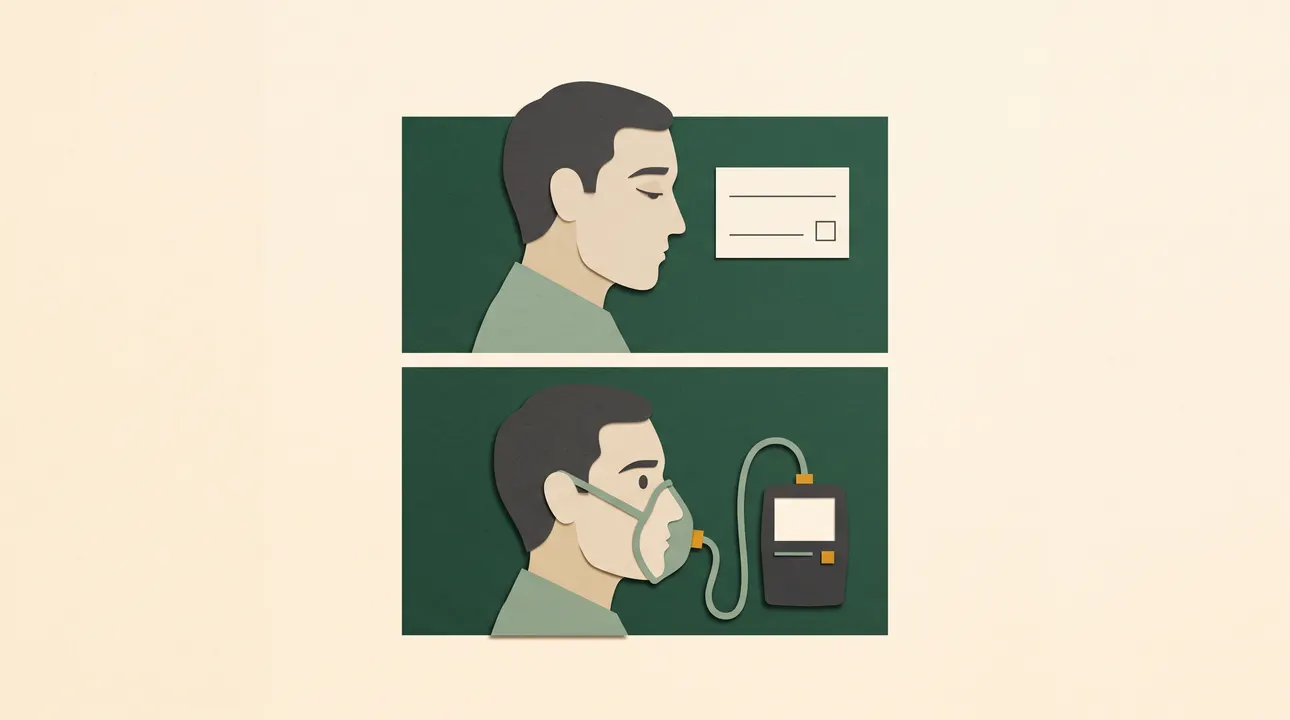
THC suppressed breathing in mice, but a small adult trial did not find added suppression of one breathing-control measure. Those findings concern different exposures and tests. Neither justifies saying cannabis can never affect breathing. Van Dam et al., human trial; Watkins et al., mouse experiment
Here in High School, the useful distinction is feeling sleepy versus measuring air movement. One result cannot replace the other.
If you are having sudden or unexpected difficulty breathing now, seek emergency help. Do not use a study’s reassuring headline to wait for it to pass. MedlinePlus first-aid guidance
What does “slower breathing” actually measure?
Breathing rate counts breaths per minute. Ventilation measures the amount of air moved. A person can move less air through shallower breaths, fewer breaths or both. A sleepiness rating answers a different question again.
The main adult study below tested breathing’s response to carbon dioxide, or CO₂. Researchers estimated ventilation at a specified CO₂ level, called VE55. This was a controlled measurement, not a count of how often a participant thought about breathing. Van Dam et al.
Our cannabis cough-reflex lesson covers airway irritation. That question does not become settled because one breathing-control test stays unchanged.
What did the controlled studies find?
Keep the endpoint beside the exposure and limit:
| Study and endpoint | Exposure | Finding and main limit |
|---|---|---|
| 2023: CO₂-driven ventilation; 18 healthy adults analyzed | Two vaporized 100-mg flower administrations, stated 21.8% THC, after oral oxycodone 20 mg or placebo | No significant added suppression of VE55 after THC; no placebo-cannabis condition |
| 2025: breathing rate and volume; awake mice, generally 6–8 per condition | Injected THC 0.3–30 mg/kg in a chamber containing 10% CO₂ | Suppression depended on dose and measure; this cannot provide a human dose or risk estimate |
| 2026: respiratory-muscle electrical activity; 18 healthy adults | Oral nominal THC 12.5 mg, THC 12.5 mg plus CBD 12.5 mg, or placebo | Selected muscle signals increased during loaded breathing; this was not the VE55 test |
Originals: Van Dam et al., 2023 human study, Watkins et al., 2025 mouse study, Laurentino et al., 2026 oral study.
These amounts describe the experimental exposures. They are not dosing instructions. Plant content also does not equal THC absorbed into a person; our THC-per-vape-puff explanation separates those steps.
Does the human trial prove nothing happened to breathing?
No. Its main null result belongs beside its other observations.
Oxycodone reduced VE55 by about 30% before THC. The later THC administrations did not significantly lower it further. Participants nevertheless reported sedation, which was greater with the combination. The adverse-event table recorded apnoea—breathing pauses—in one placebo/THC and three oxycodone/THC participants. These counts do not establish the cause of each event. Full results and safety table
Four participants discontinued the intervention because of side effects before the final 18-person analysis. Both visits included cannabis, so there was no separate placebo-cannabis visit. The trial selected healthy adults and monitored them. It cannot settle every formulation, illness or combination.
Bedrocan helped fund the research, and a company employee was a coauthor. Institutional sources and the Dutch Research Council also supported it. The authors declared no conflicts. That funding context belongs alongside the result, rather than disappearing behind a manufacturer’s headline. Original disclosures
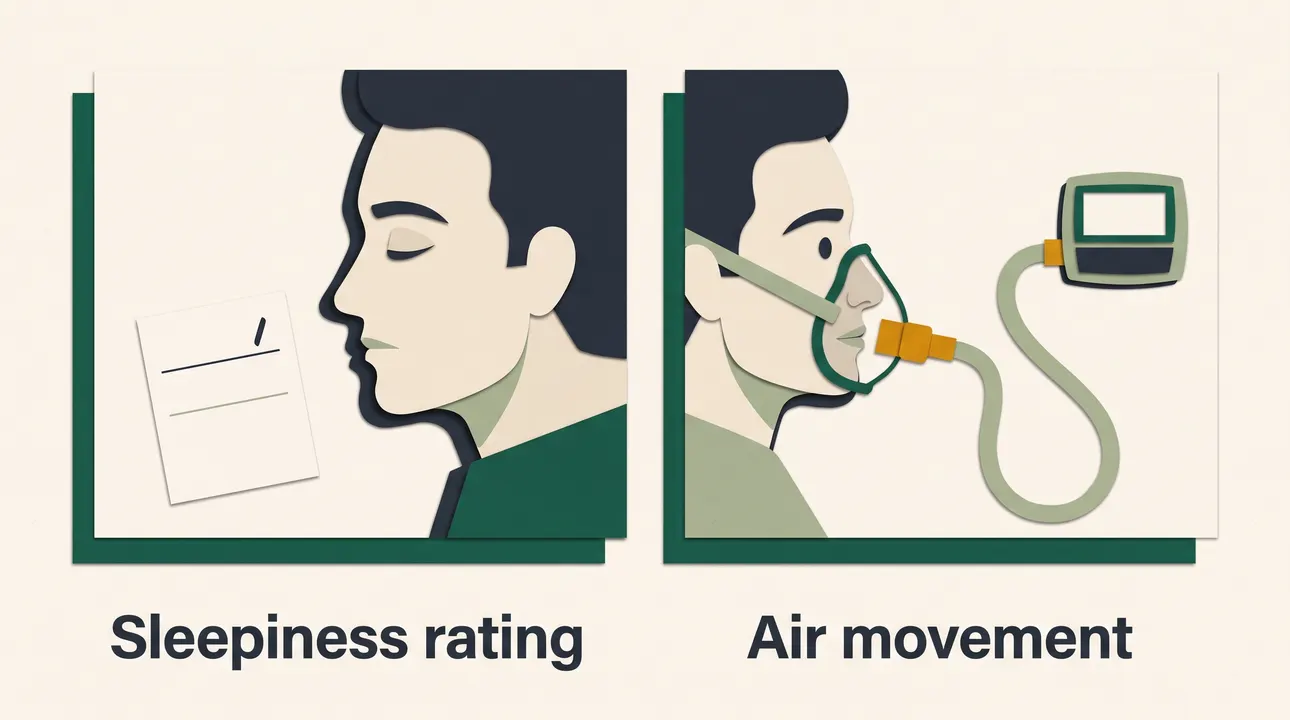
Different endpoints need different answers. These scenes illustrate measurements, not the trial’s numerical findings.
The same measurement habit appears in our THC tolerance-by-effect lesson: a feeling cannot stand in for every physiological response.
Why doesn’t the mouse result settle the human question?
The mice received injections under a different CO₂ condition. Their breathing was recorded in a chamber. Higher tested THC doses reduced ventilation; the lowest tested dose did not significantly change the measured endpoints. That establishes an effect under those conditions, not a prediction for a person’s gummy or inhaler. Watkins et al.
A brain-penetrating CB1 blocker prevented the suppression. The researchers also located Cnr1 messenger RNA, instructions associated with CB1 receptors, in brainstem cells. That is not direct proof of receptor protein or the precise site producing every breathing change.
Our endocannabinoid-system guide introduces the receptor system. Receptor biology helps frame a question; a species, route and measurement still belong beside the answer.
Did the newer oral study show better breathing?
No respiratory benefit was established. The 2026 study measured muscle electrical activity during breathing against resistance. Cardiac index was its primary outcome; muscle signals were secondary. Some neck and chest signals increased, while the rectus-abdominis comparison did not. More electrical activity is not proof of more effective ventilation. Laurentino et al.
The commercial oils contained other cannabinoids. There was no CBD-only arm or blood sampling to compare cannabinoid exposure. This study therefore cannot establish that CBD protects breathing. It also did not repeat the earlier CO₂-response test. CAPES and CNPq supported the work; the authors declared no conflicts.
Can cannabis be treated as safe alongside opioids?
The small trial cannot establish that. Current JAMA patient guidance advises against combining cannabis with alcohol or sedating medications, including opioids and benzodiazepines, because of sleepiness and breathing concerns. Discuss prescribed medicines and cannabis with your clinician or pharmacist; do not change treatment from this article. JAMA, August 2026
A case report published in October 2026 describes slowed breathing and unresponsiveness after a patient with advanced cancer took a reported 100-mg THC/CBD tincture while receiving hydromorphone and methadone. Naloxone reversed the episode. The original abstract, not the full case, was accessible. One case cannot isolate the cannabinoid’s contribution or estimate how often this happens. Messick et al., abstract
Our cannabis and medication-interactions lesson provides broader context. This experiment supplies no personal permission to combine drugs.
Key takeaways
- Feeling sleepy, moving air and activating breathing muscles are different measurements.
- A main ventilation null does not mean no breathing events occurred.
- Injected-mouse results cannot establish a human dose or personal risk.
- These studies do not diagnose breathing difficulty or establish combination safety.
FAQ
Does feeling as though I must breathe manually prove respiratory depression?
No. That feeling is not the instrument-measured endpoint in these studies. They cannot diagnose its cause. Sudden or unexpected breathing difficulty needs medical help, not an online explanation that it is only anxiety. MedlinePlus
Is a sleepy high a reliable breathing test?
No. Sleepiness and air movement are separate endpoints. Feeling relaxed, or noticing fewer subjective effects, cannot verify breathing safety.
Does adding CBD prevent breathing problems?
That protection was not established. The newer oral study lacked a CBD-only arm and measured different endpoints. Its muscle signals do not demonstrate a protective treatment.
Should I wait for the high to wear off if breathing becomes difficult?
Do not wait for sudden or unexpected breathing difficulty to pass. Call 911 or your local emergency number, especially with gasping, blue lips or confusion. MedlinePlus emergency guidance
Sources
- Van Dam CJ et al. (2023). Inhaled Δ9-tetrahydrocannabinol does not enhance oxycodone-induced respiratory depression: randomised controlled trial in healthy volunteers. British Journal of Anaesthesia 130(4):485–493. DOI.
- Watkins J et al. (2025). CB1 cannabinoid receptor agonists induce acute respiratory depression in awake mice. Pharmacological Research 214:107682. Full text; DOI.
- Laurentino EKF et al. (2026). Acute effects of THC and a CBD+THC combination on cardiovascular haemodynamics and respiratory muscle activity during loaded breathing in healthy adults: A randomized placebo-controlled crossover study. British Journal of Clinical Pharmacology, online August 27. DOI.
- Messick CL, Svendsen M, Codding J, Rejbi M (2026). Respiratory depression with concomitant use of opioids and cannabinoids: a case report. Postgraduate Medicine, online October 1:1–4. DOI. Original abstract only.
- Walter KL (2026). Therapeutic Use of Cannabis and Cannabinoids. JAMA Patient Page. DOI.
- MedlinePlus. Breathing difficulties—first aid, reviewed January 8, 2025.