How to Dispose of Cannabis Vape Pens, Carts, and Batteries
Learn how to dispose of cannabis vape pens, cartridges, and batteries safely, what to ask collection sites, and why THC devices need a separate check.

Professor High
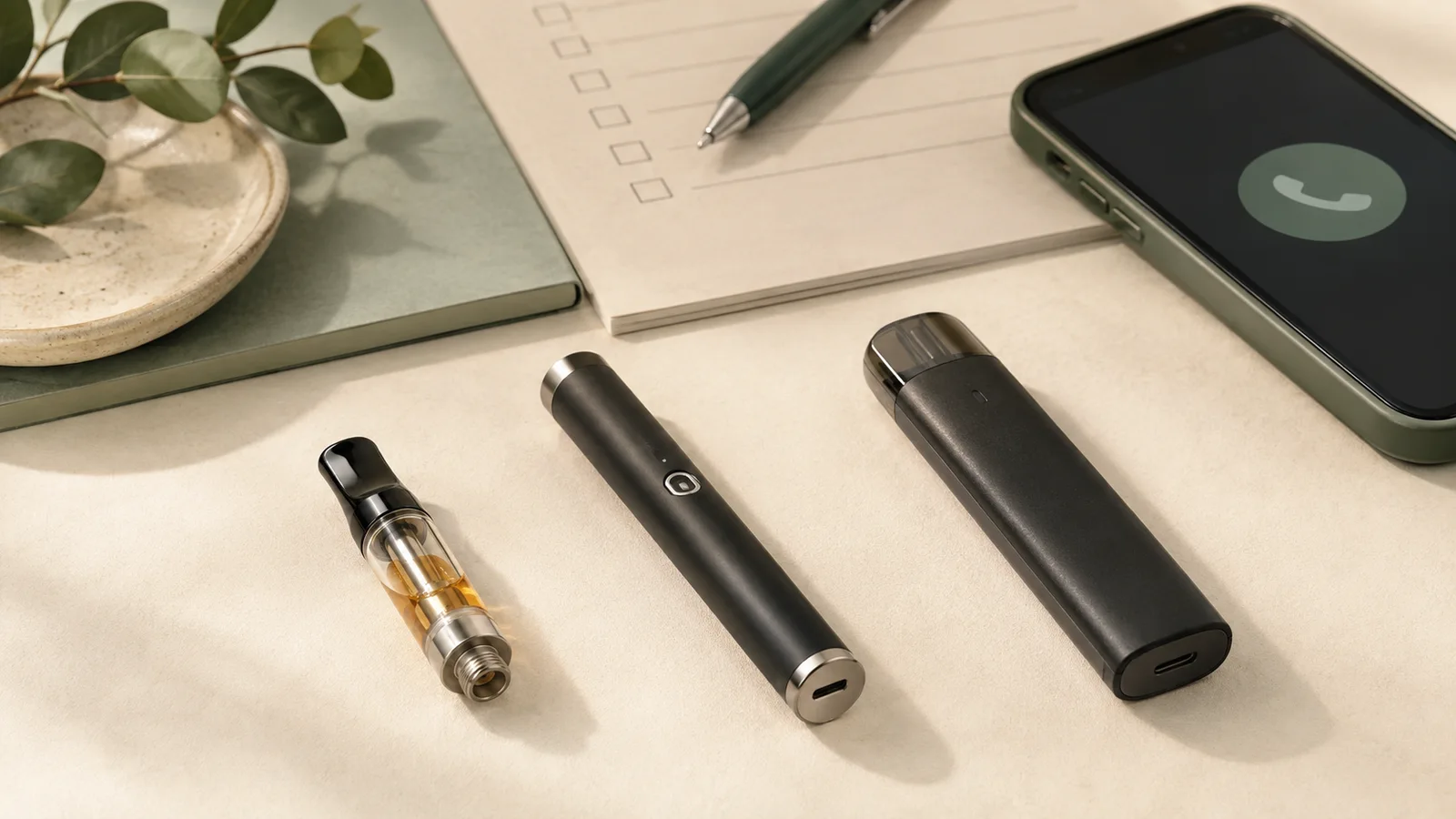
The drawer starts with one dead vape. Then a cartridge with a stubborn drop left. Then a pen battery you keep meaning to deal with. Eventually, you have a tiny electronics collection that smells faintly like last summer.
The frustrating part is that “recycle your vape” sounds simple until you try to find somewhere that takes it.
Identify your hardware, leave sealed devices intact, and confirm a collection program accepts your exact THC-containing item. Keep lithium batteries and devices containing them out of household trash and curbside recycling. EPA battery guidance.
This guide is for personal household waste in the United States. A dispensary clearing inventory or a school handling confiscated devices needs guidance for its own situation. Here, the job is getting that drawer emptied responsibly, one confirmed destination at a time.
First, know which piece you have
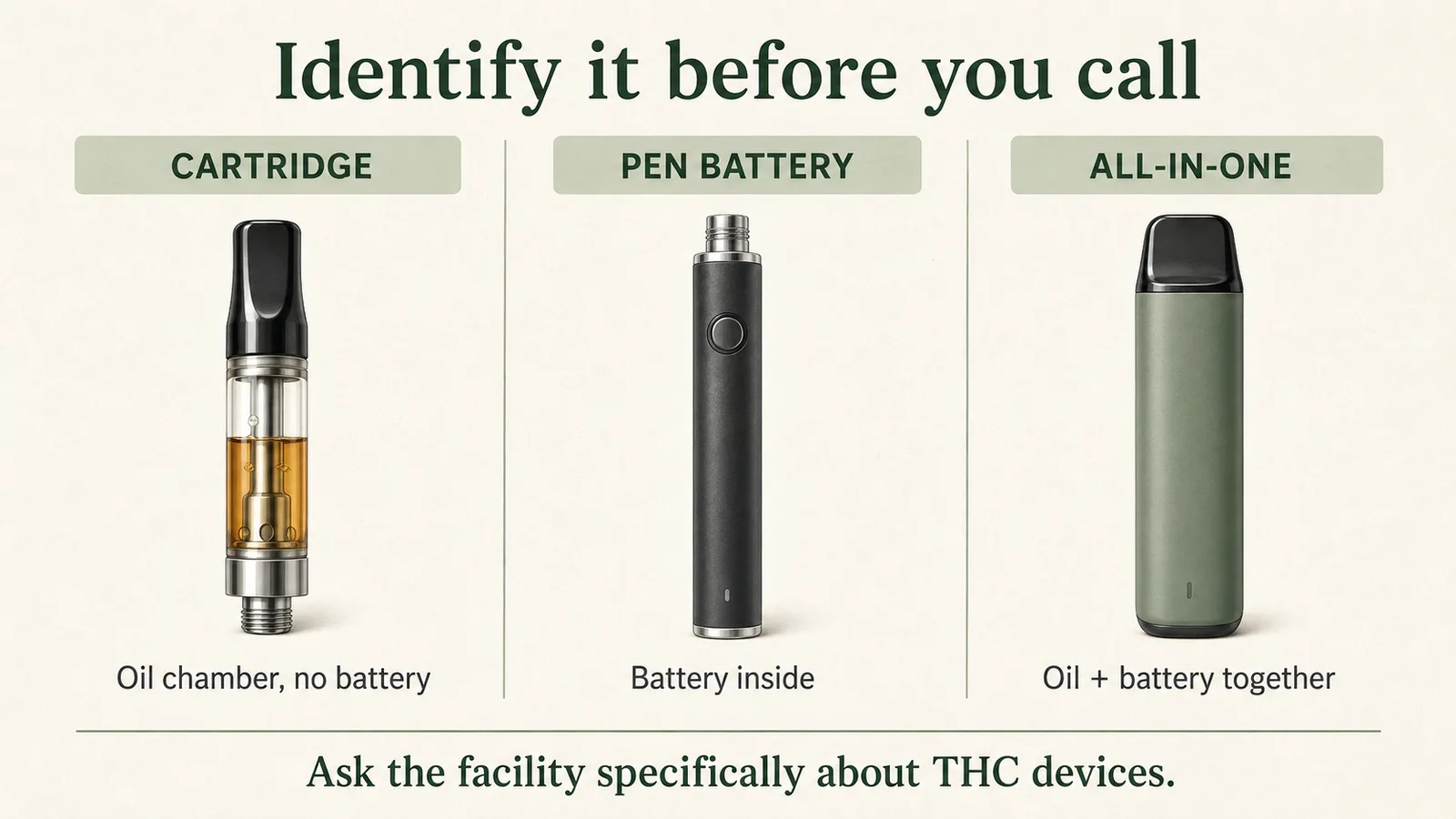
“Vape pen” can mean three different objects. Use the right name when you call, because the disposal answer may change with it.
A cartridge is the oil chamber, mouthpiece, and heating assembly. A standard detached 510-thread cartridge does not contain a battery. A pen battery is the power unit it attaches to. An all-in-one disposable combines the oil chamber and battery in one device. Some disposables have charging ports; that does not make their internal cells user-removable.
Our cartridge-versus-disposable guide explains those formats in more detail. For disposal, the practical distinction is whether you are asking someone to accept residue, a battery, or both together.
| What is in your drawer? | What to ask the collection program | What to leave alone |
|---|---|---|
| Detached, apparently empty cannabis cartridge | “Do you accept used THC cartridges with possible oil residue?” | Do not pry it open or rinse it to make it look recyclable. |
| Cartridge with oil remaining | “Do you accept cannabis cartridges that still contain oil?” | Keep the contents in the cartridge. |
| Retired reusable pen battery | “Do you accept this intact vape battery unit, and how should I prepare its contacts?” | Leave its internal battery housing intact. |
| Sealed disposable, including a rechargeable one | “Do you accept a whole THC vape with an embedded battery?” | Do not extract the cell or separate sealed parts. |
| Damaged or swollen battery/device | “What is your damaged-battery procedure?” | Do not use an ordinary unattended collection bin. |
This table is a call guide, not a promise of acceptance. A yes for one row does not establish a yes for the others.
Why the recycling symbol is not enough
Collection and sorting equipment can crush batteries and cause fires. A device that no longer works can still pose that risk. EPA consumer guidance.
A cartridge poses a different question. Its glass appearance does not tell you whether a local glass program accepts the assembled item or its residue. Neither does a recycling arrow on the outer box. Treat the package and the device as separate questions when reading local instructions.
You also do not need to squeeze out one last use to qualify for disposal. If your cart has stopped drawing, our clogged-cart troubleshooting guide can help you distinguish routine issues from reasons to stop using it. Once you decide to discard it, tell the collector what remains inside.
The THC detail that generic disposal advice misses
EPA’s individual e-cigarette disposal page describes nicotine products and recommends household hazardous waste collection. Its nicotine discussion is not evidence that cannabis oil has the same waste classification, or that every facility accepting nicotine vapes accepts THC devices.
Two local examples make this distinction concrete:
- King County, Washington: Its household guide says cannabis e-liquid and cannabis vape devices are not accepted at hazardous waste facilities. It directs consumers to the manufacturer or the store where they bought the item for disposal guidance. King County’s instructions.
- Boulder County, Colorado: Its Vape Aware page lists devices, cartridges, batteries, and e-liquid, then explicitly excludes THC devices. Boulder County Vape Aware.
These are examples checked September 6, 2026, not a nationwide directory. They show why scanning a list for the word “vape” can send you to the wrong counter.
A five-step disposal plan you can actually finish
1. Identify the item without dismantling it
Read the model and package, if you still have them. Write down whether it is a separate cartridge, reusable power unit, or sealed disposable. Note whether oil remains and whether the casing is damaged.
You are gathering information for a phone call. You are not preparing a science experiment. Removing a cartridge through its normal user-operated connection is different from prying open a sealed device. Follow the product’s instructions; do not force a stuck connection. EPA warns that not every battery is serviceable by the user. EPA household battery guidance.
2. Start with your local household waste agency
Search your city or county name with “household hazardous waste” and “cannabis vape disposal.” Prefer the official agency page over a map pin or an old social post. EPA’s household hazardous waste resource recommends contacting local environmental, health, or solid waste agencies about collection options.
Look for an accepted-items list, restrictions, appointment rules, and a contact number. A facility might have different rules for a permanent site and a mobile collection event. Do not treat a nearby location as confirmed until the program says it accepts your item.
3. Ask the complete question
Here is a script you can copy into your notes:
I have a used cannabis THC vape from my household. It is a sealed disposable with a battery inside, and some oil may remain. Do you accept that exact item? If so, how should I package it, and do I need an appointment?
Change the description to match your hardware. Then confirm:
- Does “vape” acceptance include cannabis or only nicotine?
- Are cartridges with residue accepted separately?
- Must I be a resident, and is there a fee or quantity limit?
- What instructions apply if the device is damaged?
- If you cannot accept it, which local agency or program should I contact next?
These questions prevent a vague yes from becoming a wasted trip. Record the answer and the date; keep the instructions with your appointment details.
4. If the answer is no, get a specific referral
Contact the device manufacturer and the licensed retailer where you bought it. Ask for a current local disposal route for that model, including any remaining THC oil. King County specifically recommends those contacts when its facilities cannot accept cannabis vapes.
A retailer’s recommendation is not the same thing as permission to leave the item at the store. Ask whether there is an actual take-back program and exactly what it accepts. For future purchases, after-sale help is a useful question from our dispensary buyer’s guide.
If neither contact can name a destination, go back to the municipal or state waste agency with their answers. Ask for a referral for household cannabis devices containing lithium batteries. Do not quietly substitute an ordinary battery bin or leave the device outside a closed facility.
5. Prepare for the confirmed handoff
Follow the receiving program’s instructions. EPA recommends separate plastic bags and nonconductive tape on accessible battery terminals. Keep labels readable; do not open a housing to find internal terminals. EPA battery precautions.
Bring only items the program has agreed to accept. At a staffed location, identify the contents before handing them over. A little specificity at the counter helps preserve the same clear understanding you established on the phone.
Store it safely while you arrange disposal
For an intact, cool device, follow its storage directions and keep it away from heat, direct sun, moisture, and loose metal objects. North Carolina Emergency Management recommends cool, dry storage and protection from physical damage for lithium-ion equipment. A hot parked car is a poor waiting room for your collection appointment. Ready NC battery safety.
Keep discarded cannabis products inaccessible to children and pets. Retain identifying labels and avoid repurposed food containers or mixing the waste with other chemicals; those are general household hazardous waste precautions. EPA storage guidance.
A hot, smoking, hissing, or actively failing device is an emergency, not a recycling errand. Move away, keep others away, and call 911. Do not put it in your car for a trip to a collection center. For damaged devices without active emergency signs, stop using and charging them and obtain handling instructions from the manufacturer and local waste program. Ready NC, EPA damaged-battery guidance.
Mailing is also a separate question. Lithium-battery transport has specific requirements; a return address alone is not shipping authorization. Use a program only after it confirms the device, cannabis contents, condition, and shipping method are accepted. PHMSA lithium-battery transport resources.
Avoid turning disposal into a repair project
Do not puncture, crush, drill, or heat a device to get the cell or final oil out. Do not drain oil into a sink, flush it, or use solvents to clean a cartridge for a recycling bin. EPA’s general hazardous waste advice warns against drain disposal and mixing wastes; its battery guidance warns about damage and user-serviceability. EPA HHW precautions, EPA household batteries.
If the reason you are discarding the cart is its age, our oil shelf-life guide covers that separate decision. If you suspect a fake, our counterfeit-cart guide explains what to check. Neither uncertainty needs to be resolved by consuming the leftovers.
FAQs
Can I throw away an empty disposable weed vape?
Keep a disposable containing a lithium battery out of household trash and curbside recycling. An empty oil chamber does not remove the battery. Find a collection route that explicitly accepts whole cannabis devices.
Can an empty THC cartridge go in glass recycling?
Do not assume so. Ask your local program about the assembled cartridge and possible THC residue. “Empty cartridge,” “glass bottle,” and “whole vape” are different descriptions; be specific.
Will a hardware store’s battery bin accept my vape?
Confirm with that program first. Acceptance of ordinary rechargeable batteries does not establish acceptance of a complete cannabis device. Damaged batteries may also require a separate process.
Should I remove the battery from a disposable?
Do not open sealed hardware or extract an embedded cell. Follow the manufacturer’s user instructions and the receiving facility’s preparation requirements. A USB charging port does not mean the battery is removable.
What if nobody near me accepts THC vapes?
Ask the local waste agency, manufacturer, and original retailer for a specific referral. Explain that it contains cannabis residue and, where applicable, an embedded battery. Keep intact devices stored safely while arranging the route; do not interpret a rejection as approval for curbside disposal.
The useful finish line is a confirmed handoff. Save the contact and instructions once you find one, and that drawer never has to become a mystery collection again.
Sources
- U.S. Environmental Protection Agency. Used Lithium-Ion Batteries. Consumer handling and disposal guidance.
- U.S. Environmental Protection Agency. How to Safely Dispose of E-Cigarettes: Information for Individuals. Nicotine-product guidance; not a cannabis acceptance guarantee.
- King County, Washington. E-cigarettes and vape devices. Local cannabis exclusions and referral guidance.
- Boulder County, Colorado. Boulder County Vape Aware. Local THC-device exclusion.
- U.S. Environmental Protection Agency. Used Household Batteries. Removable and embedded batteries; damaged-battery handling.
- U.S. Environmental Protection Agency. Household Hazardous Waste (HHW). Local collection, storage, and disposal precautions.
- North Carolina Emergency Management. Lithium-Ion Battery Safety. Storage, damage, and emergency signs.
- Pipeline and Hazardous Materials Safety Administration. Transporting Lithium Batteries. Transportation resources.
Official pages checked September 6, 2026. Collection rules can change; confirm before visiting.
