Do Vape Carts Expire? The Real Chemistry of Cannabis Oil Shelf Life
Cannabis oil does not spoil like milk, but it does degrade. What the research actually shows about THC loss, CBN, terpene fade, and cart lifespan.

Professor High
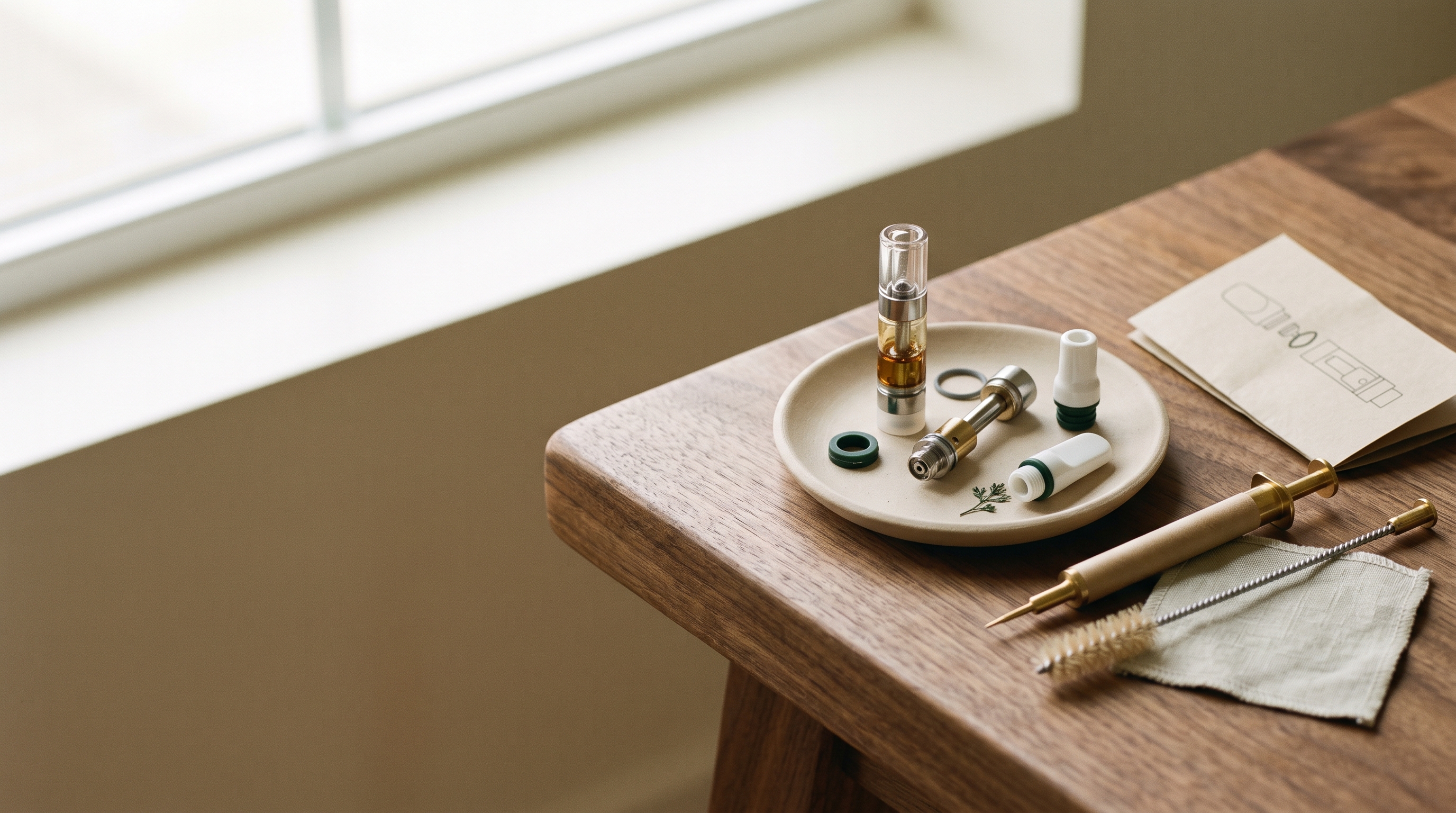
You found a cart in a jacket pocket. The oil is darker than you remember, it crawls instead of sloshes when you tilt it, and the sticker says nothing useful about a date. Is it still good?
The internet gives you two bad answers. One says carts last forever because oil does not rot. The other says an old cart has “turned into CBN” and will glue you to the sofa. Both are wrong, and the second is wrong in a specific way worth understanding, because it has been repeated often enough to read as settled fact.
Carts do not expire — they degrade
Expiry is a food-safety idea. Milk spoils because microbes colonise it. Cannabis oil is a poor home for microbes: mostly cannabinoids by mass, almost no free water, sealed in glass. Nothing is growing in there.
What happens instead is slower and purely chemical. Three processes chip away at the oil, and they do different things:
- Oxidation — oxygen attacks THC. This is the pathway that makes some CBN.
- Light — photons break cannabinoids apart. The fastest destroyer, and it makes almost no CBN.
- Heat — does little on its own at room temperature, but accelerates the other two.
Running alongside all three is terpene loss, which is why an old cart tastes wrong long before it stops working.
Pathway one: light, the fastest destroyer
The foundational work is nearly fifty years old and still has not been bettered. Fairbairn, Liebmann and Rowan stored pure cannabinoid solutions, nine herbal cannabis samples and two resin samples under varying conditions for up to two years.
Their conclusion was blunt. Exposure to light — and they specify not direct sunlight, just ordinary ambient light — was “the greatest single factor in loss of cannabinoids,” and the effect was worst in solutions.
That detail matters enormously here. A vape cart is a solution: cannabinoids dissolved in a terpene matrix inside a transparent glass tube. It is close to the exact preparation the 1976 study found most vulnerable. Flower at least shades its own interior, and the authors noted that intact resin glands act as “well filled, well closed containers.” A clear cart has no such protection.
And now the part that gets left out of every listicle:
“Loss of tetrahydrocannabinol after exposure to light does not lead to an increase in cannabinol, but air oxidation in the dark does.”
Read that twice. Light-damaged THC does not become CBN. It becomes other things that nobody is marketing as a sleep aid. So the most common real-world route to a degraded cart produces one that is simply weaker, not sleepier. The folk theory has the mechanism backwards for the typical case.
Pathway two: oxidation, and the CBN claim everybody overstates
Oxidation is the real THC-to-CBN route. Oxygen strips hydrogen from THC and aromatises one of its rings, producing cannabinol. This is genuine chemistry. The question is how much.
Aviram and colleagues stored measured doses of cannabis in sealed cartridges at 25°C and analysed them repeatedly over two full years:
| Compound | Baseline | After 24 months at 25°C | Change |
|---|---|---|---|
| THCA | 2.7 mg | 1.50 mg | −44% |
| Total THC | 2.80 mg | 2.20 mg | −21% |
| CBGA | 0.097 mg | 0.044 mg | −55% |
| CBN | 0.005 mg | 0.14 mg | +2700% |
“CBN increased 2700%” is the number that escaped into the wild. It is also close to meaningless alone, because it is 2700% of very nearly nothing. Do the arithmetic the summary skips:
- After two years, CBN sits at 0.14 mg against 2.20 mg of THC — about 6% of the THC content.
- The sample lost 0.60 mg of total THC and gained 0.135 mg of CBN. The two molecules have almost identical masses, so that is a fair comparison: roughly one in five lost THC molecules turned up as CBN. The other four became something else.
After two years — longer than any cart you own — the oil is about a fifth weaker with a trace of CBN. It has not become a CBN product.
One honest caveat: this trial stored ground plant material inside cartridges, not distillate oil. The container was sealed and the chemistry is the same family, but it is not a perfect stand-in for a 510-thread oil cart. It remains the closest thing to a controlled long-run cartridge stability study that exists.
And CBN probably is not doing what you think
Corroon reviewed the human literature on CBN and sleep in 2021, screening 99 human studies and reviewing eight in detail. The conclusion: “there is insufficient published evidence to support sleep-related claims.” No trials using polysomnography or validated sleep questionnaires were found at all. Most human research dates to the 1970s and 1980s with small samples, and the evidence that CBN produces cannabis-like effects on its own is mixed, with most of it showing no such effect.
Your aged cart contains a rounding error’s worth of CBN, and the case that CBN at that dose sedates you does not currently exist. More in CBN: the sleepy cannabinoid, facts vs fiction.
So why does an old cart feel more sedating? Most likely because the terpene profile collapsed.
Terpenes go first, and they go fast
Milay, Berman, Shapira, Guberman and Meiri stored cannabis inflorescences and extracts at −80, −30, 4 and 25°C for twelve months. Cannabinoids held up reasonably: an average 26% loss at the twelve-month mark. Terpenes did not — average terpenoid concentration fell more than 50% within four months.
Flavour degrades roughly three times faster than potency. That is the whole explanation for the central experience of an old cart: it tastes like nothing in particular, feels flatter, and still gets you high. The terpenes went; the THC mostly stayed.
Notably, monoterpenes and sesquiterpenes dropped at similar rates despite very different volatilities — so this is not simply light molecules evaporating. Oxidation and rearrangement do much of the work, which is why a sealed cart still loses character even though nothing can physically escape.
If the entourage effect has substance — and the evidence is suggestive rather than settled — then losing half your terpenes while keeping your THC is a real change in what you inhale, not just less of the same. A cart that once led with bright limonene and terpinolene and read as uplifting can drift duller as those reactive top notes go first and sturdier caryophyllene and myrcene remain.
That drift, not CBN, is the most plausible reason an old cart reads as more sedating. It is a subtraction, not a transformation. See also terpene bioavailability.
Pathway three: heat, the accelerator
Fairbairn found temperature effects up to 20°C “insignificant” compared with light. Reassuring for anyone keeping carts in a normal room.
Above that it stops being reassuring. The 24-month trial saw materially steeper degradation at 30°C than 25°C over a shorter window, and Milay’s team concluded 4°C was optimal for preserving both cannabinoid and terpenoid profiles. As a rough rule of thumb from general reaction kinetics — not a cannabis-specific measurement — reaction rates tend to roughly double per 10°C. A glovebox in summer sits well above 50°C. That is not a step up from a drawer at 20°C; it is a different regime, and the fastest way to ruin an otherwise fine cart. Heat also softens the oil and stresses seals, so the hardware often fails before the chemistry does.
How long does a cart actually last?
Estimates from the storage literature, not guarantees. Your cart’s starting quality matters more than any row here.
| Storage condition | Good potency retention | What fails first |
|---|---|---|
| Sealed, dark, room temperature | 12–24 months | Flavour, by month 4–6 |
| Sealed, dark, cool (10–18°C) | 18–24+ months | Flavour, slowly |
| Drawer, frequently opened, warm room | 6–12 months | Flavour, then potency |
| Bag, pocket, desk in daylight | 3–6 months | Potency, noticeably |
| Car, windowsill, direct sun | Weeks | Everything, plus leaking |
The anchor for the top rows is Fairbairn’s summing-up: carefully prepared cannabis extracts are “reasonably stable for 1 to 2 years if stored in the dark at room temperature.” The 24-month trial’s 21% total THC loss puts a number on it — very roughly 10% potency loss per year when stored properly.
So the honest answer to “is my forgotten cart still good?” is usually yes, but it will taste like cardboard. The commonly cited “6 to 12 months” figure is not about safety or even mainly potency. It is the window in which a cart still tastes like the thing you paid for.
How to read a manufacture date
Most cartridges carry no expiry date, because there is no regulatory basis for one. What they do carry varies — part of the broader mess covered in why your dispensary labels are mostly wrong.
In descending order of usefulness:
- Test or analysis date. The most reliable clock, normally within days or weeks of packaging. If a QR code links to a certificate of analysis, that document is dated. See reading cannabis lab results.
- Packaged-on date. Usually close to the test date. Fine as a proxy.
- Batch or lot number. Frequently encodes a date, often
YYMMDDor a Julian day. Not standardised, but worth decoding. - Harvest date. Refers to the plant, not the oil. Extraction may have happened months later.
- “Best by” date. Almost always a marketing decision rather than a stability finding.
Requirements differ by state and change often, so check your own jurisdiction. The practical move is the same everywhere: scan the QR code at purchase and note the test date, because that sticker will be illegible in eight months. Testing itself is shakier than the certificate implies — see why lab testing standards are failing consumers and why THC percentage is a terrible way to choose cannabis.
The tells: reading an old cart by eye and mouth
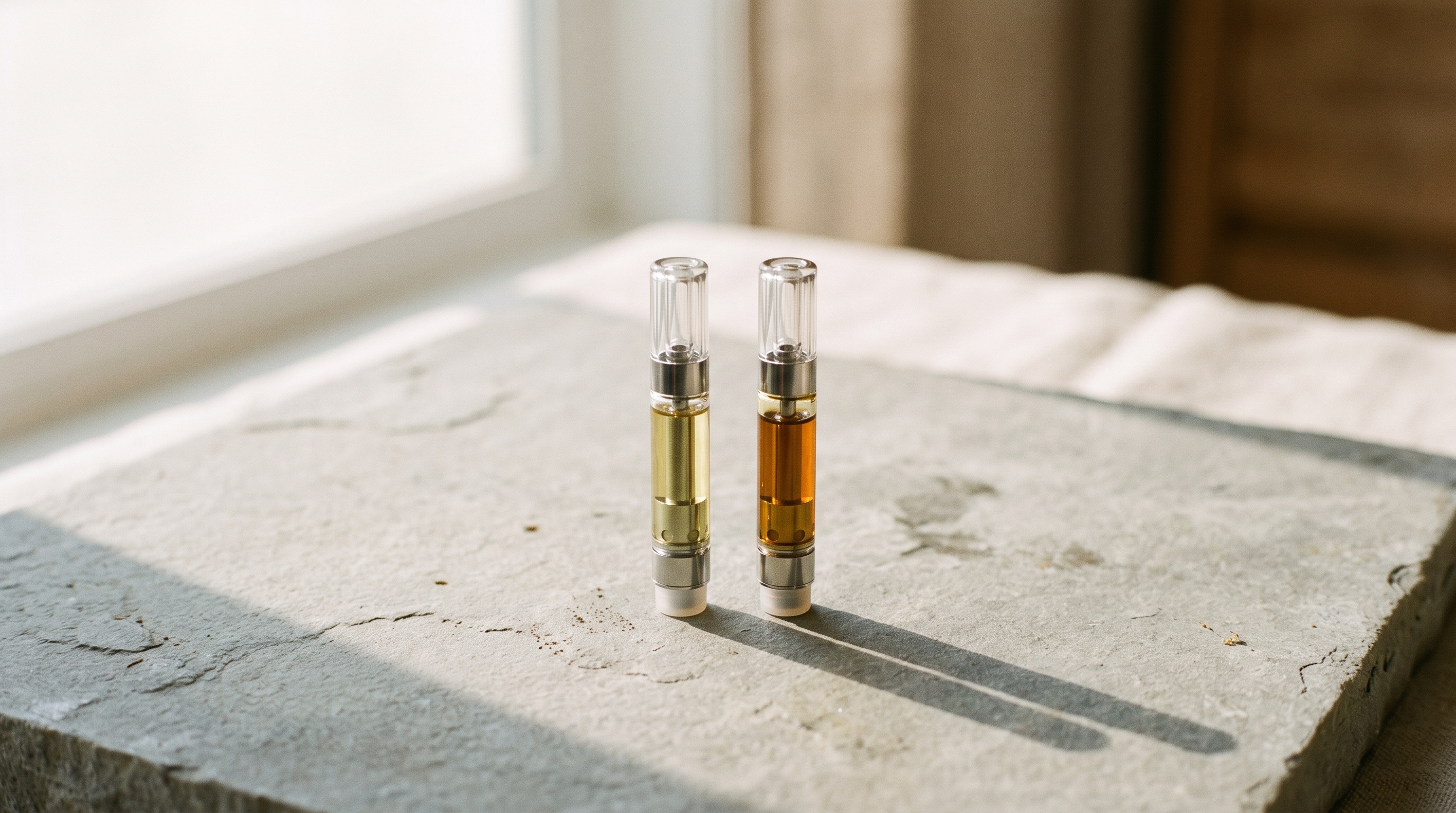
Darkening. Oxidation builds structures that absorb light, so aged oil trends amber then brown. But this only means something relative to how the cart looked when you bought it. Distillate starts nearly clear; good live resin starts amber. A dark live resin cart may be perfectly fresh.
Thickening. Tilt it and watch the bubble travel. Some of this is just temperature — warm it in your hand and check again.
Flat taste. The most reliable indicator, and the earliest. If a cart that read as distinctly citrus or fuel now reads as generically sweet, the terpenes are gone. Your nose is a decent instrument; see the terpene smell test.
Harshness. Thickened oil wicks slowly, so the coil runs hotter and drier than intended. Lower the voltage before assuming the oil is dead.
Clogging and leaking. Mechanical, not chemical. Seals harden and thickened oil blocks the intake holes.
Is an old cart unsafe?
Mostly, no. Degradation is a quality problem, not a safety one. There is no meaningful microbial risk, and cannabinoid oxidation products at these quantities are not established hazards.
The genuine concerns are about the hardware. McDaniel, Mallampati and Wise analysed thirteen commercially purchased cannabis cartridges from Washington State along with cartridge components, and found chromium, copper and nickel — plus smaller amounts of lead, manganese and tin — migrating into the cannabis oil and the inhaled vapour phase, in some cases at levels that could exceed regulatory intake standards. They concluded the heating device itself is a source of contamination.
Metal migration is a contact-time phenomenon. Oil sitting against a coil and its solder joints for eighteen months has had far more opportunity than oil consumed in three weeks. This is the one respect in which age is a real risk factor rather than a quality one, and a strong argument for buying tested product and finishing carts within a reasonable window. Formats differ here too — see cart vs disposable.
There is a second-order risk. When thickened oil draws poorly, the instinct is to crank the voltage. That is exactly wrong. Meehan-Atrash, Luo and Strongin showed that myrcene and other common cannabis terpenes form methacrolein, benzene and other products of concern under conditions simulating real-world dabbing — far hotter than a cart is meant to run. That study does not describe normal cartridge use and I will not stretch it into doing so. But the direction is unambiguous: terpene degradation into unpleasant compounds is temperature-driven. Chasing a stubborn cart with more voltage moves you toward that end of the scale.
If a cart is clogged, warm it gently and draw slowly. Do not turn it up.
Two things genuinely warrant binning a cart: visible contamination — particulates, cloudiness, or layers that will not remix — and any cart of unverified origin, which is a separate and much larger problem than age. On that, acetylated cannabinoids and ketene is the more urgent read.
Distillate, live resin and rosin age differently
Starting composition determines the aging curve.
Distillate is the most stable — a refined, near-pure cannabinoid fraction with terpenes reintroduced afterwards, often botanically derived. Fewer reactive species means less to oxidise. Cannabinoid content holds well; the added terpene blend fades, and because those blends are often simple and volatile, flavour can drop off a cliff rather than decline gracefully. A year-old distillate cart is typically still potent and thoroughly boring. See rosin vs distillate.
Live resin carries the full native terpene load plus minor cannabinoids and residual lipids. More chemistry means more to lose, and the loss is more noticeable because there was more character to begin with. It ages worse precisely because it started better — the live resin vs live rosin distinction matters.
Rosin carts are least stable. Solventless extraction retains lipids, waxes and a broad chemical population, all of which oxidise, and rosin is usually the most viscous to start with, so thickening bites sooner. This is the one category where cold storage advice is well founded. Buy rosin carts to use, not to stockpile. Background in the complete guide to concentrates and dabbing 101.
Shelf stability ranks distillate, live resin, rosin. Day-one quality ranks in exactly the opposite order. That is not a coincidence — the compounds that make a concentrate interesting are the compounds that react.
Storing carts properly
The rules are short, and not the same as the rules for flower.
Do:
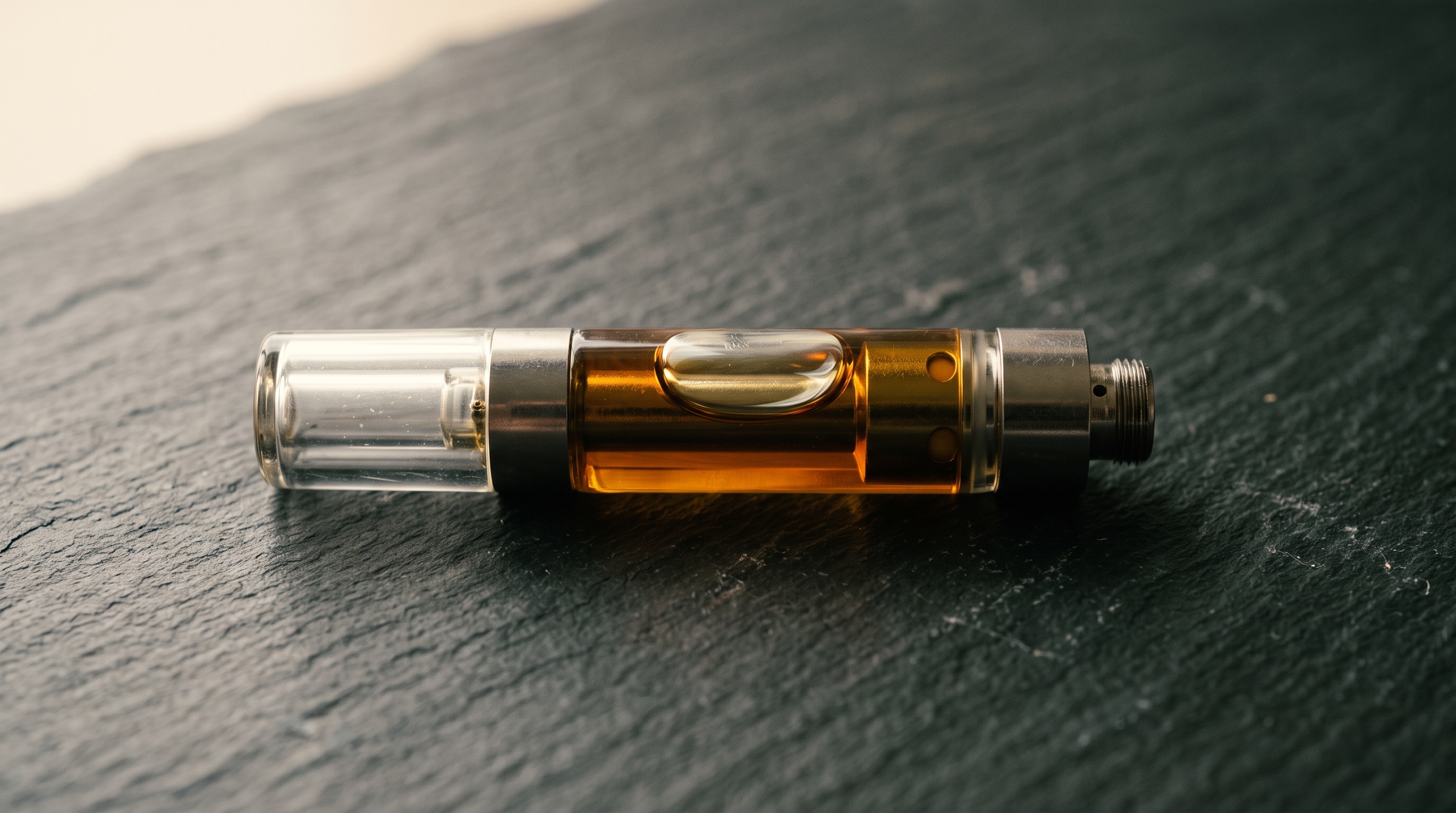
- Keep them dark. The highest-value action by a wide margin. Light is the dominant threat and darkness is free.
- Keep them upright, mouthpiece up. Gravity keeps oil seated at the intake and reduces leaking.
- Keep them cool and stable. A consistent 15–20°C spot beats one that swings.
- Keep them sealed. Original packaging limits oxygen exchange around the threading.
- Detach the battery. Prevents accidental firing, a slow way to cook a cart in your bag.
- Photograph the label at purchase. You will not be able to read it later.
Do not:
- Do not refrigerate or freeze carts. The big departure from flower storage. Cold makes oil viscous enough to starve the wick, thermal cycling stresses seals and glass, and every trip out of the fridge condenses moisture on the hardware. Fairbairn found temperature effects modest anyway — you trade a small gain for real mechanical risk. Dark beats cold, decisively.
- Do not store them in a car. Summer interiors will degrade oil quickly and cause leaks.
- Do not lay them flat for long periods.
- Do not bother with humidity packs. Those are for flower. A sealed cart has no moisture equilibrium to manage.
Storage logic is entirely different for edibles, which contain fats, sugars and water and therefore can genuinely spoil. Carts cannot.
The part that actually matters
Once you have accounted for storage, a stubborn problem remains: two carts labelled with the same strain, bought from the same shop three months apart, will not perform the same even when both are fresh.
Extraction method, source material, the terpene blend the producer chose to reintroduce, the hardware, and how long it sat in a warehouse under fluorescent lights all vary batch to batch. The name on the sticker tracks almost none of it. A Blue Dream cart and a Gelato cart from different producers can differ more from each other than either differs from a Wedding Cake cart from a third. The same holds across Jack Herer, Durban Poison, Sour Diesel, Granddaddy Purple and Northern Lights. The label is a genetics claim, not a chemistry claim — and aging widens the gap, because each cart loses different compounds at different rates.
Which means the only reliable instrument is you. Note what a cart tasted like the week you opened it, and how it read — calm, bright, heavy. Note whether that shifted by week six. Over a few carts you will build a better model of what to buy and how fast to use it than any label can give you. If you want somewhere structured to keep those notes, that is what the High IQ app is for.
For the wider case on inhalation formats: vaping vs smoking, choosing a vaporizer, and dry herb vs oil vaporizers.
FAQ
Can an old vape cart make you sick? Degraded cannabinoids are a quality issue rather than a known safety hazard, and there is no meaningful microbial risk in cannabis oil. The more legitimate concern is metal migration from cartridge hardware into the oil, which has been measured in commercial cartridges. Buy tested product and finish carts within a year or so.
Does an old cart make you sleepy? Probably not for the reason usually given. THC-to-CBN conversion is real but small — after two years of sealed room-temperature storage, CBN reached only about 6% of THC content in one stability trial — and a 2021 review found insufficient evidence that CBN promotes sleep at all. Terpene loss stripping out the bright top notes is the likelier explanation.
Why does my old cart taste burnt? Thickened oil wicks slowly, so the coil runs hotter and drier than designed. Warm the cart in your hand, draw slower, and lower the voltage. Turning the voltage up makes it worse, in taste and in what you generate.
Should I put my carts in the fridge? No. Cold thickens the oil, thermal cycling stresses seals and glass, and condensation forms every time you take it out. Research indicates light matters far more than temperature in this range. A dark drawer at room temperature is better.
How can I tell how old a cart is with no date on it? Look for a test or analysis date, a packaged-on date, or a batch code — many encode a date. If a QR code links to a certificate of analysis, that document is dated and is your best source. Scan it at purchase.
Is a darker cart always an old cart? No. Distillate starts nearly clear and live resin starts amber, so colour only tells you something compared against how that specific cart looked when you bought it.
Sources
- Fairbairn JW, Liebmann JA, Rowan MG. “The stability of cannabis and its preparations on storage.” Journal of Pharmacy and Pharmacology, 1976. doi:10.1111/j.2042-7158.1976.tb04014.x — PubMed 6643
- Milay L, Berman P, Shapira A, Guberman O, Meiri D. “Metabolic Profiling of Cannabis Secondary Metabolites for Evaluation of Optimal Postharvest Storage Conditions.” Frontiers in Plant Science, 2020. doi:10.3389/fpls.2020.583605
- Aviram J, Atzmony D, Frenklakh A, Kroll A, Zaks I, Hazekamp A. “THC degradation does not impair the accuracy of THC doses aerosolized by the metered-dose SyqeAir inhaler: a 24-month stability trial.” Journal of Cannabis Research, 2022. doi:10.1186/s42238-022-00166-5
- Corroon J. “Cannabinol and Sleep: Separating Fact from Fiction.” Cannabis and Cannabinoid Research, 2021. doi:10.1089/can.2021.0006 — PubMed 34468204
- McDaniel C, Mallampati SR, Wise A. “Metals in Cannabis Vaporizer Aerosols: Sources, Possible Mechanisms, and Exposure Profiles.” Chemical Research in Toxicology, 2021. doi:10.1021/acs.chemrestox.1c00230
- Meehan-Atrash J, Luo W, Strongin RM. “Toxicant Formation in Dabbing: The Terpene Story.” ACS Omega, 2017. doi:10.1021/acsomega.7b01130 — PubMed 28983528
