Vape Cartridge vs Disposable: The Real Differences
510-thread carts vs all-in-one disposable vapes: hardware, oil quality, cost-per-gram, heavy-metal risks, and waste, compared so you choose right.


Walk into any dispensary and you’ll hit the same fork in the road at the vape case: a wall of sleek all-in-one disposables on one side, and a rack of little glass cartridges with a separate battery on the other. They look like they do the same thing, they cost roughly the same up front, and the budtender is busy. So you grab whatever’s on sale and hope for the best.
Here’s the thing, professor’s honest take: these two formats are not interchangeable. Under the hood they differ in hardware, in the oil they tend to carry, in what they cost you over a month, and even in the small print of how much metal might end up in your lungs. Picking the right one isn’t about brand loyalty, it’s about matching the device to how you actually consume.
Let’s break down the real differences, the science included, so you can stop guessing.
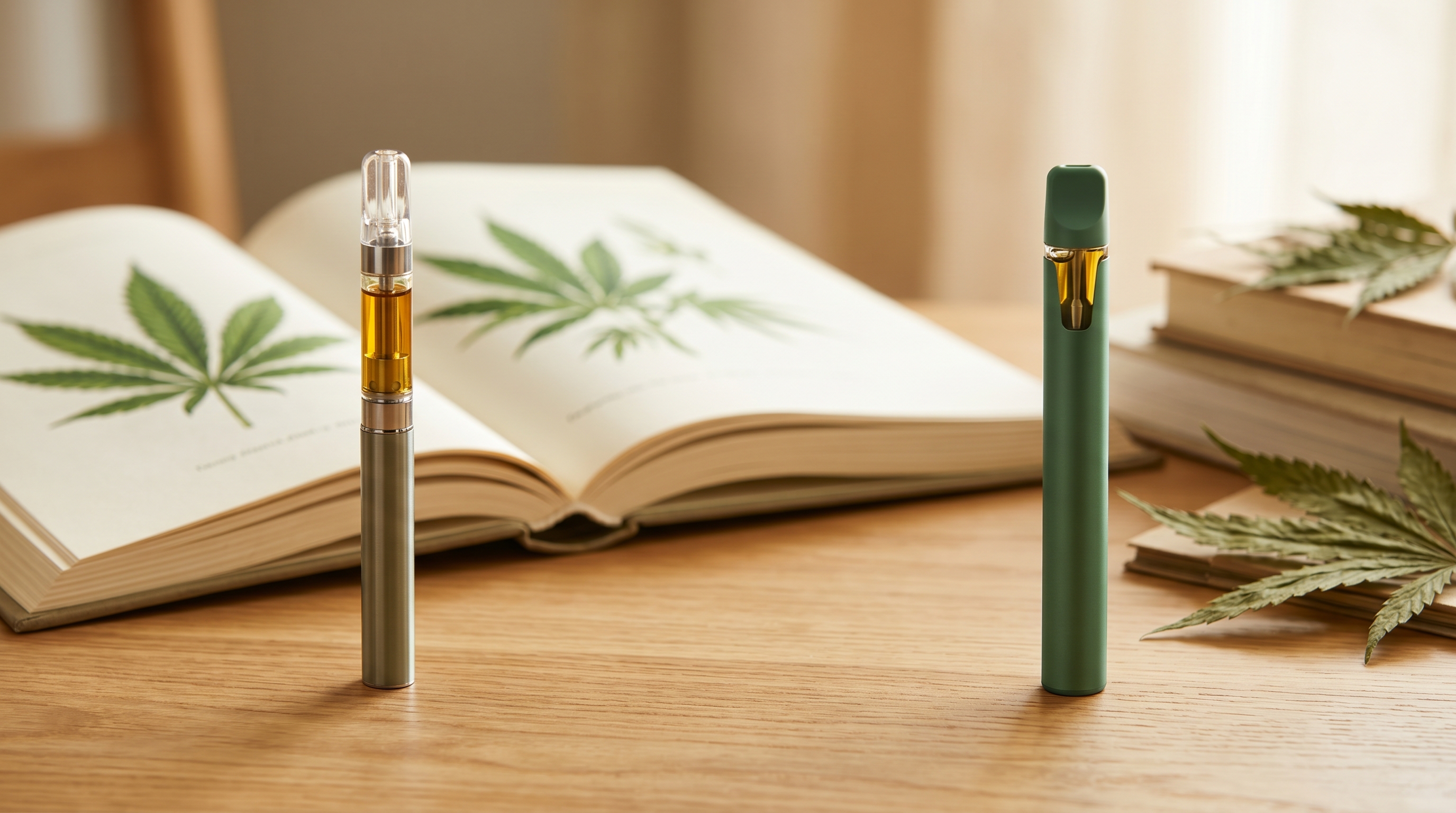
First, the vocabulary (because the labels lie)
Every cannabis vape is just two things glued together in some combination: oil and hardware. The confusion comes from how those pieces are packaged and sold.
- A cartridge (“cart,” “510 cart”) is the oil component only, a small tank holding 0.5g or 1g of concentrate with a heating coil inside and a threaded connector at the bottom. It does nothing on its own. It needs a battery.
- A 510-thread battery is the reusable power source. The “510” refers to the thread spec, roughly 10 threads at 5mm diameter, and it’s been the industry standard for years. Any 510 cart screws onto any 510 battery, regardless of brand. That interoperability is the whole point.
- A disposable (or “all-in-one”) seals the oil and a built-in lithium battery into one unit. No screwing, no settings, no charger to find (though most modern ones now have a USB-C port so the battery doesn’t die before the oil does). When it’s empty, the entire device gets thrown away.
So when someone says “vape pen,” they usually mean a 510 battery paired with a cart. When they say “disposable,” they mean the sealed all-in-one. Same family, different philosophy. If the broader question of whether to vaporize at all is on your mind, our vaping vs. smoking comparison covers the combustion-versus-vapor science, and our vaporizer buyer’s guide zooms out to dry-herb and concentrate hardware too.
Hardware and heating: more alike than you’d think
Both formats use the same basic engine: a battery sends current to a coil, the coil heats the oil past its vaporization point, and you inhale the resulting aerosol. The meaningful difference is control.
A quality 510 battery often gives you variable voltage, sometimes a literal temperature dial or a preheat function. That matters because terpenes and cannabinoids vaporize at different temperatures, and running cooler preserves the delicate aromatic compounds that shape your experience. Crank the voltage and you’ll get bigger clouds but a harsher, more “burnt” taste as you scorch the lighter terpenes first, the bright, citrusy ones tend to go before heavier ones like caryophyllene.
Most disposables, by contrast, are draw-activated with a fixed voltage. You just inhale, and the device fires. That’s gloriously simple, and it has a quiet safety upside: it’s much harder to accidentally overheat the oil when you can’t crank a dial. The tradeoff is zero customization. What the manufacturer set is what you get.
Neither format is inherently “better” engineered. The split is convenience versus control.
Oil quality and variety: the cart usually wins
This is where the gap widens, and it’s the one most people overlook.
Because the 510 standard is universal, cart makers fill them with the full spectrum of oil types: high-potency distillate, terpene-rich live resin, full-spectrum extracts, balanced THC:CBD blends, and strain-specific options. If you want to chase a particular terpene profile or effect, the cart aisle is where the selection lives. If the words distillate and live resin blur together for you, our complete guide to cannabis concentrates and the live resin vs. live rosin breakdown untangle the extraction methods behind each.
Disposables tend to carry a narrower menu, often whatever the brand mass-produces. The format favors crowd-pleasing distillate with botanical or cannabis-derived terpenes added back in. That’s not automatically bad, but if you’re a flavor chaser or you’re matching oil to a specific effect like headache relief, your options shrink. Still deciding between flower, edibles, and concentrates altogether? Our guide on choosing between flower, edibles, and concentrates is a good starting point.
A quick reality check on potency labels: a sky-high THC number on either format doesn’t predict how the high feels. Terpene content and the entourage effect do far more of that work, which is also why we sort strains into High Families by terpene profile rather than just indica/sativa labels.
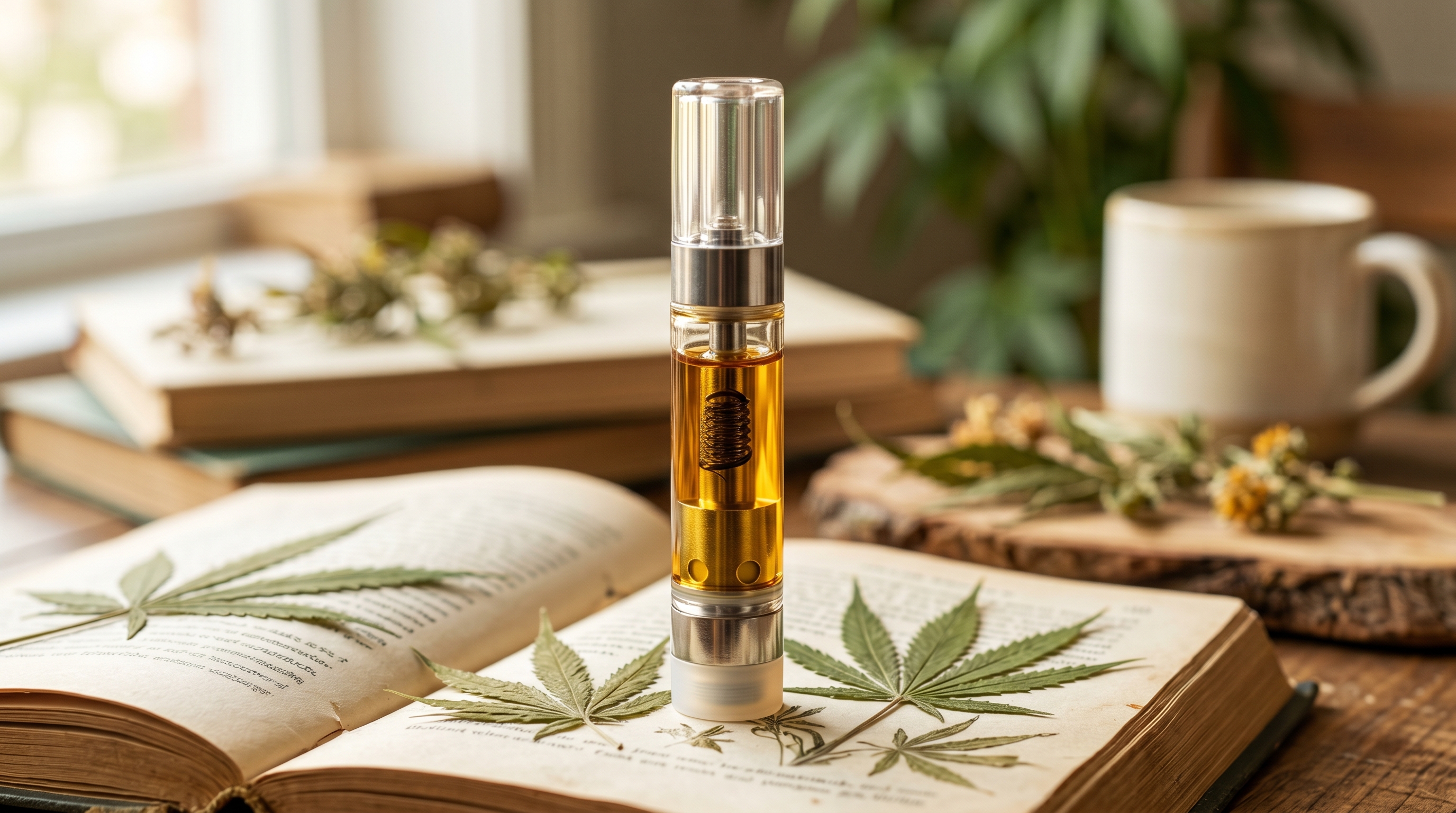
Cost: disposables are cheaper today, pricier all year
Up front, the two look comparable. Over time, the math diverges sharply.
A reusable 510 battery is a one-time buy, roughly $15 to $40 for a decent one. After that, you’re only paying for replacement carts, typically $25 to $55 for a gram. Because that battery can power dozens of carts across its lifetime, the cost per gram of oil keeps dropping the longer you own it.
A disposable bakes a brand-new battery into every single purchase. You’re paying for that lithium cell, the casing, and the charging circuit every time, which is why the price per milligram of oil tends to run higher than the equivalent cart. For an occasional user that premium is trivial. For someone who goes through a gram or two a week, it compounds into real money over a few months.
The rule of thumb:
- Vape rarely or unpredictably? Disposables keep your total spend low because you’re not buying a battery you’ll barely use.
- Vape regularly? A battery plus carts is almost always the cheaper long game.
If tracking your actual spend per gram sounds useful, that’s exactly the kind of pattern the High IQ app surfaces, more on that below.
Lifespan and reliability
A 510 battery, treated well, lasts months to years. Carts themselves can clog, leak, or develop the dreaded burnt taste when the coil runs dry, but you only replace the cheap part. A leaking cart in your bag is annoying; a leaking whole device is a write-off.
Disposables solved their original Achilles’ heel, the battery dying before the oil ran out, by adding USB-C recharging to most modern units. But the device’s lifespan is still capped at one tank. When the oil’s gone, so is a perfectly good rechargeable battery cell.
That last point isn’t just a convenience footnote. It’s the heart of the sustainability problem.
Sustainability: the disposable’s real cost
Here’s the uncomfortable part. Those “disposable” lithium-ion batteries are not designed to be removed, and the EPA classifies them as toxic waste that can leach chemicals or even catch fire in landfills and waste-management facilities. Globally, electronic vape waste is estimated in the tens of thousands of tons per year, with the wasted materials valued in the billions, and disposable cells are often capable of hundreds of recharge cycles they’ll never get to use.
Regulators have started to notice. In 2024 California passed a first-of-its-kind law (Business & Professional Code 26152.1) requiring vape pens and batteries to be disposed of at hazardous-waste facilities, and even banning the word “disposable” in cannabis vape marketing and labeling. Washington State fielded a petition to ban single-use lithium-battery vapes outright. The direction of travel is clear.
A cart-and-battery setup sidesteps most of this: you discard only the small oil chamber and keep the battery for dozens more uses. If sustainability factors into your choices the way it does into your harm-reduction thinking, and into your broader vaping habits, this is a meaningful tiebreaker. (Curious whether outdoor flower behind your oil tastes different? See sun-grown cannabis and terpenes.)

Heavy metals: a risk that affects both (but you can manage it)
Now the science that genuinely matters for your health, and it applies to both formats, because both rely on metal coils, connectors, and heating elements.
Multiple peer-reviewed studies have found that metal components inside vape devices can shed particles into the oil and into the aerosol you inhale. A 2025 Scientific Reports study [Zhao, 2025] analyzed legal Canadian cannabis vape products and detected metal particles, cobalt, chromium, nickel, lead, tin, and zinc, in the emitted aerosol of all tested samples. Tellingly, the researchers found cracking on the connector pin of an unused device, evidence that the contamination comes from the hardware itself, not just the cannabis. Earlier work analyzing 20 legal and 21 illegal vape liquids [Skalny, 2022] found lead reaching up to roughly 50 µg/g in illegal samples (versus a tolerance limit near 0.5 µg/g), with nickel as high as 677 µg/g and zinc up to 426 µg/g, almost all of it concentrated in the illegal, untested products. Analysis of THC cartridge heating elements [Guo, 2020] similarly found nickel and chromium in every device tested, with some also containing copper, lead, and tin capable of volatilizing at high temperatures.
That last detail is the actionable one. Research suggests the leaching is worse with cheaper components, higher operating temperatures, longer storage, and unregulated products. So a few harm-reduction moves help regardless of format:
- Buy lab-tested, legal-market products. The contamination gap between regulated and illicit vapes is dramatic.
- Favor quality hardware, ceramic-and-glass cartridges over no-name metal-and-plastic ones.
- Vape at lower temperatures, which both preserves terpenes and reduces metal volatilization.
- Don’t hoard. Older devices showed more connector degradation.
For honest perspective, a 2026 Canadian regulatory risk assessment [Health Canada, 2026] concluded that for most consumers, who are not daily users, the health risk from heavy metals in legal, regulated inhaled products appears low. Vaping is widely considered less harmful than smoking, but “less harmful” isn’t “risk-free,” and your choice of legal hardware is part of that equation.
Discretion and portability
Both formats are pocketable and far more discreet than a joint, no lingering smoke smell, fast cleanup. Disposables edge ahead on pure grab-and-go simplicity: nothing to assemble, nothing to leak, draw-activated so there’s no fumbling with a button in public. A cart-and-battery rig is barely less portable, but you’ve got two pieces to keep track of and a battery to keep charged.
So which should you buy?
There’s no universal winner, only a best fit for you.
Reach for a disposable if you:
- Vape occasionally or unpredictably
- Are brand-new to vaping and want the simplest possible start
- Don’t want to buy or charge a separate battery
- Prize zero-setup, grab-and-go convenience above all
Reach for a 510 cart + battery if you:
- Vape regularly (the cost savings stack up fast)
- Want the widest selection of oils, strains, and terpene profiles
- Care about temperature control and flavor preservation
- Want to cut down on e-waste
The classic on-ramp: start with a disposable to learn what effects and flavors you actually like, then graduate to a 510 system once you know your preferences, for the better economics, variety, and lower waste.
The bigger truth: the format matters less than the fit
Here’s where the professor gets a little philosophical. Whether the oil sits in a refillable cart or a sealed disposable, the device is just a delivery mechanism. What actually shapes your experience is the oil inside it, its terpene profile, its cannabinoid ratio, and crucially, how your body responds to it.
Two people can vape the identical cart and have opposite nights. That’s not a hardware problem, that’s the reason we built High IQ: to help you log what you vape and notice your own patterns, which families lift you up, which ones settle you down, which terpene profiles you keep reaching for. The right device is the one that gets your oil into you cleanly and affordably. The rest is self-knowledge, and that’s trackable.
So buy the format that fits your habits. Then pay attention to what works. Your future self, and your wallet, and the landfill, will thank you.
Key Takeaways
- Same engine, different philosophy. Carts give you control and variety; disposables give you grab-and-go simplicity.
- Oil variety favors carts. The universal 510 standard unlocks distillate, live resin, full-spectrum, and strain-specific options.
- Disposables are cheaper today, pricier all year. A reusable battery plus carts wins the long game for regular vapers.
- Sustainability favors carts. Sealed disposables bury a rechargeable lithium battery in the trash every time; some states now regulate their disposal.
- Heavy-metal risk applies to both. Buy lab-tested legal products, choose quality ceramic-and-glass hardware, and vape at lower temperatures.
- The fit matters more than the format. What shapes your experience is the oil’s terpene profile and how your body responds, so track it.
Frequently asked questions
Are disposables or carts safer? Neither is categorically safer, both use metal heating components that research suggests can shed trace metals into the aerosol. The biggest safety lever is buying lab-tested legal-market products and using quality hardware at lower temperatures. Illicit, untested vapes carry far higher contamination risk in the studies.
Why does my cart taste burnt? Usually the voltage is too high or the tank is nearly empty and the coil is running dry. Lower the temperature on your battery and let the cart sit upright so oil re-saturates the coil. A fixed-voltage disposable can’t be adjusted, which is one reason carts give flavor chasers more control.
Is a 510 battery really cheaper over time? For regular users, yes. You buy the battery once ($15-$40) and then only replace carts. A disposable bakes a brand-new battery into every purchase, so the price per milligram of oil tends to run higher.
Can I recycle a disposable vape? Not in your curbside bin. The embedded lithium battery is hazardous waste, take spent disposables to a hazardous-waste collection site or a dispensary take-back program where available. Some states, like California, now legally require this.
Does a higher THC percentage mean a better vape? No. Potency labels don’t predict how the high feels, terpenes and the entourage effect do much of that work. Match the oil to the effect you want, not the biggest number on the box.
Sources
- Zhao, D. et al. “Tracking metal presence in cannabis vaping products from source to inhalation.” Scientific Reports (2025). nature.com/articles/s41598-025-17004-2
- “Evidence That Metal Particles in Cannabis Vape Liquids Limit Measurement Reproducibility.” PMC (PMC9713800). pmc.ncbi.nlm.nih.gov/articles/PMC9713800
- “Heavy Metals in Cannabis Vapes and Their Health Implications: A Scoping Review.” Realm of Caring (2025). realmofcaring.org
- Risk assessment of metals in regulated Canadian cannabis and vaping products. Frontiers in Toxicology (2026). frontiersin.org
- “Vaping cartridge heating element compositions and evidence of high temperatures.” PLOS ONE (2020). journals.plos.org
- “California cannabis operators pivot to comply with new vape law.” MJBizDaily (2024). mjbizdaily.com
- “Up in smoke: Considerations for lithium-ion batteries in disposable e-cigarettes.” Joule / ScienceDirect (2023). sciencedirect.com


