THCP: The Super-Potent Cannabinoid 33x Stronger Than THC
THCP binds CB1 receptors 33x more strongly than THC. Discover the 2019 Italian discovery, the chemistry, and what it really means for your cannabis experience.

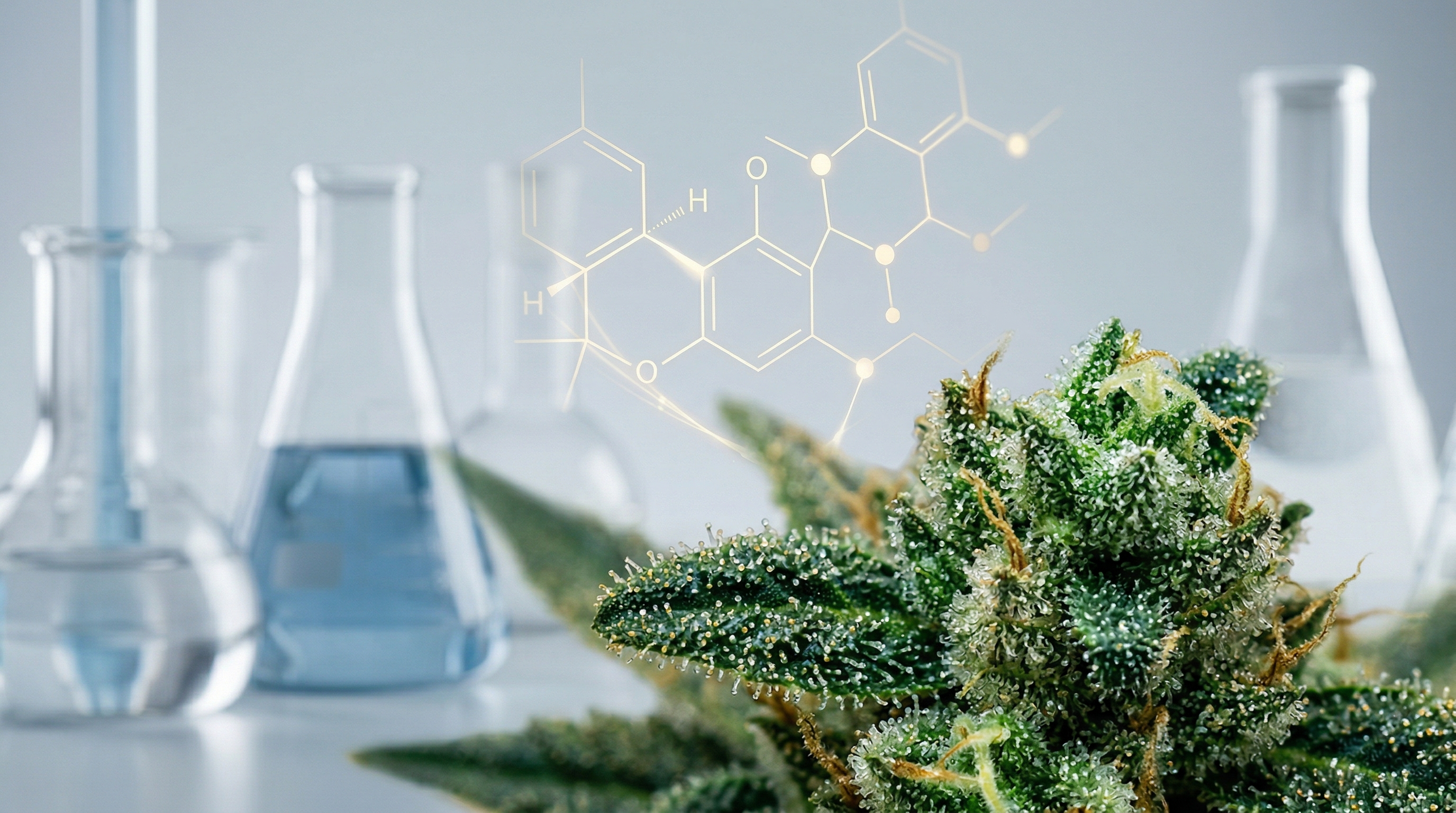
A Cannabinoid That Rewrites the Potency Playbook
What if I told you that scientists accidentally discovered a cannabinoid hiding in cannabis that binds to your CB1 receptors 33 times more effectively than regular THC? Not synthesized in a lab. Not manufactured. Just… sitting there in the plant, waiting to be found.
That’s exactly what happened in late 2019, when a team of Italian researchers identified THCP (tetrahydrocannabiphorol) — a naturally occurring cannabinoid that sent shockwaves through cannabis science. For decades, we assumed delta-9 THC was the undisputed heavyweight champion of psychoactive cannabinoids. THCP challenged that assumption in a significant way.
Now, before you start imagining some terrifyingly intense experience, let’s pump the brakes. “33 times stronger” is a headline that needs serious unpacking. Binding affinity and subjective experience are very different things, and the actual story of THCP is far more nuanced — and far more interesting — than the clickbait version.
In this article, you’ll learn exactly what THCP is, how it works at the molecular level, what the research actually shows (and doesn’t show), and what it might mean for your real-world cannabis experience. Whether you’ve been consuming cannabis for years or you’re just curious about the science behind what makes different strains feel different, this is a compound worth understanding.
This article is for educational purposes only. THCP has not been approved by the FDA for any medical use. Always consult a healthcare professional before using cannabinoid products for health conditions.
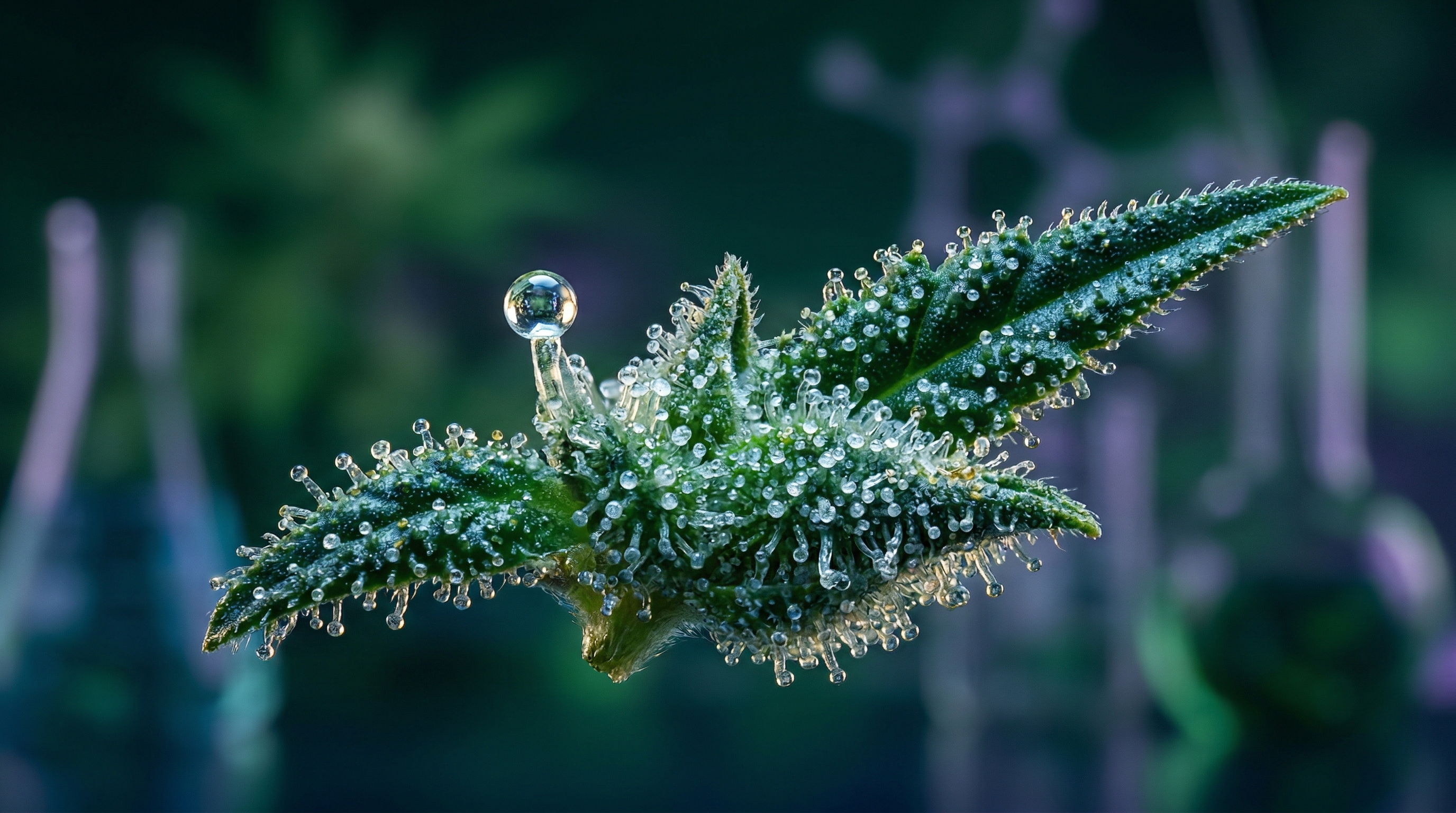
The 2019 Discovery: How THCP Was Found
The story of THCP starts with an Italian medical cannabis variety called FM2, a strain developed by Italy’s Military Chemical-Pharmaceutical Institute for use in their national medical program.
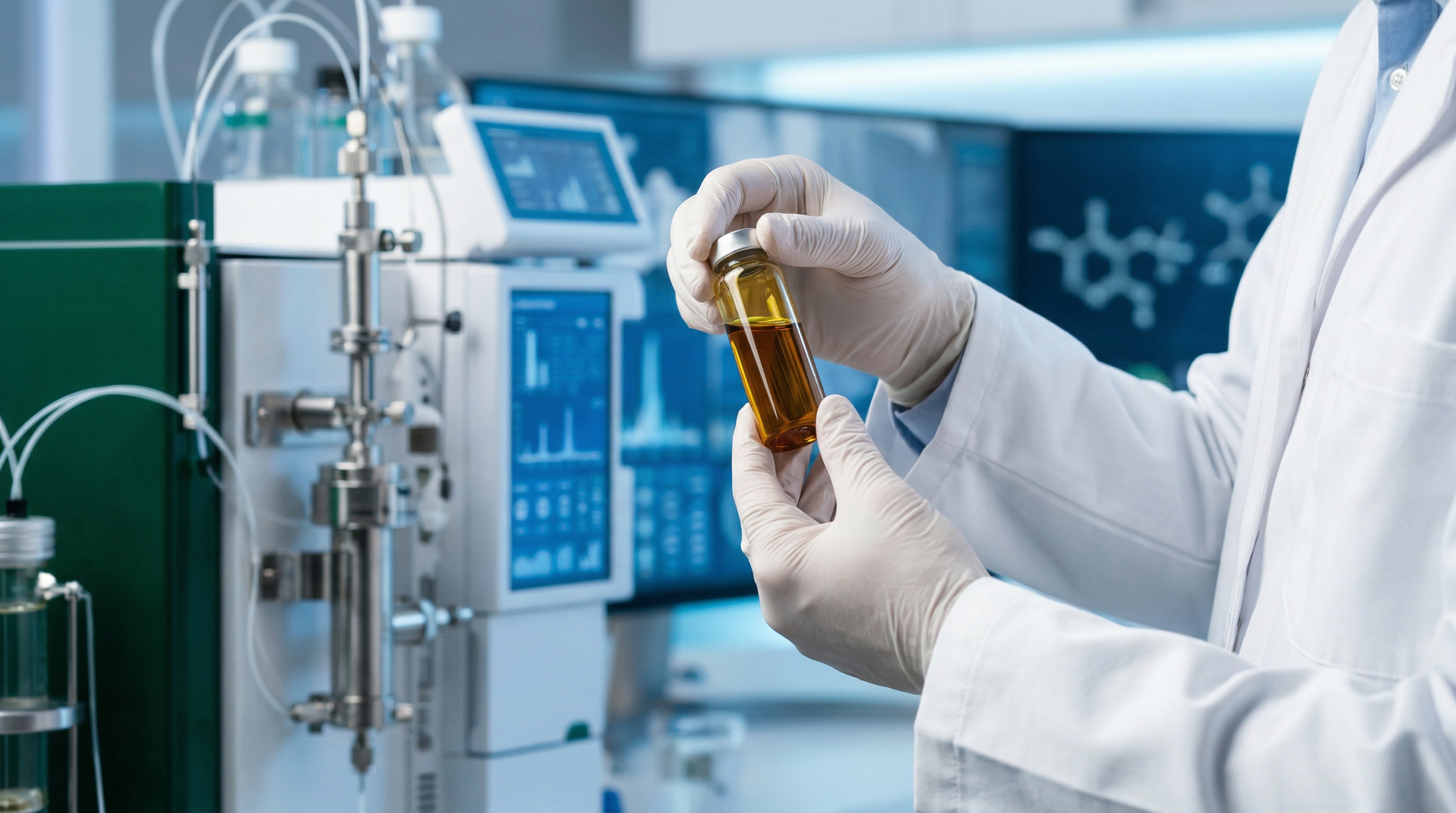
In December 2019, a research team led by Dr. Giuseppe Cannazza at the University of Modena published a paper in Scientific Reports — a peer-reviewed Nature journal — announcing something unexpected. While running routine chemical analysis on FM2 using advanced high-resolution mass spectrometry, they discovered two previously unknown cannabinoids: THCP and its non-psychoactive cousin, CBDP (cannabidiphorol) [Citti et al., 2019].
Both compounds share a structural feature that set them apart from every cannabinoid characterized before: a seven-carbon alkyl side chain instead of the standard five-carbon chain found in THC and CBD.
That structural difference turned out to be anything but minor.
The Chemistry: Why Two Extra Carbons Change Everything
To understand why THCP is so interesting, you need to understand one piece of molecular architecture: the alkyl side chain.
Think of a cannabinoid molecule like a key designed to fit a lock — your cannabinoid receptors (CB1 and CB2). The “teeth” of that key are largely determined by a tail-like chain of carbon atoms hanging off the molecule’s core structure. Regular delta-9 THC has a five-carbon side chain (a pentyl group). That’s been the molecular standard we’ve studied for more than 60 years.
THCP has a seven-carbon side chain (a heptyl group).
That might sound like a trivial difference. But in biochemistry, small structural changes can have major functional consequences. Those two additional carbons allow THCP to slide deeper into the CB1 receptor’s binding pocket, creating a tighter molecular grip. It’s like the difference between a key that fits a lock and a key that fits and deadbolts it.
This relationship between side chain length and receptor affinity isn’t new science — researchers have known since the 1940s that synthetic cannabinoids with longer side chains tend to be more potent. Roger Adams, the American chemist who first synthesized many THC analogs, documented this pattern decades ago. What nobody expected was to find a seven-carbon cannabinoid occurring naturally in the plant itself.
The 33x Number: What It Actually Means
This is where the famous “33 times” figure comes from. In receptor binding assays — lab experiments that measure how tightly a molecule attaches to a receptor — THCP showed approximately 33 times greater binding affinity at CB1 receptors compared to delta-9 THC [Citti et al., 2019]. The specific measurement: THCP’s Ki value at CB1 was approximately 1.2 nM, compared to roughly 40 nM for THC. Lower Ki = tighter binding.
At CB2 receptors, THCP showed roughly 5-10 times greater affinity than THC.
For context, the synthetic CB1 agonist CP55940 — a compound used as a “gold standard” in receptor research because of its extreme potency — has a Ki of approximately 0.9 nM. THCP lands almost in that same territory.
Critical caveat: Receptor binding affinity is not the same as “33x more potent” in terms of your subjective experience. Binding affinity measures molecular grip strength in a controlled in vitro environment. How that translates to a real-world experience involves absorption, metabolism, blood-brain barrier penetration, dosage, other cannabinoids present, and dozens of other variables that haven’t been studied in humans for THCP specifically.
Animal Testing: The Tetrad Results
Beyond the binding assays, the Citti team ran in vivo testing using the standard “cannabinoid tetrad” protocol — a set of four behavioral measures used to assess cannabinoid potency in rodents:
- Hypomotility (reduced movement)
- Analgesia (pain reduction)
- Catalepsy (muscle rigidity)
- Hypothermia (lowered body temperature)
THCP produced all four classic THC-like effects — and did so at lower doses than THC, consistent with its higher receptor affinity. This animal data suggests THCP is genuinely more pharmacologically active than THC in a living system, not just in a test tube.
As of today, no published human clinical trials exist for THCP. Everything we know comes from that single 2019 paper and subsequent analytical studies identifying THCP in various cannabis cultivars. The animal data is promising but cannot be directly extrapolated to human experience.
How THCP Compares to Other Cannabinoids
THCP isn’t the only novel cannabinoid that’s been reshaping our understanding of cannabis pharmacology in recent years. Here’s how it fits into the broader picture:
| Cannabinoid | Side Chain | CB1 Affinity | Psychoactive? |
|---|---|---|---|
| Delta-9 THC | 5-carbon | Baseline (Ki ~40 nM) | Yes |
| THCP | 7-carbon | ~33x THC (Ki ~1.2 nM) | Yes (likely stronger) |
| THCV | 3-carbon | Lower than THC | Partial agonist |
| Delta-8 THC | 5-carbon | Slightly lower than THC | Yes (milder) |
| CBG | 5-carbon | Low affinity | No |
The comparison with THCV is particularly instructive. THCV has a shorter three-carbon side chain than THC, which makes it a partial agonist or even an antagonist at CB1 at low doses — producing a very different (often energizing, appetite-suppressing) effect profile. THCP sits at the opposite end of that spectrum, with a longer chain and dramatically higher affinity.
Why Was THCP Hiding in Plain Sight?
Cannabis produces over 150 known cannabinoids, and for most of history, our analytical tools simply weren’t sensitive enough to detect trace compounds like THCP. The Italian team’s high-resolution mass spectrometry was cutting-edge equipment not widely available even a decade ago. THCP has likely been part of the cannabis chemical profile all along — we just lacked the instruments to see it.
THCP also occurs at extremely low concentrations in the plant — typically somewhere between 0.002% and 0.014% by weight in strains where it has been detected. That’s trace territory. For comparison, popular high-THC strains often contain 20-30% THC. You would need a dramatically different plant to produce meaningful THCP concentrations naturally.
This low concentration raises an interesting question: if THCP is so potent at the receptor level but so sparse in the plant, could even those tiny amounts meaningfully shape how different cannabis strains feel? Some researchers believe the answer is yes — and that this may partly explain why identical THC percentages can produce such different experiences across strains. You can explore this concept further in our guide to the endocannabinoid system.
THCP Products on the Market
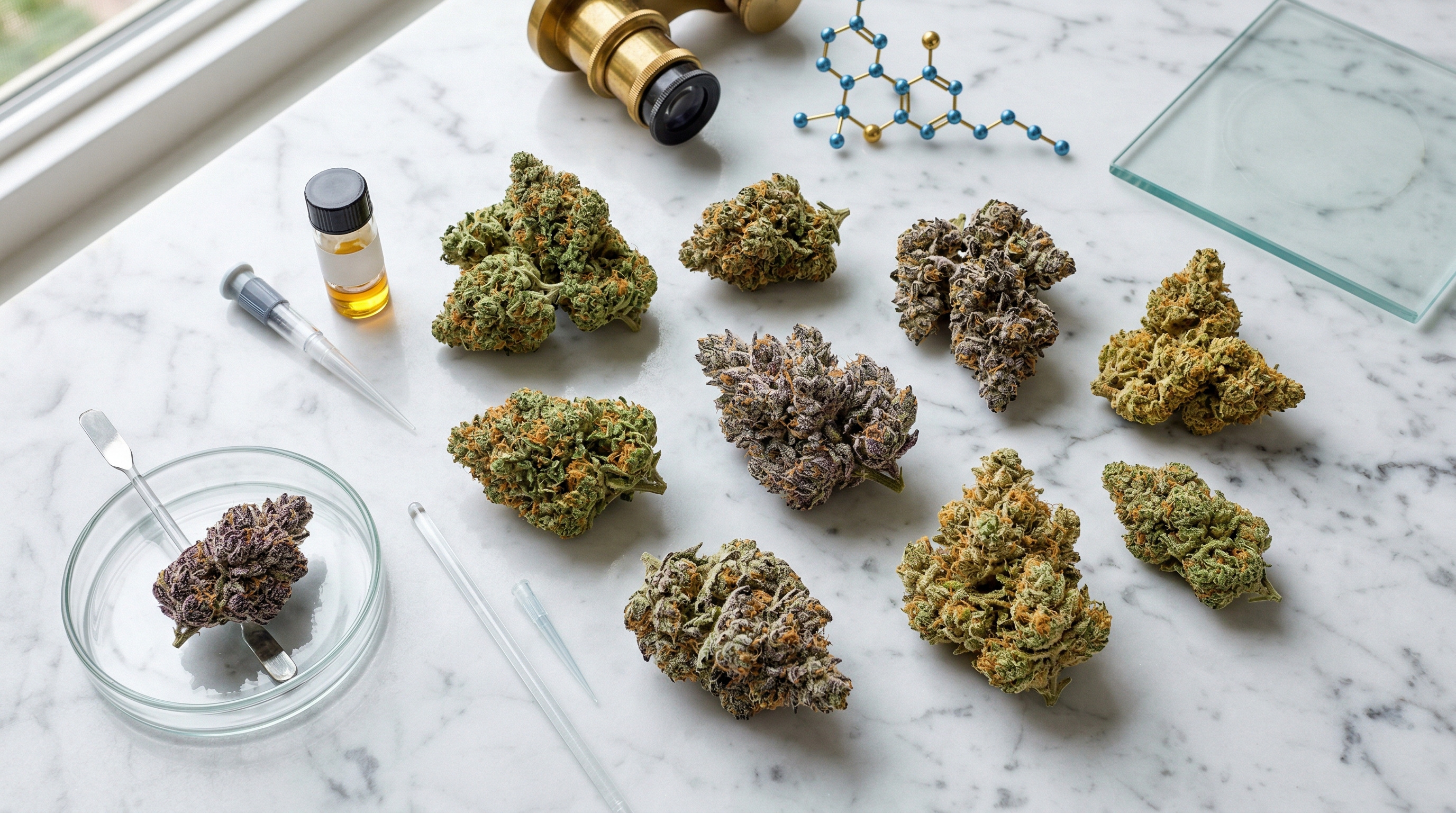
Since 2021, isolated or synthesized THCP has begun appearing in consumer products — primarily in states and countries where hemp-derived cannabinoids occupy a regulatory gray zone. You can find THCP in:
- Vape cartridges (often blended with delta-8 THC or HHC)
- Gummies and edibles
- Tinctures
- THCP-infused flower (hemp flower sprayed with THCP distillate)
Here’s what you need to know about these products:
Most commercially available THCP is synthesized, not extracted. Because THCP occurs at such trace levels in natural cannabis, it isn’t economically viable to extract directly from plant material. Instead, manufacturers typically synthesize THCP from hemp-derived CBD using chemical conversion processes. This is similar to how most delta-8 THC is produced.
Testing and standardization are inconsistent. Without federal regulatory oversight, the accuracy of THCP content claims on product labels varies widely. A 2024 study published in a forensic science journal confirmed THCP’s presence in commercial products across multiple formats but also found significant variation in actual concentrations versus labeled amounts.
Start extremely low. If THCP’s higher CB1 affinity translates even partially to human experience, standard “start low, go slow” advice applies with extra emphasis. There is no established human dosing data. If you choose to experiment, begin with the smallest possible dose and wait well beyond the typical onset window before considering more.
Legal Status: A Patchwork of Rules
THCP’s legal status in the United States is genuinely murky and evolving.
Federal level: THCP is not explicitly listed as a scheduled substance. Hemp-derived THCP (from cannabis containing less than 0.3% delta-9 THC) theoretically falls under the 2018 Farm Bill framework. However, the DEA’s position is that synthetically derived tetrahydrocannabinols are Schedule I — and since most commercial THCP is synthesized from CBD, it could potentially be prosecuted under that interpretation. The Federal Analogue Act also poses a risk, as THCP could be treated as a THC analog if intended for human consumption.
State level: The landscape shifts dramatically by state. As of early 2026:
- Several states with comprehensive hemp-cannabinoid frameworks (Texas, Florida, Georgia) permit THCP products
- California enacted emergency regulations in late 2024 restricting novel intoxicating cannabinoids
- States like New York, Oregon, Vermont, and Colorado have effectively prohibited or tightly restricted THCP
- Many states are actively drafting or updating legislation
The pattern is clear: regulatory pressure is building, and the window of widespread availability may be closing in many markets. Always verify your specific state and local laws before purchasing any THCP product. The broader hemp vs. cannabis regulatory picture continues to shift rapidly.
What This Means for Your Cannabis Experience
THCP’s discovery carries several practical implications for anyone who consumes cannabis:
THC percentage still isn’t the whole story. THCP reinforces what terpene-focused research has been saying for years: the numbers on a label don’t capture the full picture. The THC potency arms race has pushed strains toward extreme THC percentages — but a strain with 18% THC and trace amounts of THCP alongside a rich terpene profile may hit very differently than a 25% THC strain without those compounds. This is why our High Families classification system focuses on the holistic experience chemistry, not just cannabinoid percentages.
The entourage effect gains another supporting character. THCP doesn’t work in isolation. It’s part of a complex chemical conversation happening inside the plant. Understanding the endocannabinoid system helps explain why all these compounds — THC, THCP, CBD, terpenes — interact in ways that can amplify or modify each other’s effects.
Novel cannabinoids deserve skepticism and caution. THCP, like delta-8 before it, has moved rapidly from scientific discovery to consumer market without the benefit of human safety data. That doesn’t mean it’s necessarily dangerous — but it does mean you’re operating with incomplete information if you consume concentrated THCP products.
Key Takeaways
- THCP is a naturally occurring cannabinoid with a seven-carbon side chain, discovered in 2019 by Italian researchers analyzing a medical cannabis strain
- 33x CB1 binding affinity compared to THC in receptor assays — but binding affinity does not linearly translate to “33x stronger effects” in humans
- Animal testing confirmed THC-like effects at lower doses, consistent with higher potency — but no human clinical trials exist
- Extremely low natural concentrations (0.002-0.014% by weight) mean most commercial THCP is synthesized from hemp-derived CBD
- Legal status is a gray area federally and increasingly restricted at the state level — verify your local laws before purchasing
- Start with the lowest possible dose if experimenting with concentrated THCP products, as no human dosing studies have been published
- THCP supports the entourage effect hypothesis — it may partly explain why similar THC percentages produce different experiences across strains
FAQs
Is THCP legal?
It depends on where you live. In the United States, hemp-derived THCP exists in a federal gray area under the 2018 Farm Bill, but synthetic production raises DEA Schedule I concerns, and an increasing number of states are actively restricting it. Always check your specific state and local laws before purchasing.
Will THCP get me 33 times higher than THC?
Almost certainly not. The “33x” figure refers to receptor binding affinity measured in a controlled lab environment, not subjective human experience. Absorption, metabolism, dosage, other cannabinoids present, and individual biology all shape how you actually feel. Think of it as a much stronger molecular grip on the receptor — not a simple multiplier on your experience.
Can I find THCP in regular cannabis flower?
Yes, but in very small amounts. THCP occurs naturally at trace concentrations, typically 0.002-0.014% by weight in strains where it has been detected. Most commercial products use synthesized THCP, not plant-extracted THCP.
How does THCP compare to delta-8 or THCV?
THCP has significantly higher CB1 binding affinity than either. Delta-8 THC is generally considered milder than delta-9, while THCV (with its shorter three-carbon chain) acts as a partial agonist or antagonist at CB1 at lower doses. THCP sits at the high-potency end of the natural cannabinoid spectrum.
Is THCP safe?
No human toxicology or long-term safety studies have been published. The general principle of starting with the lowest effective dose applies with extra weight here, especially for concentrated synthesized products sold outside regulated markets.
Sources
- Citti, C., Linciano, P., Russo, F., Luongo, L., Iannotta, M., Maione, S., Laganà, A., Capriotti, A.L., Forni, F., Vandelli, M.A., Gigli, G., & Cannazza, G. (2019). “A novel phytocannabinoid isolated from Cannabis sativa L. with an in vivo cannabimimetic activity higher than Δ9-tetrahydrocannabinol: Δ9-Tetrahydrocannabiphorol.” Scientific Reports, 9, 20335. DOI: 10.1038/s41598-019-56785-1
- Russo, E.B. (2011). “Taming THC: potential cannabis synergy and phytocannabinoid-terpenoid entourage effects.” British Journal of Pharmacology, 163(7), 1344-1364. PMID: 21749363
- Auwärter, V. et al. (2024). “Δ9-Tetrahydrocannabiphorol: Identification and quantification in recreational products.” Drug Testing and Analysis, 16(9). DOI: 10.1002/dta.3672
- Anand, U. et al. (2025). “Modulatory effects of minor cannabinoids on pain signaling neurons.” Cited in RethinkTHC Research summaries.


