THCV for Metabolic Health: What Early Human Studies Show
THCV blocks CB1 receptors to lower blood sugar, improve insulin sensitivity, and suppress appetite. Here's what peer-reviewed human trials actually found.


Cannabis has a well-earned reputation for triggering “the munchies.” THC activates CB1 receptors in the brain’s hypothalamus and reward circuits, flooding the body with hunger signals and making even a cold slice of pizza seem transcendent. It is one of the most documented pharmacological effects in cannabis science.
But buried inside the same plant is a structurally similar molecule that does the exact opposite.
Delta-9-tetrahydrocannabivarin, or THCV, is a minor cannabinoid that blocks the same CB1 receptors that THC activates. At most doses found in human research, it acts as a neutral CB1 antagonist – switching off, rather than amplifying, the appetite-stimulating cascade. Researchers quickly realized that a naturally occurring cannabis compound capable of suppressing appetite without psychiatric side effects could have major implications for the global epidemics of obesity and type 2 diabetes.
Between 2013 and 2025, a series of peer-reviewed studies – including the first randomized, placebo-controlled human clinical trial published in Diabetes Care – began testing that hypothesis. The results are promising, methodologically modest, and scientifically important. This deep dive unpacks every human study, the preclinical mechanistic evidence underpinning them, and what the emerging data actually means for cannabis consumers and patients.
This article is for educational purposes only. THCV has not been approved by the FDA for the treatment, cure, or prevention of any disease. Always consult a qualified healthcare professional before using cannabinoid products for metabolic conditions.
What Is THCV? Understanding the “Diet Weed” Cannabinoid
Structure: A Three-Carbon Difference That Changes Everything
THCV and THC are structurally nearly identical. The critical distinction is a single chemical modification: THCV has a propyl (3-carbon) side chain where THC carries a pentyl (5-carbon) side chain. This seemingly minor difference produces profoundly different pharmacological behavior at the CB1 receptor.
THC – with its longer side chain – fits snugly into the CB1 receptor binding pocket and activates it. THCV – with its shorter chain – occupies the same binding site but produces little to no activation. Instead, it blocks the receptor without triggering the downstream signaling cascade, which is the definition of a neutral antagonist.
This is a fundamentally different mechanism from the synthetic CB1 inverse agonists like rimonabant (Acomplia), which were approved in Europe in 2006 for obesity. Rimonabant did not just block CB1 – it actively reversed baseline endocannabinoid signaling, essentially pushing the system below its natural resting state. This produced the weight-loss results that made it clinically attractive, but also severe neuropsychiatric side effects including depression, anxiety, and suicidality, which led to its withdrawal from the market in 2008.
THCV, as a neutral antagonist, occupies the receptor without triggering that inverse activation. Early preclinical evidence suggests this pharmacological difference may translate to the metabolic benefits of CB1 blockade with a much safer side effect profile.
Biosynthesis: How Cannabis Makes THCV
THCV follows a parallel biosynthetic pathway to THC, but starts from a different precursor. While THC begins from olivetolic acid (a five-carbon chain), THCV begins from divarinolic acid (a three-carbon chain). This precursor undergoes the same series of enzymatic steps – combining with geranyl pyrophosphate, forming CBGVA, then THCVA, and finally decarboxylating to THCV when heated.
The practical consequence: THCV is present in meaningful quantities only in certain cannabis cultivars, primarily narrow-leaf drug varieties (NLD) and African sativa landraces. It is typically absent or trace-level in indica-dominant strains. Most commercial cannabis testing below 1% THCV. A handful of strains, discussed later, consistently test between 3-6%.
The Endocannabinoid System and Metabolic Health
To understand why THCV’s CB1 antagonism matters for metabolism, you need to understand what the endocannabinoid system (ECS) is doing in your body outside the brain.
The ECS Is Not Just in Your Head
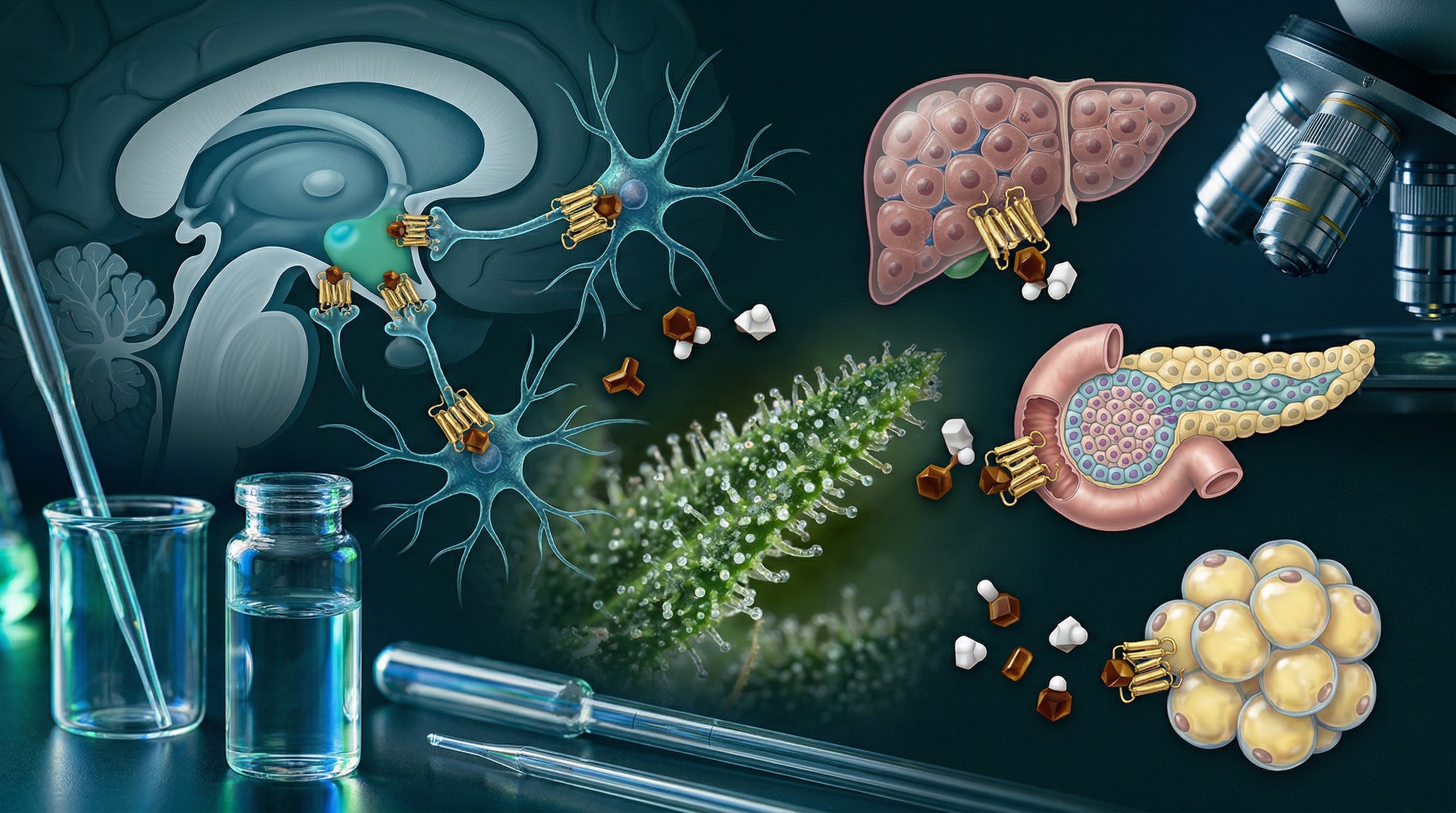
Most cannabis science education focuses on CB1 receptors in the brain, because that is where THC’s psychoactive effects originate. But CB1 receptors are expressed throughout the body – in the liver, pancreas, skeletal muscle, adipose tissue, and gastrointestinal tract – where they play a critical role in metabolic homeostasis.
When the endocannabinoid system becomes chronically overactivated in the context of obesity and metabolic disease, this peripheral CB1 activity promotes:
- Increased lipogenesis (fat production) in the liver
- Reduced insulin sensitivity in muscle and adipose tissue
- Impaired pancreatic beta-cell function
- Promotion of energy storage over energy expenditure
- Appetite dysregulation in the hypothalamus and gut
This is why CB1 became such an attractive pharmacological target for metabolic disease in the early 2000s. Rimonabant’s clinical trials showed substantial weight loss and improvements in glycemic and lipid parameters – but the psychiatric cost was too high. Researchers began searching for safer CB1-modulating compounds, and THCV was identified as a naturally occurring candidate.
What Happens When You Block CB1?
Neutral CB1 antagonism at peripheral metabolic tissues is thought to shift the body’s metabolic balance in several ways. Animal studies have documented:
- Increased mitochondrial activity in adipocytes and hepatocytes
- Improved glucose uptake in insulin-resistant muscle cells
- Restoration of insulin signaling pathways disrupted by obesity
- Reduced liver fat accumulation (anti-hepatosteatotic effects)
- Decreased activity in hypothalamic appetite centers
THCV accomplishes this without the inverse agonism that made rimonabant dangerous. This mechanistic profile is what drove the GW Pharmaceuticals team to advance THCV into human clinical trials.
The Key Human Studies: What Researchers Found
Study 1: The GW Pharmaceuticals Diabetes Trial (Jadoon et al., 2016)
This is the landmark study. Published in Diabetes Care (the flagship journal of the American Diabetes Association) in October 2016, it remains the most rigorous peer-reviewed human trial of THCV’s metabolic effects.

Study design: Randomized, double-blind, placebo-controlled, parallel-group pilot study conducted at the University of Nottingham and the University of Oxford. This is the gold standard design in clinical pharmacology.
Participants: 62 subjects with noninsulin-treated type 2 diabetes. Average characteristics: well-controlled diabetes on standard oral medications, mean age approximately 60 years.
Treatment arms (5 groups, 13 weeks):
- CBD 100 mg twice daily
- THCV 5 mg twice daily
- CBD 5 mg + THCV 5 mg twice daily (1:1 ratio)
- CBD 100 mg + THCV 5 mg twice daily (20:1 ratio)
- Matched placebo
Primary endpoint: Change in HDL-cholesterol from baseline.
THCV results (compared to placebo):
| Measure | THCV Effect | Statistical Significance |
|---|---|---|
| Fasting plasma glucose | Decreased (ETD = −1.2 mmol/L) | P < 0.05 |
| Pancreatic β-cell function (HOMA2) | Significantly improved | P < 0.01 |
| Adiponectin | Increased | P < 0.01 |
| Apolipoprotein A | Changed (ETD = −6.02 μmol/L) | P < 0.05 |
| HDL cholesterol | No significant change | Not significant |
| Body weight | No significant change | Not significant |
| Appetite | No significant change | Not significant |
What the results mean:
The fasting glucose reduction is clinically relevant. A drop of 1.2 mmol/L (approximately 22 mg/dL) in fasting blood sugar is comparable to the initial glucose-lowering effect of some oral diabetes medications. In the context of type 2 diabetes management, this magnitude of effect is meaningful.
The improvement in HOMA2 beta-cell function is particularly significant. HOMA (Homeostatic Model Assessment) beta-cell function is a validated mathematical model that estimates how well the pancreatic cells that produce insulin are functioning. In type 2 diabetes, beta-cell function progressively declines – this is what drives disease progression. THCV significantly improved this metric compared to placebo.
Adiponectin is an insulin-sensitizing hormone secreted by fat tissue. Low adiponectin levels are associated with insulin resistance, type 2 diabetes, and cardiovascular disease. THCV increased adiponectin, suggesting it may be improving insulin sensitivity through this hormonal pathway.
Important caveats:
- The study used only 5 mg THCV twice daily – a very low dose
- Sample size was small (approximately 12 subjects per arm)
- The trial lasted 13 weeks, too short to assess long-term outcomes
- THCV did not produce significant effects on body weight or HDL, the primary endpoint
- The combination arms (CBD + THCV) did not show significant metabolic effects, which the authors attributed to possible pharmacological interactions between the two cannabinoids
The researchers concluded: “THCV could represent a new therapeutic agent in glycemic control in subjects with type 2 diabetes.”
Study authors (Jadoon, Ratcliffe, Barrett, Thomas, Stott, Bell, O’Sullivan, and Tan) noted that the dose used was conservative and that higher doses may produce stronger effects on endpoints like HDL and body composition.
Study 2: Brain Connectivity and Appetite Regulation (Rzepa, Tudge & McCabe, 2015)
Published in the International Journal of Neuropsychopharmacology, this Oxford study took a neuroimaging approach to understanding how THCV affects appetite in the human brain.
Design: Randomized, within-subjects, double-blind, placebo-controlled crossover design. 19 healthy volunteers received a single 10 mg oral dose of THCV or placebo, with an MRI scan approximately one hour post-administration.
Key finding: THCV decreased resting-state functional connectivity in the default mode network (DMN) and simultaneously increased connectivity in the cognitive control network and dorsal visual stream network.
This connectivity shift matters because the default mode network has been identified as hyperconnected in obese individuals, and alterations in DMN connectivity have been linked to disordered eating patterns and reduced control over appetite-driven behavior. The simultaneous increase in cognitive control network activity suggests greater executive regulation of eating impulses.
A separate fMRI analysis (Tuulari et al., 2015) found that THCV specifically reduced the correlation between BMI and amygdala-precuneus connectivity that was observed in the placebo group. The amygdala-precuneus connection is involved in emotional aspects of food reward. THCV appeared to modulate this appetite and reward circuitry without the drug being psychoactive.
The researchers proposed this neural connectivity profile may represent the mechanism by which THCV modulates food intake – not simply through peripheral metabolic effects, but through active reorganization of brain networks involved in appetite regulation.
Study 3: Neural Effects on Food Reward and Aversion (Tudge et al., 2014)
The same Oxford research group published an earlier fMRI study in the International Journal of Neuropsychopharmacology that examined THCV’s effects on food reward processing in the brain.
Design: Randomized, double-blind, placebo-controlled, crossover design. Healthy volunteers received THCV (10 mg) or placebo before undergoing fMRI while viewing images of food versus non-food items.
Findings: Compared to placebo, THCV increased the brain’s response to pleasant food stimuli in the anterior cingulate cortex, caudate, and putamen – regions involved in reward value computation. This seems counterintuitive for an “appetite-suppressing” compound.
The authors interpreted this finding carefully: the enhancement of brain response to food reward signals in these circuits may actually reflect increased salience discrimination – a sharper evaluation of which foods are genuinely rewarding – rather than increased overall appetite drive. This is consistent with CB1 antagonism producing a more precise, rather than globally suppressed, relationship with food.
The study illustrates an important scientific principle: the relationship between brain reward signals and actual food intake behavior is not straightforward. Increased limbic activation to food cues does not automatically translate to increased eating.
Study 4: THCV/CBD Mucoadhesive Strips for Weight Loss and Metabolic Syndrome (Smith, 2025)
Published in Cannabis (Journal of the Research Society on Marijuana) in January 2025 (PMCID: PMC11831893), this more recent placebo-controlled study expanded the scope from glycemic control to broader metabolic syndrome markers.
Design: Placebo-controlled, with two active treatment groups and a placebo group. 44 subjects (31 female, 13 male), average age 51.75 years. 90-day treatment period.
Treatment arms:
- Low dose: 8 mg THCV + 10 mg CBD once daily via mucoadhesive oral strip
- High dose: 16 mg THCV + 20 mg CBD once daily via mucoadhesive oral strip
- Placebo strip
Results:
| Measure | High-Dose Result | Statistical Significance |
|---|---|---|
| Body weight | Statistically significant loss | P < 0.05 |
| Abdominal girth | Significantly decreased | P < 0.05 |
| Systolic blood pressure | Significantly decreased | P < 0.05 |
| Total cholesterol | Significantly decreased | P < 0.05 |
| LDL cholesterol | Significantly decreased | P < 0.05 |
| A1c (HbA1c) | Trend toward improvement | Not statistically significant |
The high-dose group (16 mg THCV + 20 mg CBD) showed superior results compared to the low-dose group, suggesting dose-dependent effects. This dose-response relationship is consistent with what preclinical research predicted.
Study limitations acknowledged by the authors:
- Small sample size per group (n ≈ 11-15)
- No standardized dietary or exercise controls
- Not yet replicated in a larger independent study
- Industry-affiliated research (NeX Therapeutics)
Despite these limitations, the results align with the preclinical mechanistic evidence and the 2016 Jadoon et al. findings. The pattern across independent studies – reduced fasting glucose, improved insulin signaling markers, and now direct weight loss and lipid improvements – provides growing convergent evidence.
Study 5: The Phylos Biosciences Crossover Trial (2024, unpublished)
In 2024, Phylos Biosciences partially funded a double-blind, placebo-controlled crossover trial involving 78 adults who received different combinations of placebo, THC (5 mg or 15 mg), and/or THCV (5 mg) across multiple three-day periods.
This trial has not yet been published in a peer-reviewed journal, so its conclusions warrant careful interpretation. The reported finding: THCV co-administered with THC reduced the hunger increase that 5 mg THC alone produced.
As analyzed by cannabis pharmacologist Nick Jikomes, PhD (writing in Leafly), the more precise finding was that THC at 5 mg increased hunger, and adding THCV to that same THC dose appeared to attenuate the hunger response – consistent with THCV blocking some of THC’s CB1-mediated appetite stimulation. Both THC-alone and THCV+THC groups reported increased subjective energy, activity, and well-being compared to placebo.
Important interpretation: This study tells us more about THCV’s interaction with THC than about THCV’s standalone metabolic effects. The “THCV blunts the munchies” framing is broadly accurate but represents only one dimension of THCV’s pharmacological profile. The standalone metabolic effects shown in the Jadoon et al. study (reduced fasting glucose, improved beta-cell function) are separate and arguably more clinically significant.
Study 6: Safety and Acute Effects in Healthy Adults (Bonn-Miller et al., 2023)
A two-phase, dose-ranging, placebo-controlled trial published in Cannabis and Cannabinoid Research in September 2023 evaluated the safety and acute effects of Δ8-THCV (an isomer of the more commonly studied Δ9-THCV) in healthy adults at doses of 5 mg, 15 mg, 25 mg, 50 mg, 100 mg, and 200 mg.
Key safety findings:
- All doses displayed a favorable safety profile – no serious adverse events
- Mild THC-like psychoactive effects appeared at 100 mg and 200 mg doses (consistent with preclinical findings that THCV acts as a partial CB1 agonist at high doses)
- At lower doses (5-25 mg), no meaningful psychoactive effects were reported
- Several doses showed a preliminary signal for improved sustained attention on the digit vigilance test, though the effect was not dose-dependent
This study confirmed an important pharmacological principle: THCV is dose-dependent in its receptor activity. At low doses (under 25 mg oral), it functions as a CB1 neutral antagonist. At very high doses (100+ mg), it may begin to exhibit partial CB1 agonist activity, similar in some ways to low-dose THC. This dose-dependency has been well-established in preclinical models and is critical for understanding how to interpret any THCV study.
The study also flagged that THCV-containing products can produce positive results on standard urine drug screens for THC – a practical consideration for consumers subject to drug testing.
The Preclinical Foundation: What Animal and Cell Studies Show
The human trials described above don’t exist in a vacuum. They were built on a decade of preclinical mechanistic research that helps explain why THCV produces the effects observed in humans.
The Wargent et al. Mouse Studies (2013)
Published in Nutrition & Diabetes (a Nature portfolio journal), this foundational study by Wargent, Zaibi, Silvestri and colleagues tested THCV in two mouse models of obesity: dietary-induced obesity (DIO) in mice fed high-fat diets, and genetic obesity in ob/ob mice.
Key findings:
- THCV did not significantly reduce food intake or body weight in DIO mice
- THCV produced a significant early increase in energy expenditure – specifically 8.2% at 5 mg/kg and 13.5% at 12 mg/kg over 24 hours
- THCV dose-dependently reduced glucose intolerance in ob/ob mice
- THCV improved glucose tolerance and increased insulin sensitivity in DIO mice
- THCV restored insulin signaling in insulin-resistant hepatocytes and skeletal muscle cells in vitro
The cellular mechanism: THCV treatment restored phosphorylation of key insulin signaling proteins (Akt and ERK) in insulin-resistant cell lines – essentially reactivating the intracellular pathway that becomes dysfunctional in type 2 diabetes.
This study established a critical conceptual point that gets lost in mainstream THCV coverage: THCV’s most robust metabolic effect may not be appetite suppression, but rather direct improvement in insulin sensitivity. The energy expenditure boost and glucose regulation effects occurred even when food intake and body weight were unchanged.
In Vitro Insulin Resistance Studies
Beyond the animal models, cell culture studies have illuminated the molecular mechanisms:
- THCV pre-treatment protects hepatocytes (liver cells) against insulin resistance induced by chronic insulin exposure
- In C2C12 myotubes (skeletal muscle cell model), THCV restored insulin-stimulated glucose uptake that had been impaired by inducing insulin resistance
- THCV reduces lipid accumulation in adipocytes, with an associated improvement in mitochondrial function
- In zebrafish and obese mouse models, THCV enhanced lipid utilization and prevented non-alcoholic fatty liver disease (NAFLD) development
These cellular findings align precisely with what human studies observed: improvements in beta-cell function, increased adiponectin (an insulin-sensitizing hormone), and reduced fasting glucose.
What THCV Does (and Does Not) Do to Your Brain
This is where nuance matters most, and where mainstream “diet weed” marketing often gets oversimplified.
THCV as a CB1 Neutral Antagonist
At low to moderate doses (the range used in human studies), THCV blocks CB1 receptors without activating them. This “neutral antagonism” means:
- The endocannabinoid system’s baseline activity is not disrupted
- Appetite signals that were already elevated (as in metabolic disease) can be reduced
- The metabolic “fasting state” – characterized by preferential fat burning – is promoted
- None of the psychoactive effects of THC are produced
This is pharmacologically distinct from rimonabant, which as an inverse agonist actively pushed CB1 signaling below its natural resting state. The psychiatric effects of rimonabant (depression, suicidality) are thought to result from this suppression of baseline endocannabinoid tone in limbic brain circuits. THCV’s neutral antagonism does not suppress baseline signaling – it only blocks incoming cannabinoid stimulation.
THCV and Appetite: Nuanced, Not Simple
The human studies paint a nuanced picture:
- In healthy, metabolically normal individuals: THCV may not dramatically suppress appetite – the 2016 Jadoon trial found no significant appetite effect in diabetic patients, and the neural studies suggest THCV reorganizes food reward processing rather than globally suppressing hunger
- When co-administered with THC: THCV clearly blunts THC’s munchie-inducing effect, likely by competing at CB1 receptors
- In metabolically dysregulated states: The weight-loss observed in the mucoadhesive strip study (Smith, 2025) and the reduction in abdominal girth suggest appetite modulation may be more pronounced in people with existing metabolic dysfunction
The most accurate framing: THCV is not a universal appetite suppressor, but rather a modulator of the endocannabinoid system’s contribution to appetite and metabolic homeostasis – which is particularly relevant when that system is dysregulated.
High-THCV Cannabis Strains: Where to Find It
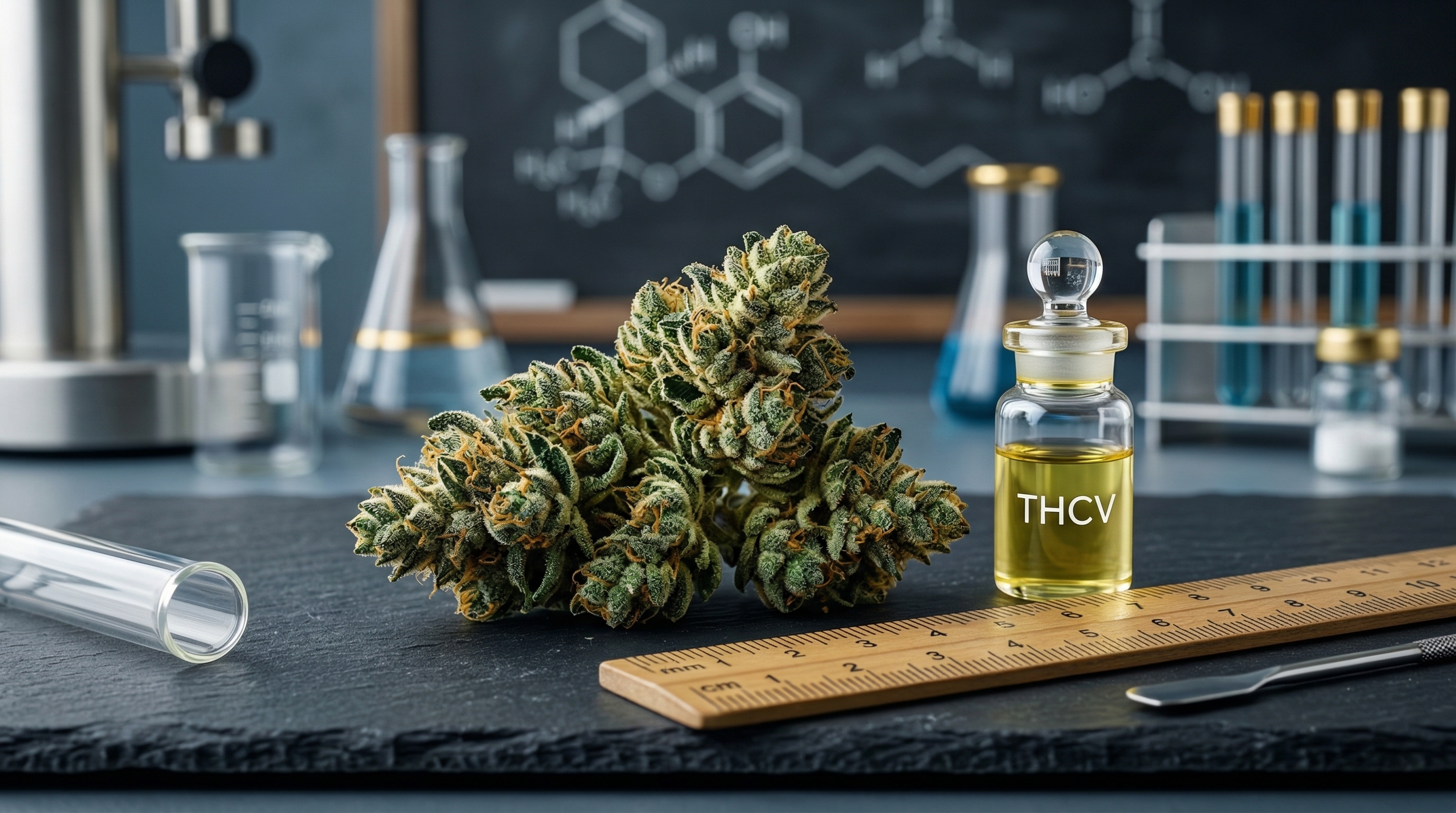
THCV does not appear in meaningful quantities in most commercial cannabis. Its biosynthetic pathway favors sativa landraces from specific geographic origins. Here is what the evidence shows about where to find it.
Durban Poison
The most accessible high-THCV strain. Durban Poison is a South African landrace sativa that has been cultivated and distributed globally. Lab analyses typically show 1-4% THCV alongside 15-20% THC. It is one of the few THCV-containing strains widely available at legal dispensaries. Effects are characteristically energetic and clear-headed – consistent with the CB1 modulation that THCV would produce when co-present with THC.
Doug’s Varin
Bred specifically for high THCV expression, Doug’s Varin is one of the rare strains developed with intentional cannabinoid targeting. Lab reports indicate 3-6% THCV-A, making it among the highest THCV concentrations available in commercial cannabis. The strain is rarer than Durban Poison but represents the cutting edge of THCV-focused cultivation. Effects are described as sharply energetic with pronounced mental clarity and focus.
Jack the Ripper
A sativa-dominant hybrid that has been found to contain up to 5% THCV in some phenotypes, along with high THC (15-25%). Jack the Ripper has been a reference strain for THCV research precisely because of its consistently elevated minor cannabinoid content. Creative, alert, energizing effects are commonly reported.
Pineapple Purps
A sativa-dominant hybrid with approximately 4% THCV alongside balanced THC and CBD. Less widely available than Durban Poison or Jack the Ripper, but sought out by consumers specifically for its THCV content. Uplifting, social, and fruity-flavored.
African Landraces Generally
The common thread across high-THCV strains is African genetic heritage. Varieties originating from South Africa, East Africa, and parts of West Africa tend to produce the divarinolic acid precursor pathway more efficiently than European or South Asian genetics. If a strain’s lineage includes documented African landrace genetics, it is more likely to carry THCV.
A Practical Note on Finding THCV
Because THCV is present in trace amounts in most cannabis, verified third-party lab testing is essential. A certificate of analysis (COA) that specifically reports THCV content is the only reliable way to confirm you are consuming meaningful levels of this cannabinoid. Many dispensaries do not routinely include THCV in their standard panel – look for comprehensive cannabinoid panels that report beyond just THC and CBD.
THCV’s Comparison to Rimonabant: The Safety Question
A key question in the scientific literature is whether THCV can deliver the metabolic benefits of CB1 blockade without rimonabant’s psychiatric risks.
The pharmacological case for THCV’s safety advantage is mechanistically sound:
- Neutral vs. inverse agonism: THCV does not suppress baseline endocannabinoid tone, which is the mechanism believed to underlie rimonabant’s depression and suicidality risk
- Partial CB2 agonism: Unlike rimonabant, THCV partially activates CB2 receptors, which are involved in anti-inflammatory signaling. This may provide additive metabolic benefit
- Dose-dependent psychoactivity ceiling: Human studies show that even at very high doses (100-200 mg), THCV produced mild effects rather than the severe psychiatric episodes associated with rimonabant
Human clinical experience is limited but consistent with this mechanistic prediction. The Jadoon et al. trial (13 weeks, 62 subjects) reported that THCV was well-tolerated with no serious adverse events. The Bonn-Miller et al. safety study found a favorable safety profile across all doses tested.
What remains unknown is long-term safety with chronic administration, drug-drug interactions (particularly with medications metabolized by cytochrome P450 enzymes), and effects in individuals with pre-existing psychiatric conditions.
Current Limitations and What the Research Still Needs
Honesty requires acknowledging the state of the evidence as it actually exists:
1. All human studies have been small. The largest published human trial had 62 participants. Pharmaceutical trials for diabetes medications typically enroll thousands. THCV’s effect sizes are promising, but small trials are susceptible to chance findings and publication bias.
2. Long-term data does not exist. The longest published human trial ran 13 weeks. Type 2 diabetes and metabolic syndrome are chronic conditions. Whether THCV’s benefits persist, attenuate, or produce unforeseen effects with multi-year use is entirely unknown.
3. Optimal dosing is uncertain. Human studies have used 5-16 mg of THCV daily. Preclinical models used much higher weight-adjusted doses. No dose-ranging study has systematically mapped the dose-response relationship for metabolic endpoints in humans.
4. Most studies are not independent. The 2016 Jadoon et al. study was conducted with GW Pharmaceuticals-supplied THCV. The 2025 Smith study was industry-affiliated. Independent academic replication with no industry involvement is needed.
5. No regulatory approval exists. THCV has not been approved by the FDA or any other major regulatory agency for any indication. It is not a proven medicine.
6. Interaction with the full cannabis matrix is complex. Most consumers who seek THCV will encounter it through whole cannabis, not isolated THCV. The interaction of THCV with THC, CBD, terpenes, and other cannabinoids in the entourage effect creates a pharmacological complexity that no human study has fully characterized.
Key Takeaways
-
THCV is a minor cannabinoid with a three-carbon propyl side chain, compared to THC’s five-carbon chain. This structural difference causes it to act as a neutral CB1 receptor antagonist rather than an agonist – blocking the receptor without activating it.
-
At low doses, THCV is non-psychoactive. Only at very high doses (100+ mg oral) does mild THC-like activity emerge. The doses used in human metabolic studies (5-16 mg daily) were well below the psychoactive threshold.
-
The landmark 2016 Jadoon et al. trial (published in Diabetes Care) showed that THCV at 5 mg twice daily for 13 weeks significantly reduced fasting plasma glucose (−1.2 mmol/L, p < 0.05) and significantly improved pancreatic beta-cell function and adiponectin in type 2 diabetic patients, compared to placebo.
-
THCV’s metabolic effects appear to come primarily from improving insulin sensitivity and beta-cell function, not just appetite suppression. The brain connectivity studies show it also reorganizes food reward circuitry in ways that may reduce compulsive eating behavior.
-
The 2025 Smith et al. trial found statistically significant weight loss, reduction in abdominal girth, lower systolic blood pressure, and improved total and LDL cholesterol with THCV/CBD mucoadhesive strips over 90 days – but in a small, industry-affiliated study.
-
High-THCV strains include Durban Poison (most accessible), Doug’s Varin (highest THCV percentage), Jack the Ripper, and Pineapple Purps. Always verify THCV content with third-party lab results.
-
THCV is not a proven medicine. The existing human evidence is promising but preliminary. Larger, independent, long-term clinical trials are essential before THCV can be recommended as a therapeutic intervention for metabolic disease.
FAQs
Will THCV suppress my appetite?
The honest answer is: it depends. In healthy individuals, evidence for direct appetite suppression is weak – the neuroimaging studies show THCV reorganizes food reward processing rather than simply shutting down hunger. When combined with THC, THCV clearly blunts the munchie effect. In people with metabolic dysfunction, THCV may reduce appetite as part of a broader metabolic rebalancing. Do not expect a magic hunger-off switch.
Does THCV lower blood sugar?
The Jadoon et al. (2016) trial found statistically significant reductions in fasting plasma glucose in type 2 diabetic patients at 5 mg twice daily for 13 weeks. This is the most rigorous human data available. If you have diabetes, this does not mean you should self-medicate with THCV – blood sugar management is complex and should involve a physician.
Can THCV make me fail a drug test?
Yes. Both the Bonn-Miller et al. (2023) safety study and the Smith et al. (2025) study flagged that THCV-containing products can produce positive results on standard urinary drug screens for THC. This is because the assays cross-react with structurally similar cannabinoids. If you are subject to drug testing, exercise caution with any THCV product.
Is THCV the same as “diet weed”?
The “diet weed” label is catchy but oversimplified. THCV’s metabolic effects appear to be broader and more mechanistically significant than simple appetite suppression – they involve direct improvements in insulin sensitivity, beta-cell function, and energy expenditure. The appetite-suppression framing, while partially accurate, undersells the more clinically relevant metabolic mechanisms.
What is the difference between THCV and rimonabant?
Both block CB1 receptors, but mechanistically they are very different. Rimonabant was an inverse agonist that suppressed CB1 activity below its natural baseline, causing severe psychiatric side effects including depression and suicidality that led to its withdrawal. THCV is a neutral antagonist that simply occupies the receptor without altering baseline endocannabinoid tone. This distinction is believed to explain why THCV has shown a favorable safety profile in early human trials.
Where is THCV research headed?
The most immediate need is larger, independent, placebo-controlled trials with longer follow-up periods. Pharmaceutical research into isolated THCV for type 2 diabetes indications continues. The intersection of THCV and the obesity epidemic, particularly in the context of the GLP-1 agonist revolution (Ozempic, Wegovy), is drawing renewed scientific attention to CB1-targeting compounds with better safety profiles.
Sources and Further Reading
-
Jadoon, K.A., Ratcliffe, S.H., Barrett, D.A., Thomas, E.L., Stott, C., Bell, J.D., O’Sullivan, S., & Tan, G.D. (2016). Efficacy and Safety of Cannabidiol and Tetrahydrocannabivarin on Glycemic and Lipid Parameters in Patients With Type 2 Diabetes: A Randomized, Double-Blind, Placebo-Controlled, Parallel Group Pilot Study. Diabetes Care, 39(10), 1777-1786. doi:10.2337/dc16-0650
-
Wargent, E.T., Zaibi, M.S., Silvestri, C., Hislop, D.C., Stocker, C.J., Stott, C.G., … & Cawthorne, M.A. (2013). The cannabinoid Δ9-tetrahydrocannabivarin (THCV) ameliorates insulin sensitivity in two mouse models of obesity. Nutrition & Diabetes, 3, e68. doi:10.1038/nutd.2013.9
-
Smith, G.L. (2025). Weight Loss and Therapeutic Metabolic Effects of Tetrahydrocannabivarin (THCV)-Infused Mucoadhesive Strips. Cannabis, 8(1). PMCID: PMC11831893. doi:10.26828/cannabis/2024/000206
-
Rzepa, E., Tudge, L., & McCabe, C. (2015). The CB1 Neutral Antagonist Tetrahydrocannabivarin Reduces Default Mode Network and Increases Cognitive Control Network Resting-State Functional Connectivity in Healthy Volunteers. International Journal of Neuropsychopharmacology, 19(2), pyv092. PMCID: PMC4772823. doi:10.1093/ijnp/pyv092
-
Tudge, L., Williams, C., Cowen, P.J., & McCabe, C. (2014). Neural effects of cannabinoid CB1 neutral antagonist tetrahydrocannabivarin on food reward and aversion in healthy volunteers. International Journal of Neuropsychopharmacology, 18(6), pyu094. doi:10.1093/ijnp/pyu094
-
Bonn-Miller, M.O., et al. (2023). A Two-Phase, Dose-Ranging, Placebo-Controlled Study of the Safety and Preliminary Test of Acute Effects of Oral Δ8-Tetrahydrocannabivarin in Healthy Participants. Cannabis and Cannabinoid Research, 8(5). doi:10.1089/can.2023.0038
-
Mendoza, S. (2025). The role of tetrahydrocannabivarin (THCV) in metabolic disorders: A promising cannabinoid for diabetes and weight management. AIMS Neuroscience, 12(1), 32-43. PMCID: PMC12011981. doi:10.3934/Neuroscience.2025003
-
Abioye, A., Ayodele, O., Marinkovic, A., Patidar, R., Akinwekomi, A., & Sanyaolu, A. (2020). Δ9-Tetrahydrocannabivarin (THCV): a commentary on potential therapeutic benefit for the management of obesity and diabetes. Journal of Cannabis Research, 2(6). PMCID: PMC7819335. doi:10.1186/s42238-020-0016-7


