When and How to Harvest Cannabis: A Grower's Complete Guide
Learn exactly when to harvest cannabis using trichome color, pistils, and smell—plus wet vs. dry trim, flushing, and step-by-step cutting technique.

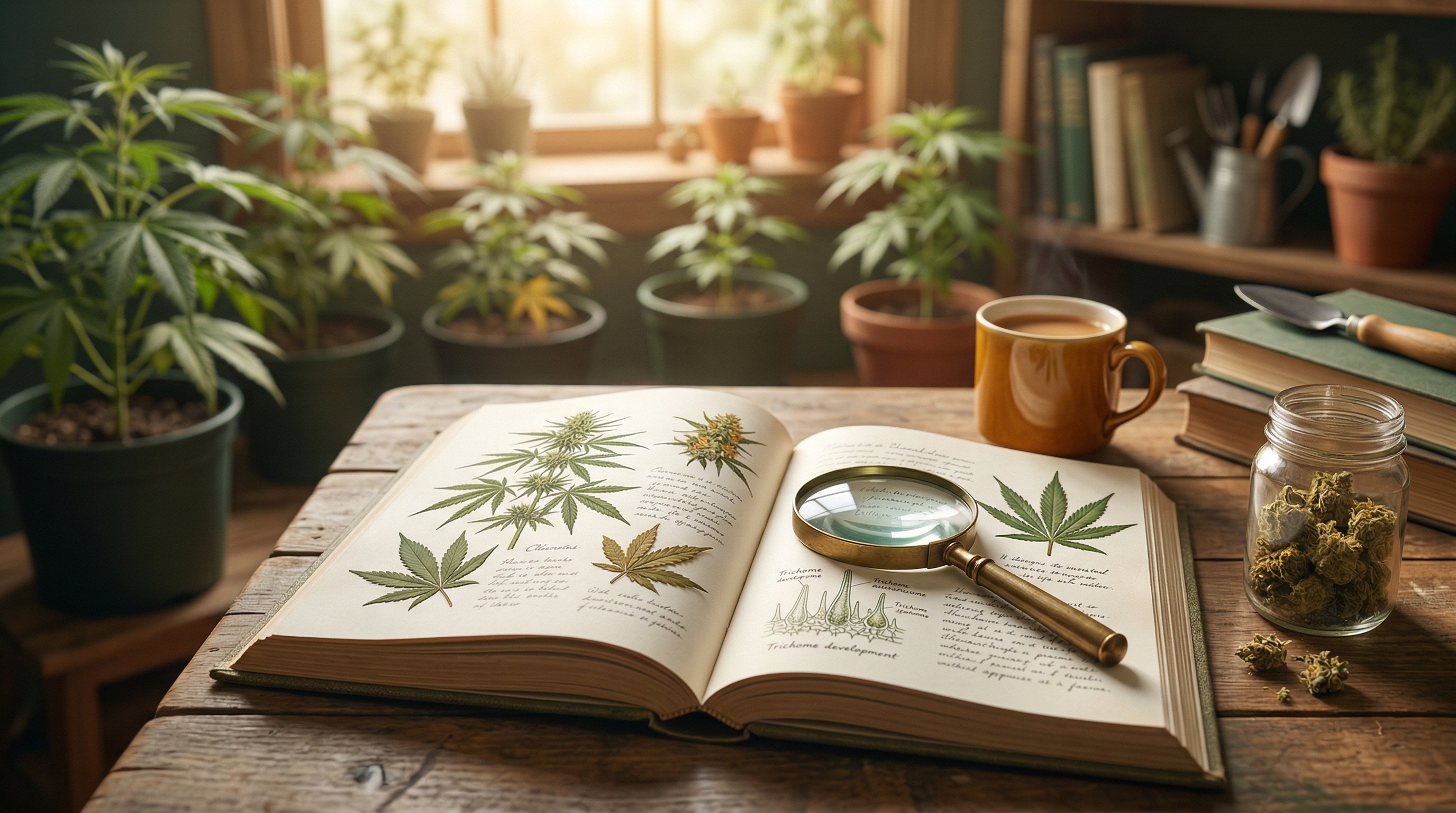
You’ve spent weeks—maybe months—nurturing your cannabis plants through germination, vegetative growth, and flowering. Now comes the moment that separates a good harvest from a great one: knowing exactly when to cut those plants down. Harvest too early and you leave potency on the table. Harvest too late and you risk degraded cannabinoids, diminished terpene profiles, and an overly sedative experience.
This guide walks you through every step of the harvest process—from reading trichomes like a pro to making your final cuts with confidence. Note: this guide focuses specifically on the harvest itself. Once your plants are down, head to the companion guide on drying and curing cannabis for everything that happens next.
What you’ll accomplish: You’ll identify peak harvest maturity, properly cut and handle your plants, choose the right trim approach, and set yourself up for a flawless dry.
Estimated time: Trichome checks take 5–10 minutes per plant. The actual harvest (cutting, trimming, hanging) takes 2–6 hours depending on garden size.
Difficulty level: Intermediate — you’ll need a magnification tool and some patience, but once you know what to look for, it becomes second nature.
What You’ll Need
Required
- Jeweler’s loupe (60x–100x magnification) or a digital USB microscope — essential for reading trichomes
- Sharp pruning shears or scissors — clean cuts reduce plant stress and contamination risk
- Rubbing alcohol (isopropyl 90%+) — for sanitizing tools between cuts
- Dark drying space — room at 60°F–70°F (15–21°C) and 55%–65% relative humidity
- Hanging line or drying rack — for suspending branches upside down
- Nitrile or latex gloves — cannabis resin is extremely sticky and hard to remove from bare skin
Optional
- Trimming tray with kief screen — catches valuable trichomes that fall during trimming
- Digital hygrometer — monitors humidity in your drying space (budget models start at $10)
- Small oscillating fan — gentle air circulation (never aimed directly at buds)
- Trimming scissors — curved spring-loaded scissors are a grower’s best friend
Safety
- Gloves prevent skin irritation from plant resin
- Ventilation in your drying area prevents mold
- Work in low light — UV light degrades cannabinoids and terpenes
Step-by-Step Instructions
Step 1: Track the Flowering Timeline
Start paying close attention to your plants during the final 2–3 weeks of the breeder’s suggested flowering period. Most photoperiod strains flower for 8–11 weeks; autoflowers typically finish in 70–90 days from seed. If you want a detailed week-by-week breakdown of what’s happening inside the plant during each stage, check out our cannabis growing stages guide.
Keep in mind: breeder timelines are estimates, not guarantees. Light intensity, nutrient levels, temperature, and genetics all influence actual maturity. Use the calendar as a rough guide, not a countdown.
Tip: Start daily trichome checks once you’re within one week of the breeder’s estimated harvest window.
Step 2: Read the Trichomes
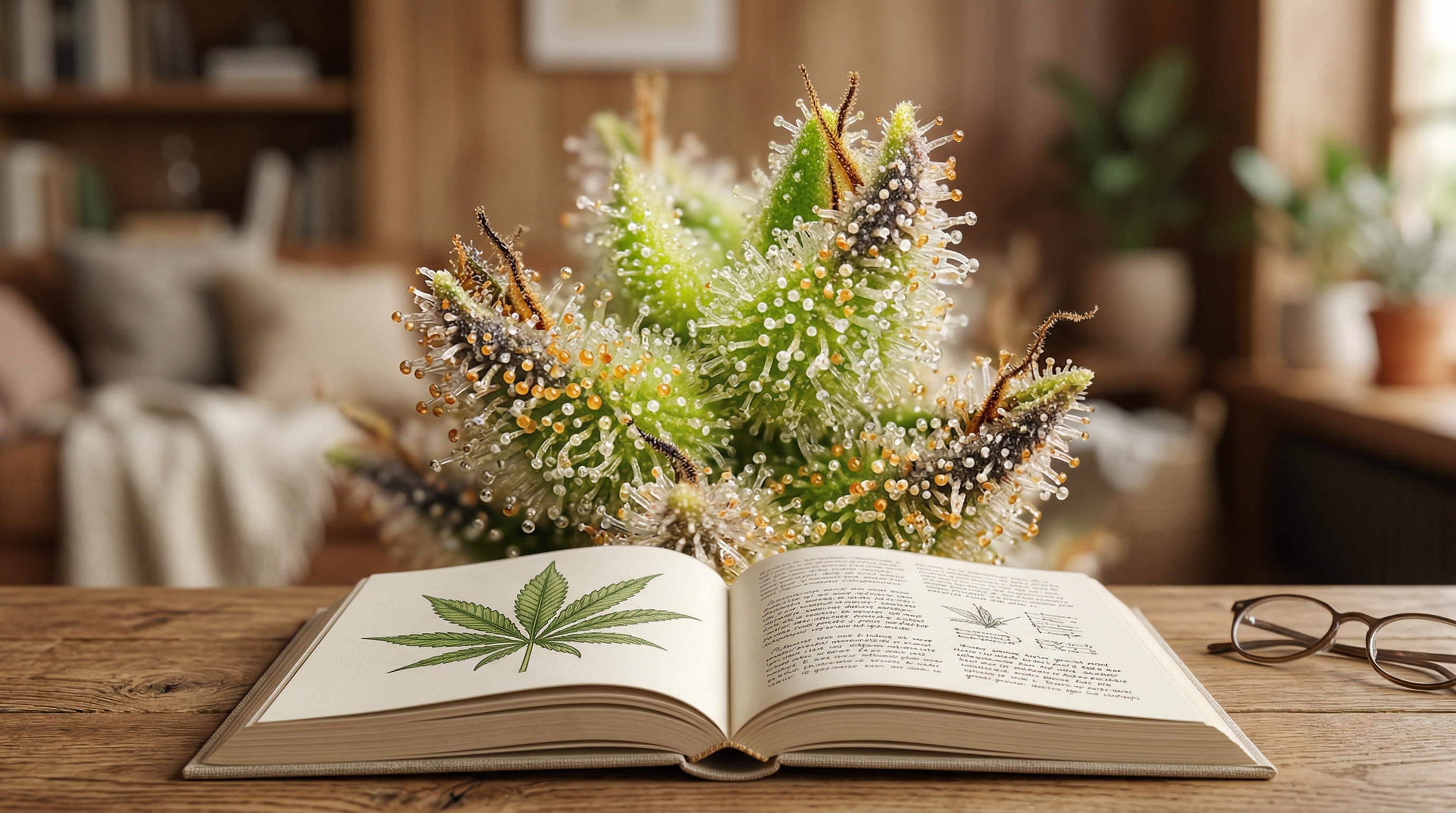
This is the single most important skill in harvesting cannabis—and the one most beginner growers skip. Grab your jeweler’s loupe and examine the trichomes on the calyxes (the small, teardrop-shaped pods that make up the bud structure itself). Avoid reading trichomes on sugar leaves—they mature faster than the bud and will mislead you.
Here’s what you’re looking for:
| Trichome Appearance | What It Means | Harvest? |
|---|---|---|
| Clear / transparent | Cannabinoids still developing | Too early |
| Mostly milky / cloudy | Peak THC production | Ideal for most goals |
| 50/50 milky and amber | THC beginning to convert to CBN | Fuller body effects |
| Mostly amber | Significant THC degradation | Past peak for most |
Most growers aim for 80–90% milky trichomes with 5–15% amber as the sweet spot—this balances peak potency with a small amount of CBN development for depth of effect.
For an energizing, cerebral experience, harvest when trichomes are mostly milky with just a few amber heads. This timing preserves terpenes like terpinolene and limonene that drive the Uplifting High and Energetic High experiences. For a deep dive into how these aromatic compounds shape your high, see our cannabis terpenes guide.
For deeper relaxation and body effects, wait until 30%–50% of trichomes have turned amber. This allows more THC to convert to CBN. The sedative reputation of CBN is widely cited in grower communities—and our own CBN guide covers the nuanced science behind that claim—but the effect difference at harvest timing is primarily reported anecdotally. What is well-established is that higher amber ratios correlate with more mellow, less stimulating effects, which aligns with the Relaxing High experience many growers target at this window.
Tip: Check trichomes at the same time each day — lighting conditions affect how trichome colors appear under magnification.
Step 3: Confirm with Secondary Indicators
Trichomes are your primary indicator, but these secondary cues confirm you’re in the right window:
- Pistils (hairs): 70%–90% have darkened from white to orange, red, or brown
- Fan leaves: Yellowing and dropping naturally as the plant redirects energy to the flowers
- Bud density: Calyxes are swollen and firm to a gentle squeeze
- Aroma: Terpene production peaks at maturity — your garden should smell intensely of the strain’s characteristic profile
A scientific note: A 2021 study across 25 cannabis genotypes found that peak cannabinoid concentration typically occurred between the third and fourth stages of inflorescence maturation — roughly aligning with the transition from mostly-white to mostly-amber pistils. That said, optimal timing was genotype-specific, reinforcing trichome inspection as the gold standard [Piluzza et al., 2021].
Tip: If pistils are still mostly white, you’re almost certainly too early — regardless of what the calendar says.
Step 4: Consider Flushing
Many growers water with plain, pH-balanced water for the final 1–2 weeks before harvest to allow the plant to use up stored nutrients. The science on flushing is legitimately debated [Stemeroff et al., 2020]—some peer-reviewed research finds minimal impact on final product, while many experienced cultivators swear by it for smoother flavor. The practical consensus: it won’t hurt, and if your nutrient program was heavy, it likely helps.
If you decide to flush, stop all nutrient feeding 7–14 days before your target harvest date and water normally with pH-corrected water only.
Step 5: Prepare for the Cut
Before you start cutting:
- Clean your tools with isopropyl alcohol to prevent contamination and pathogen spread between plants
- Stop watering 24–48 hours before harvest — slightly drier substrate reduces water weight and can shorten drying time
- Set up your drying space — dark room at 60°F–70°F with 55%–65% humidity, hanging lines or racks ready to go
- Work in low or no light — UV and bright light degrade cannabinoids and volatile terpenes during the harvest process
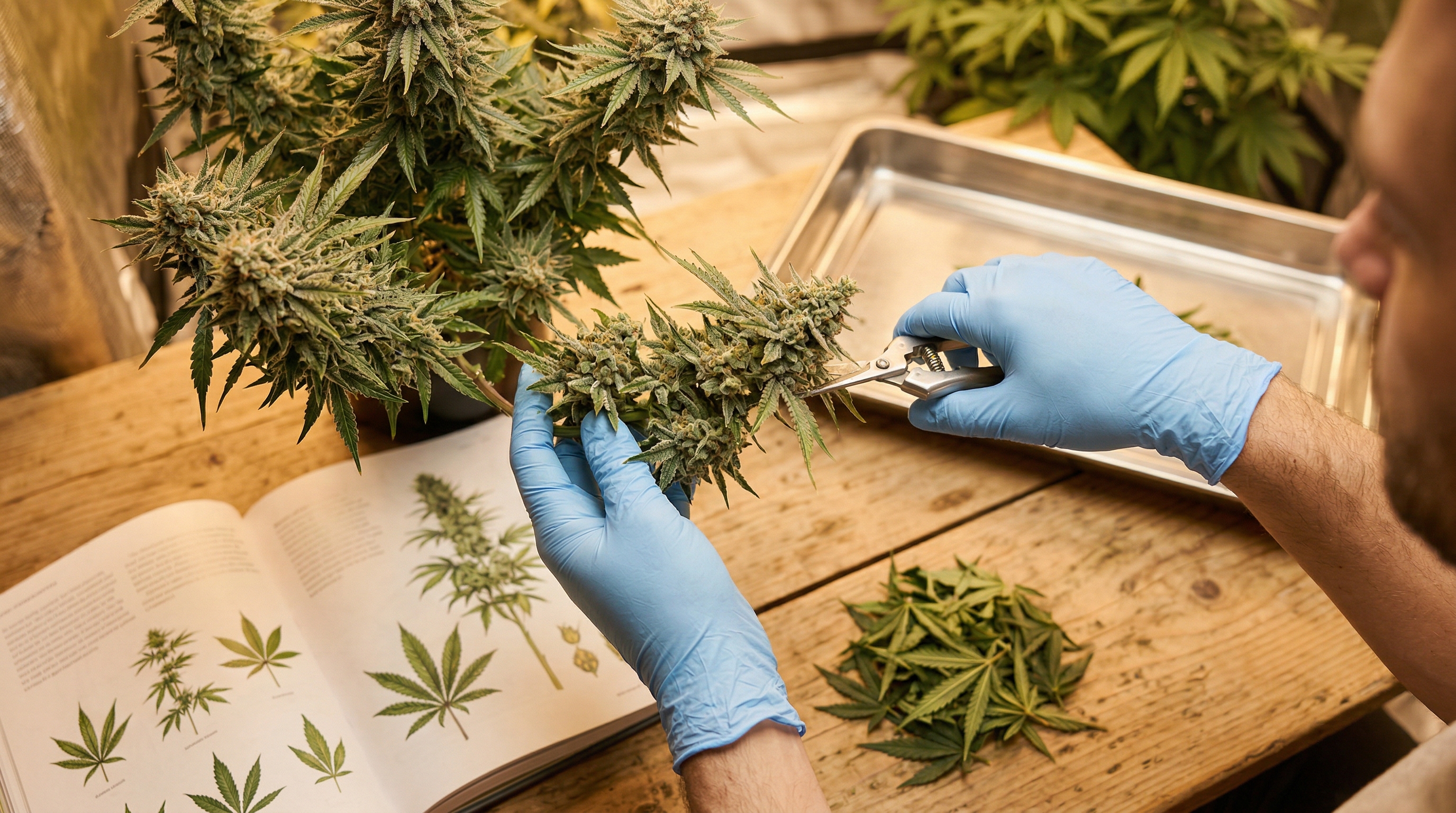
- Put on gloves — you’ll thank yourself when trimming is over
Step 6: Cut and Hang Your Branches
You have two main cutting approaches:
- Whole-plant harvest: Cut the main stalk at the base and hang the entire plant. Best for dry climates where you want to slow down the drying process by allowing moisture to travel through the full stem system.
- Branch-by-branch harvest: Cut individual branches. Gives you more control, works well if different parts of the plant matured unevenly, and is easier to manage in smaller drying spaces.
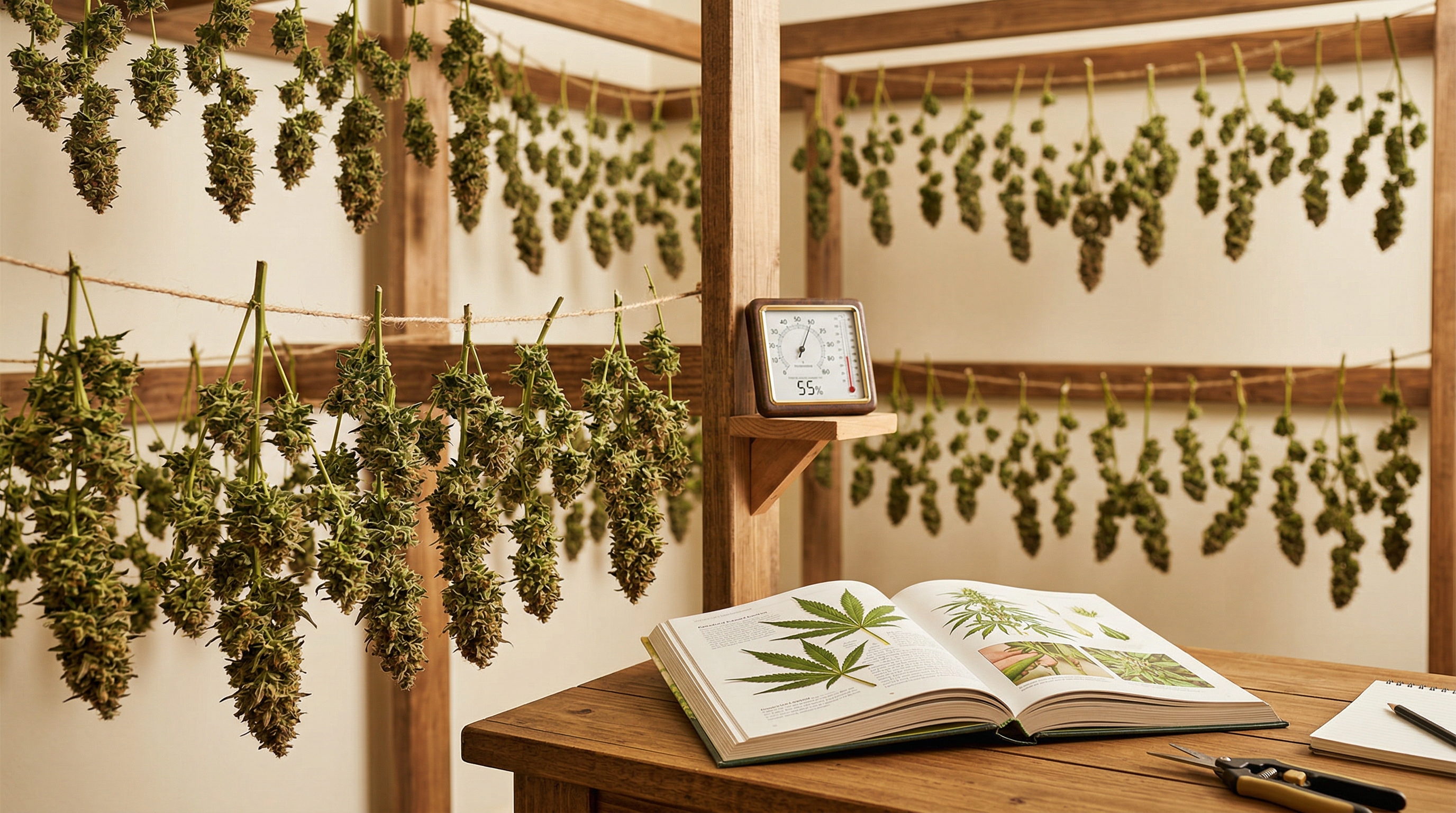
Hang branches upside down with at least 6 inches of spacing between them for airflow. Never stack or pile wet buds on a flat surface — this is a fast track to mold.
Tip: Some growers do a “staggered harvest” — cutting the top colas first and letting lower, less-mature branches ripen for another 5–7 days. This approach maximizes potency across the entire canopy.
Step 7: Wet Trim or Dry Trim?
This is where growers have strong opinions. Here’s the honest breakdown:
Wet trimming (removing sugar leaves immediately after cutting, while the plant is still moist):
- Faster and easier — leaves pull away cleanly when wet
- Buds dry faster, which reduces mold risk in high-humidity environments
- Drawback: faster drying can strip volatile terpenes if your environment runs dry
Dry trimming (hanging whole branches with leaves intact, then trimming after drying):
- Leaves act as a natural humidity buffer, slowing the dry
- Widely regarded to preserve more terpene complexity and aroma
- Drawback: takes more time, labor, and space; trimming dried plant material is stickier
The practical rule: If your environment is humid (above 60% RH during drying), wet trim to reduce mold risk. If your space runs dry (below 50% RH), dry trim to slow things down. Either way, at minimum remove the large fan leaves immediately — they contain minimal resin and trap moisture against buds.
Step 8: Begin the Dry
Your buds should dry for 7–14 days in a controlled environment. You’ll know they’re ready for the curing phase when:
- Small stems snap cleanly rather than bend
- The outside of the bud feels dry to the touch but not crispy
- Buds have lost approximately 75% of their wet weight
Once you hit this point, it’s time to move into jars and begin the cure. The curing phase is where the real magic of post-harvest happens — chlorophyll breaks down, moisture redistributes, and flavor and smoothness reach their peak. Everything you need for that process is in our complete drying and curing guide.
Pro Tips
Harvest in the morning. Terpene concentration in cannabis flowers peaks during the dark cycle. Cutting your plants early in the morning — before the grow lights have been on for hours — may help preserve those volatile aromatic compounds that define each High Family’s character.
Don’t rush the dry. A too-fast dry (under 5 days) degrades terpenes and produces harsh, hay-smelling flower. If your buds are drying too quickly, lower the fan speed and raise humidity slightly toward 60–65% RH.
Save your trim. Those sugar leaves and small trim pieces are loaded with trichomes. Collect them in a kief screen tray as you work. The material is excellent for making hash, edibles, or butter.
Keep a harvest journal. Document your trichome ratios, pistil percentages, flush timing, and harvest date for each strain. Over multiple grows, you’ll dial in the exact timing that produces your preferred experience—and you’ll stop relying on the breeder’s timeline altogether.
Handle buds by their stems. Trichomes are fragile. Every squeeze, toss, or roll of a bud knocks off trichome heads and degrades potency and flavor. Work gently.
Troubleshooting
| Problem | Likely Cause | Solution |
|---|---|---|
| Trichomes still clear after expected flowering time | Insufficient light or nutrients during flowering | Extend flowering 1–2 weeks; check 12/12 light cycle is uninterrupted |
| Buds smell like hay after drying | Dried too quickly or in too much light | Slow the next dry by raising humidity to 60%; always dry in darkness |
| Mold appearing on drying buds | Humidity too high or poor airflow | Lower humidity below 60%; increase branch spacing; add gentle circulation |
| Stems won’t snap after 14 days | Humidity too high in drying space | Run a dehumidifier; check for air leaks |
| Buds crispy outside, wet inside | Dried too fast at the surface | Place in paper bags for 12–24 hours to equalize moisture, then re-hang |
| Uneven maturity across the plant | Normal for many strains | Use a staggered harvest — top colas first, lower sites 5–7 days later |
Variations
Staggered harvest: Rather than harvesting the entire plant at once, many growers remove the top colas when they’re ready and leave lower branches to mature for another week. This is especially useful for sativa-leaning strains with long, uneven canopies.
Whole-plant hang: Cut the entire plant at the base and hang it whole. This maximizes the slow-dry effect as moisture travels through the full stem system. Space-intensive but produces exceptional terpene retention in the right environment.
Water curing: An unconventional method where harvested buds are submerged in water for 5–7 days (water changed daily) before drying. This produces extremely smooth smoke but strips most terpenes and aroma. Not recommended if you value the distinct flavor profiles that make cannabis so interesting—or if you’re exploring specific High Families through terpene expression.
Key Takeaways
- Trichomes are your primary indicator. Read them on the calyxes, not the sugar leaves. Aim for 80–90% milky with 5–15% amber for most goals.
- Pistils and aroma are secondary. 70–90% darkened pistils and peak smell confirm what your loupe is already telling you.
- Breeder timelines are estimates. Always verify with your own eyes.
- Wet vs. dry trim depends on your environment. Humid room? Wet trim. Dry room? Dry trim to slow things down.
- A slow dry is a good dry. Target 7–14 days at 60–70°F and 55–65% RH. Rushing this step costs you terpenes and flavor.
- Harvest is just the beginning. What happens in the dry and cure determines whether you end up with exceptional flower. Head to our drying and curing guide next.
Harvesting is equal parts science and intuition — and it genuinely gets easier with every grow. Trust your trichomes, be patient with the dry, and you’ll be rewarded with flower that reflects every week of care you put into growing it.
For common issues earlier in the grow that can affect harvest quality, check out our guide to common cannabis growing problems. And if you’re still planning your setup, our indoor vs. outdoor growing guide can help you choose the right environment from the start.
Sources
- Corroon, J. (2021). “Cannabinol and Sleep: Separating Fact from Fiction.” Cannabis and Cannabinoid Research, 6(5), 366–371. DOI: 10.1089/can.2021.0006
- Piluzza, G., et al. (2021). “Inflorescence Maturation and Stigma Color as Predictors of Cannabinoid Content in Cannabis sativa.” Industrial Crops and Products. DOI: 10.1016/j.indcrop.2021.113551
- Stemeroff, J. et al. (2020). “Flushing Cannabis Before Harvest: Science or Tradition?” RX Green Technologies Study.
- McPartland, J.M. & Russo, E.B. (2001). “Cannabis and Cannabis Extracts: Greater Than the Sum of Their Parts?” Journal of Cannabis Therapeutics. DOI: 10.1300/J175v01n03_08
- Desert-Aire. (2023). “A Guide to Optimal Cannabis Drying.” Application Note AN35.


