Why Cannabis Makes You Laugh: Science of the Giggles
Discover why THC triggers uncontrollable giggles. The neuroscience of cannabis and laughter, from dopamine surges to terpenes that amplify joy.

It starts innocently enough. Someone says something that’s maybe a 3 out of 10 on the funny scale. A mild observation. A dumb pun. But you’re two hits in, and suddenly you’re doubled over, tears streaming, abs burning, gasping for air between waves of laughter that just won’t stop.
Updated June 2026: A 2026 brain imaging study confirms that cannabis alters how the ventral striatum processes positive stimuli, and new clinical data strengthens the case for limonene as the “giggle terpene.” We’ve updated the neuroscience sections and added links to newer related guides.
Your sober friend stares at you. “It wasn’t that funny.”
They’re right. It wasn’t. But your brain doesn’t care—because THC just rewired your entire humor processing system.
The “cannabis giggles” might be the most universally recognized effect of getting high, and yet most people have no idea why it happens. It’s not just “being high and acting silly.” There’s a cascade of neurochemical events unfolding in your brain that makes ordinary moments feel genuinely hilarious.
Let’s break down exactly what’s happening between your ears when cannabis turns you into a laughing machine.
🧠 First, What Even Is Laughter?
Before we can understand why cannabis amplifies laughter, we need to understand laughter itself—because it’s far weirder than you think.
Laughter isn’t a single brain event. It’s a coordinated explosion across multiple brain regions:
| Brain Region | Role in Laughter |
|---|---|
| Prefrontal cortex | Detects incongruity—“wait, that’s unexpected” |
| Temporal lobe | Processes wordplay and semantic humor |
| Nucleus accumbens | Rewards you with pleasure for “getting” the joke |
| Motor cortex | Triggers the physical act of laughing |
| Brainstem | Controls the involuntary, rhythmic vocalization |
A study published in Neuron (Aharon et al., 2003) confirmed that humor activates the mesolimbic reward system—the same pathway that lights up for food, sex, and yes, drugs. Finding something funny is literally rewarding at a neurochemical level.
Here’s where it gets interesting: cannabis doesn’t create laughter from nothing. It amplifies every single step in this chain.
🔑 The CB1 Connection: THC Hijacks Your Humor Hardware
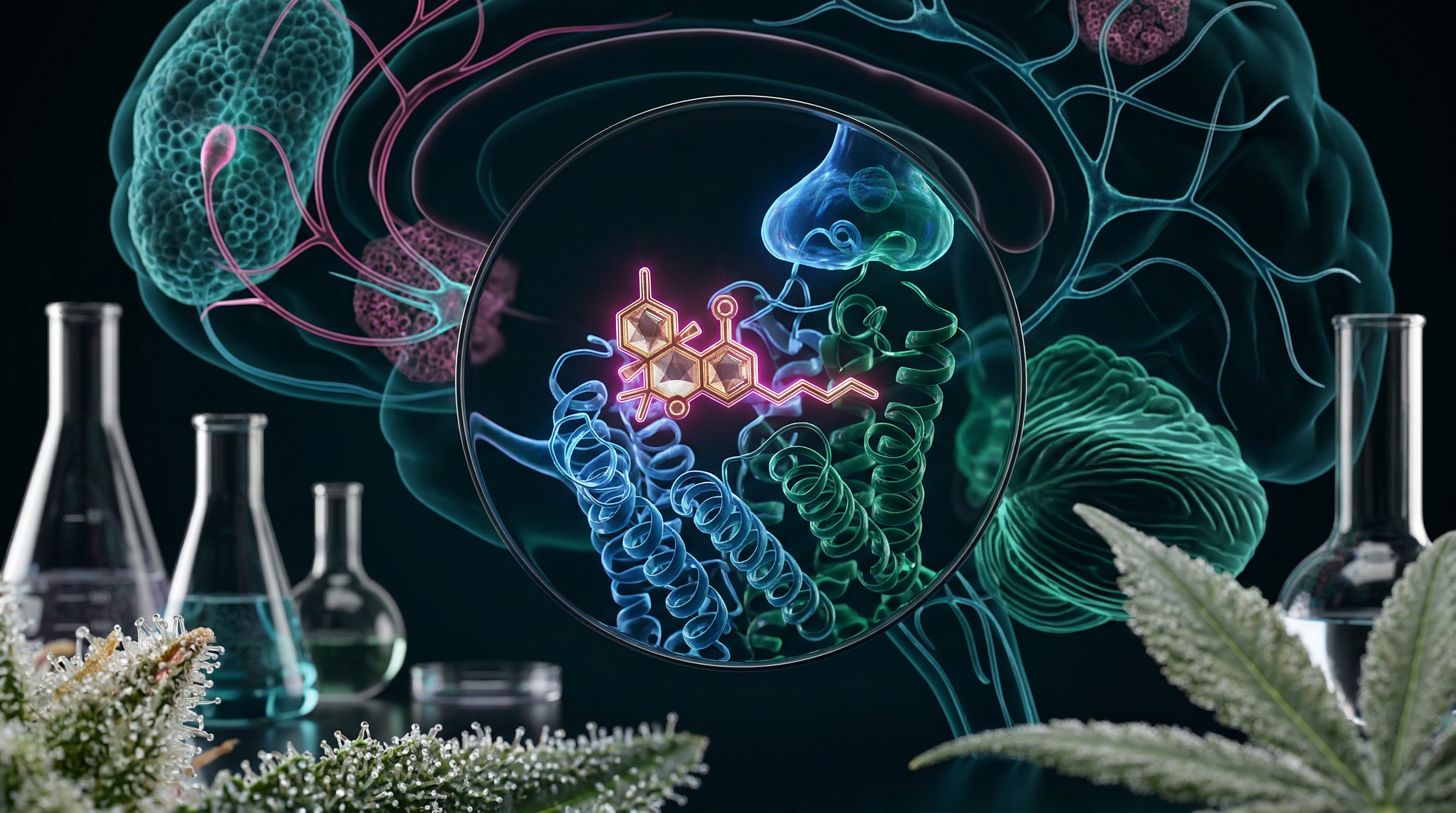
Your endocannabinoid system has a natural molecule called anandamide—literally named after the Sanskrit word for “bliss.” Anandamide binds to CB1 receptors throughout your brain, gently regulating mood, pleasure, and emotional processing.
THC is anandamide’s louder, more persistent cousin. It binds to the same CB1 receptors but with greater intensity and duration, essentially turning up the volume on circuits that were already humming along quietly.
And here’s the critical detail: CB1 receptors are densely packed in exactly the brain regions responsible for processing humor.
- Hippocampus — where contextual associations form (connecting ideas in unexpected ways)
- Amygdala — where emotional intensity gets amplified (turning “that’s odd” into “that’s HILARIOUS”)
- Prefrontal cortex — where judgment and social restraint live (more on this in a moment)
- Nucleus accumbens — where reward signals make funny things feel really good
When THC floods these CB1 receptors simultaneously, your brain doesn’t just process humor normally—it processes humor on overdrive.
💥 The Dopamine Surge: Making Funny Feel Really Good
This might be the single most important mechanism behind the cannabis giggles.
THC triggers a significant dopamine release in the nucleus accumbens—the brain’s primary reward center. Research published in Biological Psychiatry (Bloomfield et al., 2016) demonstrated that cannabis boosts the dopamine response in reward circuits, amplifying the “pleasure hit” you get from any rewarding stimulus.
The mechanism is sneaky. A review in Neuropsychopharmacology (Parsons & Hurd, 2015) explains how it works: your brain has GABA neurons that act as a brake pedal, keeping dopamine in check. THC releases that brake. It binds to CB1 receptors on those GABA “brake” neurons in the VTA (ventral tegmental area), and dopamine neurons fire freely.
A 2026 study in Frontiers in Adolescent Medicine added another layer. Researchers found that regular cannabis users showed hyperactivity in the ventral striatum when engaging with positive stimuli (like happy faces), but hypoactivity when trying to inhibit responses to those same stimuli [Falcone et al., 2026]. Translation: cannabis use may literally rewire your brain to react more strongly to positive cues while weakening the brake that normally holds back that reaction. It’s a neurological setup custom-built for uncontrollable laughter.
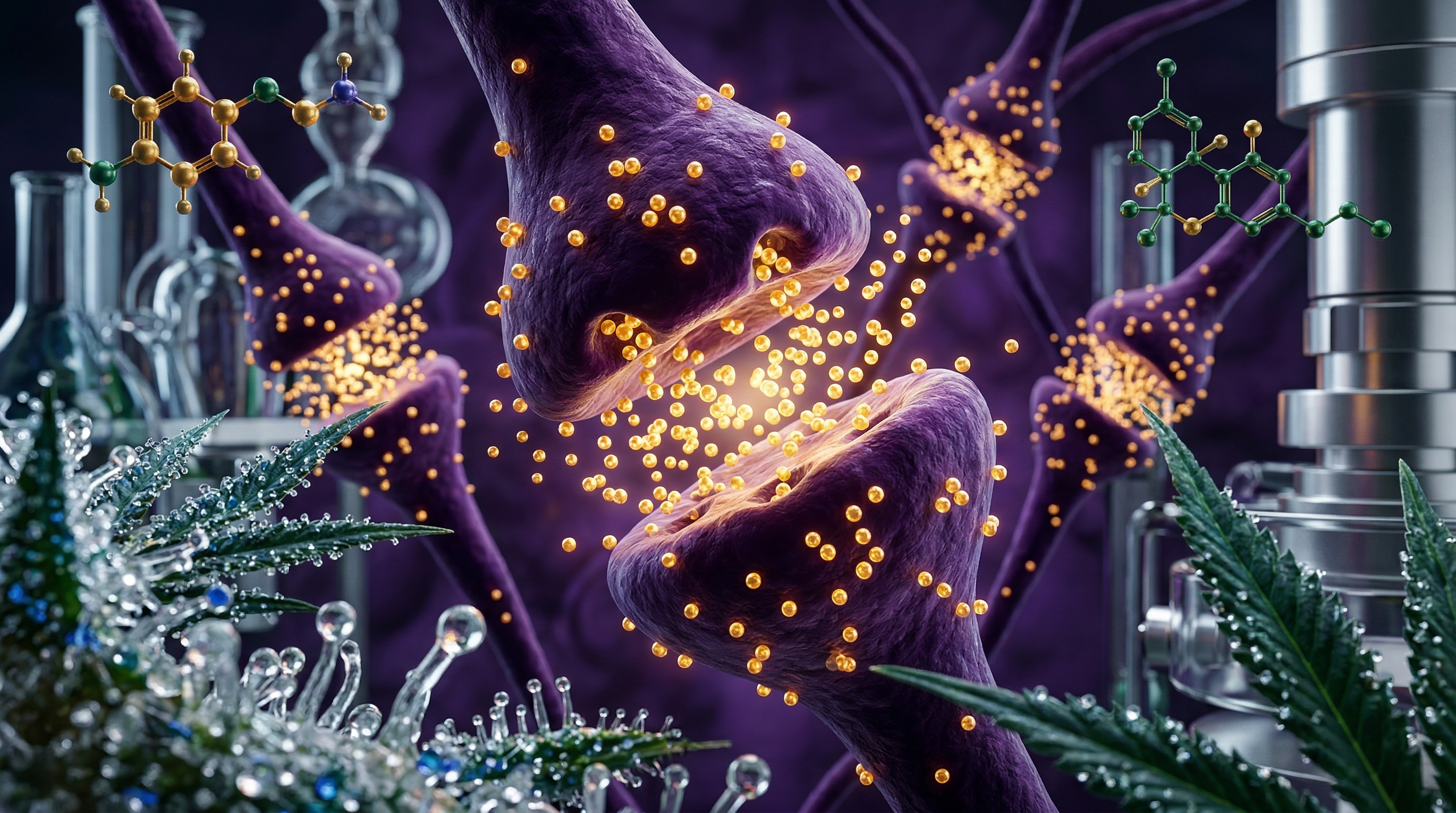
Here’s the result: something that would normally earn a polite chuckle now triggers a full-body laughing fit. The joke hasn’t changed—but the reward you get for finding it funny has been cranked to eleven.
Think of it like adjusting the “tip jar” for humor. Normally, your brain drops a nickel in the jar when something’s amusing. On THC, it dumps the entire jar out. Your brain goes, “That was AMAZING, let’s do it again!” And you keep laughing.
🤫 The Inner Critic Takes a Nap
Here’s where the science gets really fascinating.
Your prefrontal cortex is the part of your brain responsible for judgment, self-monitoring, and social inhibition. It’s your inner critic—the voice that says “that’s not actually funny” or “don’t laugh, this is serious.”
Brain scans tell the story clearly. A study in NeuroImage (Fusar-Poli et al., 2009) found that THC cranks up amygdala activity (your emotional amplifier) while dialing down prefrontal control. A 2024 study by Gilman et al. in Neuropsychopharmacology confirmed it: THC intoxication disrupts normal prefrontal cortex activity.
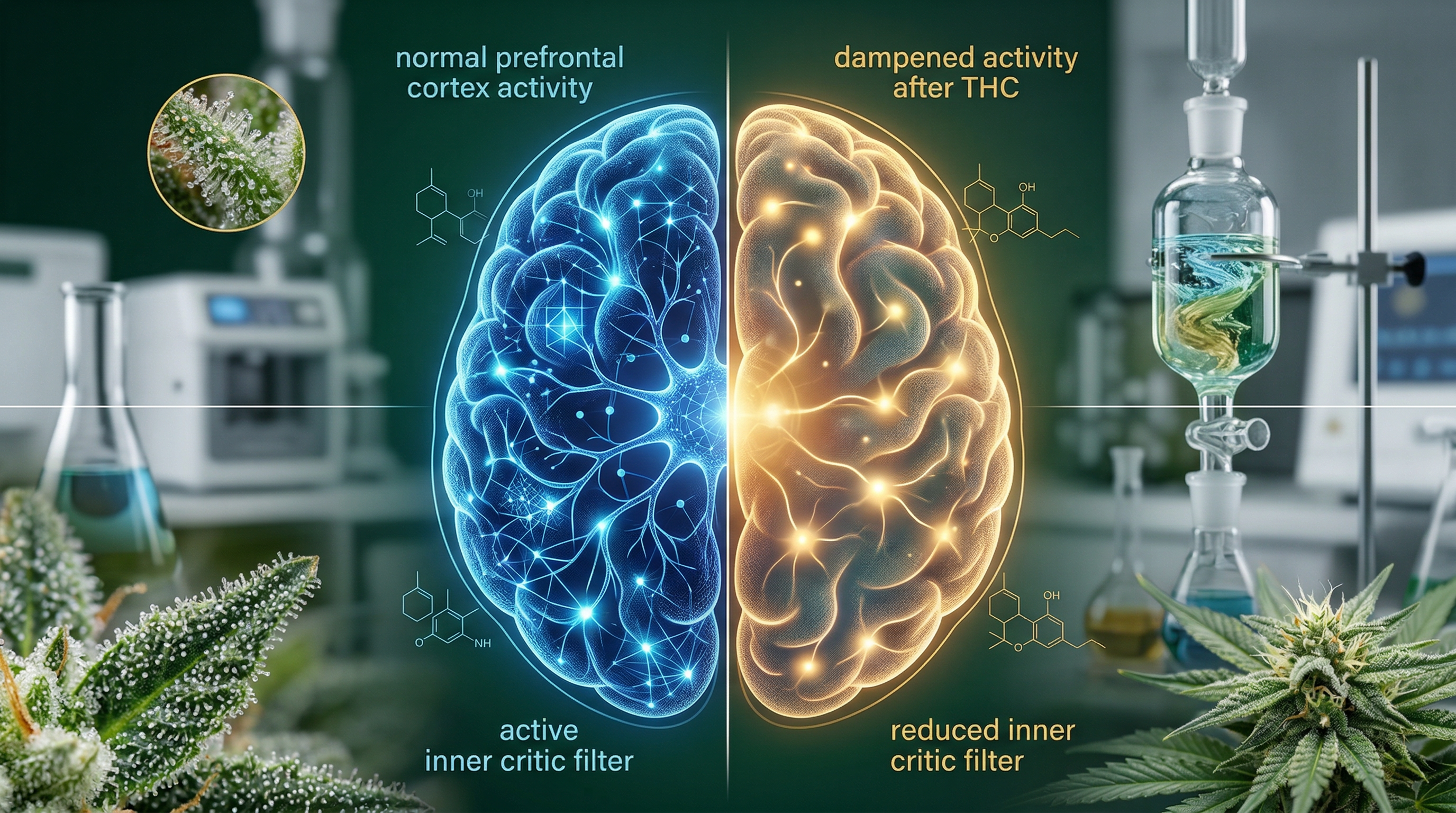
Translation: cannabis turns down your “that’s not funny” filter while simultaneously turning up your “everything feels hilarious” amplifier.
This is why you laugh at things while high that you’d never laugh at sober. It’s not that your sense of humor has gotten worse—it’s that your brain has temporarily stopped gatekeeping what qualifies as funny. That fire hydrant? Hilarious. That word your friend just said? The funniest sound ever produced by a human mouth.
This also explains the divergent thinking effect. With your prefrontal cortex’s rigid associations loosened, your brain starts connecting ideas in unexpected ways—finding humor in things you’d normally filter out. It’s the same mechanism linked to cannabis and creativity.
👥 The Social Multiplier: Why It’s Funnier With Friends
Ever notice that the giggles hit way harder when you’re with people? That’s not just a vibe—it’s neuroscience.
PET brain scans from the Journal of Neuroscience (Manninen et al., 2017) revealed something powerful: laughing with others triggers your brain to release its own opioids—natural chemicals in the same family as endorphins. This happens in the thalamus and caudate nucleus, and it feels good.
Laughter is literally social glue. A review by Caruana (2017) confirmed that the opioid release from laughter evolved to strengthen group bonds. It’s a survival mechanism—and cannabis supercharges it.

Now layer cannabis on top of this system. You’ve got:
- THC boosting dopamine → everything feels more rewarding
- Reduced prefrontal inhibition → lower threshold for what’s “funny enough”
- Social laughter triggering endorphins → making the group experience euphoric
- Laughter becoming contagious → each person’s laughter becomes a trigger for everyone else’s
This creates a positive feedback loop. Someone giggles, which makes you giggle, which makes them laugh harder, which makes you lose it completely. Cannabis doesn’t just start this loop—it removes all the brakes that would normally slow it down.
This is why smoking alone might make you smile at your phone, but smoking with friends can leave your entire group incapacitated with laughter for twenty minutes over absolutely nothing.
🍋 The Terpene Factor: Why Some Strains Hit Different
Not all giggles are created equal. If you’ve noticed that some strains make you laugh more than others, terpenes are the reason.
Specific terpenes interact with your brain’s mood and reward systems in ways that can amplify or dampen the laughter response:
Limonene: The Giggle Terpene
Limonene is the citrusy terpene most strongly associated with mood elevation and euphoria. It modulates serotonin and dopamine activity, priming your brain for the kind of lighthearted state where laughter comes easily. Strains high in limonene—like Super Lemon Haze, Durban Poison, and Wedding Cake—are frequently reported as “giggly” strains.
A 2024 Johns Hopkins trial put this on firmer footing. In healthy adults who used cannabis intermittently, vaporized d-limonene taken alongside THC selectively reduced THC’s anxiety-producing effects [Spindle et al., 2024]. Less anxiety is exactly what keeps the giggles flowing instead of shifting into paranoia.
Terpinolene: The Euphoric Amplifier
Terpinolene is rarer but powerful. Found in strains like Jack Herer and Dutch Treat, it’s associated with uplifting, cerebral effects that pair naturally with social laughter.
Pinene: The Clarity Keeper
Pinene doesn’t directly cause laughter, but it may preserve the mental clarity needed to actually follow conversations and “get” jokes—rather than zoning out into couch-lock territory. Strains with pinene like Blue Dream and Strawberry Cough keep you engaged enough to participate in the humor.
Myrcene: The Couch-Lock Counterpoint
In contrast, strains dominated by myrcene tend to produce heavy relaxation rather than giggly euphoria. While you might still find things amusing, the sedating body high can shift the experience from “laughing until you cry” to “smiling contentedly at the ceiling.”
🎨 High Families and the Giggle Spectrum
This is where understanding High Families becomes genuinely useful. Not every high is a laughing high:
| High Family | Giggle Potential | Why |
|---|---|---|
| Uplift | ⭐⭐⭐⭐⭐ | Limonene + linalool = maximum mood elevation |
| Energy | ⭐⭐⭐⭐ | Terpinolene-driven cerebral effects fuel creative humor |
| Entourage | ⭐⭐⭐ | Multi-terpene profiles can go either way |
| Balance | ⭐⭐⭐ | Mild, approachable—good for gentle giggles |
| Relief | ⭐⭐ | Caryophyllene focus is more body than mind |
| Relax | ⭐ | Myrcene dominance favors sedation over silliness |
If you’re specifically chasing the giggles, look for strains in the Uplift and Energy families. These profiles emphasize the euphoric, cerebral effects that fuel uncontrollable laughter rather than the sedating effects that put you on the couch.
📉 Why Experienced Users Laugh Less
There’s a bittersweet truth in the science: the giggles tend to fade with regular use.
This connects directly to dopamine tolerance. When you consume THC regularly, your brain’s dopamine response becomes blunted. The same dose that once triggered a flood of reward chemicals now produces a more modest response. The joke is still funny—but your brain doesn’t reward you as intensely for finding it funny.
This is why many long-time cannabis users describe missing the “early days” when everything was hilarious. Your CB1 receptors downregulate with chronic use, and the prefrontal cortex disruption becomes less pronounced as your brain adapts.
The fix? A tolerance break. Even a short one (48-72 hours) can begin resensitizing your CB1 receptors. Many users report that post-T-break sessions feel like “the first time again”—including the return of those uncontrollable giggles.
🧪 The Full Picture: A Neurochemical Perfect Storm
Let’s put it all together. When you consume cannabis and start laughing, here’s the chain reaction happening in your brain:
- THC binds to CB1 receptors across your hippocampus, amygdala, prefrontal cortex, and nucleus accumbens
- Dopamine floods your reward pathway via disinhibition of VTA neurons, making every amusing stimulus feel intensely pleasurable
- Your prefrontal cortex quiets down, lowering the threshold for what qualifies as “funny” and enabling divergent, unexpected associations
- Your amygdala amplifies emotions, turning mild amusement into genuine hilarity
- Social context triggers endorphin release, creating a feedback loop where each person’s laughter fuels everyone else’s
- Terpenes modulate the experience, with limonene and terpinolene pushing toward euphoria while myrcene pulls toward sedation
It’s not one mechanism—it’s a neurochemical perfect storm where every system that governs humor, reward, social bonding, and inhibition gets simultaneously tilted toward laughter.
Track Your Giggles
Here’s something most people never think to do: pay attention to which strains make you laugh most.
Different terpene profiles produce different laughter responses, and your individual brain chemistry means your “giggle strains” might be completely different from your friend’s. The only way to figure out your personal pattern is to track it.
Note the strain, the setting, who you were with, and how hard you laughed. Over time, you’ll start seeing patterns—and you can deliberately seek out those terpene profiles when you want a session built around joy and connection.
Key Takeaways
- THC hijacks your reward system. It floods your nucleus accumbens with dopamine, making every mildly funny thing feel intensely rewarding.
- Your inner critic goes quiet. THC dampens prefrontal cortex activity, lowering the bar for what your brain considers “funny enough” to laugh at.
- Friends make it exponentially better. Social laughter triggers opioid release, creating a feedback loop that cannabis removes all brakes from.
- Terpenes matter. Limonene and terpinolene strains (Uplift and Energy families) produce more giggles than myrcene-heavy sedating strains.
- Tolerance steals the giggles. Regular use blunts the dopamine response. A short tolerance break can bring them back.
- Track your patterns. Your “giggle strains” are unique to your brain chemistry—the only way to find them is to pay attention.
Related Reading
- Cannabis and Dopamine: What Neuroscience Actually Shows — The full science behind THC’s dopamine effects
- Anandamide: Your Body’s Natural THC — How your brain’s “bliss molecule” sets the stage
- Best Cannabis Strains for Socializing and Parties — Strains optimized for the social multiplier effect
- Best Movies to Watch High — Put those giggles to work with the right film
- Cannabis and GABA: The Anxiety Brake System — Deep dive into the GABA “brake pedal” that THC releases
Sources
- Aharon, I. et al. (2003). “Humor Modulates the Mesolimbic Reward Centers.” Neuron, 40(5), 1041-1048.
- Bloomfield, M.A. et al. (2016). “The effects of acute cannabis with and without cannabidiol on neural reward anticipation.” Biological Psychiatry, 79(11), 920-927.
- Caruana, F. (2017). “Laughter as a Neurochemical Mechanism Aimed at Reinforcing Social Bonds.” Neuroscience & Biobehavioral Reviews, 80, 260-275.
- Fusar-Poli, P. et al. (2009). “Distinct effects of delta-9-tetrahydrocannabinol and cannabidiol on neural activation during emotional processing.” NeuroImage, 44(3), 1056-1063.
- Gilman, J.M. et al. (2024). “Intoxication due to Δ9-tetrahydrocannabinol is characterized by disrupted prefrontal cortex activity.” Neuropsychopharmacology, 49(8), 1237-1245.
- Manninen, S. et al. (2017). “Social Laughter Triggers Endogenous Opioid Release in Humans.” Journal of Neuroscience, 37(25), 6125-6131.
- Parsons, L.H. & Hurd, Y.L. (2015). “Endocannabinoid signalling in reward and addiction.” Nature Reviews Neuroscience, 16, 579-594.
- Falcone, M., et al. (2026). “Positive face BOLD response and task-dependent ventral striatal functional connectivity during Go/No-go task among abstinent cannabis-using adolescents and young adults.” Frontiers in Adolescent Medicine, 4, 1737529. Frontiers
- Spindle, T.R., et al. (2024). “Vaporized D-limonene selectively mitigates the acute anxiogenic effects of Δ9-tetrahydrocannabinol in healthy adults who intermittently use cannabis.” Drug and Alcohol Dependence, 257, 111267. DOI: 10.1016/j.drugalcdep.2024.111267
- Bossong, M.G., et al. (2009). “Delta 9-tetrahydrocannabinol induces dopamine release in the human striatum.” Neuropsychopharmacology, 34(3), 759-766.


