How to Grow Autoflowering Cannabis: Week-by-Week Guide
Grow autoflowering cannabis week by week: light schedule, why you never transplant, light feeding, LST, and a full germination-to-harvest timeline.


Autoflowering cannabis is the closest thing growing gets to a “set it and (almost) forget it” plant. You pop a seed, give it light, water it sensibly, and roughly eight to eleven weeks later you have dried, smokable flower. No flipping light cycles, no counting hours of darkness, no agonizing over when to trigger bloom. The plant runs its own clock.
But that convenience comes with a catch most new growers learn the hard way: because an autoflower is on a fixed biological timeline, it does not forgive mistakes the way a photoperiod plant does. Stunt a photoperiod seedling and you can simply veg it longer to let it recover. Stunt an autoflower and you’ve permanently shrunk your final harvest, because the bloom clock keeps ticking no matter what you do.
This guide walks you through the entire grow, week by week, with the reasoning behind each move. By the end you’ll understand not just what to do, but why autoflowers behave the way they do — which is the only way to grow them well.
Why Autoflowers Flower by Age, Not Light
To grow autoflowers intelligently, you have to understand where the trait comes from. The autoflowering gene is inherited from Cannabis ruderalis, a hardy subspecies that evolved in the short, brutal summers of northern Eurasia. In those latitudes, day length is a useless flowering trigger — the season is simply too short and too variable to wait for shortening nights. So ruderalis evolved a different strategy: it flowers based on chronological age, finishing its entire life cycle in eight to ten weeks before the first frost.
Photoperiod cannabis (the indica and sativa lineages most growers know) measures the length of darkness using a pigment called phytochrome. When nights grow long enough, the plant flips to flowering. Ruderalis-derived autoflowers have effectively switched off this photoperiod dependence. Researchers studying the trait point to genes near the FLOWERING LOCUS T (FT) pathway — the same molecular machinery plants use to time reproduction — as the likely control point. Instead of waiting for a light signal, the plant accumulates developmental milestones until an internal threshold is crossed, usually around three to four weeks of age, and then it simply starts to bloom.
Modern autoflower strains are hybrids: breeders cross ruderalis with potent photoperiod genetics to keep the autoflowering trait while restoring the cannabinoid and terpene richness ruderalis lacks on its own. The result is a plant that flowers automatically and gets you properly high.
Three practical truths fall out of this biology, and they shape everything else in this guide:
- The clock can’t be paused. You can’t “veg longer” to fix a slow start. Every day of early stunting is a day of growth you never get back.
- The plant stays small and fast. Expect 12 to 24 inches indoors and a total cycle of roughly 8–11 weeks from seed to jar.
- Recovery time is tiny. With only a few weeks of vegetative growth, the plant has almost no slack to bounce back from heavy training or pruning.
The Three Rules That Separate Good Autoflower Grows From Bad Ones
Before the timeline, internalize these three rules. Break them and even a great strain will underperform.
Rule 1: Start in the Final Pot — Never Transplant
This is the single most common autoflower mistake. With photoperiod plants, growers happily pot up from solo cup to 1-gallon to 5-gallon over a long veg. Do not do this with autoflowers. Transplanting always causes some root disturbance, and the recovery period — often several days of sulking — is time an autoflower simply doesn’t have. A transplant shock during week two can cost you a third of your final yield.
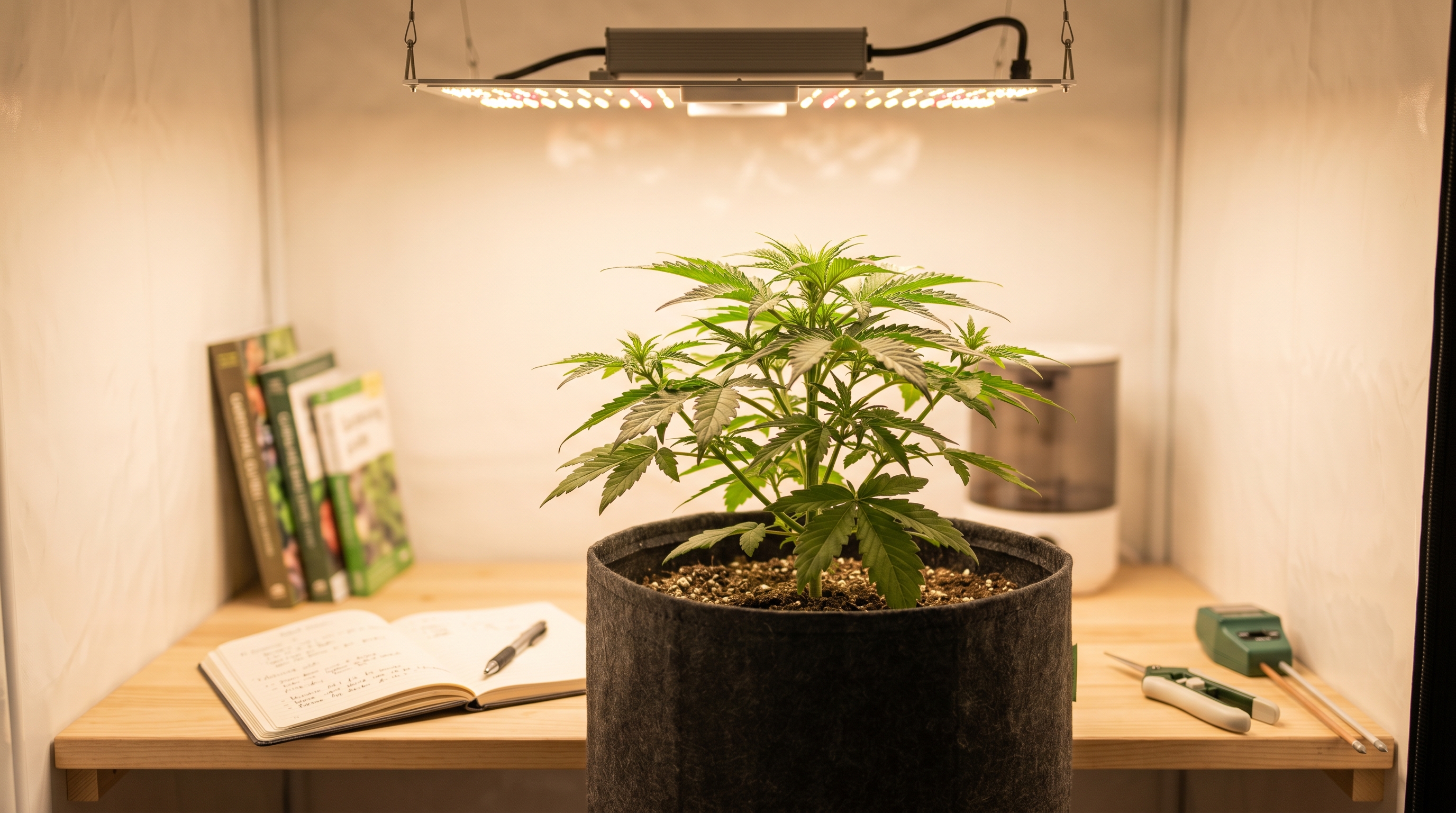
Instead, germinate directly into the container the plant will live in for its whole life. A breathable 2–3 gallon fabric pot is the sweet spot for most strains: big enough to support a full plant, small enough that a young seedling won’t drown in soggy, oversized soil. Fabric pots also air-prune the roots, which keeps the root ball healthy without any repotting.
Rule 2: Feed Light — Autoflowers Are Not Hungry Plants
Because of their ruderalis ancestry and small stature, autoflowers need far fewer nutrients than photoperiod plants. Overfeeding is more dangerous than underfeeding here. The classic beginner death spiral is dumping full-strength bloom nutrients on a tiny plant and burning it.
Start with a light, airy living soil and you may not need to feed at all for the first few weeks. When you do feed, begin at a quarter to a half of the manufacturer’s recommended dose and only increase if the plant clearly asks for it (pale, slow growth). A plant that’s slightly underfed looks healthy and green; an overfed one shows clawing, burnt leaf tips, and dark green “rubbery” foliage.
Rule 3: Train Gently — LST Only, No Heavy Topping
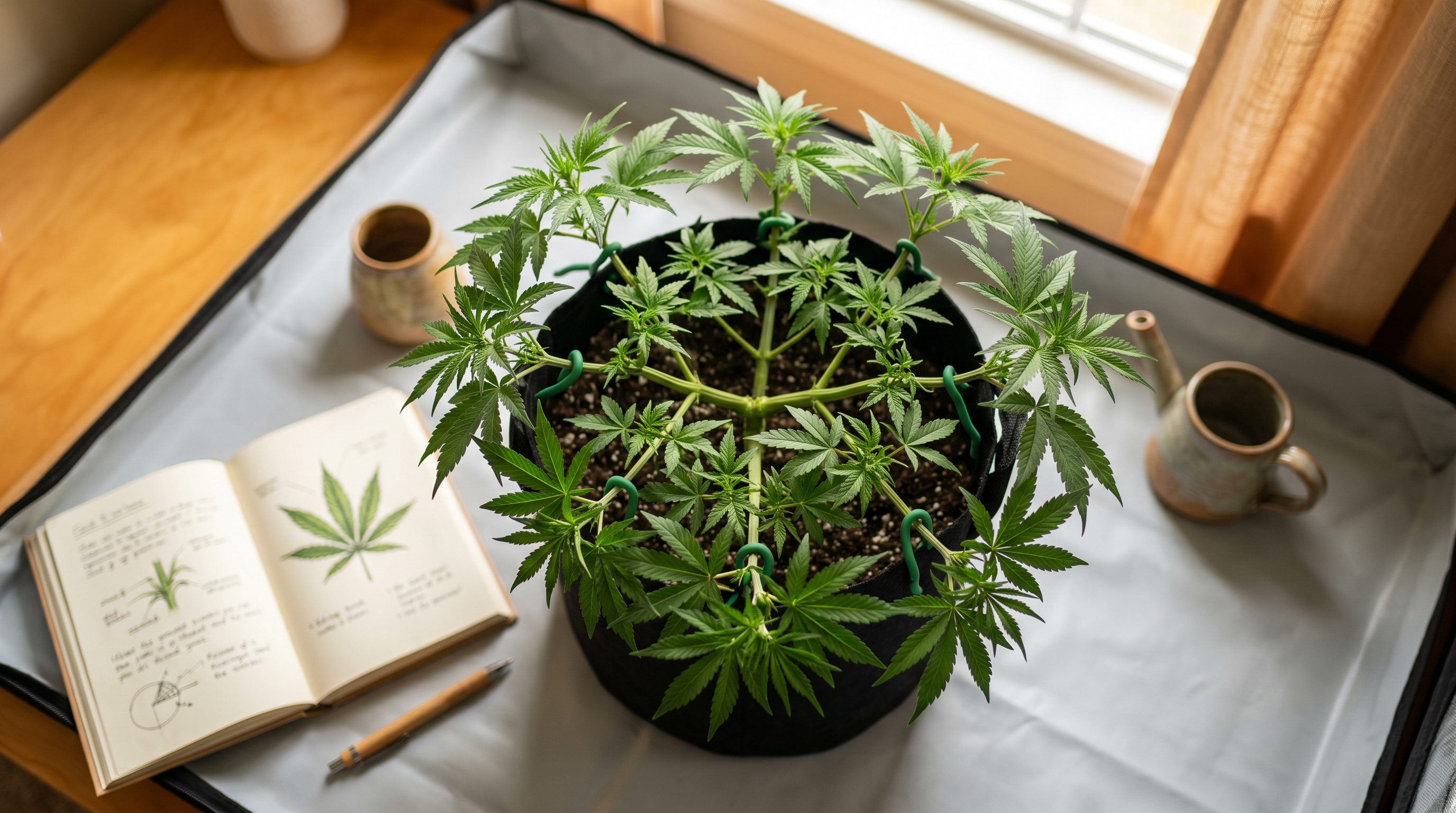
You can train autoflowers to increase yield, but the short veg window means you must be gentle. Stick to low-stress training (LST): bending and tying down the main stem and branches to flatten the canopy and expose more bud sites to light. LST causes no tissue damage, so there’s nothing to recover from.
Avoid high-stress techniques — topping, fimming, heavy defoliation, super-cropping — unless you have experience and a strain you know responds well. The risk-reward math just doesn’t favor aggressive training on a plant that can’t regrow. And because autoflowers won’t clone well (a cutting is the same age as the mother and will flower immediately), every plant is a fresh seed — so there are no second chances on a botched training session.
Light Schedule: Pick One and Leave It
Here’s the beautiful part. Because autoflowers ignore photoperiod, you never change the light schedule. Pick one and run it from germination to harvest:
- 18 hours on / 6 hours off (18-6): The most popular choice. Gives the plant a “rest” period, slightly lower electricity cost, and excellent results. If you’re unsure, start here.
- 20 hours on / 4 hours off (20-4): A bit more total light energy per day, which can push slightly faster growth and bigger yields, at marginally higher running cost and heat.
Some growers even run 24/0, but most agree a few hours of darkness is healthier for the plant. The key insight: with autoflowers, more light hours simply means more photosynthesis and (usually) more growth — there is no risk of “revegging” or delayed flowering the way there is with photoperiod plants. Keep your light a sensible distance from the canopy to avoid bleaching, and keep it consistent.
The Week-by-Week Autoflower Timeline
Every strain runs slightly differently, and outdoor grows stretch things out, but this indoor timeline covers the vast majority of autoflowers. Use it as a map, not a stopwatch — let the plant’s appearance, especially the trichomes, guide your final decisions.
| Stage | Weeks | What’s Happening | Your Job |
|---|---|---|---|
| Germination | Week 1 (days 1–3) | Taproot emerges, seedling breaks soil | Warmth, high humidity, light watering |
| Seedling | Weeks 1–2 | Cotyledons, then first true leaves | Gentle light, minimal/no nutrients |
| Vegetative | Weeks 3–4 | Rapid leaf and stem growth | Begin light feeding, start LST |
| Pre-flower | Weeks 4–5 | First pistils appear at nodes | Finish LST, shift toward bloom nutrients |
| Flowering | Weeks 5–9 | Buds swell, trichomes frost over | Bloom feeding, lower humidity, monitor pests |
| Flush & Harvest | Weeks 9–11 | Ripening, nutrient drawdown | Flush, watch trichomes, chop & cure |
Week 1 — Germination & Seedling
Germinate your seed (paper-towel method, or straight into a small divot in your final pot) and keep it warm (around 22–25°C / 72–77°F) and humid (70–90%). The taproot appears in one to three days, then the seedling pushes up its first rounded cotyledon leaves. These aren’t true leaves — they’re the seed’s stored energy. Keep your light gentle and a touch further away than you would for older plants, water lightly around the stem, and resist the urge to feed. A seedling has everything it needs from the seed and the soil.
Week 2 — Establishing
The first sets of true, serrated cannabis leaves emerge and photosynthesis kicks into gear. Growth is still slow above ground while the root system establishes below. You can begin a very light feed (quarter strength) if using inert soil, but living soil growers should still hold off. Maintain humidity around 60–70% and keep airflow gentle.
Weeks 3–4 — Vegetative Growth
Now the plant explodes upward. Internodes stack, fan leaves widen, and the plant builds the frame that will hold your harvest. This is your window for LST — the stems are flexible and the plant is growing fast enough to fill out a flattened canopy. Begin gentle low-stress training, bending the main stem to the side and tying it down. Increase feeding toward half strength as growth accelerates, watching the leaves for any sign of burn. Target around 45–55% humidity.
Weeks 4–5 — Pre-Flower
Right on schedule, the biological clock triggers bloom. You’ll see the first white pistils (fine hairs) appearing at the nodes where branches meet the stem. Finish any LST now — once flowering ramps up you want the plant focusing on buds, not recovering from training. Begin transitioning your nutrients: lower the nitrogen and raise phosphorus and potassium to support flower development. This is also the period of the “stretch,” where many strains nearly double in height, so make sure your light has headroom.
Weeks 5–9 — Flowering
The main event. Pistils multiply and bud sites swell into real flowers, then those flowers fatten and crystallize with resin-rich trichomes. Terpenes ramp up, and the grow room starts to smell like the strain it’s going to be. Keep up bloom feeding, but drop your humidity to 40–45% to protect those dense buds from mold (bud rot loves humid, packed flowers). Increase watering as the plant drinks more, improve airflow around the lower canopy, and inspect regularly for pests and any stray hermaphroditic structures. Don’t defoliate heavily — at most, tuck or remove a few large fan leaves blocking light from bud sites.
Weeks 9–11 — Flush & Harvest
In the final stretch, many growers flush — watering with plain pH’d water only for the last week or two to let the plant use up stored nutrients, which can improve smoothness and flavor. You’ll see fan leaves yellow and fade as the plant cannibalizes its own reserves; this is normal and a sign of ripening, not a deficiency to fix.
Now comes the most important decision of the whole grow: when to chop. Ignore the calendar and look at the trichomes under a jeweler’s loupe or pocket microscope:
- Clear/translucent: Not ready — THC hasn’t peaked.
- Cloudy/milky: Peak THC, most energetic and potent high. Harvest window for an uplifting effect.
- Amber: THC degrading to CBN, producing a heavier, more sedative, body-focused effect.
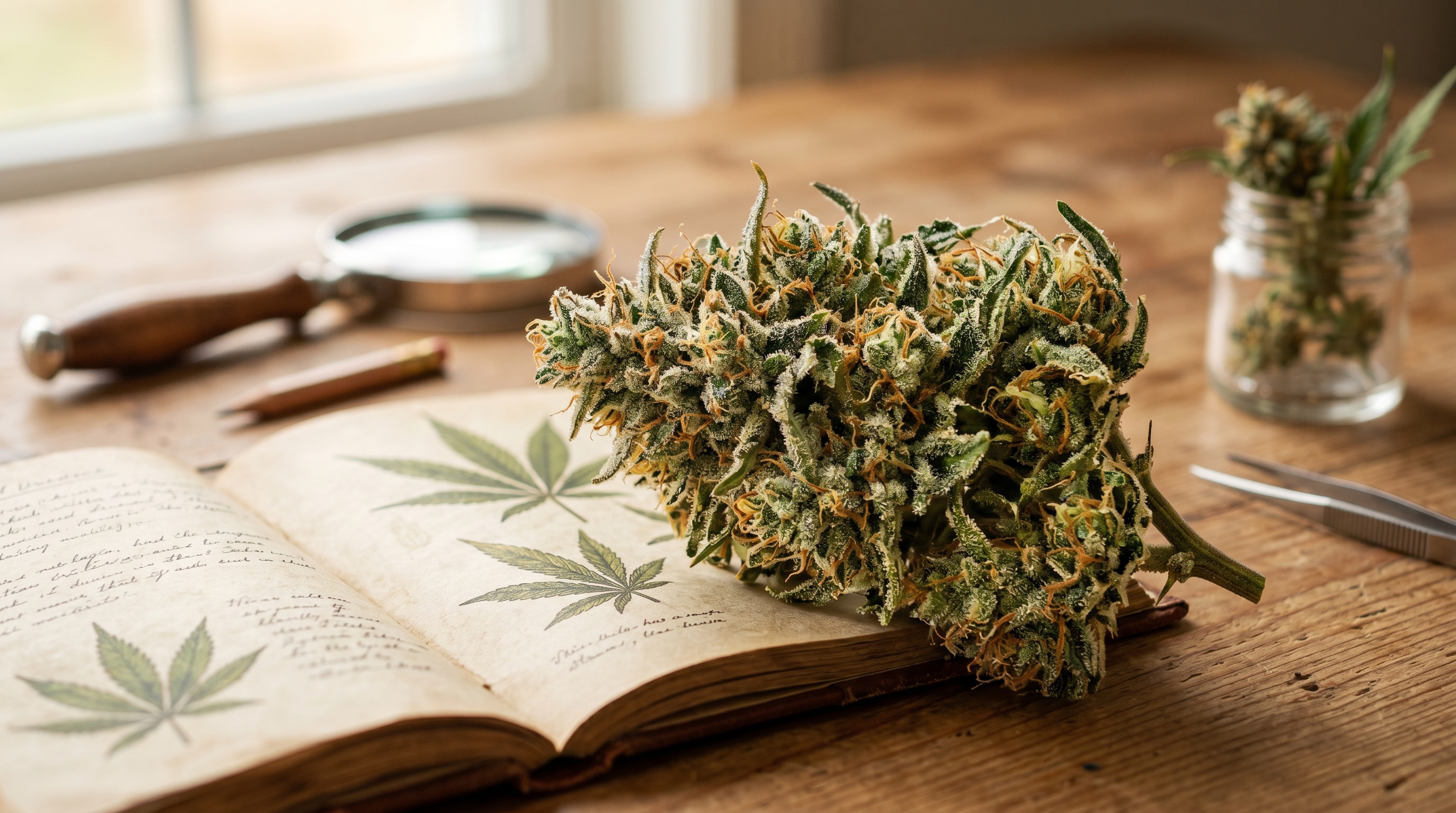
Most growers harvest when the majority of trichomes are milky with a scattering of amber. Upper, light-exposed buds usually ripen first, so a staggered harvest over a few days is perfectly fine. After cutting, dry slowly (around 60°F / 60% humidity for 7–14 days) and then cure in jars — the curing stage is where harsh, “green” flower transforms into smooth, aromatic, properly finished cannabis.
Matching Strain to Goal
One advantage of autoflowers is how many beginner-friendly strains now exist. Because the plants are small and fast, they’re forgiving of space and timing — though, as we’ve covered, not of overfeeding. If you’re choosing genetics, think about the effect profile you actually want, not just the yield.
Looking for energizing daytime flower? Many autoflower versions of classic uplifting cuts lean toward the Energy High and Uplift High families, driven by terpenes like limonene and terpinolene. Want something relaxing for the evening? Myrcene-dominant strains in the Relax High family produce that classic calming, sleepy effect. For physical comfort, look toward caryophyllene-rich genetics in the Relief High family. Beginners who want something mellow and predictable often do best with low-terpene-diversity cuts in the Balance High family.
Some perennial autoflower-friendly favorites worth researching include Northern Lights, Blue Dream, Gorilla Glue, Amnesia Haze, White Widow, and Girl Scout Cookies. Many of these have dedicated autoflowering versions bred specifically for the compressed life cycle.
The Thing Most Grow Guides Won’t Tell You
Here’s Professor High’s honest take: the strain on the seed packet matters less than how your own plant grows and how its flower affects you. Two growers running the “same” autoflower in different soil, light, and feeding regimes will harvest noticeably different flower. And two people smoking that identical flower can have completely different experiences based on their own endocannabinoid chemistry.
That’s exactly why tracking matters. When you grow your own, you have a rare luxury: you know precisely what you grew, how you grew it, and how it makes you feel. Logging the strain, the terpene profile, and your actual effects turns a fun hobby into real self-knowledge — the difference between “I think this one’s relaxing” and “this myrcene-forward cut reliably helps me sleep at this dose.” The High IQ app is built to capture exactly that: track what you grow and consume, see your patterns over time, and stop guessing about what actually works for you.
Grow gently, feed lightly, watch the trichomes — and let the plant’s own clock do the heavy lifting. That’s the whole secret to autoflowers.
Sources
- Royal Queen Seeds — How to Grow Autoflowering Cannabis: Week-By-Week Guide. https://www.royalqueenseeds.com/blog-how-to-grow-autoflowering-cannabis-n83
- Mephisto Genetics — Autoflower Growth Stages: A Week-by-Week Guide. https://mephistogenetics.com/blogs/seo-articles/autoflower-growth-stages-week-by-week-guide-to-growing-cannabis-plants
- Weed Seeds Express — How Autoflower Cannabis Plants Flower Without Light Cycles. https://weedseedsexpress.com/blog/how-autoflower-cannabis-plants-flower-without-light-cycles
- Zamnesia — Cannabis Ruderalis: The Autoflower Key. https://www.zamnesia.com/grow-weed/469-cannabis-ruderalis-autoflowers
- Cannabis ruderalis — Wikipedia. https://en.wikipedia.org/wiki/Cannabis_ruderalis


