Autoflowering vs Photoperiod Cannabis: Which Should You Grow?
Autoflowering vs photoperiod cannabis: how flowering, yield, training, cloning, and timing differ, and which seed type fits your grow.

Walk into any seed bank, online or off, and the very first fork in the road is this: autoflowering or photoperiod? It sounds like a technical detail, the kind of thing you can sort out later. It isn’t. This single choice quietly decides how long your grow takes, how big your plants get, how much you harvest, whether you can train or clone them, and frankly how forgiving the whole project will be of your inevitable beginner mistakes. Pick wrong for your situation and you’ll spend three months fighting genetics that were never going to cooperate with your space, your schedule, or your goals.
The good news is that there’s no “better” type in the abstract. There’s only the type that fits your grow. A stealth balcony grower in a short-summer climate and a connoisseur with a dedicated flower room and a clone library want opposite things, and the seed market has obliged both. This guide breaks down exactly how the two differ, where each one shines, and how to match the choice to what you’re actually trying to do. If you’re brand new to all of this, start with our beginner’s complete guide to growing cannabis at home and treat this as the “which seeds do I even buy” companion piece.
The Core Difference: What Makes a Plant Flower
Everything else flows from one biological fact, so let’s get it right first.
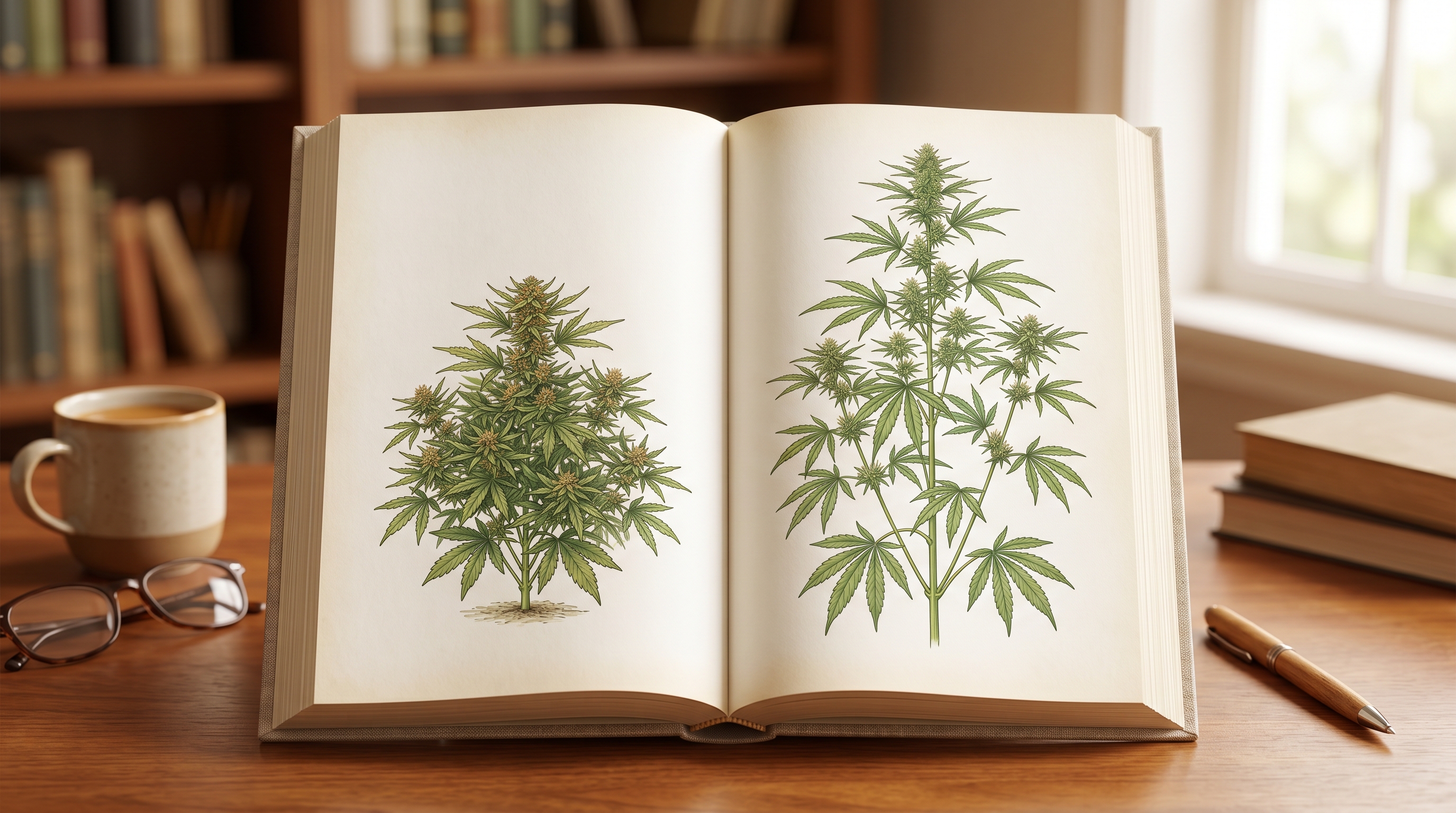
A photoperiod plant flowers in response to light. In the wild, lengthening nights as summer fades signal that autumn is coming, and the plant switches from growing leaves and stems (the vegetative stage) to producing buds. Indoors, you mimic that seasonal cue manually: you keep the lights on 18 hours a day to keep it in veg, then “flip” to a 12-hours-on, 12-hours-off cycle to trigger flowering. The plant needs that block of uninterrupted darkness — a light leak at night can confuse it and even cause it to revert or produce seeds.
An autoflowering plant flowers on a timer instead of a light cue. It carries genetics from Cannabis ruderalis, a hardy subspecies from the short, harsh growing seasons of Russia and Central Asia. Ruderalis couldn’t afford to wait for shortening days, so it evolved to flower based on age — typically starting to bud around three to four weeks from germination no matter what the light is doing. Breeders crossed that trait into modern strains, and the result is a plant you can run on a steady 18-to-20-hour light schedule from seed to harvest. No flip, no blackout discipline, no worrying about a sliver of light under the tent door.
That one difference — flower by light versus flower by age — cascades into every practical trade-off below.
Side-by-Side Comparison
Here’s the whole picture at a glance. Figures reflect well-grown plants with modern genetics; your mileage will vary with skill, environment, and strain.
| Factor | Autoflowering | Photoperiod |
|---|---|---|
| Flowering trigger | Age (~3–4 weeks from seed) | Light cycle (flip to 12/12) |
| Genetics | Contains ruderalis | Indica/sativa, no ruderalis |
| Seed-to-harvest | ~8–11 weeks | ~14–24+ weeks |
| Light schedule | Steady 18–24h, no change | 18/6 veg, then 12/12 flower |
| Typical height | ~40–120 cm | ~100–300 cm |
| Indoor yield | ~300–400 g/m² | ~400–600+ g/m² |
| Training | Light LST only | Full LST, topping, SCROG, HST |
| Cloning | Not practical | Yes — and keep mothers |
| Veg control | Fixed, can’t extend | Indefinite |
| Beginner friendly | Very | Moderate |
| Light-leak tolerance | High | Low |
Read that table twice. Most of the “which is better” debate online comes from people weighting these rows differently, not from anyone being wrong.
Autoflowering Cannabis: The Case For (and Against)
Autoflowers are the easy button, and that’s not an insult — ease is a genuine feature.
Speed is the headline. Many autos go from seed to harvest in 8 to 11 weeks. That short cycle means a mistake costs you days or a week, not an entire season. It also means you can stack multiple harvests: in a single outdoor summer where a photoperiod plant gives you one crop, autos can deliver two or even three. Indoors, perpetual rotation is simpler because you’re not juggling separate veg and flower light schedules.
They stay small and discreet. Most autos finish between roughly 40 and 120 cm. That compact stature is a gift for micro-growing in cabinets and tight stealth spaces, for balcony grows you’d rather neighbors didn’t clock, and for anyone whose ceiling is a closet shelf. Their indifference to light schedule also makes them forgiving of the light leaks that would ruin a photoperiod flower room.
They’re forgiving and tough. Ruderalis heritage brings genuine resilience — autos tend to shrug off cold snaps, pests, and mild neglect better than many pampered photoperiod strains. For a first-time grower, that hardiness is worth a lot.
Now the trade-offs, because there are real ones:
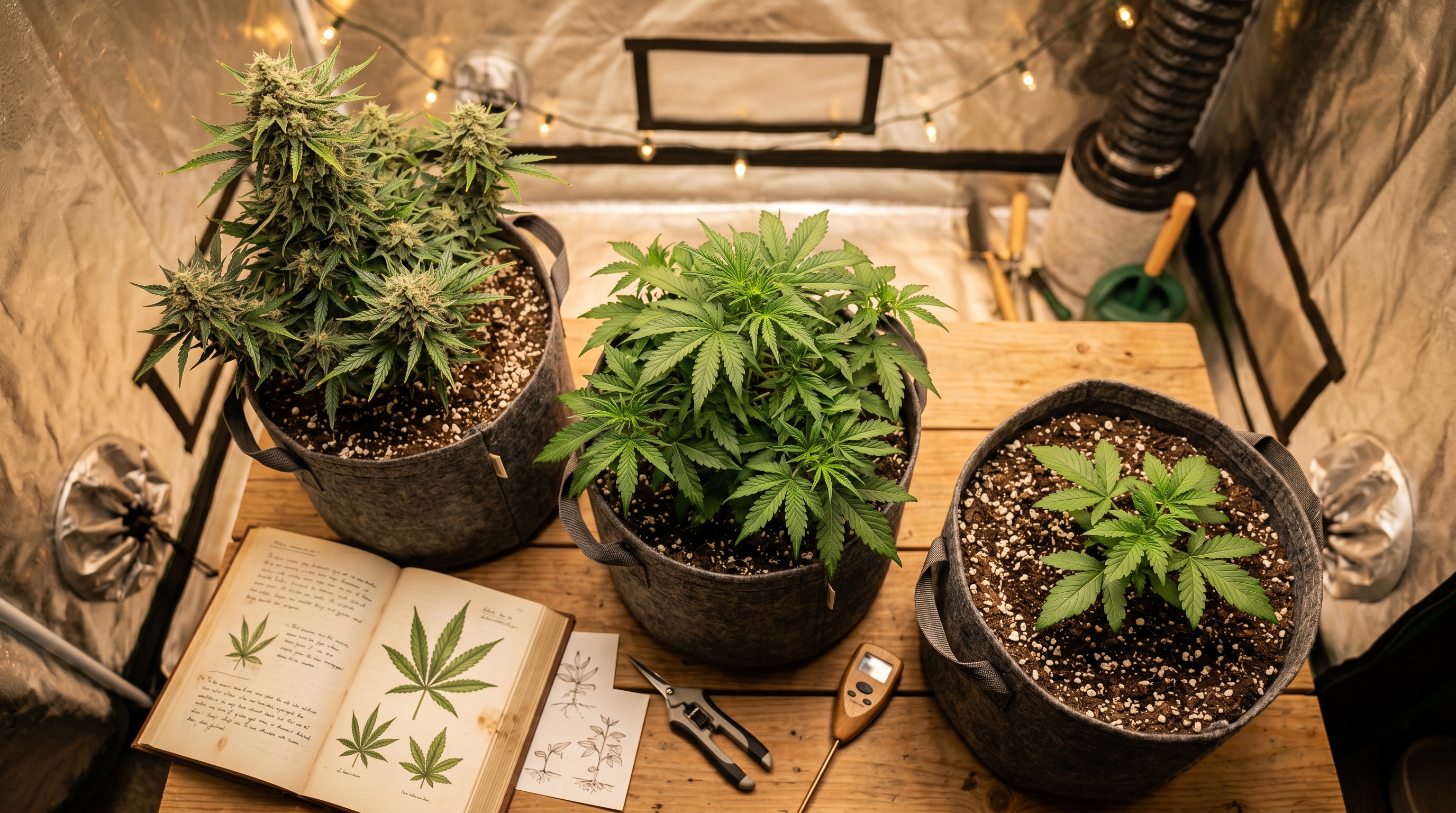
- Smaller yields per plant. That compact frame simply has fewer bud sites. Modern genetics have closed the gap dramatically — top autos now hit a competitive 300–400 g/m² — but a well-run photoperiod still wins on raw per-plant weight.
- You can’t extend veg. The clock is fixed. If a seedling stalls in its first weeks from cold, overwatering, or transplant shock, it will flower anyway — on schedule, but small. There’s no “let it veg another two weeks to recover.” Every lost growing day is lost yield, which is why a clean, low-stress seedling and growth-stage progression matters even more here.
- Heavy training backfires. Topping and aggressive defoliation need recovery time autos don’t have. Stick to gentle low-stress training (LST) — tucking and tying branches rather than cutting them.
- No cloning, no mothers. This is the big structural limit. A clone taken from an autoflower is the same age as its mother, so it immediately starts flowering as a tiny, rootless cutting and produces almost nothing. You can’t preserve a great phenotype or build a clone library. (More on why in our cannabis cloning beginner’s guide.)
Photoperiod Cannabis: The Case For (and Against)
Photoperiod plants are the grower’s grower choice. They ask more of you and hand back more control.
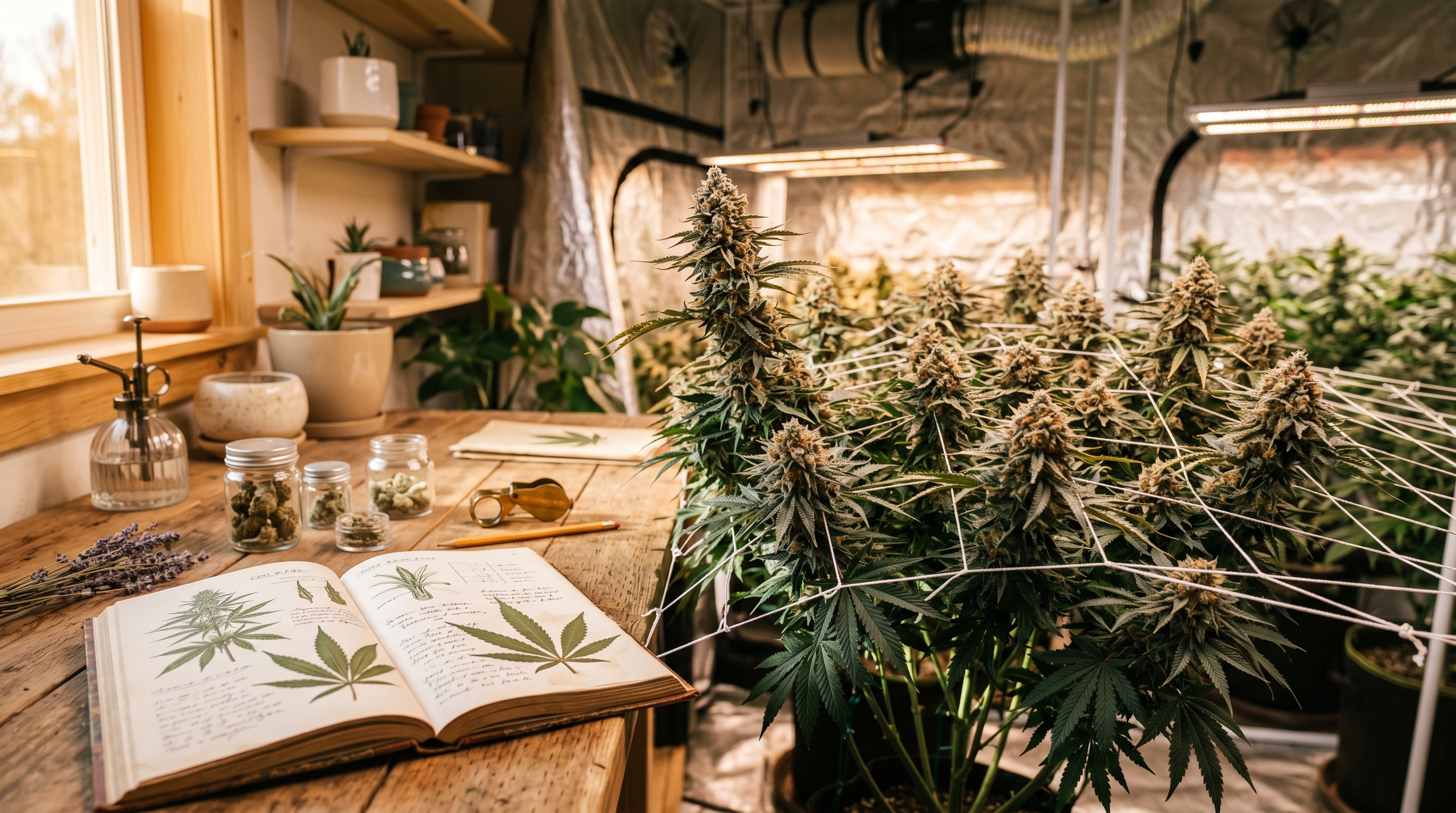
Maximum yield and full control. Because you decide when flowering starts, you can veg a plant for as long as you like — two weeks for a quick turnaround, two months to build a monster. That extra veg time is yield. A well-grown photoperiod plant routinely produces 400–600+ g/m² indoors and can become genuinely huge outdoors.
The full training toolkit. With a long, flexible veg stage you have time to shape the plant: topping for multiple colas, low-stress training, SCROG nets, and high-stress techniques all become viable. Our complete plant-training guide covers the whole menu, and if you’re deciding between two popular methods, our breakdown of topping vs FIMming is the next read. The payoff: an even canopy that uses your grow light far more efficiently.
Cloning and mother plants. This is the killer feature. Find a phenotype you love and you can keep it forever — maintain a mother plant in permanent veg and take genetically identical cuttings whenever you want. Every harvest then has the same potency, flavor, and structure. That consistency is the backbone of any serious or commercial-style grow, and it’s something autos simply can’t offer.
The costs:
- Time. From germination you’re looking at 14 to 24+ weeks, since flowering alone runs 6 to 12 weeks on top of however long you veg.
- Light discipline. You must commit to the 12/12 flip and protect the dark period. Light leaks during flowering can stress the plant, trigger hermaphroditism, or seed your crop.
- Space and planning. Serious setups want separate veg and flower areas (or a careful single-room schedule), plus room for plants that can get tall fast once they “stretch” in early flower.
- Less beginner-forgiving. More variables, more timing, more ways for a first-timer to stumble.
So Which Should You Grow?
Forget which is objectively “best.” Match the type to your situation.
Choose autoflowering if you:
- Are growing for the first time and want a forgiving, fast result.
- Have limited height or a stealth/discreet space — think balconies, cabinets, and small-footprint micro grows.
- Live in a short-season climate and need plants that finish before the frost, or want two-to-three outdoor harvests in one summer.
- Want quick, low-commitment cycles and don’t need maximum per-plant weight.
- Can’t run a strict dark period (roommates, a multi-use room, unavoidable light leaks).
Choose photoperiod if you:
- Want the highest possible yield per plant and per square meter.
- Plan to train heavily — SCROG, topping, big sculpted canopies.
- Want to clone winners and keep mother plants for consistent, repeatable harvests.
- Have the space, the time, and the discipline to manage separate light schedules.
- Are a connoisseur chasing a specific phenotype you can lock in and reproduce.
A common, sensible path: start with autoflowers to learn the fundamentals — watering, feeding, reading trichomes for harvest timing, drying and curing — then graduate to photoperiods once you want bigger yields and a clone library. For a true step-by-step on the auto route, our week-by-week autoflower grow guide walks the whole cycle. When you’re ready to go bigger, the grow tent setup guide and the seed-types explainer cover the next decisions.
A Note on Quality and Effects
One myth worth killing: autoflowers are not inherently weaker weed. Early ruderalis crosses were low in THC, which gave autos a lasting bad reputation. Modern breeding has erased that gap — today’s top autos produce resin, terpenes, and cannabinoid levels that rival their photoperiod cousins. The ruderalis is bred down to a trait, not a flavor.
What matters for how the flower feels isn’t the seed type at all — it’s the strain’s chemistry. An indica-leaning genetic heavy in myrcene will lean toward the body-heavy Relax High and relaxed end of the spectrum whether it’s an auto or a photoperiod. A bright, limonene-forward cultivar will push toward the Uplift family and a more euphoric, energetic experience either way. The terpene profile, not the flowering mechanism, writes the high. If you’re choosing genetics partly for the effect you’re after, our explainer on why your ideal high isn’t a strain name and the science of cannabis aromas are the two reads that connect chemistry to experience.
Professor High’s Bottom Line
If you remember one thing, make it this: autoflowers flower by age, photoperiods flower by light, and everything else follows from that. Autos trade some yield and all of your control for speed, small size, and a forgiving learning curve. Photoperiods trade time and discipline for maximum harvest, full training freedom, and the ability to clone winners forever.
New grower, tight space, or short summer? Start with autoflowers. Chasing big yields, a sculpted canopy, or a phenotype you want to keep for years? Go photoperiod. Either way, the seed type sets the rules of the game before you plant a thing — so choose it on purpose, not by accident.
And once your jars are full, the harder question begins: figuring out which of your harvests actually works best for you. That’s exactly what the High IQ app is built for — log what you grew and how each batch made you feel, and let your own patterns, not a seed-bank label, guide your next grow.
Sources
- Royal Queen Seeds — Photoperiod vs Autoflower Cannabis Strains: Pros and Cons
- Royal Queen Seeds — The Pros and Cons of Autoflowering Cannabis Strains
- Zamnesia — Cannabis Ruderalis: The Autoflower Key
- Wikipedia — Autoflowering cannabis
- Wikipedia — Cannabis ruderalis
- Weed Seeds Express — Autoflowers vs Photoperiods: Ultimate Cannabis Grow Guide
- 2Fast4Buds — Low Stress Training (LST) Autoflowering Guide
- The Cannigma — Cannabis ruderalis and its game-changing autoflowering trait


