Cannabis Ruderalis: The Genetics Behind Autoflowering
Meet Cannabis ruderalis, the hardy weed from Russia and Central Asia whose day-neutral flowering gene became the backbone of every modern autoflower strain.

There is a third member of the cannabis family that almost nobody talks about. You hear “indica” and “sativa” thrown around every day. You see “hybrid” stamped on half the jars at the dispensary. But the quiet cousin, Cannabis ruderalis, gets ignored almost entirely. That is a shame, because ruderalis carries one of the most useful genetic tricks in the entire plant kingdom: the ability to flower on a timer instead of a light switch.
That trick is called autoflowering. It is the reason a grower in a short, cold northern summer can pull a harvest before the frost arrives, and it is the reason home growers can run plants under constant light without ever flipping their lamps. Every autoflower seed sold today owes its existence to a scrappy little weed that botanists first wrote down in 1924. Let me introduce you properly.
What ruderalis is and where it came from
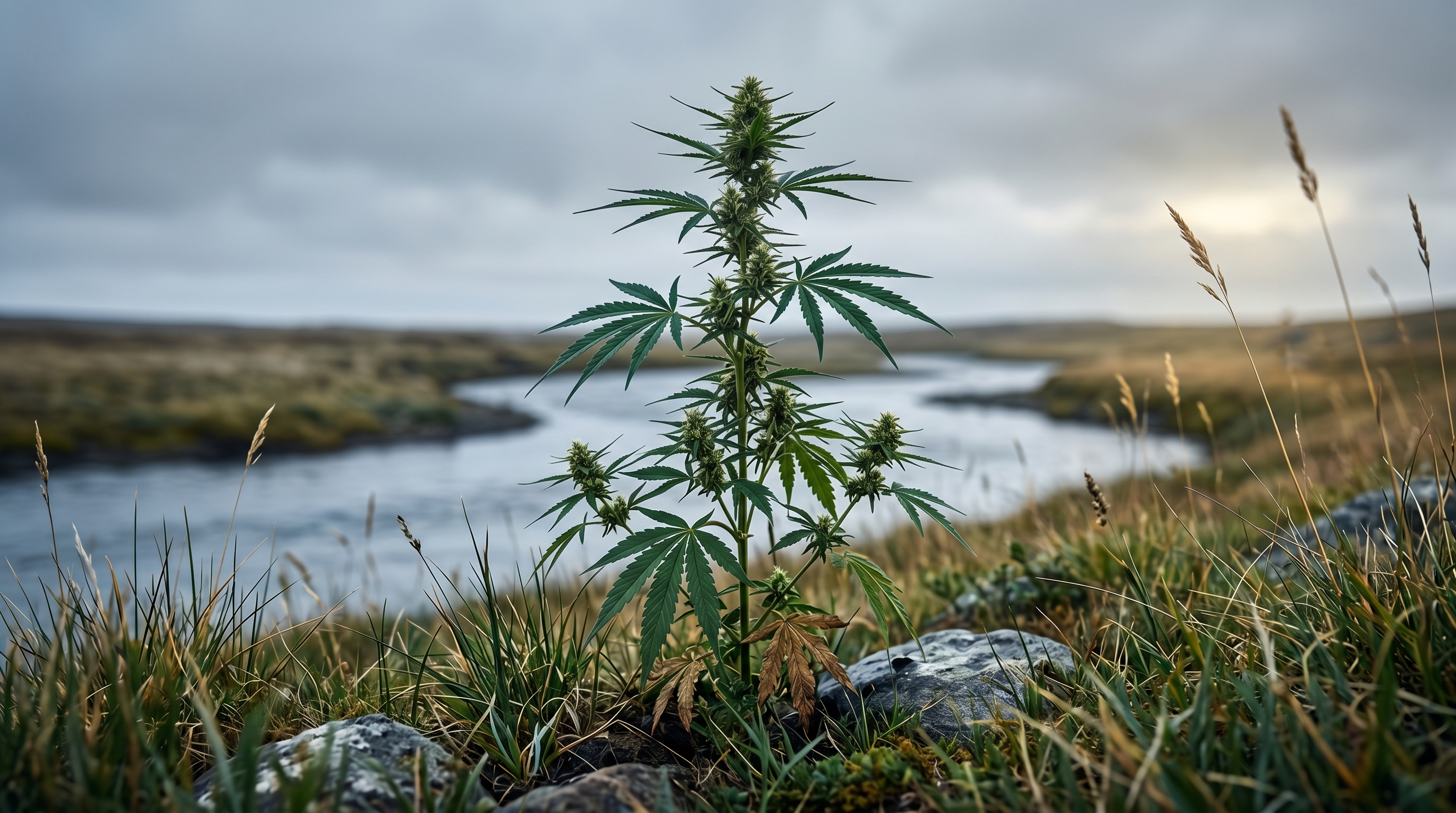
Cannabis ruderalis is the wild, weedy form of cannabis. It grows across Russia, Eastern and Central Europe, Siberia, and the steppes of Central Asia. The name comes from the Latin rudera, meaning rubble or waste ground. That fits, because these plants thrive in roadsides, ditches, and disturbed soil where pampered drug-type cannabis would struggle. It is the dandelion of the cannabis world: small, tough, and impossible to get rid of.
The Russian botanist Dmitrij Janischevsky put it on the scientific map [Janischevsky, 1924] while studying wild cannabis in the Volga River region of southeastern Russia. He noticed the seeds, shape, and size differed enough from cultivated hemp that he gave it a name of its own. Ruderalis is not a product of breeding or human selection in the way modern strains are. It is what cannabis looks like when it goes feral and has to survive on its own.
Most ruderalis plants top out around one to two feet tall, grow with little branching, and produce small, scattered buds with almost no resin. Compared to the towering, frosty plants you see at a dispensary, ruderalis looks like an afterthought. Its real value was never in the flower. It was hidden in the plant’s internal clock.
The species-versus-subspecies debate
Here is where botanists start arguing. Is ruderalis its own species, Cannabis ruderalis? Or is it just a subspecies of one big, sprawling Cannabis sativa? The answer depends on who you ask, and the disagreement is older than most of us.
The view most botanists lean toward groups all cannabis under a single species, Cannabis sativa L. In that model, “indica,” “sativa,” and “ruderalis” are subspecies or varieties, not truly separate species. What we call ruderalis is often formally written as Cannabis sativa subsp. sativa var. spontanea or var. ruderalis. A 2018 review in the journal Cannabis and Cannabinoid Research [McPartland, 2018] put it bluntly. In modern slang, “Ruderalis” gets applied to any plant showing one of three traits: roughly equal CBD and THC, a wild-type weedy form, or early flowering. None of those traits alone seems to make a separate species.
An earlier review of cannabis taxonomy [Small, 2017] traced how the vernacular “Sativa,” “Indica,” and “Ruderalis” labels drifted away from the formal scientific names over the 20th century, muddying the picture even further. A 2025 cannabis pangenome study in Nature [Allen et al., 2025] echoed the uncertainty. It noted that “debate remains regarding the status of Cannabis indica and Cannabis ruderalis, the latter of which is thought to be the source of the day-neutral (autoflowering) flowering type.” Genetically, ruderalis-type plants do not appear to form a clean, isolated branch. Many feral populations look like escaped hemp that went wild generations ago, not an ancient separate lineage.
So why does the “three species” idea persist? Partly because ruderalis genuinely behaves differently. It flowers on its own schedule, it shrugs off cold and pests, and Janischevsky himself flagged its distinct seeds. For practical purposes, growers and breeders treat ruderalis as a functional category defined by one thing above all: autoflowering. If you want the deeper taxonomy fight, I unpack the whole mess in indica vs sativa vs hybrid: what science actually says in 2026, and the wild origins of the plant in landrace strains: the original cannabis genetics that started it all.
The autoflowering trait: flowering by age, not by light
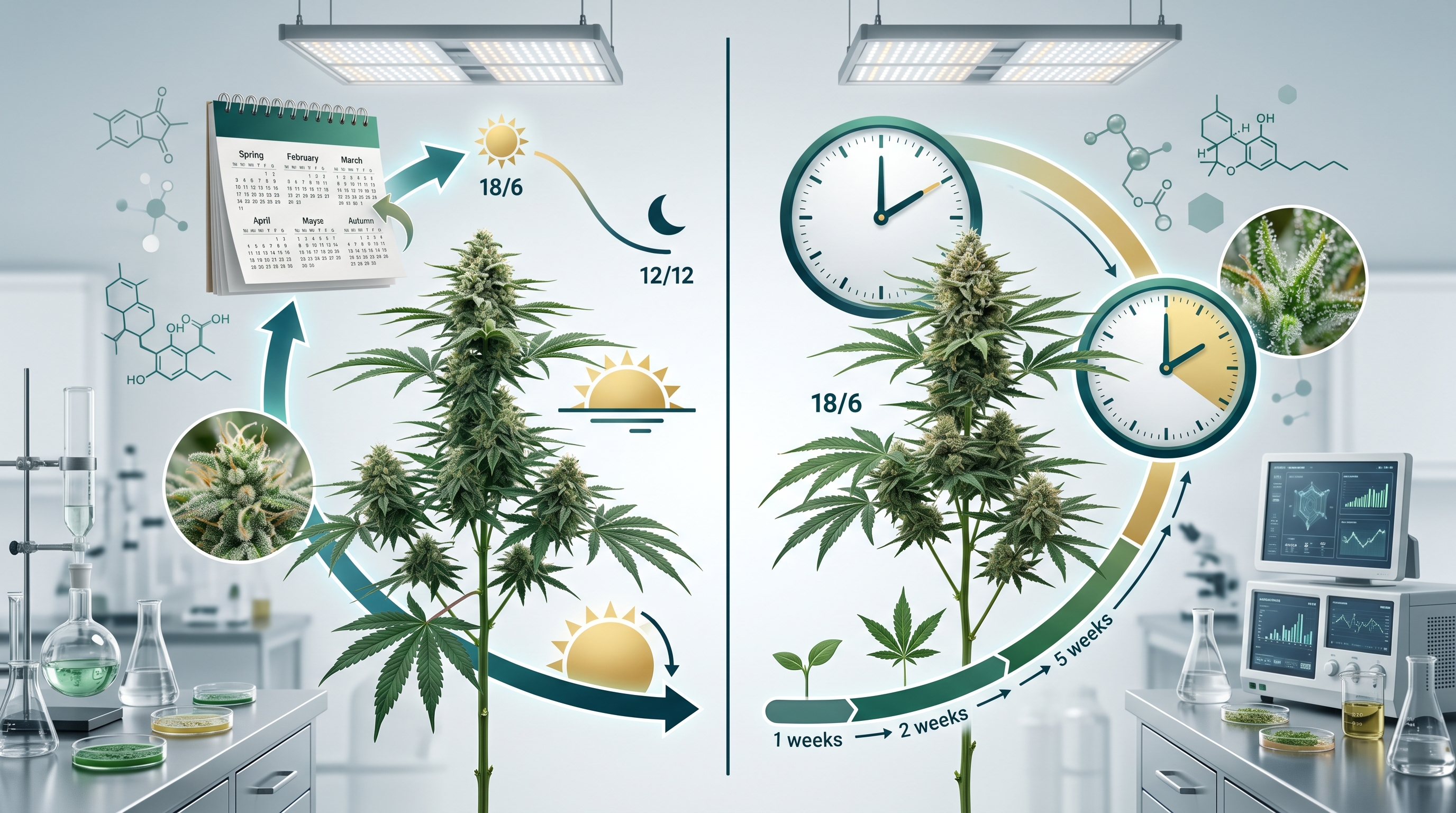
This is the heart of the story. Most cannabis is photoperiod-dependent. It flowers in response to changing daylength. As summer fades and nights grow longer, the plant senses the shift toward shorter days. That is its cue to switch from vegetative growth into bloom. Indoor growers mimic this by flipping their lights from an 18-hours-on schedule to a 12-on, 12-off cycle. Until you flip that switch, a photoperiod plant will happily stay in veg forever.
Ruderalis ignores all of that. It is day-neutral. That means it flowers based on the plant’s age and maturity, not the light cycle. A true autoflower will start budding roughly three to four weeks after sprouting, no matter what the lights are doing. It will even bud under a brutal 24 hours of constant light. You cannot keep an autoflower in veg by giving it more daylight, because daylight was never the trigger.
Why this evolved in the far north
The autoflowering trait is a survival adaptation to extreme northern latitudes. In places like southern Siberia, summers are short, cold, and unpredictable. A plant that waited for the days to shorten before flowering would risk getting caught by an early frost with nothing but immature, seedless flowers, a dead end for its genes.
Far-northern summers also stay light for a very long time, sometimes eighteen-plus hours a day. A normal short-day plant might never get the long-night signal it needs to flower at all. So ruderalis threw away the calendar and ran on an internal clock instead. The cycle is simple: sprout, grow for a few weeks, flower, set seed, all before the cold returns. Speed and certainty beat size.
On the genetic side, scientists are closing in on the machinery. The 2025 Nature pangenome work [Allen et al., 2025] implicated a core circadian and flowering-time gene called PRR3 in autoflowering behavior, the same family of genes tied to flowering-time shifts in crops like soybean and sorghum as they spread into new climates. A 2022 whole-genome study [Ren et al., 2022] likewise found that wild cannabis could keep flowering even under 18 hours of light, pointing to the same photoperiod-independence. The autoflowering trait appears to behave as a recessive condition, which has huge consequences for breeders, as we will see.
Cannabinoids, stature, and hardiness
Let’s be honest about ruderalis in its raw form. On its own, it is not a great smoke. Wild ruderalis typically carries less than one percent THC, well below the threshold that defines drug-type cannabis. Many ruderalis populations instead lean toward roughly balanced or CBD-leaning chemistry, which is part of why some growers find ruderalis genetics useful for CBD-rich autoflower projects today. If you want to understand why CBD-forward plants behave so differently, CBG, the mother cannabinoid and CBN, the sleepy cannabinoid are good companions, and THC vs CBD differences covers the basics.
What ruderalis lacks in potency it makes up for in resilience. These plants are short, usually staying under two feet, which is a gift for stealthy or space-limited growers. They tolerate cold, resist pests and mold, and germinate and finish fast. That combination of small stature, toughness, and an internal flowering clock is exactly the package breeders wanted to bottle, even if nobody wanted to smoke the wild plant itself. It is a reminder that THC percentage is a terrible way to judge a plant’s worth, a point I make often in why THC percentage is a terrible way to choose cannabis.
How breeders turned a weed into modern autoflowers
For most of the 20th century, breeders dismissed ruderalis as a low-potency curiosity. Crossing it with elite drug strains seemed pointless. You got the weak potency and lost the autoflowering trick more often than not. The trait is recessive. So first-generation (F1) crosses between a ruderalis plant and a photoperiod plant usually did not autoflower. The autoflowering plants only reappeared in later generations, in roughly a quarter of an F2 batch. That is exactly the pattern you would predict from a recessive gene. Breeders who tossed out the “weird” early-flowering seedlings as off-types were literally throwing away the prize.
The breakthrough came in the early 2000s with a Canadian breeder known as the Joint Doctor. He started with a mysterious fast-flowering plant called “Mexican Rudy.” It was believed to be a 1970s cross of Russian ruderalis and Mexican cannabis. He crossed it with the compact, potent Northern Lights #2, then with a William’s Wonder clone. Buried in that three-way cross were seedlings that flowered almost immediately. They budded under 24 hours of light, while barely past the seedling stage. The recessive autoflowering genes had finally lined up.
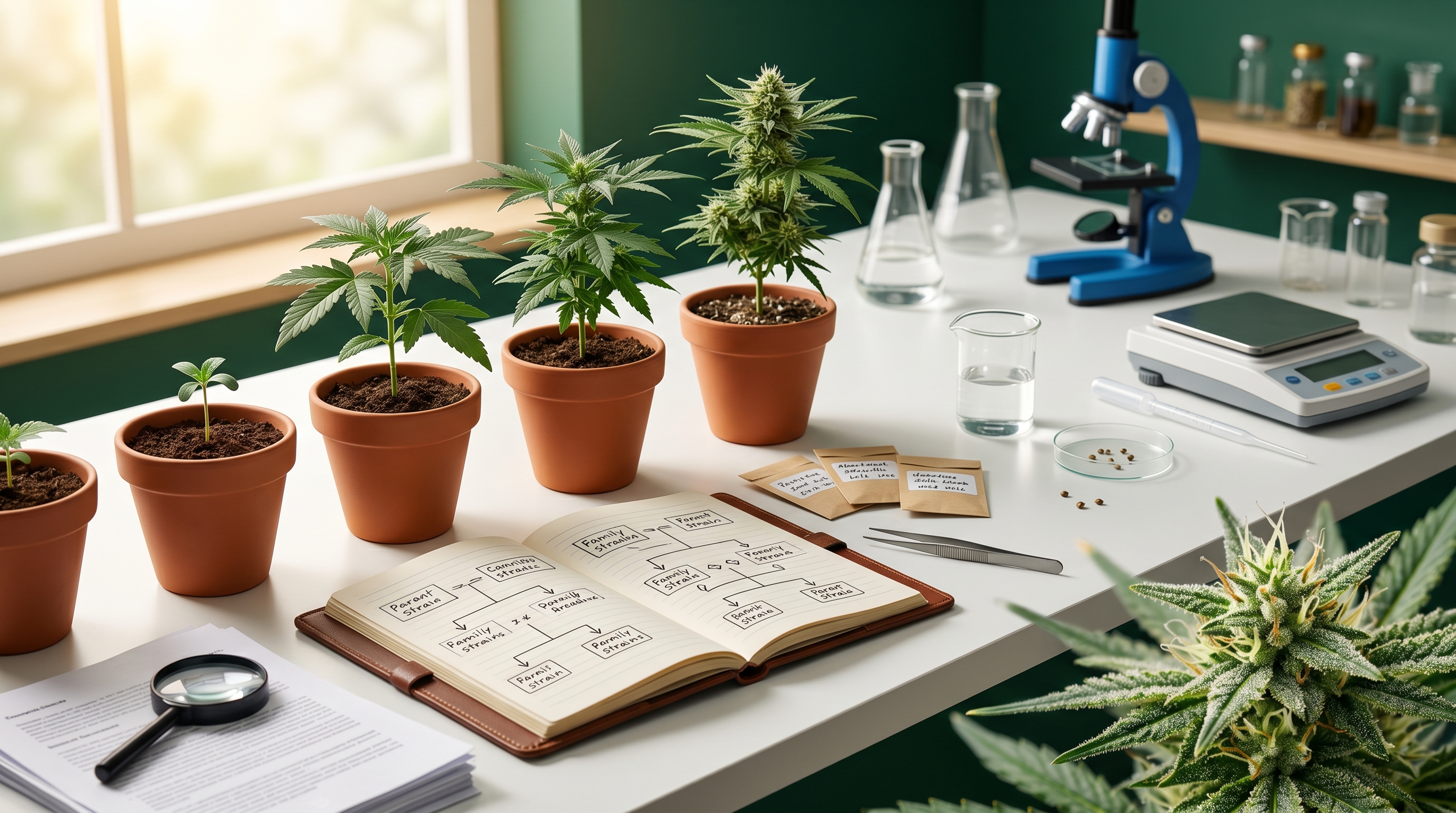
He stabilized those freak dwarfs over five or six generations into a true-breeding line he first called Willy’s Automatic, then renamed Lowryder. Released around 2002 to 2003, Lowryder was the first commercially successful autoflower: a compact plant that finished in roughly nine weeks from seed regardless of light schedule. Early reviewers mocked its modest yield and low potency, but it proved the concept. Cannabis could finish its life cycle by age rather than daylength.
The mechanics of stacking a recessive trait with desirable chemistry are the same ones I cover in cannabis breeding at home: an F1, F2, and backcross guide and phenotype hunting: how breeders find the perfect cannabis plant.
Ruderalis in modern genetics
Lowryder kicked off an arms race. The Joint Doctor crossed it with a potent Brazilian sativa called Santa Maria to create the punchier Lowryder #2, then spawned Easy Ryder, Diesel Ryder, and others. European seed banks like Dutch Passion, Dinafem, and FastBuds piled in, and dedicated autoflower houses such as Mephisto Genetics emerged. Over two decades of selection erased ruderalis’s biggest weakness. Modern “super autos” run longer life cycles and bigger yields, and the best now test north of 20 to 25 percent THC, with some competition winners cracking 29 percent.
That is a staggering transformation of a plant that started at under one percent THC. Yet a thread of ruderalis runs through every one of those seeds, contributing the day-neutral flowering behavior and a dose of hardiness, while indica and sativa parents supply the potency, aroma, and structure. This same patient, generations-long selection is what built the THC ceilings we see today, a story I trace in the THC potency arms race.
Autoflowers now occupy a real lane in the market. They are ideal for beginners, stealth growers, and anyone in a short-season climate who wants multiple harvests a year. If you are weighing your seed options, cannabis seed types: feminized vs autoflower vs regular explained lays out the trade-offs, and how to grow cannabis at home: a beginner’s complete guide walks you through the full process. To see where autoflowers fit on the timeline, check cannabis growing stages: seed to harvest timeline alongside when and how to harvest cannabis and drying and curing cannabis. Curious where to buy quality auto seeds? Best cannabis seed banks 2026 is a good starting point.
The bigger lesson is one I keep coming back to: genetics shape your experience far more than a strain name on a label. The ruderalis legacy is proof that an entire category of cannabis can be reverse-engineered from a single inherited trait. Understanding how your genetics determine your cannabis experience, tracing a strain’s lineage with cannabis genealogy, and decoding what cannabis strain names actually mean all matter more than chasing a number. And once you know your plant’s roots, our High Families framework helps you choose by effect, not marketing.
Frequently asked questions
Is Cannabis ruderalis a real species? It is debated. Many botanists classify all cannabis as a single species, Cannabis sativa, with ruderalis as a subspecies or variety rather than a separate species. Genetic studies generally support the single-species view, though ruderalis behaves distinctly enough that the older “three species” idea persists. For practical purposes, growers define ruderalis by its autoflowering trait.
Does ruderalis get you high? Wild ruderalis on its own does not, really. It typically contains less than one percent THC. Modern autoflower strains feel potent because breeders crossed ruderalis with high-THC indica and sativa parents, so the ruderalis contributes the flowering behavior, not the buzz.
Why does ruderalis autoflower? It evolved in far-northern climates with short, cold summers and very long daylight hours. Waiting for shorter days to trigger flowering would risk frost before seeds matured, so ruderalis flowers on an internal age-based clock instead. The flowering-time gene PRR3 has been implicated in this day-neutral behavior.
Are autoflowers as strong as regular strains? Today, often yes. Early autoflowers like the original Lowryder were modest, but modern super autos can exceed 20 to 25 percent THC, rivaling photoperiod strains while finishing faster.
What was the first autoflower strain? Lowryder, bred by the Joint Doctor and released around 2002 to 2003. It descended from a ruderalis-influenced “Mexican Rudy” crossed with Northern Lights #2 and William’s Wonder, and it proved autoflowers could be commercially viable.
Key Takeaways
Cannabis ruderalis is the underdog of the cannabis family. It is small, low in THC, and was written off for most of a century. But hidden inside that weedy little plant was a single brilliant adaptation, day-neutral flowering, born from the need to survive a brutal northern summer. Breeders spent decades coaxing that recessive trait into elite genetics, and the result is the entire modern autoflower category. The next time you crack open a pack of autoflower seeds that finish in nine weeks under any light schedule, tip your hat to a wild Russian weed and the survival instinct that made it all possible. Knowing why your plant behaves the way it does, right down to its roots, is the whole point.
Sources
- McPartland, J.M. (2018). Cannabis Systematics at the Levels of Family, Genus, and Species. Cannabis and Cannabinoid Research. https://www.liebertpub.com/doi/10.1089/can.2018.0039
- McPartland, J.M. & Small, E. (2017). Models of Cannabis Taxonomy, Cultural Bias, and Conflicts between Scientific and Vernacular Names. The Botanical Review. https://link.springer.com/article/10.1007/s12229-017-9187-0
- Allen, K. et al. (2025). Cannabis pangenome reveals diversity of cannabinoid synthases and unmapped wild relatives. Nature. https://www.nature.com/articles/s41586-025-09065-0
- Ren, G. et al. (2022). Whole-genome resequencing of wild and cultivated cannabis reveals the genetic structure and adaptive selection of important traits. https://pmc.ncbi.nlm.nih.gov/articles/PMC9327241/
- Ren, M. et al. (2021). Large-scale whole-genome resequencing unravels the domestication history of Cannabis sativa. Science Advances. https://www.science.org/doi/10.1126/sciadv.abg2286
- Janischevsky, D.E. (1924). A form of cannabis in wild areas of south-eastern Russia. Scientific Notes of Saratov State University 2(2): 3-17.
- Wikipedia. Cannabis ruderalis. https://en.wikipedia.org/wiki/Cannabis_ruderalis
- Wikipedia. Autoflowering cannabis. https://en.wikipedia.org/wiki/Autoflowering_cannabis
- Dutch Passion. Interview With The Joint Doctor and The Untold Story of Autoflowering Cannabis Strains. https://dutch-passion.com/en/blog/interview-with-the-joint-doctor-n384
- Dinafem Seeds. History of Autoflowering Seeds. https://www.dinafem.org/en/blog/history-of-autoflowering-seeds/
- Seedsman. The Origins of Lowryder Cannabis Strain. https://www.seedsman.com/us-en/blog/the-origins-of-lowryder-cannabis-strain


