Bubble Hash vs Kief vs Dry Sift: Solventless Concentrates Explained
Bubble hash, kief, or dry sift? Compare potency, production methods, micron screens, star ratings, and when to choose each solventless concentrate.


The Decision: Which Solventless Concentrate Is Right for You?
So you’ve heard the buzz about solventless concentrates — products made without chemical solvents like butane or CO₂ — and you’re intrigued. Smart move. Solventless methods are among the oldest and most straightforward ways to concentrate cannabis, and they’re experiencing a serious renaissance right now.
But here’s where it gets confusing: bubble hash, kief, and dry sift all fall under the solventless umbrella, yet they’re made differently, look different, hit differently, and cost differently. If you’ve ever stared at a dispensary menu wondering which one to grab, you’re not alone.
The good news? None of these is objectively “the best.” Each one shines in specific situations depending on your experience level, budget, equipment, and what kind of session you’re after. This guide breaks down all three so you can make a confident, informed choice — or decide you want to try them all.
For context on how solventless concentrates sit within the broader concentrate landscape, check out our complete guide to cannabis concentrates. And if you’re curious how bubble hash feeds into the world of live rosin, our live resin vs live rosin explainer picks up right where this guide leaves off.
Quick Comparison
| Factor | Kief | Dry Sift | Bubble Hash |
|---|---|---|---|
| What it is | Trichome heads from a grinder | Refined trichomes sifted through screens | Trichomes separated with ice water |
| Potency (THC range) | 20–40% | 40–60%+ | 50–80%+ |
| Effort to make | Minimal (passive collection) | Moderate (manual sifting) | High (ice, bags, agitation, drying) |
| Equipment needed | Three-chamber grinder | Sifting screens (various microns) | Bubble bags, buckets, ice, water |
| Terpene preservation | Moderate | Good | Excellent |
| Star rating potential | 1–2 stars | 2–4 stars | Up to 6 stars |
| Best for | Casual users, bowl-toppers | DIY enthusiasts, rosin pressers | Connoisseurs, hash lovers |
| Cost | Free (byproduct of grinding) | Low–moderate (screens $20–$80) | Moderate–high (bags + ice + time) |
Deep Dive: Kief
What It Is
Kief is the simplest solventless concentrate you’ll encounter. Those tiny, crystalline structures covering cannabis flower? Those are trichomes — the resin glands where cannabinoids and terpenes are produced and stored. When trichome heads break off from the plant, the resulting powder is kief.
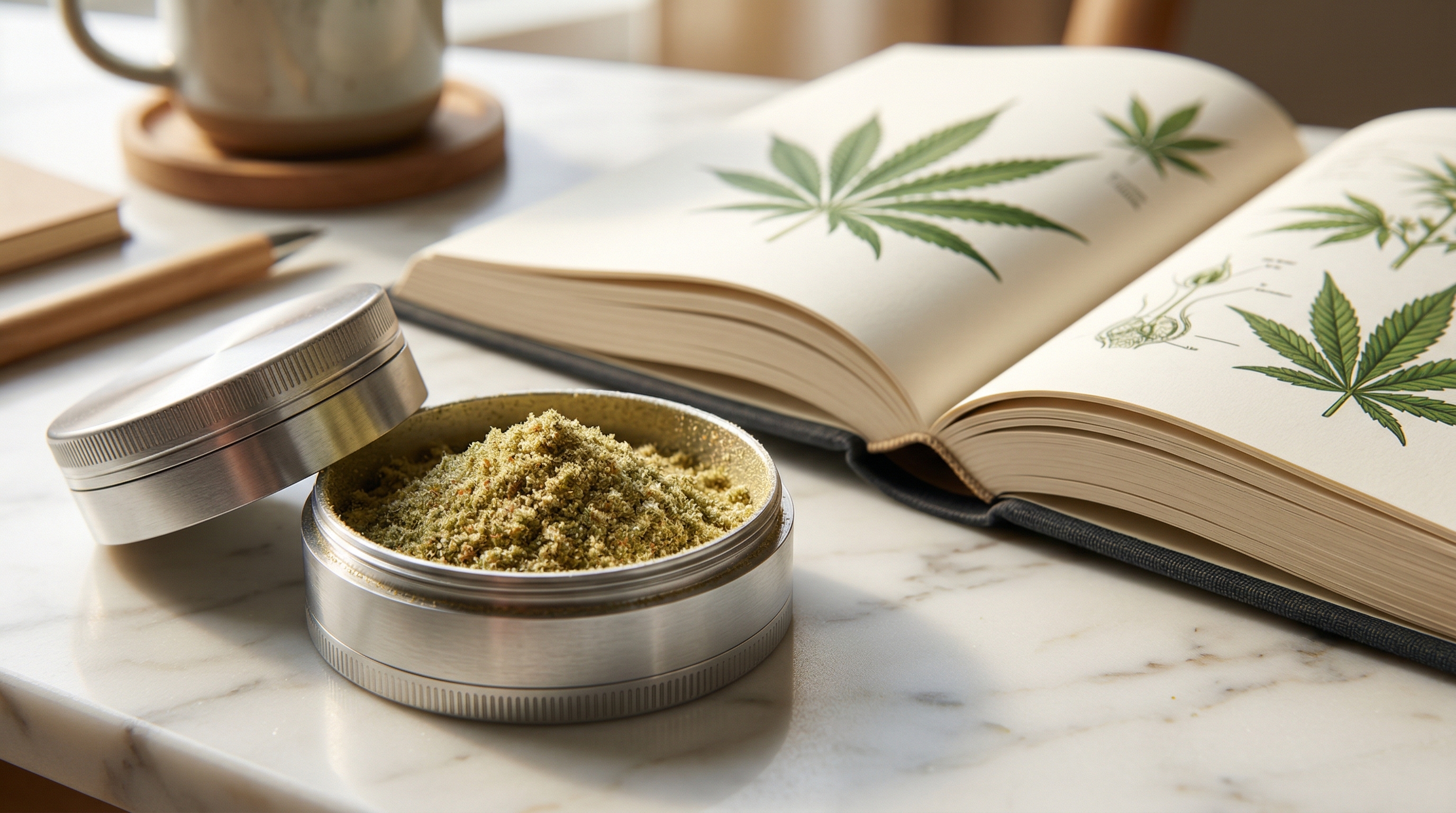
If you own a three-chamber grinder (the kind with a screen and a bottom catch compartment), you’re already collecting kief every time you grind your flower. It’s the golden-green dust that accumulates beneath the screen over time.
How It Works
There’s no real “process” here — gravity and friction do the work. As you grind cannabis, trichome heads detach and fall through the mesh screen (typically around 150–200 microns in most grinders) into the kief catcher below. The screen filters out most plant material, leaving you with a relatively concentrated powder.
The downside is that grinder screens aren’t precision tools. The kief you collect contains a mix of trichome heads, stalks, and fine plant matter — which is why the potency tops out lower than dry sift or bubble hash.
Pros
- Zero effort — it collects passively while you grind
- No extra equipment beyond a quality grinder
- Free — it’s a byproduct of what you’re already doing
- Versatile — sprinkle on bowls, roll into joints, or press into pucks
Cons
- Lower potency compared to dry sift and bubble hash (typically 20–40% THC)
- More plant contamination — grinder screens aren’t precision tools
- Slow accumulation — takes weeks of grinding to collect meaningful amounts
- Terpene degradation over time if stored improperly
Ideal Use Cases
Kief is perfect if you want to boost a bowl or joint without any extra steps. It’s the gateway to concentrates for many people — zero learning curve, zero investment. Think of it as the casual, “set it and forget it” option. If you’re new to concentrates altogether, our dabbing 101 guide is a great next read.
Deep Dive: Dry Sift
What It Is
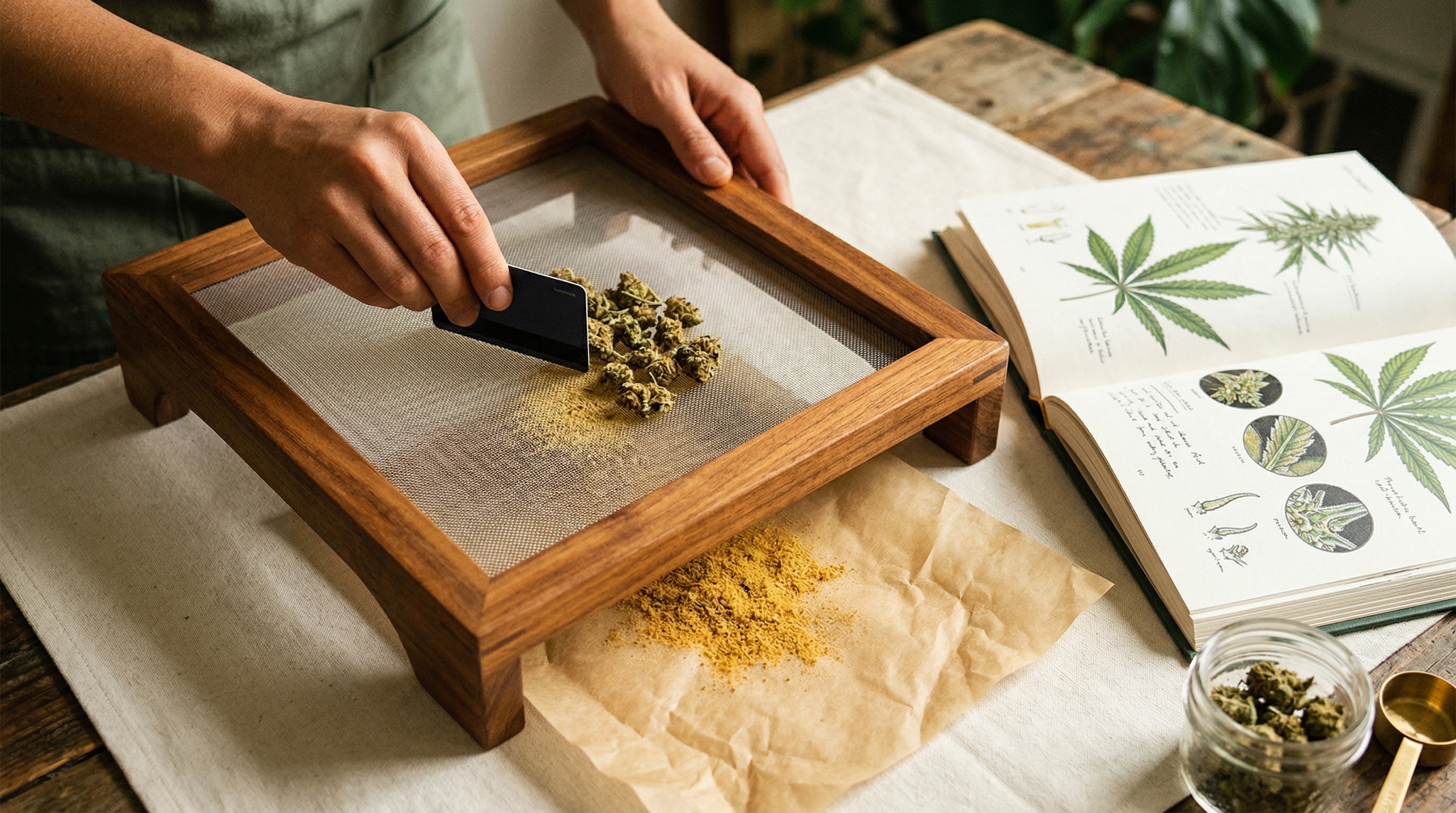
Dry sift is essentially kief’s more refined cousin. While kief is passively collected in a grinder, dry sift is intentionally produced by rubbing or gently agitating cannabis flower over a series of fine mesh screens measured in microns. The goal is to isolate the purest trichome heads possible while leaving behind plant material, stalks, and debris.
High-quality dry sift — sometimes called full melt dry sift — can rival bubble hash in purity and is prized as a starting material for making solventless rosin.
How It Works
You place dried, often frozen cannabis on a screen and gently card or shake it back and forth. Trichome heads fall through while larger material stays on top. Most serious sifters use multiple screens stacked at decreasing micron sizes to progressively refine the product:
| Screen Size | What It Captures | Quality |
|---|---|---|
| 150–220µ | Plant debris, large particles | Discard layer |
| 120µ | Mixed trichomes and plant matter | 1–2 star (edibles) |
| 90µ | Mature trichome heads, some stalks | 3–4 star (half-melt) |
| 73µ | High-quality trichome heads | 4–5 star (approaching full-melt) |
| 45–60µ | Finest trichome fraction | Variable — can be very pure |
The finest, most refined dry sift is rated on the same star system used for bubble hash: 1–2 stars for cooking-grade material and 5–6 stars for full-melt quality that dabs cleanly with near-zero residue.
Pros
- Higher potency than kief (40–60%+ THC when done well)
- Good terpene retention — no heat or water involved
- Relatively affordable equipment — screens cost $20–$80
- Excellent rosin starting material if you own a press
- Scalable — process small or large amounts
Cons
- Technique-dependent — too much pressure or agitation pushes plant material through screens
- Time-consuming for high-quality results
- Requires frozen material for best results (cold makes trichomes brittle and easier to detach)
- Quality varies widely based on skill and screen quality
Ideal Use Cases
Dry sift is ideal for the DIY enthusiast who wants a meaningful upgrade over kief without the wet process of bubble hash. It’s especially popular among home rosin pressers — high-quality dry sift pressed into rosin produces exceptional results. If you enjoy the craft side of cannabis, this is a rewarding technique to learn.
Because dry sift preserves the terpene profile well, it’s a great way to experience the distinct character of different cannabis strains. Understanding how terpenes shape your experience is key to getting the most out of well-made dry sift.
Deep Dive: Bubble Hash
What It Is
Bubble hash (also called ice water hash or water hash) is widely considered the gold standard of traditional solventless concentrates. It uses ice-cold water and agitation to separate trichomes from plant material, then filters the mixture through a series of mesh bags at various micron sizes.
The name “bubble” comes from the way high-quality hash bubbles when exposed to flame — a sign of purity and minimal plant contamination.
How It Works
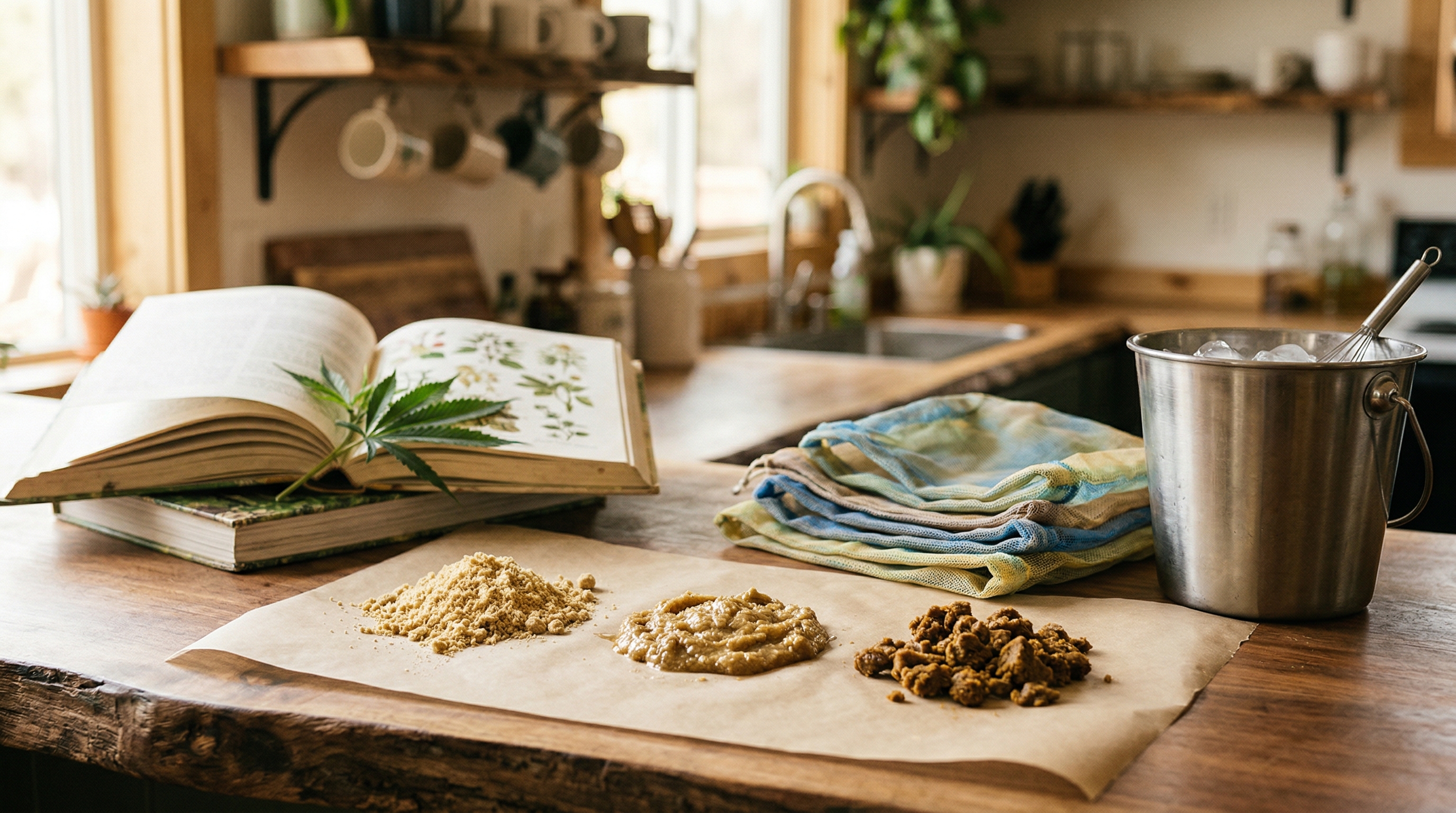
Frozen cannabis is submerged in ice water inside a bucket lined with bubble bags — mesh filter bags typically ranging from 220µ down to 25µ. The mixture is agitated (by hand stirring or a washing machine drum), which causes brittle, frozen trichomes to snap off. The ice water carries them through the bags, with each bag catching a different size fraction:
| Micron Size | Role | Hash Quality |
|---|---|---|
| 220µ | Work bag — traps plant debris | Not collected |
| 160–190µ | Large particles, some trichomes | 1–2 star (edibles/cooking) |
| 120µ | Mature trichome heads | 4–5 star |
| 90µ | Optimal mature trichomes | 5–6 star (full melt) |
| 73µ | Good quality trichomes | 4 star |
| 45µ | Smaller, less mature trichomes | 2–3 star |
| 25µ | Very fine particles | 1–2 star (edibles) |
The 90–120µ range is the sweet spot for premium bubble hash — this is where you find the highest concentration of mature trichome heads with the best oil-to-plant-material ratio. Full-melt hash from this window dabs cleanly and showcases a strain’s complete terpene profile.
The collected material is then carefully dried — a critical step. Air drying works, but freeze drying is the gold standard for preserving terpenes and preventing mold.
Pros
- Highest potency of the three (50–80%+ THC for top grades, approaching 90% for exceptional 6-star hash)
- Exceptional terpene preservation — cold water is gentle on volatile compounds
- Precise separation — multiple bag sizes let you isolate specific trichome fractions
- Full melt quality possible (dabs cleanly with minimal residue)
- Rich, complex flavor that showcases strain-specific terpene profiles
Cons
- Most labor-intensive process of the three
- Equipment investment — bubble bag sets, buckets, ice, and ideally a freeze dryer
- Drying is critical and tricky — improper drying leads to mold or degraded quality
- Requires quality starting material — garbage in, garbage out applies strongly here
- Messy and wet — not a quick kitchen project
The Star Rating System
Bubble hash quality is often graded on a 1–6 star scale:
- 1–2 stars: High plant content, dark color. Best for edibles, tinctures, or cooking. Won’t dab cleanly.
- 3–4 stars (half-melt): Will dab but leaves some residue. Good for mixing with flower or pressing rosin.
- 5–6 stars (full-melt): Bubbles and disappears completely when dabbed. The connoisseur tier.
Achieving 6-star hash requires exceptional starting material, precise technique, and often freeze-dried finishing.
Ideal Use Cases
Bubble hash is for the cannabis connoisseur who values flavor, purity, and craft. It’s also the premier starting material for hash rosin — the most sought-after solventless concentrate on the market. If you want to understand how bubble hash feeds into the broader solventless world, our live resin vs live rosin guide explains exactly how hash rosin is made and why it commands premium prices.
Head-to-Head Analysis
Effect Profile
All three concentrates deliver more potent effects than flower alone, but the experience differs. Kief added to a bowl gives a noticeable boost without dramatically changing the character of the session. Dry sift, being purer, delivers a cleaner, more pronounced high. Bubble hash — especially full melt — offers the most intense and terpene-rich experience, often described as a “true expression” of the strain’s character.
Because solventless concentrates preserve terpene profiles, the strain you start with matters enormously. If you’re exploring how terpenes shape your experience, solventless concentrates are the clearest window into what terpenes actually do.
Accessibility
Kief wins here, hands down. If you own a grinder, you’re already making it. Dry sift requires a modest investment in screens and some practice. Bubble hash demands the most equipment, time, and technique — though plenty of home enthusiasts produce excellent results with a basic bubble bag kit and some patience.
Cost Considerations
- Kief: Essentially free (byproduct of grinding)
- Dry sift: Low startup cost ($20–$80 for screens), plus the cost of flower
- Bubble hash: Moderate startup ($30–$100 for bubble bags), plus ice, and ideally a freeze dryer for best results
At dispensaries, expect to pay the most for bubble hash, followed by dry sift, with kief being the most affordable concentrate option. Understanding the full spectrum of consumption methods helps put these price differences in context.
User Experience
Kief is forgiving — there’s nothing to mess up. Dry sift rewards patience and gentle technique. Bubble hash has the steepest learning curve but also the highest ceiling for quality. If you enjoy process-oriented hobbies, making bubble hash can be genuinely meditative.
The Verdict
Choose Kief If…
- You’re new to concentrates and want to dip your toes in
- You want zero extra effort or equipment
- You’re looking to casually enhance your flower sessions
- Budget is a priority
Choose Dry Sift If…
- You want a meaningful step up in potency and purity
- You enjoy hands-on, craft-style cannabis preparation
- You plan to press rosin at home
- You want great terpene expression without the wet process
Choose Bubble Hash If…
- You’re chasing the purest, most flavorful solventless experience
- You have quality starting material worth concentrating
- You’re willing to invest time, equipment, and technique
- You want to make hash rosin — the pinnacle of solventless
Consider All Three If…
You’re on a solventless journey. Many enthusiasts start with kief, graduate to dry sift, and eventually fall in love with bubble hash. Each teaches you something about trichomes, terpenes, and what makes cannabis concentrates special. There’s no wrong path — just different stops along the way.
FAQs
Can I dab kief or dry sift?
You can, but it’s not ideal unless you have high-purity material. Lower-grade kief and dry sift contain enough plant material to leave residue and produce harsh hits. Look for “full melt” quality dry sift (5–6 star) or bubble hash for a clean dabbing experience. Otherwise, kief and standard dry sift are better suited for topping bowls, adding to joints, or pressing into rosin. Our dabbing 101 guide walks through exactly what you need to get started.
Does the strain I use matter for making these concentrates?
Absolutely. The quality and quantity of trichomes vary dramatically between strains. Strains known for heavy resin production tend to yield the most and best-quality solventless concentrates. Always start with the best flower you can get — no technique can compensate for poor starting material.
What’s the difference between kief and dry sift?
Both are dry-processed trichome powders, but the key difference is precision. Kief is passively collected in a grinder using a single coarse screen — convenient but imprecise. Dry sift uses multiple calibrated screens at specific micron sizes to progressively refine the material. The result is significantly purer trichome heads with less plant contamination and higher potency.
Is solventless actually safer than solvent-based concentrates?
Solventless concentrates avoid the risk of residual solvents (like butane) in the final product, which some consumers prefer. However, properly purged solvent-based concentrates from licensed producers are also considered safe. The choice often comes down to personal preference and values rather than a clear-cut safety difference. If purity and process transparency matter to you, solventless is a great path.
What micron size makes the best bubble hash?
The 90–120 micron range consistently produces the highest quality bubble hash. These bags capture mature trichome heads at the optimal oil-to-cuticle ratio — the sweet spot for full-melt potential and exceptional flavor. The 73µ bag is close behind, producing excellent 4-star material. Bags at 45µ and below collect smaller, less mature trichomes better suited for edibles or lower-tier products.


