Cannabis Oil vs Flower: Which Delivers Better Effects?
Science-backed comparison of cannabis oil and flower—bioavailability, terpene preservation, dosing, and how to choose the right format for your goals.

Two Formats, One Plant, Very Different Experiences
Walk into any dispensary today and you’ll face a wall of options that didn’t exist a decade ago. Flower sits in glass jars on one side. Oil cartridges, tinctures, and concentrates line the shelves on the other. Both are derived from the same plant. Both contain THC, CBD, and other cannabinoids. And yet the experiences they deliver can be strikingly different—in onset time, intensity, duration, terpene character, and how well you can actually control your dose.
The question of cannabis oil vs. flower isn’t about which product is superior. It’s about understanding the real, measurable differences between them so you can choose what fits your body, goals, and lifestyle. Whether you’re a beginner trying to navigate your first dispensary purchase, a regular consumer looking to refine your approach, or someone switching formats for health or convenience reasons, the science here is genuinely useful.
In this guide, we’ll break down how each format delivers cannabinoids to your system, what the research says about bioavailability and terpene preservation, how dosing compares in practice, and how to make the right call for your specific situation. Let’s get into it.
The Science Explained
What “Cannabis Oil” Actually Means
Before we can compare, we need to define terms—because “cannabis oil” covers a remarkably wide range of products.
In dispensary contexts, cannabis oil typically refers to one of three things:
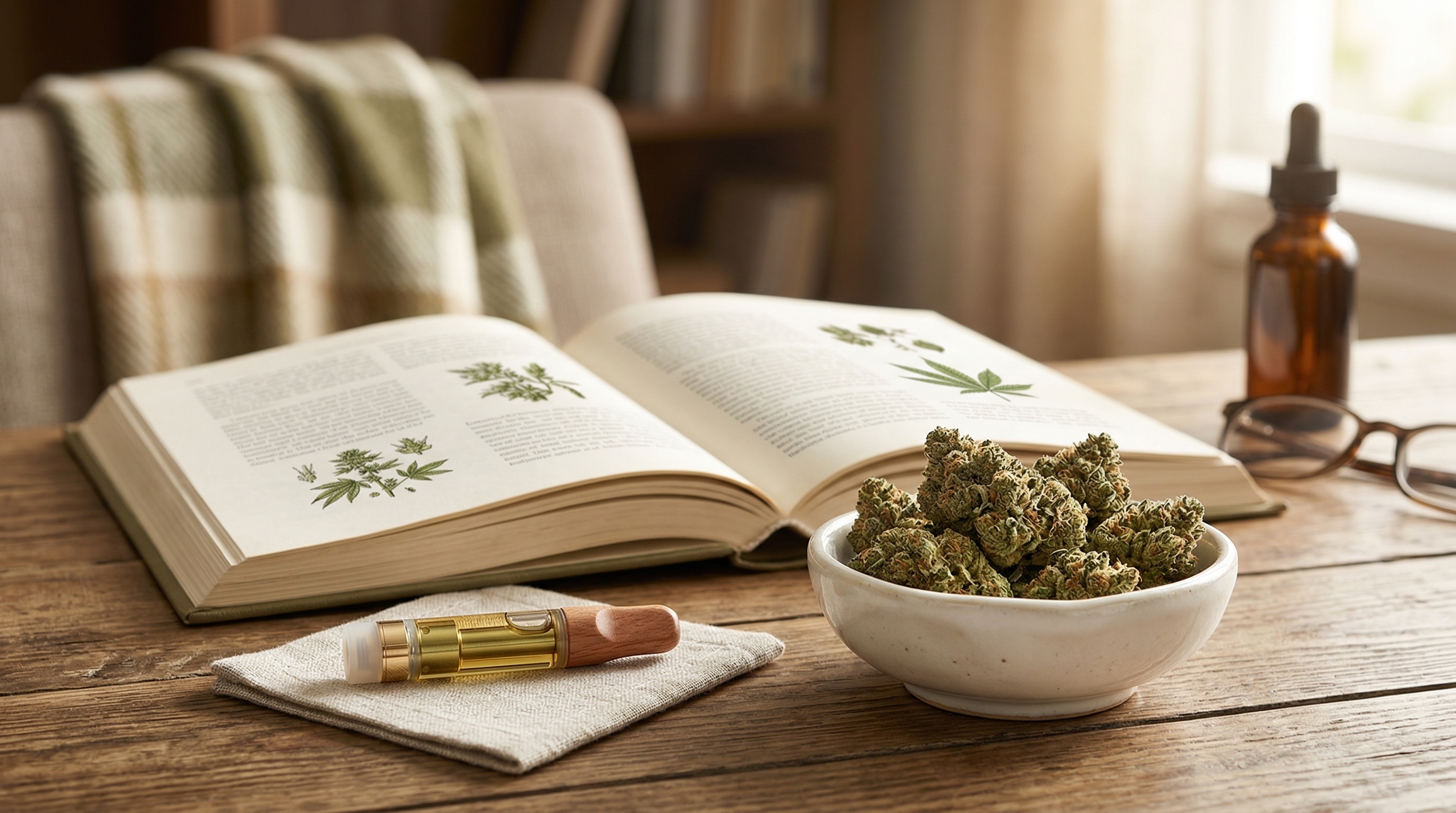
- Vape cartridges: Concentrated cannabis oil (usually distillate or CO₂ extract) loaded into a pre-filled cartridge for inhalation via a battery-powered vaporizer
- Tinctures: Cannabinoid-infused alcohol or oil-based liquids taken sublingually (under the tongue) or added to food and drink
- Concentrates: High-potency extracts including wax, shatter, rosin, and live resin, consumed through dabbing or vape pens
Each of these has a distinct delivery mechanism, and that mechanism determines everything about how the experience unfolds. For the purposes of this comparison, we’ll focus primarily on vape cartridges (the most common oil format) against whole flower, since they share the same inhalation route and can be meaningfully compared. We’ll also note where tinctures and oral oils diverge significantly.
Whole flower is cannabis in its most natural, minimally processed form—the dried and cured bud of the female cannabis plant. It can be smoked (combustion) or vaporized (heated below combustion temperature) using a dry herb vaporizer.
Bioavailability: How Much Actually Reaches Your Bloodstream
Bioavailability refers to the fraction of a substance that enters circulation in active form. For cannabis, it’s one of the most clinically important variables—and one of the most misunderstood by consumers.
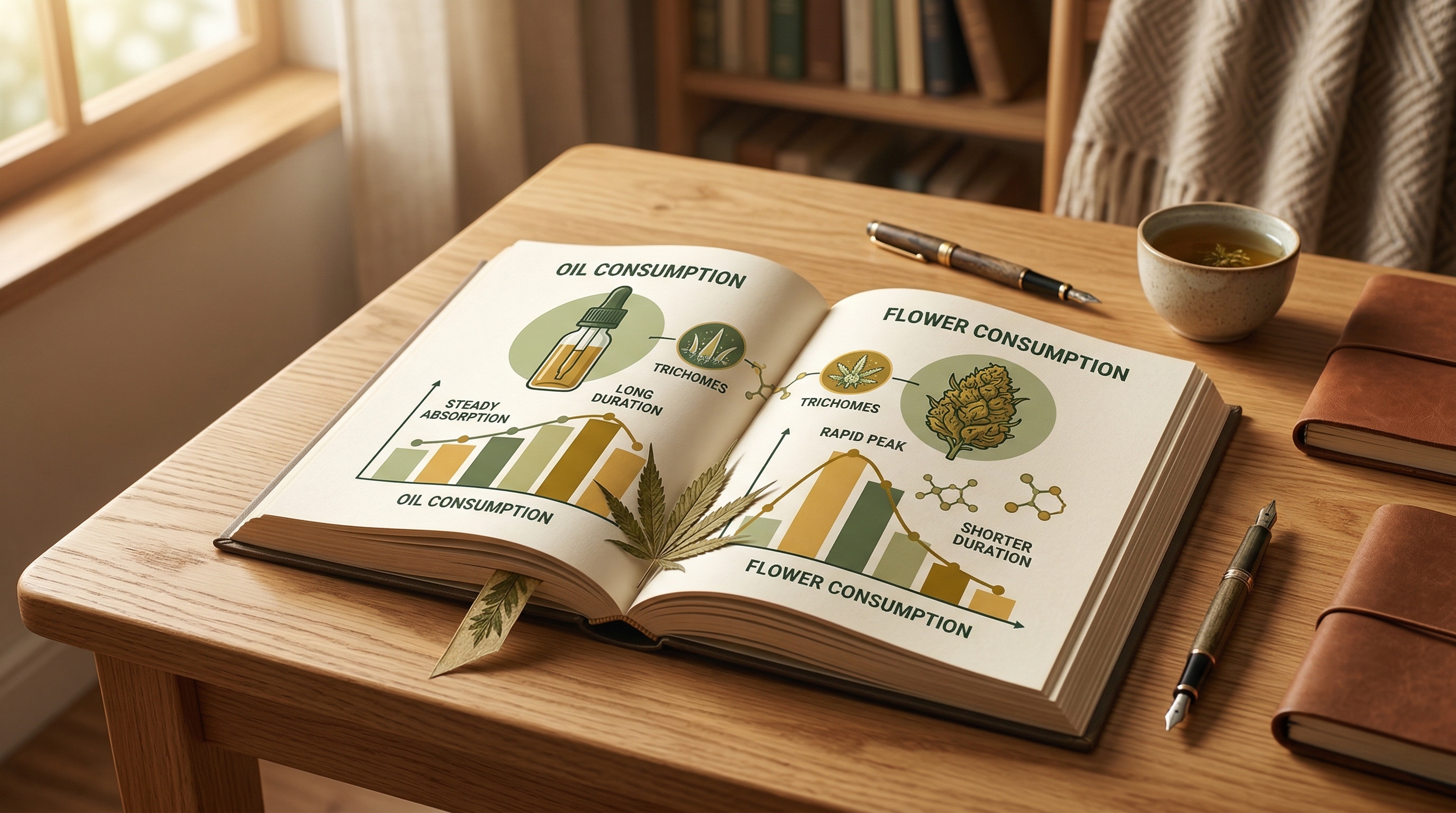
When you inhale cannabis—whether flower through combustion, flower through vaporization, or oil through a cartridge—cannabinoids absorb rapidly through the lung’s enormous surface area directly into the bloodstream. Peak blood THC levels are typically reached within 3–10 minutes of inhalation [Huestis, 2007]. This is why inhalation methods, regardless of format, have a fast onset.
However, the actual bioavailability varies meaningfully by method:
| Method | Estimated THC Bioavailability | Onset | Peak Effects | Duration |
|---|---|---|---|---|
| Flower (smoked) | 2–56% (avg ~25%) | 1–5 min | 15–30 min | 1–3 hours |
| Flower (vaporized) | 40–50% | 1–5 min | 10–20 min | 1–3 hours |
| Oil cartridge (vaporized) | 40–65% | 1–5 min | 10–20 min | 1–2.5 hours |
| Tincture (sublingual) | 12–35% | 15–45 min | 60–90 min | 2–4 hours |
| Oral oil (swallowed) | 4–20% | 30–90 min | 1–3 hours | 4–8 hours |
Sources: Huestis, 2007; Grotenhermen, 2003; MacCallum & Russo, 2018
The wide range for smoked flower (2–56%) reflects how dramatically user technique affects delivery. Shallow puffs with poor lung contact versus slow, deep inhalation with several seconds of breath retention can result in wildly different actual doses from the same amount of product.
Oil cartridges—because they deliver a pre-defined, consistent aerosol of concentrated extract—tend to show higher and more consistent bioavailability than smoked flower. This is the primary pharmacological argument for oil over combusted flower: you may be getting more of what you paid for, more reliably, with every puff.
That said, for a more complete breakdown of how all consumption routes compare, our Cannabis Consumption Methods Ranked by Bioavailability article goes deep on the full spectrum.
Terpene Preservation: Where Flower Has a Real Advantage
Here’s where the comparison shifts in flower’s favor—and it matters more than most people realize.
Terpenes are the aromatic compounds responsible for each strain’s distinct smell and flavor profile. They also contribute meaningfully to the overall experience through what researchers call the entourage effect—the synergistic interaction between cannabinoids and terpenes that shapes the character of a high beyond what THC percentage alone can predict [Russo, 2011].
The problem with most commercial cannabis oils is that the extraction and refinement process destroys or removes terpenes. The most common oil in vape cartridges is distillate: a highly refined extract that can reach 90%+ THC purity, but in the process, virtually all terpenes and minor cannabinoids are stripped away. What you’re left with is a potent but pharmacologically narrow product—high THC, minimal entourage.
Manufacturers typically add terpenes back into distillate cartridges, but these are often:
- Botanically derived (from non-cannabis sources like lavender or citrus)
- Cannabis-derived but sourced from different strains
- Present in lower concentrations than in whole plant material
By contrast, whole flower—smoked or ideally vaporized at controlled temperatures—preserves the terpene profile as nature arranged it. A terpinolene-forward cultivar like Dutch Treat retains its energizing, pine-sweet character. A myrcene-dominant OG Kush delivers its characteristic earthy, sedating depth. That specificity matters enormously if you’re choosing strains based on their High Family profile.
The exception worth knowing about: High-quality oil products do exist that preserve terpenes effectively.
- Live resin is extracted from fresh-frozen (never dried) plant material, which dramatically reduces terpene loss during extraction. Live resin cartridges typically have terpene profiles much closer to the original plant.
- Rosin is a solventless extract made using only heat and pressure, which preserves terpenes without the refinement losses of CO₂ or hydrocarbon extraction.
- Full-spectrum extracts retain the broader cannabinoid and terpene profile of the original plant, including CBD, CBG, CBN, and other minor cannabinoids alongside the major terpenes.
If terpene fidelity matters to you—and if you use the High Families framework to choose strains, it should—these premium oil formats are far closer to the whole-flower experience than standard distillate.
Dosing Control: A Critical Practical Difference
One of the most commonly overlooked differences between oil and flower is how difficult it is to dose each one consistently.
Flower dosing is inherently variable. A single gram of cannabis labeled at 20% THC contains approximately 200mg of total THC by weight—but combustion efficiency, inhalation technique, paper type (for joints), and bowl packing density all introduce enormous variability into how much actually reaches your bloodstream per session. Research on smoked cannabis shows that the same individual can absorb significantly different amounts of THC from the same quantity of flower across multiple sessions [Vandrey et al., 2017].
Oil cartridges, by contrast, are generally more consistent per puff. Most cartridges are formulated to deliver a measured volume of aerosol per draw, and the THC concentration in the oil is known (typically 70–90% for distillate). While the exact milligrams per puff still depend on draw length and technique, the variance is considerably lower than combusted flower. Experienced users can develop reasonably reliable dose intuitions from cartridge use.
Tinctures offer the most precise dosing of all oil formats. Because they come in bottles with calibrated droppers (typically 0.5mL or 1mL per dropper), and the mg-per-mL concentration is stated on the label, you can calculate your dose with relative accuracy. Sublingual absorption also reduces the “first-pass metabolism” effect that makes oral cannabis so difficult to predict.
For beginners especially, this dosing dimension matters. If you’re still learning your tolerance and finding your comfortable range, the more predictable delivery of a calibrated tincture or a reliable cartridge from a reputable brand can significantly reduce the risk of accidentally taking too much—a common and unpleasant experience covered in our How Long Does a Cannabis High Last guide.
Potency: Understanding Concentrate vs. Flower THC Numbers
A significant source of consumer confusion is how to compare the THC percentages on flower labels with those on oil labels.
Flower is typically labeled with THC percentage by dry weight—a 20% flower contains roughly 200mg THC per gram. Oil products list either percentage (70–90% THC for distillate) or milligrams per cartridge (commonly 0.5g or 1g cartridges, so 350–900mg THC).
On paper, oil looks far more potent. But potency on a label and potency in your body are different things. Because bioavailability from vaporized oil is higher than from combusted flower, the gap is somewhat smaller in practice—but oil is genuinely more concentrated, which means:
- Smaller physical amounts needed per session
- Less forgiving margin for new users
- Significantly higher risk of overconsumption for people who equate “one puff” from a cart with “one hit” from a joint
The principle here is the same for flower: decarboxylation and delivery route determine real-world potency far more than label numbers alone. Start low, add gradually, and give each method time to reveal its actual effect curve before repeating your dose.
Practical Implications
Head-to-Head: Oil vs. Flower Across the Variables That Matter
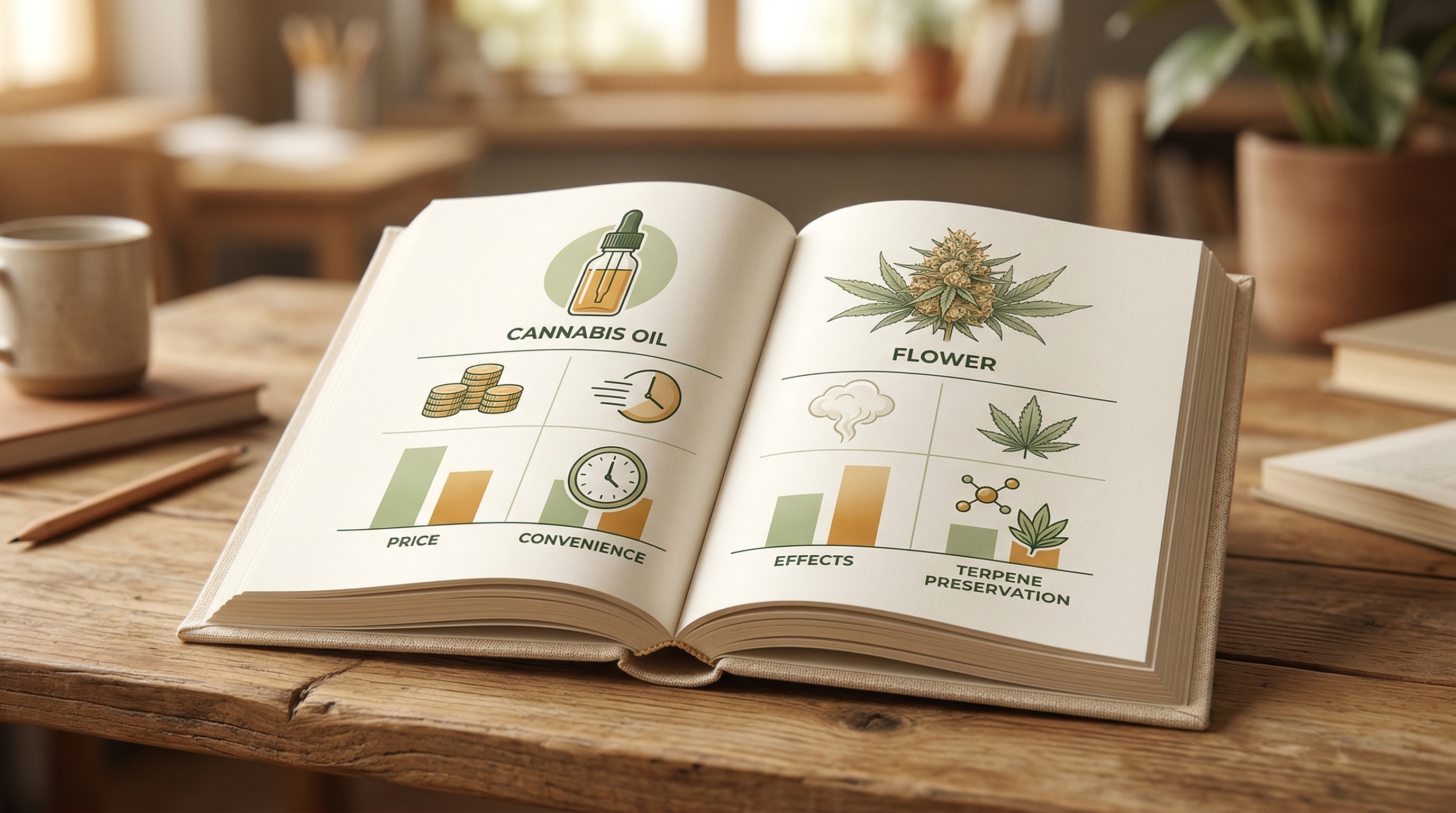
Here’s how the two formats stack up across the factors most consumers care about:
Onset and Duration Both inhaled flower and vaporized oil share a fast onset (1–5 minutes) and similar duration (1–3 hours). Sublingual tinctures take 15–45 minutes to peak but may last longer. If you need fast-acting effects, both inhalation formats are equivalent.
Terpene Fidelity and Entourage Effect Whole flower wins clearly over distillate. Live resin and full-spectrum oil products are competitive with or close to flower. If strain character and the nuanced entourage effect matter to you, prioritize fresh, quality flower or premium live resin oil. See our Cannabis Terpenes Guide for a deeper look at why this matters.
Dosing Consistency Oil formats (tinctures especially, cartridges secondarily) are more consistent than smoked flower. Vaporized flower is more consistent than smoked flower.
Convenience and Discretion Oil cartridges are the clear winner—compact, odorless relative to smoke, and require no preparation. Pre-rolled joints are convenient but produce noticeable odor and require an open flame. Dry herb vaporizers are moderate on both counts.
Respiratory Considerations For those concerned about lung health, the best option is non-inhalation entirely (tinctures, capsules, edibles). Among inhalation options, research consistently suggests vaporization—of either flower or oil—is less harmful to respiratory tissue than combustion [Abrams et al., 2007]. See our Vaping vs Smoking deep dive for the full breakdown.
Cost Efficiency This is highly context-dependent. Premium live resin cartridges are expensive per gram. Mid-range distillate carts are often cheaper per milligram of THC than equivalent quality flower. But because oil delivers more THC per puff, consumption rates differ—many users report a single cartridge lasting longer than an equivalent weight of flower.
Product Safety and Quality Control Legal, licensed flower from tested dispensaries is a well-understood product. For oil, the quality spectrum is wider. The 2019 EVALI outbreak—linked to vitamin E acetate in illicit THC cartridges—was a stark warning about unregulated oil products [Blount et al., 2020]. Always purchase oil products with a certificate of analysis (COA) from a licensed dispensary. Avoid unregulated or street-sourced cartridges entirely.
Which Should You Choose?
Choose whole flower if:
- You want the most complete, authentic terpene and entourage experience from your chosen cultivar
- You enjoy the ritual of preparing and consuming cannabis
- You prefer vaporizing dry herb for cleaner, temperature-controlled delivery
- Exploring specific strain character and High Families matters to you
- You want to smell and inspect the product before purchase
Choose oil (vape cartridge) if:
- Convenience and discretion are top priorities
- You want consistent, repeatable dosing with less technique variability
- You’re comfortable reading COAs and purchasing from reputable, licensed sources
- You prefer a format that requires no grinding, loading, or cleaning
- You’re looking for high-potency effects from a physically small product
Choose tincture/sublingual oil if:
- Respiratory health is a concern and you want to avoid inhalation entirely
- You want the most control over your precise dose
- You need a longer-lasting effect than inhalation provides
- Discretion is essential (tinctures are odorless and visually unremarkable)
Explore live resin or full-spectrum oil if:
- You like the convenience of oil but want a genuine terpene-rich experience
- You’re curious about the entourage effect without returning to whole flower
- You’re willing to pay a premium for a product that bridges the gap between concentrates and whole plant
Key Takeaways
- Bioavailability is higher and more consistent with oil cartridges than with smoked flower, meaning more THC per puff—but “more efficient” also means less forgiving for new users.
- Whole flower preserves the full terpene profile that shapes strain character. Standard distillate oil largely strips terpenes away; live resin and full-spectrum extracts are much closer to whole-plant fidelity.
- Dosing is more controllable with oil formats, especially tinctures. Smoked flower has the widest dose variance due to technique variability.
- Both formats carry respiratory considerations when inhaled. Tinctures and oral oils are the only inhalation-free options.
- Product quality matters more for oil than flower. Licensed, tested cartridges from dispensaries are safe; illicit cartridges are not. Always verify COAs.
- There is no universally “better” format. The right choice depends on your priorities: terpene experience, convenience, dosing precision, discretion, or health considerations.
FAQs
Is cannabis oil stronger than flower?
By concentration, yes—most cannabis oil products have significantly higher THC percentages than flower. But “stronger” in practice depends on bioavailability, dosing, and technique. Vaporized oil delivers more consistent and often higher amounts of THC per inhalation than combusted flower. However, premium flower vaporized at optimal temperature can be every bit as effective gram-for-gram as mid-range distillate cartridges.
Does cannabis oil have a different high than flower?
Often, yes. Standard distillate oil—which has had most terpenes removed—tends to produce a blunter, less nuanced effect driven primarily by THC and CBD levels. Whole flower, with its intact terpene profile, typically produces a more complex, character-rich experience. The difference is most noticeable when comparing high-terpene cultivars like Energetic High or Relaxing High strains against generic distillate. Live resin and full-spectrum oil products close this gap considerably.
Is cannabis oil safer than smoking flower?
For respiratory health, the comparison depends on format. Any inhalation route poses some lung exposure. Among inhalation methods, current evidence suggests vaporization of both oil and flower is meaningfully less harmful than combustion [Abrams et al., 2007]. Oral oil and tinctures are the safest consumption routes from a respiratory standpoint. The EVALI crisis underlines that unregulated oil cartridges can be dangerous—but licensed, tested products do not carry that risk.
How do I know if a cannabis oil cartridge is high quality?
Look for three things: a current certificate of analysis (COA) from a third-party lab showing cannabinoid content, terpene content, and testing for contaminants (pesticides, heavy metals, residual solvents); the product was purchased from a licensed dispensary; and the extract type is disclosed (distillate vs. live resin vs. full-spectrum). Avoid products with vague labeling, no lab testing, or purchased outside licensed retail channels.
Can I switch between oil and flower freely?
Yes, and many consumers use both depending on context. Oil carts for on-the-go use or when discretion matters, dry herb vaporizer at home for the full terpene experience. Your tolerance will normalize across formats over time, though the first few sessions with a new format—especially switching from flower to high-potency distillate—warrant extra caution with dosing.
Sources
Abrams, D.I., Vizoso, H.P., Shade, S.B., Jay, C., Kelly, M.E., & Benowitz, N.L. (2007). Vaporization as a smokeless cannabis delivery system. Clinical Pharmacology & Therapeutics, 82(5), 572–578.
Blount, B.C., Karwowski, M.P., Shields, P.G., et al. (2020). Vitamin E acetate in bronchoalveolar-lavage fluid associated with EVALI. New England Journal of Medicine, 382(8), 697–705.
Grotenhermen, F. (2003). Pharmacokinetics and pharmacodynamics of cannabinoids. Clinical Pharmacokinetics, 42(4), 327–360.
Huestis, M.A. (2007). Human cannabinoid pharmacokinetics. Chemistry & Biodiversity, 4(8), 1770–1804.
MacCallum, C.A., & Russo, E.B. (2018). Practical considerations in medical cannabis administration and dosing. European Journal of Internal Medicine, 49, 12–19.
Russo, E.B. (2011). Taming THC: potential cannabis synergy and phytocannabinoid-terpenoid entourage effects. British Journal of Pharmacology, 163(7), 1344–1364.
Vandrey, R., Herrmann, E.S., Mitchell, J.M., et al. (2017). Pharmacokinetic profile of oral cannabis in humans: blood and oral fluid disposition and relation to pharmacodynamic outcomes. Journal of Analytical Toxicology, 41(2), 83–99.


