CBL: Cannabicyclol, Cannabis's Rarest Major Cannabinoid
CBL (cannabicyclol) is cannabis's rarest cannabinoid: a light-made degradation product of CBC with almost no research. Here's what we actually know.

Professor High
Your friendly cannabis educator, bringing science-backed knowledge to the community.
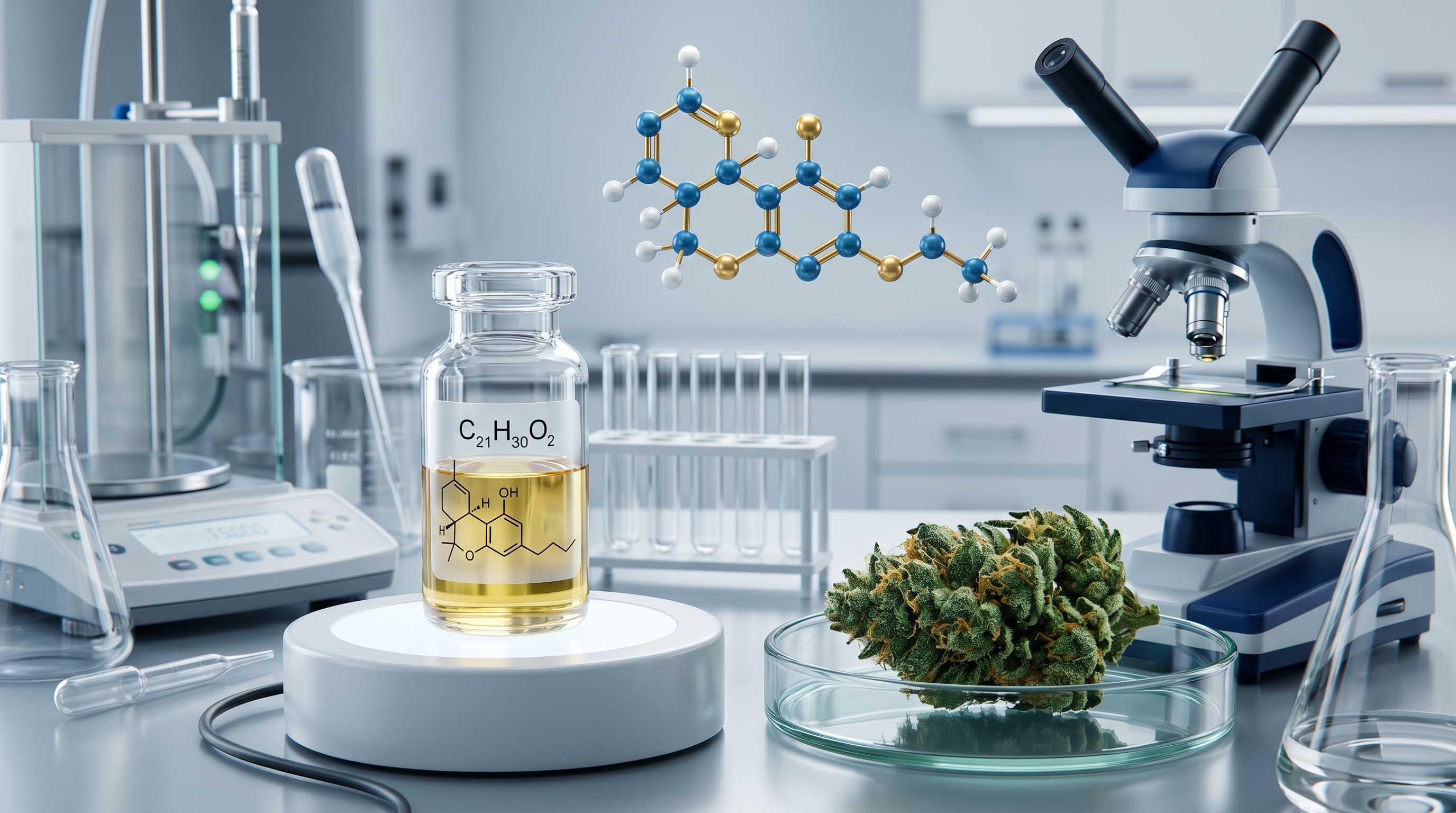
Here is something that should make any honest cannabis educator a little uncomfortable: there is a cannabinoid the plant barely makes on purpose, that almost no one has studied, and that we mostly find in cannabis that has been sitting in sunlight or in a tomb for a couple thousand years. Its name is cannabicyclol — CBL — and it is, by almost any measure, the rarest of the “major” cannabinoids you will see listed on a certificate of analysis.
I want to be candid up front, because CBL is the kind of compound where overconfidence is the real danger. We know what CBL is with chemical precision. We know how it forms with chemical precision. But when it comes to what CBL does in a human body, the honest answer is: almost nothing has been established. One genuinely surprising 2025 paper cracked the door open. Beyond that, we are standing in a research vacuum. So let’s walk through what is solid, flag what is speculation, and be clear about where the map simply ends.
Quick housekeeping: this is cannabis education, not medical advice. CBL has effectively zero human clinical data. Nothing here is a recommendation to use, dose, or treat anything with it.
CBL is a degradation product, not a plant product
Most of the cannabinoids people talk about are things the cannabis plant builds deliberately through its own enzymes. The plant starts with CBGA, the “mother” precursor, and enzymatically converts it into the acid forms of THC, CBD, and CBC (cannabichromene). That is biosynthesis: the plant doing chemistry on purpose.
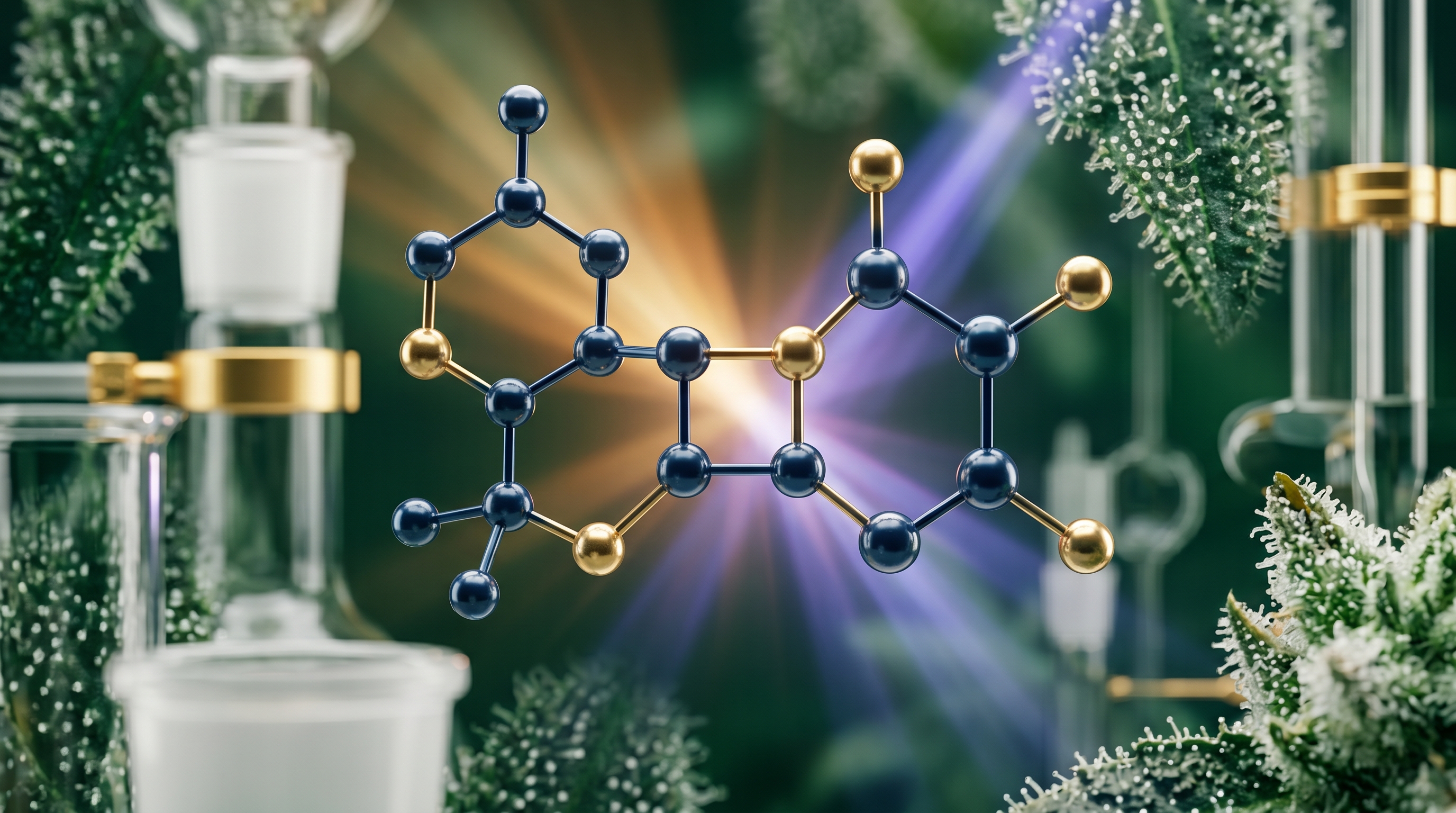
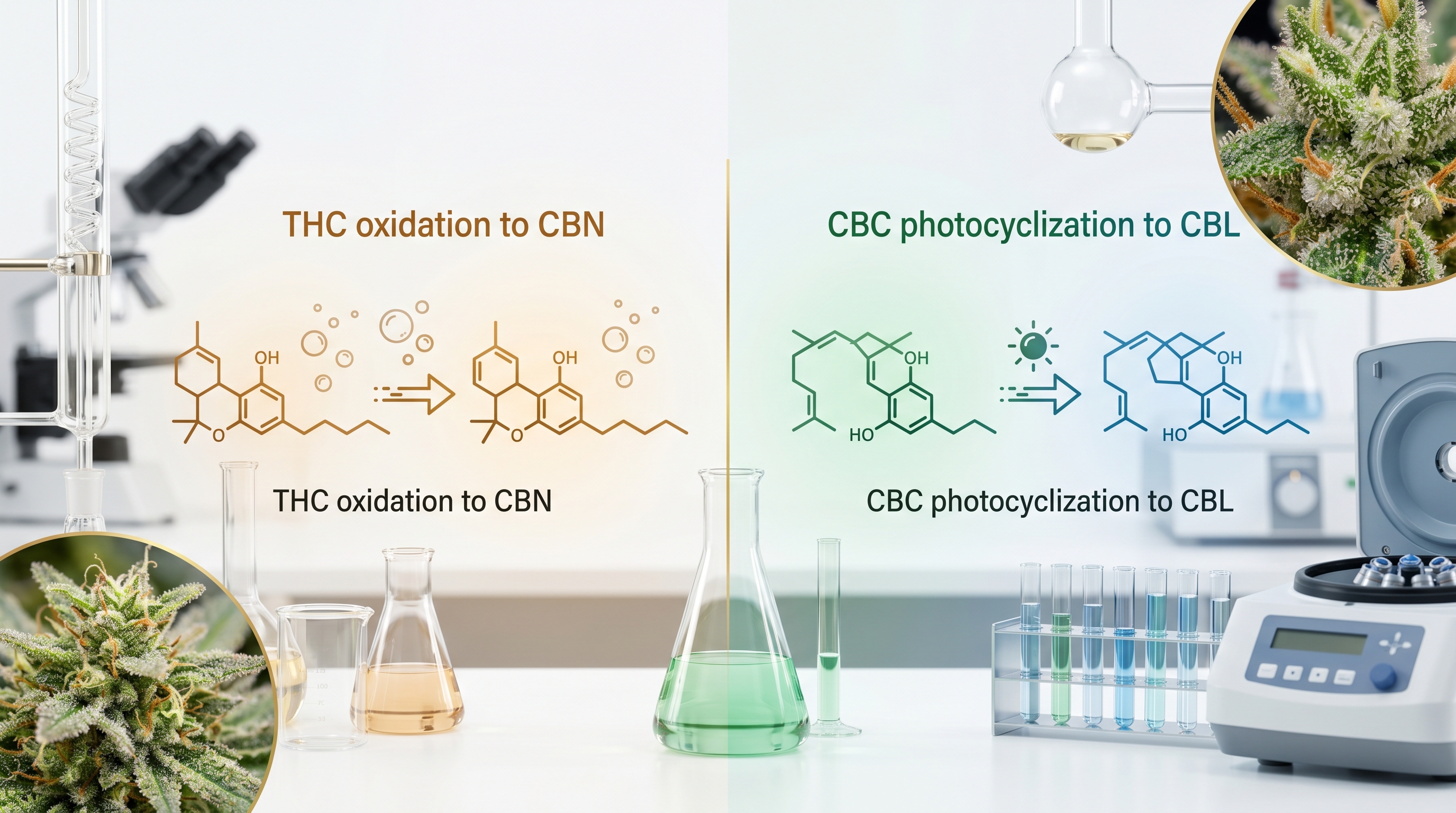
CBL is different, and this is the single most important thing to understand about it. The cannabis plant does not have a dedicated enzyme that synthesizes CBL. Instead, CBL is created when CBC degrades. Specifically, when CBC is exposed to ultraviolet light, the molecule undergoes an intramolecular [2+2] photocycloaddition — a reaction in which two of CBC’s double bonds snap together to form a four-membered carbon ring called a cyclobutane [Russo et al., 2008]. That new ring is the structural signature of CBL, and it is what makes the molecule so chemically distinct from its parent.
This is a completely different aging pathway from the famous one. When THC degrades, it oxidizes into CBN, the “sleepy” cannabinoid — that is an oxidation reaction driven mostly by oxygen and heat. CBL, by contrast, is fundamentally a light-driven cyclization. Sunlight (or strong UV) is the key ingredient. Heat and acid can push the reaction along too, but the textbook route is photochemical [Russo et al., 2008].
In living, freshly harvested cannabis, CBL exists only in trace amounts — essentially the small fraction of CBC that has already caught some light. It accumulates after harvest, especially in poorly stored, sun-exposed, or simply very old material. In that sense CBL is less a feature of the plant and more a fingerprint of its history.
CBLA: the acid that comes first
Like most cannabinoids, CBL has an acidic precursor form: cannabicyclolic acid (CBLA). The relationship mirrors the rest of the cannabinoid family. The plant makes acid forms first — THCA, CBDA, CBCA — and only heat (decarboxylation) strips off the carboxyl group to give the “neutral” compound. If you have ever wondered why raw cannabis is chemically different from smoked cannabis, this is the same story.
For CBL, the chain runs: cannabichromenic acid (CBCA) can photochemically cyclize into CBLA, and CBLA can then decarboxylate (with heat) into CBL — paralleling the way CBC itself becomes available. Researchers have even worked out chiral separation methods to isolate CBC, CBL, and both of their acidic analogs on specialized chromatography columns, which tells you the field is still at the “we need clean material to even study this” stage [Mazzoccanti et al., 2023]. When a 2023 paper’s headline contribution is how to physically separate the molecule, that is a strong signal of how early the science is.
I find this oddly clarifying. The reason we know so little about CBL is partly that, until recently, it was genuinely hard to get pure CBL to test. You cannot run a clean receptor-binding assay if your sample is a murky mixture of CBC, CBL, and their acids.
What CBL might actually do — and why I’m hedging hard
For decades, the standard line in every cannabinoid review was blunt: no meaningful pharmacology of CBL had been performed. It was listed, catalogued, and then politely ignored. CBL is non-intoxicating — it lacks the molecular features that make THC psychoactive — but “won’t get you high” is not the same as “does nothing,” and for years that distinction sat unexamined.
Then, in early 2025, a team published the first genuinely interesting pharmacological finding in the Journal of Natural Products [Haghdoost et al., 2025]. Here is what they reported, and I am going to state it carefully:
- They synthesized clean (±)-CBL from CBC using a clay catalyst (montmorillonite K30), confirmed its structure by X-ray crystallography, and ran receptor assays.
- CBL showed almost no meaningful binding at CB1 (the receptor THC acts on) and only weak interaction with CB2 — consistent with it being non-intoxicating.
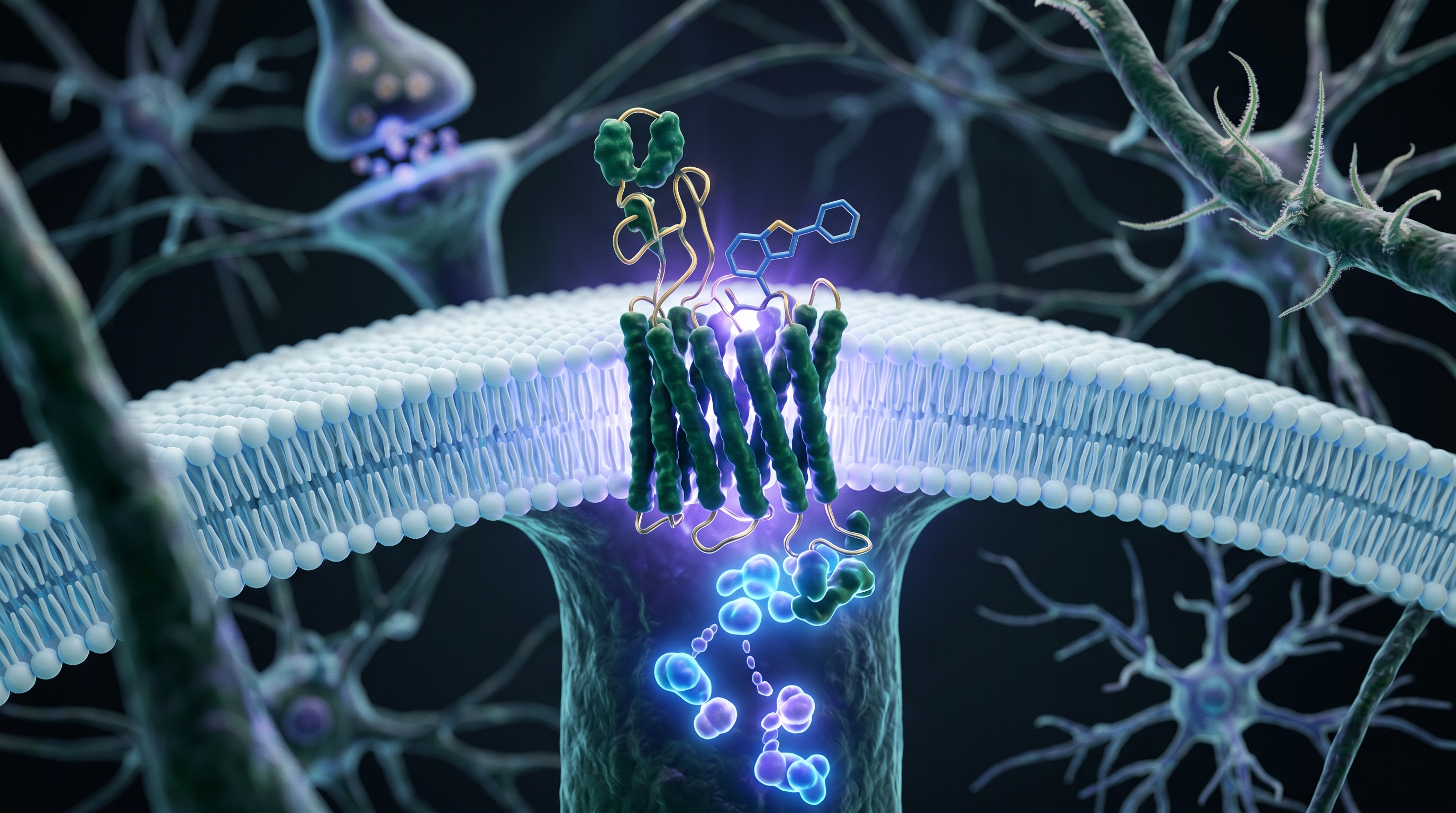
- The surprise: CBL bound the serotonin 5-HT1A receptor with notably higher affinity than CBD, and acted as a positive allosteric modulator — meaning that at low concentrations it amplified serotonin’s own signaling rather than activating the receptor on its own [Haghdoost et al., 2025].
That 5-HT1A connection is intriguing because the same receptor shows up in conversations about mood, anxiety, and the way CBD interacts with serotonin signaling. But here is where I pump the brakes, hard:
This is one in-vitro study. It was done in cells and binding assays, not animals, and certainly not humans. The authors themselves are refreshingly honest — they note that the metabolism of CBL in animals and humans is entirely unknown, and that they only looked at one signaling pathway (β-arrestin recruitment), leaving G-protein effects unexplored [Haghdoost et al., 2025]. A single allosteric finding in a dish is a hypothesis generator, not a health claim. Anyone selling you CBL for mood right now is selling you several years ahead of the evidence.
So the responsible summary is: CBL is non-intoxicating, it largely ignores the classic cannabinoid receptors, and it may have an unexpected relationship with serotonin signaling that deserves real follow-up. That’s it. That is the entire evidence-based story.
CBL’s real, proven value: it is a clock
Here is the irony. CBL’s most reliable, well-documented use has nothing to do with the human body at all. It is a chemical marker of age and degradation.
Because CBL accumulates as CBC catches light over time, the amount of CBL in a cannabis sample is a clue to how old and how degraded that material is. Scientists have used exactly this logic on ancient cannabis. In one of my favorite studies in the entire field, researchers analyzed roughly 789 grams of cannabis recovered from a 2,700-year-old tomb in the Yanghai burial site near Turpan, China — material left by the Gūshī culture [Russo et al., 2008]. Their analysis found CBN, CBD, CBC, and CBL, describing CBL plainly as “a heat-generated artefact of CBC.” The presence of these degradation products was part of the evidence that the sample was genuinely, profoundly old [Russo et al., 2008].
Think about that. The same compound that is useless as a “feature” cannabinoid is invaluable as a forensic timestamp — a way to read the history of a plant sample the way you read tree rings.
This also has a practical lesson for anyone who cares about flower quality today. A cannabis sample showing elevated CBL has been exposed to light and time. That same exposure degrades the terpenes and the active cannabinoids you actually wanted. It is a chemical confirmation of bad storage. If your jar has been sitting on a sunny windowsill, CBL is quietly going up while myrcene, limonene, and linalool are quietly evaporating away. This is one more reason proper storage — cool, dark, airtight — matters, and why understanding how cannabis degrades helps you protect what you paid for.
Does CBL matter for the entourage effect?
This is where people get speculative, so let me draw the line clearly. The entourage effect — the idea that cannabis compounds work better together than in isolation — is a real and active area of cannabis science. Minor cannabinoids and terpenes plausibly shape the overall experience.
But CBL is present in such trace amounts in fresh, well-stored flower that any entourage contribution is, at best, theoretical. Unlike CBG or CBC, which the plant actively produces and which have at least some pharmacology behind them, CBL only shows up in meaningful quantities precisely when the product is degraded — which is to say, when the rest of the entourage is also falling apart. So if you are chasing a full-spectrum, entourage-style experience, CBL is not a compound to seek out. It is closer to a warning light. The genuinely relaxing or relieving profiles you actually want come from fresh material with intact terpenes and major cannabinoids — not from aged flower rich in cyclized degradation products.
How this connects to the strains you actually use
You will essentially never choose a strain for its CBL content — no one does, and no breeder targets it. But understanding CBL changes how you think about freshness across the whole catalog.
High-CBC genetics are, indirectly, the ones most capable of generating CBL once they age, since CBC is the raw material. CBC tends to show up across a wide range of cultivars rather than being concentrated in one. Meanwhile, the strains people prize for vivid, intact chemistry — the bright citrus of Super Lemon Haze or Tangie, the energetic clarity of Jack Herer or Durban Poison, the balanced character of Blue Dream, the high-CBD calm of Harlequin, ACDC, or Cannatonic — are all strains whose appeal fades as CBL rises. The same is true for dessert profiles like Wedding Cake, Gelato, and Girl Scout Cookies, classics like OG Kush, Sour Diesel, and Granddaddy Purple, or sleep-leaning options like Northern Lights and Bubba Kush. In every case, detectable CBL means the experience you read about is no longer the experience in the jar.
That reframes CBL into something genuinely useful for a consumer: a reminder that the molecule profile changes over time, and that what worked beautifully from a fresh eighth may feel flat from the same strain stored badly for six months.
Key Takeaways: the honest bottom line
Let me restate the research gap plainly, because it is the whole point:
- What we know: CBL is a non-enzymatic, light-driven [2+2] cyclization product of CBC. It is non-intoxicating. Its acid form is CBLA. It is the rarest “major” cannabinoid because it only accumulates with age and UV exposure. It is a reliable chemical marker of degradation, used even to characterize 2,700-year-old samples [Russo et al., 2008].
- What we barely know: One 2025 in-vitro study suggests CBL is a positive allosteric modulator at serotonin’s 5-HT1A receptor, with little activity at CB1/CB2 [Haghdoost et al., 2025].
- What we do not know: Essentially everything else. No human trials. No established effects. No known metabolism. No dosing. No safety profile beyond “appears non-intoxicating.”
CBL is a beautiful example of why I keep insisting that cannabis education should be comfortable saying “we don’t know yet.” The compound is real, its chemistry is elegant, and its forensic usefulness is proven. But its pharmacology is a near-blank page. That is not a flaw in the story — it is the story.
The broader lesson is the one High IQ is built around: your experience comes from a living, changing mixture of compounds, and that mixture shifts with time, light, and storage. The most reliable way to understand what works for you is not to chase an exotic minor cannabinoid you read about online, but to track how real products — at real freshness — actually feel in your body. CBL’s main practical message is humble and useful: keep your flower cool, dark, and sealed, and the chemistry you paid for stays the chemistry you consume.
Sources
- Russo, E. B., Jiang, H.-E., Li, X., et al. (2008). Phytochemical and genetic analyses of ancient cannabis from Central Asia. Journal of Experimental Botany, 59(15), 4171–4182. DOI: 10.1093/jxb/ern260. https://pmc.ncbi.nlm.nih.gov/articles/PMC2639026/
- Haghdoost, M., et al. (2025). An Unexpected Activity of a Minor Cannabinoid: Cannabicyclol (CBL) Is a Potent Positive Allosteric Modulator of the Serotonin 5-HT1A Receptor. Journal of Natural Products. DOI: 10.1021/acs.jnatprod.4c00977. https://pmc.ncbi.nlm.nih.gov/articles/PMC11774245/
- Mazzoccanti, G., et al. (2023). Chiral Separation of Cannabichromene, Cannabicyclol, and Their Acidic Analogs on Polysaccharide Chiral Stationary Phases. https://pmc.ncbi.nlm.nih.gov/articles/PMC9921479/
- Meija, J., et al. (2022). Effect of temperature in the degradation of cannabinoids: From a brief residence in the gas chromatography inlet port to a longer period in thermal treatments. DOI reference at https://pmc.ncbi.nlm.nih.gov/articles/PMC9664148/
Educational content only. CBL has essentially no human clinical data; nothing here is medical advice or a recommendation to use any cannabinoid to treat, prevent, or diagnose any condition. Consult a qualified healthcare professional with questions about cannabis and your health.


