

Dablicator 25 mg vs. 55 mg: Check the Hardware Version
Dablicator 3.2 and 4.0 use different oil-mass markings. Compare the maker’s three-line and six-line charts before doing any THC-content math.

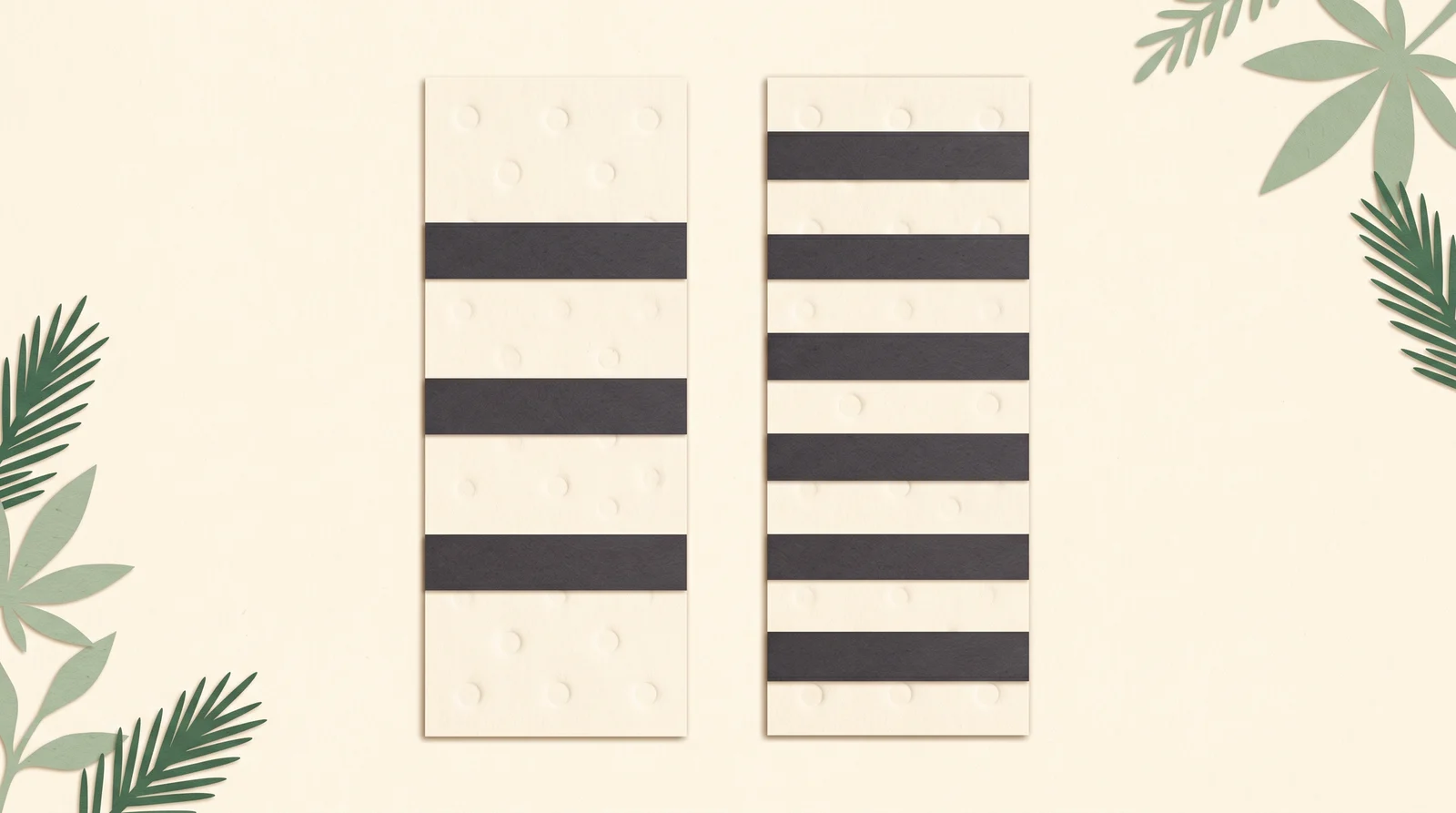
Dablicator’s named 3.2 hardware marks about 55 mg of oil per line; its 4.0 hardware marks about 25 mg. The maker documents three button lines for 3.2 and six for 4.0. Those figures measure oil mass, not THC, according to its version-specific calculator and charts.
That explains why two instructions can give different milligram figures. The missing detail is the hardware version. A current webpage cannot identify the applicator in your hand.
Why do Dablicator instructions say 25 mg or 55 mg?
The maker publishes different increments for different hardware. Its FAQ describes roughly 55 mg of oil at each black mark and 165 mg at the final red line. That paragraph does not name 3.2, but its figures match the maker’s explicitly named 3.2 chart.
The redesign announcement dated August 21, 2024 introduced 25 mg increments. The current homepage also describes approximately 25 mg of oil per black mark. The calculator supplies the important bridge: separate cards and charts for 3.2 hardware and 4.0 hardware.
| Hardware / button lines | Approximate oil per black line | Approximate full oil amount |
|---|---|---|
| 3.2 / 3 lines | 55 mg | 165 mg |
| 4.0 / 6 lines | 25 mg | 150 mg |
Source: the maker’s 3.2 chart and 4.0 chart, linked from its calculator. These are nominal oil amounts from commercial documentation. They do not establish independently tested dispensing accuracy.
Six finer marks do not mean a larger full amount: the named 4.0 chart indicates about 150 mg oil, versus about 165 mg for 3.2. Keep “approximately” attached to the markings, even when a chart prints a tidy calculated THC number.
How can you tell which hardware instructions apply?
Start with the exact product’s named hardware version and its package instructions. The maker’s calculator depicts three lines on the button for 3.2 and six for 4.0. A matching complete pattern can corroborate those version-specific instructions.
A partly exposed button does not reveal its complete line count. Neither the current homepage nor a count of the few lines you can see supplies a missing model identity. If the version or complete pattern remains unclear, stop before assigning an oil increment or doing THC arithmetic.
Color is also an unreliable shortcut. The maker offers partner branding and custom colors on its homepage. A white or black casing, a partner logo, a metal tip or a recent purchase date does not establish the named version. The dated redesign announcement does not prove that all older stock disappeared.
This comparison identifies the maker’s two documented versions. It is not an identification key for every branded applicator, lookalike or future model. You do not need to operate or dispense from an unknown device to make its markings fit a chart.
Does a 25 mg oil mark mean 25 mg of THC?
No. Oil mass and THC content are different quantities. The maker’s charts combine a nominal oil amount with a separate percentage of THC. A percentage of total cannabinoids cannot silently replace that THC percentage.
The distinction is the same label-reading problem explained in hemp seed oil versus CBD oil: milligrams of a mixture do not tell you the milligrams of one ingredient.

Oil mass describes the mixture; THC content describes one component. This schematic does not show a measured percentage or a suggested amount.
For a hypothetical oil labeled 50% THC by weight, the conditional calculation is:
THC content in mg = oil mass in mg × THC fraction by weight.
| One nominal oil line | THC content at hypothetical 50% by weight |
|---|---|
| 3.2: about 55 mg oil | About 27.5 mg |
| 4.0: about 25 mg oil | About 12.5 mg |
These calculations match the maker’s 50% chart row. They illustrate why the hardware identity matters before multiplying. They are content estimates, not suggested doses, absorbed amounts or predictions of effects.
Use the exact label’s compound and units. “85% total cannabinoids” does not mean “85% THC.” A volume in milliliters is not an oil mass in milligrams without a density conversion. Before using a lab result, match the report to the package’s batch. The HPLC-versus-GC comparison explains why the reported analyte and calculation also matter.
Does the chart prove the delivered THC amount is exact?
No. Multiplication checks the chart’s arithmetic; it does not test the dispenser or the oil. The maker markets precision, but these product pages and charts are not an independent calibration study. This comparison does not establish a tolerance for every oil, temperature or operating condition.
Keep three questions separate: which hardware is documented, what the oil label actually reports, and how closely a particular sample and dispensed amount match those claims. A neat result on a calculator answers only the arithmetic question. Edible label accuracy explains that broader distinction between calculated content and measurement, without validating this hardware.
Potency arithmetic also cannot answer whether a product passed other testing. A matching batch report and the actual panels matter, as explained in reading residual solvents on a cannabis COA. A THC percentage alone is not a complete contaminant report.
FAQ
Why does the FAQ say 55 mg while the homepage says 25 mg?
The FAQ’s 55 mg and 165 mg figures match the maker’s named 3.2 chart. The current 25 mg wording matches its 4.0 chart. Use documentation for the exact hardware version rather than treating either webpage as a universal instruction.
Do 25 mg markings mean 25 mg of THC?
No. They indicate an approximate oil mass in the maker’s 4.0 documentation. THC content also needs the product’s THC concentration on the correct basis; total cannabinoids is a different figure.
Is one click the same as one black line?
Do not assume that equivalence. The comparison charts specify exposed black lines and their nominal oil amounts, not a universal milligram amount per audible click. Counting clicks cannot replace the version-specific line chart.
Can I identify the version by casing color or the lines currently showing?
No. Custom colors and partner branding make color insufficient, and a partially exposed button can hide some lines. Confirm the named version from the product documentation; an unresolved model does not have a known increment for this calculation.
Key takeaways
- The maker maps 3.2 to three button lines at approximately 55 mg oil each, and 4.0 to six at approximately 25 mg each.
- The full indicated oil amounts differ too: approximately 165 mg for 3.2 and 150 mg for 4.0.
- Confirm the named hardware and the THC-specific label before arithmetic. Unknown hardware means the increment remains unknown.
- Calculated THC content does not prove dispensing precision, absorption or a suitable amount for a person.
Sources
- Dablicator. Dosing calculator, including its named 3.2 and 4.0 cards and linked oil-mass/THC charts. No verified graphic publication date; accessed October 11, 2026.
- Dablicator. Frequently asked questions. Undated page; accessed October 11, 2026.
- The Dablicator. Introducing the New Dablicator Oil Applicator. August 21, 2024.
- Dablicator. Homepage, including current 25 mg wording and custom branding. Accessed October 11, 2026.
- Dablicator. Anatomy, including 25 mg lines and capacity specifications. Undated page; accessed October 11, 2026.
These are the maker’s commercial documentation, not independent dispensing tests or human studies. The worked example is conditional arithmetic, not a dosing recommendation.


